YubNub Social YubNub Social
    Advanced Search
  • Login

  • Day mode
  • © 2026 YubNub Social
    About • Directory • Contact Us • Privacy Policy • Terms of Use • Android • Apple iOS • Get Our App

    Select Language

  • English
Install our *FREE* WEB APP! (PWA)
Night mode
Community
News Feed (Home) Popular Posts Events Blog Market Forum
Media
Headline News VidWatch Game Zone Top PodCasts
Explore
Explore Jobs Offers
© 2026 YubNub Social
  • English
About • Directory • Contact Us • Privacy Policy • Terms of Use • Android • Apple iOS • Get Our App

Discover posts

Posts

Users

Pages

Group

Blog

Market

Events

Games

Forum

Jobs

The Lighter Side
The Lighter Side
2 yrs

Lessons we should have learned from the liberation of Auschwitz and other Nazi camps
Favicon 
www.upworthy.com

Lessons we should have learned from the liberation of Auschwitz and other Nazi camps

From 1940 to 1945, an estimated 1.3 million people were deported to Auschwitz, the largest complex of Nazi concentration camps. More than four out of five of those people—at least 1.1 million people—were murdered there.On January 27, 1945, Soviet forces liberated the final prisoners from these camps—7,000 people, most of whom were sick or dying. Those of us with a decent public education are familiar with at least a few names of Nazi extermination facilities—Auschwitz, Dachau, Bergen-Belsen—but these are merely a few of the thousands (yes, thousands) of concentration camps, sub camps, and ghettos spread across Europe where Jews and other targets of Hitler's regime were persecuted, tortured, and killed by the millions. The scale of the atrocity is unfathomable. Like slavery, the Holocaust is a piece of history where the more you learn the more horrifying it becomes. The inhumane depravity of the perpetrators and the gut-wrenching suffering of the victims defies description. It almost becomes too much for the mind and heart to take in, but it's vital that we push through that resistance. The liberation of the Nazi camps marked the end of Hitler's attempt at ethnic cleansing, and the beginning of humanity's awareness about how such a heinous chapter in human history took place. The farther we get from that chapter, the more important it is to focus on the lessons it taught us, lest we ignore the signs of history repeating itself.Lesson 1: Unspeakable evil can be institutionalized on a massive scalePerhaps the most jarring thing about the Holocaust is how systematized it was. We're not talking about humans slaying other humans in a fit of rage or a small number of twisted individuals torturing people in a basement someplace—this was a structured, calculated, disciplined, and meticulously planned and carried out effort to exterminate masses of people. The Nazi regime built a well-oiled killing machine the size of half a continent, and it worked exactly as intended. We often cite the number of people killed, but the number of people who partook in the systematic torture and destruction of millions of people is just as harrowing.It has now come out that Allied forces knew about the mass killing of Jews as early as 1942—three years before the end of the war. And obviously, there were reports from individuals of what was happening from the very beginning. People often ask why more wasn't done earlier on if people knew, and there are undoubtedly political reasons for that. But we also have the benefit of hindsight in asking that question. I can imagine most people simply disbelieving what was actually taking place because it sounds so utterly unbelievable.The lesson here is that we have to question our tendency to disbelieve things that sound too horrible to be true. We have evidence that the worst things imaginable on a scale that seems unfathomable are totally plausible.Lesson 2: Atrocity can happen right under our noses as we go about our daily livesOne thing that struck me as I was reading about the liberation of Auschwitz is that it was a mere 37 miles from Krakow, one of the largest cities in Poland. This camp where an average of 500 people a day were killed, where bodies were piled up like corded wood, where men, women, and children were herded into gas chambers—and it was not that far from a major population center.And that was just one set of camps. We now know that there were thousands of locations where the Nazis carried out their "final solution," and it's not like they always did it way out in the middle of nowhere. A New York Times report on how many more camps there were than scholars originally thought describes what was happening to Jews and marginalized people as the average person went about their daily lives:"The documented camps include not only 'killing centers' but also thousands of forced labor camps, where prisoners manufactured war supplies; prisoner-of-war camps; sites euphemistically named 'care' centers, where pregnant women were forced to have abortions or their babies were killed after birth; and brothels, where women were coerced into having sex with German military personnel."Whether or not the average person knew the full extent of what was happening is unclear. But surely there were reports. And we know how the average person responds to reports, even today in our own country.How many news stories have we seen of abuses and inhumane conditions inside U.S. immigrant detention camps? What is our reaction when the United Nations human rights chief visits our detention facilities and comes away "appalled"? It's a natural tendency to assume things simply can't be that bad—that's undoubtedly what millions of Germans thought as well when stories leaked through the propaganda.Lesson 3: Propaganda works incredibly wellPropaganda has always been a part of governance, as leaders try to sway the general populace to support whatever they are doing. But the Nazis perfected the art and science of propaganda, shamelessly playing on people's prejudices and fears and flooding the public with mountains of it.Hermann Goering, one of Hitler's top political and military figures, explained in an interview late in his life that such manipulation of the masses isn't even that hard."The people can always be brought to the bidding of the leaders," he said. "That is easy. All you have to do is tell them they are being attacked and denounce the pacifists for lack of patriotism and exposing the country to danger. It works the same way in any country."Terrifyingly true, isn't it? This is why we have to stay vigilant in the face of fear-mongering rhetoric coming from our leaders. When an entire religion or nationality or ethnic group is painted as "dangerous" or "criminal" or "terrorists," we have to recognize that we are being exposed to the same propaganda used to convince Germans that the Nazis were just trying to protect them. Safety and security are powerful human desires that make it easy to justify horrible acts.Hitler was also great at playing the victim. While marching through Europe, conquering countries and rounding up millions of innocent people to exterminate, he claimed that Germany was the one under attack. Blatant anti-Semitic rhetoric surely fired up Hitler's core supporters, but the message to the average German was that this was all being done in the name of protecting the homeland, rather than a quest for a world-dominating master race.Lesson 4: Most of us are in greater danger of committing a holocaust than being a victim of oneI had to pause when this realization hit me one day. As fairly average white American, I am in the majority in my country. And as strange as it is to say, that means I have more in common with the Germans who either committed heinous acts or capitulated to the Nazis than I do with the Jews and other targets of the Nazi party. That isn't to say that I would easily go along with mass genocide, but who's to say that I could fully resist the combination of systematic dehumanization, propaganda, and terrorism that led to the Holocaust? We all like to think we'd be the brave heroes hiding the Anne Franks of the world in our secret cupboards, but the truth is we don't really know what we would have done.Check out what this Army Captain who helped liberate a Nazi camp said about his bafflement at what the Germans, "a cultured people" allowed to happen:"I had studied German literature while an undergraduate at Harvard College. I knew about the culture of the German people and I could not, could not really believe that this was happening in this day and age; that in the twentieth century a cultured people like the Germans would undertake something like this. It was just beyond our imagination... – Captain (Dr.) Philip Leif - 3rd Auxiliary Surgical Group, First ArmySome say that we can gauge what we would have done by examining what we're doing right now, and perhaps they are right. Are we speaking out against our government's cruel family separations that traumatize innocent children? Do we justify travel bans from entire countries because we trust that it's simply our leadership trying to keep us safe? Do we buy into the "Muslims are terrorists" and "undocumented immigrants are criminals" rhetoric?While it's wise to be wary of comparing current events to the Holocaust, it's also wise to recognize that the Holocaust didn't start with gas chambers. It started with "othering," scapegoating, and fear-mongering. We have to be watchful not only for signs of atrocity, but for the signs leading up to it.Lesson 5: Teaching full and accurate history mattersThere are people who deny that the Holocaust even happened, which is mind-boggling. But there are far more people who are ignorant to the true horrors of it. Reading first-hand accounts of both the people who survived the camps and those who liberated them is perhaps the best way to begin to grasp the scope of what happened.One small example is Supreme Allied Commander Dwight D. Eisenhower's attempt to describe what he saw when he visited Ohrdruf, a sub-camp of Buchenwald:"The things I saw beggar description. While I was touring the camp I encountered three men who had been inmates and by one ruse or another had made their escape. I interviewed them through an interpreter. The visual evidence and the verbal testimony of starvation, cruelty and bestiality were so overpowering as to leave me a bit sick. In one room, where they were piled up twenty or thirty naked men, killed by starvation, George Patton would not even enter. He said that he would get sick if he did so. I made the visit deliberately, in order to be in a position to give first-hand evidence of these things if ever, in the future, there develops a tendency to charge these allegations merely to 'propaganda.'"And of course, the most important narratives to read and try to digest are the accounts of those who survived the camps. Today, 200 survivors of Auschwitz gathered to commemorate the 75th anniversary of its liberation. They warned about the rise in anti-Semitism in the world and how we must not let prejudice and hatred fester. Imagine having to make such a warning seven decades after watching family and friends being slaughtered in front of you.Let's use this anniversary as an opportunity to dive deeper into what circumstances and environment enabled millions of people to be killed by one country's leadership. Let's learn the lessons the Holocaust has to teach us about human nature and our place in the creation of history. And let's make darn sure we do everything in our power to fend off the forces that threaten to lead us down a similarly perilous path.This article originally appeared on 01.27.20

Like
Comment
Share
The Lighter Side
The Lighter Side
2 yrs

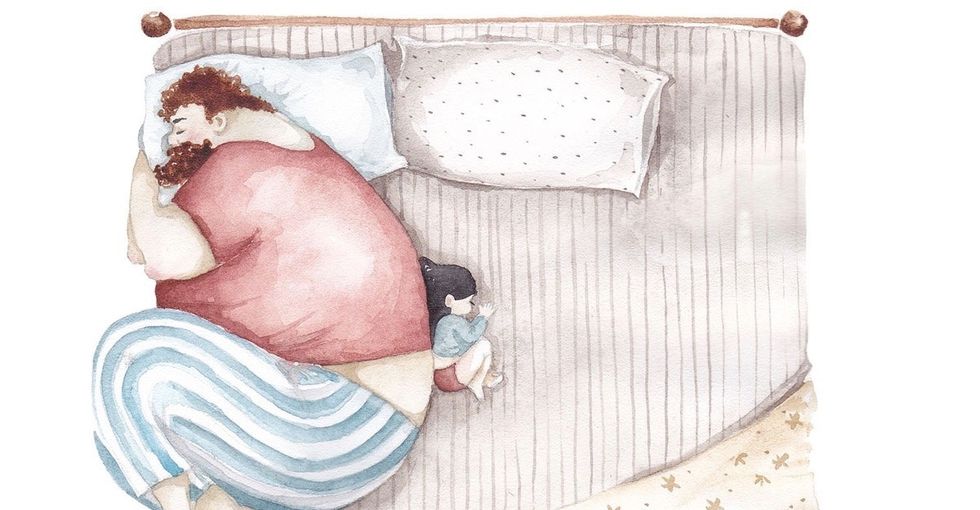
Dad and daughter relationships, as explained by 10 paintings.
Favicon 
www.upworthy.com

Dad and daughter relationships, as explained by 10 paintings.

It's hard to truly describe the amazing bond between dads and their daughters. Being a dad is an amazing job no matter the gender of the tiny humans we're raising. But there's something unique about the bond between fathers and daughters.Most dads know what it's like to struggle with braiding hair, but we also know that bonding time provides immense value to our daughters. In fact, studies have shown that women with actively involved fathers are more confident and more successful in school and business.You know how a picture is worth a thousand words? I'll just let these images sum up the daddy-daughter bond.A 37-year-old Ukrainian artist affectionately known as Soosh, recently created some ridiculously heartwarming illustrations of the bond between a dad and his daughter, and put them on her Instagram feed. Sadly, her father wasn't involved in her life when she was a kid. But she wants to be sure her 9-year-old son doesn't follow in those footsteps."Part of the education for my kiddo who I want to grow up to be a good man is to understand what it's like to be one," Soosh told Upworthy. There are so many different ways that fathers demonstrate their love for their little girls, and Soosh pretty much nails all of them. Get ready to run the full gamut of the feels.1. Dads can do it all. Including hair.2. They also make pretty great game opponents.3. And the Hula-Hoop skills? Legendary.4. Dads know there's always time for a tea party regardless of the mountain of work in front of them.5. And their puppeteer skills totally belong on Broadway.6. Dads help us see the world from different views.7. So much so that we never want them to leave.8. They can make us feel protected, valued, and loved.9. Especially when there are monsters hiding in places they shouldn't.Seeing the daddy-daughter bond as art perfectly shows how beautiful fatherhood can be.This article originally appeared on 04.09.16
Like
Comment
Share
The Lighter Side
The Lighter Side
2 yrs

Understand consent with the help of stick figures and a cup of tea
Favicon 
www.upworthy.com

Understand consent with the help of stick figures and a cup of tea

In this hilarious and enlightening new animated video from Blue Seat Studios, consensual sex is explained in a way that everyone can understand.By replacing sex with a cup of tea, this crudely drawn short offers a clear picture of what "saying yes" looks like.The script for this video came from blogger Rockstar Dinosaur Pirate Princess, previously reported here.You'll never look at a cup of oolong the same way again.This article originally appeared on 05.12.15
Like
Comment
Share
The Lighter Side
The Lighter Side
2 yrs

Gen Zers share 17 of their biggest 'Boomer' complaints that a lot of us secretly agree with
Favicon 
www.upworthy.com

Gen Zers share 17 of their biggest 'Boomer' complaints that a lot of us secretly agree with

Even though there is a considerable age gap between Gen Zers (those aged 12 to 27) and Baby Boomers (60 to 70), the younger generation admits that they share many complaints with the older generation.A recent Reddit post by a user named bangbangskeetskeet23 asked Gen Zers, “What’s the most Boomer complaint you have?” and many of them shared that they don’t like how technology has taken over every aspect of their lives. They also feel that common human decency has gone out the window in many ways.What’s interesting about the Gen Zers’ admissions is they were born in the Internet era and most of them can’t remember a time without smartphones. But even though they are digital-age natives, they can’t help but feel uneasy about how big tech has taken over our lives.One wonders if they’ll be the last generation to share that sentiment.Here are 17 of the most Boomer complaints shared by Gen Z.1. No more QR code menus"I hate QR code menus. Give me the damn plastic-covered menu that hasn’t seen a Clorox wipe in years.""It's just annoying because your phone might die, or you have kids and they might not have phones, or you might have parents and they might not have phones. Or you don't want to go out to eat and be staring at your phones."2. Computerized cars"I hate tech in cars. With a passion. I want a hand break. I want levers and dials and buttons with physical feedback.""When those touch buttons break, it’s so expensive to fix and it’s getting harder to work on cars unless you go to a dealer and they way overcharge."3. They don't make things like they used to"I was just talking to my fiancé about this! Recently, a refrigerator from the 1940s was found abandoned in a Texas field. Someone picked it up and brought it home, plugged it in without fixing anything and it still worked like brand new. Someone stitched the TikTok and said that we would never have a product like that again. Everything now is designed to break, so you have to go spend more money with that specific company."4. Kids need boredom"Young people these days can't seem to sit down, shut up, and enjoy the moment; it's always Go! Go! Go! I blame smartphones and the virtually unrestricted access to the internet. Seriously, chill out, breathe, and just sit. Don't pull out your phone, just sit, relax, and observe; the world ain't goin' nowhere."5. People are too sensitive"Yes, it's great that we're becoming less tolerant of prejudice, but there are a**holes everywhere. You need to be able to build up some resilience for your own sake.""Being a victim is not cool, it makes you look helpless. Being self-reliant is cool."6. "What's your Insta?""Everyone you meet asks for your social media profile. I don’t have any. You wanna talk to me, here’s my number."7. Get off your phone"Why is everyone always on their phones? When I see friend groups all sitting around on their phones instead of talking to each other it's depressing. Having phones banned at schools is actually not a bad idea. Kids are glued to their screens all day and then complain they have bad social skills or no friends, which is just... come on now. And I'm no extrovert myself but at least make an effort.""Went to a bach party recently with a bunch of girls I knew from college that i hadnt seen in a few years. I swear, the whole time, they were either planning content, making content, or posting content. It was bizarre. It felt like we were just presenting the image of having fun rather than actually just having it. Half the time i spent drinking in silence in a circle while everyone stared at their phone in matching pink t shirts telling esch other how many likes the most recent TikTok they posted had received. It was like a black mirror episode."8. iPads are frying your brain"Kids are being so messed up by unrestricted internet access. The iPads are deep frying their brains before they even get a chance to use them. I keep seeing videos and comments from teachers about how poorly students are doing, kids can’t even read, think critically, and are just being pushed through to the next grade even if they fail. I’m so worried for the future when these kids grow up and are let loose on the rest of us."9. Loud background music"Why the hell is background music in restaurants and stores so goddamn loud. Looking at you Chipotle.""There’s a reason for this. The louder it is, the faster people eat and leave. The faster this happens, the more money they make."10. Pick up your phone"How people absolutely refuse to pick up their phones. Believe me, I’m a 99% text me kinda of guy. But there are certain times like when my car is on fire and I need you to pick up your phone and people still refuse to."11. Can I speak with a human?"Why does it take me 30 minutes and press 20 buttons to get a real human on the phone.""Companies consider employees to be a tax. They avoid them at all costs. They'll spend 100x a salary for technology to avoid a human--yet they expect everyone to be able to purchase their products. We're doomed."12. Everything requires an app"I hate that you need an app for everything. Don’t get me wrong, I love apps. I couldn’t get through my day without Spotify, YouTube, my banking apps, etc. but when f**kers like McDonald’s want me to get an app just so I can get menu items at their normal prices, they can f**k right off."13. What happened to grocery baggers?"The people don’t bag our groceries at the grocery store anymore and they will start scanning the next persons groceries before we’re even halfway done getting ours together, suddenly we’re feeling rushed to death and the next persons groceries are lumped in a pile with ours on a small space. pisses me right off."14. The broccoli haircut"I’m sorry but that broccoli haircut is just awful."15. Today's music is terrible"I don't like the current music (from like around 2020 to today)."16. Bring back respect"There’s no more honor or respect in our society anymore. I try to be as nice and positive as I can to people around me and I want to help people and make people's lives better but it just doesn’t feel like you can do that anymore. It’s like if I’m driving and see someone stuck on the side of the road I want to help them but it’s like there’s a 50/50 chance I either get robbed or they freak out thinking I’m going to hurt them or something since it’s almost unheard of that people just help each other."17. More dress codes"School dress codes are necessary and we should call out underage and barely legal kids for dressing in inherently sexual clothing as dressing inappropriately, as well as young people wearing their literal pajamas in public. I’m sorry if I were a male teacher and my students were wearing Daisy Dukes shorts and sports bras by themselves, I would be uncomfortable. It is a child wearing clothing that is extremely revealing even for adults. School dress codes are about teaching kids how to dress in public. As my mom would say: 'Too many kids out here are dressing like ragamuffins.'"
Like
Comment
Share
Classic Rock Lovers
Classic Rock Lovers  
2 yrs

The guitarist Eric Clapton called the most important: “The first that got to me”
Favicon 
faroutmagazine.co.uk

The guitarist Eric Clapton called the most important: “The first that got to me”

Licks impossible to emulate. The post The guitarist Eric Clapton called the most important: “The first that got to me” first appeared on Far Out Magazine.
Like
Comment
Share
Classic Rock Lovers
Classic Rock Lovers  
2 yrs

What is the world’s most popular musical instrument?
Favicon 
faroutmagazine.co.uk

What is the world’s most popular musical instrument?

An obvious choice. The post What is the world’s most popular musical instrument? first appeared on Far Out Magazine.
Like
Comment
Share
Classic Rock Lovers
Classic Rock Lovers  
2 yrs

The song Sammy Hagar called “the greatest I’ve ever done”
Favicon 
faroutmagazine.co.uk

The song Sammy Hagar called “the greatest I’ve ever done”

Keeping things sentimental. The post The song Sammy Hagar called “the greatest I’ve ever done” first appeared on Far Out Magazine.
Like
Comment
Share
Conservative Satire
Conservative Satire
2 yrs Funny Stuff

rumbleRumble
Kamala never goes off script reading the same teleprompter text over & over again. Trump press conference: "She's not doing any news conference. Do you know why? Bc she can't & she doesn't know how. She's not smart enough.
Like
Comment
Share
Let's Get Cooking
Let's Get Cooking
2 yrs

11 Seafood Dishes Chefs Will Never Order
Favicon 
www.mashed.com

11 Seafood Dishes Chefs Will Never Order

Seafood is a popular option at restaurants, but is it always right? We spoke to chefs who explained why they avoid some otherwise popular seafood orders.
Like
Comment
Share
Intel Uncensored
Intel Uncensored
2 yrs

The Madness Continues: Chinese Scientists Create Mutant Ebola Virus
Favicon 
www.sgtreport.com

The Madness Continues: Chinese Scientists Create Mutant Ebola Virus

by Shane Trejo, Big League Politics: Apparently, the lessons of the COVID-19 pandemic haven’t been learned. Dangerous biolab experiments continue – humanity be damned. According to the Daily Mail, Chinese scientists have engineered a virus with parts of Ebola in a lab that killed a group of hamsters. A team of researchers at Hebei Medical University used […]
Like
Comment
Share
Showing 17072 out of 56670
  • 17068
  • 17069
  • 17070
  • 17071
  • 17072
  • 17073
  • 17074
  • 17075
  • 17076
  • 17077
  • 17078
  • 17079
  • 17080
  • 17081
  • 17082
  • 17083
  • 17084
  • 17085
  • 17086
  • 17087

Edit Offer

Add tier


Select an image
Delete your tier
Are you sure you want to delete this tier?

Reviews

In order to sell your content and posts, start by creating a few packages. Monetization

Pay By Wallet

Payment Alert

You are about to purchase the items, do you want to proceed?

Request a Refund