YubNub Social YubNub Social
    Advanced Search
  • Login

  • Night mode
  • © 2026 YubNub Social
    About • Directory • Contact Us • Privacy Policy • Terms of Use • Android • Apple iOS • Get Our App

    Select Language

  • English
Install our *FREE* WEB APP! (PWA)
Night mode
Community
News Feed (Home) Popular Posts Events Blog Market Forum
Media
Headline News VidWatch Game Zone Top PodCasts
Explore
Explore Jobs Offers
© 2026 YubNub Social
  • English
About • Directory • Contact Us • Privacy Policy • Terms of Use • Android • Apple iOS • Get Our App

Discover posts

Posts

Users

Pages

Group

Blog

Market

Events

Games

Forum

Jobs

The Lighter Side
The Lighter Side
2 yrs

99-Yr-Old Grandpa Sold A “Whopping $5” Worth Of His Book… Then the Internet Stepped Up!
Favicon 
www.inspiremore.com

99-Yr-Old Grandpa Sold A “Whopping $5” Worth Of His Book… Then the Internet Stepped Up!

After collecting a lifetime of interesting experiences (and then some), one grandpa finally decided to turn his memories into a book. Leroy Day certainly had no shortage of stories to tell! This 99-year-old man spent his childhood years struggling during the Great Depression, but eventually grew up to become the Deputy Director of NASA’s Space Shuttle program. His memoir is titled Road from Hilldene: Growing Up on a Farm in the Great Depression. Unfortunately, this grandpa’s book wasn’t selling very well. His granddaughter was devastated when the elderly man quipped to her that he’d earned a “whopping $5” from sales. So, Lauren Day decided to take matters into her own hands — or, rather, the internet’s! She started marketing her grandfather’s memoir to her followers on social media. Screengrab from TikTok “This is my 99-year-old grandpa,” she wrote, sharing a photo of him. “Can we make his year?” Lauren explained that, for his age, her grandpa was still extremely independent. With his 100th birthday on the not-so-distant horizon, she really wanted his book to be successful before he reached that important milestone. “He still has perfect vision, lives on his own, can use a computer to email me AND drives,” she said. At the end of her slideshow, she added, “Can we sell out his book before he turns 100?!” Screengrab from TikTok Reading the comments section on Lauren’s social media post is absolutely heartwarming. Everyone wanted to support this grandpa’s book! “Just bought it for my grandma who also grew up on a farm during the Depression,” one user wrote. “I know she’ll love it!” Another added, “I’m a high school librarian. I just purchased this book for my school’s library. Each year, our sophomores do a project after reading memoirs/autobiographies. Can’t wait to do a book talk! As it turns out, Lauren’s post about her grandpa’s book worked wonders. In fact, she shared an update that the hardcover version of the memoir had completely sold out on Amazon! Thankfully, though, she added that the paperback edition was still in stock. If you’re interested in reading her grandpa’s book, you might want to get a copy while you can! You can find the source of this story’s featured image here. The post 99-Yr-Old Grandpa Sold A “Whopping $5” Worth Of His Book… Then the Internet Stepped Up! appeared first on InspireMore.
Like
Comment
Share
Classic Rock Lovers
Classic Rock Lovers  
2 yrs

Favicon 
www.classicrockhistory.com

Complete List Of Steve Miller Band Members

The Steve Miller Band was founded by Steve Miller in 1966. Originating from San Francisco, the band became a mainstay of the San Francisco music scene during the late 1960s before reaching a commercial peak in the mid-1970s. With hit albums such as Fly Like an Eagle and Book of Dreams, they achieved critical and commercial success, producing enduring classics like “The Joker,” “Fly Like an Eagle,” and “Rock’n Me.” Over the years, the Steve Miller Band has released more than 18 studio albums and has undergone numerous personnel changes, although Miller has remained the constant leader and decision-maker. The The post Complete List Of Steve Miller Band Members appeared first on ClassicRockHistory.com.
Like
Comment
Share
Science Explorer
Science Explorer
2 yrs

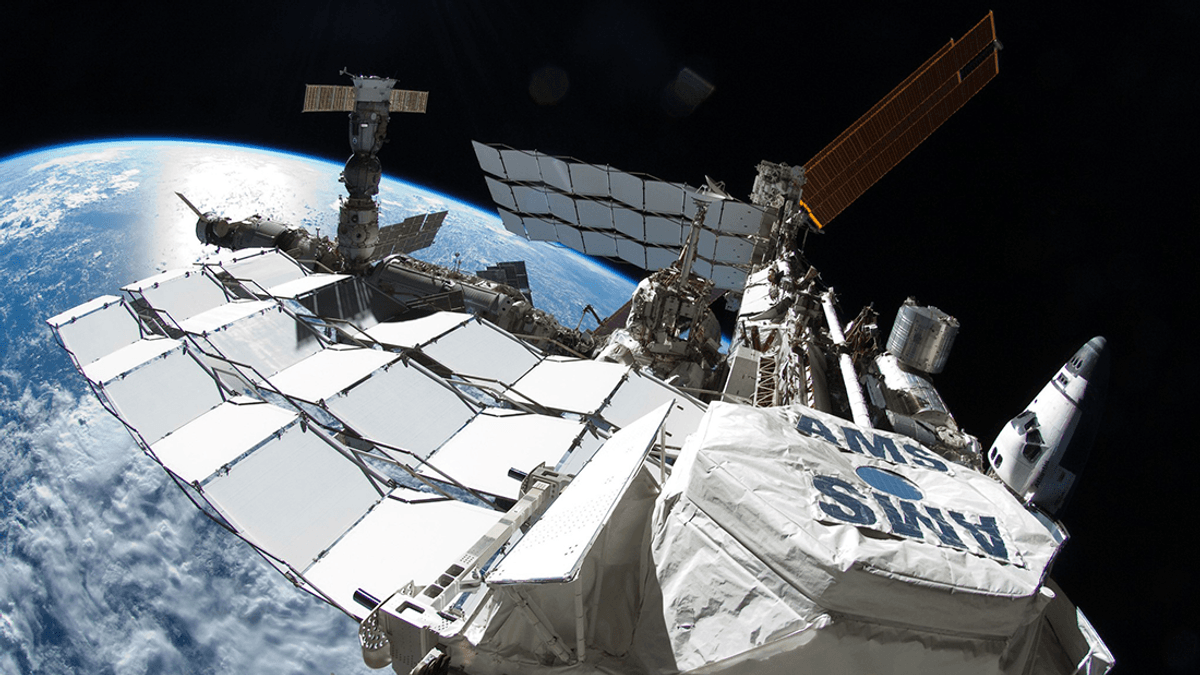
What Is Causing The Antihelium Detected On The International Space Station?
Favicon 
www.iflscience.com

What Is Causing The Antihelium Detected On The International Space Station?

Attached to the International Space Station (ISS) is a state-of-the-art particle detector, tasked with searching for antimatter and dark matter, and performing precise measurements of the composition of cosmic rays.The Alpha Magnetic Spectrometer (AMS-02) has collected over 239,017,100,611 cosmic events in the decade it has been mounted to the ISS. Within this data are some truly strange events that have been tentatively reported in presentations by the collaborators as the experiment continues.The reported detection of 10 relativistic antihelium (He) cosmic-ray events is of particular weirdness.Antimatter is essentially the same as ordinary matter except it has the opposite electric charge. It is made up of so-called antiparticles. Every particle is thought to have an antimatter companion with the opposite charge. For example, an electron has a negative charge but its antiparticle, a positron, has a positive charge. When these two particles meet, they annihilate each other. One of the many puzzles of antimatter is the continued existence of the universe. In short, we can't really tell why there is much more matter than antimatter. Scientists expected both types of particle to be produced during the Big Bang, so why didn't the universe pretty quickly annihilate itself?     We can study antimatter using high-energy collisions in particle colliders, which can produce a small amount of antimatter. But we can also look at cosmic rays – highly energetic particles ejected from stars including our Sun's flares, neutron stars, supernovas, or when matter falls into supermassive black holes.Antihelium-3 and antihelium-4 have now been reportedly detected by AMS-02, containing antiprotons and antinucleons together. While antihelium 3 and 4 have been produced by the Large Hadron Collider and the Relativistic Heavy Ion Collider, we still don't know a lot about either isotope of antihelium, or how they are produced in nature. In a new paper, a team has attempted to explain how the antimatter could have come into existence, prior to being flung across the cosmos all the way to a space station orbiting Earth. These explanations lie at the edges of our understanding of physical processes, and will require more observations and work to back up or discount. The team suggests that the process behind the antihelium-4 likely took place in rapidly expanding "thermalized fireballs" of plasma, subject to relativistic effects."For appropriate initial conditions set by the initial radius, temperature, and antibaryon-to-entropy ratio of the plasma, the evolution of these fireballs is such that their thermal pressure drives the system toward a regime where there is relativistic bulk radial motion of a thin shell of plasma, in which the temperature of plasma falls as the expansion proceeds," the team writes in their paper. "This permits purely [standard model] thermal antinucleosynthesis of elements (similar to BBN) to occur in the expanding, cooling thin shell, while the products obtain relativistic boosts with respect to the rest frame of the fireball. Eventually, for appropriate parameters, the expansion rate shuts off the antinucleosynthesis in a regime where the antinucleosynthetic products have not reached their thermodynamic equilibrium values, which allows the abundances of 4He and antitritium (which later decays to 3He)."Already complicated enough with thin shells of plasma undergoing relativistic effects, the team suggests that it's possible for dark matter to be involved, offering an avenue to investigate."It would be plausible (at least in principle) for the required injection luminosity to be obtained via the collisions of supermassive, composite dark states (possibly a subcomponent of the dark matter)," the team explained, "provided that these otherwise individually cosmologically stable states can become destabilized in the collision in such a way that activates a decay channel that converts a non-negligible fraction of their mass energy to [standard model] antiquarks (and possibly some fraction of positively charged leptons), with this taking place both rapidly and in a localized region of space."Though an interesting avenue to explore, more detections will be needed and more work to be done to identify the source. For now, try to revel in the fact that antihelium nuclei are being flung across the cosmos, and are being detected by a space station humanity built.The research is published in Physical Review D.
Like
Comment
Share
Strange & Paranormal Files
2 yrs

If you were born in Ancient Rome: what would your life be like?
Favicon 
anomalien.com

If you were born in Ancient Rome: what would your life be like?

In the history of mankind there have been many ancient civilizations that in one way or another shaped our current way of life. One of these civilizations was Ancient Rome – the majestic state of antiquity, whose solid foundation has been preserved to this day. But despite all the greatness of the empire, the life of an ordinary citizen in Ancient Rome was difficult. Historians suggest imagining a time traveler who returned to the past somewhere between 27 BC. and 180 AD – the golden age of Ancient Rome. This era began with the rise to power of Emperor Augustus after the assassination of his father, the famous Julius Caesar. This is what a public toilet looked like in ancient Rome. Credit: JSTOR Daily Life was not easy for the Romans With the arrival of the new emperor, a period of rapid development began in Rome. At its peak it became home to a million people. It was truly a golden era of architecture, science, art, entertainment and economic growth. It was a time of peace and prosperity. If you were rich, of course. If you were not part of the 1% elite that controlled 16% of Rome’s wealth, then your life would not be easy. Up to 50% of all Roman children died before the age of 10. Most adult Romans, at best, lived to be 50 years old. Despite the reigning peace, local conflicts still occurred, so the military profession was in demand in Ancient Rome. The Roman armies at that time consisted of volunteers who were looking for a chance for a better life. Soldiers came from the poorest strata of society and spent most of their service on the borders of the empire, where the situation was unstable. After retirement from military service, the Romans could settle on the land where they served. If a soldier was particularly good at wielding a sword or bow, he could be selected to join the special troops that protected the emperor. There was also the opportunity to become a gladiator, who were treated as celebrities in ancient Rome, at least those who survived. Since the overwhelming majority of men were away from home, women gained more independence during that period. Roman women took on important functions as city councilors, lawyers, teachers, and so on. The daily life of a Roman. Credit: Planet Pompeii However, men in the family still had the privilege of deciding matters of property and finances. Most of the poor lived in cheap wooden houses. Many of them were located in urban slums, where crime flourished. In some areas, the streets were patrolled by the so-called urban cohorts (Cohortes Urbanae) of Emperor Augustus. But the poorest areas still remained dangerous. Soldiers, philosophers or senators, for the most part, ate approximately the same. The daily diet of the Romans included bread, cheese, grapes, nuts, olives and meat. Depending on their income, residents of Ancient Rome could buy bread from numerous bakeries and wash down their meals with milk, diluted wine or fruit juice. Wealthy Romans went to the bathhouse after lunch, where they could not only take a steam bath, but also play sports, swim, go for a massage, or simply wash themselves. After water treatments, around 4-5 o’clock in the afternoon, the Romans sat down to dinner. The rest of the Romans, who were born poor, served in the homes of rich families. Such hired workers in Rome were called clients; they were free citizens who surrendered under the patronage of their patron. Sometimes this system even made it possible to sell people. Clients performed a variety of jobs, from hard labor to highly skilled professions such as teachers, accountants and so on. If the patrons were kind, the clients were provided with a good meal and returned home with food for the family. For truly outstanding work, clients could even be made truly free. But more often it happened that desperate poor families sold their own children to patrons. Fight of gladiators Daily life of the ancient Romans There were also great oddities in the daily life of the Romans. For example, to relieve yourself, you had to go to a public toilet, which had more than 10 open-air seats. Instead of toilet paper, the Romans had a stick with a sponge on the end, which they shared when necessary. When it came time to clean up the house, many Romans considered urine the best disinfectant. Moreover, both human and animal urine were used. It was also used to wash clothes and treat infections. This may seem strange, but it is true: The urea in urine breaks down into ammonia (NH3), a powerful cleaning agent found in most household cleaning fluids today. And in cases of epilepsy in Ancient Rome, they could prescribe the blood or liver of a gladiator. If the Romans had even a little money in their wallets, they could go shopping at Trajan’s Market, the world’s first shopping center. For thrills – go to chariot races at the Circus Maximus or to a gladiator fight. There were also a huge number of theaters, and for the poorest – many public executions. The post If you were born in Ancient Rome: what would your life be like? appeared first on Anomalien.com.
Like
Comment
Share
Gamers Realm
Gamers Realm
2 yrs

Grab this Cooler Master AIO cooler with RGB lighting for just $59.99
Favicon 
www.pcgamesn.com

Grab this Cooler Master AIO cooler with RGB lighting for just $59.99

It’s not often you see a decent, big-brand 240mm liquid cooler going for under $90, let alone under $60, but if you get in quick, this AIO cooler deal on Newegg enables you to pick up a Cooler Master MasterLiquid ML240L V2 ARGB for just $59.99. Not only does this CPU cooler have a 240mm radiator and the ability to cool a powerful CPU, but it also has RGB lighting on both the pump unit and the fans, making your PC look great in the process. Usually priced at $99.99, the ML240L V2 ARGB is already featured on our guide to the best AIO cooler as our favorite budget design, but it’s a steal at this price. A pair of Cooler Master’s SickleFlow 120 ARGB fans are included in the package, offering ARGB (addressable RGB) lighting so you can control their color and pattern, and the same goes for the glowing Cooler Master logo outline on the pump unit. Continue reading Grab this Cooler Master AIO cooler with RGB lighting for just $59.99
Like
Comment
Share
Gamers Realm
Gamers Realm
2 yrs

Realistic new Tarkov rival Delta Force Hawk Ops is soaring on Steam
Favicon 
www.pcgamesn.com

Realistic new Tarkov rival Delta Force Hawk Ops is soaring on Steam

Between Arena Breakout Infinite, Escape From Tarkov, Gray Zone Warfare, Hunt Showdown 1896, and Exfil, competition in the extraction FPS world is high right now. Perhaps it’s all pushback against fast-paced hero shooters - after so many years of, lighter, arcade-type action, there’s an appetite now for something more realistic, something harder. But with so many tactical FPS games suddenly emerging, it’s difficult to speculate which ones will successfully break through. Based on its current performance on Steam, Delta Force Hawk Ops is definitely in with a chance. Marking the return of the erstwhile ‘00s classic, its latest alpha is pulling solid numbers and starting to climb the wishlist chart. Continue reading Realistic new Tarkov rival Delta Force Hawk Ops is soaring on Steam MORE FROM PCGAMESN: Best FPS games, Best upcoming PC games, Best multiplayer games
Like
Comment
Share
National Review
National Review
2 yrs

Market Crash Shouldn’t Create Policy Panic
Favicon 
www.nationalreview.com

Market Crash Shouldn’t Create Policy Panic

There is nothing to justify a rate cut.
Like
Comment
Share
National Review
National Review
2 yrs

<em>How the World Ran Out of Everything</em> Paints an Incomplete Picture of Pandemic-Era Supply-Chain Woes
Favicon 
www.nationalreview.com

<em>How the World Ran Out of Everything</em> Paints an Incomplete Picture of Pandemic-Era Supply-Chain Woes

Although Peter Goodman’s new book raises some valid concerns, none of them sufficiently compensate for the book’s shortcomings.
Like
Comment
Share
National Review
National Review
2 yrs

Iran’s New President Is No Liberal
Favicon 
www.nationalreview.com

Iran’s New President Is No Liberal

Masoud Pezeshkian is merely a polished front man for a bloody, theocratic regime incapable of reforming itself.
Like
Comment
Share
National Review
National Review
2 yrs

Kamala Harris Is Bad News for Gig Workers
Favicon 
www.nationalreview.com

Kamala Harris Is Bad News for Gig Workers

Independent contractors anxiously await how a President Harris might hurt worker freedom.
Like
Comment
Share
Showing 17608 out of 56670
  • 17604
  • 17605
  • 17606
  • 17607
  • 17608
  • 17609
  • 17610
  • 17611
  • 17612
  • 17613
  • 17614
  • 17615
  • 17616
  • 17617
  • 17618
  • 17619
  • 17620
  • 17621
  • 17622
  • 17623

Edit Offer

Add tier


Select an image
Delete your tier
Are you sure you want to delete this tier?

Reviews

In order to sell your content and posts, start by creating a few packages. Monetization

Pay By Wallet

Payment Alert

You are about to purchase the items, do you want to proceed?

Request a Refund