YubNub Social YubNub Social
    Advanced Search
  • Login

  • Night mode
  • © 2026 YubNub Social
    About • Directory • Contact Us • Privacy Policy • Terms of Use • Android • Apple iOS • Get Our App

    Select Language

  • English
Install our *FREE* WEB APP! (PWA)
Night mode
Community
News Feed (Home) Popular Posts Events Blog Market Forum
Media
Headline News VidWatch Game Zone Top PodCasts
Explore
Explore Jobs Offers
© 2026 YubNub Social
  • English
About • Directory • Contact Us • Privacy Policy • Terms of Use • Android • Apple iOS • Get Our App

Discover posts

Posts

Users

Pages

Group

Blog

Market

Events

Games

Forum

Jobs

Gamers Realm
Gamers Realm
2 yrs

Call of Duty Bans Thousands of Warzone and Modern Warfare 3 Cheaters
Favicon 
www.dualshockers.com

Call of Duty Bans Thousands of Warzone and Modern Warfare 3 Cheaters

For the last few weeks, the Call of Duty series has been receiving a major backlash for its large number of cheaters. Luckily, an update to the RICOCHET Anti-Cheat system put a stop to all these shenanigans.
Like
Comment
Share
History Traveler
History Traveler
2 yrs

Getting Jewish Children Out of Nazi Territory: Unsung Heroes of the Kindertransport
Favicon 
www.historyisnowmagazine.com

Getting Jewish Children Out of Nazi Territory: Unsung Heroes of the Kindertransport

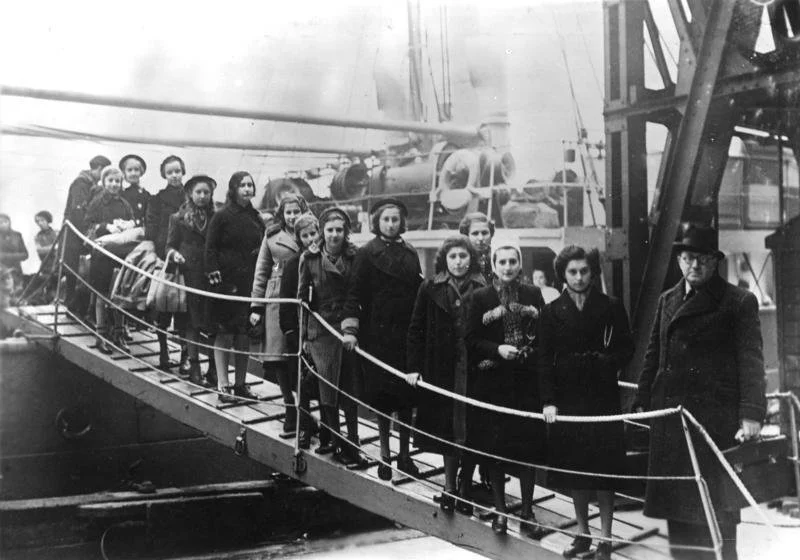
The Kindertransport was the rescue of Jewish children from Nazi-controlled territory from 1938 to 1939. Here, author Mike Levy looks at some of the unsung heroes of this movement.Mike’s book, Get the Children Out! : Unsung Heroes of the Kindertransport, is available here: Amazon US | Amazon UK Jewish children arriving in London in February 1939. Source: Bundesarchiv, Bild 183-S69279 / CC-BY-SA 3.0, available here. When the word ‘Kindertransport’ is heard, one name often comes to the fore: Sir Nicholas Winton. Made famous by British TV’s ‘That’s Life’ programme in the late 1980s and the recent film ‘One Life’ starring Anthony Hopkins. Winton’s name has become synonymous with the rescue of unaccompanied Jewish children from Nazi-controlled Europe in the late 1930s. But Winton did not, could not have, acted alone. The rescue of nearly 10,000 young Jews from Germany, Austria and Czechoslovakia involved hundreds if not thousands of people. I once asked Sir Nicholas, when he was 103 years of age, why his name is so well known and the others forgotten. Ever humble and self-deprecating, he replied, ‘That’s easy to explain, I’ve outlived the others’.So let’s go back a bit here and look again at the history. On December 2, 1938, just 86 years ago, a group of 200 young people descended a ship’s gangplank in the Essex port of Harwich. They came from Germany without their parents, siblings, family, friends; they came alone. These 200 were the vanguard of one of the largest acts of rescue in the Holocaust era. They were Jewish children from orphanages and homes that had been torched, battered or smashed by Nazi thugs on the night of November 9/10, 1938 – so called ‘Kristallnacht’, the Night of Broken Glass, now more accurately dubbed ‘November Pogroms’. The children had witnessed SS and Hitler Youth beating up their parents, wrecking their homes and businesses, arresting men and carting them off to be brutalised in concentration camps. It was after this terrible night that parents in Germany decided to send their children to  safety. The British government had decided to waive visas for fleeing children under the age of 17. ArrivalThe children had no one in Britain to look after them; homes and support had to be found for them. Their arrival was entirely in the hands of volunteers – the British government took no part in their rescue from persecution. Enter an army of British helpers among whom, very prominently, were the Rotarians.The children who arrived on that sunny December day had come on a train that left Germany the day before, travelled across the border into the Netherlands, on to the Hook of Holland and the night ferry to Harwich. This was the preferred route of most of the 10,000 children who came to Britain on the ‘Kindertransport’. The last such transport arrived in Harwich on September 2, 1939, one day before war was declared, all borders were closed, the fate sealed for the Jewish children, and their families, left at the mercy of the murderous Nazi state.The nerve centre of this massive rescue operation was at Bloomsbury House in central London. Here committees were hurriedly set up by Jewish, Quaker, Church of England, Methodist and many other relief bodies. The building (now the HQ of Arts Council England) was packed with desks, telephones, filing cabinets and queues of anxious relatives or refugees already in Britain, desperate for help, news, financial support and more. The central committees in London totally relied on the goodwill of voluntary bodies throughout the length and breadth of the UK. This was after all, years before the Welfare State came into being. Voluntarism was key to the success of the Kindertransport rescue – the largest of its kind in the whole of the Holocaust era. Many unsung heroesThe landscape of care in Britain involved a wide spectrum of ‘unsung heroes’. Winton and his team rescued 669 Jewish children from Nazi-occupied Prague in the spring of 1939.But who helped rescue the other 9,300 young refugees who fled persecution from Germany and Austria? Winton had no dealing whatsoever with the children from the German Reich.The answer is a whole raft of forgotten figures. There were German Jews who played a key role in organising the emigration of the children from Berlin, Vienna, Frankfurt and Cologne. Wilfred Israel, British by birth but German by nationality was in 1938, de facto head of the benighted Jewish community under Hitler’s cosh. After the November Pogroms, Israel and his team worked round the clock to secure the paperwork and finances to help get the children out. He was aided by a group of formidable German Jewish women including Hannah Karminsky who often acted as a chaperone for the smallest children travelling alone on the fateful trains to safety. Despite pleas for her to stay in Britain at her journey’s end, she insisted on returning to Nazi Germany to bring out more children. After war broke out her fate was sealed and Karminsky was eventually murdered in Auschwitz. CareOnce in Britain, who cared for the 10,000 children? Up and down the country, local refugee committees were hurriedly set up to seek out foster families, raise money or secure places in hurriedly created hostels. My ongoing work on the UK Holocaust Map (created by the Association for Jewish Refugees) shows at least 50 such refugee hostels from Glasgow to Cornwall. Many more are being uncovered by research.Foster families were urged in national and regional newspapers, in the pulpits of local churches and synagogues, in local clubs and societies such as the Rotarians, and by word of mouth, to offer a bed or two to a needy German, Czech or Polish-speaking Kindertransport child. Thousands came forward. Some were genuinely touched by the plight of the Jewish children and the fracture of their family life under the Nazis. Aubrey and Winifred Chadwick, both young teachers in Cambridge, offered a bed to five-year-old Suzi Spitzer who had been put on a Winton train in Prague. She was never to see her natural parents again. To Suzi, the Chadwicks, including foster sister Ann, became her new family.Some foster families offered their homes with less creditable motives. Some wanted to treat older children as unpaid servants; some wanted to show off to their neighbours that they were doing a good turn – others neglected or even abused the children. Yet it seems that the majority of the Kindertransport children were well treated and taken into the open arms of strangers.Among the host families was Alfred Roberts, father of future prime minister Margaret Thatcher. He was urged to take in a Jewish German girl by dint of his leading role in the local Rotarians. Similarly, the parents of David and Richard Attenborough warmly welcomed the sisters into their home in Leicester. They too became lifelong members of the family. Among other well-known names was the composer Ralph Vaughan Williams who chaired his local Jewish Refugee Committee in Dorking, Surrey, and aided dozens of Jewish children to find homes in the area.These famous names are the exception. As I say in my book, most of the people who helped the children were ordinary Britons who neither sought nor achieved fame. In my small way, my book helps, I hope, to sing the praises of some of these forgotten heroes.  Mike Levy is the author of the book Get the Children Out! : Unsung Heroes of the Kindertransport published by Lemon Soul and available as a book, audiobook, or e-book on Amazon US | Amazon UK or via lemonsoul.com.Mike is also lead researcher for the UK Holocaust Map https://ajr.humap.site/mapHe is also currently researching British families who took in Kindertransport refugees. If your family, or someone you know, did host a Jewish refugee from 1938, please contact Mike on kindertransport4@gmail.com
Like
Comment
Share
NEWSMAX Feed
NEWSMAX Feed
2 yrs

Trump Gets 'Full Arena Audience' for Sept. 4 Debate With Harris
Favicon 
www.newsmax.com

Trump Gets 'Full Arena Audience' for Sept. 4 Debate With Harris

Republican presidential nominee Donald Trump is going to debate Democrat nominee Kamala Harris, but this time it will be "with a full arena audience," allowing American voters to weigh in on the two sides of the election coin.
Like
Comment
Share
NEWSMAX Feed
NEWSMAX Feed
2 yrs

Iran: Short-Range Projectile Killed Hamas' Haniyeh
Favicon 
www.newsmax.com

Iran: Short-Range Projectile Killed Hamas' Haniyeh

Iran: Short-Range Projectile Killed Hamas' Haniyeh
Like
Comment
Share
Let's Get Cooking
Let's Get Cooking
2 yrs

Crock Pot Beef Ragu
Favicon 
www.thecountrycook.net

Crock Pot Beef Ragu

Crock Pot Beef Ragu is a deliciously cozy sauce that simmers all day featuring tender beef steak and a rich tomato sauce with herbs and spices! A CROCK POT VERSION OF BEEF PASTA SAUCE Turn your ordinary pasta night into a dinner to remember with this Crock Pot Beef Ragu sauce recipe. It’s a favorite of ours and after you make it, you’ll see why. The house smells incredible while it’s simmering away for hours. Serve it with your favorite pasta, and the beef sauce really shines thru! Now I know some of y’all are gonna see the list of ingredients and want to skip this recipe or just find all kinds of substitutions. This is not the recipe for that. I have a few crazy easy sauce recipes on this site if that is what you’re looking for but that is not this sauce. This sauce (or gravy as some might call it) is made for Sundays and it is not meant to be rushed. Do not skimp here and don’t try to cook on high. And definitely don’t start substituting or leave out ingredients either. This one is worth it – I promise! FREQUENTLY ASKED QUESTIONS:  Do this recipe scale easy to feed a crowd? It certainly does! You can easily double or even triple this recipe if needing to make more servings. I would just be sure to use a large enough Slow Cooker if you plan on making tons of sauce. Can I make this sauce on the stovetop instead? Sure. I’d complete the steps up until you were to cook in the crock pot, and instead of putting it in the crockpot, toss it all in a dutch oven over low heat and cover. Cook the sauce for at least 2 hours or until you notice that the beef is fork tender.  Can I make this in the Instant Pot instead? Same thing as above. When ready, add it all to the Instant Pot Pressure Cooker and cook for 30-40 minutes on high. Be careful when releasing pressure as it could burn you. Do I have to use the red wine? While it’s a true standard ingredient in a traditional Ragu sauce, I’ve made it optional in this recipe knowing that it would turn some of my readers away from the recipe. However, if you have the opportunity to include it, I highly recommend it. If you must swap it out, you can just use more beef stock in place of the red wine. I don’t like red wine if I’m honest but you don’t taste it as a separate ingredient. Its just adds depth of flavor. Can I cook this on high to speed it up? Nope! Trust me, low and slow is the way to go. I wouldn’t recommend cooking on high because you just won’t get the desired flavor and the beef won’t be nearly as tender if cooked on high. Why are the bay leaves added? Bay leaves are commonly used in red sauce recipes. When added to Ragu sauce that’s cook low and slow, these leaves add a subtle, earthy depth to the sauce all while adding a super subtle aroma. What to serve with Ragu Sauce? Serve up whatever sides you typically enjoy with a nice red sauce and pasta dish. We like a nice big green salad, some Garlic Bread, Cheesy Garlic Bread, delicious Breadsticks or even Cheese Stuffed Breadsticks, or Garlic Knots. What do I do with leftover Ragu sauce? Once your sauce cools down, you can store it in an airtight container and keep it in the fridge for up to 5 days. Can you freeze Ragu sauce? YES! In fact, this is a great idea. You can freeze extra sauce you make, or leftover sauce to have on hand for later in a freezer safe container or freezer safe bag for up to 2 months. I want to share that I’d recommend to save the pasts separately from the sauce. Make fresh pasta when thawing and reheating the sauce. INGREDIENTS NEEDED: (SEE RECIPE CARD BELOW FOR THE FULL RECIPE) olive oil  unsalted butter yellow onion, carrots, celery stalks – this combo of veggies is also called a mire poix. To save time, you can purchase this already chopped. Some stores sell it already cut up for you. garlic cloves– fresh, not jarred. beef chuck steak – you can also use beef short ribs. This recipe is not meant for ground beef. That would not be a traditional beef ragu. If you want a pasta sauce with ground beef, check out my Beef Spaghetti Sauce recipe. crushed tomatoes – if you can find canned San Marzano tomatoes, go with those and crush them up with your hands or a potato masher. Use all the juice too. beef stock – you can use low or no sodium if you prefer. red wine – this is optional. If you rather not use this ingredient, check the FAQ section for what to use instead. tomato paste – I like the kind in the squeeze tube. honey– this DOES not add sweetness to the dish. Don’t let this stop you from making this sauce, I only added it to help cut or offset the acidity from the tomatoes. It’s not going to make this a sweet tomato sauce. chopped parsley – curly or flat leaf parsley both work in this recipe. better than bouillon beef base– I really enjoy using this! I think it works amazingly well in this recipe and it really adds a depth of flavor. But, if you need to swap it out, try using 2 bouillon cubes instead. dried oregano dried thyme red pepper flakes – I don’t find this makes it spicy at all but you can leave it out if you prefer. bay leaves – don’t skip this, it really adds such depth of flavor. HOW TO MAKE CROCK POT BEEF RAGU In a large cast iron skillet add the olive oil and butter over medium heat. Once the butter is melted and the oil is hot (it should start to bubble a bit), add in the onion, carrots, celery, garlic, black pepper, and salt. Stir for about 3 minutes or until you start to see the onions turn translucent. Transfer everything to a 5 quart crock pot. Next, add the chuck steak to the cast iron skillet. Sear each side of the steak on medium to high heat for 1-2 minutes on each side so the steak has a deep golden brown color. You are not cooking it through, but getting a good brown color on the outside. If necessary, you may need to add another Tablespoon of oil to the skillet. Transfer the browned steak to the crock pot with the vegetables. To the crock pot add crushed tomatoes, beef stock, red wine, tomato paste, honey, parsley, better than bouillon, oregano, thyme, red pepper flakes, and bay leaves. Give it all a good stir. Then cover and cook on low for 6 to 8 hours or until the beef is tender. Add ⅛ cup of water at a time if you feel the sauce is getting too thick and needs to be thinned out a bit. When the sauce is ready, remove the bay leaves and discard. Next, remove the steak from the crock pot to a cutting board. Shred the steak with 2 forks. The steak should be so tender that it easily separates. Transfer the shredded steak back to the crock pot and cover the crock pot while you make the pasta. Cook the pasta according to the directions. After draining the pasta, transfer it back into the pot it was boiled in. Add some of the ragu to coat the pasta. Serve the pasta in bowls or on plates and top with more sauce. CRAVING MORE RECIPES?  Crock Pot Lasagna Crock Pot Homemade Meatballs and Marinara Crock Pot White Lasagna Crock Pot Chicken Alfredo for Two Crock Pot Stroganoff for Two Crock Pot Mac and Cheese Crock Pot Chili Print Crock Pot Beef Ragu A rich and tasty tomato sauce with tender beef and veggies that simmered in the Crock Pot all day. Course Dinner, Main CourseCuisine American Prep Time 10 minutes minutesCook Time 6 hours hours 5 minutes minutesTotal Time 6 hours hours 15 minutes minutes Servings 8 servings Calories 409kcal Author Brandie @ The Country Cook Ingredients2 Tablespoons olive oil2 Tablespoons unsalted butter1 cup finely diced yellow onion1 cup finely diced carrots (about 2 carrots)2 finely diced celery stalks (about ½ cup or so)3 garlic cloves, minced½ teaspoon black pepper⅛ teaspoon coarse kosher salt1.5 pounds beef chuck steak, cut into 1-inch cubes28 ounce can crushed tomatoes2 cups beef stock½ cup red wine (optional, substitute with beef broth)3 Tablespoons tomato paste1 Tablespoon honey1 Tablespoon chopped parsley (curly or flat leaf)2 teaspoons better than bouillon beef base1 teaspoon dried oregano1 teaspoon dried thyme¼ teaspoon red pepper flakes2 bay leaves⅛ cup water (adding more as necessary)8.8 ounces package papardelle pasta (or your favorite pasta, for serving) InstructionsIn a large cast iron skillet add 2 Tablespoons olive oil and 2 Tablespoons unsalted butter over medium heat. Once the butter is melted and the oil is hot (it should start to bubble a bit), add in 1 cup finely diced yellow onion, 1 cup finely diced carrots, 2 finely diced celery stalks, 3 garlic cloves, minced, ½ teaspoon black pepper and ⅛ teaspoon coarse kosher salt. Stir for about 3 minutes or until you start to see the onions turn translucent.Transfer everything to a 5 quart crock pot. Next, add 1.5 pounds beef chuck steak, cut into 1-inch cubes to the cast iron skillet. Sear each side of the steak on medium to high heat for 1-2 minutes on each side so the steak has a deep golden brown color. You are not cooking it through, but getting a good brown color on the outside. If necessary, you may need to add another Tablespoon of oil to the skillet. Transfer the browned steak to the crock pot with the vegetables. To the crock pot add 28 ounce can crushed tomatoes, 2 cups beef stock, ½ cup red wine, 3 Tablespoons tomato paste, 1 Tablespoon honey, 1 Tablespoon chopped parsley, 2 teaspoons better than bouillon beef base, 1 teaspoon dried oregano, 1 teaspoon dried thyme, ¼ teaspoon red pepper flakes and 2 bay leaves. Give it all a good stir.Then cover and cook on low for 6 to 8 hours or until the beef is tender. Add 1/8 cup water at a time if you feel the sauce is getting too thick and needs to be thinned out a bit. Adding more if needed.When the sauce is ready, remove the bay leaves and discard.Next, remove the steak from the crock pot to a cutting board. Shred the steak with 2 forks. The steak should be so tender that it easily separates. Transfer the shredded steak back to the crock pot and cover the crock pot while you make the pasta. Cook 8.8 ounces package papardelle pasta according to the directions.After draining the pasta, transfer it back into the pot it was boiled in. Add some of the ragu to coat the pasta.Serve the pasta in bowls or on plates and top with more sauce. Notes Please refer to my FAQ’s (Frequently Asked Questions) and ingredient list above for other substitutions or for the answers to the most common questions. NutritionCalories: 409kcal | Carbohydrates: 39g | Protein: 24g | Fat: 17g | Sodium: 540mg | Fiber: 4g | Sugar: 10g
Like
Comment
Share
Science Explorer
Science Explorer
2 yrs

Nano-Enhanced Sodium Carbonate Breaks Barriers in Carbon Capture
Favicon 
scitechdaily.com

Nano-Enhanced Sodium Carbonate Breaks Barriers in Carbon Capture

Scientists have developed a carbon nanocomposite using sodium carbonate that significantly improves carbon dioxide from industrial emissions. Industrial emissions are one of the main sources...
Like
Comment
Share
YubNub News
YubNub News
2 yrs

LGBT guise and Olympic-sized lies
Favicon 
yubnub.news

LGBT guise and Olympic-sized lies

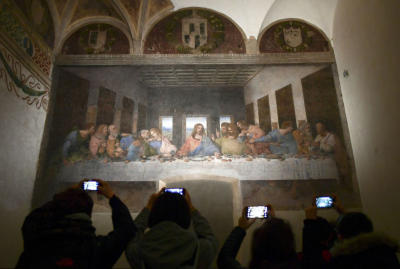
By Ryan Bomberger, Exclusive Columnist Saturday, August 03, 2024Visitors with their mobile phone take photos of "The Last Supper" (Il Cenacolo or L'Ultima Cena), Italian artist Leonardo da Vinci's late…
Like
Comment
Share
YubNub News
YubNub News
2 yrs

Are we on path to ultimately lose the American experiment?
Favicon 
yubnub.news

Are we on path to ultimately lose the American experiment?

By Jerry Newcombe, CP Op-Ed Contributor Saturday, August 03, 2024iStock/Caiaimage/Chris RyanGeorge Orwell wrote in his classic novel, 1984: “Who controls the past, controls the future: who controls…
Like
Comment
Share
YubNub News
YubNub News
2 yrs

Imagine having only politics
Favicon 
yubnub.news

Imagine having only politics

By Dan Delzell, Christian Post Contributor Saturday, August 03, 2024  | Samuel Corum/Getty ImagesI suspect it is difficult for those of us who know Christ to truly fathom how depressing it would…
Like
Comment
Share
YubNub News
YubNub News
2 yrs

Faith and Firearms: A Biblical Perspective on Gun Rights
Favicon 
yubnub.news

Faith and Firearms: A Biblical Perspective on Gun Rights

Podcast: Play in new window | Download ()Subscribe: Android | RSS | MoreIn this thought-provoking episode of “2A for Today,” host Dr. Joe Wolverton sits down with Erich Pratt of the Gun Owners of…
Like
Comment
Share
Showing 17925 out of 56670
  • 17921
  • 17922
  • 17923
  • 17924
  • 17925
  • 17926
  • 17927
  • 17928
  • 17929
  • 17930
  • 17931
  • 17932
  • 17933
  • 17934
  • 17935
  • 17936
  • 17937
  • 17938
  • 17939
  • 17940

Edit Offer

Add tier


Select an image
Delete your tier
Are you sure you want to delete this tier?

Reviews

In order to sell your content and posts, start by creating a few packages. Monetization

Pay By Wallet

Payment Alert

You are about to purchase the items, do you want to proceed?

Request a Refund