YubNub Social YubNub Social
    Advanced Search
  • Login

  • Night mode
  • © 2026 YubNub Social
    About • Directory • Contact Us • Privacy Policy • Terms of Use • Android • Apple iOS • Get Our App

    Select Language

  • English
Install our *FREE* WEB APP! (PWA)
Night mode
Community
News Feed (Home) Popular Posts Events Blog Market Forum
Media
Headline News VidWatch Game Zone Top PodCasts
Explore
Explore Jobs Offers
© 2026 YubNub Social
  • English
About • Directory • Contact Us • Privacy Policy • Terms of Use • Android • Apple iOS • Get Our App

Discover posts

Posts

Users

Pages

Group

Blog

Market

Events

Games

Forum

Jobs

SciFi and Fantasy
SciFi and Fantasy  
2 yrs

Babylon 5 Rewatch: “Legacies”
Favicon 
reactormag.com

Babylon 5 Rewatch: “Legacies”

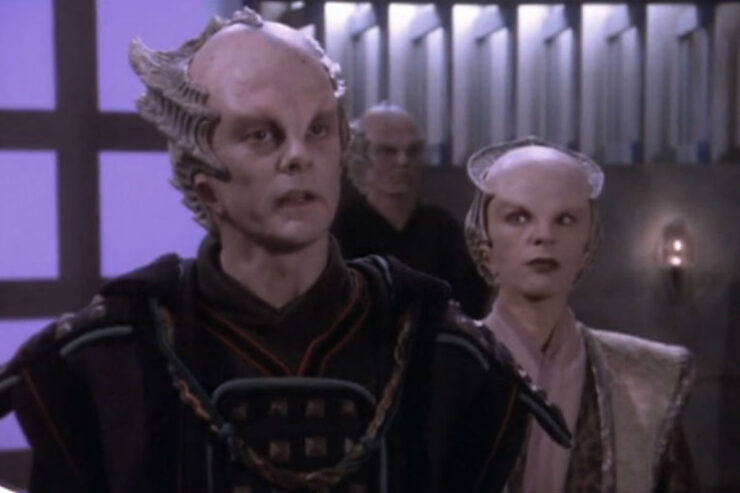
Movies & TV Babylon 5 Rewatch Babylon 5 Rewatch: “Legacies” A Minbari ceremony is interrupted, and a young telepath considers her options… By Keith R.A. DeCandido | Published on July 29, 2024 Credit: Warner Bros. Television Comment 5 Share New Share Credit: Warner Bros. Television “Legacies”Written by D.C. FontanaDirected by Bruce Seth GreenSeason 1, Episode 17Production episode 115Original air date: July 20, 1994 It was the dawn of the third age… Shai Alyt Bramner, one of the great warriors of the Minbari people, has died. Bramner’s executive officer, Alyt Neroon, is bringing his corpse back home to Minbar, stopping at every port of call along the way and parading his corpse for all to see. They arrive through the jump gate with gun ports open, which makes Sinclair understandably nervous, despite the captain’s assurances that they come in peace. Delenn shows up in CnC to reassure Sinclair that it’s just a ceremonial thing—the gun ports are open to symbolize that a great warrior is on board. They won’t fire. A girl named Alison Beldon picks someone’s pocket in the Zocalo, then collapses. Winters and Ivanova are both nearby, and the former senses that she’s had a mindburst. Beldon is brought to medlab, where Winters explains that the kid’s a telepath, and her psi abilities must have just kicked in. She collapsed because she was overwhelmed by all the thoughts she could suddenly hear. Winters wants to contact the Psi Corps right away and recruit her, but Ivanova refuses, pointing out that she is under arrest for the pocket picking and therefore is under the station’s jurisdiction. Franklin crankily points out that she’s his patient right now and they can both leave medlab, please and thank you. Credit: Warner Bros. Television Delenn, Sinclair, Garibaldi and an honor guard meet Neroon and Bramner’s corpse when they dock. Delenn explains that this type of parading around is unusual, but was insisted upon by his clan, the Star Riders. For his part, Sinclair is a bit apprehensive, since Bramner was the leader of Minbari forces on the Battle of the Line. Neroon insists that the security detail guarding Bramner’s corpse be entirely Minbari. Sinclair acquiesces, but obviously neither he nor Garibaldi are thrilled with the lack of trust there. Beldon wakes up and is again overwhelmed by all the intrusive thoughts, though Winters is able to help her mute them. Beldon is an orphan, who’s been on her own in downbelow for over a year. Winters again insists that she should go with the Psi Corps, and Ivanova again insists that she’s still the station’s responsibility. The ceremony to gaze upon Bramner’s corpse is rather ruined when Neroon opens the coffin to find it empty. Neroon is livid; Sinclair isn’t all that thrilled either, especially when Neroon starts making threats of going to war over this. Delenn gently reminds Neroon that he doesn’t speak for the entire Minbari government and that the Star Riders clan doesn’t set Minbari Federation policy. Ivanova goes to Sinclair and says she wants to find an alternative to Psi Corps for Beldon. Sinclair agrees to back her play. Sinclair speaks to Delenn, who confides in Sinclair that Bramner was originally of the Religious Caste, and only switched to the Warrior Caste when the Earth-Minbari War broke out, and he felt his skills as a tactician were needed. Delenn also says that there are many members of the Warrior Caste who were never particularly thrilled with the surrender order. Garibaldi’s investigation takes him to the alien sector, specifically the Pak’ma’ra, who are carrion eaters, who might be motivated to steal a corpse, ’cause them’s good eatin’. A piece of Bramner’s robe is found near a Pak’ma’ra cabin, so Garibaldi orders all the Pak’ma’ras’ stomachs pumped. Franklin later reports, however, that there’s no Minbari DNA is any of the Pak’ma’ra’s bellies. Credit: Warner Bros. Television Beldon meets with Na’Toth, who is willing to grant Beldon asylum on the Narn homeworld in exchange for regular genetic samples. However, the telepathic impressions Beldon gets from Na’Toth are not pleasant, and she’s not sure she can handle being on a world with so many Narn—reinforced by Ivanova pointing out what a crappy place to live the Narn homeworld is thanks to the Centauri occupying it for so long. Neroon is not at all thrilled with Garibaldi’s investigation and starts making threats again. Then he breaks into Sinclair’s quarters to search them, having assumed that they wouldn’t be searched. He’s rather embarrassed when (a) Sinclair walks in on him, and (b) Delenn and Garibaldi inform him that Sinclair’s place was the first place Garibaldi searched, supervised by Delenn, so fuck you. Neroon has the good grace to be abashed at that. Beldon talks to Delenn, since Minbari treat their telepaths well. While they talk, Beldon gets a flash of Delenn’s thoughts, and then asks to be excused. She and Ivanova go to Sinclair, where Beldon says that she saw in Delenn’s thoughts that she knows what happened to Bramner’s corpse. Sinclair and Garibaldi confront Delenn, who not only stole the corpse, but had it cremated. It turns out that that was Bramner’s true wish, not to be paraded about like a carnival show. But Delenn knew she wouldn’t convince the Star Rider clan of that, so she thought she’d try to couch it as a religious miracle. She says she’ll talk to Neroon alone, which she does—and also uses her status as the head of the Grey Council, which cows Neroon into doing whatever she asks, on penalty of the Star Riders being censured and destroyed. She also orders him to apologize to Sinclair for being a dick. Neroon dutifully apologizes. Beldon decides to go to Minbar, and she thanks both Ivanova and Winters. The latter two then apologize to each other and agree to a coffee date. Before Beldon leaves, she tells Sinclair that she saw something else in Delenn’s mind: the word chrysalis. Nothing’s the same anymore. Sinclair flashes back to the Battle of the Line, reusing the footage from “And the Sky Full of Stars.” Ivanova is God. Ivanova does everything humanly possible to keep Beldon the hell away from Psi Corps. The household god of frustration. So apparently Garibaldi can compel every representative of a species on the station to an invasive medical procedure based on a flimsy bit of suspicion. That’s, um, horrible. If you value your lives, be somewhere else. In Neroon we get our first significant look at a member of the Warrior Caste, and their love of bombast, cloaked in a veneer of honor. We also see the conflict between the Warrior and Religious Castes. Having said that, Neroon apparently is fully aware of Delenn’s “secret identity” as the head of the Grey Council and keeps it secret from the humans. Though it take a thousand years, we will be free. The Narn still want telepaths, as Na’Toth tries to recruit Beldon in a manner significantly less skeevy than the way G’Kar tried to recruit Alexander in “The Gathering.” Credit: Warner Bros. Television The Corps is mother, the Corps is father. Standard operating procedure when a human telepath blossoms, as it were, is to do the Psi Corps recruitment pitch. Winters is, at least, open to letting Beldon pursue other options, probably at least in part due to the warnings she got from Ironheart in “Mind War” (which Ivanova throws in her face at one point). No sex, please, we’re EarthForce. Ivanova softens her stance on Winters over the course of the episode, mostly because Winters doesn’t fight her tooth and claw over Beldon’s fate, and they agree to have coffee. Looking ahead. Neroon says that Sinclair talks like a Minbari; the “War Without End” two-parter will make it clear that it’s more like Minbari talk like him… Beldon’s sensing of the word chrysalis will pay off in the season finale, appropriately titled “Chrysalis.” Welcome aboard. John Vickery makes his first of five appearances as Neroon; he’ll return in “All Alone in the Night.” Grace Una plays Beldon. Trivial matters. While this is Beldon’s only on-screen appearance, the character does return in the short story “True Seeker” by Fiona Avery in issue #23 of The Official Babylon 5 Magazine in 2000. Neroon is one of two recurring roles for John Vickery, who will also play the human Mr. Welles in one episode each of B5 and Crusade. The echoes of all of our conversations. “There’s nothing more annoying than Mr. Garibaldi when he’s right.” —Ivanova, speaking truth. Credit: Warner Bros. Television The name of the place is Babylon 5. “Perhaps there was some small wisdom in letting your species survive.” Okay, I mentioned this above, but it bears mentioning again, because it really bugged the crap out of me when rewatching this episode: Based solely on a piece of cloth found in a corridor, Garibaldi is able to compel every single member of a species on the station to have their stomachs pumped—which is an invasive medical procedure, and one that has a profound impact on its victims, as they now have lost all the value from the food they’ve recently eaten. That is, to say the least, appalling, especially since the Pak’ma’ra are all compelled to do this due entirely to what species they happen to belong to. That is, bluntly, revolting. I’m uncomfortable enough every time they refer to the “alien sector,” which always feels like a ghetto. Now we have this, which I can’t imagine being something that the humans on the station would all agree to. (Also, how many Pak’ma’ra are on the station? Are they all accounted for? Wouldn’t it take a while to do this?) Anyhow, this is a perfectly cromulent B5 episode. I mostly come away from it disappointed that it didn’t do more with the story. The big thing is Beldon. This is an orphan who’s reduced to thievery to survive. The episode never really focuses on that part of it, the class differences, and the fact that even something as awful as Psi Corps is a huge-ass improvement on living alone in downbelow. On top of that, the costuming and makeup department did a terrible job of showing us a person living on the raggedy edge of life, as Beldon is way too kempt and together for someone in her position. I like that Ivanova fights for her to have a choice, but the brutal truth is that Ivanova wouldn’t give two shits about her if she wasn’t a telepath. On top of that, after Ivanova makes a fuss over keeping her out of Psi Corps’ hands because she’s a criminal, that’s never followed up on. Is she found guilty? Does she see the ombuds? What happened there? The main plot is also fine, and is mostly fun for giving us Neroon. John Vickery’s magnificent voice makes every role he plays automatically one of gravitas. (See also his Klingon lawyer Orak in Enterprise’s “Judgment” and his Cardassian soldier Rusot in DS9’s series–ending storyline.) The tension between him and Sinclair and between him and Delenn is sparkling—though the latter is completely muted once Delenn goes all Grey Council on him. The best thing about the main plot, truly, is to remind us that, for all that Delenn is sweet and pleasant and friendly, she’s also a master manipulator who has an agenda. Though her ability to shut Neroon down takes the wind out of the sails of the plot, too, as it’s a disappointingly pat solution to the problem that makes you wonder why they went to all that trouble in the first place… Next week: “A Voice in the Wilderness, Part I.”[end-mark] The post <i>Babylon 5</i> Rewatch: “Legacies” appeared first on Reactor.
Like
Comment
Share
SciFi and Fantasy
SciFi and Fantasy  
2 yrs

What Is Going On With the Tone of This Star Trek: Section 31 Trailer?
Favicon 
reactormag.com

What Is Going On With the Tone of This Star Trek: Section 31 Trailer?

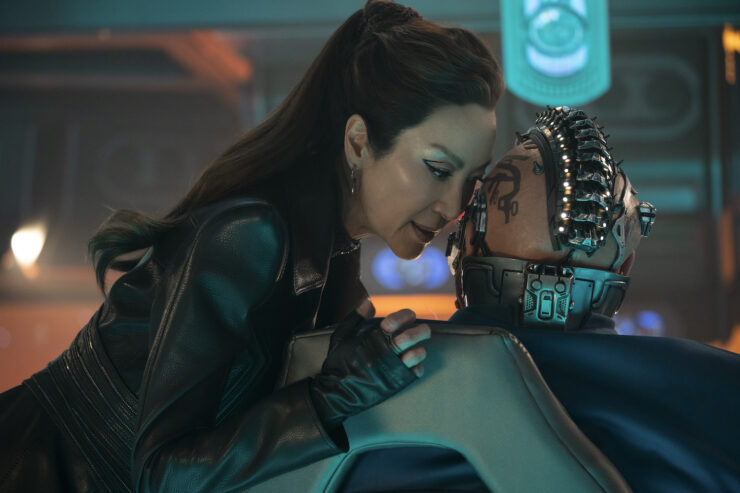
News Star Trek: Section 31 What Is Going On With the Tone of This Star Trek: Section 31 Trailer? Does somebody really need to keep it lively? Are we sure? By Molly Templeton | Published on July 29, 2024 Photo Credit: Jan Thijs/Paramount+ Comment 0 Share New Share Photo Credit: Jan Thijs/Paramount+ We finally have a first real look at Star Trek: Section 31, the TV movie starring Michelle Yeoh as former emperor Philippa Georgiou, and it’s … well, it’s a little baffling. Section 31 are the secret black ops of Starfleet. Kacey Rohl has a line in this teaser about how they have to make sure no murders occur. The opening is a heavy, bloody flashback to Georgiou’s youth (where she is played by Miku Martineau). And yet the soundtrack is an out-of-place Beyoncé track and the overall tone is … a bit wacky? Wacky secret space cops. Is Star Trek trying to go Killjoys? (I will not hear a single bad word about Killjoys, for the record.) Are we doing funny murders? Funny sexy? The yellow-screen warning at the beginning of the trailer mentions “Deltan fraternization,” which is a choice. (Deltans are extremely sex-oriented.) There is still very little detail as to the plot of the film; Paramount says only, “In the movie, slated to premiere in early 2025, Yeoh reprises her fan-favorite role as Emperor Philippa Georgiou—a character she played in Star Trek: Discovery’s first season—who joins a secret division of Starfleet. Tasked with protecting the United Federation of Planets, she also must face the sins of her past.” One hopes that the young Georgiou bits are only a flashback, and that this is not secretly an origin story. One also hopes the movie does well by its supporting cast, which includes the incredible Rohl (Hannibal, The Magicians); Omari Hardwick (Power); Sam Richardson (Ted Lasso, Detroiters, I Think You Should Leave with Tim Robinson); Robert Kazinsky (Pacific Rim); Sven Ruygrok (One Piece); Humberly Gonález (Ginny & Georgia); and James Hiroyuki Liao (Barry). The film is written by Craig Sweeny (Discovery, Elementary) and directed by Discovery director Olatunde Osunsanmi. Star Trek: Section 31 comes to Paramount Plus early next year. [end-mark] The post What Is Going On With the Tone of This <i>Star Trek: Section 31</i> Trailer? appeared first on Reactor.
Like
Comment
Share
SciFi and Fantasy
SciFi and Fantasy  
2 yrs

More Star Trek for You! New Series Announced & Starfleet Academy Will Have Familiar Faces
Favicon 
reactormag.com

More Star Trek for You! New Series Announced & Starfleet Academy Will Have Familiar Faces

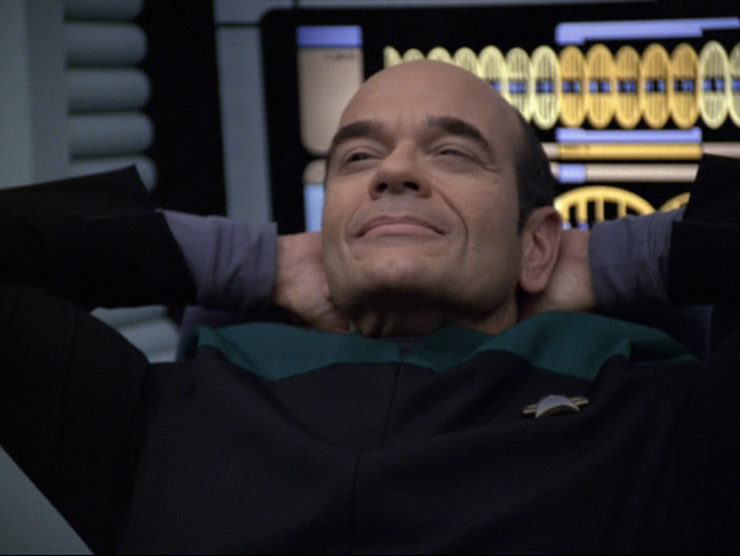
News Star Trek: Starfleet Academy More Star Trek for You! New Series Announced & Starfleet Academy Will Have Familiar Faces A plethora of Treks! By Vanessa Armstrong | Published on July 29, 2024 Screenshot: CBS Comment 0 Share New Share Screenshot: CBS The Star Trek news kept coming this weekend at San Diego Comic-Con! In addition to a fun Season Three teaser for Strange New Worlds and trailers for both Lower Decks and Section 31, we also got some casting news for the upcoming show, Star Trek: Starfleet Academy, as well as news of a new live-action comedy show in the works. During the franchise’s panel in Hall H this year, we found out that Starfleet Academy, a show that follows the adventures of a new class of Starfleet cadets, would see the return of several familiar faces, specifically Tig Notaro (Jett Reno in Star Trek: Discovery), Oded Fehr (Admiral Vance in Star Trek: Discovery), Mary Wiseman (Tilly in Star Trek: Discovery) and Robert Picardo (The Doctor in Star Trek: Voyager). Picardo and Notaro are joining as series regulars, which means we’ll see lots of them! Wiseman and Fehr will be guest stars, meaning we’ll see them, but not as much as Picardo and Notaro. The four join Holly Hunter, a lead on the show, and recurring guest stars Gina Yashere and Paul Giamatti. We also got a video of the actors playing the cadets—Kerrice Brooks, Bella Shepard, George Hawkins, Karim Diané, and Zoë Steiner—reacting to finding out they were cast. It’s adorable: But wait! There’s more! We also found out over the weekend that Lower Decks’ Tawny Newsome (who is also a writer on Starfleet Academy) along with Justin Simien (Dear White People) are developing a live-action Star Trek comedy series. The show, announced during the Hall H panel, will have 30-minute episodes and center on “Federation outsiders” whose day-to-day lives on a resort planet are reality show fodder for the quadrant.   And in one last bit of Star Trek news at San Diego Comic-Con, a Star Trek: Prodigy panel also announced that the show, which has Season Two streaming on Netflix, is now available on digital demand and that a Blu-Ray/DVD will be released on November 12, 2024. That’s a lot of news! And it looks like Star Trek continues to prosper. [end-mark] The post More Star Trek for You! New Series Announced & <i>Starfleet Academy</i> Will Have Familiar Faces appeared first on Reactor.
Like
Comment
Share
SciFi and Fantasy
SciFi and Fantasy  
2 yrs

Class Issues, Sick Burns, and an Army of Bastards: House of the Dragon Season 2, Episode 7
Favicon 
reactormag.com

Class Issues, Sick Burns, and an Army of Bastards: House of the Dragon Season 2, Episode 7

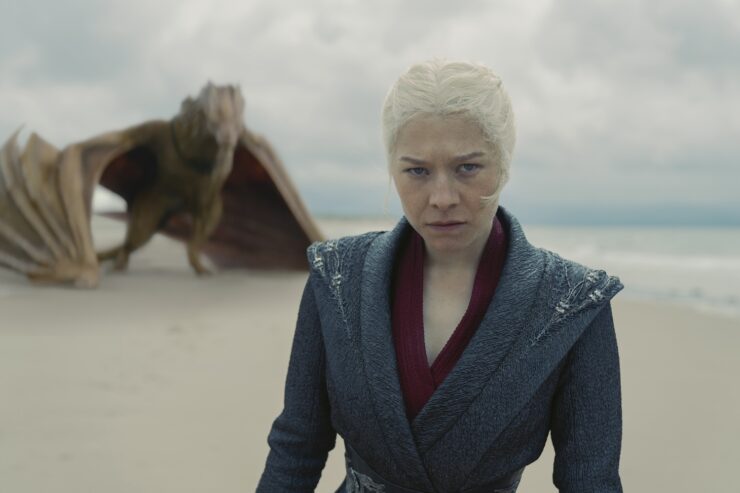
Movies & TV house of the dragon Class Issues, Sick Burns, and an Army of Bastards: House of the Dragon Season 2, Episode 7 Rhaenyra’s moment of triumph comes at a cost, Alicent gets back to nature, and Daemon… is a mess. By Tyler Dean | Published on July 29, 2024 Credit: Theo Whiteman/HBO Comment 0 Share New Share Credit: Theo Whiteman/HBO This penultimate episode of season 2 gives us the rest of the Sowing of the Seeds and finally lets non-book readers in on why we’ve been following Hugh and Ulf all season. It brings Daemon’s plot in the Riverlands to a close while bringing us to a cliffhanger moment in his personal journey. It also features some of the most gorgeous photography in the entirety of the show as Alicent spends a few days reconnecting with nature. We’ll talk about the specifics of this episode’s increasingly thorny class politics, the new dragons on the scene, and some content cut from Fire & Blood that it’s (probably) safe to talk about now. Spoilers for the episode and some book-related speculation below…  The Title The title of this episode is “The Red Sowing,” which is the cacophomism for “the Sowing of the Seeds”—the incident where Seasmoke, Vermithor, and Silverwing were claimed by dragonseeds. While “the Red Sowing” is a phrase known to people of the Seven Kingdoms, using that term (rather than “the Sowing of the Seeds” or simply “The Sowing”) moves away from the show’s typical ethos of using more flowery names that reflect a sanitized or heavily biased version of the bloody history. The Red Sowing is a moment of triumph for Rhaenyra but it comes at the cost of the slaughter and burning of dozens of people. In the “Inside the Episode” interviews, Ryan Condal even refers to it as a “ritual sacrifice.” Dragonseed Lineages and Dragonkeeper Politics Credit: Ollie Upton/HBO We’re seeing some interesting reactions to the ways in which the show has added nuance and new details to its version of the Sowing of the Seeds. First off, we witness the rise of the crisis that was hinted at in last week’s episode, where allowing lowborn dragonseeds to ride dragons is considered a perversion of the art of dragonriding.  F&B gives us a few pages on the “Sowing of the Seeds” or the “Red Sowing.” In the books, while the Targaryen bastards are front and center, there it’s much more of a free-for-all, with anyone loyal to the Blacks invited to participate. Munkun’s True Telling tells us that sixteen men lost their lives during the Sowing. Three times that number were burned or maimed. Steffon Darklyn was burned to death whilst attempting to mount the dragon Seasmoke. Lord Gormon Massey suffered the same fate when approaching Vermithor. […] Vermithor, the Old King’s own dragon, bent his neck to a blacksmith’s bastard, a towering man called Hugh the Hammer or Hard Hugh, whilst a pale-haired man-at-arms named Ulf the White (for his hair) or Ulf the Sot (for his drinking) mounted Silverwing […] and Seasmoke, who had once borne Laenor Velaryon, took onto his back a boy of ten-and-five known as Addam of Hull. (Fire & Blood, 441-442) The show opts, instead, to portray the inclusion of the Targaryen bastards as causing a scandal. There has been a strong throughline this season of the general classism of both the Greens and the Blacks this season and this is one point where it culminates in a meaningful way. Part of this comes from the way in which the show has reimagined the dragonkeepers. In F&B, the order is founded in 56 AC after Aerea Targaryen returned from her disastrous two-year sojourn with Balerion (you can read my article on Martin and horror for the specifics of that sad chapter). They are a special order of trained guards and handlers, but they are not an esoteric order full of Valyrian mysticism. In HotD, the dragonkeepers appear to be as old as the Targaryens themselves. They wear Valyrian colors (their robes are the same red and yellow designs that Rhaenyra and Daemon wear at their traditional Valyrian wedding). They only ever speak in High Valyrian and seem to share some Old Valyrian sensibilities. They refer to Steffon Darklyn as an “Andal” (the ethnic group from Western Essos that dominates the Southern Westerosi houses) reminding the audience that he is, from their perspective, part of an outgroup (incidentally, the Darklyns are generally thought of as being descended from the First Men in AsoIaF).  I was initially surprised that the show chose to represent the dragonkeepers as being anti-bastard—isn’t a Targaryen a Targaryen? But it makes sense if they are not just an order of dragon experts but true remnants of Valyrian culture. The Freehold of Valyria was a slave state and, even before the Doom, there was a premium placed on the precious rarity of dragonlord blood. Lowborn bastards are, therefore, only to be used for sacrifice. We may find the Westerosi nobility’s class politics to be abhorrent but they are still better than those held by the Valyrians. In terms of Targaryen lineages, Hugh (Kieran Bew) gets a weirdly truncated acknowledgement of his status as a dragonseed this episode. It does strike me as a little bit rushed that we spent six episodes establishing his backstory and domestic life only to have his daughter die off-screen and the reveal of his Targaryen bastardy occur in a scene immediately before he becomes plot-relevant. The other potential dragonseeds, Addam of Hull (Clinton Liberty) and Ulf the White (Tom Bennett) had comparatively much better-paced arcs leading up to the pivotal moment. That said, in the book, we get no specific lineage for Hugh other than that he is the bastard son of a blacksmith claiming Targaryen heritage. The show’s version of Hugh says that he is the son of a Targaryen sex worker. That would make his mother, most likely, Saera Targaryen, the ninth-born child of Jaehaerys (Michael Carter) and Good Queen Alysanne, and the aunt of Viserys and Daemon.  In F&B, Saera is plagued by scandal for her premarital sexual interests, which only escalate as King Jaehaerys attempts to punish the princess for her behavior. The end result is that, after being forced to take a septa’s vows, she flees to Lys and becomes a sex worker. She later returns to Westeros in middle age as a powerful madame who presses the claims of her sons with the Triarch of Lys at Jaehaerys’ Great Council of 101. Obviously, HotD has cut that part of it (and it may well be that Hugh’s mother is someone other than Saera) but it’s great to see a real lineage given to the character.  DragonWatch Credit: Theo Whiteman/HBO This was one of the dragon-heaviest episodes of the series so far, with Syrax and Seasmoke both making appearances, as well as the introduction of two new dragons (give or take a single shot of a Vermithor last season). That means that about two thirds of the dragons mentioned in F&B have made it to the screen so far… Syrax — Syrax is among the most regularly featured dragons on the show and has been spectacularly displayed in each of her appearances, starting with the very first episode. We haven’t seen much of her so far this season, so yesterday’s episode gave us a decent look at the Black Queen’s mount. Syrax has only ever been ridden by Rhaenyra and it’s implied that she is one of the dragons who bonded with their first rider from the egg—with Rhaenyra first riding her at age seven. We don’t have an exact date of birth but the evidence implies that she’s near Rhaenyra’s age. Syrax, like Meraxes, Vhagar, and Balerion, is the name of an Old Valyrian god though, as with the entire Valyrian pantheon, we only know the name and have never gotten a canon explanation of their domain/characteristics. F&B describes Syrax as huge and yellow-scaled though not as large or formidable as Caraxes. The show has depicted Syrax as one of the smaller rideable dragons on the show—roughly the same size as Seasmoke. She retains her yellow scales and has been given a somewhat gentle aspect. She’s not quite as doglike as Sunfyre, but her external lips hide her teeth entirely and she has a quartet of long, scaled back curving horns that are not as fearsome as those of other dragons. Her fins are less spiky and her features are smoother. She is not battle-tested and, according to F&B, she was made more docile by years of being chained in the Dragonpit and hand-fed rather than being allowed to hunt.  Vermithor — We have technically seen Vermithor in the finale of season one, in the scene where Daemon sings his lullaby deep in the bowels of the Dragonmont. He’s called “the Bronze Fury,” as Rhaenyra says, and is the second oldest and second largest tame dragon in Westeros. Vermithor was hatched in King Jaehaerys’ crib in 34 AC, making him currently 96 years old (note that he’s still only half the age of Vhagar). I’ve mentioned this factoid before, but the name “Vermithor” likely comes from Vermithrax Pejorative (the dragon in the absurdly dark 1981 fantasy film, Dragonslayer, who is George R.R. Martin’s favorite on-screen dragon). In-world, the name sounds Valyrian but we have no explanation for what it might mean. The book describes him as bronze-scaled with tan wings, which the show has kept to fairly accurately. They’ve given him a bit of the aging dragon iguana-wattle that Vhagar has, as well as horns along his chin that give him a little bit of a bearded look. Like his elderly aunt, he’s kaiju-coded, and the show chooses to introduce him in a truly terrifying extended scene that highlights his slow, almost lackadaisical murder of a dozen dragonseeds. It captured some of the dread majesty of the T-Rex scenes in Jurassic Park. That is enhanced by the forward-curving horns that make his face look a little like a Carnotaurus. Despite his fierceness, Vermithor has no actual battle experience, though his first rider, Jaehaerys the Conciliator, did use him as a threat to his enemies.  Silverwing — Silverwing is one of the very few dragons left on the show that we have not previously seen in any form (save for on a stamp, the image of which was leaked ahead of this episode). She is the next oldest dragon after Vermithor, being somewhere between 96 and 88 years old. She’s named for her coloration though High Valyrian conlinguist David J. Peterson has said that her name (meaning, roughly “Silverwing”) in the mother tongue is Gēliotīkun. Obviously silvery in color, in line with her book description, Silverwing’s advanced age is portrayed somewhat differently than that of Vhagar and Vermithor. She looks emaciated and drawn—almost skeletal. Her neck, though proportionally shorter than Caraxes’ is still long and snakelike, and they’ve given her a fan of fins at the end of a long, whiplike tail that looks almost like a flanged mace. It’s a lean and dangerous look that is fascinatingly at odds with what Gyldayn describes as her docile, friendly nature. Her previous rider was Jaehaerys’ beloved wife, Good Queen Alysanne, who is perhaps the single most beloved Targaryen in the entire dynastic history. Like Alysanne herself, Silverwing is famously charismatic and regal—a dragon to be loved rather than feared. It’s an interesting juxtaposition that Silverwing is now paired with the feckless Ulf, whose charms are of a crasser and baser variety. Like Vermithor, she is not battle-tested, but she has been to the Wall (where she famously refused to cross it) and is a beloved symbol of authority, especially in the North.  Some Erasures Credit: HBO (Potential Show Spoilers Ahead)  This section contains some speculation on things that I am assuming have been cut from the show. That said, it is possible that some of these elements have simply been moved to later points in the series or may be repurposed. Be forewarned that by reading this section, you might spoil yourself for future plot points that could potentially show up in season 3. It will be safe to resume reading in the “Odds & Ends” section, if you want to skip ahead! There is a moment when the Kings Landing dragonseeds are boarding the ships to Dragonstone where we see a young peasant girl with dark skin and textured hair. She may or may not be intended to evoke Nettles, a character that the show appears to have cut in order to give her plot to Rhaena Targaryen. I did check, though, and we do not specifically see that extra die during the sequence with Vermithor. There has been a lot of discussion (and general disappointment) over Nettles being cut from the show. She’s the only canonical person of color in the Dance of the Dragons, a shepherd whose eventual bond with the feral dragon, Sheepstealer, puts the “dragonriders must be dragonlords” shtick into the most doubt—she is assumed to be a dragonseed but has no Targaryen features or a lineage that can be traced back to any specific Targaryen. In some ways, giving her plot to Rhaena makes sense. Rhaena is a member of the main cast and is important later on in the Dance but has relatively little to do during the first two seasons of the show. Allowing her to pursue Sheepstealer (that has to be why we see all the sheep corpses) makes some sense. Rhaena is being characterized as somewhat temperamentally similar to the Nettles of the book, and given the casting of so many other actors of color on HotD, cutting the one woman of color from the book (or at least repurposing her plot) isn’t as egregious as it might have been.  But there is plot with Nettles later in F&B that can’t be transferred to Rhaena. Namely, she has an affair with Daemon (who, I should remind you, is Rhaena’s father) and eventually she flees the court of the Blacks on dragonback in order to live as a reclusive “fire witch” in the Vale. That feels like something the show will not do with Rhaena. It’s possible that, given how much of a character arc Daemon has been given this season and how much they have transferred some of the sexual tension Alys Rivers (Gayle Rankin) has with another character in original book to Matt Smith, it may simply be that Daemon’s eventual affair with Nettles doesn’t make as much plot sense as it does in the book. With both Sheepstealer and the affair taken care of elsewhere, Nettles might not be as centrally important to HotD as she is in the source material.  Additionally, in moving the plot with Sheepstealer to Rhaena in the Vale, the show might be cutting three further dragons from its roster. In F&B, in addition to Seasmoke, Vermithor, and Silverwing, the Dragonmont is also home to three feral dragons, i.e. dragons who have reached adulthood and never been bonded to a rider. They have no official names but the smallfolk of Dragonstone have nicknamed them Sheepstealer (for their hunting habits), Grey Ghost (for their coloration and stealthy nature), and the Cannibal (for its unsavory habit of eating dragon eggs and other hatchlings). While Grey Ghost and the Cannibal are never ridden in the books, they are a neat plot point and, call me crazy, but I think the dragon show should have as many dragons as possible. In pairing up Rhaena with Sheepstealer, the show is potentially cutting the dragon hatchling she eventually bonds with in the book, who is called Morning. So that’s three dragons potentially dispensed with one adaptation change.  It is possible that Nettles may show up in season three, perhaps even riding Grey Ghost or the Cannibal. But, if she does, the character will likely be greatly altered from her role in the book, and it may just be that the show isn’t interested in adding someone so very new whose major plot points have already been covered elsewhere. Odds & Ends Credit: Theo Whiteman/HBO After the death of Leon Estermont (Ralph Davis) during the food riots last episode, Aemond pins the blame for the riots on Aegon’s remaining drinking buddies turned Kingsguard, Ser Eddard Waters (Tok Stephens) and Ser Martyn Reyne (Barney Fishwick), forcing them to take the black.  We finally get confirmation in this episode that Antonio Magro is playing Lord Petyr Piper this season. He’s only identified as “Lord Piper” on IMDb for obvious reasons. Adapting F&B for television means consistently grappling with the nonchalance with which Martin deploys a silly character name for someone that gets mentioned twice on the page, only for HotD to have to write around their goofy name or avoid having it mentioned on screen.  Lord Piper’s men-at-arms wear the house sigil, with its dancing nude woman draped in a white banner—I believe this is the first time any GoT show has shown it. The sigil takes its name for the seat of House Piper—Pinkmaiden—whose curious nomenclature has never been fully explained. The house seems to use the azure of the sigil’s field as their primary color. You can see members of House Vance of Atranta (with their black dragon quartered with yellow eye sigils) during Oscar Tully’s (Archie Barnes) address to the Riverlords. I believe this is another first for the series. Both branches of House Vance are named for seminal science fiction author Jack Vance, one of Martin’s heroes. The sigils of the two houses refer to his texts, The Dragon Masters (1962), The Eyes of the Overworld (1966), and Liane the Wayfarer (1950)—the other branch of House Vance is from “Wayfarer’s Rest.” Ser Simon Strong’s (Simon Russell Beale) robe is so close in both hue and pattern to one of George Martin’s iconic looks that I’m thoroughly convinced of the conscious styling choice I suggested last week.  I have once again been proven wrong about what the show is doing with Willem Blackwood (Jack Parry-Jones) and Oscar Tully. It seems that Oscar will be a partial replacement for the Benjicot Blackwood child soldier plot.  Another small complaint along the same lines as Aegon and Rhaenyra being named as rulers of the Rhoynar; this episode suggests that Steffon Darklyn (Anthony Flanagan) was both Lord Commander of the Queensguard and heir to the Dun Fort. Joining the Kingsguard (or the Night’s Watch, or the order of Maesters) requires that you give up any claim to lands or titles (along with taking a vow of celibacy that ensures there are no descendants to press a claim). That was the whole conflict between Tywin and Jaime in the original series—Tyrion had to be heir to Casterly Rock as long as Jaime was in the Kingsguard. So Ser Steffon can’t have been heir to the Dun Fort. It’s been subtle, but one of the ways in which the show has been reinforcing Jace’s lack of trust in Rhaenyra lies in the detail that he believes that his bastardy makes him illegitimate. In Westeros, a monarch or Lord can legitimize their bastard child. Even if Jace is not a Velaryon, he is still the son of the Targaryen queen. For him to believe that his father being Harwin Strong disqualifies his inheritance, he would have to believe that only his father’s lineage matters. It’s a quiet rebuke of the idea that a ruling Queen would be afforded all the same privileges as a King.  In F&B, Alyn of Hull (Abubakar Salim) attempts to claim Sheepstealer and gives up on dragonriding after being badly burned. I assume that his invocation as being salt and sea in this episode is proof that he is more like his father and also that he will not attempt to claim a dragon on HotD. It’s a little weird that Elinda Massey (Jordon Stevens) wears the brightest red cloak and her House sigil while undercover in King’s Landing.  Tom Bennett’s performance as Ulf has a particularly Ricky Gervais-style shiftlessness in this episode. It’s a good touchstone for our gladhanding, cowardly dragonseed. You’ll note that Gormon Massey (James Dreyfus), Rhaenyra’s most addled small council member, is still alive after the Sowing of the Seeds. It will be interesting to see if the show has some other fate in store for him or if he’ll continue to be an amusing if unremarkable presence now that his book-equivalent is dead in the source material. There is so much beautiful Pre-Raphaelite imagery featuring Olivia Cooke in this episode. Obviously, they were trying to fake us out a little bit with the potential drowning and its Pre-Raphaelite Ophelia parallels. All I can say is they better not. I think Alicent has a perfect endpoint in Fire & Blood and I would hate to see it changed without a truly earned expansion of her plot. But we can rejoice—Alicent is simply swimming peacefully in the waters of the Kingswood!  In Season 1, episode 4 of the original Game of Thrones, that show’s Viserys Targaryen (Harry Lloyd) tells Doreah that one of the dragons whose skulls were in the Red Keep was Vermithrax. Benioff and Weiss put the name in as a reference to Martin’s beloved Dragonslayer and it is likely that the inclusion sparked Martin naming two of his historical dragons Vermithor and Vermax.  Robert Rhodes, who plays the first burned dragonseed with the facial difference, is credited in this episode as “Silver Denys” a named dragonseed from F&B who is killed by the yet-unseen Cannibal. I assume he had some cut lines this episode since a featured extra usually doesn’t get end-credit billing. There is similarly a credit for Parker Lapaine, the dragonseed that Hugh saves from Vermithor According to the matching episode of HBO’s “The House that Dragons Built,” the face on Harrenhal’s Weirwood tree is George R.R. Martin’s.  In Conclusion Despite what might have been cut out by the HotD showrunners, I think the show is better than ever. I’ll be interested in seeing what the endpoint of this season is in the finale next episode, seeing as both of my predictions for the season’s climax both seem unlikely at this point. But what did you think? Are you on board for our new dragonriders and our new dragons? Do you have any predictions for next week’s finale?[end-mark] The post Class Issues, Sick Burns, and an Army of Bastards: <i>House of the Dragon</i> Season 2, Episode 7 appeared first on Reactor.
Like
Comment
Share
Reclaim The Net Feed
2 yrs

Bohemian Club Uses Copyright Strikes To Scrub Ritual Footage
Favicon 
reclaimthenet.org

Bohemian Club Uses Copyright Strikes To Scrub Ritual Footage

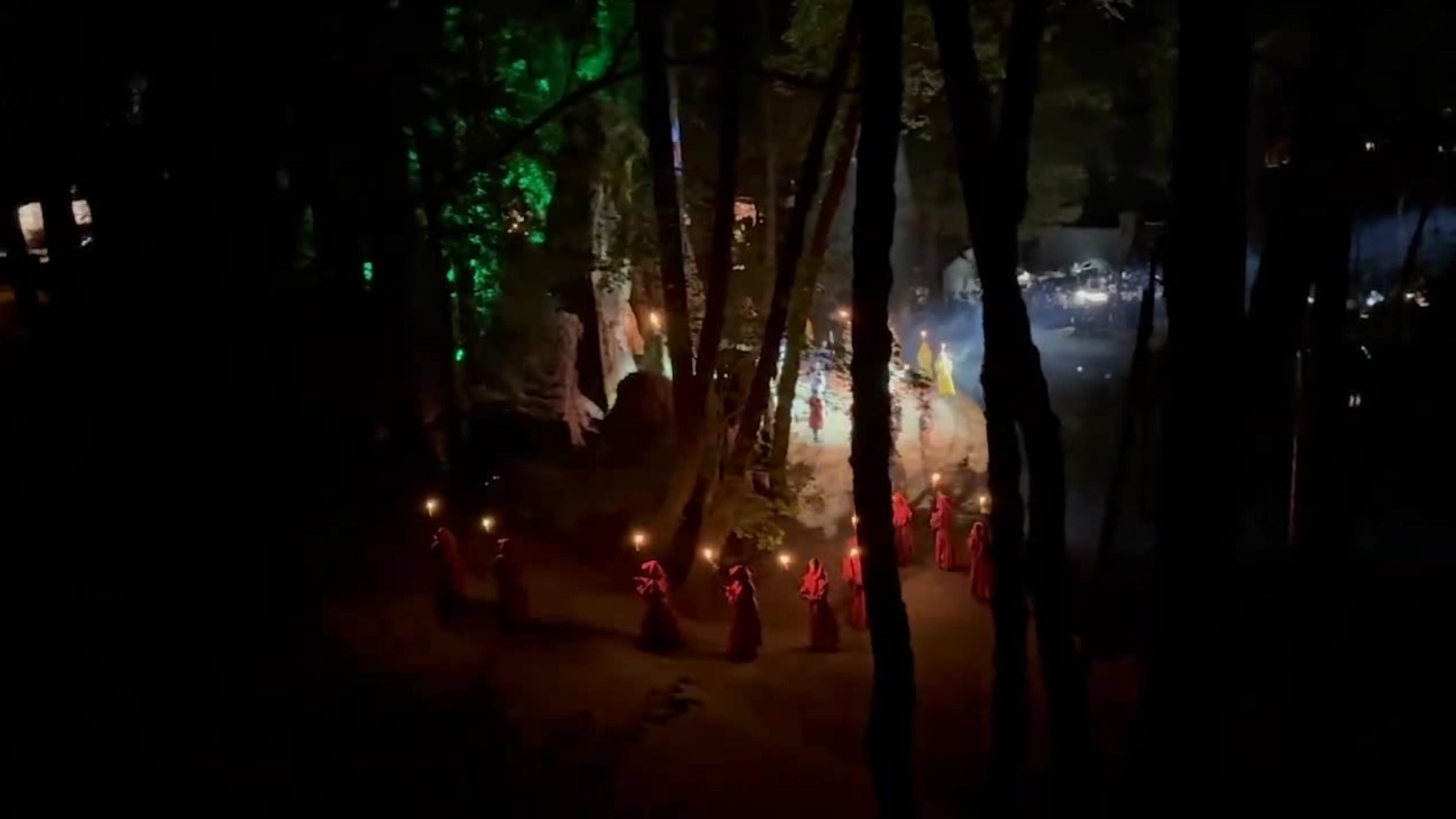
If you're tired of censorship and dystopian threats against civil liberties, subscribe to Reclaim The Net. A video uploaded by a citizen journalist, known by the pseudonym “Dancer,” was removed from YouTube after the Bohemian Club issued a copyright strike against the footage, which captured scenes from the secretive Bohemian Grove’s annual ceremony. Dancer filmed parts of the “Cremation of Care” ceremony, a private event held within the confines of the 2,700-acre retreat in Monte Rio, California. The Bohemian Club, a private club known for its high-profile membership including politicians, business leaders, and artists, asserts strict privacy policies and prohibits any recording devices at the gathering. Tucked away in the ancient redwood forests of Monte Rio, California, lies a 2,700-acre retreat known as Bohemian Grove. This exclusive enclave hosts a private all-male membership that comprises some of the most influential figures in politics, business, and the arts. Annually, members of the Bohemian Club, which was founded in San Francisco in 1872, gather for a two-week retreat that is both a sanctuary from the public eye and a subject of substantial controversy. Bohemian Grove continues to be shrouded in mystique and controversy. While members may argue that the retreat serves as a critical decompression chamber away from the limelight, the secrecy surrounding its ritualistic activities fuels ongoing debates about transparency. Copyright strikes have become a prevalent tool for removing controversial footage from online platforms, a trend that raises significant concerns about the suppression of free speech and transparency. While these legal mechanisms are designed to protect intellectual property rights, they are increasingly leveraged by corporations, private entities, and even government bodies to censor material deemed sensitive or damaging. This practice not only restricts public access to potentially important information but also stifles discourse and debate, particularly when the content in question involves powerful figures or institutions. This incident has added fuel to the ongoing controversy surrounding Bohemian Grove, which has been criticized for its secrecy and alleged influence on global affairs. Activists and transparency advocates have long demanded more insight into the club’s annual gatherings, suggesting that the decisions made behind closed doors should be subject to public scrutiny. If you're tired of censorship and dystopian threats against civil liberties, subscribe to Reclaim The Net. The post Bohemian Club Uses Copyright Strikes To Scrub Ritual Footage appeared first on Reclaim The Net.
Like
Comment
Share
Reclaim The Net Feed
2 yrs

James Woods: “Oppenheimer” Credit Kept Quiet Due to Pro-Trump Tweets
Favicon 
reclaimthenet.org

James Woods: “Oppenheimer” Credit Kept Quiet Due to Pro-Trump Tweets

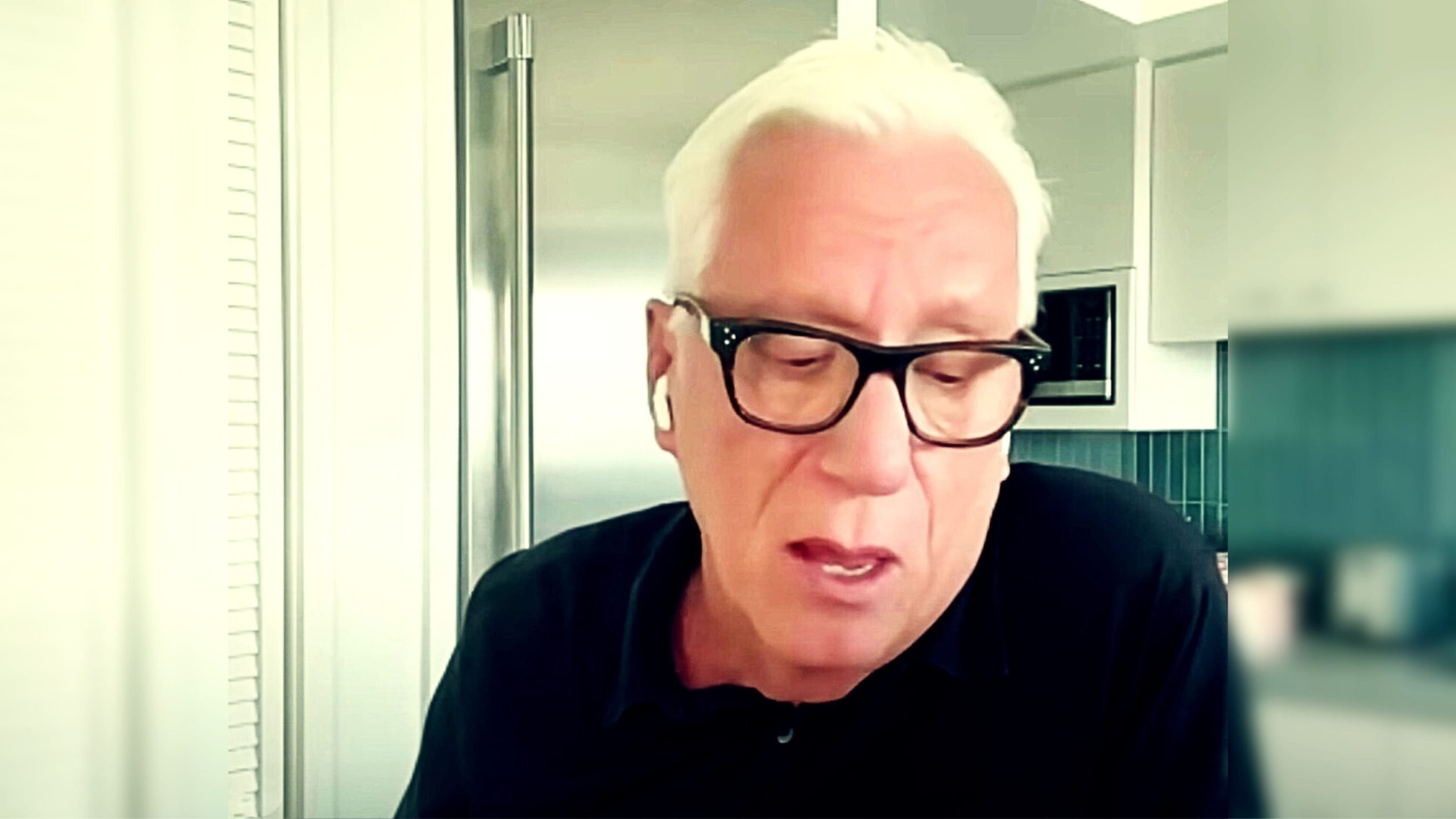
If you're tired of censorship and dystopian threats against civil liberties, subscribe to Reclaim The Net. Salvador, Once Upon a Time in America, and Casino Actor James Woods, these days known for his political tweets and vocal support of President Donald Trump, has shared a revealing account on Megyn Kelly’s SiriusXM show, that shows just how much prominent figures have to curb their speech to protect their acting career. Speaking on Kelly’s radio show, Woods talks about how he forwent credit and promotional involvement with last year’s blockbuster film “Oppenheimer,” in order to not cause the film to receive any negative attention. Display "James Woods Describes How Hollywood Blacklists Conservatives, and How He's Crafted a Second Act Now" from rumble.com Click here to display content from rumble.com Always display content from rumble.com Open "James Woods Describes How Hollywood Blacklists Conservatives, and How He's Crafted a Second Act Now" directly Despite his crucial role as an executive producer—stemming from his acquisition of the rights to the biographical book, “American Prometheus,” which inspired Christopher Nolan’s screenplay—he was discreetly advised to maintain a low profile. The decision stemmed from concerns that his political outspokenness might negatively impact the film’s rollout and its success in the awards season. Woods described the request for his reduced visibility as a painful yet necessary sacrifice for the greater good of the project. “It was gently suggested that I basically remain invisible, which was painful,” he remarked. His pragmatic outlook led him to accept the sidelining to avoid jeopardizing the film’s accolades and financial success, crucial for securing its place in cinematic history. The film went on to gross almost $1 Billion and received seven Academy Awards, including Best Picture. Despite his significant contribution, Woods faced exclusion from key industry events, including the Producers Guild of America awards, where he was notably not invited despite “Oppenheimer” clinching the top prize. His willingness to step back highlights a troubling dynamic in Hollywood, where creative contributions can be overshadowed by personal political affiliations. The situation underscores a broader issue of censorship and bias within the entertainment industry, where an individual’s political views can lead to professional isolation and exclusion. Woods, who has largely retreated from Hollywood following these experiences and a break with his agent over his political stances, last appeared in the sitcom “Dice” in 2017. His story raises critical questions about freedom of expression and the potential consequences of political affiliations in the arts and media sectors. In a similar vein, actress Gina Carano, previously known for her role in The Mandalorian, filed a lawsuit against Disney and LucasFilm, claiming wrongful termination and discrimination following her dismissal from the show. This action came after a series of social media posts that Disney stated violated its standards. If you're tired of censorship and dystopian threats against civil liberties, subscribe to Reclaim The Net. The post James Woods: “Oppenheimer” Credit Kept Quiet Due to Pro-Trump Tweets appeared first on Reclaim The Net.
Like
Comment
Share
Hot Air Feed
Hot Air Feed
2 yrs

Beege's Moment of Zen Where We Chill Out and...Watch Some Donald Trump Ads
Favicon 
hotair.com

Beege's Moment of Zen Where We Chill Out and...Watch Some Donald Trump Ads

Beege's Moment of Zen Where We Chill Out and...Watch Some Donald Trump Ads
Like
Comment
Share
Hot Air Feed
Hot Air Feed
2 yrs

Politico Pounces: Trump Accused Kamala of Opposing Fracking!
Favicon 
hotair.com

Politico Pounces: Trump Accused Kamala of Opposing Fracking!

Politico Pounces: Trump Accused Kamala of Opposing Fracking!
Like
Comment
Share
Science Explorer
Science Explorer
2 yrs

Videos Of Chimps Saying "Mama" Fuel Debate Around Speech Capabilities In Non-Human Apes
Favicon 
www.iflscience.com

Videos Of Chimps Saying "Mama" Fuel Debate Around Speech Capabilities In Non-Human Apes

What separates us from animals that share 98.8 percent of our DNA? While there might be many varied and valid answers, something that has been at the forefront of this debate is the lack of speech from chimpanzees. Two theories exist as to why chimpanzees might not be able to make human speech sounds: either it is a physiological issue within the lips, tongue, or mouth system; or they lack the pathways in the brain to make a sound. However, by reviewing old footage, researchers have challenged the idea that chimps don’t have the building blocks for speech.Animals have also been known to mimic human speech but are typically those without any similar vocal apparatus, such as whales and other marine mammals. In human babies, words such as “mama” are often among the first to appear. The team looked at old videos of two chimpanzees named Johnny and Renata who each produced the word “mama”.  In the paper, the authors explain that Johnny lived at the Suncoast Primate Sanctuary at Palm Harbor in Florida, USA, and was recorded on a home video. When prompted by the question “Can you say mama?” Johnny appears to appropriately respond.           In Renata’s case, the footage came from a Universal Studios’ Universal Newsreel called Now Hear This! Italians Unveil Talking Chimp was released in 1962. However, the team does not know any further context surrounding Renata's life or how she might have been taught to speak.They explain that previous research has been based on scientific studies (which nowadays would not pass ethical standards) on apes that experienced poor animal welfare – they explain that "Subjects in 'ape language' studies were traumatized, their emotional, ecological and social needs unmet", with many being taken from their mothers in the wild and exposed to "neglect and cruelty".          To test if unbiased people could tell what the chimps were saying, the researchers set up an experiment. The voices of the chimpanzees were mixed in with the voices of humans diagnosed with speech pathologies from Parkinson's disease. Each voice was saying only a few words, and the participants in the study were not aware that two of the voices came from chimps. They were asked to write down the words spoken during the experiment – if they wrote ma or mama, it would indicate that the phonetics the chimps were saying were similar to human words. Most of the participants agreed that at least Renata was making “mama” sounds, while there were more widespread responses surrounding the noises Johnny was making. The results suggest that the chimps were capable of vocal learning. The team wrote that “chimpanzees can produce the putative 'first words' of spoken languages.” The team concluded that previously chimps have underestimated and do possess the necessary neural pathways for speech – "Great apes can produce human words; the failure to demonstrate this half a century ago was the fault of the researchers, not the animals," they conclude.Not everyone is convinced though – as Julia Fischer, a cognitive scientist at the German Primate Center in Göttingen explained to the New York Times, “This paper is a good example of the tug of war in the ‘ape language’ field. What the apes are doing vocally has nothing to do with human speech,” she said.The paper is published in the journal Scientific Reports.
Like
Comment
Share
Science Explorer
Science Explorer
2 yrs

Around 4,200 Years Ago, Humans Started To Spread Domesticated Horses Across Eurasia
Favicon 
www.iflscience.com

Around 4,200 Years Ago, Humans Started To Spread Domesticated Horses Across Eurasia

Around 4,200 years ago, in the third millennium BCE, humans in the western Russian steppes began a new era in human history by entangling their lives with another species of animal. Recent research has argued that, at this time, the numbers of domesticated horses bred by people expanded quickly, which introduced unprecedented changes. Horses not only sped up communications and trade across Eurasian networks, they also catalyzed exchanges and interactions among diverse and distant cultures.Every domestic horse across the world today, be it a majestic draft horse, a local pony-club trotter, or a world champion racer or showjumper, comes from the same place in the Russian steppe region. This fact has been known for a long time, but scientists have been less sure about the exact chronology of when horses were first domesticated and then utilized by humans.In this recent study, a massive international team of researchers coordinated by Ludovic Orlando, director of the Centre of Anthropobiology and Genomics of Toulouse (CAGT, CNRS/Université Paul Sabatier), assessed 475 ancient horse genomes to trace when the animals were first reshaped by humans. They did so by gathering horse archaeological remains from across the Eurasian continent.They then combined radiocarbon dating with DNA sequencing to create a comprehensive genome time-series. This basically offers a fine-grained image of the genetic transformations that horses have experienced and how they relate to the emergence of equestrianism.“I started working on horses about a decade ago,” first author Pablo Librado, Tenured Scientist at the Institut de Biologia Evolutiva of Barcelona (IBE), explained in a statement.“At that time, we only had a handful of ancient genomes. With this new work, we now have several hundred. It was particularly important to gain resolution into Central Europe, the Carpathian and the Transylvanian basins, as this area was central to ongoing debates about horseback riding driving the massive migrations from the steppes around ~5,000 years ago, and possibly earlier.”Librado and colleagues searched for signs of three indicators of horse husbandry in their data. Firstly, they traced when the progenitors of modern domestic horses started to spread beyond their native domestication homeland. Secondly, they attempted to precisely date the earliest signs of breeding and large-scale production of horses. They did so by reconstructing horse demography throughout the third millennium BCE.  Finally, the team identified signs of a significant shift in the horse reproductive cycle, which is basically a “fingerprint” of deliberate manipulation of the animals by early breeders.The convergence of all of these offers compelling evidence that, around 4,200 years ago, domestic horses started to be produced in significantly large numbers to sustain a growing demand across the continent. The evidence suggests that it could have only happened at this point, and not earlier than this.It means that the date of ~4,200 years ago marks the beginning of horse-based mobility as we know it today, something that persisted as the fastest form of terrestrial transportation until the 20th century.“One question that puzzled me for years pertains to the scale of the production,” Orlando explained.“[H]ow could such a substantial number of horses be bred so suddenly from a relatively small domestication area to meet the increasingly global demand by the turn of the second millennium BCE? Now we have an answer. Breeders controlled the reproduction of the animal so well that they almost halved the time interval between two generations. Put simply, they were able to accelerate the breeding process, effectively doubling their production rate.”In order to conduct this novel research, the team had to develop a new way to measure generation times, one that utilized the full potential of ancient genome time series.As genomes evolve, they accumulate mutations and then recombine every generation. The number of mutations carried and any DNA crossovers they went through can indicate the number of generations leading to them. Couple this information with that produced by radiocarbon dating and you have a way to calculate calendar years.The research showed that more generations accumulated in the last two centuries, which coincides with the emergence of many modern bloodlines created by intensive selective breeding. In a similar way, the generational clock seems to have ticked faster around ~4,200 years ago, when the mass production and geographic expansion of domestic horses began.“Our methodology for measuring temporal changes in generation times holds great potential. It arms the archaeozoological toolkit with a new way to monitor the development of controlled breeding across various domestic species beyond horses,” Librado added.“But it can also help elucidate the generation interval in our hunter-gatherer ancestors and how these intervals evolved alongside shifts in lifestyle or significant climatic changes.”The study is published in Nature.
Like
Comment
Share
Showing 18622 out of 56670
  • 18618
  • 18619
  • 18620
  • 18621
  • 18622
  • 18623
  • 18624
  • 18625
  • 18626
  • 18627
  • 18628
  • 18629
  • 18630
  • 18631
  • 18632
  • 18633
  • 18634
  • 18635
  • 18636
  • 18637

Edit Offer

Add tier


Select an image
Delete your tier
Are you sure you want to delete this tier?

Reviews

In order to sell your content and posts, start by creating a few packages. Monetization

Pay By Wallet

Payment Alert

You are about to purchase the items, do you want to proceed?

Request a Refund