YubNub Social YubNub Social
    Advanced Search
  • Login

  • Night mode
  • © 2026 YubNub Social
    About • Directory • Contact Us • Privacy Policy • Terms of Use • Android • Apple iOS • Get Our App

    Select Language

  • English
Install our *FREE* WEB APP! (PWA)
Night mode
Community
News Feed (Home) Popular Posts Events Blog Market Forum
Media
Headline News VidWatch Game Zone Top PodCasts
Explore
Explore Jobs Offers
© 2026 YubNub Social
  • English
About • Directory • Contact Us • Privacy Policy • Terms of Use • Android • Apple iOS • Get Our App

Discover posts

Posts

Users

Pages

Group

Blog

Market

Events

Games

Forum

Jobs

Daily Caller Feed
Daily Caller Feed
2 yrs

‘I’m Getting Emotional’: KJP Addresses Biden Stepping Down From 2024 Race On ‘The View’
Favicon 
dailycaller.com

‘I’m Getting Emotional’: KJP Addresses Biden Stepping Down From 2024 Race On ‘The View’

'Right thing to do for this country'
Like
Comment
Share
Daily Caller Feed
Daily Caller Feed
2 yrs

Dave Portnoy Rips Clooney, Dems For Praising Biden For Dropping Out After Working To Push Him Out
Favicon 
dailycaller.com

Dave Portnoy Rips Clooney, Dems For Praising Biden For Dropping Out After Working To Push Him Out

'You pushed him down a flight of stairs'
Like
Comment
Share
Daily Caller Feed
Daily Caller Feed
2 yrs

Former Clinton Adviser Says He Has ‘Trouble With’ How Dems Undemocratically Gave Harris ‘Rubber Stamp’
Favicon 
dailycaller.com

Former Clinton Adviser Says He Has ‘Trouble With’ How Dems Undemocratically Gave Harris ‘Rubber Stamp’

'I have trouble with the process'
Like
Comment
Share
Daily Caller Feed
Daily Caller Feed
2 yrs

FACT CHECK: No, Trump Did Not Say Bullet From Rally Shooting Took His ‘Entire Ear Off’
Favicon 
checkyourfact.com

FACT CHECK: No, Trump Did Not Say Bullet From Rally Shooting Took His ‘Entire Ear Off’

A post shared on Instagram purports to show a tweet from 2024 Republican nominee and former President Donald Trump claiming the bullet he was struck with during a shooting at his July 13 campaign rally in Butler, Pennsylvania took his “entire ear off.”   View this post on Instagram   A post shared by Big […]
Like
Comment
Share
Daily Caller Feed
Daily Caller Feed
2 yrs

FACT CHECK: Did The Secret Service Allow Heckler To Storm Stage During Kamala Harris Interview?
Favicon 
checkyourfact.com

FACT CHECK: Did The Secret Service Allow Heckler To Storm Stage During Kamala Harris Interview?

A post shared on social media purportedly shows the secret service failing to protect Vice President Kamala Harris from a heckler who stormed the stage during a speech. SHOCKING: Vice President Kamala Harris’s Secret Service let a crazy white man roll up on her. She was ultimately protected by the White House Press Secretary. pic.twitter.com/2MTnmx5PPO — […]
Like
Comment
Share
SciFi and Fantasy
SciFi and Fantasy  
2 yrs

The Further Adventures of John Carter: The Gods of Mars and The Warlord of Mars by Edgar Rice Burroughs
Favicon 
reactormag.com

The Further Adventures of John Carter: The Gods of Mars and The Warlord of Mars by Edgar Rice Burroughs

Books Front Lines and Frontiers The Further Adventures of John Carter: The Gods of Mars and The Warlord of Mars by Edgar Rice Burroughs In which our hero returns to Barsoom to face fearsome foes, unmask false gods, and rescue his true love! By Alan Brown | Published on July 23, 2024 Comment 0 Share New Share In this bi-weekly series reviewing classic science fiction and fantasy books, Alan Brown looks at the front lines and frontiers of the field; books about soldiers and spacers, scientists and engineers, explorers and adventurers. Stories full of what Shakespeare used to refer to as “alarums and excursions”: battles, chases, clashes, and the stuff of excitement. Edgar Rice Burroughs is one of the pioneers of science fiction, and the exploits of Earth-born adventurer John Carter on the planet Mars are among his best works. A few years ago, I looked at the first book in the Barsoom series, A Princess of Mars. Since the summer is the perfect time to read books full of pulpy action and adventure, today I’m diving into the second and third adventures in that series, The Gods of Mars and The Warlord of Mars. I have these three books in two forms in my library. The first is a pair of books from the Science Fiction Book Club, which published the first volume alone, and the next two in an omnibus edition. But the volume I used for this review is Under the Moons of Mars (which takes its name from the very first tale of the planet the natives call Barsoom), a collection that contains the first three Barsoom books, published in hardback in 2003 by University of Nebraska Press, as part of their Bison Frontiers of Imagination series. The book is nicely bound, although the typeface is kind of an odd one, with extra-tall capital letters, and in which the letter “f” shows up in different sizes depending on where it appears in a word. The dust jacket features a wonderful painting by Michael Whelan that originally appeared on a Del Rey paperback, and has some nice interior illustrations created for this edition by Scott Beachler. When I revisited Burroughs’ Venus and Pellucidar series in this column, despite thinking I had read them all in my youth, I discovered that I had actually only read about half the books. And that was the case with the books I’m looking at today. I had read the first Barsoom book, and remembered the second, but the third book was new to me. In this day and age, when computers make purchases and inter-library loans effortless and books can even be sent directly to your phone, it is hard to imagine missing books in a series. But in the ancient times of my youth, when books were paper artifacts, scattered among a variety of stores or libraries, you read whatever you came across, regardless of whether you’d read the book that came before it, and sometimes would not find the book that followed. About the Author Edgar Rice Burroughs (1875-1950) was one of the most popular authors of the early 20th century, making an indelible mark on both science fiction and adventure fiction. I’ve looked at his work in this column before, including A Princess of Mars, the book Pirates of Venus and the rest of the Venus series, and also Tarzan at the Earth’s Core and the other Pellucidar books. All those columns contain more biographical information on the author. And that review of the first Barsoom book also includes a discussion of John Carter’s adventures in other media, including movies and comic books. You can find much of Burroughs’ work available to read for free at Project Gutenberg, including most of the Barsoom series. A Princess of Mars For those who might not remember the details, I’ll provide a short summary of the book that started the series. In it, John Carter, a cavalryman who fought for Virginia in the Civil War, is trapped in a cave full of strange carvings. And when the planet Mars catches his eye, he finds himself suddenly whisked away to that world. His strength aided by the lesser gravity of Mars, he runs afoul of the Tharks, a fierce race of Green Martians with tusks and four arms apiece. His martial prowess wins him an honored place in their ranks, and the friendship of one of their great chiefs, Tars Tarkas. Then Carter meets a Red Martian prisoner, the incomparably lovely Dejah Thoris, the eponymous princess of the title. The two fall in love, although they must overcome the inevitable misunderstandings that make romance difficult in books such as this. Eventually they are married, and she lays an egg that will become their child (despite this difference between Earth and Martian people, they are cross-fertile). But during a struggle to save an atmosphere plant that keeps the Martian air breathable, Carter finds himself transported back to Earth, where he spends years pining away and wondering what happened to his lost love. The Gods of Mars The next book, originally serialized in 1913, opens with John Carter’s wishes being granted as he finds himself on Mars again. Unfortunately, he is immediately attacked by fierce plant men. He encounters a Green Martian who is also fighting to survive, and realizes it is his old friend Tars Tarkas. This might seem like an improbable coincidence, but those who read Burroughs quickly become used to such coincidences. If a magical force can transport you from one world to the next, why wouldn’t it bring you to the side of an old friend in their hour of need? It turns out they are near the South Pole of Mars, in the Valley Dor, where the River Iss supposedly carries Martians to paradise at the end of their lives. But this religious belief turns out to be a horrible lie, as those who are not devoured by the fierce inhabitants of the valley are either devoured or taken as prisoners by the Therns, a race of White Martians who consider themselves the gods of Mars. Carter and Tarkas are captured and meet the beautiful Thuvia, a Red Martian maiden who is smitten with Carter (who immediately tells her he is married and not available for romance). There is an attack by the Black Pirates of Barsoom, and Carter steals an airship, accidentally rescuing a captured Thern princess, Phaidor, who is also immediately smitten with Carter (who, true to form, rebuffs her romantic interest, infuriating the spoiled princess). Tarkas and Thuvia, on another airship, are able to escape. The Black Martians refer to themselves as the “First Born,” and consider themselves gods even higher than the Therns. The Black Pirates recapture Carter and take him to Issus, their queen, an ugly and evil woman who not only rules the Black Pirates, but as the unseen goddess of the Therns, rules them as well. The religious traditions of Mars turn out to be a confidence racket, with each level of “gods” being manipulated by the next—a nice little parable about the dangers of blind faith in fundamentalist teachings. Carter is forced to fight in gladiatorial games, and befriends the Black Pirate Xodar, who he defeats in combat, as well as befriending a noble young Red Martain. The three of them escape, and find Thuvia, who tells them Tarkas is in the hands of a rival tribe of Green Martians. Carter discovers the young Red Martian he befriended is his own son, Carthoris (yet another of those improbable Burroughs coincidences). They rescue Tarkas and return to civilization, where Carter is condemned as a heretic, but given a year before his execution. He finds that his wife, Dejah Thoris, thinking him dead, had taken the trip down the River Iss, and Carter pledges to save her. Having gained many friends among the Red Martians during his previous time on Mars, Carter is able to build a fleet of a thousand airships (in secret, a notion that boggles the imagination), with a million crew members, and supported by a quarter of a million Green Martian cavalrymen. They set out to defeat the self-styled gods of Mars, and are aided by the fact that the Therns and Black Pirates, in addition to fighting the Red Martians, fight viciously among themselves. There are fierce battles in the air and through the holy cities, but just as Carter is about to rescue Dejah Thoris, she is imprisoned in a rotating stone tower in a cell whose door is only accessible once a year. Moreover, she is trapped inside with Thuvia and the insanely jealous Phaidor, who tries to murder Dejah Thoris just as they pass out of sight. The Warlord of Mars The next book, first serialized in 1914, picks up right where the last tale ended. While allies of John Carter assume leadership of the Therns and the Black Pirates, he himself is impatient to rescue his beloved from her stone prison at the end of the year. There is a rather feeble running gag about Carter thinking the year will consist of 365 days until he is reminded the Martian year is longer. Carter follows Thurid, deposed leader of the Black Pirates, to a secret meeting with Matai Shang, deposed head of the Therns and father of Phaidor. The two discuss a secret way into the cell where Dejah Thoris, Thuvia, and Phaidor are trapped, a way that does not require waiting for the full year to elapse. Carter tries to follow them, desperate enough to make a harrowing free climb up the outside wall of a fortress, with only cracks between the stones for purchase. But the villains free the women and flee on an airship to the north. With only his faithful Martian hound Woola to aid him, Carter steals an aircraft and heads out in pursuit. They reach the equatorial land of Kaol, where people still respect the old religions and their leaders, but Thuvia’s father shows up and demands she be freed. Instead, Thurid and Matai Shang take their prisoners and flee even further north, to the land of the reclusive Yellow Martians, who dwell in a valley protected by a magnetic tower that destroys any incoming airships. With the aid of warrior Thuvan Dihn, Carter disguises himself as a Yellow Martian, and the two fight their way through fierce beasts in the Caves of Carrion. Carter’s disguise fails and he is captured, finding that the head of the Yellow Martians has decided to marry Dejah Thoris. Carter is imprisoned in the torture chamber ironically named the Pit of Plenty, but escapes and leads an uprising of enslaved Red Martians. He sees a Red Martain airship fleet flying to his aid, but realizes he must neutralize the magnetic tower—otherwise his friends will be destroyed. After a fierce fight with a mad scientist, this is accomplished, and the battle for the Yellow Martian city is underway. I’ll end the recap here so as not to spoil the ending. Some of you might be wondering about the identity of the Warlord of Mars mentioned in the title, and why Carter has not met him yet, but those questions are answered before the tale ends. The work of Burroughs has sometimes been criticized for reflecting the prevalent racism of the times when it was written, and one could certainly argue that John Carter fits the tired “White Savior” trope. At the same time, one of the overarching themes of the first three Barsoom books is how people from different races can overcome their differences and become allies. Wherever John Carter goes he makes friends, first with Green Martian Tars Tarkas, and then with people from every other race of Mars. And he shows them how to work together toward common goals. Burroughs can sometimes be heavy-handed with his social commentary, but this message is presented effectively by being shown through Carter’s actions, not relayed through exposition or a lecture. Final Thoughts Together with A Princess of Mars, The Gods of Mars and The Warlord of Mars offer the reader a rousing tale of planetary romance. While the Mars series continued on from this point, these three books make a single, cohesive story that concludes with a solid and satisfying ending. These books present Burroughs at his best, with a larger-than-life protagonist who is strong, principled, brave, and true. Not someone we would expect to meet in real life, but someone we might aspire to be. The writing from this early part of Burroughs’ career feels fresh and energetic. I’m glad I gave these books a try, because they were perfect reading for a summer day. In fact, I’m going to do some digging around to track down the rest of the series, because I obviously missed more than a few books, and these were a lot of fun. And now I’d like to hear from you, either about these books in particular or the Barsoom series in general.[end-mark] The post The Further Adventures of John Carter: <i>The Gods of Mars</i> and <i>The Warlord of Mars</i> by Edgar Rice Burroughs appeared first on Reactor.
Like
Comment
Share
Daily Signal Feed
Daily Signal Feed
2 yrs

Can US Department of Education Really Be Closed? Yes, Starting Here.
Favicon 
www.dailysignal.com

Can US Department of Education Really Be Closed? Yes, Starting Here.

A congressional committee’s recent vote should be a message to taxpayers: Yes, it is possible to close the U.S. Department of Education. The House Appropriations Committee approved a proposal to cut an entire program from the agency, demonstrating how lawmakers can downsize and then eliminate the department. The Appropriations Committee voted to defund Title II, Part A of the Elementary and Secondary Education Act, the federal law governing K-12 schools. The proposal now goes to the full U.S. House. This specific title directs federal spending on teacher professional development and recruiting, which sound like worthwhile initiatives—except that these programs have failed for years to help teachers and students. Just ask advocates of Title II, Part A about professional development. In 2015, The New Teacher Project tried to uncover what, exactly, would be “the right type and right amount of support” for teacher training and improvement. They cited two federally funded studies of “sustained” professional development and “found that these interventions did not result in long-lasting, significant changes in teacher practice or student outcomes.” The report adds that “if teacher improvement were achieved at scale, it would have an enormous effect on students. The problem is our indifference to its impact—that all this help doesn’t appear to be helping all that much.” It only gets worse for professional development. Researchers at the Learning Policy Institute wrote “research has shown that many [professional development] initiatives appear ineffective in supporting changes in teacher practices and student learning.” Though the Learning Policy Institute found some research examples demonstrating that teacher training has “a positive link” with improved student outcomes, the researchers still said “major questions remain about how teachers can learn these [effective teaching] skills and how [professional development] can play a role in improving teacher practice.” An American Institutes for Research report said “13 years and some $30 billion later, Title IIA has not had the effect on teacher and principal quality or student achievement its creators hoped.” The National Council for Teacher Quality, the Graduate School of Education at the University of Pennsylvania, and the Association for Supervision and Curriculum Development have issued similar reports that include statements critical of professional development, while maintaining that it can be reformed. The Learning Policy Institute, the American Institutes for Research, and others say that even though federal taxpayer spending on teacher training has not produced the intended results, we need more of it. Americans should note when education organizations call for lifelines for failing programs while lawmakers expose weaknesses. This combination means the reasons for closing the Education Department continue to mount. Courts have found that two of President Joe Biden’s administration’s signature education plans are illegal. The administration tried to shift outstanding college student loan payments from students to taxpayers, but federal courts have enjoined many of those efforts. The plan would force taxpayers to pay for outstanding loans, an affront to those who worked and saved to pay off their own student loans. Biden’s team is also trying to redefine sex to mean “gender” in federal civil rights law, and this move, too, is facing injunctions across much of the country. By redefining sex in this way, boys would have access to girls’ private spaces in K-12 schools and be able to participate in girls’ athletics. Surveys consistently find these ideas are highly unpopular. Meanwhile, achievement gaps persist between students from families with different income levels, reading and math scores are stubbornly low, and education spending is high. The agency has not had answers for these problems since its inception. So, when Congress points to evidence that a large federal education program is ineffective—taxpayers spend $2.19 billion on Title II-A annually—these findings, along with the Biden administration’s illegal activities, only strengthen the position that lawmakers should close the whole department. The House Appropriations Committee just demonstrated how to close the agency. Report that a program is ineffectual and zero-out the budget for it. For programs that make public education activities more transparent, relocate offices to departments where they would be better suited. Repeat this process across the department. The findings will give parents and local educators confidence that Washington is ready to stop spending money to prop up programs that fail both teachers and students.     The post Can US Department of Education Really Be Closed? Yes, Starting Here. appeared first on The Daily Signal.
Like
Comment
Share
Hot Air Feed
Hot Air Feed
2 yrs

Did Democrats Conduct a 'Palace Coup'?
Favicon 
hotair.com

Did Democrats Conduct a 'Palace Coup'?

Did Democrats Conduct a 'Palace Coup'?
Like
Comment
Share
Science Explorer
Science Explorer
2 yrs

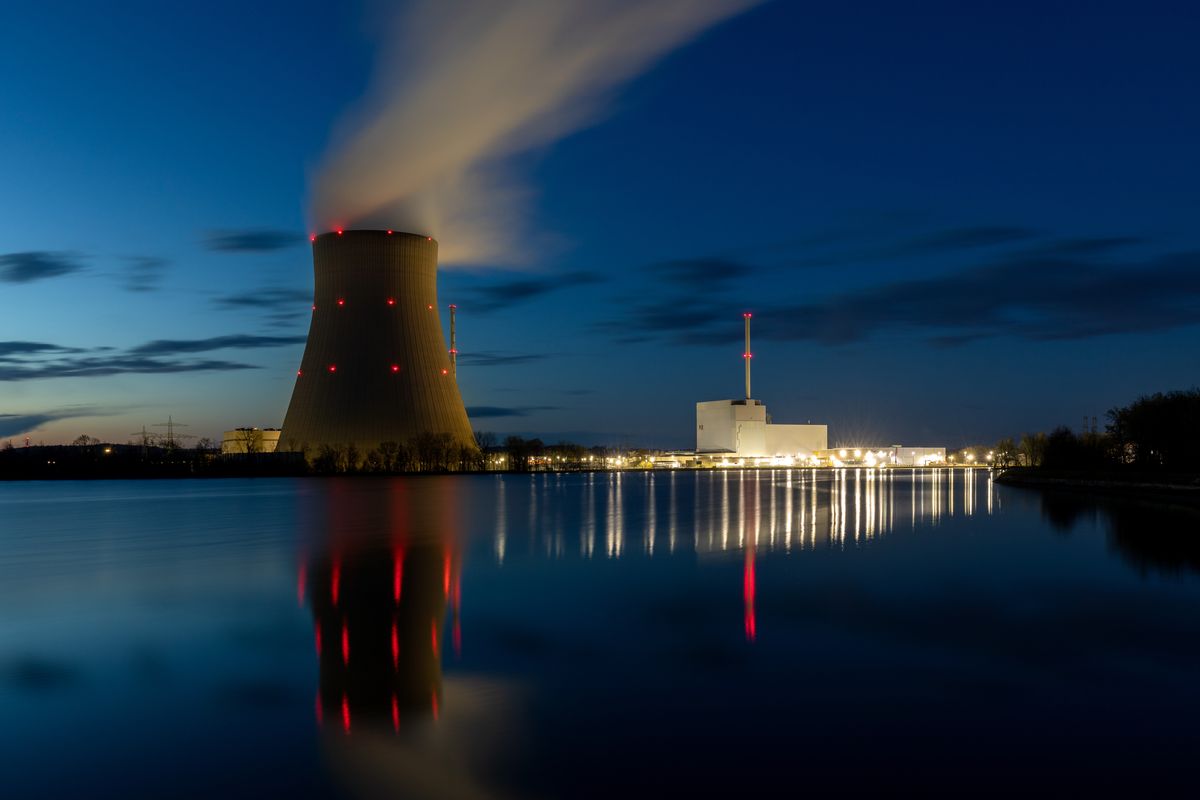
China Has Created The First Ever Meltdown-Proof Nuclear Reactor
Favicon 
www.iflscience.com

China Has Created The First Ever Meltdown-Proof Nuclear Reactor

China has created the first large-scale nuclear power station that is apparently resistant to meltdowns. Although this design cannot be fitted to existing nuclear reactors, it provides a model that can be used for any future constructions.How are nuclear reactors cooled?Existing nuclear power reactors require powered cooling systems to operate. The nature of these systems may vary between reactor designs – most use water, but some use coolants like CO2, helium, molten metals, or molten salts – but they all essentially do the same thing: they convey excess heat away from the reactor core.Water cooling systems are known to provide a high power density which translates to better thermal efficiency (basically the ratio of work output to the total heat energy input in a system), but it has drawbacks. For instance, there is always the chance of an explosion if the reactor experiences a meltdown. This is because, if water pumps lose power, the heat from the reactor fuel rods can split water into explosive hydrogen and oxygen gas.It was an issue like this that contributed to the Fukushima nuclear accident in 2011, when a loss of power meant the fuel rods – which were flooded – overheated, resulting in an explosion.Gas-cooled reactors are less liable to explode than their water-cooled counterparts, but they also tend to have lower thermal efficiency.But regardless of the type of cooling system employed, in the case of an emergency, human intervention is needed to shut down the rector to prevent a disaster. This is generally because the cooling systems rely on external power sources.What’s special about the new reactor design? One new(ish) kind of reactor design, known as a pebble-bed reactor (PBR), may have solutions to the issues inherent in older designs. These reactors are “passively” safe, whereby they can shut down on their own if there is any issue with the cooling system.  Unlike other reactors that rely on highly energy-dense fuel rods, PBRs use smaller, low-energy-density fuel “pebbles” in greater numbers. Although they contain less uranium than traditional fuel rods, there are more of them. They are also surrounded by graphite, which is used to moderate the amount of neutron activity in the core. This helps slow down nuclear reactions, resulting in less heat.As such, lower energy density means excess heat can be spread out across the pebbles and can be more easily transferred away.This may sound good, but until recently the only PBR reactors in existence were prototypes in Germany and China. However, China has now constructed a full-scale Temperature Gas-Cooled Reactor Pebble-Bed Module (HTR-PM) in Shandong, which became commercially operational in December 2023 and is equipped with these systems.In order to test them, engineers turned off both modules of HTR-PM at a time when they were operating at full power.“To confirm the presence of inherent safe reactors on a commercial scale, two natural cooling tests were performed on the #1 reactor module on August 13, 2023 and the #2 reactor module on September 1, 2023,” the researchers write. “During the entirety of the tests, the reactor modules were naturally cooled down without emergency core cooling systems or any cooling system driven by power.”The results, which have just been published, show that HTR-PM cooled itself, reaching a stable temperature within 35 hours of its power being cut. Being able to test an operating nuclear reactor by removing its cooling power is extremely unusual. It is only because of the HTR-PM’s unique system that this is even possible, and although further tests will be needed to ensure that the system works correctly, it is hoped this will serve as a model for future reactors elsewhere.“In summary, the loss-of-cooling tests conducted confirm the inherent safety feature of the world’s first demonstration plant of a HTR-PM,” the team wrote. “To fulfill the climate change mitigation goal, we have initiated new projects aimed at providing high-temperature steam up to 500°C [932°F] and electricity to the petrochemical industry in China.”“The reactor modules for the commercial plants are designed to adhere to the same standardized design.”The study is published in Joule.
Like
Comment
Share
Science Explorer
Science Explorer
2 yrs

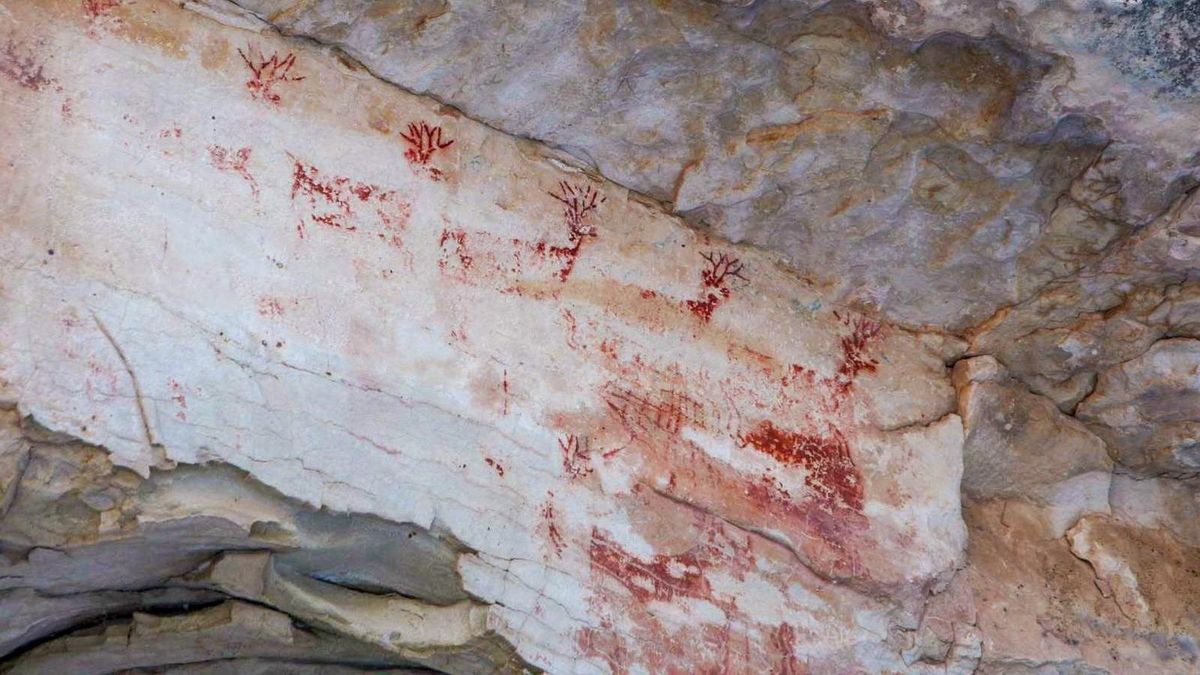
Ancient Rock Art Is Scattered Throughout The Grand Canyon – But You’ll Never Know Where
Favicon 
www.iflscience.com

Ancient Rock Art Is Scattered Throughout The Grand Canyon – But You’ll Never Know Where

The Grand Canyon is a spectacular sight to behold in and of itself, but did you know the surrounding national park is also home to a wealth of prehistoric rock art? Don’t be disappointed if you didn’t – the exact whereabouts of the vast majority of it remains a closely guarded secret.Take Shamans’ Gallery, a site that most people would never have heard of were it not for word-of-mouth and later, the Internet. First recorded in 1987 and named by American archaeologist Polly Schaafsma, it features a large panel of rock art paintings – called pictographs – depicting anthropomorphic characters, deer, birds, and other abstract features.Its style has been described as Grand Canyon or Esplanade Polychrome, the latter after the distinctively red and tan bed of sandstone that forms the canyon and though it can be difficult to precisely date rock art, it’s estimated to date back to the Archaic period, which lasted from around 8500 BCE to roughly 2000-1000 BCE.Shamans’ Gallery is also nowhere to be found on the National Park Service (NPS) website.The only way we know about it is through Schaafsma’s descriptions and photographs of the gallery taken by those who’ve managed to find the site. In the latter of those cases, it’s become something of an unofficial rule to not share the exact location, out of respect for preserving and protecting the art.Officials choosing to keep the location of thus far well-preserved ancient rock art so secret isn’t really a surprising choice given the behavior that some members of the general public visiting national parks display towards their surroundings.On an episode of the podcast Everybody’s National Parks, NPS park ranger and archaeologist Russell Cash, who works at Zion National Park, describes how out of the over 150 panels of pictographs and petroglyphs in that region, the “overwhelming majority” are not accessible to and are kept secret from the public in order to protect the art.The one site that is accessible, Cash describes as “the saddest thing that we have here in the park” because “there is more graffiti and vandalism on that rock than any other place in the park.”Back in Grand Canyon National Park and the nearby Grand Canyon-Parashant National Monument, there are a couple of locations where the public is allowed to feast their eyes on early pictographs and petroglyphs – namely on the Bright Angel Trail and at Nampaweap – but visitors are urged to keep their distance due to similar issues of vandalism.“Please don’t touch petroglyphs. When people touch petroglyphs, they leave a residue of body oil on the surface of the rock. Over time, the oil causes images to fade and history is lost,” says the NPS. “Remember petroglyphs by photographing or sketching them, not by making rubbings or tracings.”
Like
Comment
Share
Showing 19342 out of 56670
  • 19338
  • 19339
  • 19340
  • 19341
  • 19342
  • 19343
  • 19344
  • 19345
  • 19346
  • 19347
  • 19348
  • 19349
  • 19350
  • 19351
  • 19352
  • 19353
  • 19354
  • 19355
  • 19356
  • 19357

Edit Offer

Add tier


Select an image
Delete your tier
Are you sure you want to delete this tier?

Reviews

In order to sell your content and posts, start by creating a few packages. Monetization

Pay By Wallet

Payment Alert

You are about to purchase the items, do you want to proceed?

Request a Refund