YubNub Social YubNub Social
    Advanced Search
  • Login

  • Night mode
  • © 2026 YubNub Social
    About • Directory • Contact Us • Privacy Policy • Terms of Use • Android • Apple iOS • Get Our App

    Select Language

  • English
Install our *FREE* WEB APP! (PWA)
Night mode
Community
News Feed (Home) Popular Posts Events Blog Market Forum
Media
Headline News VidWatch Game Zone Top PodCasts
Explore
Explore Jobs Offers
© 2026 YubNub Social
  • English
About • Directory • Contact Us • Privacy Policy • Terms of Use • Android • Apple iOS • Get Our App

Discover posts

Posts

Users

Pages

Group

Blog

Market

Events

Games

Forum

Jobs

Science Explorer
Science Explorer
2 yrs

Subterranean Maya Structure And Hidden Pyramids Found In Mexico's Tropical Forests
Favicon 
www.iflscience.com

Subterranean Maya Structure And Hidden Pyramids Found In Mexico's Tropical Forests

In a quiet pocket of Mexico, archaeologists have used LiDAR imaging to reveal long-lost structures built by the Maya culture centuries ago. Among the discoveries are grand pyramids and a civic-ceremonial center, plus a subterranean structure found beneath a Maya ball court.The recent archaeological work was carried out by Mexico's National Institute of Anthropology and History (INAH) in central Campeche, a state that's famed for its ancient Maya ruins. The new project focused on a lesser-studied forest called the Balam Kú Biosphere Reserve, which spans approximately 140 square kilometers (54 square miles).The area is marked by tough terrain that’s tricky to farm, so unsurprisingly it’s home to fewer ancient settlements and structures compared to neighboring regions. The sites are also more modest in style, featuring minimal architectural decoration and engravings."The inevitable impression is that the Maya culture of this region that we have just explored was noticeably less elaborate than that of Petén, to the south, and the regions of Chenes and Chactún, to the north and east," Ivan Šprajc, an archaeologist from the Research Center of the Slovenian Academy of Sciences and Arts, said in a statement. Nevertheless, the researchers were able to make several significant discoveries thanks to LiDAR, a remote sensing technology that uses lasers to reveal hidden structures by penetrating dense vegetation and capturing precise topographical data.LiDAR images show an unusual substructure located under the site of a Maya ball court.Image credit: INAHOne important find was a group of structures near Nadzcaan, a site first discovered in the 1990s, featuring a main plaza with a pyramid construction and a drainage channel. Another notable site featured a large building that stood 13 meters (43 feet) tall and likely served as a civic-ceremonial center. This settlement, they suspect, must have held some “socio-political importance” given the building's stature. In the eastern part of this site, they also found a ball court that appears to sit on top of a substructure possibly from the Early Classic period (200-600 CE).Lastly, a third site consisted of several structures concentrated on a natural hill. Next to the main plaza stood a 16-meter (52-foot) high pyramid surrounded by several “offerings”, including a flint point, ceramic remains, and an animal leg fragment, perhaps of an armadillo or large rodent. This settlement dates to the Late Postclassic period (1250-1524 CE) during the last few centuries before the Americas were turned upside-down by the arrival of the Spanish. It also shows how human cultures managed to persist long after the disintegration of complex political entities in the Central Lowlands at the end of the Classic period.In recent years, LiDAR technology has revolutionized the field of archaeology. It’s proved to be especially useful in the tropical Americas where the relentless rainforests have swamped the ruins of many pre-Columbian civilizations, including highly complex settlements of enormous size and significance.One recent study indicated there could be as many as 10,000 archaeological sites hidden throughout the Amazon basin alone, shutting down the idea that the region was sparsely populated before it was colonized by Europeans. 
Like
Comment
Share
Science Explorer
Science Explorer
2 yrs

Just A Small Rise In Earth's Oxygen Levels Led To The Cambrian Explosion And Its Evolutionary Leaps
Favicon 
www.iflscience.com

Just A Small Rise In Earth's Oxygen Levels Led To The Cambrian Explosion And Its Evolutionary Leaps

New research shows that the Cambrian explosion, one of the most important interludes in the story of life on Earth, may have been triggered by a small increase in oxygen levels. Using datasets from an international consortium of scientists, the team show that modest changes in oxygen levels may have been enough to cause the major evolutionary leap we see in the fossil record.What was the Cambrian explosion?The Cambrian explosion occurred around 540 million years ago and brought with it a rapid burst of evolution, which resulted in greater diversification of life on the planet. Before this, life mostly consisted of single-celled and smaller multicellular organisms. But the fossil record shows that, within 20 to 30 million years – basically a single heartbeat in geological time – we see a huge variety of complex creatures emerging. Each new species has its own strange and novel body plan, with features like mineralized shells, gripping appendages, and sensory organs like eyes.“The specific animals that we observe as fossils from rocks of this age may look weird and wonderful to us,” Dr Richard Stockey, lead author of the new study and a paleobiologist at the University of Southampton explained to IFLScience, “but the ecological roles they were playing were very similar to marine animals that we know and love today.”“Unravelling whether there was an environmental trigger to this (geologically) rapid shift in the habitability of Earth’s oceans is a question that is fundamental to our understanding of our biosphere, and even potentially for the habitability of other planets.”Scientific uncertaintyFor decades, scientists believed the Cambrian explosion was kicked off by a sudden surge in atmospheric oxygen that brought oceanic oxygen levels close to what they are today.However, evidence for this has been limited, scattered, and, in some cases, contradictory.“As a community, we have been balancing a number of different lines of evidence, based on the chemical composition of ancient sediments,” Stockey added.“Some of these seemed to indicate a big oxygenation event around the Cambrian explosion, while others seemed to indicate that this scale of oxygenation didn’t occur until around 140 million years later.”But by conducting a comprehensive, large-scale data analysis, Stockey and colleagues have found that only a small increase in atmospheric oxygen actually occurred at the time of the Cambrian explosion.We have demonstrated that these changes in ocean oxygenation likely took place at a time where they could have played a key role in the major ecological and evolutionary changes we see during the so-called Cambrian explosion.Dr Richard StockeyThey did this by analyzing data showing levels of the metals uranium and molybdenum contained in sedimentary rock that formed in low-oxygen environments at the bottom of the world’s ancient oceans. The concentration of these metals in black shale is useful for assessing oceanic oxygen levels, essentially offering a way to investigate them across 700 million years of history.In the past, studies have found traces of metals in black shale during the Cambrian explosion, but they were based on data collected from sites where local factors can lead to increased levels of metal concentration. But statistical and machine learning techniques allowed Stockey and his team to assess data across a much larger scale and to match it with oceanographic models that give a better picture of historical oxygen levels.They found that changes in organic carbon in black shale have led to changes in trace metals that researchers have been seeing for the last 15 to 20 years."It's not until 140 million years after the Cambrian explosion, in the Devonian period, that we see trace metals increasing at a rate that would indicate whole ocean oxygenation," Stockey explained in a statement.Setting the oxygen record straightThe black shale data were compiled as part of the Sedimentary Geochemistry and Paleoenvironments Project. This is a first-in-its-field research consortium that unites geochemical data in a standardized dataset for collaborative and large-scale analysis.“Our community-driven approach has been absolutely critical to making this research possible,” Stockey told IFLScience.“We have found that the environmental conditions in which marine sediments were deposited are often very important in structuring the chemical composition of those sedimentary rocks, impacting the records that geochemists use to reconstruct the oxygenation of the oceans.”Geologists are specialists at figuring out key environmental changes, but they have limitations.“[G]eology has historically been quite a descriptive science and descriptive data is often difficult to integrate into state-of-the-art data science and machine learning techniques. By working with the geologists who originally described and collected the specific samples we use in this study, we are able to all use a common language and vocabulary to describe differences between the rocks we use from different geographic locations and time periods.”With this common vocabulary, researchers can apply sophisticated data science techniques that use this “geological knowledge” to address significant questions like the one being investigated here.“We have demonstrated that these changes in ocean oxygenation likely took place at a time where they could have played a key role in the major ecological and evolutionary changes we see during the so-called Cambrian explosion. I am really excited to keep investigating the extent to which those changes really did drive these changes,” Stockey concluded.“I think that we have a lot to learn from researchers who work on the impacts of environmental changes in modern oceans, as well as continuing to develop techniques that translate geological and palaeontological knowledge into powerful datasets that can be rigorously tested with modern data science.”The study is published in Nature Geoscience.
Like
Comment
Share
Science Explorer
Science Explorer
2 yrs

Neutron Star Spotted Shooting A Jet Like A Garden Sprinkler For First Time
Favicon 
www.iflscience.com

Neutron Star Spotted Shooting A Jet Like A Garden Sprinkler For First Time

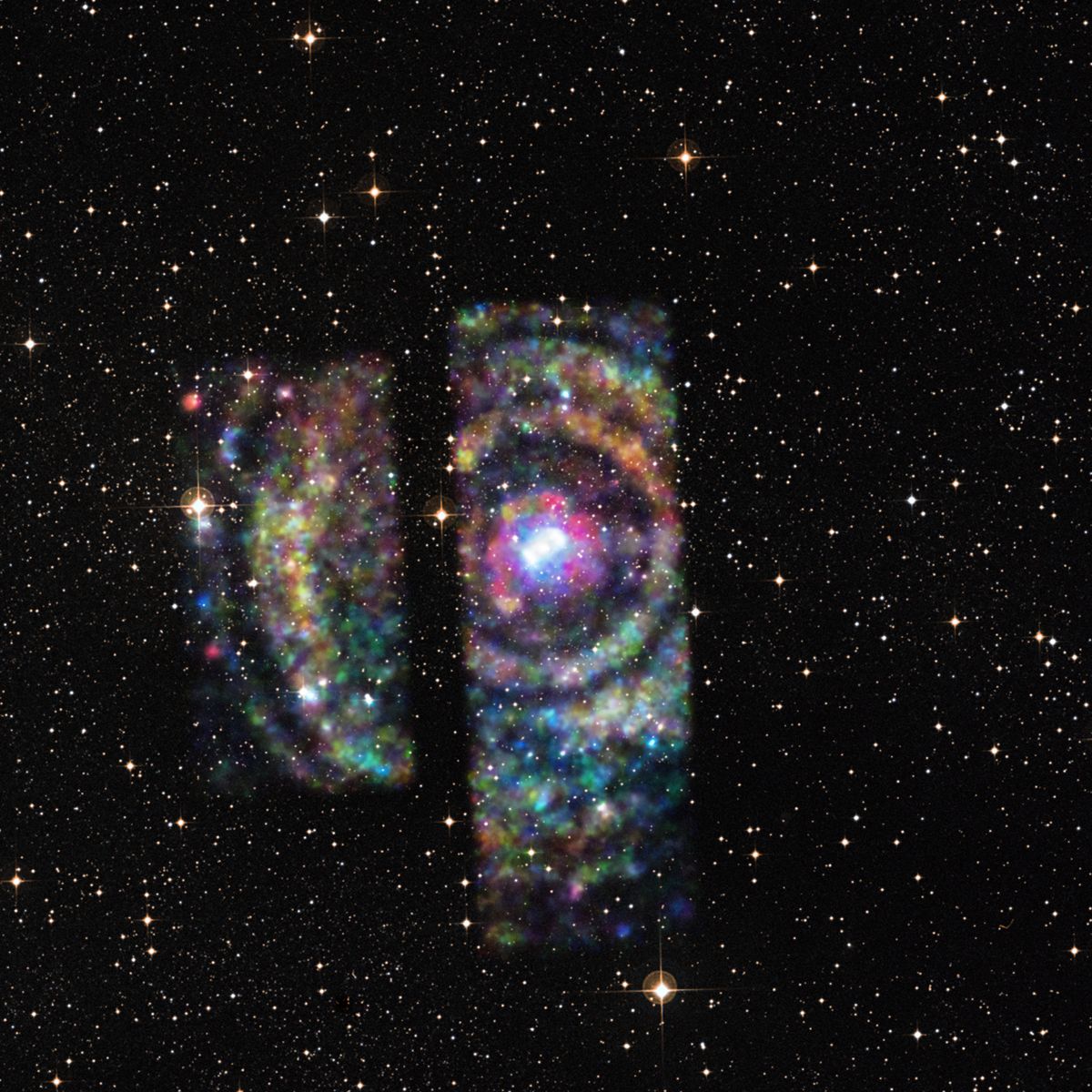
Astronomers have spotted a neutron star whose jet is changing direction for the first time. Likened to a garden sprinkler, the jet is coming from the phenomenal object Circinus X-1, one of the brightest and best-studied objects in the X-ray sky. However, it turns out that there is a lot more to discover about this object.Circinus X-1 is a binary system. It comprises a neutron star, the extremely dense remains of a star going supernova, orbited by a companion star from which it steals material. Some of that material is pushed away from the system in the form of powerful jets. These jets are commonly seen around black holes but Circinus X-1 was the first neutron star seen to have jets, back in 2007. Curiously, now it's been observed that the jet is not going straight.Circinus X-1 is such a well-studied source in our field, but it still remains such a puzzle even after 50 years of people looking at it.Fraser CowieThe interaction between the rotating star and the disk of material creates a precession. Just like a spinning top slowing down, the direction in the rotation of the neutron star and its jet point is changing. This motion makes the jet look like a garden sprinkler or even a gymnast's ribbon."[The research] is really exciting because Circinus X-1 is such a well-studied source in our field, but it still remains such a puzzle even after 50 years of people looking at it," Fraser Cowie, from the University of Oxford who presented the new research, told IFLScience. "Now we have managed, with our new observations, to shed a bit more light on why it is so puzzling and see even more features. We are starting to link the various puzzling things together in a more unified picture."Radio image of the S-shaped precessing jet launched by the neutron star in Circinus X-1.Image Credit: Fraser CowieThe observations were taken by the MeerKAT telescope in South Africa. Recent upgrades, which improve the sensitivity and resolution of radio observations, allowed the researchers to see the details of Circinus X-1’s jet, which is how the S-shaped structure was discovered. The accretion of material onto the neutron star is an extremely energetic process. Neutron stars are so dense that a teaspoon of material weighs as much as Mount Everest. As material falls onto these extremely dense objects, it can release the energy of a million Suns in a single second. Some of that energy will push away part of the infalling material into the jet.The jet is moving at velocities comparable to the speed of light. It slammed into the material surrounding this binary system creating termination shocks. It's moving so fast that interacting with the interstellar medium creates shockwaves.These termination shocks are moving at 10 percent of the speed of light. So it must have been caused by the jets. Winds, even from neutron stars, are not that energetic. This is the first time that termination shocks have been observed around an X-ray binary." We are still taking observations with MeerKAT every week. We can do two things with that. We can stack all the images together and look for even fainter new structures. Or we can start to look at how the source is changing with time," Cowie told IFLScience about the current work. Circinus X-1 will be followed up in multiple wavelengths leading to a more comprehensive picture of the system. The research was presented at the National Astronomy Meeting on July 15, 2024. 
Like
Comment
Share
Science Explorer
Science Explorer
2 yrs

This Is What Neanderthal And Denisovan Faces Looked Like
Favicon 
www.iflscience.com

This Is What Neanderthal And Denisovan Faces Looked Like

Your face is the result of thousands of years of lovemaking between multiple human species, with Neanderthals, Denisovans, and Homo sapiens being the main players in this ancient three-way romance. Because of a lack of physical evidence, however, we don’t really know how the features we’ve inherited compare to those of our extinct lovers – although the authors of a new study say that those two archaic human species probably had wider noses and more distantly spaced eyes than we do.To figure out how our long-lost relatives may have looked, the researchers examined the genomes of around 20,000 modern humans from around the world, paying particular attention to how genetic differences correspond to changes in facial structure. Ultimately, they identified 71 genomic loci that appear to influence a total of 78 different facial traits and distances.By applying this model to the genomes of seven Neanderthals and one Denisovan, the study authors were able to make predictions about how the faces of these ancient individuals might have appeared.“[Modern human] faces differ from archaic humans mainly in terms of a narrower nose width and a more obvious nose bridge,” write the researchers. “We infer that the nose shape of Neanderthals and Denisovans, were relatively different from the average [modern human], but were similar to the nose shape of [modern African humans] to some extent,” they continue. “The mouth of Neanderthal is similar in width and height to the average modern human, especially to [Europeans]. The height of the Denisovans’ mouth is also comparable to that of [modern humans], but the width is smaller,” add the study authors.Results also indicated that the distance between the eyes was greater for both Neanderthals and Denisovans than it is for Homo sapiens, and that Denisovans had shorter yet wider noses than either of the other two human species. Previous research has suggested that Neanderthals probably had larger schnozzes than we do because they evolved in a colder climate and therefore needed to burn more energy to keep warm, which means their oxygen intake requirements would have been higher than ours.Scientists have also found evidence to suggest that our own noses may have expanded as a result of our intermingling with Neanderthals, as we might have inherited some of their genes for large hooters.According to the authors of the new study, Denisovans probably had even higher airflow demands than Neanderthals since they lived in colder climates and at higher altitudes. Their supremely wide nostrils may therefore represent an adaptation to their environment, which would have suited big noses.The study has been published in The Journal of Genetics and Genomics.
Like
Comment
Share
Strange & Paranormal Files
2 yrs

The tablets of Tǎrtǎria: ancient artifact that could rewrite history
Favicon 
anomalien.com

The tablets of Tǎrtǎria: ancient artifact that could rewrite history

The Sumerians may not have been the first people to invent the earliest form of writing, which allegedly appeared c. 3500 B.C.E. The Tărtăria tablets, found in the western part of Romania and dating back to around 5300 B.C.E, according to radiocarbon dating, suggest that it was in Eastern Europe that writing first appeared. Some experts have dubbed the writing the Old European Script or the Danube Script. The tablets have been linked to the Neolithic Turdas-Vinca culture (c. 4500-3700 B.C.E), spread across several Romanian provinces, the south of Serbia, the southeast of Hungary, the northwest of Bulgaria and other countries. In 1961, archaeologist Nicolae Vlassa discovered what may be direct evidence of the earliest forms of writing in the world. While conducting an archeological excavation at a Neolithic site in Romania, Vlassa’s team uncovered three small clay tablets containing indecipherable etchings, now known as the Tartaria Tablets. There have been varying interpretations of the meanings of the etchings on the tablets. Some believe the etchings are a primitive form of writing, while others believe they are pictograms, random scribbles, religious symbols, or symbols of ownership. The tablets are each about 2 ½ inches across. Two are rectangular, and one is round. The round tablet and one rectangular tablet have holes drilled through them. The clay tablets were unbaked and were discovered along with 26 clay and stone figurines, a shell bracelet, and damaged human bones. The writing found on the Tartaria Tablets is the first writing in the world, which we know of. Unfortunately, the signs have remained indecipherable until this day. Some believe that the tablets were actually found within a sacrificial burial pit. The tablets are inscribed on only one side, and the inscriptions resemble a horned animal, an unclear figure, a vegetal motif, a branch or tree, and a variety of mainly abstract symbols. The so-called Danube Script is a script that appeared some 2,000 years earlier than any other known writing. It appeared in southeast Europe c.7300 BC. The script first appeared in the central Balkans but quickly spread to southern Hungary, Transylvania, the Danube valley, Macedonia, and northern Greece. The Danube script flourished up to about 5,500 BC, when a social upheaval apparently took place. The script is currently undecipherable, but is certainly generating a lot of interest among scholars of ancient languages. The Tartaria Tablets Older than Sumerian Ones Nicolae Vlasa made a colossal discovery in 1961. At Tartaria, in an ancient tomb, he found 2 tablets with inscriptions that were dated from 4500-200 BC. Tartaria is located in Alba county, Saliste. At the same site, there were found human skeletons. The inscriptions on the tablets are 1000 years older than the ones discovered at Djemer-Nasr, Kis and Uruk from Summer, dated by specialists somewhere around 3300 BC. Approximate location of the Vinča culture. Credit: thearchaeologist.org The culture who created the tablets in taught to be Turdas-Vinca (4500-3700 BC). The tablets have been dated with C14 and it is officially confirmed that the inscriptions on them are the oldest form of writing known to man, outdating the Sumerian ones. Scholars who conclude that the inscribed symbols are writing base their assessment on three conclusions, which are not universally endorsed. First, that similar signs on other artifacts of the Danube civilization suggest that there was an inventory of precise standard shapes of which scribes made use. Second, the characters of this proto-European script, when compared to other archaic writings, manifest a high degree of standardization and a rectilinear shape. Third, that the information communicated by each character was a specific one with an unequivocal meaning.Finally, that the inscriptions are sequenced in rows, whether horizontal, vertical or circular. Others consider the pictograms to be accompanied by random scribbles. Their meaning (if any) is unknown. If they do comprise a script, it is also not known what kind of writing system they represent. Some archaeologists who support the idea that they do represent writing have proposed they are fragments of a system dubbed the Old European Script. The post The tablets of Tǎrtǎria: ancient artifact that could rewrite history appeared first on Anomalien.com.
Like
Comment
Share
The Blaze Media Feed
2 yrs

Disney actively looking for trans actors to star in new 'Little Mermaid' show
Favicon 
www.theblaze.com

Disney actively looking for trans actors to star in new 'Little Mermaid' show

Disney made some waves when it cast a black actress to play Ariel in its 2023 live-action adaption of "The Little Mermaid." The company is apparently now entertaining the possibility of making a bigger splash with a transvestite actor in its upcoming musical stage production at Hollywood Studios. Disney has in recent months sought video submissions from "Equity actors" of both sexes and all ethnicities for the roles of Ariel and Prince Eric in "The Littler Mermaid - A Musical Adventure." Walt Disney World News revealed earlier this month that casting director Erika Ureña refined the open call to specify that for the role of the "spirited, fun-loving, yet curious mermaid princess," the company was looking for a white woman or white male transvestite between the ages of 18 and 30. Included among the songs the actor or actress playing Ariel will sing at the Animation Courtyard Theater in the Walt Disney Resort is a number titled, "Kiss the Girl." The lead will also sing "Daughters of Triton." Prince Eric, too, could be played by a member of the opposite sex. Ureña's posting indicated that for the non-singing role, Disney was looking for a white man or a "transgender man" between the ages of 18 and 30. This potentially transvestic adaptation will replace the "Voyage of the Little Mermaid," which was a feature show at the Animation Courtyard from January 1992 until the pandemic. While Disney has evidenced on multiple occasions its willingness to cast transvestites in various roles, That Park Place indicated that this is the first time the company is openly advertising it. 'I realized that I was just being gaslighted.' Blaze News previously reported that a conservative Christian family paid for a meet-and-greet with the Evil Queen at the Walt Disney World Resort in April. When it came time to take pictures and glad-hand with the Disney cast member, they realized that instead of a poisoned apple, the Evil Queen had an Adam's apple. The father told That Park Place that when he complained, the manager assured him that "she is a woman." "She went even further, trying to shame me, informing me that 'she' was so excited to get the part as the Evil Queen," said the father. "For a brief moment, I thought, 'Oh ... maybe I’m wrong,' but then I realized that I was just being gaslighted." At the time, John F. Trent, the editor in chief of That Park Place, told Blaze News that this "appears to be a continued pattern from the Walt Disney Company and its 'not-at-all-secret gay agenda,' as the company's Latoya Raveneau confirmed in March 2022." "It is clearly trying to target small children, their families, and even adults in an attempt to warp their minds into believing this objective evil is normal or even good," added Trent. Disney park-goers have in recent years shared footage online showing other other cast members in drag, including mustachioed men in dresses dealing with young children. Like Blaze News? Bypass the censors, sign up for our newsletters, and get stories like this direct to your inbox. Sign up here!
Like
Comment
Share
The Blaze Media Feed
2 yrs

Alex Stein reacts LIVE to ASSASSINATION ATTEMPT on Donald Trump
Favicon 
www.theblaze.com

Alex Stein reacts LIVE to ASSASSINATION ATTEMPT on Donald Trump

The attack on former President Donald Trump was just taken to an entirely new level — in the form of an assassination attempt. During his rally speech in Butler, Pennsylvania, on Saturday evening, a shooter who set himself up about 150 yards away on a roof to the north of the former president took his shot. Thankfully, he missed. The shooter, who was later identified as 20-year-old Thomas Matthew Crooks, fired multiple shots and did not accomplish what he set out to do. Rather, one bullet grazed Trump’s ear. After initially ducking, Trump rose quickly to his feet while Secret Service agents huddled around him and began moving him off the stage. Trump yelled out “wait” before pumping his fist in the air. It was an image that will go down as one of the most historic America has ever seen. While it was undeniable to everyone watching that Trump had survived an assassination attempt, the mainstream media jumped on the incident and refused to call it what it was. One CNN headline read “Secret Service rushes Trump off stage after he falls at rally.” Alex Stein of “Prime Time with Alex Stein” isn’t pleased with network's original reaction. “That’s disgusting,” Stein says in response to the headline, before noting that no one was ready for a situation like this — not even the Secret Service agents themselves. “You play that video, they’re like, what do we do? What do we do?” Stein says, adding, “They have protocols and stuff to follow, but they still don’t know what to do. Do they lift him up, do they rush him with the ambulance, like they’re still kind of confused what to do.” Stein, who was in Tampa with his girlfriend at the time of the shooting, stopped to ask dozens of people what their reactions were to the assassination attempt on Trump. Oddly enough, most of them were unaware or refused to talk. "Are you guys happy that Trump got shot?" Stein asked, confused as to why no one would answer. "Trump got shot by a BB gun," one man shouted while he passed by. "No," Stein responded.Want more from Alex Stein?To enjoy more of Alex's culture jamming, comedic monologues, skits, and street segments, subscribe to BlazeTV — the largest multi-platform network of voices who love America, defend the Constitution, and live the American dream.
Like
Comment
Share
Gamers Realm
Gamers Realm
2 yrs

This is the graphics card you need to play Once Human
Favicon 
www.pcgamesn.com

This is the graphics card you need to play Once Human

A brand new Sapphire RX 7800 XT is coming with Once Human branding, according to the graphics card makers' social media channel. It sports a fetching OH-themed design and a triple-fan cooler, though details about the card are thin on the ground so far. Sapphire picked a great card for its special edition Once Human design because we have the AMD Radeon RX 7800 XT listed as the best graphics card for under $500. Continue reading This is the graphics card you need to play Once Human MORE FROM PCGAMESN: Ryzen 7 7800X3D review, Best gaming CPU, Radeon RX 7800 XT review
Like
Comment
Share
Gamers Realm
Gamers Realm
2 yrs

MSI Stealth 16 AI Studio A1V review: Scotty, we need more CPU power
Favicon 
www.pcgamesn.com

MSI Stealth 16 AI Studio A1V review: Scotty, we need more CPU power

MSI might have shoehorned “AI” into the name of its latest 16-inch gaming laptop, but there’s a serious gaming spec under the slimline hood. The real key features in the MSI Stealth 16 AI Studio A1V are an awesomely powerful Nvidia GeForce RTX 4090 GPU, and a stunning 4K+ miniLED display with a 120Hz refresh rate. That combo alone should be enough to make any PC gaming enthusiast weak at the knees, and it comes at what looks like a reasonable price of $3,299 as well. There’s a lot to love about the MSI 16 AI Studio A1V, and although it doesn’t quite rank with the best gaming laptops around, it does bring a lot to the table for that initial outlay. So, who is this for? It can handle gaming, of course, but MSI is also targeting the professional, the creator, and the artist. It’s a studio laptop kitted with some serious firepower to really take advantage of Photoshop, Da Vinci Resolve, and other similar programs. That color-accurate display and GPU combo alone is enough to prove that point, but it also packs plenty of RAM to back it all up. This is what piqued my interest in particular. As well as being a gamer, I’ve also spent many years dabbling in Photoshop, building everything from World of Warcraft interfaces, to websites, CVs, and even house designs. I’ve spent the last two weeks getting to grips with the Studio A1V to see whether it’s up to scratch, and if it’s capable of replacing my fully-fledged desktop in exactly those tasks. And of course, I wouldn’t be a 20-year World of Warcraft veteran without playing some games on it too. Continue reading MSI Stealth 16 AI Studio A1V review: Scotty, we need more CPU power MORE FROM PCGAMESN: MSI Z370 Gaming Pro Carbon AC review, MSI GTX 1080 Ti Gaming X Trio review, Best gaming motherboard
Like
Comment
Share
Gamers Realm
Gamers Realm
2 yrs

Massive Bloodborne inspired Elden Ring mod now works with the new DLC
Favicon 
www.pcgamesn.com

Massive Bloodborne inspired Elden Ring mod now works with the new DLC

Elden Ring’s astounding Bloodborne-inspired overhaul finally works with Shadow of the Erdtree, so you can take Yharnam’s trick weapons, firearms, and eternal night into the FromSoftware DLC. With the Bloodborne PC port seemingly never happening (it's been nine years I'm so sorry), the gameplay changes in this mod make it the closest we'll ever get to that dream. Continue reading Massive Bloodborne inspired Elden Ring mod now works with the new DLC MORE FROM PCGAMESN: Elden Ring builds, Elden Ring bosses, Elden Ring weapons
Like
Comment
Share
Showing 20427 out of 56670
  • 20423
  • 20424
  • 20425
  • 20426
  • 20427
  • 20428
  • 20429
  • 20430
  • 20431
  • 20432
  • 20433
  • 20434
  • 20435
  • 20436
  • 20437
  • 20438
  • 20439
  • 20440
  • 20441
  • 20442

Edit Offer

Add tier


Select an image
Delete your tier
Are you sure you want to delete this tier?

Reviews

In order to sell your content and posts, start by creating a few packages. Monetization

Pay By Wallet

Payment Alert

You are about to purchase the items, do you want to proceed?

Request a Refund