YubNub Social YubNub Social
    Advanced Search
  • Login

  • Night mode
  • © 2026 YubNub Social
    About • Directory • Contact Us • Privacy Policy • Terms of Use • Android • Apple iOS • Get Our App

    Select Language

  • English
Install our *FREE* WEB APP! (PWA)
Night mode
Community
News Feed (Home) Popular Posts Events Blog Market Forum
Media
Headline News VidWatch Game Zone Top PodCasts
Explore
Explore Jobs Offers
© 2026 YubNub Social
  • English
About • Directory • Contact Us • Privacy Policy • Terms of Use • Android • Apple iOS • Get Our App

Discover posts

Posts

Users

Pages

Group

Blog

Market

Events

Games

Forum

Jobs

Daily Caller Feed
Daily Caller Feed
2 yrs

Alec Baldwin Addresses His Big Legal Win On Social Media
Favicon 
dailycaller.com

Alec Baldwin Addresses His Big Legal Win On Social Media

'You will never know how much I appreciate your kindness'
Like
Comment
Share
Daily Caller Feed
Daily Caller Feed
2 yrs

Trump Credits Immigration Chart For Saving His Life, Former White House Doctor Says
Favicon 
dailycaller.com

Trump Credits Immigration Chart For Saving His Life, Former White House Doctor Says

'If I hadn't pointed'
Like
Comment
Share
The Lighter Side
The Lighter Side
2 yrs

Nurse Credited for Saving Man’s Life with CPR and Defibrillator After Heart Attack in Charlotte Airport
Favicon 
www.goodnewsnetwork.org

Nurse Credited for Saving Man’s Life with CPR and Defibrillator After Heart Attack in Charlotte Airport

Like so many victims, the first sign that Ken Jeffries was vulnerable to heart disease was a heart attack—suffered when the 57-year-old was at the airport waiting for a flight. Collapsing to the floor of the Charlotte Douglas Int. Airport, he has his lucky stars to thank for his flight being bound for Knoxville—the same […] The post Nurse Credited for Saving Man’s Life with CPR and Defibrillator After Heart Attack in Charlotte Airport appeared first on Good News Network.
Like
Comment
Share
SciFi and Fantasy
SciFi and Fantasy  
2 yrs

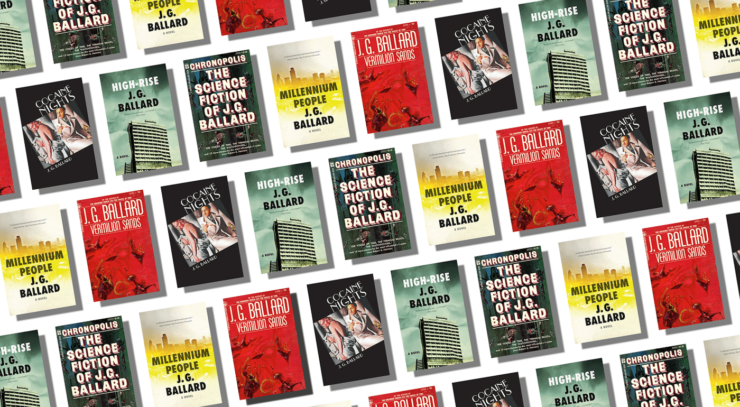
Unimaginable Wealth, Decadence, Decline: Scaling the Walled Gardens of J.G. Ballard
Favicon 
reactormag.com

Unimaginable Wealth, Decadence, Decline: Scaling the Walled Gardens of J.G. Ballard

Books J.G. Ballard Unimaginable Wealth, Decadence, Decline: Scaling the Walled Gardens of J.G. Ballard Ballard’s fiction is filled with spoiled elites, hoarded luxuries, and class warfare, but no easy answers or predictable outcomes… By Ryan Berger | Published on July 15, 2024 Comment 0 Share New Share “Ballardian” is probably not anywhere near the top of the list of potential Met Gala themes one could have reasonably expected to see in their lifetime (likely not in the top thousand or so, just behind “Borgesian” and ahead of “Barthelmian” even if we just stick to the literary B’s). Yet here we are… When Vogue announced that the dress code for its 2024 soiree would be “The Garden of Time,” I initially didn’t clock it as a reference to the J.G. Ballard story, and any random photograph taken from the night does little to reinforce the connection. Any reference to the late, great author of dystopian science fiction with an emphasis on urban surrealism was quickly supplanted by the Gala’s more digestible theme: “Sleeping Beauties: Reawakening Fashion” (though the relationship between the gala’s theme and its dress code is notoriously ambiguous). Fey apparel, floral garments, and even some clock and hourglass symbolism were all apparent on the red carpet—visions of Ballardian horrors of modern life, less so. The irony of this year’s theme was not lost on those familiar with the story. The Met Gala, for all its charity and celebration of the arts, has become a veritable Olympics of Opulence, a night when unimaginable wealth is flaunted on the museum steps in New York’s thrumming heart. Ballard’s “The Garden of Time” tells the story of a rich count and countess living a charmed life in a walled garden surrounded by magnificent art, baroque architecture, and near-total seclusion. It is an idyllic manse where even “the air seemed brighter, the sun warmer” while the surrounding lands are “always dull and remote.” Count Axel, the keeper of the castle, looks over the ramparts one evening to see an army of torch-wielding commonfolk presumably coming to redistribute his wealth by force. The count then goes into his garden to pluck a crystalized “time flower” that, once picked, bursts apart and turns back time, pushing the mob deeper into the horizon. Axel and the Countess savor their remaining time together as they exhaust their supply of flowers, and the story ends with the mob breaching the walls only to find that the castle is a creaking husk, long abandoned—the rubble ruled by two lonely statues, a monument to our handsome couple. It is not difficult to spot the friction, here. Both the Met Gala and Ballard’s story are visions of haves and have-nots. It goes without saying that there is extreme poverty in our real world, mere blocks from the Gala, and inequality is the bedrock of our society, so any flourish of wealth where the cost of tickets to attend the event outpaces the total annual income of millions of families is going to become a target of ire. Though it’s never explicitly stated if the Count and Countess are poor custodians of the land or how they amassed their hoard of art—it is obvious the couple cloisters themselves and have monopolized all of life’s beauty and luxury, from access to art, the sun above, and even time itself. That feeling that the rich control the material world is not a new idea, but Ballard’s sense that the affluent can turn the dial on metaphysics itself is an unsettlingly plausible notion. These images of walled gardens, experiments in seclusion, a grasping hunger for experience, the privatization of beauty, class warfare, and mob mentality are all pervasive throughout Ballard’s oeuvre. Nearly every element we see in “The Garden of Time” has gone under the microscope with greater specificity in one or more of Ballard’s novels. To examine how the rich play if left completely unsupervised, free to let their darkest impulses drive them in the name of art and creativity—Ballard created the overlit beaches of Vermilion Sands, a fixup novel of short stories that follows the psychopathic rich and the boutique managers who keep their paradise running. Animosity between social classes is at the concrete core of perhaps Ballard’s most popular science fiction book High-Rise, in which a modern marvel of architecture—a city sealed in a skyscraper—declares war on itself as the upper and lower floors dissolve into atavistic tribal violence in a commentary on suburbia and hostile urban planning. Even the usually sanctified mob itself is not free of criticism, as evident in Millennium People, a satire about the misplaced, meaningless anger lying dormant in the hearts of London’s middle-class intelligentsia. Ballard can sometimes be contradictory in his treatment of these same subjects across different books: the celebrities who populate the resort of Vermillion Sands are almost exclusively pathological narcissists who tie their own noose—yet in Millennium People, Ballard engages in a defense of the famous when the mob tries to scapegoat them to justify its bloodlust. But this is less waffling on an opinion and more of a desire to produce variations on a theme and explore the same truth in different environments. Both Ballard’s revolutionary hotbed of Chelsea Marina in Millennium People and the resort town of Estelle Del Mar in Cocaine Nights present profound middle-class ennui as a serious threat—but give rise to wildly different reactions. The residents of Estelle Del Mar are desperate for sensation and danger that wakes up the soul and forces them to live mindfully, while in Millenium People, boredom is turned into aimless rages against dog shows, the tourism industry, and art museums as the wayward neo-proletariat search for a worthwhile boulder to push uphill. The symbols remain the same, but the contexts produce strange mutations. This is to say that we should resist the easy reading of this story: that the lords in “The Garden of Time” are piggish, wasteful caricatures of what wealth does to people. Ballard lends his couple no small amount of sympathy and does not delight in watching his creations scatter like insects when the mob climbs the hill. Indeed, in Millennium People, the protagonist David Markham laments after the senseless death of a celebrity—killed for no discernible reason, yet framed by the rioters as a revolutionary act—the fact that “[f]ame and celebrity were again on trial, as if being famous was itself an incitement to anger and revenge, playing on the uneasy dreams of a submerged world, a dark iceberg of impotence and hostility.” It is in some ways a radical position to take, in a world desperate to balance the scales of inequality, to insist that celebrities do not deserve the mob’s justice simply for being gluttons for life and leisure and that we should resist substituting a convenient, highly visible scapegoat in place of the real culprits, no matter how satisfying the release or how tone-deaf the target. Still, we also should not paint the couple in the garden as entirely blameless, and this is where the cries of the affluent come off as tinny. Despite ostensibly wielding time itself, it is painfully obvious that the only thing that Axel and the Countess understand about the crystal flowers is that they are in dwindling supply. They write time itself off as a stubborn gravity beyond mortal control, an incomprehensible force Ballard calls “as simple and mysterious as sundials.” To them, time is archaic and their fate inevitable. Yet this is not necessarily a story about the unstoppable march of time and how no coin or castle can pacify it. While counting his winnowing patch of time flowers, Axel laments that “[d]uring his entire lifetime, he had failed to notice a single evidence of growth among the flowers.” Perhaps this is Ballard suggesting that time is the one thing that we cannot cultivate and stockpile—but if the couple is guilty of crimes other than harpsichord ownership, it might suggest that the mob’s anger is rooted in their lord’s great mistreatment of time and take issue with the suggestion that the exhaustion of the precious time flowers is but one of those simple, thorny facts of life… At least, on the personal scale, and herein lies our aristocrat’s true sin: Time for the individual may be finite, but it is the responsibility of those in the present to ensure that there will be time for others to spend in the future. There is a proverb sometimes attributed to Chief Seattle of the Duwamish and Suquamish peoples: “We do not inherit our land from our ancestors, but instead borrow it from our children.” This wisdom contradicts Axel’s belief that no decision may have saved them and there was no way to cultivate the time flowers. If they had only shared their resources, the answer to how one grows more time flowers may have been found among the common folk. A more generous approach to life would have left more time available for all, but instead the secrets and the garden itself dies with the couple. No fool draws more anger than the one who makes every mistake possible, achieves nothing, and then claims that there was no other possible outcome. This is why fatalism from those in power, this resignation to the violent ways of the world (or the worsening climate, a metaphor that fits snugly inside “The Garden of Time”)as human nature or the unavoidable cost of doing business tend to fall on deaf ears. The story can be read, then, as a commentary not about the stubborn, fickle properties of time—but instead about those who live thoughtlessly and mistake their inability to leave the world in a better place than they found it as a harsh reality rather than a personal failure. Inevitability is another common theme in Ballard’s writing. Nearly all of the stories in Vermilion Sands begin with a tattered vignette of dilapidated mansions, ghost ships, and personal effects left ruined on the beach before a flashback takes us to the first events of their tragic origins. Both High-Rise and Millennium People also begin this way, with a vision of a chaotic present before peddling backwards to when things were bright, perhaps inspiring hope for a new, better outcome even if we know the truth beforehand. Though we begin with the regal couple at the start of “The Garden of Time” very much alive, by the end we come to realize that their actions have been buried in the unreachable past, their only punishment dispensed by nature, deepening and calcifying their belief that they did all they could. Perhaps this is the greatest trick that time pulls on us: Not that it somehow manages to slip through our fingers no matter how tightly we cup our hands, but that even those who understand that time is in short supply are unaware of just how little time there is, how the end can be measured in steps, not years. It’s the false perception that a crisis point, some decision to change our decadent ways and avoid disaster is not approaching rapidly, but in fact was passed long ago and it is too late for our anger to mean anything. The tragedy of “The Garden of Time” is that even though the mob has finally been summoned to restore balance, they know not that they are marching on ruins.[end-mark] The post Unimaginable Wealth, Decadence, Decline: Scaling the Walled Gardens of J.G. Ballard appeared first on Reactor.
Like
Comment
Share
Reclaim The Net Feed
2 yrs

Think Tank Pushes International Alliance To Censor “Fake News”
Favicon 
reclaimthenet.org

Think Tank Pushes International Alliance To Censor “Fake News”

If you're tired of censorship and dystopian threats against civil liberties, subscribe to Reclaim The Net. The Japanese chair of the Center for Strategic and International Studies (CSIS) has come out with a report calling for the US and Japan to team up on “combating disinformation.” Christopher B. Johnstone also wants the two countries to engage in several censorship techniques, such as removing content (“false narratives” – regular censorship) but also a considerably more dystopian one known as “prebunking.” That would be, suppressing narratives by revealing them as “misinformation” before they become public, thus eroding the very perception of their trustworthiness, while equating this as introducing “mental antibodies” into a population, and other outlandish language has been used in the past to justify the tactic. CSIS mentions in a press release announcing the report that Johnstone had a meeting with Japanese Ministry of Foreign Affairs Director of Public Diplomacy Strategy Division Hideaki Ishii, “to discuss how the United States and Japan can cooperate to address this critical challenge” (namely, combating “disinformation”). Not for nothing – CSIS is not your run-of-the-mill nonprofit, and access to government structures in other countries is not surprising, given its origins and image as one of those think tanks that have an oversized influence on US foreign policy. Now, CSIS wants Japan and the US to tackle “information operations” such as (real or labeled as such) disinformation threats. The report seeks to establish an agenda to increase this collaboration and mentions that the paper includes “the results of a closed-door conference held at CSIS in February” – attended by “experts” from both countries. The part of the report that addresses strategies to counter the threat, defined by CSIS, includes public education and media literacy, AI (as a tool of censorship – but without failing to mention the same tech as supposedly a grave threat to democracies when it’s used to create deepfakes). Another thing CSIS likes is “fact-checking” (while critical of Japan as being “somewhat late” to this particular game), as well as debunking. And then, there’s “prebunking” which CSIS chooses to describe as a method that proactively issues “forewarnings” and also “preemptively refutes false narratives.” Coming back to Earth a little bit, so to speak – in terms of championing more conventional information control tools, the CSIS strategy lastly mentions “labeling, transparency, and risk monitoring.” If you're tired of censorship and dystopian threats against civil liberties, subscribe to Reclaim The Net. The post Think Tank Pushes International Alliance To Censor “Fake News” appeared first on Reclaim The Net.
Like
Comment
Share
Hot Air Feed
Hot Air Feed
2 yrs

Why is the Power Still Out in Houston?
Favicon 
hotair.com

Why is the Power Still Out in Houston?

Why is the Power Still Out in Houston?
Like
Comment
Share
Hot Air Feed
Hot Air Feed
2 yrs

Taibbi: The Slow Motion Assassination
Favicon 
hotair.com

Taibbi: The Slow Motion Assassination

Taibbi: The Slow Motion Assassination
Like
Comment
Share
Science Explorer
Science Explorer
2 yrs

Astronomers Are Attempting To Redefine What A Planet Actually Is
Favicon 
www.iflscience.com

Astronomers Are Attempting To Redefine What A Planet Actually Is

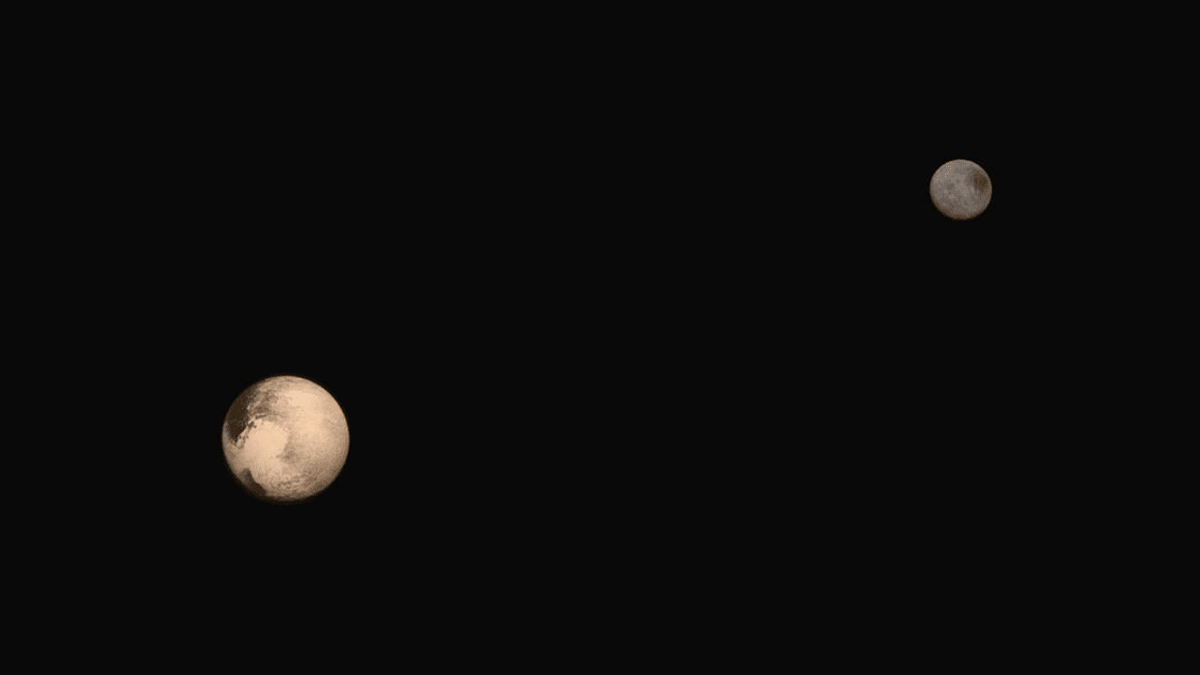
A team of astronomers has proposed a new definition of a planet ahead of the International Astronomical Union’s (IAU's) General Assembly next month. Don't hold your breath, Pluto fans.As we learn more about the Solar System and beyond, our understanding of what constitutes a planet has changed. The classic example came in 2006 when the IAU downgraded Pluto to dwarf planet status as it did not meet all the updated criteria for what astronomers call a planet. Though it orbits the Sun and has enough mass to make it into a nearly spherical shape (two requirements), it does not dominate its own orbit, as required by the updated definition. Pluto has not tidied up enough of its orbit of other space rocks to qualify, sharing its orbit with other large objects that do not orbit the dwarf planet as moons.   One major part of the definition of planets that will likely change is that it currently does not include exoplanets. Since the first exoplanet was found in 1992, we have discovered over 5,000 exoplanets.“The current definition specifically mentions orbiting our Sun. We now know about the existence of thousands of planets, but the IAU definition applies only to the ones in our Solar System,” Jean-Luc Margot, professor of earth, planetary, and space sciences and of physics and astronomy at UCLA and lead author of the new paper, said in a statement. "We propose a new definition that can be applied to celestial bodies that orbit any star, stellar remnant, or brown dwarf.”In the new definition, the team suggests that we ditch the requirement that planets be spherical, as this is currently difficult to ascertain with exoplanet observations. But mass can be measured much more easily, and so instead, the team proposes mass limits for what constitutes a planet. The lower limit is proposed at 1023 kg. Objects above 1023 kg tend to be spherical anyway, and the team argues that it would be helpful to move to more quantifiable definitions.“Having definitions anchored to the most easily measurable quantity — mass — removes arguments about whether or not a specific object meets the criterion,” co-author Brett Gladman added. “This is a weakness of the current definition.”The team, whose work is accepted for publication in the Planetary Science Journal but has not yet been peer-reviewed, places an upper limit of mass at 13 Jupiter masses. At this point, gas giants become substars known as brown dwarfs, as fusion of deuterium occurs in their cores. The new definitions proposed by the team will be up for discussion at the IAU's general assembly next month and are intended to start a more general discussion about the definition of what a planet is. Unfortunately for Pluto fans, it still does not qualify as a planet under the new proposed definition.“All the planets in our Solar System are dynamically dominant, but other objects — including dwarf planets like Pluto, and asteroids — are not,” Margot added. “So this property can be included in the definition of a planet.”The study is accepted for publication in the Planetary Science Journal, and is available to read on the pre-print server arXiv.
Like
Comment
Share
Science Explorer
Science Explorer
2 yrs

The First Cave Has Been Found On The Moon – Is It Ready For Occupation?
Favicon 
www.iflscience.com

The First Cave Has Been Found On The Moon – Is It Ready For Occupation?

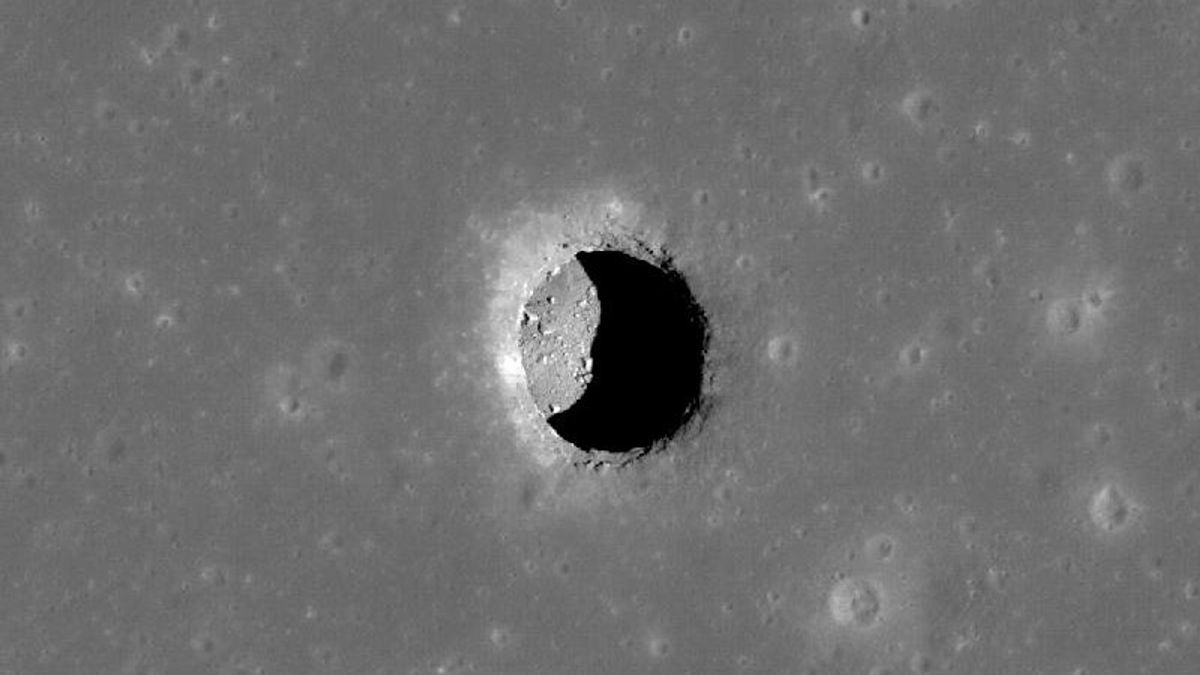
A tunnel has been identified under the surface of the Moon for the first time, appropriately on the Sea of Tranquility where humans first set foot. Although this particular spot is not a likely place to build a future colony, where there is one cave there are likely to be more, boosting the prospects for future colonization. Despite falling launch costs, it will be very expensive to carry anything heavy to the Moon for the foreseeable future. A long-term base, let alone anything permanent, will depend on being able to source as much as possible on location. Much of the focus in recent years has been on finding sources of water, but shelter is crucial as well. Any future astronauts will need extensive protection from space radiation and the wild swings in temperature the Moon experiences if they are to stay long. We’d also like something tough enough to survive a small asteroid strike of the kind that is common without atmospheric shielding. Much better if there are natural formations that provide this than having to build or dig our own."In 2010, as part of the ongoing Luna Reconnaissance Orbiter (LRO) NASA mission, the Miniature Radio-Frequency (Mini-RF) instrument acquired data that included a pit in Mare Tranquilitatis,” said Professor Lorenzo Bruzzone in a statement. “Years later we have reanalysed these data with complex signal processing techniques we have recently developed, and have discovered radar reflections from the area of the pit that are best explained by an underground cave conduit. This discovery provides the first direct evidence of an accessible lava tube under the surface of the Moon."The pit is about halfway between the landing sites of Apollo 11 and Apollo 17.Image credit: NASAThe pit Bruzzone and colleagues studied, known as Mare Tranquillitatis pit, is one of more than 200 that have been observed. Some or all of these appear to be the result of the ceiling of a lava tube caving in. However, just because such a pit exists does not mean there is an underground cave large enough to be useful. The Mare Tranquillitatis pit is the deepest known, so it seemed a good place to start. It’s around 100 meters (328 feet) across with walls so steep they may be overhanging. That makes it one of the few large enough for internal features to be detected with the resolution the LRO’s radar could provide.The new study reveals a bright patch on the west side of the pit in the LRO’s side-looking orbital synthetic aperture radar images. Simulations suggest it is a conduit between 30 to 80 meters (98 to 262 feet) long and around 45 meters (148 feet) wide. Not large enough to hold a city perhaps, but a decent location for a lunar village. The floor of the cave is thought to be flat enough to be usable. Although it’s more than 100 meters (328 feet) from the cave entrance to the surface, in the low lunar gravity that might not be a major impediment. The authors constructed two models of the likely dimensions of the pit and cave, differing primarily in the height of the rock pile produced when the ceiling of the pit fell in and therefore the steepness of the floor.What it might be like to enter a lunar lava tube.Image credit: Conor Marsh, University of Manchester/ESAAs is said of New York, the Sea of Tranquility is a great place to visit, but we wouldn’t want to live there. That’s because it lacks the other crucial ingredient for lunar habitation: ice. Frozen water almost certainly exists at the lunar poles, particularly the south pole, inspiring the race to land there. Ice anywhere near the surface of the flat equatorial plane that is Mare Tranquilitatis would have long since boiled off in the scorching lunar days. Nostalgia about being about 7 degrees due north of where Armstrong took “one small step” won’t compensate for having nothing to drink.However, the work increases the chances that such lava tubes could exist at the poles, and perhaps more importantly, that we can find them from space with modestly increased resolution. "These caves have been theorized for over 50 years, but it is the first time ever that we have demonstrated their existence,” Bruzzone said.The study is published in Nature Astronomy.
Like
Comment
Share
Science Explorer
Science Explorer
2 yrs

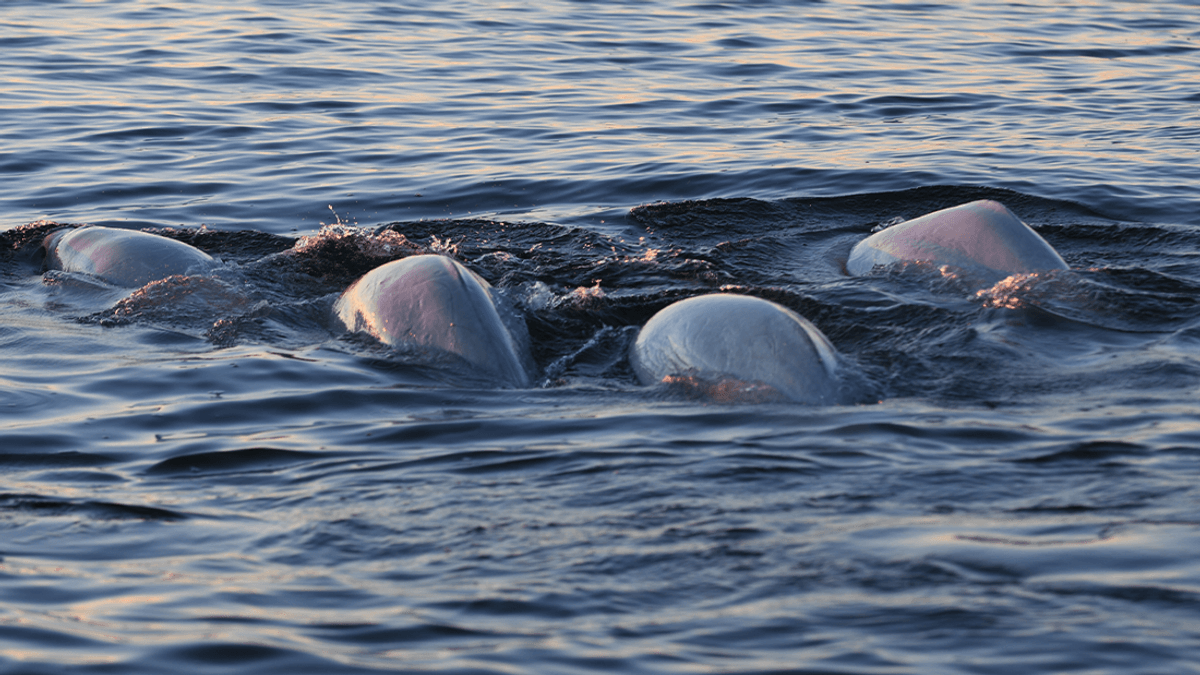
60,000 Beluga Whales Are On The Move – Watch Their Annual Migration Live
Favicon 
www.iflscience.com

60,000 Beluga Whales Are On The Move – Watch Their Annual Migration Live

Whale species in Earth’s oceans are some of the most majestic and captivating animals the world has to offer. From the biggest blue whale to sperm whales and everything in between, few people get the chance to appreciate these marine mammals. However, almost 60,000 beluga whales are now on the move as part of their annual migration and Polar’s Bears International have set up a beluga whale live stream so we can join in on the action. Today, July 15, is Arctic Sea Ice Day, a day created by Polar Bears International to bring attention to the rapidly melting Arctic ecosystem. The beluga whales (Delphinapterus leucas) swim from the wider Arctic Ocean into the Churchill River in Hudson Bay, Canada, to feed and give birth to their young. More than 57,000 belugas will make this journey so the odds of spotting them frolicking in the water via the live cam are pretty good. “Beluga whales are so curious and many will swim right up to the underwater camera, as they play in the wake of the boat,” Alysa McCall, Polar Bears International Staff Scientist and Director of Conservation Outreach, told BBC Discover Wildlife.     Two live cams are mounted on the research boat Delphi: one that films the water's surface, while the other films under the water. A hydrophone is even used to pick up the voices of the belugas as they travel. These animals are known as the “canaries of the sea” because of their incredible range of vocalizations. As well as their vocalizations, studies have shown that the squishy melon on their heads can also change shape, aiding with visual communication. Hudson Bay has plenty of food for the whales but remains inaccessible to them in the winter months. In the summer, however, the ice melts, making it the perfect place for the whales to journey to as it is also home to relatively few killer whales, their natural predators. Part of the reason to return to these plentiful waters is that the adults must undergo the molt. According to the Alaska Department of Fish and Game, their skin grows about 100 times faster than normal during this time. According to research from the 1990s, the low salt and warmer temperatures of the waters in the Hudson Bay may help the skin grow faster, by stimulating blood flow to the skin.     In the fall, the ice will once again reform and the belugas will travel back out. They feed on salmon and other fish as well as shrimp, crabs, and moullusks, explains the WWF. Not only do the belugas rely on the sea ice, but species like polar bears and seals use it as a platform to hunt, rest, and reproduce. 
Like
Comment
Share
Showing 20438 out of 56670
  • 20434
  • 20435
  • 20436
  • 20437
  • 20438
  • 20439
  • 20440
  • 20441
  • 20442
  • 20443
  • 20444
  • 20445
  • 20446
  • 20447
  • 20448
  • 20449
  • 20450
  • 20451
  • 20452
  • 20453

Edit Offer

Add tier


Select an image
Delete your tier
Are you sure you want to delete this tier?

Reviews

In order to sell your content and posts, start by creating a few packages. Monetization

Pay By Wallet

Payment Alert

You are about to purchase the items, do you want to proceed?

Request a Refund