YubNub Social YubNub Social
    Advanced Search
  • Login

  • Night mode
  • © 2026 YubNub Social
    About • Directory • Contact Us • Privacy Policy • Terms of Use • Android • Apple iOS • Get Our App

    Select Language

  • English
Install our *FREE* WEB APP! (PWA)
Night mode
Community
News Feed (Home) Popular Posts Events Blog Market Forum
Media
Headline News VidWatch Game Zone Top PodCasts
Explore
Explore Jobs Offers
© 2026 YubNub Social
  • English
About • Directory • Contact Us • Privacy Policy • Terms of Use • Android • Apple iOS • Get Our App

Discover posts

Posts

Users

Pages

Group

Blog

Market

Events

Games

Forum

Jobs

The Lighter Side
The Lighter Side
2 yrs

Young Stranger Spends $2,800 on Funeral for a Woman He Never Met–She Reminded Him of His Sister
Favicon 
www.goodnewsnetwork.org

Young Stranger Spends $2,800 on Funeral for a Woman He Never Met–She Reminded Him of His Sister

When a young woman died before her time in Italy’s region of Puglia, a stranger felt compelled to help the grief-stricken family. Paying off the major part of the woman’s funeral, he told Italian media he expected nothing in return, but was merely listening to the voice in his heart. In the city of Fasano, […] The post Young Stranger Spends $2,800 on Funeral for a Woman He Never Met–She Reminded Him of His Sister appeared first on Good News Network.
Like
Comment
Share
SciFi and Fantasy
SciFi and Fantasy  
2 yrs

Hold On to Your Bowels for Futurama’s Season 12 Trailer
Favicon 
reactormag.com

Hold On to Your Bowels for Futurama’s Season 12 Trailer

News Futurama Hold On to Your Bowels for Futurama’s Season 12 Trailer If you ever wanted to see a giant disco ball destroy a whole town, you know where to be. By Vanessa Armstrong | Published on July 8, 2024 Comment 0 Share New Share Futurama, the beloved animated sci-fi series from Matt Groening and David X. Cohen is coming back for another season on Hulu. The show received a revival in 2023, with new episodes hitting the streamer after a decade-long hiatus. That season, which Hulu dubbed the eleventh one, aired last July. Today, we got a trailer for season twelve that teases a planet made of bowel-moving coffee, Bender drop-kicking a lil’ robot that looks like his progeny, and a ginormous disco ball that destroys a settlement. It is, in short, Futurama as we know it. Here’s the synopsis for the upcoming episodes: On this orbit around the sun, our occasionally heroic crew embarks on mind-bending adventures involving birthday party games to the death, the secrets of Bender’s ancestral robot village, A.I. friends (and enemies), impossibly cute beanbags, and the true five million-year-old story behind the consciousness-altering substance known as coffee. And, of course, the next chapter in Fry and Leela’s fateful, time-twisted romance. The cast continues to boast the voice talent of John DiMaggio, Billy West, Katey Sagal, Tress MacNeille, Maurice LaMarche, Lauren Tom, Phil LaMarr, and David Herman. The good news for Futurama fans is that season twelve won’t be the last episodes of the show; back in November 2023, Hulu picked up twenty additional episodes of the series, which suggests that at least two more seasons are coming our way. The twelfth season of Futurama is set to premiere on Hulu on July 29, 2024. Check out the trailer below. [end-mark] The post Hold On to Your Bowels for <i>Futurama’</i>s Season 12 Trailer appeared first on Reactor.
Like
Comment
Share
SciFi and Fantasy
SciFi and Fantasy  
2 yrs

Read an Excerpt From Miye Lee’s The Dallergut Dream Department Store
Favicon 
reactormag.com

Read an Excerpt From Miye Lee’s The Dallergut Dream Department Store

Excerpts Magical Realism Read an Excerpt From Miye Lee’s The Dallergut Dream Department Store What if there was a store that sold dreams? Which would you buy? And who might you become when you wake up? By Miye Lee | Published on July 8, 2024 Comment 0 Share New Share We’re thrilled to share an excerpt from The Dallergut Dream Department Store, a cozy fantasy written by Miye Lee and translated from the Korean by Sandy Joosun Lee—publishing with Hanover Square Press on July 9th. In a mysterious town hidden in our collective subconscious there’s a department store that sells dreams. Day and night, visitors both human and animal shuffle in to purchase their latest adventure. Each floor specializes in a specific type of dream: childhood memories, food dreams, ice skating, dreams of stardom. Flying dreams are almost always sold out. Some seek dreams of loved ones who have died.For Penny, an enthusiastic new hire, working at Dallergut is the opportunity of a lifetime. As she uncovers the workings of this whimsical world, she bonds with a cast of unforgettable characters, including Dallergut, the flamboyant and wise owner, Babynap Rockabye, a famous dream designer, Maxim, a nightmare producer, and the many customers who dream to heal, dream to grow, and dream to flourish. PROLOGUE The Third Disciple’s Historic Store Penny is sitting on the second floor of her favorite café. She’s wearing a comfortable shirt. Her bobbed hair is soggy. This morning, she received word from the Dal­lergut Dream Department Store that her application has passed the screening, and her interview is next week. She went straight to a corner bookstore to buy job interview books, and now she is in full prep mode. But something has been bothering her for a while. A guy drinking tea at the next table has been tapping his feet, showing off his colorful fuzzy socks with every bounce, distracting her like crazy. He is in a thick dressing gown, sipping his tea with closed eyes. As he blows on his tea, its fresh forest scent carries over to her table. He must be having a special herbal tea good for fatigue. “Hmm, very nice…warm…delicious… Should I get a refill?” The guy mutters under his breath as though he’s sleep-talking, then goes back to tapping his feet and smacking his lips. Penny turns her seat to block his bouncing socks from view. Others in the café are wearing pajamas. For centuries, Penny’s hometown has been famous for its sleep products. Now it has evolved into a metropolis with a surging population. The locals, including Penny, who grew up here, are used to seeing outsiders roaming around in sleepwear. Buy the Book The Dallergut Dream Department Store Miye Lee Buy Book The Dallergut Dream Department Store Miye Lee Buy this book from: AmazonBarnes and NobleiBooksIndieBoundTarget Penny sips on her now-cold coffee. The bitter caffeine seems to mute the background noise and cool the air around her. The extra charge for two Calm Syrup pumps is worth it. She pulls out her job prep questions and re­reads the last one, which she has been struggling with. Q. Which dream and dreammaker won the Grand Prix at the 1999 Dream of the Year Awards by a unani­mous vote? a. “Crossing the Pacific Ocean as a Killer Whale” by Kick Slumberb. “Living as My Parents for a Week” by Yasnoozz Otrac. “Floating in Space Gazing Down on Earth” by Wawa Sleeplandd. “Teatime with a Historical Figure” by Dojee. “An Infertile Couple’s Dream Foretelling the Birth of Triplets” by Babynap Rockabye Penny chews on her pen cap. The question is tricky: 1999 was a long time ago. Young dream directors like Kick Slumber or Wawa Sleepland might not be correct. She strikes out those two choices with her pen. When did Yasnoozz Otra’s “Living as My Parents for a Week” come out? If Penny’s memory serves, it was fairly recent. Otra’s dreams usually receive heavy prerelease promotions, and a catchphrase from their ads is still vivid in her memory. “Still bothering to scold your kids? Make them live like you for a week in a dream, and everything is solved!” Penny wavers between the two remaining options and finally goes with “e.,” Babynap Rockabye’s “An Infer­tile Couple’s Dream Foretelling the Birth of Triplets.” She reaches to take another sip of coffee when, out of nowhere, a furry paw slaps down on her question sheet, catching her so off guard that she nearly knocks over the mug. “No, the answer is a,” says the owner of the big paw without an introduction. “Kick Slumber debuted in 1999. He won the Grand Prix in his first year. I saved for six months straight to buy that dream. It was the most vivid dream I’d had in my entire life! The feeling of my fins crossing the ocean and the view under the waves. It was so real that when I woke up, I was devastated to re­member that I wasn’t a killer whale! He’s a genius. You know how old he was then? Just thirteen!” The owner of the paw seems to burst with pride as if he were talk­ing about his own accomplishment. “Oh, it’s you, Assam. You scared me.” Penny pushes the mug out of harm’s way. “How did you know I was here?” “I saw you coming out of the bookstore with a bunch of books. I knew you’d come here. You never study at home.” Assam glances at the pile of books on Penny’s table. “Prepping for the job interview?” “And how did you know that? I just heard from them this morning.” “Nothing in this area goes unnoticed by us Noctilucas.” Assam’s job, like the other Noctilucas working on this street, is to make sure sleeping customers don’t go around taking off their pajamas. They chase after any naked patrons with stacks of dressing gowns that hang from their oversize claws. That feature, combined with their warm, furry bodies, makes a good fit for the job. The irony is that they don’t wear anything themselves, but on second thought, Penny thinks the naked custom­ers would rather be chased by equally naked furry crea­tures than by well-dressed humans. “You don’t mind me sitting here, do you? My feet hurt from bustling around all day.” Assam plops down next to Penny before she can answer. His fluffy tail sticks out through a hole in the back of the chair, wagging. “This is hard.” Penny looks at the question again. “How old are you if you know all this, Assam?” “That’s a rude question to ask a Noctiluca,” Assam says primly. “I once studied hard to get into those stores too, but I quit. I thought this job suited me better.” He slings a stack of gowns over his shoulder. “Anyhow, I can’t be­lieve this is really happening. Clumsy Penny, getting an interview at the Dallergut Dream Department Store!” “I guess my good karma is finally catching up to me!” It’s a miracle, Penny thinks, that she even passed the screening. Everyone wants to work at the Dallergut Dream De­partment Store. The high pay, the glamorous architecture, the chance to work at a city landmark, the perks of free dreams doled out on special occasions. It’s a sought-after job. Plus the locals are familiar with the long pedigree of the Dallergut family. In fact, the family is the origin of the city. The prospect of working with Mr. Daller­gut makes Penny’s heart so full that she thinks her whole body might swell up like a balloon. “I really hope I can get in,” Penny says, clasping her hands together as if in prayer. “And you’re studying just these materials?” Assam holds up one of the prep books and skims through it before putting it back on the table. “Thought I should memorize whatever I can. You never know what they’ll ask. I could have to name the Legendary Big Five, or the highest-selling dream of the decade, or what time of day is popular among what cus­tomer demographic—who knows? Apparently the shift I applied for has a lot of West Australian and Asian cus­tomers. I even memorized all the time zones and date­lines. Fun fact, do you know why our city has a constant influx of customers twenty-four seven?” Penny is eager to launch in, but Assam is equally eager to avoid her lecture, vigorously shaking his head. “Dal­lergut would never ask such a boring question. Plus any random middle schooler would know the answer.” When Penny turns glum, Assam holds out his paw to pat her on the shoulder. “Don’t worry, friend. I’ve heard a lot about Dallergut after a decade of working here. And I hear he loves to ask open-ended questions about dreams, so I don’t think his prompts will have a clear answer. Speaking of which, I actually came here to give you this.” He drops the heap of dressing gowns from his shoulder and starts rummaging through them. From the mountain of gowns, he produces a small bun­dle containing dozens of fuzzy socks. “Wait, no, these are for the customers who have cold feet… Ah, yes, there it is!” Assam finds a small booklet among the socks. It has a hard, pale blue cover, and the elegant gold titling reads The Time God and the Three Disciples. “I haven’t seen that book in ages!” Penny recognizes the title at once. Everyone who grew up in her home­town had to read it. “Dallergut could ask about this story, you know. If you haven’t read it since you were little, you should read it again—carefully, this time.” Assam pulls his seat closer, his face right next to Penny’s. “And just between us, I hear Dallergut gave this book to all his employees at the Dream Department Store.” “For real?” Penny asks, clutching the book from Assam. “Of course! That proves how important he thinks this boo—” Assam stops abruptly as his eyes move from Penny to the view outside the window. “Oh goodness! I should get back. I think I just saw a person roaming around in underwear.” His chestnut nose twitches. He rushes to pick up the pile of gowns while Penny helps to put the fuzzy socks back in the bundle. “Good luck, Penny. Let me know how the interview goes.” Assam stands up, his eyes still preoccupied with the view outside. “At least he is wearing something,” he mumbles. “Thanks, Assam,” Penny says. Assam’s tail circles clockwise as if to say, “You’re wel­come,” and off he goes downstairs. Penny inspects the book from Assam. He does have a point. The Time God and the Three Disciples explains the origin of this shopping street, the birth of the city, and most of all, the genesis of the Dallergut Dream Depart­ment Store. If Dallergut values history, there is a good chance that the answers to his interview questions will be in this book. Penny tucks the sheets of practice ques­tions inside her backpack. She finishes her coffee in one gulp, straightens her back, then flips open the book. THE TIME GOD AND THE THREE DISCIPLES Penny closes the book, odd sensations stirring inside her. The story had seemed elusive and far-fetched when she first read it in childhood. A fairy tale. But the proof of its veracity solidified her understanding. The story is built into the fabric of the city, a part of the circle of life. The very fact that we dream every night is living proof. So is that fact that the Third Disciple went on to found the Dream Department Store, which passed through his descendants down to Dallergut. Suddenly, Dallergut seems like a mythical figure to Penny. The thought of having a conversation with him one-on-one leaves her nervously excited. She shudders. I guess I’m done studying for today, she thinks. Penny returns home, and for the rest of the day, until she falls asleep, she doesn’t put down the book from Assam. She reads and rereads it over several days. She reads it so many times that she has memorized the entire story. On the day of the interview, Penny arrives at the de­partment store early, looking for Dallergut’s office in the lobby on the first floor. People wear stretched T-shirts and loose shorts as pajamas, or dressing gowns rented by the Noctilucas. They are all looking at different dream products in the display corner. Next to the “Best New Products” stand, a customer in pajama bottoms covered with stars is holding a dream box. “Oh, the new dream by Kick Slumber is here… ‘Becoming a Giant Tortoise in the Galapagos.’ Let’s see. These snobby critics even rated it four-point-nine out of five? That’s rare. What’s the description? ‘A spectacular abyss surrounding its shell’? Their blurbs are confusing and useless as usual.” Penny has ten minutes to get to Dallergut’s office, but none of the spaces here look fancy enough to be his. Penny intends to ask a middle-aged employee at the front desk, but she’s on the phone and seems too busy. Same with the employees who hurry past in linen waist aprons, barely noticing Penny. “Mom! I flunked it!” yells a passerby on the phone, bumping into Penny. “He asked the craziest questions ever. I’d analyzed the last five years of dream trends, but he didn’t ask anything about that!” She must have had an interview with Dallergut! Desperately, Penny tries to silently mouth to her Where. Is. The. Office? The woman bluntly points up the stairs before rushing through the crowd. A wooden staircase leads to the next floor. Looking closer, Penny spots a half-open wooden door with a dangling sign that reads Interview Room. The door’s peeling paint and the rough handwriting on the sign make it look like the entrance to an old-school classroom. In front of the door, Penny takes a moment to breathe and calm herself. Then, still unsure if this is Dallergut’s office, she knocks. “Yes, do come in.” A booming voice rings from the inside. The same voice Penny has often heard in TV interviews or radio broadcasts. There is no doubt that Dallergut is inside the room. “Excuse me.” The office is smaller than she expected. Dallergut is struggling with an old printer behind a long desk. “Wel­come. Do you mind giving me a second? I have issues every time I print with this thing.” He is wearing a clean shirt, and looks taller and skin­nier than he does on TV or in magazines. His disheveled, wavy hair shows streaks of gray. Dallergut forcibly pulls out what looks like Penny’s résumé from the printer. Having been jammed somewhere inside the machine, the paper is crumpled and ripped, but he seems satis­fied. “Finally.” Penny approaches and Dallergut offers his wrinkled, skinny hand. Penny, feeling nervous, wipes her hands on her shirt before shaking his. “Hello, Mr. Dallergut, I’m Penny.” “Nice to meet you, Penny. I was looking forward to meeting you.” Dallergut looks regal. His dark brown eyes exude youthful twinkles, more like the eyes of a boy. Penny worries she’s staring and looks away at the boxes strewn all over the office, which looks more like a shabby storeroom. All dream products. Some are damp from long days spent here, and some seem new with their wrapping still shiny. Dallergut pulls a steel chair closer, drawing Penny’s attention back to him. “Please have a seat.” He points to a nearby chair. “Make yourself comfortable. These are my favorite cookies. Here, have some.” Dallergut hands Penny a savory-looking nutty cookie. “Thank you,” Penny says, and as she takes a bite, the air turns cooler, and her shoulders relax. Strangely, the mysterious office becomes more familiar. The effect is similar to the Calm Syrup she adds to her coffee, only better. There must be something special in this cookie. “I remember your name very clearly,” Dallergut says. “Your application was impressive. I was struck by what you wrote. ‘As much as you love them, dreams are just dreams.’” “I’m sorry? Oh, that… That was…” She now remem­bers sprinkling the phrase into her otherwise bland ap­plication, hoping it might pique Dallergut’s interest. Did he just want to check who this daring kid was? Penny gauges Dallergut’s expression. He seems genu­inely interested in her. “It is great to hear that I made an impression, sir,” Penny carefully responds. “Shall we get down to business, then?” Dallergut looks to the ceiling, gathering his thoughts. From The Dallergut Dream Department Store by Miye Lee. Translated by Sandy Joosun Lee. Published by Hanover Square Press, an imprint of HarperCollins (2024). Copyright 2020 Miye Lee. The post Read an Excerpt From Miye Lee’s <i>The Dallergut Dream Department Store</i> appeared first on Reactor.
Like
Comment
Share
Daily Signal Feed
Daily Signal Feed
2 yrs

Ukraine and the Winter War, 1939-1940
Favicon 
www.dailysignal.com

Ukraine and the Winter War, 1939-1940

In early World War II, on Nov. 30, 1939, a Soviet-Russian army invaded Finland in a surprise massive attack. The Finns were eventually outnumbered nearly 3 to 1. The population of the Soviet Union in 1940 was 50 times larger than Finland’s.Finland’s former anti-Soviet ally, Nazi Germany, had sold it out under the August 1939 Molotov-Ribbentrop Pact, which made Germany and Russia de facto allies.Finland’s other allies, particularly France and Britain, were slow in giving aid. Both were unsure whether Finland had any chance of survival. And they were further confused as to whether their archenemy Germany was friendly or hostile to Finland.Yet for nearly the next four months, the Finns fought ferociously. They were led brilliantly by their iconic general and commander-in-chief, Carl Mannerheim.By March 1940, however, the brave but exhausted Finns were being slowly ground down. Soon they were facing abject defeat—even after courageously inflicting nearly 500,000 Russian causalities, 10 times the number of their own dead, wounded, and missing.Finnish ferocity shocked Soviet dictator Joseph Stalin. Eventually, he was willing to abandon his original objective of controlling, if not annexing, Finland—in exchange for stealing 9% of Finland’s territory.Mannerheim reluctantly took the deal, stopped the war, and saved an autonomous Finland.The fallout from the Winter War directly influenced World War II.After the Soviet humiliation in Finland, Hitler mistakenly perceived Stalin’s Red Army as a paper tiger. Accordingly, he would miscalculate disastrously by invading the Soviet Union little more than a year later.Later in World War II, the Finns eventually fought alongside Hitler but were careful not to invade Russia or fight on Russian ground—just in case Germany failed to win the war and they were left to again confront an ascendant Red Army.Yet after World War II, Stalin was still careful not to attack Finland, given the debacle of 1939-40.In 1945, Gen. Mannerheim was able to negotiate for a neutral, independent Finland nation. Yet, given his huge, paranoid, and inimical Soviet neighbor, he was careful not to openly side with the West.Is any lesson from the Winter War applicable to the current Ukrainian conflict?One: Drawn-out heroic resistance to the Russian juggernaut wins global praise for a nation, but not necessarily enough weapons or manpower to overcome the huge disparity of forces. The European elation at Finland’s initial success mirrors the global admiration for the Ukrainian efforts to save Kyiv in 2022.Two: The Russian Army has a long history of starting poorly in its wars. But after months of mismanagement, incompetence, and massive losses, its brutal command eventually readjusts. It then marshals the vast manpower and territorial power of Russia to slowly grind down a smaller enemy.Charles XII of Sweden, Napoleon, and Hitler all learned that fighting in or near Russia starts out well but usually ends badly. The Ukrainian winter ebullition of March 2022 has now descended into a bitter, Verdun-like 2024 summer stalemate.Three: Smaller border nations facing Russian aggression cannot count on allied pledges of massive aid. In 1939, Finland was not helped much by France, Britain, or America. And Ukraine is learning that current foreign aid has a definite shelf life.Four: Both the media and Western democracies may lionize brave countries fighting against Russian aggression, as seen in 1939 and again in 2022, but they also sometimes fool themselves into thinking that brilliant tactical successes will always translate into ultimate strategic victories.Five: Smart leaders use their surprising, initially successful resistance to leverage a peace with Russia despite the reality that required concessions often result in the loss of some currently Russian-occupied territory. Mannerheim lost 9% of Finland but saved his nation.In late March 2022, Ukrainian President Volodymyr Zelenskyy was purported to be considering negotiations with a reeling Russia—reportedly by conceding that it would be impossible to recover by force the Donbas and Crimea regions lost to Russia in 2014.Six: A fully armed Finland, under capable leadership, established lasting deterrence, even against Stalin’s brutal Red Army. Ukraine’s heroic defense has stunned Russian President Vladimir Putin. Most of Russia’s population considers the 2022 surprise invasion a terrible mistake—and, apparently, Ukraine too tough a neighbor to repeat such a blunder.Carl Mannerheim is still considered Finland’s greatest leader—indominable in war and yet enough of a realist to end a war and to survive next to an aggressive and dangerous Russia.Zelenskyy might do well by studying the career of Mannerheim and how, with dignity, he saved Finland from the Russian meatgrinder. (C) 2024 Tribune Content Agency LLC We publish a variety of perspectives. Nothing written here is to be construed as representing the views of The Daily Signal. The post Ukraine and the Winter War, 1939-1940 appeared first on The Daily Signal.
Like
Comment
Share
Reclaim The Net Feed
2 yrs

From Prosecutor to Censor: Barbara McQuade’s Call to Erode Free Speech
Favicon 
reclaimthenet.org

From Prosecutor to Censor: Barbara McQuade’s Call to Erode Free Speech

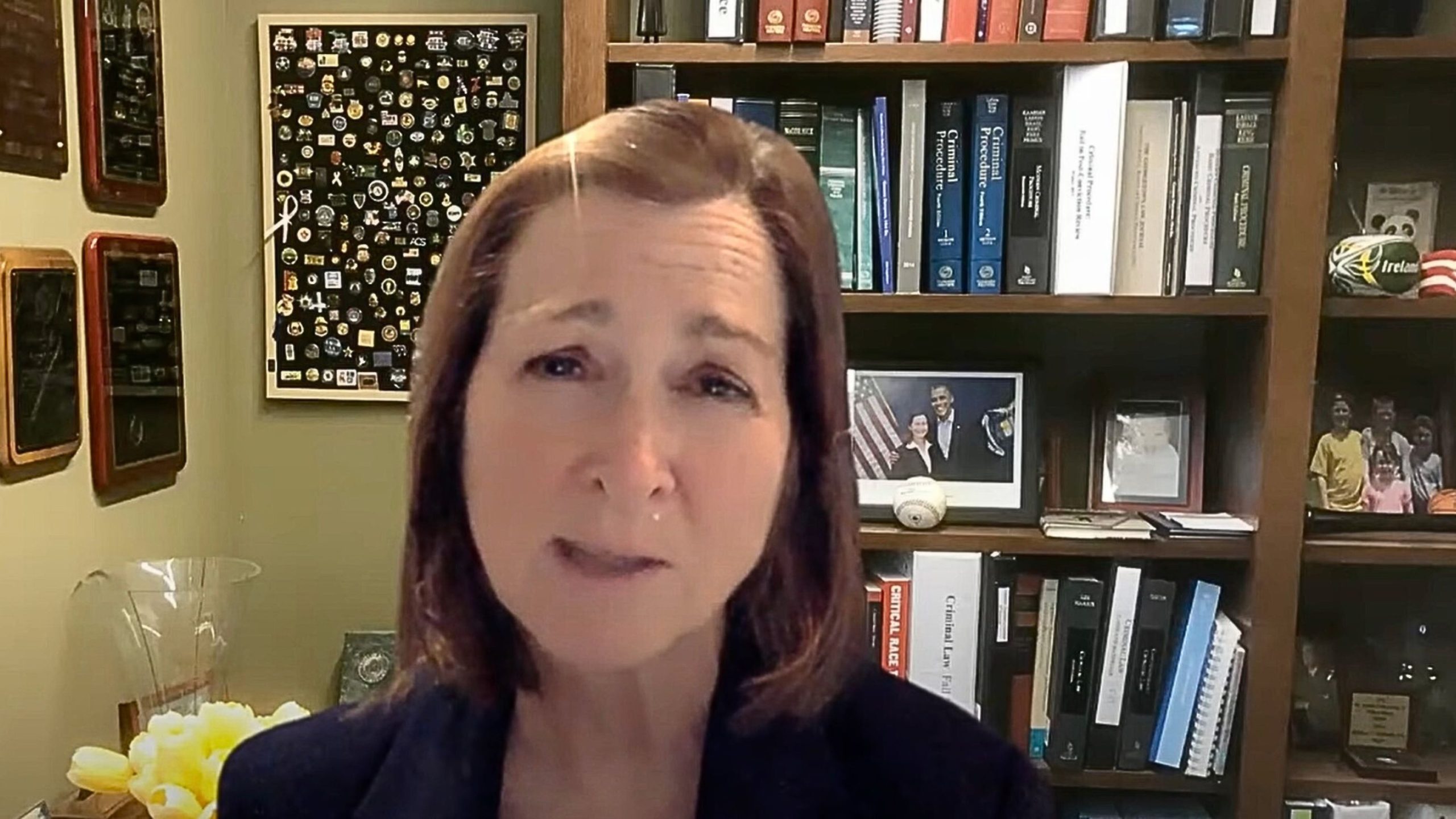
If you're tired of censorship and dystopian threats against civil liberties, subscribe to Reclaim The Net. Barbara McQuade, who was in 2017 dismissed from her job as US Attorney for the Eastern District of Michigan, has in the meantime turned into quite something of a “misinformation warrior.” Earlier this year McQuade – who in the past also worked as co-chair of the Terrorism and National Security Subcommittee of the Attorney General’s Advisory Committee in the Obama Administration – published a book, “Attack from Within: How Disinformation is Sabotaging America.” Now, she herself is attacking the First Amendment as standing in the way of censorship (“content moderation”) and advocating in favor of essentially finding ways to bypass it. Opponents might see this as particularly disheartening, coming from somebody who used to hold such a high judicial office. “The better course for regulating social media and online content might be to look at processes versus content because content is so tricky in terms of First Amendment protections. Regulating some of the processes could include things like the algorithms,” McQuade said. This point – that the First Amendment serves precisely the purpose it was designed for – has lately been cropping up more and more frequently in the liberal spectrum of US politics, with the situation resembling a coordinated “narrative building.” McQuade also sticks to the script, as it were, on other common talking points this campaign season: the dangers of AI (as a tool of “misinformation” – but the same camp loves AI as a tool of censorship). In the scenario where AI is perceived as a threat, McQuade wants new laws to regulate the field. And she repeats the suddenly renewed calls to change CDA’s Section 230 in a particular way – namely, a way that pressures social platforms to toe the line, or else see legal protections afforded to them eroded. This is phrased as amending the legislation to provide for civil liability, i.e., “money damages” if companies behind these platforms are found to not force users to label AI-generated content or delete bot accounts diligently enough. McQuade’s comments regarding Section 230 are made in the context of her ideas on “regulating processes rather than content” (as a way to circumvent the First Amendment). While on the face of it, stepping up bot removal sounds reasonable, there are reasons to fear this could be yet another false narrative whose actual goal is punishing platforms for not deleting real accounts falsely accused of being “bots” by certain media and politicians. The Hamilton 68 case, exposed in the Twitter Files, is an example of this. If you're tired of censorship and dystopian threats against civil liberties, subscribe to Reclaim The Net. The post From Prosecutor to Censor: Barbara McQuade’s Call to Erode Free Speech appeared first on Reclaim The Net.
Like
Comment
Share
Reclaim The Net Feed
2 yrs

EU Commission Urges Digital ID, E-Health Records, and Touts “Anti-Disinformation” Efforts in Digital Decade Report
Favicon 
reclaimthenet.org

EU Commission Urges Digital ID, E-Health Records, and Touts “Anti-Disinformation” Efforts in Digital Decade Report

If you're tired of censorship and dystopian threats against civil liberties, subscribe to Reclaim The Net. Earlier this week the EU Commission (EC) published its second report on what it calls “the state of the digital decade,” urging member countries to step up the push to increase access and incentivize the use of digital ID and electronic health records. At the same time, the bloc is satisfied with how the crackdown on “disinformation,” “online harms,” and the like is progressing. In a press release, the EC said the report was done to assess the progress made in reaching the objectives contained in the Digital Decade Policy Program (DDPP), targeting 2030 as the year of completion. EU members have now for the first time contributed to the document with analyses of their national “Digital Decade strategic roadmaps.” And, here, the EC is not exactly satisfied: the members’ efforts will not meet the EU’s “level of ambition” if things continue to develop as they currently are, the document warns. In that vein, while the report is generally upbeat on the uptake of digital ID (eID schemes) and the use of e-Health records, its authors point out that there are “still significant differences among countries” in terms of eID adoption. To remedy member countries falling short on these issues, it is recommended that they push for increased access to eID and e-Health records in order to meet the objectives set for 2030. The EU wants to see both these schemes available to 100% of citizens and businesses by that date – and reveals that eID is at this point available to 93% of citizens across the 27 of the bloc’s countries, “despite uneven take-up.” Still, the EC’s report shows that policymakers in Brussels are optimistic that the EU digital ID Wallet will “incentivize” eID use. And, the document’s authors are happy with the way the controversial Digital Services Act (DSA) is getting enforced. Critics, however, believe it is there to facilitate crackdowns on speech – under the guise of combating “disinformation,” etc. The EU calls this, “strengthening the protection against online harms and disinformation,” while also mentioning that it is launching investigations (into online platforms) to make sure DSA is enforced. And in order to reinforce the message that DSA is needed as a force for good, the report asserts that “online risks are on the rise and disinformation has been identified as one of the most destabilizing factors for our societies, requiring comprehensive, coordinated action across borders and actors.” If you're tired of censorship and dystopian threats against civil liberties, subscribe to Reclaim The Net. The post EU Commission Urges Digital ID, E-Health Records, and Touts “Anti-Disinformation” Efforts in Digital Decade Report appeared first on Reclaim The Net.
Like
Comment
Share
Hot Air Feed
Hot Air Feed
2 yrs

Boeing Takes the Plea Deal, but Will it Stick?
Favicon 
hotair.com

Boeing Takes the Plea Deal, but Will it Stick?

Boeing Takes the Plea Deal, but Will it Stick?
Like
Comment
Share
Science Explorer
Science Explorer
2 yrs

The World’s Oldest Crystals Contain Traces Of Even Older Sediments
Favicon 
www.iflscience.com

The World’s Oldest Crystals Contain Traces Of Even Older Sediments

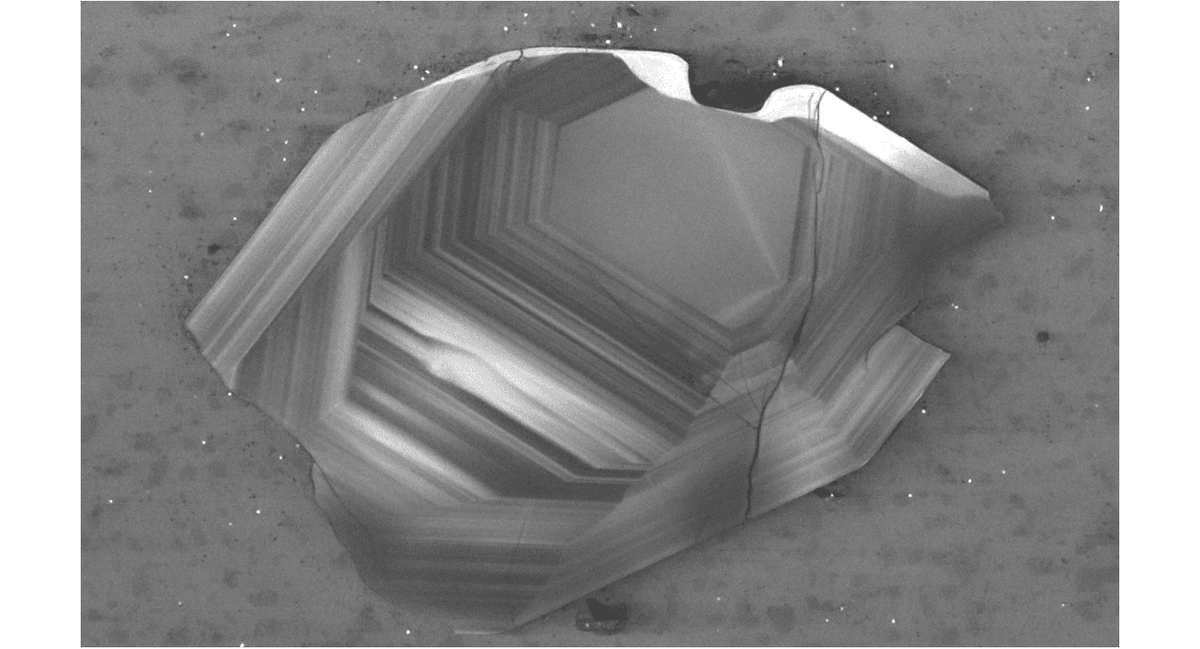
Within the oldest crystals in the world, collected from Western Australia’s Jack Hills, lie the remnants of even older rocks – some of which were reprocessed through magma into the surviving crystals. With the help of machine learning, geologists have revealed that a third of these primeval rocks were sedimentary. This means that more than four billion years ago, at a time from which no minerals survive, the Earth had extensive crust exposed to the elements above sea level. The Earth’s first few hundred million years were not as strange to us as we might think.The Earth’s atoms are mostly the same ones that were here more than four billion years ago, but nothing solid from that time survives; everything has been reprocessed, usually many times over. It’s one of the reasons we went to the Moon, and study asteroids, to find a direct line almost to the birth of the Solar System.The lack of rocks that bear witness to the first ten percent of the Earth’s existence frustrates geologists. Yet in the oldest things on the Earth, arrivals from space aside, researchers have found an unexpected clue to that lost era, revealing how quickly the planet evolved to something familiar. It comes just a month after the same tiny crystals were used in a different way to prove something similar, but not quite as impressive. The zircons of the Jack Hills are the Earth’s oldest surviving relics. They formed up to 4.4 billion years ago and subsequently became incorporated into sedimentary rocks that have since eroded away, leaving just the zircons behind.The Jack Hills zircons crystallized from magma, but not the original magma ocean. This magma was made of older rocks drawn into the Earth to melt. Most information about those previous rocks has been lost in the magma reprocessing, but one fact geologists have hoped to find is whether any of them were sedimentary, or if these were all igneous. Igneous rocks can form from cooling magma or lava we know existed on the early Earth, but sedimentary rocks require a water cycle, where rocks are exposed to the atmosphere above the water line. Rain erodes them, and the material is washed into lakes or oceans to settle and be converted into new forms of rock. Professor Ross Mitchell of the Chinese Academy of Sciences and colleagues have taken a new look at Jack Hills zircons, as well as some from the newly discovered South African Green Sandstone Bed that may almost match their age. By training computers to recognize the fingerprints of sedimentary material within zircons, Mitchell and colleagues were able to determine that a sample of very old zircons contains about abundant S-type granite. This is granite formed from sediments that were subducted into magma.The S-type share rises with time, as would be expected – but if the method Mitchell and colleagues used to identify S-type granites is right, zircons formed 4.24 billion years ago were made from 35 percent S-type granite. In an interesting tangent, the authors found that rather than rising forever, the S-type proportion rises and falls in line with cycles of supercontinent formation and collapse.Magma melt incorporating sediment (“S-type” granite) from the Himalayas (left) and the discovery site of the Jack Hills zircon in Western Australia (right).Image Credit: Ross MitchellTo make an S-type granite, you need a previous process in which rocks form, erode to become sediments, and then are compressed to new rocks before being pushed down into magma. Such a multi-stage process is unlikely to be quick, so the original islands poking out of the sea must have been there considerably before the zircons’ formation. S-type granites in such ancient zircons would also prove tectonic cycles that subducted crust into the mantle occurred at least 4.2 billion years ago.In other words, if an alien had visited the Earth early in its existence, they would have found neither a dry orange world, as presumed a few decades ago, nor an all-encompassing ocean, as suspected more recently.The findings complement and extend work published in June, when a team investigating the ratio of oxygen isotopes within similarly aged zircons found most were formed within the ocean. However, some of the zircons show signs of having formed in fresh water on land that poked out of the ocean, indicating the presence of continental crust around this time.The presence of S-type granites in Jack Hills zircons may have been a big debate among a small subset of geologists, but it has implications for a question attracting much wider interest. The two competing hypotheses for the origins of life are the warm little pond proposed by Darwin, and the hydrothermal vents at the bottom of the ocean. However, the warm pond idea requires the planet to have had a water cycle with land and fresh water at the time life emerged. By pushing back the time when the first ponds existed, Mitchell and co-authors have not proved this was where life began, but they make a powerful case that ponds remain a contender.The study is published in the Proceedings of the National Academy of Sciences. 
Like
Comment
Share
NewsBusters Feed
NewsBusters Feed
2 yrs

Tongue Bath: Biden Calls into MSNBC’s ‘Morning Joe’, Serenaded by Joe & Mika
Favicon 
www.newsbusters.org

Tongue Bath: Biden Calls into MSNBC’s ‘Morning Joe’, Serenaded by Joe & Mika

With Joe Biden’s presidency in peril over the left finally admitting publicly he has little grasp of his basic faculties and more voices demanding he withdraw from the 2024 race, Biden went to his happy places on Monday with a surprise call to MSNBC’s Morning Joe, his favorite news show and helmed by two of his top liberal media lemmings, co-hosts Joe Scarborough and wife Mika Brzezinski. Biden surfaced in a block originally scheduled to feature Vice President Kamala Harris, which Brzezinski had no problem with in giddily announcing: All right, Now for something a little different. And from inside the White House, we have a special guest. Joining us now, the 46th President of the United States and presumptive Democratic nominee, Joe Biden, calling in to Morning Joe right now.  Biden immediately got snippy: “Hey, Mika. I'm more than the presumptive, I'm going to be the Democratic nominee.” The supposed conservative in Scarborough had the first softball question, which he falsely claimed there was an open Democratic primary (when it was in name only). This allowed Biden to go off on a tangent about Donald Trump riding in a golfcart, referred to himself in the third person, cited supporters in the past tense (as if he’s left the race), and even admitted “the press is with me”: ?Lol Biden called into MSNBC's 'Morning Joe', meaning he can just read talking points.... Mika Brzezinski: "All right, Now for something a little different. And from inside the White House, we have a special guest. Joining us now, the 46th President of the United States and… pic.twitter.com/WcPJnyX9PN — Curtis Houck (@CurtisHouck) July 8, 2024 Scarborough followed up with more lunacy, arguing Sunday “was quite a contrast, that the people that were supporting you yesterday compared to, say, a lot of the Washington insiders and Hollywood moguls and...very powerful people that want you out”. He then gave Biden a second chance to answer a question he flubbed during his ABC interview with George Stephanopoulos. In other words, it was a chance to argue America, democracy, and the world would cease to exist in peace if Trump won. This time, Biden argued losing is “not an option” and angrily sounded like he did throughout the interview, which was reading heavily from notes.  A man with nearly 60 years in Washington who represented the credit card company state also and hilariously asserted he doesn’t “care what the millionaires think” and bragged “[y]ou don't see a whole lot of CEOs flocking to Trump”.     Brzezinski only gingerly asked about the disastrous debate: “How — how can you assure the American people that you won't have another night like the one you did in Atlanta?” Biden again became extremely defensive and used his all-but-certain crutch of notes as he angrily shouted about having “created over 15 million jobs, 21 million ensured with ACA, beat big pharma, relieved student debt for five million people, first black woman on the court” and takes “a neurological test everyday” by being president. Brzezinski’s follow-up was similar to how ABC’s George Stephanopoulos acted on Friday in showing concern: [I]f anybody in my family had a night like that. Like, if Joe — if my Joe had a night like that or my kids or anybody, I’d — I’d probably want to do some sort of workup, medical workup, and make sure he's okay. Have you been tested for any age-related illnesses, pre-Parkinson's or anything like that, that might explain sort of having a night like that where you couldn't finish sentences? Biden meandered his way through another lengthy answer that made little sense.     Brzezinski then listed some of those who’ve called for him to get out of the race, ranging from liberal news outlets (like The New York Times editorial board) to elected Democrats (New York’s Jerry Nadler) and liberal influences like David Axelrod. Biden continued with his angry, defense elderly bit popping off about NATO, Gaza, and the 2022 midterms. When he started to speak in gibberish, he was rescued (click “expand”): BIDEN: My plan of attack is to go out — BRZEZINSKI: These are pretty big names. BIDEN: — and keep doing — they’re big names, but I don't care what those big names think. They were wrong in 2020. They’re wrong in 2022 about the red wave. They’re wrong in 2024. And go with me — come out with me and watch — watch people react! You make a judgment. You make a judgment. BRZEZINSKI: Mmmhmm. BIDEN: And by the way, I’m going to be — have all of these foreign leaders! I've been in contact with the new British Prime Minister, with the — anyway — look, the country — the rest of the world is looking — our allies are looking for U.S. Leadership. Who else do you think could step in and do this? I expanded NATO. I solidified nato. Ask your brother about it in Poland. I made sure that we were in a position where we have a coalition of people — of the nations around the world to deal with China, with Russia, with everything that's going on in the world. We're making real progress. The Biden plan, which got — in Israel, for — for — for the Gaza Strip is something that was adopted by the U.N. Security Council. Whether it comes to fruition, it’s awful close, we'll see. He — seven — bubrarah — BRZEZINSKI: Okay. SCARBOROUGH: Yeah. BIDEN: — but, look, I — I'm not going to explain anymore about what I should or shouldn't do. I am running. I am running.  BRZEZINSKI: Mmhmm. BIDEN: And if you want to stop me, come see — SCARBOROUGH: I wanted to ask you, it's so interesting, you talked about how, you know, you were supposed to lose in 2020. You won. There was supposed to be a huge wave in 2022. There wasn't. In 2023, Republicans were supposed to win, they didn't.  Scarborough had what ended up being the last question and it was, of course, another softball citing leftist romps in France and the United Kingdom as proof that could come to fruition in the U.S. Still angry and claiming he and Democrats have been douted in every election from 2020 on, Biden comically added he’s grown “so frustrated by the elites — now, I’m not talking about you guys — but the elites in the party who — oh, they know so much more, but none of these guys don’t think I should run.” Biden went from talking about the French elections to Trump to the Supreme Court to Project 2025 to tax cuts to claiming Trump gives jobs to illegals to even admitting he’s reading from notes. Biden eventually wrapped by saying Trump “makes George Wallace look like a patriot” (click “expand”): BIDEN: [O]n Europe, the polls were wrong in France. There's also — right — there’s right wave or tide here in America either. By the way, in case you're wondering whether there is one, have you ever seen Trump run away so fast from what he's for? You know, he's going to do it anyway, but I mean, he's such a liar. This guy — it’s all — everybody knows what they're planning to do. And now, he’s saying, no, no, no. This guy is going to rip away at a women's right to choose in a permanent way. This guy is going to make sure that he exacts revenge. This guy is going to destroy democracy. This guy is going to give a blank check to the Supreme Court and use his past — the — the 2025 agenda, you know, extreme dan — this guy is extremely dangerous. He doesn't speak up for — now — what he’s really is for. He’s — all of a sudden, he's realizing, oh, my god, nobody is for what I'm for. At any rate — look — and again, think of the things he lied about. He talked about he gave his — the largest tax cut in history. Yeah, he gave the largest tax cut in history to millionaires and billionaires. He said that he’s going to — 10 percent annual universal tax proposal is not going to drive prices higher. Every major economist in the world is going to say it's going to drive up $2,500 per person. Only jobs he’s created for illegal immigrants and bounce back from jobs and bounce back from Covid. Give me a break. That's what he said at the convention — excuse me — at the debate. And he — I mean, everything he said — he said — you know — he largely fixed Covid. Are you kidding me? And what happened? Nobody said anything. Nobody said anything except me and the folks out there in the local — [SHUFFLES PAPERS] — uh — you know, race. You know, he said, I did nothing to stop Russia’s invasion of Ukraine. In fact, I encourage Russia from — going — I — I encourage — I think he encouraged Russia going in.  I mean, we're reading from a list of lies. First of all, he was — made-up quotes, suckers and losers. I was with him. He — called the Americans in the cemeteries in World War I suckers and losers. And so, this guy’s going to have to start answering for what he’s did. I'm not letting up, Joe. I am not letting up a little bit. SCARBOROUGH: Oh! BIDEN: By the way, France registered — you know — I — look, you talk about Europe. France rejected extremism. Democrats will reject it here as well. Trump — and — this is a — this is a guy who is an extreme candidate. I can't think of a candidate in my lifetime that's been more extreme. He makes — SCARBOROUGH: Alright. BIDEN: — George Wallace look like a patriot. With the 20-minute mark approaching, the Biden stooges made sure to wrap with Brzezinski pleading with Biden to “make this a thing”, which was an interesting take since the three supposedly talk off-camera on the regular. To see the relevant MSNBC transcript from June 8, click here.
Like
Comment
Share
NewsBusters Feed
NewsBusters Feed
2 yrs

Nate Silver: Biden ‘Mess’ Caused By Pro-Dem Press Caving to ‘Progressive Media Scolds’
Favicon 
www.newsbusters.org

Nate Silver: Biden ‘Mess’ Caused By Pro-Dem Press Caving to ‘Progressive Media Scolds’

Statistics-based journalist-pollster Nate Silver, who previously worked at the New York Times (where he founded the influential presidential polling-data site FiveThirtyEight) and at ABC News, had some internal insight into the media bias debate, saying out loud what we at NewsBusters know well. It came in his Monday post “Blaming the media is what got Democrats into this mess.” (The mess being President Biden’s disastrous debate performance and the feigned shock from the press who felt obliged to downplay it.) In his latest Silver Bulletin newsletter, the political prognosticator credited, or blamed, the newly minted progressive media critics for putting a lid on Biden age coverage (Silver’s original links are included below): But the partisan media critics I cited before succeeded in keeping coverage to a simmer -- the pot never quite boiled over. Journalists are human beings, and although they won’t want to admit it, most of them actually do read the mean Twitter messages you write about them. And, although they won’t admit to this either, most who work for high-prestige media outlets like the Times and the Washington Post are left-of-center. They aren’t necessarily partisan Democrats, but vanishingly few are Republicans or would like to see Trump elected again. (Nor would I, for that matter). He discounted the oft-heard criticism from defenders of the press that any hypothetical Democratic lean among journalists is more than neutralized by their capitalist bosses. There are some countervailing biases: publishers and media moguls are often centrists or conservatives, or at least unrepentant capitalists. But having worked for some of the biggest mainstream media outlets in the country -- including the New York Times (where I still occasionally freelance) and ABC News -- my experience is that staff attitudes usually prevail over management. At news organizations of a certain size, there are too many things happening at once -- dozens of stories being published every day under intense deadline pressure -- for central planning to be entirely effective. Some of Silver's media criticism of so-called "cheap fakes" are aimed at the Associated Press and his former employees at the Times itself, judging by his links. In their critiques of coverage of Biden’s age, then, progressive media scolds are like the dog who caught the car. They succeeded in getting the media to frame the issue gingerly -- for every story that engaged forthrightly, there were two that dismissed it as “misinformation”, sometimes even inventing whole new categories like “cheap fakes” to describe what were simply lightly edited but unflattering video clips of Biden. But having caught the car, the critics aren’t sure what to do with it. Because the car was a lemon…. Although anti-Trump himself, Silver is well aware of the liberal media bubble. His prediction in the final hours before the 2016 election that Trump had a 29% of winning was mocked by liberals as being far too generous to Trump. How’d that turn out?
Like
Comment
Share
Showing 21361 out of 56670
  • 21357
  • 21358
  • 21359
  • 21360
  • 21361
  • 21362
  • 21363
  • 21364
  • 21365
  • 21366
  • 21367
  • 21368
  • 21369
  • 21370
  • 21371
  • 21372
  • 21373
  • 21374
  • 21375
  • 21376

Edit Offer

Add tier


Select an image
Delete your tier
Are you sure you want to delete this tier?

Reviews

In order to sell your content and posts, start by creating a few packages. Monetization

Pay By Wallet

Payment Alert

You are about to purchase the items, do you want to proceed?

Request a Refund