YubNub Social YubNub Social
    Advanced Search
  • Login

  • Night mode
  • © 2026 YubNub Social
    About • Directory • Contact Us • Privacy Policy • Terms of Use • Android • Apple iOS • Get Our App

    Select Language

  • English
Install our *FREE* WEB APP! (PWA)
Night mode
Community
News Feed (Home) Popular Posts Events Blog Market Forum
Media
Headline News VidWatch Game Zone Top PodCasts
Explore
Explore Jobs Offers
© 2026 YubNub Social
  • English
About • Directory • Contact Us • Privacy Policy • Terms of Use • Android • Apple iOS • Get Our App

Discover posts

Posts

Users

Pages

Group

Blog

Market

Events

Games

Forum

Jobs

History Traveler
History Traveler
2 yrs

Today in History for 3rd July 2024
Favicon 
www.onthisday.com

Today in History for 3rd July 2024

Historical Events 1814 - Americans capture Fort Erie, Canada (War of 1812) 1890 - Idaho admitted as 43rd US state 1959 - Wimbledon Men's Tennis: American-based Peruvian Alex Olmedo wins his only Wimbledon title beating Rod Laver of Australia 6-4, 6-3, 6-4 1976 - Adolfo Suárez becomes premier of Spain 1988 - US Vincennes in Strait of Hormoez shoots Iran Airbus A300, kills 290 1999 - Wimbledon Women's Tennis: Lindsay Davenport beats Steffi Graf 6-4, 7-5 for her only Wimbledon singles title More Historical Events » Famous Birthdays 1907 - Arthur Staal, Dutch architect (Group '32), born in Amsterdam, Netherlands (d. 1993) 1913 - William Deakin, British historian and warden (St Anthony's College Oxford), born in London (d. 2005) 1920 - Louise Allbritton, American actress (The Egg and I, Stage Door, Got a Secret), born in Oklahoma City, Oklahoma (d. 1979) 1940 - Lance Larson, American swimmer (Olympic gold 4x100m freestyle relay, silver 100m freestyle 1960; WR 100m butterfly 58.7s 1960), born in Monterey Park, California (d. 2024) 1946 - Johnny Lee [Ham], American country music singer ("Lookin' For Love"), born in Texas City, Texas 1961 - Vince Clarke [Martin], British rock keyboardist, and songwriter (Depeche Mode; Erasure), born in South Woodford, Essex, England More Famous Birthdays » Famous Deaths 1863 - Alonzo Cushing, American Union officer, dies at the Battle of Gettsburg at about 22 1904 - Edouard Beaupré, Canadian giant and strongman (b. 1881) 1918 - Mehmed V, 35th Ottoman Sultan (1909-18), dies at 73 1966 - André Gailhard, French classical music composer, dies at 81 1985 - Cooney Weiland, Canadian ice hockey coach (Stanley Cup 1941 Boston Bruins; Harvard Uni) and NHL forward (Boston Bruins, Detroit Red Wings), dies at 80 1993 - Don Drysdale, American Baseball Hall of Fame pitcher (World Series 1959, 63, 65; 9 x MLB All Star; Cy Young Award 1962; Brooklyn/LA Dodgers), dies of a heart attack at 56 More Famous Deaths »
Like
Comment
Share
BlabberBuzz Feed
BlabberBuzz Feed
2 yrs

Cuban Tradition Or Criminal Activity? Sen. Menendez’s Sister Spills The Family Secret
Favicon 
www.blabber.buzz

Cuban Tradition Or Criminal Activity? Sen. Menendez’s Sister Spills The Family Secret

Like
Comment
Share
Living In Faith
Living In Faith
2 yrs

Does the Bible Blame Women for Rape?
Favicon 
www.thegospelcoalition.org

Does the Bible Blame Women for Rape?

Many women, including me, endure the tragic experience of Scripture being misused against them, often by men. It can be difficult to untangle Scripture’s truth from man’s manipulation. But even when the Word is handled rightly, some passages are difficult to engage as a woman. They seem unfair or even cruel. Could any passage be as troubling for women as Deuteronomy 22? A decade ago, Rachel Held Evans raised this passage in A Year of Biblical Womanhood. To be biblical, Held argued, women had to marry their rapists. To be biblical, Christians should stone anyone caught in an adulterous affair. To be biblical, Christians should kill a woman who didn’t cry out as she was being raped. To fully engage Evans’s argument would require dealing with her definition of “biblical,” which is outside the scope of this article. Nevertheless, she raised legitimate questions: How should we understand Deuteronomy 22? And does its inclusion in the Scriptures mean the Bible cannot be trusted to guide and direct women today? These questions can’t be completely answered in a single article. But we can begin to make sense of them by considering both history and hermeneutics. We’ll start by looking at the specific situations described in light of their historical context. Then we’ll zoom out to consider this passage in Scripture’s larger story. As we do, please keep in mind that this article is addressing a specific textual question rather than offering counsel for victims of sexual assault. Questions about Deuteronomy 22—as much as questions around eschatology, soteriology, or ecclesiology—require a hermeneutic. We need a holistic way of reading Scripture’s long story to understand this chapter. Jesus is that hermeneutic, the lens through which we must read the Bible. Let’s consider what Deuteronomy 22 says and then seek to understand what it means for women today. Laws on Sexual Ethics Deuteronomy 22:13 begins a section of the law on sexual ethics. It first deals with a husband’s false accusation that his wife had sex before marriage. Verses 15–19 outline a process for the wife to prove her innocence and, if this is found true, for the husband to be punished. The law protected women in this situation from false accusations. Verse 22 then deals with a man and woman caught in adultery. They must have been found in the act, so they’re protected from false accusations based only on hearsay. The penalty was stark—the couple would be stoned to death—but it was the same for both the man and the woman. Verses 23–27 then deal with the rape of a woman engaged to another man. The man who raped her was to be stoned to death. The Scriptures say violating a woman in this way is akin to a man murdering his neighbor. If the sexual act occurred outside of town, it was assumed the woman didn’t consent and she was protected from punishment. But here’s where the tricky part comes in—if the act occurred within the city, it was labeled as rape only if the woman cried out. This is worth a brief excursion. Remember the Law’s Purpose A 2023 New York Times article highlighted the number of women who, as a response to the trauma of rape, shut down rather than cried out during the act. Though I’ve never experienced rape, I’ve had this response to other trauma in my life. I sink into myself and have been accused of not caring in times of crisis. But sometimes I can’t process what’s happening. Mentally, I descend into a bunker and close the door, slowly opening it inch by inch over time to take in the circumstances that forced me into my mental fortress. Not everyone reacts this way to trauma, but many naturally do, and it can be a helpful coping mechanism in some situations. At first reading, Deuteronomy 22 seems unfair for requiring a woman to cry out. But it’s important to remember the law wasn’t only given to prescribe punishments for violations; it was given to teach God’s people how to live before the violation ever happens. Deuteronomy 6 explains that these commandments, rules, and statutes were given to God’s people so that “it may go well with [them]” and “that [their] days may be long” (vv. 1–3). Parents were instructed, “Repeat them to your children. Talk about them when you sit in your house and when you walk along the road, when you lie down and when you get up” (v. 7, CSB). When my sons were 2 and 4 years old, we attended a cooperative preschool. The teachers taught a safety curriculum, and one lesson was on abduction. We taught the kids to yell and scream nonstop until someone came to help. We practiced, and we repeated the instructions. Similarly, in Moses’s time, if Jewish moms and dads were teaching their children God’s law, their daughters were taught through Deuteronomy 22 to cry out if they were taken against their will. They were taught they didn’t have to submit to rape, that someone would come to help. The law wasn’t only given to prescribe punishments for violations; it was given to teach God’s people how to live before the violation ever happens. Don’t read this explanation as blaming rape survivors or their parents. I’m not saying that if a woman doesn’t cry out during rape, she must not have been trained by trusted adults ahead of time. And I’m not saying that being trained would guarantee a woman would cry out. Individual responses to trauma are complicated. The point is much bigger—in an unjust world where women seemed to experience harsher consequences if they resisted rape than if they gave in, God’s law taught daughters to resist and call for help. This law was an aid to a broader world that had no protections for women at all, where rape, apart from such laws, was an acceptable norm. It taught fathers and society to protect women, it taught women they had agency when attacked, and it punished those who violated them. Understand the Law in Its Own Culture This leads to verses 28–29. If a man raped a woman who wasn’t engaged, the rapist was commanded to marry his victim. Note this law wasn’t directed to a woman to marry her rapist, because, in ancient cultures, a woman had few rights about such things. Apart from the law, she was powerless to affect the outcome either way. This passage doesn’t reflect a Western cultural understanding of choice in marriage. The individualistic mindset predominant throughout Western culture has a hard time grasping the value of marriage decisions made for the good of the community as a whole rather than the individual alone. When the community flourished, particularly in rugged settings without modern conveniences, the individual flourished, and vice versa. Many Eastern and African cultures today still reflect such a communal understanding of marriage. The common practice outside of God’s law for a rape survivor was that her family killed her because of the resulting shame (a practice still occurring in some cultures today). Mankind was bent far away from basic human dignity at this point in history, some 1,400 years before Jesus’s birth. If a rape survivor’s family didn’t kill her, she was left to live in shame with no options for a future life with a family. Often, the only way she could support herself was through prostitution. When Deuteronomy 22 was written, there were few sexual protections for women. This law therefore moved culture forward by giving women some protection, creating a counterculture in its wake. It held the man responsible for the consequences he created in his sin against the woman. He had to pay her father a price worthy of the woman he violated, and he could never divorce her. The law required him to remove the victim’s public shame and restore her to a position of dignity in her community through marriage. The abuser was made to value what he took by force. I’m thankful to live in a culture that doesn’t cast on a woman the same shame and condemnation that was the norm in ancient times (and is still the norm in parts of the world). But in that culture, God pressed on his people a way forward that didn’t just make the victim marry; it also required a sizable payment for the privilege of marrying her. God’s plan didn’t just remove the woman’s public shame; it also provided for her security by requiring a monetary commitment to her and her family. See the Law in Light of Jesus Considering the historical context of Deuteronomy 22 helps us begin to make sense of its challenges. Let’s now consider it within the context of the whole Bible and how Jesus taught us to understand the Old Testament law. After Jesus’s resurrection, he met his disciples on the Emmaus road and began to explain to them everything from the Old Testament that pointed to his life, death, and resurrection. He included the law of Moses in his explanation (Luke 24). Did he specifically include Deuteronomy 22 in that discussion? We don’t know, but it’s possible. Regardless, he made clear that the law as a whole pointed to him. Jesus gave additional information in Matthew 5:17. He said he didn’t come to abolish the law but to fulfill it. John 8 gives us a real-time illustration of what he meant. The religious elite threw at Jesus’s feet a woman who had been caught in adultery—she’d violated the laws in Deuteronomy 22. Though the pair was caught in the act, the man wasn’t thrown at Jesus’s feet as the law instructed. It’s not surprising that sinful hearts had perverted the law at this point to favor the man over the woman. God’s law taught daughters to resist and call for help. Jesus then wrote something in the dirt. Was it the name of the man caught with her? Was it the names of women the male scribes and Pharisees had sinned with? Whatever Jesus wrote, the woman’s accusers fell away one by one. Jesus then told her, “Neither do I condemn you; go, and from now on sin no more” (John 8:11). Jesus didn’t tell her that her sin of adultery didn’t matter, that it was no longer a problem to break the law in that way. He didn’t abolish the law. Instead, he fulfilled it in a way no one else could: by obeying the law perfectly himself. And he didn’t condemn the woman because, in a short time, he’d hang on a cross paying for the very violation of the law of Deuteronomy 22 for which she’d been thrown at his feet. Even Hard Laws Reflect a Good God Paul later taught in Galatians, “The law was our guardian until Christ came, in order that we might be justified by faith. But now that faith has come, we are no longer under a guardian” (Gal. 3:24–25). The law was good, but it wasn’t everything. The law was good, but it wasn’t final. The law was good, but Jesus is better. This is the general context, the hermeneutic, through which we must approach Deuteronomy 22. This chapter’s laws on sexual faithfulness are hard, but they reflect a good God who is faithful to his vows. He told his people through the prophet Hosea, I will take you to be my wife forever. I will take you to be my wife in righteousness, justice, love, and compassion. I will take you to be my wife in faithfulness, and you will know the LORD. (Hos. 2:19–20, CSB) Some modern scholars don’t believe John 8’s story of the woman caught in adultery was part of the original text (see the notes in modern Bible translations like the ESV and NIV), but we see the same theology here in the book of Hosea. Hosea’s bride committed adultery, yet God told the prophet not to stone her as the law instructed but to pursue her. God told Hosea to redeem her, to buy her back from her sexual slavery, and to restore her to an honored position in his home—because God also does this for us. God’s faithfulness is good for us, and because we’re created in his image, our faithfulness to our vows is good as well. God is good, and his Scriptures are good. Stay engaged with the hard parts. Wrestle with them. Pray through them. They tell a long but good story, fulfilled in Jesus Christ. O daughter of God and member of the Bride of Christ, don’t let anyone convince you God’s Word isn’t good for you.

Like
Comment
Share
Living In Faith
Living In Faith
2 yrs

Why One Presbyterian Appreciates a Baptist Systematic Theology
Favicon 
www.thegospelcoalition.org

Why One Presbyterian Appreciates a Baptist Systematic Theology

It’s an exciting time to do theology. Technology allows unprecedented access to vast deposits of historical resources. Scholars across disciplines are talking to one another in new ways. Conversations across traditional divides enable both interdisciplinary and ecumenical sharpening of iron by iron. For those faithfully listening to God speaking in Scripture, these are encouraging developments that have yielded fruit in recent theological publications. In Systematic Theology: From Canon to Concept, Stephen J. Wellum leverages these trends to make a strong case for the importance of careful and cohesive theological reflection on Scripture. Like his earlier work on biblical theology, this text is thoughtful and clearly written. Wellum sets out in this text—the first of two planned volumes—to introduce the task of systematic theology and explore the doctrines of revelation, Scripture, God, creation, and providence. Coherence of Biblical and Systematic Theology The church’s health depends on careful systematic theology. As Wellum notes, “Systematic theology is not optional for the church; it is fundamental to our thinking rightly about God, the self, and the world.” Everyone does systematic theology. The real question is “whether our theology is true to Scripture or not” (4). Therefore, wisdom calls us to conform our systematic theology to Scripture’s teaching. Healthy theology involves both reading Scripture and thinking about how to follow it. Therefore, Wellum refuses the false choice sometimes posed between biblical theology and systematic theology. Referring to the Great Commission, he observes, “To obey our Lord’s command requires careful biblical and theological thinking; knowing the Scripture, thinking rightly about who the Father, Son, and Spirit are; and faithfully applying all of Scripture to people’s lives. This is what theology is” (5). Healthy theology involves both reading Scripture and thinking about how to follow it. The task of systematic theology is essential for Christians as we read and apply the biblical text. It does not supersede or replace biblical theology. Instead, when systematic theology builds on the task of scriptural exegesis and biblical theology, it helps us to read Scripture more profitably. In other words, like biblical theology, systematic theology is essential to healthy theology. It is indispensable because “theology does not merely repeat Scripture; it seeks ‘to understand’ Scripture in terms of application, logical implications, and metaphysical entailments as a ‘constructive’ exercise in ‘faith seeking understanding.’” Theology must move beyond interpreting passages, chapters, or even books to fit all of Scripture together into one coherent picture. In doing so, “theology constructs and defends sound doctrine so that the church is not ‘blown around by every wind of teaching’ (Eph 4:14), but is instead ‘rooted and built up in Christ’ (Col 2:7)” (108).  Historical Theology’s Contribution Wisdom requires admitting we are not the first to ask questions about what Scripture teaches. Such wisdom acknowledges at least two potential problems. On the one hand, raising the authority of theological tradition to that of Scripture confuses the Church’s voice with God’s voice. On the other hand, refusing to listen carefully to the wisdom accrued through centuries of the church’s reading and reflecting on God’s Word confuses the individual’s interpretation with God’s voice. Wellum seeks to navigate a narrow channel between these twin errors. He does so by listening to a range of theological voices from the church’s past and constructively evaluating them in dialogue with sound biblical exegesis. The dual emphasis on eclectic theological retrieval and meticulous attention to the detail of biblical theology makes for some especially strong chapters on the doctrines of revelation, Scripture, and God. Wellum’s emphasis on the inseparability and interdependence of these topics is a strength of the book. He observes that “from Genesis to Revelation, Scripture claims to be the product of triune communicative agency in and through human authors. And given who the triune God is, Scripture speaks with absolute authority. Even though Scripture is written by human authors, its message, truth, and reliability are not lessened” (287). In a cultural climate characterized by skepticism about the existence and knowability of truth, the chapters on these subjects repay careful reading. Furthermore, Wellum’s treatment of natural theology, his retrieval of the patristic and medieval categories for understanding the doctrine of the Trinity, and his discussion of the classical categories of God’s attributes reflect a close interaction with biblical theology and constructive engagement with other theological traditions. Thus, this is an edifying volume for any Christian reader. Precision and Consistency This first installment of Wellum’s Systematic Theology leaves me anticipating how he will handle even more controversial subjects in the second volume. This unashamedly Presbyterian reviewer hopes his “unashamedly Baptist” brother will continue to place the precision of biblical theology in conversation with the retrieval efforts of historical theology to build even more bridges for constructive rapprochement between our respective “rooms” in God’s household. Unsurprisingly, given our different backgrounds, I have some points of friendly critique. In a cultural climate characterized by skepticism about the existence and knowability of truth, the chapters on these subjects repay careful reading. First, despite Wellum’s emphasis on categorical precision and retrieval through historical theology, he seems to adopt a grand narrative of decline regarding the Enlightenment, overlooking important historical discussions about how Christians both contributed to the development of modern thought and received critique during the transition to modernity. There is room for refinement here. For example, Wellum acknowledges that skepticism toward the “the truth of the gospel has existed in every age of the church” but then asserts that a “full-blown assault begins in the Enlightenment and continues today unabated” (41). The tactics for attacking the gospel may have changed, but the world, the flesh, and the devil have always strenuously opposed the truth according to the spirit of every age. Grand narratives of cultural progress and decline typically falsify as much as they clarify, and they lead to abuse by both cultural conservatives and progressives. Second, it would help to set forth a more explicit account of how the retrieval efforts of historical theology work and to ask why it is more operative in some chapters of Wellum’s work than in others. Recent discussions of such retrieval lead us to ask, Why should we listen to some authors from the past more than others? Why should we follow an author in one area but not in others? What principles do we utilize when our historical sources and traditions disagree? Thickening the engagement with such questions might help enrich the work’s ecumenical potential. Covenantal Debate Finally, this book would have benefited from greater nuance about the diversity within covenant theologies to better account for continuity and discontinuity between patristic, medieval, Reformation, and modern approaches to the subject. There are points within Wellum’s account of progressive covenantalism that sound more like historic Reformation accounts of covenant theology than he acknowledges. For example, as someone who fully subscribes to the doctrine of the covenants in the Westminster Confession of Faith, I am pleased to endorse the summary of the biblical narrative in Wellum’s definition of progressive covenantalism: It is better to think of God’s one redemptive plan, grounded in the “covenant of redemption” (pactum salutis, revealed through a plurality of covenants (e.g., Gal 4:24; Eph 2:12; Heb 8:7–13), all of which reach their fulfillment in Christ and the new covenant. Post-fall and due to God’s promise (Gen 3:15), God’s one redemptive plan is revealed through the covenants as the new covenant is progressively unveiled. This allows us to think of the continuity of God’s plan across time, now fulfilled in Christ, and it also helps us avoid “flattening” the differences between the covenants, which directly impacts a number of theological issues, specifically ecclesiology and eschatology. Each covenant, then, directs the life of those under it, but each covenant is also revelatory and prophetic of who and what is to come, namely Christ and the new covenant. (436) Wellum’s affirmation of the intra-Trinitarian pactum salutis, or covenant of redemption, makes his presentation more like historic Reformation accounts of covenant theology than many recent “Reformed” populizers, including several of the conversation partners that appear in his footnotes. He also affirms that the “creation covenant” with Adam was “temporary,” a “probation,” and required “covenantal obedience” to obtain “eternal life,” which, in spite of his claims to the contrary, sounds exactly like the doctrine of the “covenant of works” in the Westminster Confession (442). Wellum expresses his substantive affirmation of the covenants of redemption, works, and grace with thoughtfulness and concern for careful biblical exegesis. The primary caveat to my substantive agreement on the biblical narrative relates to the status of the new covenant and whether there is unresolved tension between his claims that “the fullness of new covenant blessings is still future” and that “all new covenant realities are now here and applied to the church in principle” (528). As Wellum explores the doctrines of the church, sacraments, and eschatology in the second volume, it will be interesting to see how he negotiates this tension. If the fullness of new covenant blessings is still in the future, this should inform theological reflection on these topics. In the meantime, Wellum helps us to see what careful biblical and theological thinking can look like. In this first volume of his Systematic Theology, Wellum displays the Bible’s primary message, the revelation of God, the story of redemption, and the meaning of all things in relation to God. I look forward to the expansion of the project in the next volume.
Like
Comment
Share
Living In Faith
Living In Faith
2 yrs

Maintain Gospel Centrality: 1 John 1:1-2:2
Favicon 
www.thegospelcoalition.org

Maintain Gospel Centrality: 1 John 1:1-2:2

In this lecture on 1 John, Don Carson calls Christians to maintain gospel centrality, cautioning against an excessive focus on peripheral issues. He explores the details of John’s letter, emphasizing our need for salvation through Christ, walking in the light of his righteousness, and demonstrating genuine love for others as evidence of true faith. Carson also teaches on confession, repentance, and how we’re forgiven and reconciled to God through Christ’s sacrifice.
Like
Comment
Share
YubNub News
YubNub News
2 yrs

Biden announces measures to protect against extreme weather
Favicon 
yubnub.news

Biden announces measures to protect against extreme weather

As the Caribbean sees its first Category 5 hurricane of the year, scientists warn that extreme weather is here to stay due to climate change. Aru Pande reports from Washington, where U.S. President Joe…
Like
Comment
Share
Conservative Voices
Conservative Voices
2 yrs

Hogan Is Blowing the Maryland Senate Race
Favicon 
www.theamericanconservative.com

Hogan Is Blowing the Maryland Senate Race

Politics Hogan Is Blowing the Maryland Senate Race A Republican can’t win by being Democrat Lite. The forces of Maryland politics are conspiring to make a jackass out of your humble correspondent, which he doesn’t appreciate—he has that base covered all by himself.  First we argued that Rep. David Trone, a grotesquely wealthy arriviste with bog-standard liberal politics, had it sewn up for the Democratic nomination for senate against Angela Alsobrooks. Trone’s polls were sagging as the primary approached, but Alsobrooks’s highest title to date is executive of Prince George’s County (not a name synonymous with good government in the Old Line State). Even Spiro Agnew, erstwhile Baltimore County executive, spent some time in the Governor’s Mansion before leaping into national politics. Alsobrooks walked away with it, 53 percent to 42—Trone didn’t even cover the spread. So be it. Every gambler loses some, for better or worse. We wrote about it. We then predicted that the solidly popular former governor, Larry Hogan, would be in good shape to capture the seat for the Republicans in the general election. Preliminary polling had shown him in a dead heat or edging out both Trone and Alsobrooks. Hogan was a recognizable character in American politics, the red governor of a blue state. You wouldn’t want him for president, but he was probably a cut better than your Parris Glendenningses and Martin O’Malleys. He had run a budget surplus while actually improving services like the Motor Vehicles Administration and beating cancer, which is (we are told) a big sympathy-winner. The right wing of Maryland Republicans regarded him as a bit of a squish, especially after some high-profile differences with President Donald Trump, but it didn’t seem insurmountable in a cycle that has seen the 45th president dance away from social issues and endorse whatever centrists are willing to smoke the peace pipe. It is now a month and a half later. The latest polling shows Hogan’s support in the mid-30s, more than 10 points behind Alsobrooks. So far from fielding a competitive showing against a weak candidate, Hogan is wandering into the realm of pain where people use words like “blowout” and “landslide” and (our favorite, watch for this one here when he loses) “massacre.” Alsobrooks is still a weak candidate; the same poll that showed Hogan 11 points behind pegged her support at an anemic 48 percent. (This is in a state where there are more than twice as many registered Democrats as Republicans.) So what happened? A couple things. First, Hogan in mid-May vowed that he would be a pro-choice senator, coming out in favor of codifying Roe v. Wade at the federal level. The play here is obvious. The prevailing theory of Republican defeat in 2022 is that the Dobbs decision freaked out fiscally conservative (or at any rate, anti-tax) but socially liberal suburbanites. The first problem is that he had previously touted himself as a pro-life Catholic and as governor made marginal moves to restrict abortion access in the state. The Maryland Democrats have not forgotten. The second problem is that this disavows one of the GOP’s greatest victories at the federal level, and cuts against the party’s current states’ rights approach to the issue. Gratuitously, too—nobody is very worried that abortion is about to be banned in Maryland.  Second, Hogan vocally repudiated Trump’s peace overtures, saying that he has “no interest” in an endorsement after the former president had said he would like to see Hogan win his race. The reasoning is analogous—the theory is that the Trump name is poison in the suburbs, so running away from it is the thing to do. This is a penny-wise and pound-foolish approach. Trump is at the top of the party’s ticket, whether you like it or not; while the Maryland GOP relies on swinging suburbanites, the party’s rural bloc is all in on Trump. Your humble correspondent lives in the country. Outside the teeming college-town metropole of our county seat, the political (and physical) landscape is indistinguishable from the Pennsylvania exurbs that carried Trump to the presidency. These voters are the reason the GOP gubernatorial candidate in 2020 was a hardline lawyer involved in the former president’s election-fraud suits rather than Hogan’s anointed successor; they are a plurality of the state’s actual Republican base, such as it is. With a Trump endorsement, we suspect they would have held their nose to vote for Hogan (“the bald freak,” in local parlance). Without it—well, spite is a powerful thing. For the GOP to win statewide office, you need all those voters, as well as a share of the suburbs.  Hogan has tacked to the center and overshot. A voter may reasonably ask, If the Republican candidate is at war with the party leadership and has repudiated a huge part of the national party’s successes and current program, why not just vote for the Democrat?  Why not, indeed. A Republican cannot win by being Democrat Lite; there is a difference between moderating and pandering. The modal American voter isn’t infinitely wise, but he isn’t hopelessly dumb, either. He would rather vote for the real McCoy than a red carbon copy of the other guy—or sit it out. Trump’s 2024 campaign has been a canny, almost Nixonian study in balancing moderation and differentiation. On the other hand, Hogan appears to be making a beeline for the ash-heap with John Lindsay and Nelson Rockefeller. The post Hogan Is Blowing the Maryland Senate Race appeared first on The American Conservative.
Like
Comment
Share
Conservative Voices
Conservative Voices
2 yrs

Overturning Chevron May Prove Pyrrhic
Favicon 
www.theamericanconservative.com

Overturning Chevron May Prove Pyrrhic

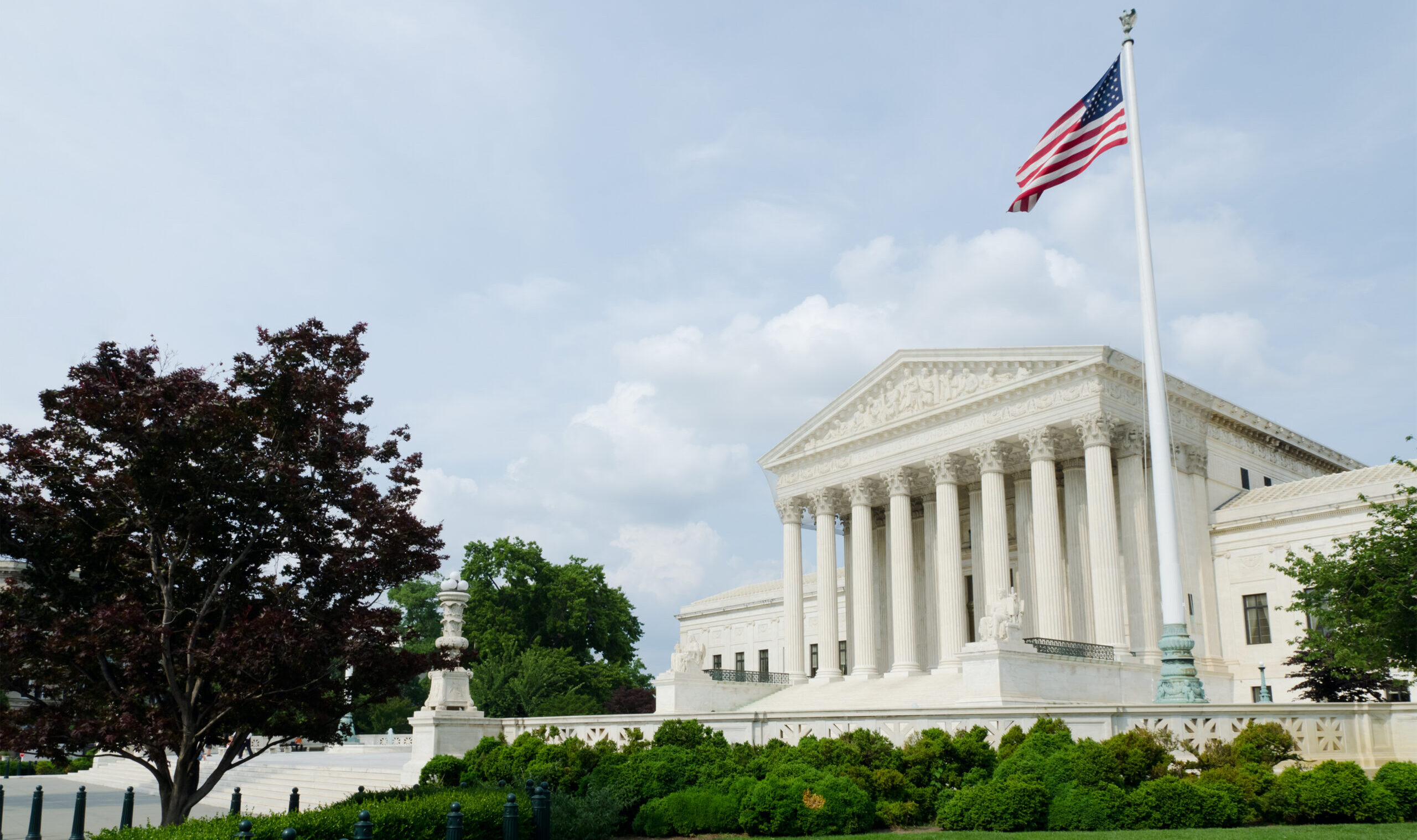
Politics Overturning Chevron May Prove Pyrrhic Does Loper bring the administrative state to heel, or just empower lawyers? Credit: Konstantin L The Supreme Court’s term has ended, as it often does, with a bang—or series of bangs. The Court set off legal fireworks on many fronts, but the most enduringly significant decision handed down is probably Loper v. Raimondo. In that case, the Court overruled its 1984 decision in Chevron U.S.A. v. Natural Resources Defense Council, which had established the legal doctrine that came to be known as “Chevron deference.” Under this doctrine, courts were required to defer to a federal administrative agency’s interpretation of the statutory law it enforces whenever a statute is sufficiently ambiguous—even if a court might have interpreted the statute differently.  This effectively ceded enormous amounts of power to the administrative state, leaving ordinary citizens with little recourse to challenge the legal interpretations of the countless agencies that wield enormous power over their lives and livelihoods. Given the size and scope of the modern administrative state, this directly undermines the fundamental principle of republican government: consent of the governed.  At issue in Loper was whether or not the Commerce Department’s National Marine Fisheries Service had overstepped its legal authority in imposing significant monitoring costs on fishermen. The Biden administration defended deference to the regulating agency on the basis of the agency’s purported expertise. The fishermen, by contrast, argued that Congress has been incentivized by Chevron deference to do far less than is constitutionally required, instead delegating to administrative agencies the power to rule by fiat rather than law. The Court accepted this argument and overturned Chevron. It did so partly on the basis of the inherent judicial authority to interpret laws in the “Cases” and “Controversies” explicitly contemplated by the Constitution, and partly on the basis of the 1946 Administrative Procedure Act (APA), which was passed to check the “zeal” of New Deal administrative agencies that led them to “excesses” beyond the four corners of the laws that gave them life. Chevron deference, the Court said in Loper, was directly contrary to the APA. Statutory ambiguities can no longer be read as implicit and broad delegations to administrative agencies. According to Chief Justice John Roberts, “Courts must exercise their independent judgment in deciding whether an agency has acted within its statutory authority….courts need not and under the APA may not defer to an agency interpretation of the law simply because a statute is ambiguous.”  In dissent, Associate Justice Elena Kagan asked, “Who should give content to a statute when Congress’s instructions have run out? Should it be a court? Or should it be the agency Congress has charged with administering the statute? The answer Chevron gives is that it should usually be the agency, within the bounds of reasonableness.” In hemming in the relatively unchecked power of federal bureaucrats, the decision in Loper has long been on the wish list of conservatives, classical liberals, and libertarians alike. And, indeed, it’s not hard to imagine benefits flowing directly from the decision, in the form of heightened judicial oversight of the administrative state. But it’s equally easy to imagine the decision delivering far less than many hope, and even masking and ultimately accelerating progressivism’s long march through our institutions. Conservatives must be careful what they wish for.  Few know the story of how we got to Chevron and why many conservatives, including the likes of the late Associate Justice Antonin Scalia, initially embraced it. Since the advent of the modern administrative state, presidents, Congress, the courts, and agencies themselves have tussled over who controls it, and the extent to which it must be accountable to the American people. FDR himself, contrary to many early progressives, came to have doubts about the independence of “the headless fourth branch of government.”  As the 20th century wore on, both liberals and conservatives increasingly agreed on the necessity to control this fourth branch, albeit for different reasons. By the 1960s, liberals became suspicious of what they saw as a captured technocratic state operating without popular or judicial controls. They sought to enable interest groups, acting through courts, to control the levers of administrative power in pursuit of a variety of newly-fashioned social, political, economic, and environmental objectives. They often sued not simply to stop government action, but to demand it, in accordance with what they claimed were statutory objectives or constitutional mandates. In this endeavor, they relied on increasingly sympathetic federal courts staffed by progressive jurists to do their bidding. Through a variety of mechanisms, including loosened standing requirements and novel due process rulings, courts began to direct the organs of the administrative state to pursue progressive policy objectives.  Meanwhile, the Nixon administration, equally suspicious of administrative independence, sought to re-politicize the massive New Deal/Great Society federal Leviathan. Nixon’s goal was to hold it accountable, through the office of the president, to the wishes of the American people. He was often stymied by the shift in the balance of power away from executive agencies to even more unaccountable federal courts. In a sense, both liberals and conservatives attempted to affect what they understood to be a “democratization” of the administrative state, each having lost the early progressives’ faith in apolitical “expertise.” By the time the Chevron case was decided during the Reagan administration, many conservatives were fully on board with having courts step back from meddling in what they understood to be executive affairs. Progressive courts had hardly proved to be allies in reining in non-consensual administrative power.  As Associate Justice Neil Gorsuch points out in a footnote to Loper,  It should be recalled that, when Justice Scalia launched the Chevron revolution, there were many judges who “abhor[red] . . . ‘plain meaning’” and preferred instead to elevate “legislative history” and their own curated accounts of a law’s “purpose[s]” over enacted statutory text…Chevron, he predicted, would provide a new guardrail against that practice…As the Justice’s later writings show, he had the right diagnosis, just the wrong cure. The answer for judges eliding statutory terms is not deference to agencies that may seek to do the same, but a demand that all return to a more faithful adherence to the written law. That was, of course, another project Justice Scalia championed. And as we like to say, “we’re all textualists now.” But are we all textualists now? Conservatives should be cautious about embracing the shift to judicial superintendence over administration that Loper demands. It might well have the effect of preventing salutary politicization of such decision making by future conservative administrations confronting an even more progressive judiciary. One of the effects of overturning Chevron will be to shift even more power toward lawyers within the administrative state, rather than political officers. Over much of the last century, courts have routinely proved to be as non-deferential to conservative preferences as they have to the text of the Constitution itself. As conservatives should know—though many have forgotten the lesson—the most important question is not who wields power, but how much power is wielded. The goal of conservatives should be to reduce the size and scope of unaccountable bureaucracy, not celebrate who or what controls it. The fat lady that is the administrative state has not yet begun to sing. The post Overturning Chevron May Prove Pyrrhic appeared first on The American Conservative.
Like
Comment
Share
Conservative Voices
Conservative Voices
2 yrs

Democrats Flee A Ship Named Democracy
Favicon 
www.theamericanconservative.com

Democrats Flee A Ship Named Democracy

Politics Democrats Flee A Ship Named Democracy Debate debacle rattles the left. Under President Joe Biden’s leadership, the Democrats have cast the presidential election as a fight for democracy. How fitting then that a critical mass of Democrats are now contemplating jettisoning Biden, the winner of all the Democratic primaries, as the nominee and replacing him with someone who did not run and received as few as zero votes. All because they fear he will lose a democratic election in four months to former President Donald Trump. Biden himself professes to be upset that the Supreme Court made it more likely that the voters determine Trump’s fitness to serve another term rather than another court proceeding, despite saying that the events of Jan. 6, 2021 were apparent to anyone watching. Now Biden himself could be denied an opportunity to face the voters by the same Democratic bigwigs who helped clear the primary field for him, if they can persuade him to drop out or incite a big enough mutiny among the Democratic convention delegates, more than 90 percent of whom are committed to him. The runner-up in the Democratic primaries was “uncommitted.” The modern primary process is a relatively recent phenomenon, to be sure. Plenty of great presidents, from George Washington to Dwight Eisenhower, preceded it. But none of them were pushing for the abolition of the Electoral College, the legislative filibuster, or the Senate itself on democratic grounds, as can be said of many Democrats pushing for a return to the smoke-filled room. If Democrats have their druthers, they would also dislodge Vice President Kamala Harris, who at least won the 2020 election alongside Biden, and replace her with a swing state-friendly ticket. But James Clyburn, the South Carolina Democrat and Congressional Black Caucus grandee who rescued Biden’s candidacy four years ago, has already signaled that is a nonstarter. It is not clear that anyone else could directly inherit and control Biden’s campaign cash, which is imperative now that Trump has picked up the fundraising pace. As Democrats try to gently escort Biden into the good night now that he has apparently outlived his usefulness, leaked polling data from the Democratic firm OpenLabs purportedly shows Trump leading in the battlegrounds and gaining ground rapidly in the toss-up and heretofore reach states. This is consistent with what the post-debate national polling is showing and would endanger down-ballot Democrats. Thus the Democrats are starting to flee the sinking ship. For the good of democracy, of course. Which suddenly might be fine after all!  “Donald Trump is going to win. And I’m OK with that,” Trump-district Rep. Jared Golden (D-ME) wrote in a remarkable op-ed. “Unlike Biden and many others, I refuse to participate in a campaign to scare voters with the idea that Trump will end our democratic system.” Democrats lost Golden’s district, good for one electoral vote, in the 2016 and 2020 presidential elections. Polls now show Biden could possibly lose Maine statewide.  In the days leading up to the Biden debate disaster that suddenly made presidential decrepitude noticeable in polite company again, Democrats were focused on their other core issue for the 2024 election: the Supreme Court’s Dobbs v. Jackson Women’s Health Organization decision, handed down two years ago. The court’s majority decided that abortion policy should be decided democratically rather than by judicial fiat for the first time in nearly a half century, without imposing its own preferences on the whole country. The Democrats’ anti-Dobbs fervor sits uneasily alongside their democracy push.  Of course, you can object to human rights issues being settled by majority vote, whether nationally or in the states, even if we disagree about the precise human rights question at stake. The Supreme Court’s junking of Chevron deference is really primarily about restoring power to the elected legislative branch that had gradually been taken by unelected bureaucrats. As was the case with Dobbs, it is not always clear that the legislators will use this power wisely or that Republicans in particular are prepared to grapple with all the thorny issues involved. But it is their duty and one of the reasons Congress has devolved into a clown show in the first place is that for the rank-and-file, lawmaking is now a secondary concern to lawmaking. The Constitution gives them better things to do. It’s true that there is more to a free and democratic society, much less a constitutional republic, than conducting elections. We learned that, or at least should have, with the folly of Iraq and Hamas’ participation in that supposed tidal wave of democracy in Gaza during that time period. But non-Democrats can be forgiven for wondering if the party’s commitment to the small-d variety is contingent upon the outcome. As one Joe Biden once put it, “You can’t love your country only when you win.” The post Democrats Flee A Ship Named Democracy appeared first on The American Conservative.
Like
Comment
Share
Conservative Voices
Conservative Voices
2 yrs ·Youtube Politics

YouTube
The View Has Always Been About This #theview
Like
Comment
Share
Showing 21949 out of 56670
  • 21945
  • 21946
  • 21947
  • 21948
  • 21949
  • 21950
  • 21951
  • 21952
  • 21953
  • 21954
  • 21955
  • 21956
  • 21957
  • 21958
  • 21959
  • 21960
  • 21961
  • 21962
  • 21963
  • 21964

Edit Offer

Add tier


Select an image
Delete your tier
Are you sure you want to delete this tier?

Reviews

In order to sell your content and posts, start by creating a few packages. Monetization

Pay By Wallet

Payment Alert

You are about to purchase the items, do you want to proceed?

Request a Refund