YubNub Social YubNub Social
    Advanced Search
  • Login

  • Night mode
  • © 2026 YubNub Social
    About • Directory • Contact Us • Privacy Policy • Terms of Use • Android • Apple iOS • Get Our App

    Select Language

  • English
Install our *FREE* WEB APP! (PWA)
Night mode
Community
News Feed (Home) Popular Posts Events Blog Market Forum
Media
Headline News VidWatch Game Zone Top PodCasts
Explore
Explore Jobs Offers
© 2026 YubNub Social
  • English
About • Directory • Contact Us • Privacy Policy • Terms of Use • Android • Apple iOS • Get Our App

Discover posts

Posts

Users

Pages

Group

Blog

Market

Events

Games

Forum

Jobs

Science Explorer
Science Explorer
2 yrs

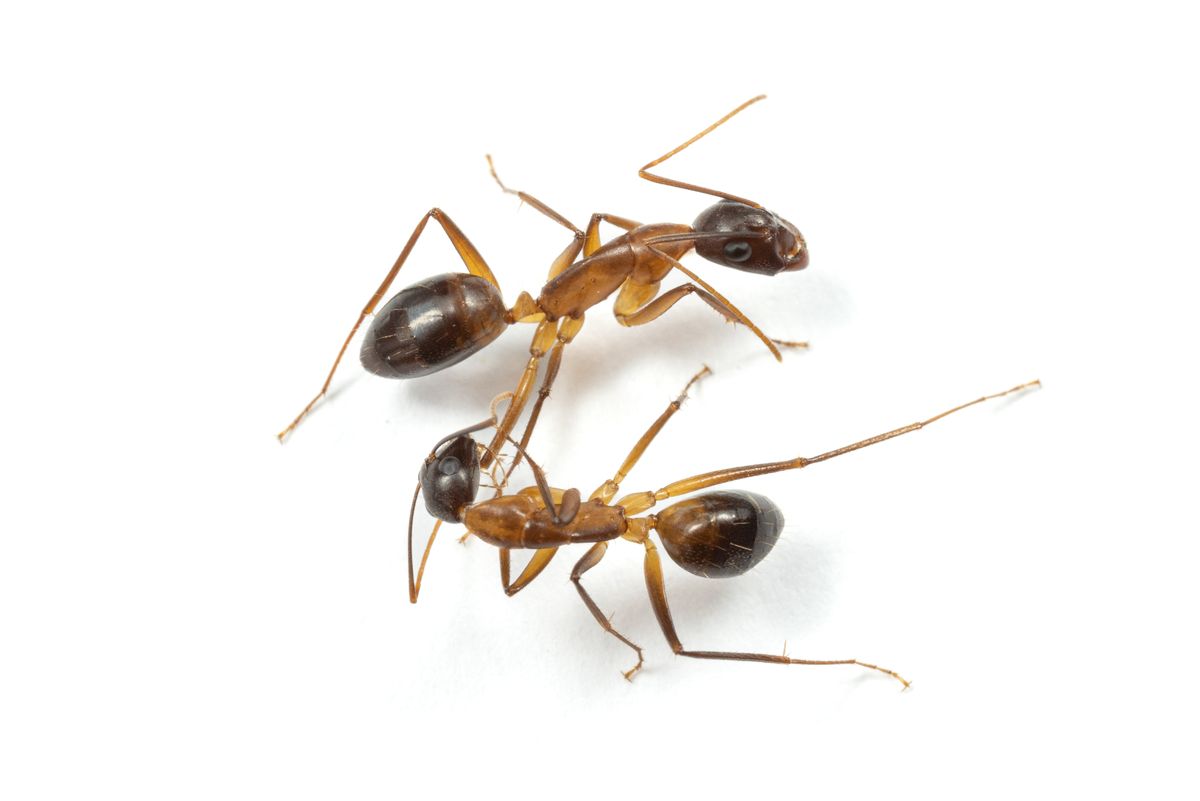
Watch An Ant Amputate A Leg From A Fellow Nestmate To Save Its Life
Favicon 
www.iflscience.com

Watch An Ant Amputate A Leg From A Fellow Nestmate To Save Its Life

Ants are pretty remarkable creatures. From navigating via Earth’s magnetic field to spraying acid at their enemies, these tiny colonies are capable of big things, both as a unit and on an individual level. Now, new research has found that ants can even perform surgery, amputating the limbs of their friends and saving their lives in the process.Florida carpenter ants (Camponotus floridanus) treat other ants with leg injuries by first assessing the wound, cleaning it, and then deciding whether to perform an amputation. The same researchers that made this discovery had previously found that another ant species can treat wounds with antibiotics in their saliva; however, Florida carpenter ants do not possess the same gland as the other species, and so their treatment is entirely mechanical. “When we're talking about amputation behavior, this is literally the only case in which a sophisticated and systematic amputation of an individual by another member of its species occurs in the animal Kingdom,” said first author Erik Frank, a behavioral ecologist from the University of Würzburg, in a statement.             The team found that the ants would assess the injury and either simply clean the wound, or clean the wound followed by a full amputation, which could take as long as 40 minutes. In the study, injuries to the femur (upper leg) were always cleaned and then amputated, while injuries to the tibia (lower leg) only received cleaning and were never amputated. Moreover, the survival rate for ants with either injury was remarkably high.“Femur injuries, where they always amputate the leg, had a success rate around 90% or 95%. And for the tibia, where they did not amputate, it still achieved about the survival rate of 75%,” said Frank.It was suspected that the decision whether to clean or amputate the leg could be based on the risk of infection. By using a micro-CT scanner, the team discovered that the femur is made up of lots of muscle tissue and can pump blood or hemolymph around to the rest of the body. The tibia, by contrast, contains very little muscle tissue, and much less involvement in the blood movement. “In tibia injuries, the flow of the hemolymph was less impeded, meaning bacteria could enter the body faster. While in femur injuries the speed of the blood circulation in the leg was slowed down,” Frank explained.Because the blood flow in the femur was slowed down via the injury, the ants could spend the extra time it takes to remove the limb, and not risk the infection spreading. But in tibia injuries, the faster blood flow means there's not enough time for amputation without the infection spreading, so they clean more instead.“Thus, because they are unable to cut the leg sufficiently quickly to prevent the spread of harmful bacteria, ants try to limit the probability of lethal infection by spending more time cleaning the tibia wound,” remarked senior author and evolutionary biologist Laurent Keller of the University of Lausanne.This remarkable behavior shows that these Florida carpenter ants can find the location of the wounds of their nestmates and alter their treatment based on the location, thereby increasing the likelihood of survival for the injured ant. The team believes this is the first case of a non-human animal performing amputations in this way.“The fact that the ants are able to diagnose a wound, see if it's infected or sterile, and treat it accordingly over long periods of time by other individuals—the only medical system that can rival that would be the human one,” said Frank.The study is published in Current Biology.
Like
Comment
Share
Science Explorer
Science Explorer
2 yrs

How Humanity Could Power Starships By Creating Artificial Black Holes
Favicon 
www.iflscience.com

How Humanity Could Power Starships By Creating Artificial Black Holes

If we one day want to explore the galaxy (let alone the rest of the universe) humanity has a speed issue. In late 2023, NASA's Parker Solar Probe achieved the highest speed ever achieved by a human-made object, clocking in at 635,266 kilometers (394,736 miles) per hour.While impressive, that's only 0.059 percent of the speed of light. Visiting our closest neighbor Proxima Centauri, 4.2 light-years away, at these speeds would take around 7,700 years, making generational ships (or robotic probes) necessary to explore it or any other interesting star further away.Such large ships would require a lot of propellant to get us anywhere near the velocities we would need to reach the stars. Physicists have proposed various methods to do this using current physics, and more speculative ways such as warp drives, with the goal of accelerating a useful-sized spaceship to these speeds without expending a huge amount of fuel. One such idea is to create an artificial black hole, and then power the spaceship using the Hawking radiation emitted from the event horizon."A stellar-mass black hole forms when a star with more than 20 solar masses exhausts the nuclear fuel in its core and collapses under its own weight," NASA explains. "The collapse triggers a supernova explosion that blows off the star’s outer layers. But if the crushed core contains more than about three times the Sun’s mass, no known force can stop its collapse to a black hole."A black hole of that size – or a supermassive black hole – would be too large to usefully power a spaceship, which would have to drag the black hole along with it, requiring it to be of similar mass. Besides this, smaller black holes emit higher temperature and energy radiation, making them more useful for powering spacecraft.So how do we get a smaller black hole? Many physicists believe that primordial black holes could have formed in the first few seconds of the universe, when all the stuff that would go on to create the stars and galaxies was more tightly packed together."In that moment, pockets of hot material may have been dense enough to form black holes, potentially with masses ranging from 100,000 times less than a paperclip to 100,000 times more than the Sun’s," NASA explains. "Then as the universe quickly expanded and cooled, the conditions for forming black holes this way ended."We have never detected such a black hole, and it's still unclear if they exist at all, or at least in the numbers and size at which we might be able to detect them. So if we want a black hole to power a spaceship, we might need to create an artificial one.  In one paper from back in 2009 looking into the feasibility of black hole-powered starships, physicists noted that it would have to be powerful enough to accelerate itself to speeds approaching that of light in a reasonable timeframe, be small enough that we can get enough energy to make it, and large enough that we can focus the energy needed to make it. Doing the math, they found that such a black hole could plausibly be made, and fairly quickly at that. "We find that a black hole with a radius of a few attometers at least roughly meets the list of criteria," the team writes in their paper. "Such BHs would have mass of the order of 1,000,000 tonnes, and lifetimes ranging from decades to centuries. A high-efficiency square solar panel a few hundred km on each side, in a circular orbit about the sun at a distance of 1,000,000 km, would absorb enough energy in a year to produce one such BH."The idea – known as a kugelblitz – is that focusing enough energy into one tiny point would create a black hole (with mass and energy being equivalent). The team believes such a black hole could accelerate itself to relativistic speeds in a matter of decades.While collecting the energy needed (never mind focusing it to a precise point needed to create a black hole) would be a hell of a mission, creating a drive from it is even more logistically challenging. The team proposes that the black hole could be used as a power plant – surrounding it with collectors that accumulate the dense energy emitted from the horizon. Alternatively, the spaceship could generate thrust by directing gamma rays."We could add a thick layer of matter which would absorb the gamma rays, reradiate in optical frequencies, and focus the resulting light rays," the team writes. "An absorber which stops only gamma rays heading towards the front of the ship and allows the rest to escape out the back causes gamma rays to radiate from the ship asymmetrically. In this way, even the escaping non-absorbed gamma rays contribute some thrust."While a cool idea (and perhaps possible), recent papers have suggested they might be impossible thanks to quantum effects.    While it could be possible using primordial black holes, that would involve finding them first. Should they exist, that may be possible using the upcoming Nancy Grace Roman telescope. But don't hold your breath for finding one of the right size, and near enough to be useful for powering awesome black hole starships.The paper is posted to the pre-print server arXiv.
Like
Comment
Share
Science Explorer
Science Explorer
2 yrs

The World’s Largest Offshore Wind Farm Is Looking To Grow Even Further
Favicon 
www.iflscience.com

The World’s Largest Offshore Wind Farm Is Looking To Grow Even Further

Dogger Bank Wind Farm, set to be the world’s largest offshore wind farm, could soon have another growth spurt. The owners of the giant North Sea wind farm have submitted plans to kick off another phase of development in a push that could provide a further 2 gigawatts (GW) of capacity to the project.Located off the east coast of England, the 3.6GW wind farm is currently under construction in the three build-out phases: Dogger Bank A, B, and C. The project won’t be completed for a few years, although Dogger Bank A started pumping clean energy in October 2023, marking a major milestone for the colossus.Now, its owners – Britain’s SSE Renewables and Norway’s Equinor – have submitted a Scoping Report to build a fourth array: Dogger Bank D. The proposed Dogger Bank D will effectively be an extension on the east side of Dogger Bank C, situated around 210 kilometers (130 miles) off the northeast coast of England. It's planned to hook up to a new 400-kilovolt substation back on the mainland in Yorkshire, where it will be used to power thousands of homes and more. To get the go-ahead, they’ll have to reach an agreement with The Crown Estate, who manage the land and seabed owned by the British monarch around England, Wales, and Northern Ireland. They also have to pass numerous environmental checks, plus face a public consultation on the proposals in Autumn 2024.          "The Scoping Report is an important milestone for Dogger Bank D and is a key part of the development of an offshore wind farm. The report lays out the scope of the project proposals and identifies key environmental factors," Rob Cussons, Project Director for Dogger Bank D at SSE Renewables, said in a statement. Even before this latest addition was mentioned, Dogger Bank Wind Farm was pitted to be “the world’s biggest wind farm.” Dogger Bank A, B, and C is set to have 277 wind turbines and, once operational, would be more than two and a half times the size of the largest offshore wind farm currently in operation. According to the latest Scoping Report, Dogger Bank could add a maximum of 122 turbines to that total. The site features turbines with a height of 260 meters (853 feet) and blades that are 107 meters (351 feet) long – which is pretty huge, although not quite as big as the turbines off the coast of China’s Fujian Province, which have blades measuring 123 meters (403 feet) long.As the world attempts to wean itself off fossil fuels, huge wind farms have sprouted up across many parts of the world in recent years. The largest in the US is the Alta Wind Energy Center in the windswept Tehachapi Pass of California, boasting a capacity of about 1.55GW. However, the efforts of the US and Britain are dwarfed by one in China – the Gansu Wind Farm Project or Jiuquan Wind Power Base on the outskirts of the Gobi Desert – that has a planned capacity of 20GW.
Like
Comment
Share
Science Explorer
Science Explorer
2 yrs

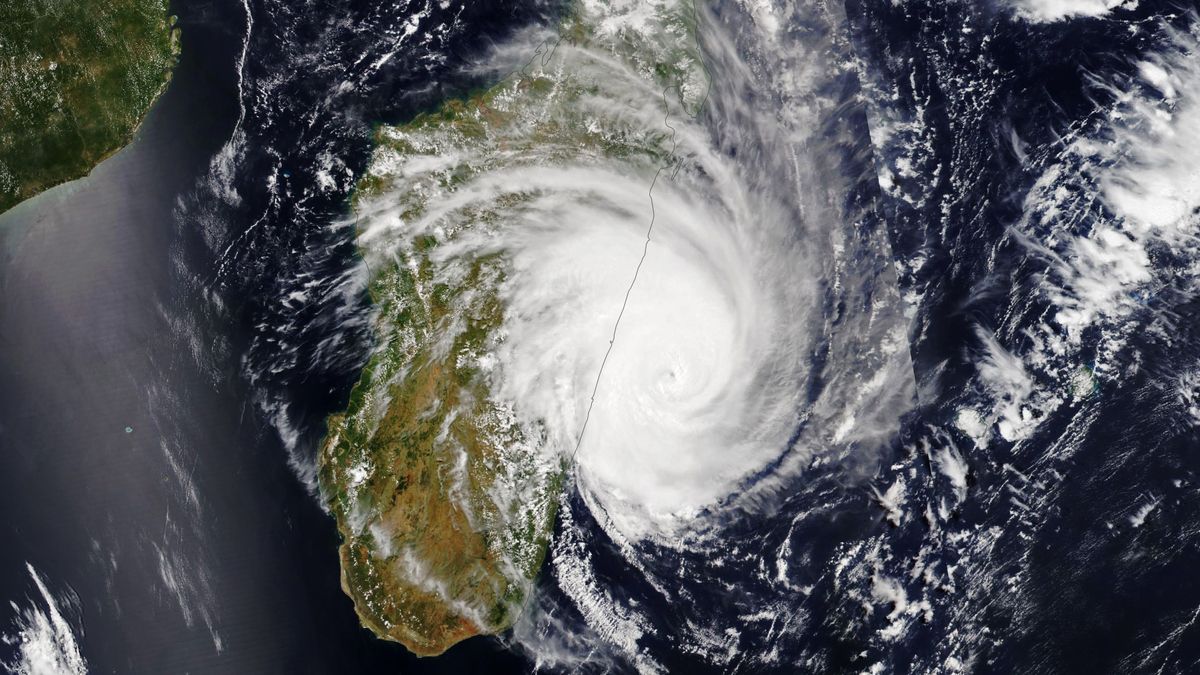
Cyclone Freddy Breaks Record For Longest-Lasting Tropical Cyclone
Favicon 
www.iflscience.com

Cyclone Freddy Breaks Record For Longest-Lasting Tropical Cyclone

The World Meteorological Organization (WMO) has announced that last year’s Cyclone Freddy was the longest-lasting tropical cyclone on record, having spent 36 days at tropical storm status.Between February 4 and March 14, Freddy started off the coast of northwest Australia and made its way across the Indian Ocean Basin before making landfall in southeast Africa. In that time, it was classified as a tropical system for 36 days – beating the previous record holder, Typhoon John, by 6.75 days, bringing an end to a streak it had going since 1994.Freddy also traveled around 12,785 kilometers (7,945 miles) whilst holding its tropical storm status. That’s where it falls short of beating John, but it’s certainly not a distance to be pooh-poohed – it’s nearly 33 percent of the Earth’s circumference. But its duration and distance traveled aren’t the only things that make Freddy an exceptional event; the cyclone also has the highest all-time accumulated cyclone energy (a measure of the storm’s strength over time) in history and was the first in the Southern Hemisphere to rapidly intensify in strength on four separate occasions. At its most intense, it had maximum wind speeds of 257 kilometers (160 miles) per hour, putting it in the highest-strength group of tropical cyclone classification. In Atlantic hurricane terms, it’d be a Category 5.     The most tangible evidence for such statistics can be found in the devastating impact that Cyclone Freddy had on the places it hit.“Freddy was a remarkable tropical cyclone, not only for its longevity but also for its ability to survive multiple land interactions, which unfortunately had significant consequences for southeast African populations," said Chris Velden – a tropical cyclone and satellite expert who formed part of the WMO committee making the decision on the record – in a statement.Some of the hardest-hit areas were Madagascar, Mozambique, and Malawi, where Cyclone Freddy brought not only catastrophic winds but also storm surges and torrential rains, causing widespread destruction. The cyclone also looped back two weeks later, adding to the damage. It’s thought that over 1.3 million people were affected by Freddy in Mozambique, with more than 180 deaths, and more than 1,200 people were reported as either dead or missing in Malawi.However, the WMO believes the death toll may well have been higher if it weren’t for advanced warnings giving people in the countries affected a chance to prepare and evacuate.“Tropical Cyclone Freddy was a text book example of the importance of the UN Early Warnings for All initiative to ensure that everyone is protected in the next five years,” said WMO Tropical Cyclone Programme scientific officer Anne-Claire Fontan.Freddy also may not be the last record-breaking storm we see, according to those who’ve added it to the ranks of the WMO’s Archive of Weather and Climate Extremes.“It is possible, and indeed likely, that greater extremes will occur in the future,” said Randall Cerveny, Rapporteur of Climate and Weather Extremes for WMO.And if the start of the Atlantic hurricane season is anything to go by, it’s a prediction that seems to be coming true already.
Like
Comment
Share
Science Explorer
Science Explorer
2 yrs

Ancient Egyptian Scribes Had The Same Bad Posture As You
Favicon 
www.iflscience.com

Ancient Egyptian Scribes Had The Same Bad Posture As You

The modern world has plenty of advantages, but nobody would say it comes without any drawbacks. Take computers, for example: it’s awesome having the sum total of human knowledge at your disposal, being connected to the world via wireless signals, and having a machine that you can write essays and calculate sums and play solitaire on – but the carpal tunnel and back problems that result from using such futuristic miracle-machines? Not so great.Except, as it turns out, those are far from modern inconveniences. According to a recent study, which looked at the skeletal remains of ancient Egyptian scribes buried in Abusir between 2700 and 2180 BCE, sitting and working with the foremost technology of the day like this has been messing with our bodies for eons.By examining the skeletal remains of 69 adult males – 30 scribes, identified by their tomb style and decoration, plus 39 other ancient laborers – the team were able to isolate some 40 statistically significant differences. Chief among these was an increased degeneration in the neck vertebrae – meaning these ancient scribes probably got the same kind of neck pain as you after a long day at the office.“In a typical scribe’s working position, the head had to be forward, and the spine flexed, changing the center of gravity of the head and putting stress on the spine,” the researchers write – a position that they note is “characteristic of many modern occupations.” When sitting like this – hunched over, with the head bent forward to look at something horizontally in front of you – the center of gravity of your head is moved, with stressful results: “the load moment for the [neck vertebrae] induced by the weight of the head and neck increases 3.6 times in comparison to the neutral position,” the authors explain.Also suffering were the right shoulder and clavicle, and the right thumb. Like the neck changes, these are all things that a modern worker might be familiar with: “Stress to the rotator cuff […] usually occurs when the arm is in an elevated position, such as among painters. However, it could also be related to a static sitting position with arms unsupported, such as during typing,” the authors explain.Of course, not all the changes point to such relatable problems – we are talking about people living 5,000 years ago, after all. This was well before the invention of ergonomic desk chairs, and the scribes’ knees and hips show signs of wear and tear associated with sitting cross-legged or squatting on the right knee. But perhaps the furthest departed from our modern occupational gripes: the changes to the temporomandibular joint, or TMJ – that is, the hinge where your jaw meets your skull. While the incidence of osteoarthritis in the TMJ generally tops out at about 40 percent in both modern and archaeological samples, among the scribes it was more than twice as prevalent as in the rest of the skeletons – nearly two out of every three scribes showed wear in the TMJ. What caused such a specific injury? Well, it all comes down to the specific method these ancient scribes used to write: “The tools that scribes used to write were made from rush […] which was cut at a slant and chewed at the end to form a brush-like head,” the authors explain. “When the pen became ragged or clogged with ink, the scribe cut off the end again and chewed the next section.”The results aren’t definitive. There are no modern populations with whom to compare the scribal cohort, so we can’t really draw causal links between the scribal profession and the skeletal changes noted in the study; moreover, as the authors themselves point out, scribes would live longer, on average, than manual laborers, and therefore had more time for their joints to degenerate simply through old age. But it nevertheless paints a picture of an ancient world that was, at least when it came to office work, more like our own than we might assume.“They were high-ranking dignitaries who belonged to the ancient Egyptian elite,” Petra Brukner Havelková, an anthropologist in the Department of Anthropology at the National Museum in Prague and lead author of the study, told Live Science. “[But] they suffered the same worries as we do today and were exposed to similar occupational risk factors in their profession as most civil servants today.”The paper is published in the journal Scientific Reports.
Like
Comment
Share
NewsBusters Feed
NewsBusters Feed
2 yrs

Uh, WHAT? Soros-Funded Poynter Claims Fact-Checks Aren’t Censorship
Favicon 
www.newsbusters.org

Uh, WHAT? Soros-Funded Poynter Claims Fact-Checks Aren’t Censorship

A George Soros-funded fact-checking organization heads up a coalition arguing that fact-checks are … free speech. Huh? The director of the Soros-funded International Fact-Checking Network (IFCN) at the leftist Poynter Institute announced a statementgaslighting on behalf of 130 organizations at a global fact-checking summit.  “World’s fact-checkers issue ‘Sarajevo statement’ supporting fact-checking as free speech, not censorship,” IFCN director Angie Drobnic Holan proudly announced. However, this is false, as multiple social media platforms such as Facebook and Instagram have actively partnered with IFCN affiliates to deboost any content that has been fact-checked. Poynter is also notorious for trying to blacklist right-leaning media. Holan, in effect, is attempting to twist around the meaning of what censorship really is, even though it received grants from one of the most prolific funders of censorship in America today.  Morever, fact-checking often operates as a harsh form of censorship online. For instance, fact-check interstitials on Facebook stop users from clicking through to view the content 95 percent of the time, according to the tech company. Facebook’s parent company Meta partners with Poynter. Soros gave $492,000 to Poynter for IFCN between 2016 and 2019 alone. In light of Soros’s $80 million investment in groups pushing Big Tech to censor speech ahead of the 2024 U.S. election, it is particularly concerning that the so-called “Sarajevo statement” highlighted election interference as supposedly important to “give the public accurate information.” Holan was spinning herself silly trying to paint censorship zealots as victims of smear campaigns.“In the United States, political and legal attacks on the misinformation research community have pressured academic researchers to curtail work that aids the fact-checking community and widespread efforts to improve election voting processes,” she railed. She mourned the unpopularity of the infamous and faltering federal government censorship proxy Stanford Internet Observatory, which was part of a government-tech-researcher cabal targeting online speech in 2020 and 2022. Holan was adamant about deluding readers into thinking that its leftist variant of a Ministry of Truth behemoth was in fact the hero of the free speech story in America.  Holan claimed, “it is time to restate our longstanding commitment to access to information and freedom of expression, for all people and across borders.” MRC Free Speech America Assistant Editor Luis Cornelio contributed to this report. Conservatives are under attack. Contact your representatives and demand that Big Tech be held to account to mirror the First Amendment while providing transparency, clarity on so-called “hate speech” and equal footing for conservatives. If you have been censored, contact us using MRC Free Speech America’s contact form, and help us hold Big Tech accountable.
Like
Comment
Share
NewsBusters Feed
NewsBusters Feed
2 yrs

7 Times Google, Meta Weaponized Censorship Against Political Campaign Ads
Favicon 
www.newsbusters.org

7 Times Google, Meta Weaponized Censorship Against Political Campaign Ads

Ahead of the historic 2024 election, Big Tech is back to its old tricks of censoring the political ads of the opposition of their apparent candidates of choice. Google and Facebook (now Meta) have targeted candidates or campaigns ahead of elections in seven major instances since 2018. In both America and the United Kingdom, these tech giants have engaged in election interference by shutting down ads for candidates whose political views do not align with the companies’ ideology. Below are seven occasions when the tech giants went all out on ads censorship, censoring dozens of political ads. 1) In May 2024, Google was caught censoring an ad supporting former President Donald Trump’s campaign multiple times. The pro-Trump ad depicted a fictional phone call between a Biden campaign worker and a voter, highlighting Biden’s disastrous economic and border policies. The ad was scheduled to run from May 1 to May 3, according to screenshotsof Google’s Ad Library posted by Andrew Arenge, director of operations for the Program on Opinion Research and Election Studies at the University of Pennsylvania. Google reportedly restored the censored ad the following day, asserting the ad was flagged “in error.” MRC President Brent Bozell argued this was an insufficient excuse. “This is unacceptable. Why did Google remove the ad from Trump's Super PAC in the first place? This is a continuation of a campaign against conservatives,” Bozell stated.  2) In 2020, Facebook targeted ads from Republican presidential candidate and former President Donald Trump in a frenzy of censorship. Facebook censored posts and ads from then-sitting President Donald Trump no fewer than four times. Furthermore, the platform took down seven political ads that were paid for by the political right. Facebook killed one ad campaign comparing Democrats’ open borders and COVID-19 lockdown policies about a month before the 2020 election. The Washington Post reported at the time, “There were more than 30 versions of the ad running on the social network, according to Facebook’s ad transparency library. It had gathered between 200,000 and 250,000 impressions.” 3) Meta’s Facebook went on a 2020 ad censorship spree. Facebook censored a staggering 5,100 ads with the key words, “Dangerous mobs of far left groups are running through our streets and causing absolute mayhem.” These included thousands of ads, and over a dozen ad campaigns from Trump, his team, his supporters and his then-Vice President Mike Pence. 4) Google targeted Joe Biden’s Democrat primary opponent in 2020. Google disabledthen-presidential candidate Tulsi Gabbard’s Google Ads account just as she became the most searched-for candidate following the first Democratic Party primary debate during that cycle. Gabbard’s campaign said the censorshipoccurred “without any explanation” from Google. “For hours, Tulsi’s campaign advertising account remained offline while Americans everywhere were searching for information about her,” the campaign accused. 5) In 2018, Facebook censored multiple candidates for the U.S. Congress. Facebook removed ads for then-Rep. Marsha Blackburn (R-TN) and Rep. Matt Rosendale (R-MT). Besides these candidates, The platform reportedly removed another video that promoted an AR-15 giveaway that Senate candidate Austin Petersen (R-MO) was conducting on his website. 6) Facebook targeted at least one state legislator before the 2018 election. Michigan Republican state Senate candidate Aric Nesbittfound his ad was rejected by Facebook “because it doesn’t follow our Advertising Policies. We don’t allow ads that contain shocking, disrespectful or sensational content, including ads that depict violence or threats of violence.” Nesbitt’s ad simply promised, “I will work to strengthen our economy, limit government, lower our auto insurance rates, balance the budget, stop sanctuary cities, pay down government debt and be a Pro-Life, Pro-Second Amendment leader for the people.” 7) Google censors anti-globalist UK political party a month before major 2024 election.Reform UK Party leader and political candidate Nigel Farage tweeted June 22, “ELECTION INTERFERENCE ALERT ? Big Tech giant @Google has BLOCKED our Ad Accounts. They are trying to stop the Reform message.” The account was restored later that day, according to Farage, who did not note if Google had provided an explanation. As MRC Vice President for Free Speech Dan Schneider said, “Google's reach is truly global, including how it meddles in elections.”
Like
Comment
Share
The Blaze Media Feed
2 yrs

Trump asks to overturn New York conviction based on Supreme Court immunity ruling
Favicon 
www.theblaze.com

Trump asks to overturn New York conviction based on Supreme Court immunity ruling

Former President Donald Trump's legal team filed a letter Monday seeking permission from acting Justice Juan Merchan to file a motion to overturn the jury's guilty verdict in the New York criminal case, the New York Times reported.The letter was sent shortly after the Supreme Court ruled on Trump's presidential immunity motion. In a 6-3 vote, the justices determined that presidents have absolute immunity for official acts and no immunity for unofficial acts.'Evidence of those acts cannot be used.'The Supreme Court did not define what constitutes an official act, which will be left up to the lower courts to determine.In response to the ruling, Trump wrote on Truth Social, "BIG WIN FOR OUR CONSTITUTION AND DEMOCRACY. PROUD TO BE AN AMERICAN!"Trump was convicted on all 34 felony counts of falsifying business records in the New York criminal case. The alleged illegal acts occurred during Trump's 2016 campaign before he became president. Merchan is expected to hand down sentencing in the case on July 11. Trump is facing up to four years in prison.In previous court filings, Trump's legal team argued that some of the evidence used in the New York trial — including Trump's social media posts about his former attorney Michael Cohen — were from his time in office and, therefore, should have been excluded.Merchan implemented a policy requiring the prosecution and the defense to provide a one-page letter summarizing their arguments before submitting court filings. According to Merchan, the policy ensured he would not become inundated with paperwork.If Merchan allows Trump's team to file the motion, sentencing would likely be delayed. However, it is unclear if Merchan will do so since the deadline to file post-trial motions has already passed.The letter is expected to be made public on Tuesday. Manhattan District Attorney Alvin Bragg's (D) office will be given an opportunity to respond to the request.Will Scharf, Trump's attorney, told CNN that the Supreme Court's recent ruling "absolutely" impacts the New York case. He argued that the prosecution used a "substantial number of official acts of the presidency" as evidence in its case against Trump."The Supreme Court was very clear that for acts that fall within the outer perimeter of the president's official responsibilities, acts that are presumptively immune from prosecution, that evidence of those acts cannot be used to try essentially private acts," Scharf told the news outlet.Scharf added, "At the very least, we deserve a new trial where those immune acts will not come into evidence, as the Supreme Court dictated today."Like Blaze News? Bypass the censors, sign up for our newsletters, and get stories like this direct to your inbox. Sign up here!
Like
Comment
Share
The Blaze Media Feed
2 yrs

Shotgun-toting Texas homeowner fatally shoots intruder who allegedly refused to leave property, lunged at homeowner, wife
Favicon 
www.theblaze.com

Shotgun-toting Texas homeowner fatally shoots intruder who allegedly refused to leave property, lunged at homeowner, wife

A shotgun-toting homeowner in San Antonio, Texas, fatally shot an intruder who allegedly refused to leave his property and lunged at him and his wife.Police were called to a residence in the 800 block of Allende Drive in the city's west side around 1 a.m. Sunday for a report of a shooting, KEYE-TV reported.The homeowner reported fearing for his and his wife's safety when the male lunged at them, the station said.A male came to the home's door, after which the homeowner asked him to leave, investigators told the station.The male returned a short time later and again was asked to leave, KEYE reported.Soon after, the homeowner heard noises coming from the back yard, officials told MySanAntonio.com. With that, the homeowner grabbed a shotgun, checked the yard, and again saw the same male, the outlet said.The homeowner asked the male to leave their yard, but the male lunged at the homeowner and his wife, after which the homeowner fired a shot that hit the male in the stomach, MySanAntonio.com reported. Police and medical personnel attempted lifesaving measures, but the male, believed to be around 47 years old, was pronounced dead at the scene, KEYE reported. The homeowner reported fearing for his and his wife's safety when the male lunged at them, the station said, adding that no charges have been filed against the homeowner as police continue their investigation.Reportedly neither the homeowner nor his wife were injured during the incident, KEYE said.How are observers reacting?Commenters underneath the KEYE Facebook post about the incident were divided regarding the outcome. Some sided with the homeowner who fired the fatal shot:"Yep won't try that again," one commenter said."Good," another commenter noted. "Reimburse the man for the ammo expended.""F around and find out," another commenter stated."This is the way," another user wrote.But two commenters didn't see it that way:"This should NEVER be the way," one user said. "Call the police and homeowners don't go outside placing yourselves in danger. This loss of life should have never happened. Taking a life should only be up [to] GOD [no one] else. Prayers to everyone.""Probably didn't have to shoot to kill," another commenter wrote. "Typical."Like Blaze News? Bypass the censors, sign up for our newsletters, and get stories like this direct to your inbox. Sign up here!
Like
Comment
Share
The Blaze Media Feed
2 yrs

Trump immunity case EXPLAINED: Alan Dershowitz's biggest takeaways
Favicon 
www.theblaze.com

Trump immunity case EXPLAINED: Alan Dershowitz's biggest takeaways

Yesterday, in a landmark decision, the Supreme Court determined in a 6-3 ruling that former presidents have broad immunity from prosecution for actions related to the core powers of their office. This will send Trump’s case back to the lower courts where it will be determined whether or not his January 6 actions were official or unofficial. How should we interpret this ruling, and what does it mean going forward? Glenn Beck, Stu Burguiere, and Alan Dershowitz discuss the case. Trump Immunity Case EXPLAINED: Alan Dershowitz's Biggest Takeaways youtu.be “I think it’s a win for the republic,” says Glenn. Dershowitz agrees and adds that it’s likely a win for Donald Trump too, as “it probably means there won't be a trial before the election.” However, “I think [the ruling] is going to be hard to implement in practice because everything the president does, he does as president. That's very hard to separate out private acts from public acts,” he explains. Further, “There is no actual official process to figure out whether these are official acts or not, so this is a maze of legal rulings and challenges,” adds Stu. And there’s another potential problem. “It's going to be implemented by the lower courts, and the lower court of the District of Columbia [is] completely biased against Trump,” says Dershowitz, adding that “it may come back to the Supreme Court." But Glenn has a prediction. If “President Trump loses this election ... these cases will just disappear,” but “if [Trump] wins this election, they'll fight it tooth and nail, and they'll drag him all the way through.” Want more from Glenn Beck?To enjoy more of Glenn’s masterful storytelling, thought-provoking analysis, and uncanny ability to make sense of the chaos, subscribe to BlazeTV — the largest multi-platform network of voices who love America, defend the Constitution, and live the American dream.
Like
Comment
Share
Showing 22047 out of 56670
  • 22043
  • 22044
  • 22045
  • 22046
  • 22047
  • 22048
  • 22049
  • 22050
  • 22051
  • 22052
  • 22053
  • 22054
  • 22055
  • 22056
  • 22057
  • 22058
  • 22059
  • 22060
  • 22061
  • 22062

Edit Offer

Add tier


Select an image
Delete your tier
Are you sure you want to delete this tier?

Reviews

In order to sell your content and posts, start by creating a few packages. Monetization

Pay By Wallet

Payment Alert

You are about to purchase the items, do you want to proceed?

Request a Refund