YubNub Social YubNub Social
    Advanced Search
  • Login

  • Night mode
  • © 2026 YubNub Social
    About • Directory • Contact Us • Privacy Policy • Terms of Use • Android • Apple iOS • Get Our App

    Select Language

  • English
Install our *FREE* WEB APP! (PWA)
Night mode
Community
News Feed (Home) Popular Posts Events Blog Market Forum
Media
Headline News VidWatch Game Zone Top PodCasts
Explore
Explore Jobs Offers
© 2026 YubNub Social
  • English
About • Directory • Contact Us • Privacy Policy • Terms of Use • Android • Apple iOS • Get Our App

Discover posts

Posts

Users

Pages

Group

Blog

Market

Events

Games

Forum

Jobs

SciFi and Fantasy
SciFi and Fantasy  
2 yrs

Babylon 5 Rewatch: “Signs and Portents”
Favicon 
reactormag.com

Babylon 5 Rewatch: “Signs and Portents”

Movies & TV Babylon 5 Rewatch: “Signs and Portents” Mollari makes an unintended bargain… By Keith R.A. DeCandido | Published on July 1, 2024 Credit: Warner Bros. Television Comment 0 Share New Share Credit: Warner Bros. Television “Signs and Portents”Written by J. Michael StraczynskiDirected by Janet GreekSeason 1, Episode 13Production episode 116Original air date: May 18, 1994 It was the dawn of the third age… A freighter being escorted to B5 by a Starfury is attacked by raiders, who destroy the Starfury and board the freighter before Sinclair can even order Delta Wing out to help. Sinclair meets with Ivanova and Garibaldi to try to figure out how to deal with the raiders. Despite cutting off their weapons supply, they’re still attacking with impunity and impossible to stop. Sinclair orders Delta Wing to be on standby, with Ivanova commanding. After the meeting, Sinclair approaches Garibaldi and talks to him about what he went through under torture back during “And the Sky Full of Stars.” (Why he waited so long to look into it is left as an exercise for the viewer.) He asks Garibaldi to look into what he learned, see what he can dig up. He doesn’t expect much, but he needs to know more than he does now. Garibaldi agrees, and thanks Sinclair for trusting him with this. A human named Morden arrives on the station. He informs the security guard who checks his papers that he’s been traveling on the rim, but is less than forthcoming with anything beyond that. Mollari meets with a human trader named Reno, who has obtained The Eye, an immensely valuable Centauri artifact that has been lost for more than a century. The Centauri government, via Mollari, is paying a small fortune to get it back. Lord Kiro and Lady Ladira arrive soon thereafter; The Eye originally belonged to their house. Upon arrival, Ladira—who is a seer—has a vision of B5 being destroyed. Kiro dismisses Ladira’s vision, as she’s been wrong before. When he was a kid, she predicted that he’d be killed by shadows, which is just silly. (This will probably be important later.) He also questions whether or not he should even give The Eye to the emperor, but instead keep it and try to claim the throne. The emperor hasn’t even been seen in public for over a year. Confidence is eroding in the Republic. Mollari thinks it would be a spectacularly bad idea, as Kiro won’t have sufficient support for a coup. Morden goes to G’Kar’s quarters and asks him, “What do you want?” G’Kar dismisses him at first, eventually answering that he wants the Centauri utterly destroyed, and then amending that all that really matters to him is that the Narn homeworld is safe. Next, Morden meets with Delenn, and asks her, “What do you want?” but she senses a darkness about Morden and a triangle appears on her forehead. She urgently kicks him out of her quarters, covering the triangle from Morden, and when he’s gone, she whispers, horrified: “They’re here.” Credit: Warner Bros. Television The freighter Achilles detects raiders approaching. Sinclair sends Ivanova with Delta Wing to engage them. A human—who’s been observing Kiro since he arrived—says that they’ve “taken the bait.” Kosh returns to the station from wherever it is that he goes when he’s not on B5. Morden sees him, but goes out of his way to avoid him. Morden’s next stop is Mollari’s quarters. The Centauri ambassador is distracted and dismissive of Morden’s query of “What do you want?” but eventually he gives in and answers that he wants to see the Centauri Republic returned to its rightful place of glory in the galaxy, to go back to the way things were. Kiro declares to Mollari that he’s ready to leave with The Eye. Along with Ladira and Mollari and his guards, they head to the dock, only to be ambushed by the human who was watching Kiro. He and his people take The Eye and also take the three Centauri hostage (after killing the guards). Sinclair is confused by the attack on the Achilles, as it doesn’t match the pattern of the prior raids. When he reads the Achilles manifest, he realizes that there’s nothing there the raiders could possibly want, and he orders Delta Wing back to the station, as this is a diversion. He also orders Garibaldi to prepare Alpha Wing, while he goes to Kiro’s ship, which is one of the ones scheduled to depart at this particular time. The commander arrives just in time to see the three Centauri being held hostage. The raider has a PPG right at Kiro’s head, and Sinclair lets him board with the one prisoner; Mollari and Ladira are released. Sinclair returns to CnC and orders Alpha Wing to disable the Centauri ship and also orders the jump gate to be programmed to reject the Centauri ship’s codes. That should trap the raider. However, a jump gate is generated within the system by a large ship, from which raider ships fly out. The raiders’ secret is now out: they have a mothership that can form its own gate, which is how they’re able to appear without warning. A space battle ensues, with the raiders protecting the Centauri ship as it flies into the mothership. The raider support ships are quickly dispatched by a combination of Alpha Wing, Delta Wing, and the station’s own defenses, but it’s enough of a distraction for the mothership to open a gate and escape with Kiro, The Eye, and Kiro’s ship. We quickly learn that Kiro was in on the whole thing. The intent was for the raiders to “kidnap” him and steal The Eye and then back him up on his coup attempt. The raiders, however, double cross him, as they have no interest in getting involved in politics, they just want lots of money. They intend to ransom both Kiro and The Eye to the Centauri government. However, a ship that looks like a giant spider appears out of nowhere and destroys the ship. Credit: Warner Bros. Television Mollari is forlorn, as the loss of The Eye is likely to end his career. So he’s rather shocked when Morden shows up with a (slightly beaten-up) box containing The Eye and presents it to him. Mollari wishes to thank him, but Morden buggers off before the ambassador can even buy him a drink. However, Morden assures him that he’ll be in touch… Nothing’s the same anymore. Sinclair learns from Garibaldi’s investigation that the Minbari were the first to sign onto the Babylon Project, but that they had a say in who commanded the station. Sinclair was their only choice, and wouldn’t participate unless Sinclair got the job. In light of what happened at the Battle of the Line, this just raises more questions for both Sinclair and the viewer… Ivanova is God. Ivanova struggles to wake up every morning, because—she explains to Sinclair—she has a hard time waking up when it’s dark. Sinclair points out that it’s always dark in space, to which Ivanova agrees in the most Russian manner possible…. If you value your lives, be somewhere else. Delenn last had that triangle on her head when serving on the Grey Council and interrogating Sinclair at the Battle of the Line. It’s not (yet) clear why it appeared in front of Morden. In the glorious days of the Centauri Republic… According to Kiro, the emperor hasn’t been seen in public in a year, and the prime minister is pretty much acting without any guidance from the monarch. The people are losing faith in the government, which is why Kiro thinks a coup is a good idea… Though it take a thousand years, we will be free. At one point, G’Kar and Mollari are both waiting for a tube. They’re both standing on either side of a human, who very quickly regrets being between the two of them, as they trade insults. It gets so bad that the tube comes, the beleaguered human gets on, and G’Kar and Mollari are too busy insulting each other to notice. Once they realize they’ve missed the tube, they each stomp off in different directions. Credit: Warner Bros. Television The Shadowy Vorlons. We get our first look at the Shadows, who are only indirectly identified as such, as Ladira’s prophecy regarding Kiro—told to him when he was a small child—was that he would be killed by Shadows. Morden is their emissary, and both Kosh and Delenn want nothing to do with him. Looking ahead. The relationship Morden forms with Mollari in this episode will be a very important one moving forward. In addition, Ladira sees the station being destroyed. Ladira’s prophecy—which we only hear in this episode—will be seen in “Babylon Squared” and again in “War Without End, Part I,” which sees the station destroyed during a major conflagration. In the end, the station will, rather anticlimactically, be destroyed deliberately after being decommissioned and evacuated in “Sleeping in Light.” Welcome aboard. Gerritt Graham plays Kiro, Fredi Olster plays Ladira, and Whip Hubley plays the head raider. We get recurring regular Ardwight Chamberlain back from “Believers” as the voice of Kosh; he’ll return in “Grail.” Robert Silver makes the first of two appearances as Reno; he’ll be back in “Hunter, Prey” next season. We get two new recurring regulars, who have pretty low-key introductions. Joshua Cox debuts the role of Corwin (identified here only as “Dome Tech #1,” he won’t be named until season three); he’ll be back in “Legacies.” And the biggie is Ed Wasser, debuting the role of Morden. Wasser previously played a CnC officer in “The Gathering,” and he’s only listed as a minor guest star deep in the closing credits. He won’t be promoted to top-of-Act-1 guest listing until “In the Shadow of Z’ha’dum” in season two. We’ll see him next in “Chrysalis” at the end of the season. Trivial matters. The title of this episode is also the general title for the season. The original working title for the episode was “Raiding Party.” B5 cut off the raiders’ supply of heavy weapons in “Midnight on the Firing Line.” When Ivanova awakens at the top of the episode, the computer gives the date as Wednesday August 3, 2258. However, the 3rd of August in 2258 will be a Tuesday… The echoes of all of our conversations. “We create the future—with our words, our deeds, and with our beliefs. This is a possible future, Commander, and it is my hope that you may yet avoid it.” —Ladira giving Sinclair (and the producers) an out for her vision of the station being destroyed. Credit: Warner Bros. Television The name of the place is Babylon 5. “I want it all back the way it was!” This is an episode that closes out one plotline—the raiders who’ve been a problem for the entire thirteen episodes of the season so far—and sets up a ton more. Well, okay, maybe not a ton, but a few at the very least. It also continues a plotline that has been hanging way longer than it should have. Seriously, Sinclair should’ve gone to Garibaldi with his problem pretty much the nanosecond after Christopher Neame’s brain-damaged Knight was taken away in handcuffs back in “And the Sky Full of Stars,” not five episodes later. (Following production order doesn’t help, as this was produced a full ten episodes after “And the Sky…”) The lack of urgency on Sinclair’s part is just weird. It’s the sort of thing you expect from television, especially of the era, but it’s something that particularly stands out in a rewatch. (Though I do recall asking the same “what took him so damn long???” question thirty years ago, too…) We also find out how the raiders have been so awesome, and we get more hints as to the state of Centauri politics. There’ve been hints about the latter up until this point, the biggest being Mollari’s lament in “The Gathering” about how far the Republic had fallen, but also in “Midnight on the Firing Line” when it was clear that the Centauri didn’t have the wherewithal to defend a colony that had been invaded. In Gerritt Graham’s Kiro, we see the discontent amongst the aristocracy. (And also the arrogant stupidity, as it probably never occurred to Kiro that the raiders would double cross him, even though that was a blindingly obvious outcome.) And we get the danger of overplotting your future when you’re producing a TV show, as Straczynski had to keep rejiggering the notion of the station being blown up, to the point where it was abandoned, but still kept it anyhow, sort of. More on that when we reach “Babylon Squared” and then “War Without End” and then “Sleeping in Light.” But the episode is truly made by a fantastic performance by Ed Wasser as Morden. Wasser brings a delightfully bland emptiness to the role. It’s obvious from the moment we see him that he’s completely faking what little emotion he’s showing. He’s there to do what he’s been told, and he goes about it in a very matter-of-fact way. The question he asks is so simple and yet so complicated. Because it’s not the easiest thing to express—as G’Kar proves with his word salad of vengeful utterances and empty platitudes. Mollari, though, speaks from the heart when he answers, and it results in a Faustian bargain that he doesn’t even realize he’s made.  Next week: “TKO.”[end-mark] The post <i>Babylon 5</i> Rewatch: “Signs and Portents” appeared first on Reactor.

Like
Comment
Share
INFOWARS
INFOWARS
2 yrs

Big Rig Hauling More Than 60 Migrants Busted Near Southern Border https://www.infowars.com/posts..../big-rig-hauling-mor

Attention Required! | Cloudflare
Favicon 
www.infowars.com

Attention Required! | Cloudflare

Site has no Description
Like
Comment
Share
Daily Signal Feed
Daily Signal Feed
2 yrs

Majority of Voters Want to Ditch Biden After Disastrous Debate, Poll Shows
Favicon 
www.dailysignal.com

Majority of Voters Want to Ditch Biden After Disastrous Debate, Poll Shows

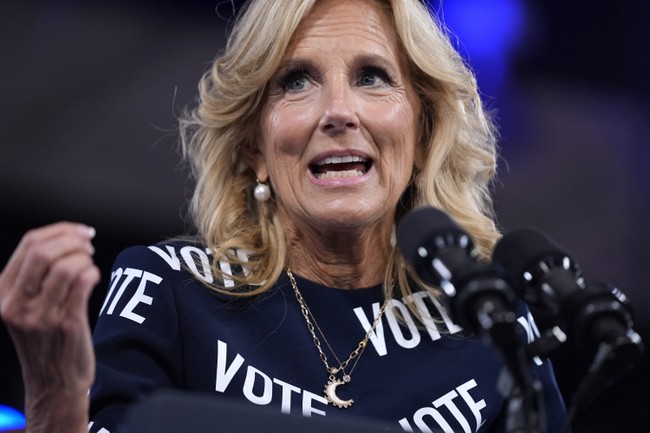
The majority of voters want to see President Joe Biden replaced as the Democratic nominee following his debate performance Thursday night, according to a Morning Consult poll. After the first presidential debate of the 2024 election cycle since the primary season, Biden’s performance against former President Donald Trump left many major Democrats scrambling to soften the blow. But even with the damage control, 60% of voters—including 47% of Democrats—said Biden should be replaced as the Democratic candidate, according to the poll released Friday. Joy Reid says Democrats are "approaching panic" by Biden's "extremely weak" debate performance pic.twitter.com/gz8KG0dHpZ— Daily Caller (@DailyCaller) June 28, 2024 Of the voters who actually watched the debate, 63% say Biden should be replaced, according to the poll. Among Democrats who watched, 50% say they want Biden gone, while 62% of independents who watched and 75% of Republicans say they agree. The sentiment was felt even in the upper echelons of the Democratic Party. Within 35 minutes of the debate’s end, top Democrats and media publications began echoing calls to replace Biden altogether. The New York Times editorial board called for Biden to drop out of the race Friday, asserting that other Democratic leaders are better equipped to take on Trump in the Nov. 5 election. Amid talks of replacing Biden altogether, 30% of Democratic voters said they think Vice President Kamala Harris should be the new nominee, according to the poll. Another 20% say California Gov. Gavin Newsom should replace Biden, and 9% say it should be Transportation Secretary Pete Buttigieg. Despite the rumors, Newsom has repeatedly downplayed questions about a potential 2024 election bid. After the debate, in an interview with MSNBC, the California governor dismissed questions about the possibility of Democrats’ replacing Biden. “I will never turn my back on President Biden,” Newsom said. “Never turn my back on President Biden. I don’t know a Democrat in my party that would do so.” Since the Biden-Trump debate, though, many top Democrats who had previously defended Biden’s mental acuity have avoided commenting on the subject altogether. To voters, the decline in Biden’s mental fitness was apparent, especially after watching the debate. Prior to the debate, 43% of voters reported that Biden was mentally fit and 41% said they thought he was in good health, according to the poll. Across debate viewers, those numbers worsened afterward, with only 35% saying Biden is mentally fit and 28% saying Biden is in good health. This trend was reversed for Trump, who had 47% of voters saying he was mentally fit and 52% saying he was in good health, according to the poll. After the debate, those numbers jumped up to 54% of viewers saying he is mentally fit and 62% saying he is in good health. Across voters, 64% said Biden was too old, while 78% of debate viewers expressed the same sentiment, according to the poll. For Trump, 42% of voters said he was too old, and only 45% of debate viewers agreed. Biden’s campaign did not immediately respond to a request for comment from the Daily Caller News Foundation. Originally published by the Daily Caller News Foundation The post Majority of Voters Want to Ditch Biden After Disastrous Debate, Poll Shows appeared first on The Daily Signal.
Like
Comment
Share
Daily Signal Feed
Daily Signal Feed
2 yrs

Monkeypox: House Investigators Find NIH Hiding Risky Viral Gain-of-Function Research
Favicon 
www.dailysignal.com

Monkeypox: House Investigators Find NIH Hiding Risky Viral Gain-of-Function Research

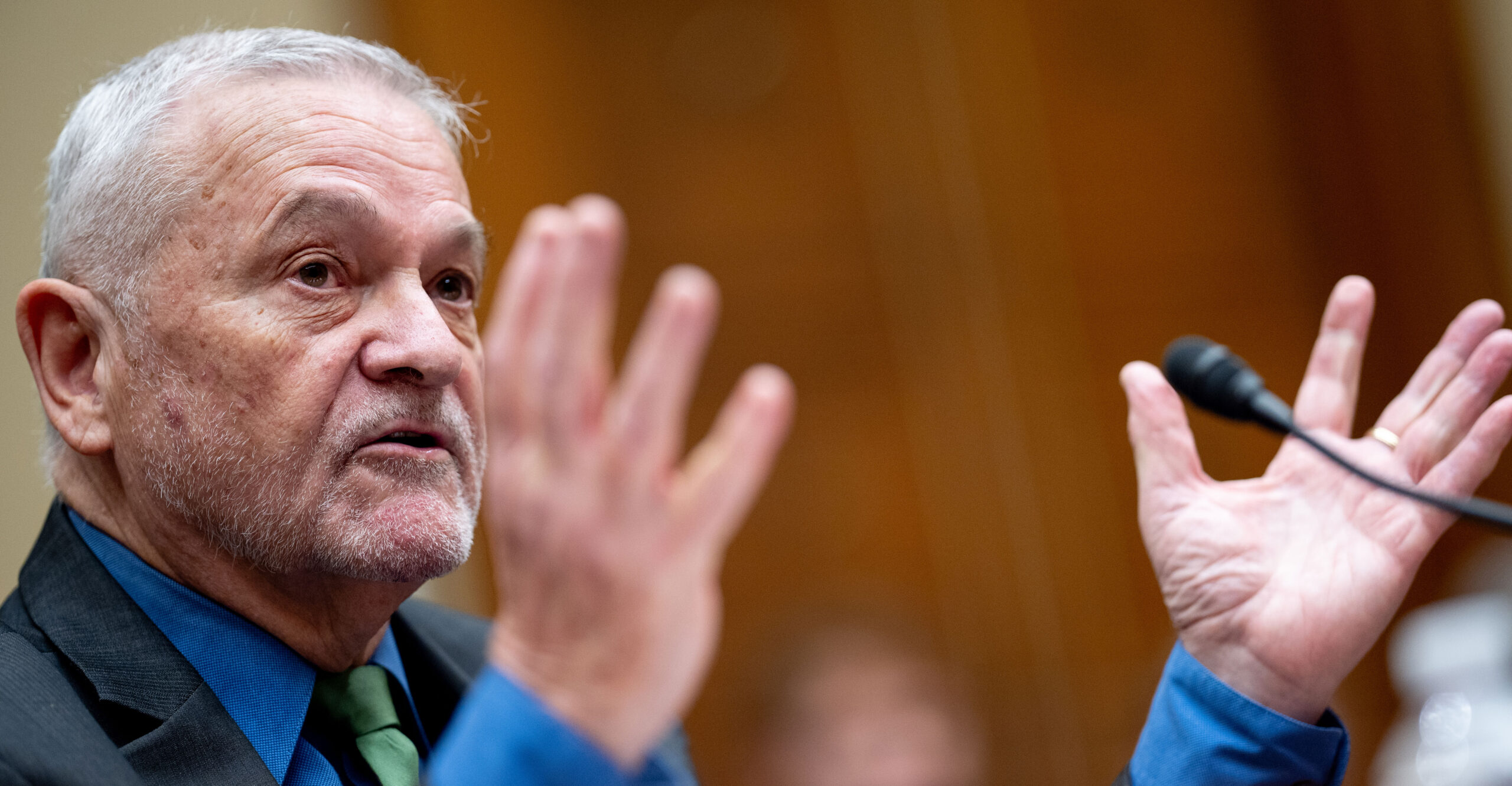
Can there any longer be any doubt? The behavior of senior officials at the National Institute of Allergy and Infectious Diseases, the powerful federal agency formerly run by Dr. Anthony Fauci, is intolerable. And the performance of the Department of Health and Human Services in response to legitimate congressional inquiries has been abysmal. The latest evidence comes to us courtesy of the House Energy and Commerce Committee. The committee recently released an interim staff report on its lengthy investigation into the NIAID-approved gain-of-function research into the MPXV, a virus that causes the deadly disease commonly known as monkeypox. Gain-of-function research is laboratory research deliberately designed to enhance the virulence and the transmissibility of a pathogen. According to the House committee’s report, the National Institutes of Health and NIAID misled lawmakers for more than 17 months before handing over proof that they approved gain-of-function experiments to be performed on the monkeypox virus. Dangerous Pathogen America experienced a brief monkeypox scare in 2022 and 2023. While the infection had limited transmissibility and was thus contained, the virus is nonetheless a dangerous pathogen. The West African-based variant of the virus, which circulated in the U.S., was less lethal, however, than the Congo-based variant, which was both more transmissible and deadly.   In September 2022, Science published an article in which a Dr. Bernard Moss was interviewed about his research on MPXV. In the October 2022 edition of Science, some scientists expressed concern that Moss’ research, if completed, could have created “a more potent version of the mpox outbreak strain,” which “could spark an epidemic that would be substantially more lethal.” House members acted quickly. In October 2022, the committee began investigating potential gain-of-function research into monkeypox that may have been conducted by Moss. According to the September 2022 issue of Science, Moss had been swapping genes between two groups of organisms—“clades”—thought to have a common ancestor: clade 1 MPXV (the Congo variant), which is “lethal to more than 10 percent of the unvaccinated humans,” and the more transmissible but less deadly clade 2 MPXV (the West African variant). Though Moss swapped genes from clade 2 into clade 1 in hopes of making it less deadly, Moss—according to the Science article—was also “planning to try the opposite, endowing clade 2 virus with genes from its deadlier relative.” That type of experiment would qualify as gain-of-function research, thus making a deadly pathogen even more deadly to humans. Hiding Information It was not until March of this year that congressional investigators confirmed that Moss had, in fact, submitted a proposal to the NIH Institutional Biosafety Committee to conduct a “bidirectional transfer of genes between clades I and II of the MPXV.” The biosafety committee had, in fact, approved that proposal on June 30, 2015, nearly nine years before investigators started their inquiry. According to the interim report, “HHS and the NIH misled the Committee in official written correspondence about the MPXV gene-transfer experiment on no fewer than five occasions over the course of 17 months.” This deception, in the language of the report, was not only “unacceptable,” but also “potentially criminal.” The bureaucrats’ behavior was positively weird. It’s still not clear whether the NIAID-approved gain-of-function monkeypox experiments were, in fact, ever conducted—and NIAID officials repeatedly denied that they were carried out. Congressional investigators note, however, the NIH repeatedly refused to provide any documentary evidence that would back up their claims. If there was nothing to hide, why the stubborn noncooperation? So, it appears that NIH/NIAID officials simply refused lawmakers’ repeated requests for information over a 17-month period for no other reason than to evade legitimate congressional oversight.  Concerning controversial viral gain-of-function experiments, the congressional staff investigators thus concluded: “NIAID cannot be trusted to oversee its own research of pathogens responsibly … or “be trusted to honestly communicate with Congress and the public … .”   Chalk up another self-inflicted black eye for public health.   Cover-Up Specialists This latest NIH and NIAID scandal comes on the heels of reports of NIH’s poor oversight of controversial grant funding in China and in the wake of damaging revelations that Dr. David Morens, then a senior adviser to Fauci, went to great lengths to evade Freedom of Information Act inquiries relating to the origins of COVID-19, using personal emails to evade the disclosure of communications related to the origins of the pandemic and taxpayer funding for EcoHealth Alliance, the controversial firm that engaged China’s Wuhan Institute of Virology as a subcontractor. The Wuhan Institute, which had been working closely with the Chinese military, was the epicenter of Communist China’s notorious and risky coronavirus research. Finally, HHS disbarred both EcoHealth Alliance and the Wuhan Institute from securing federal grant funding for at least three years. Worse, according to Morens’ own February 2021 email, he was assisted in evading FOIA requests by the very person responsible for enforcing the law, Marg Moore, who heads up the NIH FOIA office: “I learned from our foia lady here how to make emails disappear after I am foia’d but before the search starts, so I think we are all safe. Plus, I deleted most of those earlier emails after sending them to Gmail,” he wrote. After The Nation, a leftist journal, inquired into the status of Morens and Moore, the HHS resorted to standard bureaucratese about its commitment to the rule of law, responding: “HHS doesn’t comment on personnel matters.”     Next Steps In its report on the monkeypox experiment, congressional investigators concluded: NIAID has a culture of secrecy and obfuscation regarding experiments involving pandemic and potential pandemic pathogens. HHS and the NIH are complicit in enabling NIAID’s culture of secrecy and obfuscation. This is incompatible with accountable, democratic governance and further erodes the public’s trust in government health agencies.  Congress needs to get tough with NIH and should consider key interim staff recommendations: remove final approval of sensitive viral gain-of-function research from NIH and NIAID and consider vesting final review and perhaps veto authority over any such project in an independent body, and require any taxpayer-funded institutions that conducts research into “potentially dangerous” pathogens also to be subject to  independent oversight boards and to operate at the highest levels of lab biosafety. Beyond that, House Energy and Commerce Committee Chairwoman Cathy McMorris Rodgers, R-Wash., has launched a broad “framework” for discussion on comprehensive NIH reform. The goal would be to streamline an overly complex organization, improve the research approval process, and facilitate better congressional oversight. As analysts at The Heritage Foundation have detailed, the federal government’s performance during COVID-19 has damaged its standing with millions of Americans. Federal officials’ continued lack of transparency concerning the COVID-19 pandemic, mixed messaging on masks and counterproductive vaccine mandates, unscientific edicts and pronouncements, along with the repeated and scandalous refusals to respond to legitimate congressional inquiries, have all contributed to a serious loss of public trust. In an age when global viral contagions can kill millions of people at home and abroad, America cannot afford such a loss of faith in the public health agencies whose job it is to protect them. Popular cynicism could prove deadly. The post Monkeypox: House Investigators Find NIH Hiding Risky Viral Gain-of-Function Research appeared first on The Daily Signal.
Like
Comment
Share
Daily Signal Feed
Daily Signal Feed
2 yrs

France’s Right Notches Massive Wins in Key Elections Against Macron’s Liberal Wing
Favicon 
www.dailysignal.com

France’s Right Notches Massive Wins in Key Elections Against Macron’s Liberal Wing

France’s premier right-wing party won massively in the country’s first round of snap elections on Sunday, delivering a blow to President Emmanuel Macron’s liberal coalition. The right-wing National Rally party won 33% of the votes in the parliamentary elections across France on Sunday, leaving Macron’s Renaissance party with only 21% of the votes, according to The Wall Street Journal. Though the elections won’t be finished until later this week, the National Rally’s initial win signals a major shift in the French population’s political priorities and a departure from Macron’s policies. The second round of voting will take place on July 7. If the National Rally party wins more than 289 seats—the number required to take the absolute majority in Parliament—and shoves Macron’s Renaissance party out, it would significantly hamper Macron’s ability to wield power and give the National Rally a major say in the country’s legislative decisions; Macron would also be forced to appoint the party’s choice for prime minister. “Democracy has spoken and the French have put the [National Rally] and its allies at the top, practically wiping out the Macron camp,” Marine Le Pen, leader of the National Rally, told her supporters after the first round ended on Sunday, according to multiple reports. Voter turnout was at a decades-level high this weekend, with a 67% participation rate compared to the 47.5% participation rate in 2022, per The New York Times. Final votes are still being tallied, but the National Rally is projected to win somewhere between 255 and 295 seats in the 557-seat legislative body, while Macron’s party is expected to win 90 to 125 seats, according to The Wall Street Journal. Other left-wing and green parties did similarly poorly compared to the National Rally, but Macron’s party lost the biggest margin of votes. Macron called for the sudden snap elections after his party was delivered a previous defeat in a separate round of European Union parliamentary elections in early June, hoping to provide an opportunity for voters to throw their support behind his party. Officials inside the Biden administration are reportedly concerned that Macron’s party is set to lose power in this week’s elections, as President Joe Biden and Macron share similar views on policy, officials familiar with discussions previously told Politico. Biden officials were reportedly puzzled that Macron called for snap elections and risked losing the vote as his party had shown signs of losing political favor. That round of voting will be “one of the most decisive in the history of the Fifth Republic,” Jordan Bardella, a leader in the National Rally and Le Pen’s pick for the country’s next prime minister, said on Sunday, according to The Wall Street Journal. Originally published by the Daily Caller News Foundation The post France’s Right Notches Massive Wins in Key Elections Against Macron’s Liberal Wing appeared first on The Daily Signal.
Like
Comment
Share
Reclaim The Net Feed
2 yrs

Supreme Court Demands Deeper Look at Social Media Anti-Censorship Laws
Favicon 
reclaimthenet.org

Supreme Court Demands Deeper Look at Social Media Anti-Censorship Laws

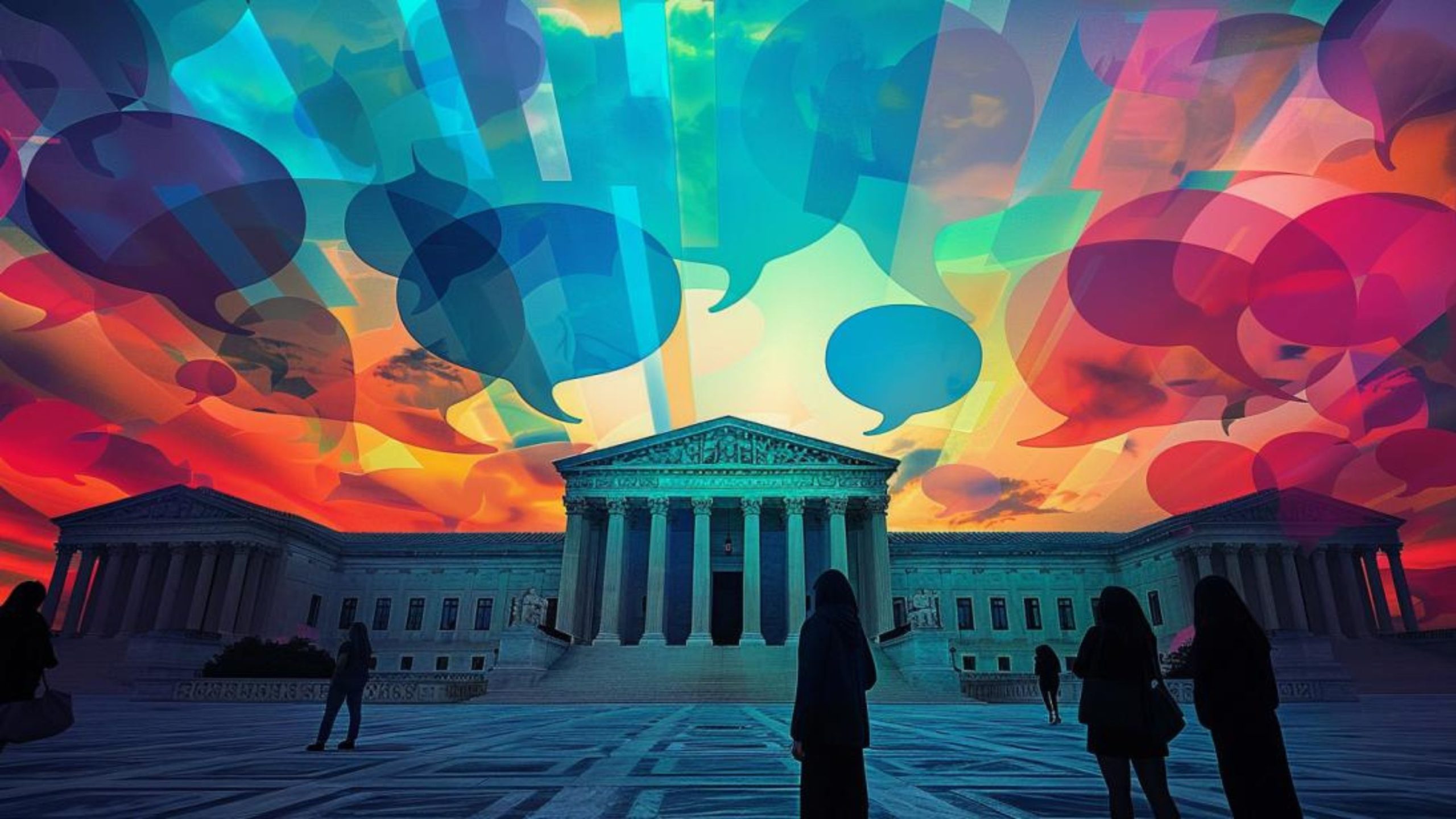
If you're tired of censorship and dystopian threats against civil liberties, subscribe to Reclaim The Net. The US Supreme Court has unanimously remanded two crucial cases involving social media regulation laws from Florida and Texas back to lower courts. This move concerns cases relating to both Florida and Texas, where the primary question was whether laws that restrict certain websites from making editorial censorship decisions violate the First Amendment. On May 24, 2021, Florida Governor Ron DeSantis signed into law SB 7072, which aims to regulate social media platforms by prohibiting the deplatforming of political candidates and requiring platforms to provide explanations when censoring content, among other stipulations.  SB 7072 places several specific restrictions and requirements on social media platforms, including: Prohibiting the willful deplatforming of political candidates, Banning the censorship or deplatforming of journalistic enterprises based on content, Imposing hefty fines on social media platforms that deplatform candidates for political office—up to $250,000 per day for statewide candidates and $25,000 per day for other candidates, Requiring platforms to notify users and provide explanations before taking actions like censoring or deplatforming, Granting Floridians the right to sue platforms for violations and seek monetary damages, Empowering the Florida Attorney General to sue technology companies under the state’s Unfair and Deceptive Trade Practices Act, That same year, Texas Governor Greg Abbott signed HB 20, a law regulating social media platforms by prohibiting them from censoring content based on viewpoint and imposing several obligations related to content moderation processes. The key provisions of HB 20 stipulate that social media platforms with over 50 million monthly active users in the US cannot censor content based on viewpoint. Additionally, the law mandates that these platforms must notify users and provide explanations when content is removed, enable users to submit and track complaints about content removal decisions or instances where illegal content was not removed, and allow users to appeal content removal decisions. The states were challenged on the constitutionality of the laws, in relation to the First Amendment. The key legal questions were: Whether the First Amendment prevents a state from mandating that social media companies host third-party communications, and from controlling the manner in which they do so, Whether the First Amendment stops a state from requiring social media companies to inform and explain to users when their content is censored, After a back-and-forth legal challenge, the cases ended up at The Supreme Court. During oral arguments, the Supreme Court had already expressed considerable doubts about the laws, suggesting that these laws might infringe upon the First Amendment rights of companies like Facebook and YouTube. The justices spent nearly four hours discussing the implications of these regulations. In court, Florida Solicitor General Henry Whitaker argued that social media companies, which he described as mere “transmitters” of user speech, do not have a constitutional right to inconsistently apply censorship policies. In contrast, trade group representative Paul Clement emphasized the necessity of editorial discretion to filter the vast content online, making platforms functional for users and advertisers alike. Justice Kagan in particular questioned the constitutionality of the laws, particularly in how they prevent platforms from making independent editorial decisions, a critical aspect of First Amendment rights. Justice Brett Kavanaugh highlighted the core issue—whether the government is impermissibly suppressing speech, noting the court’s precedent of protecting editorial control. Meanwhile, Justice Amy Coney Barrett, as she did in the oral arguments for Murthy v. Missouri (another free speech case where she sided with the Biden administration) compared the role of social media platforms in moderating content to newspapers rather than venues like law schools, which can be compelled to host military recruiters under certain federal conditions. Justice Clarence Thomas and Justice Samuel Alito showed more openness to the state laws, with Thomas questioning the extent of First Amendment protections for platform moderation decisions and Alito scrutinizing the terminology of “content moderation.” On Monday, the Supreme Court instructed the appellate courts to revisit their rulings on the 2021 statutes that permit state oversight of content moderation by major social media companies. We obtained a copy of the decision for you here. Justice Elena Kagan, in her opinion for the court, stated that, even though the decisions of the lower courts were actually vacated on grounds unrelated to the First Amendment, the First Amendment argument stands. Justice Kagan took the time to explain how the court views First Amendment principles regarding this issue, taking a swipe at the Fifth Circuit’s initial ruling — “It is necessary to say more about how the First Amendment relates to the laws’ content-moderation provisions, to ensure that the facial analysis proceeds on the right path in the courts below. That need is especially stark for the Fifth Circuit, whose decision rested on a serious misunderstanding of First Amendment precedent and principle.” The court is making it clear that the main objective of the Florida and Texas laws would not be expected to survive a First Amendment argument challenge. “The Fifth Circuit was wrong in concluding that Texas’s restrictions on the platforms’ selection, ordering, and labeling of third-party posts do not interfere with expression. And the court was wrong to treat as valid Texas’s interest in changing the content of the platforms’ feeds,” the opinion reads. The First Amendment argument could be summarized with this line: “However imperfect the private marketplace of ideas here was a worse proposal – the government itself deciding when speech was imbalanced, and then coercing speakers to provide more of some views or less of others.” Justice Kagan ruled that the appellate courts had not adequately considered the broad challenge presented by NetChoice, focusing instead on narrower issues brought forth by the parties. “Today, we vacate both decisions for reasons separate from the First Amendment merits, because neither Court of Appeals properly considered the facial nature of NetChoice’s challenge. The courts mainly addressed what the parties had focused on. And the parties mainly argued these cases as if the laws applied only to the curated feeds offered by the largest and most paradigmatic social-media platforms—as if, say, each case presented an as-applied challenge brought by Facebook protesting its loss of control over the content of its News Feed,” the court wrote. Here are the key points of the court’s argument: Facial Challenge and Scope of the Laws: The Court emphasized the importance of understanding the full scope of the statutes in question. It instructed that the lower courts should assess not just the Big Tech applications (like those affecting major social media feeds) but all potential applications and ramifications of the laws, including less obvious ones, to determine whether a substantial number of the law’s applications are unconstitutional. First Amendment Protections: The Court argued that the editorial discretion of social media platforms is protected under the First Amendment. This includes their decisions to filter, prioritize, label, or exclude certain content. By compelling platforms to alter their expressive content, the laws potentially infringe on their First Amendment rights. “The Court has repeatedly held that ordering a party to provide a forum for someone else’s views implicates the First Amendment if, though only if, the regulated party is engaged in its own expressive activity, which the mandated access would alter or disrupt,” Justice Kagan stated. Erroneous Lower Court Analyses: The Court noted that the previous appellate decisions did not conduct a proper facial analysis of the First Amendment challenges. The Fifth Circuit, in particular, erred by not recognizing the expressive activity involved in content moderation and by inadequately addressing the platforms’ First Amendment rights. Importance of Editorial Discretion: The Court underscored that just like traditional media entities, social media platforms exercise editorial control that shapes their public communications. Compelled changes to this editorial content, such as requiring platforms to carry messages they wish to exclude, interfere with their expressive freedom. Standard for Reviewing Facial Challenges: The Court clarified the standards for facial challenges in the context of the First Amendment, stating that challengers must demonstrate that the unconstitutional applications of the law substantially outweigh the constitutional ones. The Supreme Court’s decision to remand the social media regulation cases back to the lower courts signals a cautious approach to resolving the tensions between state regulations and First Amendment rights. As the legal battles continue to unfold, the implications for how social media platforms operate within the United States could be profound, particularly in light of the First Amendment arguments made by TikTok, which is facing a ban. If you're tired of censorship and dystopian threats against civil liberties, subscribe to Reclaim The Net. The post Supreme Court Demands Deeper Look at Social Media Anti-Censorship Laws appeared first on Reclaim The Net.
Like
Comment
Share
Hot Air Feed
Hot Air Feed
2 yrs

Democrats Have Chosen Long, Slow Death March
Favicon 
hotair.com

Democrats Have Chosen Long, Slow Death March

Democrats Have Chosen Long, Slow Death March
Like
Comment
Share
Science Explorer
Science Explorer
2 yrs

Is Holding In A Sneeze Dangerous?
Favicon 
www.iflscience.com

Is Holding In A Sneeze Dangerous?

They say to do one thing every day that scares you, but can we suggest you don’t make that holding in a sneeze? From rupturing your windpipe to puffing up your face, holding in a sneeze can be dangerous to the unlucky few.Fortunately, that whole thing about your eyes popping out of your head remains – at time of writing – an urban legend.Holding in a sneeze: torn windpipeHay fever season is a rough time for people with allergies. Your eyes water, your throat tickles, and you just can’t stop sneezing. Those symptoms were niggling at one man while driving who – deciding it was better to keep it in – opted for pinching his nose and closing his mouth instead of sneezing. Understandable to want to keep your eyes open while driving, but the decision brought on a very unpleasant side effect.Shortly after keeping in the sneeze, the driver began feeling severe pain in his neck and experienced swelling. By the time he arrived at the emergency department, there was a crackling noise known as crepitus audible in his neck, and an X-ray revealed surgical emphysema – a traumatic injury that leaks air under the skin. The cause? A tear in his windpipe, and it’s thought to be the first-known report of such a tear being caused by holding in a sneeze. Holding in a sneeze: Hamman’s signAnother case of crepitus post-holding in a sneeze involved a 34-year-old man holding his nose and mouth to prevent a sneeze and feeling a “popping sensation” in his neck. Soon after, swallowing became painful and he experienced a change of voice, so he sought medical advice. Doctors could hear Hamman’s sign, a crackling that can occur when the heart beats against tissue filled with air. They subsequently ordered scans that revealed the man had ruptured the back of his neck."Halting sneeze via blocking nostrils and mouth is a dangerous maneuver and should be avoided," wrote the case study authors. "It may lead to numerous complications such as pneumomediastinum, perforation of the tympanic membrane, and even rupture of cerebral aneurysm."Holding in a sneeze: cheek fractureHolding in a sneeze can also worsen existing injuries, such as in the case of a 38-year-old who tried to hold in a sneeze only for their right cheek to puff up. It turned out they had been walking around with an undiagnosed fracture of the right maxillary sinus, causing subcutaneous emphysema of the face.These case studies are rare outcomes of holding in a sneeze, but they demonstrate that it can do some damage. It’s perhaps unsurprising that holding in a sneeze can be dangerous given, as The Conversation reports, they can force air out of your body at speeds of up to 56 kilometers per hour (35 miles per hour). Covering a sneeze? Sure. Holding one in? Don't go there.And while we're on the topic of strange neck injuries, ever noticed how some brass instrument musicians have necks that bulge like a bullfrog's?All “explainer” articles are confirmed by fact checkers to be correct at time of publishing. Text, images, and links may be edited, removed, or added to at a later date to keep information current.  The content of this article is not intended to be a substitute for professional medical advice, diagnosis, or treatment. Always seek the advice of qualified health providers with questions you may have regarding medical conditions.  
Like
Comment
Share
Science Explorer
Science Explorer
2 yrs

Plant That Grows Better After Radiation Dose Could Help Terraform Mars
Favicon 
www.iflscience.com

Plant That Grows Better After Radiation Dose Could Help Terraform Mars

Researchers have identified a plant that could survive the harsh conditions on Mars, potentially helping future humans to terraform it.If humans ever want to set up a home elsewhere in the Solar System, Mars seems like the most viable bet, beating off the competition by not being a hell world, having a surface we could actually stand on, and being at the edge of the habitable zone where liquid water can exist.But a lot would have to be done to transform the planet into one we could call home. In short, along with a lot of other home comforts, higher temperatures and some sort of breathable atmosphere would be nice.   Growing plants on the planet, which would convert some of the planet's 95 percent carbon dioxide atmosphere to breathable oxygen, would be a helpful start. In a new paper, a team from the Chinese Academy of Sciences put one plant to the test; a type of moss named Syntrichia caninervis, found most commonly in the biological soil crust (BSC) of colder deserts. "Among land plants, mosses are often the pioneer species that are naturally selected for growth in extreme environments. Moss crusts represent an advanced stage in the development of BSCs," the team writes in their paper. "Compared with algae and lichen crusts, moss crusts have greater biomass and carbon fixation capacity, thus playing important roles in biogeochemical cycles and stabilizing the desert surface."The species is particularly well suited to extreme environmental stressors, including drought, cold, and radiation, making the moss a good candidate for surviving the conditions of Mars. The team tested this by subjecting the moss to similar conditions in the lab, starting with subjecting the plants to extreme dehydration. The moss survived dehydration and resumed physiological activities "within seconds of rehydration".Next, hydrated and dehydrated plants were subjected to the extreme cold. Plants were placed in a –80°C (–112°F) freezer for 3 or 5 years, and a –196°C (-321°F) liquid nitrogen storage tank for 15 or 30 days, before being transferred to sterilized sand for recovery. The team found that the plants recovered surprisingly well after being subject to these extreme conditions, with dehydrated plants faring slightly better than their dehydrated counterparts."Following 15 and 30 days of storage in liquid nitrogen, the plants ultimately regenerated approximately two new branches," the team wrote, "the regeneration rate was approximately 95 percent that of control plants."The team then subjected the plants to the kind of extreme radiation they would face on the red planet, exposing hydrated and dehydrated plants to between 500 and 16,000 grays (Gy) of radiation. Again, the plants endured the conditions surprisingly well, at least in lower doses. When radiation was between 500 and 1,000 Gy, the plants actually recovered better than the control plants. However, subjected to higher doses, the plants took longer to recover. Over 4,000 Gy caused the plants to show signs of stress, and after 60 days of recovery, these plants had a 70 percent regeneration rate. Again, dehydrated plants fared better, though the team found the dose at which 50 percent of the organisms survived was around an hour's treatment of 5,000 Gy.This is a lot of radiation, showing how hardy the plants are. Humans will generally suffer severe convulsions and/or death at around 50 Gy, while plants can generally endure no more than about 1,000 Gy.Finally, using the Planetary Atmospheres Simulation Facility at the Chinese Academy of Sciences, the team put the plants to Mars-like conditions including the balance of gases in Mars's atmosphere and similar temperature fluctuations to those seen on the planet, for 1, 2, 3, and 7 days. Dehydrated plants recovered 100 percent after a recovery time of 30 days, while hydrated plants – which were only subjected to one day in the facility – regenerated, but slower than the dehydrated plants."Although there is still a long way to go to create self-sufficient habitats on other planets, we demonstrated the great potential of S. caninervis, a model moss plant, as a pioneer plant for growth on Mars," the team concluded. "Looking to the future, we expect that this promising moss could be brought to Mars or the Moon to further test the possibility of plant colonization and growth in outer space."The paper is published in the journal The Innovation.
Like
Comment
Share
Pet Life
Pet Life
2 yrs

Dad plays the Blues but his cat’s hilarious ‘singing’ steals the spotlight
Favicon 
animalchannel.co

Dad plays the Blues but his cat’s hilarious ‘singing’ steals the spotlight

The internet is buzzing with delight over a unique and captivating video featuring Badu, the singing cat. Badu, a beautiful black cat, has captured the hearts of millions with his soulful blues singing. This charming feline lays comfortably on his owner’s music camp, where a magical musical interaction unfolds, creating a heartwarming scene that has... The post Dad plays the Blues but his cat’s hilarious ‘singing’ steals the spotlight appeared first on Animal Channel.
Like
Comment
Share
Showing 22181 out of 56670
  • 22177
  • 22178
  • 22179
  • 22180
  • 22181
  • 22182
  • 22183
  • 22184
  • 22185
  • 22186
  • 22187
  • 22188
  • 22189
  • 22190
  • 22191
  • 22192
  • 22193
  • 22194
  • 22195
  • 22196

Edit Offer

Add tier


Select an image
Delete your tier
Are you sure you want to delete this tier?

Reviews

In order to sell your content and posts, start by creating a few packages. Monetization

Pay By Wallet

Payment Alert

You are about to purchase the items, do you want to proceed?

Request a Refund