YubNub Social YubNub Social
    Advanced Search
  • Login

  • Night mode
  • © 2026 YubNub Social
    About • Directory • Contact Us • Privacy Policy • Terms of Use • Android • Apple iOS • Get Our App

    Select Language

  • English
Install our *FREE* WEB APP! (PWA)
Night mode
Community
News Feed (Home) Popular Posts Events Blog Market Forum
Media
Headline News VidWatch Game Zone Top PodCasts
Explore
Explore Jobs Offers
© 2026 YubNub Social
  • English
About • Directory • Contact Us • Privacy Policy • Terms of Use • Android • Apple iOS • Get Our App

Discover posts

Posts

Users

Pages

Group

Blog

Market

Events

Games

Forum

Jobs

Science Explorer
Science Explorer
2 yrs

People Are Just Now Learning "Goodbye" Is A Contraction Of A Religious Phrase
Favicon 
www.iflscience.com

People Are Just Now Learning "Goodbye" Is A Contraction Of A Religious Phrase

Every day is a learning day on the Internet. Last week, people learned what "Google" actually means, and yesterday people learned there's a single word for "the day after tomorrow".Today, people are learning that just as "bye" is a contraction of "goodbye", "goodbye" is a contraction too. In its original form, the word was written in various different ways, such as "godbwyes" in the sentence "to requite your gallonde of godbwyes, I regive you a pottle of howedyes" written in 1575, and "God buoye", as written in 1599. By the 1700s, this had morphed into its more familiar spelling, as used in the 1707 sentence "How! gone a Hundred Mile and ne'er bid one Good bye."So, what is it contracted from? As people learned from X (Twitter) user abby4thepeople, it is short for "God be with you".     IFLScience is not responsible for content shared from external sites.According to Dictionary.com, the phrase was used to wish God to look after the person until the two meet again as, without modern ways of communicating, it was less easy to know when you would meet them again. The word has since lost that meaning, and is just a way of expressing good wishes as you part. While we are talking greetings, "hello" has been around for a surprisingly short amount of time, and wasn't really used as it is today until the invention of the telephone. In its original use, "hello" (or "hallo", and even "holla") was used as a way of attracting attention, or as an expression of surprise, rather than as a greeting.However, when the telephone was invented, Thomas Edison originally planned on having the lines permanently open (business to business), and allow users to attract the attention of the people on the other end of the line.“Friend David," Edison wrote to a colleague, "I don’t think we shall need a call bell as Hello! can be heard 10 to 20 feet away. What do you think?”Edison popularized this greeting, which caught on amongst the population. A rival greeting, proposed by Alexander Graham Bell, was "ahoy". This was a nautical greeting coming from the Dutch "hoi". Unfortunately, it didn't catch on, and we now say "hello" to greet people rather than the far more piratey "ahoy".
Like
Comment
Share
Science Explorer
Science Explorer
2 yrs

Autonomous Vehicles Are Safe, As Long As You're Not Planning On Turning
Favicon 
www.iflscience.com

Autonomous Vehicles Are Safe, As Long As You're Not Planning On Turning

A new study has taken a look at the safety of autonomous vehicles (AVs), finding that while overall, they are better than humans in several routine areas of driving, they are currently not as good as human drivers in low-light situations or turning.Before we can simply step into our cars and allow them to drive us to our destination, we need to know that they are safe. The hope is that one day they could surpass human driving capabilities. After all, cars do not get tired, cranky at other drivers, or have lapses in concentration while thinking about something else.Around the world, tests of the technology have taken place, and we have a fairly big pool of data from semi-autonomous systems in vehicles used in real-world traffic situations. In the new study, researchers from the University of Central Florida analyzed data from 2,100 Advanced Driving Systems and Advanced Driver Assistance Systems, as well as accident data from 35,113 human-driven vehicles (HDVs), in an attempt to compare the safety of AVs and HDVs in various situations.                    The team found that generally, AVs are safer than human drivers, albeit with several heavy caveats. "The analysis suggests that accidents of vehicles equipped with Advanced Driving Systems generally have a lower chance of occurring than Human-Driven Vehicles in most of the similar accident scenarios," the team wrote in their paper.During routine traffic operations, such as keeping in lane and adjusting to match the flow of traffic, AVs performed better than HDVs, and were involved in fewer accidents during these tasks. Rear-end accidents were 0.5 less likely in AVs, while sideswipe accidents were 0.2 percent less likely. But humans still have artificial intelligence beat in other traffic situations."Based on the model estimation results, it can be concluded that ADS [automatic driving systems] in general are safer than HDVs in most accident scenarios for their object detection and avoidance, precision control, and better decision-making," the team explained."However, the odds ratio of an ADS accident happening under dawn/dusk or turning conditions is 5.250 and 1.988 times higher, respectively, than the probability of an HDV accident occurring under the same conditions. The possible reasons might be a lack of situational awareness in complex driving scenarios and limited driving experience of AV."Identifying these key problem areas could help AV researchers improve vehicle performance. An area to focus on right now would be identifying hazards in different light."At dawn and dusk, for instance, the sun’s shadows and reflections may confuse sensors, making it hard for them to distinguish between objects and identify potential hazards," the team wrote. "Furthermore, the fluctuating light conditions can impact the accuracy of object detection and recognition algorithms used by AVs, which can result in false positives or negatives."While the study may be disappointing for self-driving fans waiting for the crossover point where AVs become better than human drivers, any improvements to performance can be sent to all AVs at the same time. Should researchers find a way to improve turning, software updates can apply it to vehicles of that type, in a way that we can't do with humans. Hopefully one day we will be able to hop in AVs without worrying about turning and changes to light, or other humans on the road getting distracted.The study is published in Nature Communications.
Like
Comment
Share
NewsBusters Feed
NewsBusters Feed
2 yrs

ON THE RUN: Anti-Free Speech Stanford Internet Observatory Is Collapsing
Favicon 
www.newsbusters.org

ON THE RUN: Anti-Free Speech Stanford Internet Observatory Is Collapsing

It’s official: the dystopian Stanford Internet Observatory (SIO) is shutting down as we know it. Following its five-year assault on free speech and mounting investigations, the Observatory has dismissed most of its staffers and directors amid widespread outcry from pro-free speech groups. These changes come as advocates, including the Media Research Center, accuse it of being nothing short of a leftist tool used to bully Big Tech platforms into suppressing dissent. Notably, emails first reported by MRC exposed the extent to which some members of the leftist media went to prop up some of the work of SIO-related groups. Alex Stamos, the Observatory’s founder and former Facebook chief security officer, has transitioned into an advisory role. Renée DiResta, the group’s research manager, did not receive a contract renewal, according to The Washington Post and newsletter Platformer. The now-partially defunct Observatory aggressively tracked what the left deemed misinformation and facilitated Big Tech’s crackdown on constitutionally protected speech before the 2020 presidential election. MRC Vice President for Free Speech Dan Schneider celebrated the Observatory’s revamping, saying, “We’ve got them where we want them. It is premature to declare victory, but even if Stanford’s censorship snake is merely shedding its skin to become a different beast, the American public is now on to them. And they know it.” He added, “The path to restoring the First Amendment is long and arduous. We have to take our wins when we can get them. But we must persevere if we are to eventually win the war.”  What is the Stanford Internet Observatory? SIO was a research lab within Stanford University’s Cyber Policy Center designed to stalk social media's alleged misuse by so-called misinformation perpetrators. The SIO launched the controversial Election Integrity Partnership (EIP), a consortium that included researchers from the University of Washington, led by embattled researcher Kate Starbird. The EIP monitored online content and flagged certain posts as misinformation for social media companies to censor ahead of the 2020 election. According to emails released by the House Judiciary Committee’s Weaponization Subcommittee, the EIP was created in the summer of 2020 “at the request” of the Department of Homeland Security’s Cybersecurity and Infrastructure Security Agency (CISA). House Republicans also revealed that SIO partnered with CISA to flag so-called disinformation through a project management software called “Jira.” The SIO was also behind the Virality Project, an effort to block certain COVID-19-related information. According to the Weaponization Subcommittee, the Virality Project directly flagged content inconsistent with government-approved narratives about the pandemic for social media companies to censor. Recalling Stanford Internet Observatory’s Government and Media Ties (Because, Why Not?) The federal government and the leftist media, of course, played a major role in the operations of the SIO. House Republicans and unearthed documents revealed the extent of federal backing for SIO’s efforts. Emails scooped by Protect the Public Trust (PPT) showed the Department of Homeland Security referring the State Department’s Global Engagement Center to EIP for censorship plans. “Our colleagues at the Department of Homeland Security/CISA recommended we talk to you about your current efforts to protect the 2020 elections from foreign interference,” wrote then-GEC academic Adela Levis in an October 2020 email to the EIP. “There may be some synergies there with the work we’re doing. Warm regards, Adela. Emails shared with MRC Free Speech America by PPT revealed a pattern of leftist media outlets consulting EIP for advice on misinformation before the 2020 election. This cozy relationship between the media and EIP reinforced anti-free speech narratives, said PPT executive director Michael Chamberlain. “It’s disappointing and, frankly, a little frightening that media outlets have taken up full membership in the Censorship Industrial Complex,” he told MRC in May. Stanford University is Doubling Down on Anti-Free Speech Efforts Worry not, anti-free speech zealots, Stanford is not backing down on its censorship efforts. Stanford University spokesperson Dee Mostofi stated that the Observatory's efforts will continue under new leadership. "Stanford remains deeply concerned about efforts, including lawsuits and congressional investigations, that chill freedom of inquiry and undermine legitimate and much needed academic research – both at Stanford and across academia," Mostofi claimed, according to the Platformer.  Mostofi did not immediately respond to MRC Free Speech America’s request for comment before publication. Conservatives are under attack. Contact your representatives and demand that Big Tech be held to account to mirror the First Amendment while providing transparency, clarity on so-called “hate speech” and equal footing for conservatives. If you have been censored, contact us using MRC Free Speech America’s contact form, and help us hold Big Tech accountable.
Like
Comment
Share
NewsBusters Feed
NewsBusters Feed
2 yrs

STUDY: ‘Divested’ From Reality! PBS Cheers on Hamas-Supporting Campus Protests
Favicon 
www.newsbusters.org

STUDY: ‘Divested’ From Reality! PBS Cheers on Hamas-Supporting Campus Protests

On Monday, police cleared the latest "pro-Palestinian" encampment at Cal State-Los Angeles, as Associated Press reported it came "just days after demonstrators occupied and trashed a building while the school’s president and other employees were still inside." The establishment media promoted these leftist tactics for weeks. How did taxpayer-funded media cover the anti-Jewish, pro-Hamas protests that dominated college campuses this spring? A new Media Research Center study analyzed the words used by Public Broadcasting Service (PBS) reporters, guests, and talking heads over 36 days of protest coverage and found PBS’s flagship news program NewsHour/News Weekend to be overwhelmingly on the side of the protesters, downplaying their pro-Hamas, anti-Jewish rhetoric, not challenging the protesters on their sympathy for the eliminationist goals of Hamas, and even rediscovering the merits of “free speech.” Key Findings: “Pro-Palestinian” labels vs. “Pro-Hamas” labels: 29 to 0. PBS reporters were comfortable describing the radicals with the evasive and flattering term “pro-Palestinian,” while more accurate labels were non-existent. Four students used the inaccurate word "genocide" against Israel. “Free Speech” labels vs. “Hate Speech” labels: 17 to 3. All it took was leftist students saying offensive things for PBS reporters to decide free speech was worth defending again.  Bias by Omission: Only two of the 28 total campus protest reports mentioned the October 7 massacres, only one mentioned the "From The River to the Sea" chant threatening ethnic cleansing, and none mentioned the call for "intifada" against the Jewish state.  Things kicked off April 17 when protesters set up tents on the Columbia University quad, the same day school president Minouche Shafik testified before Congress on previous antisemitic incidents on campus. The radical-left protests opposed to Israel’s war against the Hamas terrorists who killed, raped, and kidnapped Israeli civilians on October 7 quickly spread to other leftist universities nationwide. The first NewsHour mention of the Columbia protests came on April 18, and the last in the study’s range came May 23. ■ “Pro-Palestinian” labels vs. “Pro-Hamas” labels: 29 to 0. PBS reporters were comfortable describing the radicals with the evasive and flattering term “pro-Palestinian.” Anchor Amna Nawaz did so on April 26: “…we continue to report on the spread of these campus protests, pro-Palestinian protests, by and large, and protesting Israel's war conduct in Gaza.” A somewhat more accurate label, “anti-Israeli,” was used by substitute anchor William Brangham in a May 3 segment, but in that case Brangham was actually disparaging critics of the protests, lamenting how the protesters unfairly risked “being branded as antisemites” by them: “I mean, Jonathan [Capehart], a lot of the critics of these protests like to say that it's all antisemitism, just a hot stew of anti-Israeli bias. I was at one of the NYU protests earlier this week, and there is some of that, for sure. But it's mostly young people, as you were describing, who are despairing over what is happening in Gaza. How is it that people who care deeply about this issue can't -- can somehow protest and not be risked being branded as antisemites?” Those “caring” protesters wore Palestinian-associated kaffiyeh scarves and brandished threatening signs while chanting anti-Israel eliminationist rhetoric.  No PBS journalist used the phrase “anti-Jewish” (its only appearance came in a quote from a student) and no one described the protesters as “pro-Hamas,” although that phrase would more accurately capture the truth. By contrast, PBS ran quotes from four students falsely using the term “genocide” to refer to Israel’s war on Hamas where the terrorists are using the Palestinian people as human shields. ■ “Free Speech” labels vs. “Hate Speech” labels: 17 to 3.  All it took was some leftist students saying offensive things for PBS reporters to decide free speech was worth defending again, after years of lectures about alleged “hate speech” committed by conservatives online. Journalists mentioned “free speech,” “free expression,” or similar wording 17 times, while the previously popular concept of “hate speech” was almost ignored, even as it became a valid concern on campus. There were only three mentions of “hate speech” by journalists, two coming in a May 7 segment prodded by, of all things, a speech by President Joe Biden, who spoke about antisemitism at the U.S. Holocaust Memorial Museum. Nawaz conducted a combative April 25 interview with Vanderbilt University Chancellor Daniel Diermeier after he ended a ridiculous sit-in by students in his office by calling in police assistance: “You said in your op-ed that free speech is alive and well at Vanderbilt. But there was an open letter by several members of your faculty that disputes that. They say the administration has been excessive and punitive in its response to student protests. They say the rules seem arbitrary. And they say the criterion that protests must not disrupt university operations, as you say, is perniciously vague and expansive. What do you say to that?” Reporter Lisa Desjardins conducted a surprisingly hostile interview May 7 with New York Times columnist David French, who insisted the often-vile protests were depriving other students of their own civil rights. She didn’t see the problem: “But I also don't know that there is an espoused right to sleep or right to have the most convenient path to the library.”  ■ Divestment: On 24 occasions PBS reporters mentioned “divestment” from Israel, the supposed chief priority of the campus protests. Show guests, mostly college professors, brought it up 45 more times, though oddly, the students interviewed mostly didn’t (mentioning it only 6 times) even though that was supposedly the reason they were encamped. Briefly, calls for “divestment” are demands that university endowments cut ties to companies with alleged links to the Israeli military and other companies. It’s the middle initial in the antisemitic Boycott, Divestment and Sanctions (BDS) movement, a way to delegitimize Israel’s right to defend itself. Yet PBS treated it as a positive and reasonable request, hosting guests two nights in a row to discuss it (April 29-30). Nawaz’s April 26 divestment coverage harkened back to the 1960s and sounded hopeful that the pro-Hamas campus occupiers would inspire similar political change: “Many say today's demonstrations echo college protest movements of the past, including against the Vietnam War….Other Vietnam War protests in the 1960s and '70s led to clashes with authorities and mass arrests, but over time they helped to shift public opinion leading up to the eventual U.S. withdrawal. In the 1980s, a similar movement popped up at universities nationwide, calling for divestment from South Africa to end apartheid. Today, some students say they're taking lessons from those very protests.” (When a journalist compares something to the anti-war protests of the 1960s it’s always meant to be flattering.) On the May 3 political roundtable, reporter William Brangham asked the Washington Post’s Jonathan Capehart: “On these protests that we saw growing across college campuses around the country, calls for divestment, some clashes, police being sent in in some cases. What do you make of this growing protest movement?”  Capehart’s fawning reply bore no relation to the hate actually being spewed out on campuses: “Well, one, what we're seeing is the passion of the students and the passion of the community around these universities over the issue of what's happening in Gaza. Remember, these protests started happening because of the humanitarian crisis there in Gaza.”  Meanwhile, the accurate word “antisemitism” cropped up in journalists’ coverage a relatively sparse 31 times, about the same as that phony issue of “divestment” (24). (As previously noted, two of those 31 labels were actually challenging the assumption of antisemitism, not confirming it.) ■ Bias by Omission: Unflattering terms to describe the protesters were rarely uttered by PBS journalists. Only two of the 28 total campus protest reports mentioned the October 7 massacres, only one of 28 mentioned the "From The River to the Sea" suggestion of ethnic cleansing, and none mentioned the call for "intifada" against the Jewish state, a call to violence against Jews and the Jewish state (there was one mention by a student). ■ Bright Side: Reporter Stephanie Sy’s twelve-minute story on May 8, which dealt with the language used during the debate, contained the sole mentions by a PBS journalist of “terror attack” and “From The River to the Sea” (a phrase heard chanted by protesters during her report).  Of the three positive “pro-Israel” labels used by reporters to describe those opposed to the radicals, two were from Sy’s report, swamped by the deluge of 29 “pro-Palestinian” labels overall. Of 10 total mentions of “Hamas” by PBS journalists in protest coverage, Sy’s report contained five. Of five total mentions of “October 7,” her report contained four.  Sy was also the only PBS reporter who specifically noted that some of those “pro-Palestinian” student groups supported the October 7 massacre: “None of the pro-Palestinian students NewsHour interviewed expressed support for Hamas' actions on October 7, but some student groups have lauded the attack.” Sy’s report was far more in keeping with PBS’s mission of “strict adherence to objectivity and balance.” But it was as strong as PBS’s protest criticism got. CONCLUSION:  The taxpayer-funded Public Broadcasting Service that airs PBS NewsHour and PBS News Weekend was launched in 1969 by the Corporation for Public Broadcasting, born with a congressional mandate to maintain "strict adherence to objectivity and balance in all programs or series of programs of a controversial nature.” PBS’s invariably respectful coverage of the radical campus takeovers after the Hamas massacre did not meet that standard. Methodology MRC analysts noted every mention of the campus protests on PBS NewsHour and its half-hour weekend counterpart, PBS News Weekend. Between April 18, 2024, and May 23, 2024, PBS aired 16 full stories, eight partial stories (in the “news wrap” segment), three discussions during its Friday weekly political roundtable, and one discussion during its Monday Politics segment. In all, PBS devoted 28 instances of reporting to the protests, comprising 8513 seconds (142 minutes) of screen time. MRC tabulated and examined 17 separate word clusters, both pro-Israel and pro-Hamas, spoken (or not spoken) by PBS journalists, guests, and talking heads over the scope of the study.  
Like
Comment
Share
NewsBusters Feed
NewsBusters Feed
2 yrs

Colbert and Fauci Come Together To Attack 'Hostility' From Trump, GOP
Favicon 
www.newsbusters.org

Colbert and Fauci Come Together To Attack 'Hostility' From Trump, GOP

CBS’s Stephen Colbert welcomed former NIH Director Anthony Fauci to Monday’s edition of The Late Show to promote his new book, to look back at the COVID-19 pandemic, and lament “the politicization of science” and the “hostility” he has received from Republicans. Naturally, there was no self-reflection on Fauci’s part, nor was Colbert willing to go there. Colbert lamented, “Politicization of science is dangerous, but it's not a new thing. This has happened in the past. You've dealt with it in the past. Have you seen anything like the way it is now? Because certainly just a few days ago, your testimony down in Washington, D.C., made headlines for the hostility you received.”     He then wondered, “even for your long and storied career and being involved with all these politicians, does this seem like something new to you?” Fauci described current times as “Quite new and disturbing,” as contrasted with “for almost 40 years, in the beginning there was always politics, you know. People of different ideology. There was center, center-left, center-right. They disagreed and they sometimes would argue with each other but at the end of the day, there was civility and respect for each other. What we're saying now is what you had mentioned, Stephen, it's vitriol and pure hostility… Now it's pure attack, which is totally, it’s just, I believe it's a reflection of the profound degree of divisiveness in the country which is very destructive.” Later, Colbert turned to the chapter “on Donald Trump called ‘He loves me, he loves me not’ and wondered, “Why that title for the chapter?” Fauci recalled that he and Trump got along well in the beginning, but: It was only when what he was saying and began to say, because he wanted so much for this thing to go away, that he was saying things that were incorrect and I felt strongly, though it was not comfortable for me to do it, although the people who attack me think I did it to sort of tear him down, it was not because I have a great deal of respect for the presidency of the United States that I had to contradict him publicly because he was saying things that were not correct. Once that happens, then both he and mostly his staff, not so much the president, but the staff, I became, you know, anathema, persona non grata. After Colbert added, “They were coming up with, like, oppo research against you and feeding into the press,” Fauci continued, “It was most unusual that I was working in the White House and the communications people in the White House were doing opposition research about telling the public about I'm usually wrong on what I say. That's sort of, like, weird.” Fauci wants to portray himself as a man of science who simply spoke the truth, but Fauci has admitted he was not above telling a white lie if he felt it served his purposes and he tried to squash any initial discussion of the lab leak theory. Simply noticing that is not, as Colbert would say, the “politicization of science.” Here is a transcript for the June 17-taped show: CBS The Late Show with Stephen Colbert 6/18/2024 12:05 AM ET STEPHEN COLBERT: Politicization of science is dangerous, but it's not a new thing. This has happened in the past. You've dealt with it in the past. Have you seen anything like the way it is now? Because certainly just a few days ago, your testimony down in Washington, D.C., made headlines for the hostility you received. ANTHONY FAUCI: Right. COLBERT: Is this—even for your long and storied career and being involved with all these politicians, does this seem like something new to you? FAUCI: Quite new and disturbing. Back when I first became director of the Institute, which was, you know, I had been director for almost 40 years, in the beginning there was always politics, you know. People of different ideology. There was center, center-left, center-right. They disagreed and they sometimes would argue with each other but at the end of the day, there was civility and respect for each other. What we're saying now is what you had mentioned, Stephen, it's vitriol and pure hostility.  So, I would get questioned in a very strict-pushy way, maybe back in other administrations. But at the end of the hearing, they would come over to you and say you know, “Good job. Sorry that we had to be tough with our questionings, but we want to get to the right place.”  Now it's pure attack, which is totally, it’s just, I believe it's a reflection of the profound degree of divisiveness in the country which is very destructive. … COLBERT: You have a chapter in here. You have a chapter in here on Donald Trump called "He loves me, he loves me not" and I'm pretty sure where that one landed. Why that title for the chapter? FAUCI: Well, actually in the beginning I had a very complicated relationship with President Trump. In the very beginning we got along very well. You know, I write in the book, I don't know whether it's because, you know, two guys from New York, him from Queens, me from Brooklyn that we, kind of, understood each other and we got along very, very well early on.  It was only when what he was saying and began to say, because he wanted so much for this thing to go away, that he was saying things that were incorrect and I felt strongly, though it was not comfortable for me to do it, although the people who attack me think I did it to sort of tear him down, it was not because I have a great deal of respect for the presidency of the United States that I had to contradict him publicly because he was saying things that were not correct. Once that happens, then both he and mostly his staff, not so much the president, but the staff, I became, you know, anathema, persona non grata. COLBERT: They were coming up with, like, oppo research against you and feeding into the press. FAUCI: It was most unusual that I was working in the White House and the communications people in the White House were doing opposition research about telling the public about I'm usually wrong on what I say. That's sort of, like, weird.
Like
Comment
Share
NewsBusters Feed
NewsBusters Feed
2 yrs

NYT Editorial Board Member BUZZES Around the ‘Queen Bee’ of Bidenomics
Favicon 
www.newsbusters.org

NYT Editorial Board Member BUZZES Around the ‘Queen Bee’ of Bidenomics

Apparently, The New York Times hasn’t come to terms with the fact that Bidenomics is anathema to Americans, because one of its editorial board members spent over a 1,000 words celebrating the so-called “intellectual force” behind all of it. Times editorial board member Farah Stockman swooned over “the best dinner party” she “attended all year” listening to the ramblings of President Joe Biden’s former Senior Director of International Economics for the National Security Council Jennifer Harris, whom she dubbed the “Queen Bee.” “I’d wanted to interview Ms. Harris for years,” wrote the star-struck Stockman. She lionized Harris as “the quiet intellectual force behind the Biden administration’s economic policies,” as if inflation-rattled Americans should be sending her trucks full of heavenly-scented marigolds and daffodils to thank her for the cost-of-living crisis sweeping the nation.  Stockman even highlighted Harris’ eagerness to join Biden's team after the 2020 election. “‘It felt like the ‘Nerd Justice League’ was assembling,’” Harris told Stockman “‘And I had some [fear of missing out].’” Yes, Harris actually saw herself as joining Biden’s “Nerd Justice League.” The reality of Bidenomics, which Stockman glossed over, was perfectly summed up by economist Kevin Cochrane in a scathing June 16 op-ed: During the almost four years we’ve lived with ‘Bidenomics,’ consumers have seen the cost of ordinary purchases increase by more than 15 percent due to inflation. That’s an additional expense of $9,000 per year for the average household. Cochrane’s analysis blew apart the pro-Bidenomics narrative in just two lines of prose.  The extent of the gaslighting polluting Stockman’s 1,513-word editorial was nothing short of unreal. “It’s the Biden administration that came in with a plan to build an economy that was good for workers, not just shareholders, using some strategies Ms. Harris had been talking about for years,” Stockman bleated.  Meanwhile, on planet Earth, a new survey conducted by Qualtrics found that a quarter of Americans are skipping meals due to the soaring prices of groceries while a new Morning Consult poll found that 3 in 5 respondents reported their wages not keeping up with inflation. A recent New York Federal Reserve study found that an increasing number of Americans who maxed out their credit cards are struggling to make payments. In fact, per the Fed, a “third of balances associated with maxed-out borrowers have gone delinquent in the last year.” But Stockman suggested Americans are just too stupid to interpret Bidenomics correctly, a now-common leftist media talking point  played on repeat like a broken record. “But the work that Ms. Harris and others in the Biden administration have done is unfinished, and poorly understood. The terms ‘Bidenomics’ and ‘Build Back Better’ don’t seem to resonate,” Stockman wrote. She continued:  Just 38 percent of voters trust Mr. Biden on the economy, according to a recent poll. That might be because Americans are, understandably, more concerned about the cost of groceries today than the investments that will pay off tomorrow. Or maybe an era of low trust in the government is just a tough time to revive these kinds of intervention.”  Or, just maybe, one reason is the fact that Americans are now paying an average of $18,118 a year to deal with the daunting costs of just owning and maintaining a single-family home (property taxes, homeowners insurance, home maintenance costs and electricity, internet, cable bills, etc.). That’s a 26 percent increase of the average from four years ago. Stockman’s condescension to struggling Americans fed up with the economic ludicrousness of Bidenomics is the epitome of the media’s love affair with Biden hopelessly disconnecting them from reality. Conservatives are under attack. Contact The New York Times at 1 (800) 698-4637 and demand it distance itself from Stockman’s unwarranted celebration of Bidenomics.
Like
Comment
Share
Survival Prepper
Survival Prepper  
2 yrs

Where’s Your Backup Water Source?
Favicon 
www.survivopedia.com

Where’s Your Backup Water Source?

As we all know, water is one of our top survival priorities, having earned that prominent place by how quickly we can die without it. The post Where’s Your Backup Water Source? appeared first on Survivopedia.
Like
Comment
Share
The Blaze Media Feed
2 yrs

Kansas sues Pfizer for claiming its vaccine was 'safe and effective'
Favicon 
www.theblaze.com

Kansas sues Pfizer for claiming its vaccine was 'safe and effective'

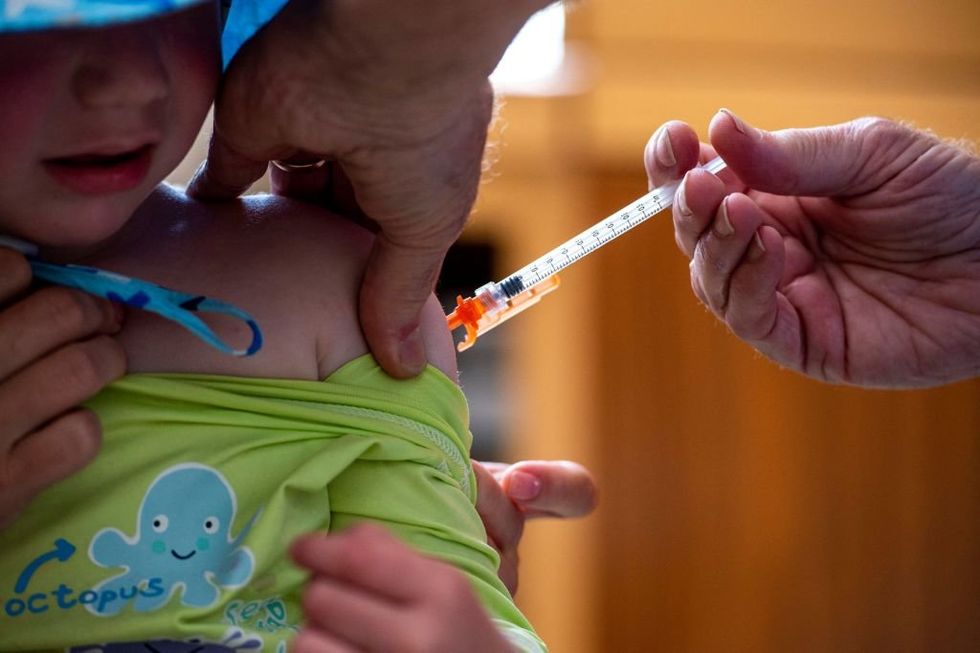
Kansas Attorney General Kris Kobach (R) announced Monday that the Sunflower State is suing Pfizer for "misleading claims it made related to the COVID vaccine." Kobach noted at a press conference in Topeka that "Pfizer made multiple misleading statements to deceive the public about its vaccine at a time when Americans need the truth." "Pfizer misled the public that it had a 'safe and effective' COVID-19 vaccine," claims the lawsuit, filed in the District Court of Thomas County, Kansas. "Pfizer said its COVID-19 vaccine was safe even though it knew is COVID-19 vaccine was connected to serious adverse events, including myocarditis and pericarditis, failed pregnancies and deaths. Pfizer concealed this critical safety information from the public." 'Pfizer must be held accountable for falsely representing the benefits of its COVID-19 vaccine while concealing and suppressing the truth.' The complaint further alleges the pharma giant: glossed over the waning efficacy of the Pfizer-BioNTech COVID-19 Vaccine as well as its ineffectiveness against variants and the absence of evidence it curbed transmission; "used FOIA denial and delay to conceal critical data relating to the safety and effectiveness of its COVID-19 vaccine"; "used an extended study timeline to conceal critical data relating to the safety and effectiveness of its COVID-19 vaccine"; used confidentiality agreements to hide the possible dangers and ineffectiveness of the jab; covered its tracks by destroying the vaccine control group; and engaged in a propaganda campaign wherein it omitted critical data about its vaccine, vilified critics, and mischaracterized its profitable product. While reportedly making roughly $75 billion from its COVID-19 vaccine sales inside a two-year window — selling $57 billion of COVID products in 2022 alone — the lawsuit claims the company "worked to censor speech on social media that questioned Pfizer's claims about its COVID-19 vaccine." Former New York Times reporter Alex Berenson, for instance, claimed that Scott Gottlieb, a former U.S. Food and Drug Administration commissioner who became a senior board member of Pfizer, leaned on Twitter in 2021 in an apparent effort to censor criticism of the vaccine. It appears such pressure may have been successful on numerous occasions. The complaint accuses Pfizer of multiple violations of the Kansas Consumer Protection Act and civil conspiracy. "Pfizer must be held accountable for falsely representing the benefits of its COVID-19 vaccine while concealing and suppressing the truth about its vaccine's safety risks, waning effectiveness, and inability to prevent transmission," added the lawsuit. Pfizer, which has produced over 366 million doses of its COVID-19 vaccine, told The Hill the case has "no merit." "We are proud to have developed the COVID-19 vaccine in record time in the midst of a global pandemic and saved countless lives. The representations made by Pfizer about its COVID-19 vaccine have been accurate and science-based," said the company. The lawsuit comes several months after Texas Attorney General Ken Paxton filed a similar lawsuit, claiming, "Pfizer intentionally misrepresented the efficacy of its COVID-19 vaccine and censored persons who threatened to disseminate the truth in order to facilitate fast adoption of the product and expand its commercial opportunity." The Texas lawsuit moved to a federal court in January. Kansas' legal action also follows numerous medical admissions and scientific studies confirming the vaccines were not as advertised, as well as a class-action lawsuit against another COVID-19 vaccine manufacturer in Britain over injuries and deaths. Blaze News previously reported that a peer-reviewed multinational study examining data from nearly 100 million people not only affirmed the well-documented link between the COVID-19 vaccines and increased risk of heart conditions but has also highlighted troubling links between the AstraZeneca, Moderna, and Pfizer vaccines and medical conditions such as Guillain-Barré syndrome, brain and spinal cord inflammation, Bell's palsy, and convulsions. The study, published in the esteemed journal Vaccine, also noted there were "significantly higher risks of myocarditis following the first, second and third doses" of Pfizer's BNT162b2 vaccine. Another peer-reviewed study published Jan. 24 in the Springer Nature Group journal Cureus suggested the COVID-19 vaccines were a rushed product with an "unacceptable harm-to-reward ratio." Like Blaze News? Bypass the censors, sign up for our newsletters, and get stories like this direct to your inbox. Sign up here!
Like
Comment
Share
The Blaze Media Feed
2 yrs

Prominent scientists demand retractions from journals that published 'unsound' articles downplaying possible COVID-19 lab origins
Favicon 
www.theblaze.com

Prominent scientists demand retractions from journals that published 'unsound' articles downplaying possible COVID-19 lab origins

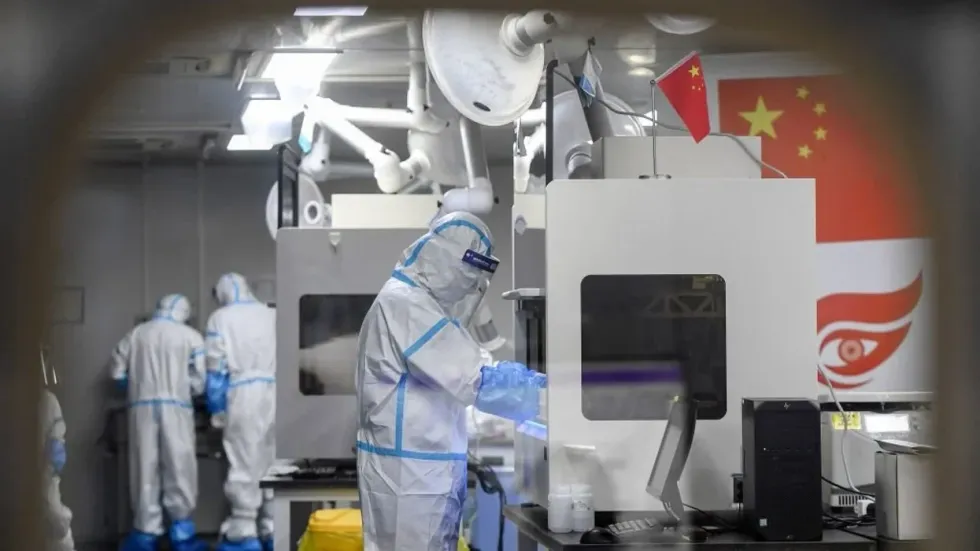
Former National Institute of Allergies and Infectious Diseases director Anthony Fauci, EcoHealth Alliance boss Peter Daszak, and elements of their inner circle were far from the only people in the Western medical establishment who actively downplayed the possibility that COVID-19 leaked from a lab where the likely patients zero executed dangerous experiments on coronaviruses with American taxpayer dollars. Early in the pandemic, multiple scientific publications ran articles decrying "conspiracy theories" that suggested the virus may have originated in the Wuhan Institute of Virology. Various authors argued, instead, that it was more likely that the virus made a cross-species leap into humans, possibly at a Chinese wet market. Now that it's abundantly clear that the lab origin theory was all along the most likely explanation, molecular biologist Dr. Richard H. Ebright of Rutgers University and dozens of other scientists are seeking accountability for perceived efforts to cure the origins narrative. They have sent open letters to the editors of the journals Science, Emerging Microbes & Infections, and Nature Medicine, requesting the retraction of "scientifically unsound papers" concerning the origins of the virus. "Scientists have a responsibility to science and the public to point out scientific misconduct, particularly scientific fraud, when they discover it," Dr. Ebright told Blaze News. "This is especially true for scientific misconduct on matters of high public importance, like the origin of COVID-19." Emerging Microbes & Infections The first of the four papers of interest was published online in Emerging Microbes & Infections on Feb. 26, 2020, and authored by Shan-Lu Liu and Linda Saif of Ohio State University; Susan Weiss of the University of Pennsylvania; and Lishan Su of the University of Maryland. The paper, entitled, "No credible evidence supporting claims of the laboratory engineering of SARS-CoV-2," stated, "There are speculations, rumours and conspiracy theories that SARS-CoV-2 is of laboratory origin. Some people have alleged that the human SARS-CoV-2 was leaked directly from a laboratory in Wuhan where a bat CoV (RaTG13) was recently reported, which shared ∼96% homology with the SARS-CoV-2." After downplaying a number of possible lab-made culprits, including a chimeric coronavirus that could replicate in human airway cells and possibly transmit to humans, the authors concluded, "There is currently no credible evidence to support the claim that SARS-CoV-2 originated from a laboratory-engineered CoV." The June 14 open letter to the editors of the journal stated, "The authors' and editor's private email communications, obtained through an Ohio Public Records Act request, provide compelling evidence that there is clear basis to infer the paper may be the product of scientific misconduct, up to and including fraud." When Weiss, for instance, expressed uncertainty about how the furin cleavage site could possibly end up in the virus naturally, her colleague Liu "completely agree[d]" but signaled a greater eagerness to dispel the notion that the "furin site may be engineered." Despite publicly suggesting there was no credible evidence of a lab origin, Weiss noted days before the publication of her paper: Henry and I have been speculating- how can that site have appeared at S1/S2 border- I hate to think it was engineered- among the MHV strains, the cleavage site does not increaser (sic) pathogenicity while it does effect entry route (surface vs endosome). so for me the only significance of this furin site is as a marker for where the virus came from- frightening to think it may have been engineered. Concealed doubts and persuasive counterpoints were not the only things said to have compromised the integrity of the paper. University of North Carolina virus expert Ralph Baric has long toyed with coronaviruses. Years ahead of the pandemic, he expressed an interest in continuing to experiment with a chimeric virus that could infect human lung cells. He even shared transgenic mice with the Wuhan lab where Chinese virologist Zhengli Shi was executing radical experiments. In violation of publisher Taylor and Francis' authorship policies, "Ralph Baric and Shi Zhengli, despite clear conflicts of interest, made substantial contributions to the manuscript but were not credited as authors or acknowledged," said the letter. Besides secretly involving people with potential conflicts, Su, Liu and the journal's editor-in-chief Shan Lu reportedly also had "privileged information about a SARS-CoV-2 infection in a Beijing lab in 2020," but decided to keep this under wraps. Su wrote to Lieu on Feb. 14, 2020: "Your former colleague was infected with sars2 in the lab?" "Yes," responded Liu. "He was infected in the lab!" "I actually am very concerned for the possibility of SARS-2 infection by lab people. It is much more contagious than SARS-1. Now every lab is interested in get a vial of virus to do drug discovery. This can potentially [be] a big issue. I don’t think most people have a clue," wrote Shan Lu. Despite weighing in heavily on the paper, Lu elected not to be included in the coauthorship, stating in a Feb. 12, 2020, message, "I definitely will not be an author as you guys did everything. It can also keep things somewhat independent as the editor." Extra to collapsing the distance between author and editor, Lu subsequently admitted he accepted the paper with "basically no review." — (@) "Taken together, the authors' and editor's private communications indicate the paper is a product of scientific misconduct, up to and including fraud, by the authors and by the Editor-in-Chief of Emerging Microbes & Infections, Shan Lu," said the open letter. "Now that these documents have come to light, we urge Emerging Microbes & Infections to issue an Expression of Editorial Concern for this paper and to initiate a retraction process." Taylor and Francis, the publisher of the journal, said in a statement to Blaze News, "We can confirm that the Editor of the journal forwarded the open letter to Taylor & Francis on 14th June and that our Publishing Ethics & Integrity team are investigating the concerns raised, in accordance with the Committee on Publication Ethics guidelines and our Editorial Policies." Nature Medicine The journal Nature Medicine published the controversial paper "The Proximal Origin of SARS-CoV-2" on March 17, 2020, which Fauci used on multiple occasions to suggest to the American public that COVID-19 was not a lab leak but rather an animal virus that jumped to a human. Blaze News previously reported that despite privately discussing the prospect that the natural-origins theory was rubbish, the paper's four official authors — Kristian Andersen, W. Ian Lipkin, Edward Holmes, and Robert Garry — concluded, "We do not believe that any type of laboratory-based scenario is plausible." Andersen, a Danish evolutionary biologist and Scripps Research Institute immunology professor, was especially doubtful in private about the conclusion he gave his name to. On Jan. 31, 2020, Andersen wrote to Fauci, "You have to look very closely at the genome to see features that are potentially engineered. ... I should mention that after discussions earlier today, Eddie [Holmes], Bob [Garry], Mike [Farzan], and myself all find the genome to be inconsistent with expectations from evolutionary theory." On Feb. 8, Andersen stated, "Passage of SARS-like CoVs have been ongoing for several years, and more specifically in Wuhan under BSL-2 conditions. ... The fact that Wuhan became the epicenter of the ongoing epidemic caused by nCoV is likely an unfortunate coincidence, but it raises questions that would be wrong to dismiss out of hand. Our main work over the last couple of weeks has been focused on trying to disprove any type of lab theory, but we are at a crossroad where the scientific evidence isn't conclusive enough to say that we have high confidence in any of the three main theories considered." Andersen also expressed concern about a paper penned by Ralph Baric and Zhengli Shi concerning the apparent insertion of furin cleavage sites into SARS, which he and his colleagues figured for a "how-to-manual for building the Wuhan coronavirus in a laboratory." Last month, Ebright and five others wrote to Joao Montiero, the chief editor of Nature Medicine, requesting a retraction. They noted that documentation obtained through public records requests along with congressional testimony from Andersen and Garry "provide conclusive evidence of misconduct." The letter does not mention Fauci's alleged involvement in the development of the paper but instead World Health Organization scientist Jeremy Farrar's unacknowledged role in the "paper's development, including its prompting, organizing, editing, and approval." 'It is imperative that this misleading and damaging product of scientific misconduct be removed from the scientific literature.' "This omission of a significant role played by the head of a funding agency, allegedly to maintain his 'independence,' represents a serious breach of publishing ethics that completely undermines the credibility of the journal and calls into question the motivation behind the paper," said the letter. "The classification of the paper as an 'opinion' rather than a 'research article' further exacerbates the issue, as the authors' intentional withholding of Farrar's involvement damages public trust in the editorial process." Ebright and scores of other scientists pressed Nature Medicine last year for a retraction as well, noting in an open letter dated July 26, 2023, "It is imperative that this misleading and damaging product of scientific misconduct be removed from the scientific literature. We, as STEM and STEM-policy professionals, call upon Nature Medicine to publish an expression of editorial concern for the paper and to begin a process of withdrawal or retraction of the paper." Blaze News reached out to Montiero for comment, but he did not respond by deadline. Science Ebright, Stanford University epidemiologist Dr. Jay Bhattacharya, and dozens of other scientists signed another open letter on June 14 to the editors of the journal Science with regards to two papers: "The Huanan Seafood Wholesale Market in Wuhan was the early epicenter of the COVID-19 pandemic," and "The molecular epidemiology of multiple zoonotic origins of SARS-CoV-2," both of which named Jonathan Pekar of the University of California, San Diego, as an author along with Andersen, Holmes, Garry, evolutionary biologist Andrew Rambaut, and Michael Worobey of the University of Arizona. Blurbs leading into the papers, which were both largely funded by Fauci's NIAID — whose parent agency supported and financed research at the Wuhan lab — and published on July 26, 2022, stated, "The precise events surrounding virus spillover will always be clouded, but all of the circumstantial evidence so far points to more than one zoonotic event occurring in Huanan market in Wuhan, China, likely during November–December 2019." According to the scientists seeking retractions, the analyses and the premises of "Worobey et al. 2022 and Pekar et al. 2022 are unsound," and the papers may be "products of scientific misconduct, up to and including scientific fraud." "Phylogenomic evidence, epidemiological evidence, and documentary evidence all indicate that SARS-CoV-2 entered humans in July-November 2019," says the letter. "Arguments based on data for the Huanan Seafood Market on or after mid- to late December 2019 — as in Worobey et al. 2022 and Pekar et al. 2022 — cannot, even in principle, shed light on spillover into humans that occurred one to five months earlier, in July-November, 2019." — (@) The open letter noted that Andersen, Garry, Holmes, and others knew full well that the "premises and conclusions of their paper were invalid at the time the paper was drafted." A spokesman for American Association for the Advancement of Science, the publisher of the Science family of journals, confirmed to Blaze News that it had received the letter. "We follow COPE (Committee on Publication Ethics) processes to address any concerns raised on published papers and are doing so here," said the spokesman. The AAAS spokesman noted in a subsequent email, "We will follow up when we make a final decision." Like Blaze News? Bypass the censors, sign up for our newsletters, and get stories like this direct to your inbox. Sign up here!
Like
Comment
Share
The Blaze Media Feed
2 yrs

Jason Whitlock wanted to leave ‘Bad Boys: Ride or Die’  3 minutes in – here’s why
Favicon 
www.theblaze.com

Jason Whitlock wanted to leave ‘Bad Boys: Ride or Die’ 3 minutes in – here’s why

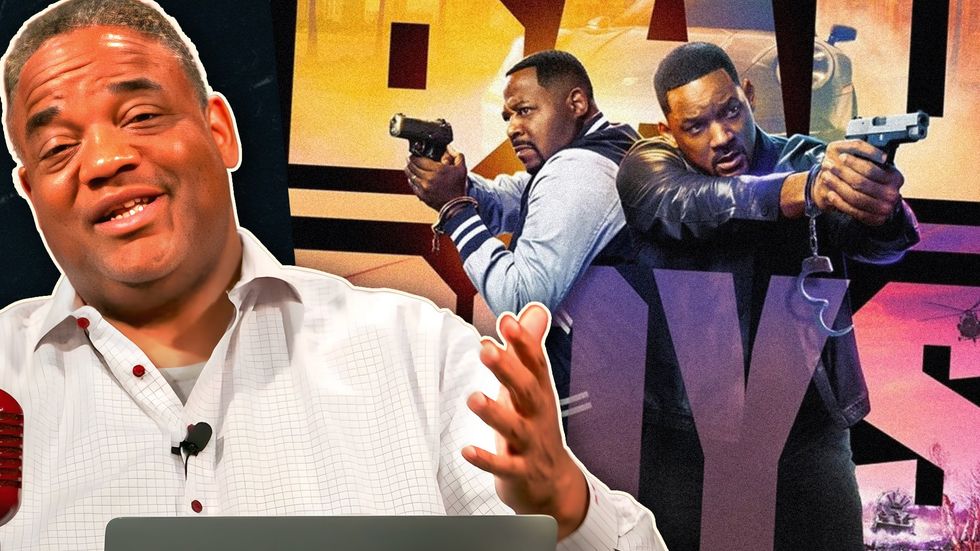
On June 7, “Bad Boys: Ride or Die” starring Will Smith and Martin Lawrence, hit theaters. Fans have been eagerly anticipating the release of the fourth installment in the Bad Boys franchise. Jason Whitlock was one of those in line to see the film. Unfortunately, he couldn’t even make it through the entire movie. “I wanted to leave three minutes in, maybe two minutes in. I left the movie maybe an hour and five minutes in,” he says, adding that it was just “too stupid” for him. There was “no hidden message” and “nothing that offended me,” but “it was so removed from reality.” “I finally hit the eject button and left,” he sighs. “'Bad Boys,' bad movie from my perspective.” However, the rest of the “Fearless at the Movies” team — Anthony Walker, Kevin Donahue, and Shemeka Michelle — also saw the movie. Shemeka agrees that the film was “removed from all reality,” but she also thought it wasn’t any different from other unrealistic action films, like “Jurassic Park” and “The Woman King.” “It’s not real, but it's so action packed that it’s interesting — that's how it was for me,” she says, adding that “it was fun to watch.” “If you haven't seen all the other Bad Boys movies, then this one would seem just dropped out of the blue,” but “the action” and “the storyline” is “right on par” with the other Bad Boys films, adds Anthony, noting that the “vulgarity was a little too much for [him].” For Kevin, who’s never seen any of the Bad Boys movies, “It was like a Chuck Norris-Arnold Schwarzenegger Rambo movie from the '80s mixed with 'Fast and the Furious.'” “I hated it at the very beginning,” he says, “but then I kind of sat back, watched, and just appreciated it for what it was.” To hear more of the crew’s analysis — including Lawrence’s heart-attack scene — watch the clip below. Want more from Jason Whitlock?To enjoy more fearless conversations at the crossroads of culture, faith, sports, and comedy with Jason Whitlock, subscribe to BlazeTV — the largest multi-platform network of voices who love America, defend the Constitution, and live the American dream.
Like
Comment
Share
Showing 23836 out of 56670
  • 23832
  • 23833
  • 23834
  • 23835
  • 23836
  • 23837
  • 23838
  • 23839
  • 23840
  • 23841
  • 23842
  • 23843
  • 23844
  • 23845
  • 23846
  • 23847
  • 23848
  • 23849
  • 23850
  • 23851

Edit Offer

Add tier


Select an image
Delete your tier
Are you sure you want to delete this tier?

Reviews

In order to sell your content and posts, start by creating a few packages. Monetization

Pay By Wallet

Payment Alert

You are about to purchase the items, do you want to proceed?

Request a Refund