YubNub Social YubNub Social
    Advanced Search
  • Login

  • Night mode
  • © 2026 YubNub Social
    About • Directory • Contact Us • Privacy Policy • Terms of Use • Android • Apple iOS • Get Our App

    Select Language

  • English
Install our *FREE* WEB APP! (PWA)
Night mode
Community
News Feed (Home) Popular Posts Events Blog Market Forum
Media
Headline News VidWatch Game Zone Top PodCasts
Explore
Explore Jobs Offers
© 2026 YubNub Social
  • English
About • Directory • Contact Us • Privacy Policy • Terms of Use • Android • Apple iOS • Get Our App

Discover posts

Posts

Users

Pages

Group

Blog

Market

Events

Games

Forum

Jobs

Hot Air Feed
Hot Air Feed
2 yrs

Blinkenspeak, Translated: Hamas Yanked the Football ... Again
Favicon 
hotair.com

Blinkenspeak, Translated: Hamas Yanked the Football ... Again

Blinkenspeak, Translated: Hamas Yanked the Football ... Again
Like
Comment
Share
Science Explorer
Science Explorer
2 yrs

World-First Discovery Reveals How The Third Domain Of Life Makes Energy In Earth’s Bleakest Corners
Favicon 
www.iflscience.com

World-First Discovery Reveals How The Third Domain Of Life Makes Energy In Earth’s Bleakest Corners

Archaea, hardy single-celled organisms that form the third domain at the top of the universal tree of life, have survived for billions of years in some of the most extreme environments on Earth. Now, scientists have taken a big leap forward in explaining how that is possible, discovering how these organisms use hydrogen as a source of energy – something that never occurred to our species until recently.“Humans have only recently begun to think about using hydrogen as a source of energy, but archaea have been doing it for a billion years,” said study author Dr Bob Leung of Monash University in a statement.Alongside archaea, the two other domains of life in the widely accepted model are the bacteria and the eukaryotes – the group that includes animals, plants, and fungi. Current thinking in the world of evolutionary biology suggests that the eukaryotes (yep, humans too) evolved from an ancient merger between archaeal and bacterial cells via the exchange of hydrogen gas. Understanding how archaea use hydrogen could therefore be central to understanding the very underpinnings of life on our planet.This widely accepted, simplified version of the phylogenetic tree of life shows the three domains extending out from LUCA, the last universal common ancestor.Image credit: Chiswick Chap via Wikimedia Commons (CC BY-SA 4.0)“Our finding brings us a step closer to understanding how this crucial process gave rise to all eukaryotes, including humans,” Leung added.The team combed through the genome sequences of over 2,000 archaeal species to find the genetic codes for hydrogen-producing enzymes, and they hit on 130 genomes with evidence of unusual enzymes called [FeFe] hydrogenases. These have previously been documented in other organisms, but not in archaea, making this result a world first.In addition to this, they found evidence of hybridization between [FeFe] hydrogenases and another class of enzyme, [NiFe] hydrogenases, across 10 archaeal orders. “These findings revise our understanding of the distribution and evolution of microbial [hydrogen] metabolism, and have broad biological, chemical, and biotechnological ramifications,” the authors write.The 130 genomes came from species in nine different phyla, living in some of the most inhospitable locations on the planet, from hot springs to deep beneath the ocean floor. By reproducing these [FeFe] hydrogenases in the lab, the scientists could see for themselves the huge diversity in their structures and functions.It turns out that archaea not only possess some of the smallest hydrogenases of any lifeform, but they are also the most complex.This ability to process hydrogen and generate energy is what has allowed these resilient microbes to thrive in places most living things wouldn’t dare to tread. But as well as helping us learn more about how they’ve survived down the millennia, which has implications for our own evolutionary story, there’s also the possibility that we can learn from archaea as we seek to transition to a more sustainable energy future.“Biotechnologists now have the opportunity to take inspiration from these archaea to produce hydrogen industrially,” said Leung.Hydrogen has been touted as a “fuel of the future”, though its production through chemical processes is not without an environmental impact – that’s why natural deposits of pure hydrogen gas are so highly prized. Learning from archaea to produce better hydrogen catalysts could help improve cost-effectiveness and sustainability.Professor Chris Greening, first author on the paper, added, “Industry currently uses precious chemical catalysts to use hydrogen. However, we know from nature that biological catalysts function can be highly efficient and resilient. Can we use these to improve the way that we use hydrogen?”The study is published in the journal Cell.
Like
Comment
Share
Science Explorer
Science Explorer
2 yrs

Adorable Wild Bornean Clouded Leopard Family Caught On Camera For First Time
Favicon 
www.iflscience.com

Adorable Wild Bornean Clouded Leopard Family Caught On Camera For First Time

A hidden camera has caught extremely rare footage of a family of endangered Bornean clouded leopards (Neofelis diardi borneensis) as they scamper and prowl around the rainforest.Orangutan Foundation, together with Tanjung Puting National Park, recently captured the adorable video (below) using a camera trap in the dense lowland forests of Indonesian Borneo. While the rare subspecies has been filmed in the wild before, this is the first time researchers have spotted a mother with her two offspring. “The clouded leopard is an arboreal species and excellent hunter on the ground that plays an important role in maintaining the ecosystem. As one of the rarest species to find, being able to see a female and cubs gives us evidence that they are healthy and actively breeding,” Anxious Yoga Perdana, Research Manager, said in a statement.  The Tanjung Puting National Park is abundant in wonderful wildlife, including the largest wild orangutan population in the world,  230 species of birds, nine species of primates, and two species of crocodiles.Arguably the region’s cutest resident, the Bornean clouded leopard is a subspecies of the Sunda clouded leopard that lives on the island of Borneo. The other subspecies, the Sumatran clouded leopard, lives on the neighboring island of Sumatra (no surprises there).        Genetic analysis suggests the two clouded leopards diverged from wild cats on the mainland around 1.4 million years ago. The Bornean clouded leopard then diverged from the Sumatran clouded leopard in the Late Pleistocene, a period that ended some 11,700 years ago, when a wave of global cooling and warming severed the islands of Borneo and Sumatra from each other. One idea is that the split of the two subspecies is linked to the “super eruption” of the Toba volcano in Sumatra around 74,000 years ago – a catastrophic even that was arguably humanity’s closest call with extinction yet. So the theory goes, clouded leopards from Borneo recolonized Sumatra in the wake of the super eruption during times of low sea levels, but were then separated from their source population by rising sea levels. As the separated populations adapted to their different niches and reproduced, they evolved into distinct subspecies.A 2007 estimate suggested that between 5,000 and 11,000 clouded leopards lived in Borneo, but that number has almost certainly dropped since then. Orangutan Foundation states the Bornean clouded leopard is classified as an Endangered species by the IUCN Red List of Threatened Species. As a result of habitat loss from deforestation, their population numbers have been reduced to less than a third in recent years. They aren’t the only life that’s imperilled by habitat loss in Borneo. The island’s most iconic and beloved animal, the orangutan, has also fallen victim to rampant deforestation driven by the demand for palm oil and timber. 
Like
Comment
Share
Science Explorer
Science Explorer
2 yrs

Say Hello To Sauron The Veggie Piranha
Favicon 
www.iflscience.com

Say Hello To Sauron The Veggie Piranha

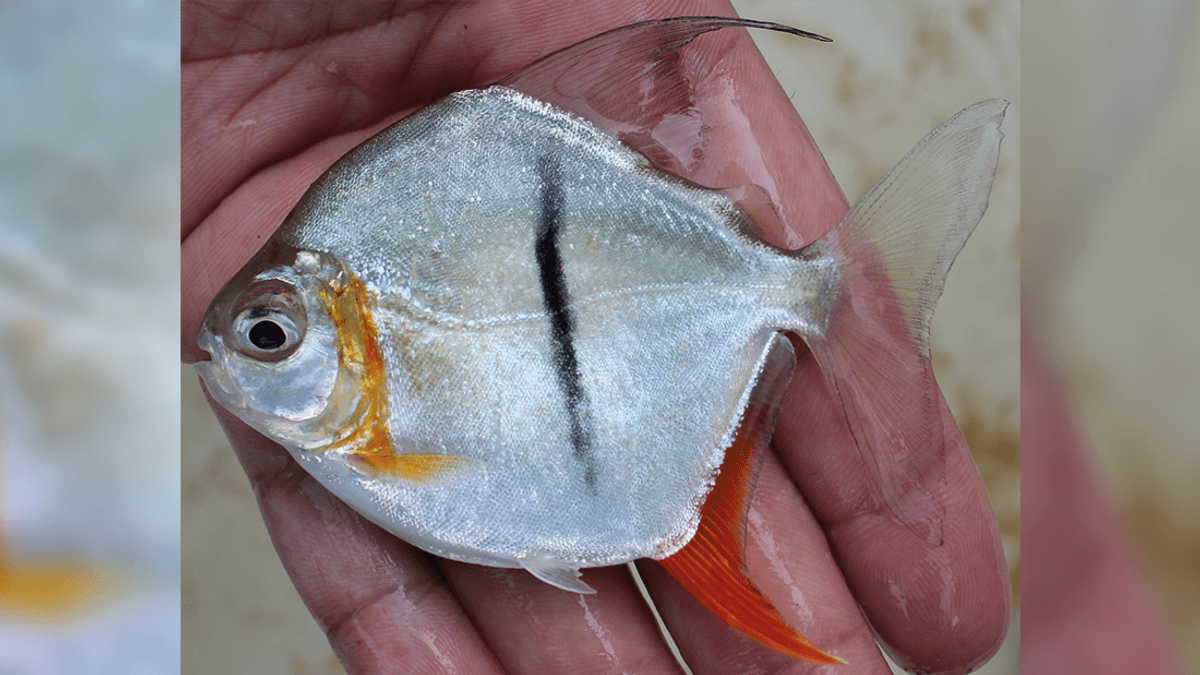
Piranhas' vegetarian cousins are known as pacus, and you've likely seen photos of their curiously human-like teeth circulating online. Now, a knew member has joined the ranks after being identified in the Amazon, and it's been named Myloplus sauron after the Dark Lord of the same name in J.R.R. Tolkein’s The Lord Of The Rings because of a distinctive mark on its side that looks like the Eye Of Sauron.“As soon as my colleagues suggested the name for this fish, we knew it was perfect for it,” said lead author Dr Rupert Collins, Senior Curator in Charge of fish at London’s Natural History Museum, in a statement. “Its pattern looks a lot like the Eye of Sauron, especially with the orange patches on its body.”Rather than sitting atop the tower of Barad-dûr in Mordor, the fish was retrieved from the Amazon River, where an estimated 42 percent of fish are thought to be new-to-science species.“With so much undescribed biodiversity in the Amazon and surrounding rivers, it’s so important to highlight just how little we know about many of the animals we share our world with,” added Collins in a statement seen by IFLScience. “Even just basic things like what they look like and where they live. In order to protect the biodiversity we share the Earth with, we must first understand it.”For weeny fish in the Amazon, the Eye Of Sauron is actually a good sign that they've encountered the vegetarian version of piranhas.Image credit: © Mark H. SabajMyloplus sauron is a pacu fish, the name given to the very close relatives of piranhas, with the key distinction between the two fish groups being that pacus are vegetarian. Its diet is reflected in its curious dentition that’s described as looking similar to that of a human.The human-like teeth of pacu have seen them circulate in the press time and time again, often turning up in non-native ecosystems when they get too big as pets and are released into the environment. With enough space and ample resources, these fish can stretch to 1 meter (3 feet) long, weighing 20 kilograms (44 pounds). Their mighty size and dentition have led some to believe they might be dangerous, but they’re herbivorous fish. However, that didn’t stop them from getting a reputation for biting off people’s testicles.According to Snopes, a testicle-biting incident reportedly occurred in 2001 when a male swimmer was chomped on the nads by a pacu in Papua New Guinea. In reality, these fish evolved to eat fruits and have seed-crushing teeth as a result. Good for grinding up nuts of the non-human kind, but not very proficient at snipping off testicles.So, don’t let the name Sauron fool you. This veggie icon isn’t out for blood or those nuts.The study is published in the journal Neotropical Ichthyology.
Like
Comment
Share
Strange & Paranormal Files
2 yrs

Another mysterious 4,000-year-old labyrinth found in Crete
Favicon 
anomalien.com

Another mysterious 4,000-year-old labyrinth found in Crete

The construction of a new airport in Crete has already helped scientists discover 35 archaeological sites. Recently, this list was supplemented by an ancient labyrinth, which dates back to the period of the Minoan civilization. At a site intended for a radar station for a new airport near the Cretan town of Kastelli, Greece, archaeologists have discovered a large labyrinthine building measuring 1,800 square meters. The discovery has already caused a stir among scientists who are trying to understand its purpose, reports Phys.org. Greece’s Ministry of Culture called the find “unique and extremely interesting,” attributing it to the Minoan civilization, known for its elaborate palaces, colorful art and mysterious writing. Despite lengthy excavations, the purpose of the structure remains unclear. Experts suggest that it could have performed ritual or religious functions. Photo: Greek Culture Ministry The building, surrounded by eight stepped stone walls up to 1.7 meters high, contains smaller connecting spaces and probably had a shallow conical roof. The significant amount of animal bones found inside suggests that it was used for ceremonies related to food and wine. The ministry noted that the structure was not a dwelling, indicating its communal nature due to its size and complex design, which required specialized knowledge and centralized management. Minister of Culture Lina Mendoni assured that the archaeological find will be preserved, and a new location will be chosen for the radar station. This will balance heritage protection with airport development. The new airport, scheduled to open in 2027, aims to replace Heraklion Airport, which will serve up to 18 million travelers annually. A structure that was mainly used between 2000-1700. BC e., were built around the same period as the first palaces of Crete, in particular in Knossos and Phistos. Some architectural features are reminiscent of early Minoan beehive tombs with stepped conical roofs. Greece’s cultural heritage often collides with construction projects, as evidenced by the excavation and subsequent destruction of a 3rd millennium BC hilltop settlement during the construction of Athens International Airport. The new Castelli Airport project has helped uncover at least 35 archaeological sites, highlighting the ongoing challenge of balancing development and preserving historical treasures. The post Another mysterious 4,000-year-old labyrinth found in Crete appeared first on Anomalien.com.
Like
Comment
Share
Classic Rock Lovers
Classic Rock Lovers  
2 yrs ·Youtube Music

YouTube
Classic Rock 80s and 90s - The Best Classic Rock Songs Are Selected
Like
Comment
Share
The Blaze Media Feed
2 yrs

The misguided conservative demand for term limits
Favicon 
www.theblaze.com

The misguided conservative demand for term limits

The race to succeed Mitch McConnell (R-Ky.) at the head of the Senate Republicans is in full swing, with candidates trading ideas, promises, and fundraising in exchange for their colleagues’ support. One proposal generating Hill chatter and a few vocal proponents is to limit the terms a Republican leader can serve. Sens. Rick Scott (R-Fla.) and John Cornyn (R-Texas) — both candidates for the job — have publicly committed to the idea. Another candidate, Sen. John Thune (R-S.D.), said he’s “not averse to having that conversation, but there are a lot of things we need to think through.” Conservatives should seek power and be willing to use it if they want to have an impact on the state. There is good reason to pump the brakes on this sort of tea-party thinking, however: power, pure and simple. But first, the history (or the sentimentality) behind the idea. Americans have a certain attachment to the notion, going back to the debates surrounding the Constitution of 1787, when anti-Federalists like Thomas Jefferson supported codifying term limits for Congress and the executive. They argued it would curtail power's tendency to corrupt. They lost the debate, but President George Washington voluntarily stepped down after two terms anyway, shocking the world with the historic precedent he set. Term limits have enjoyed a romantic reputation in America ever since. We eventually enshrined the two-term executive limit in 1951 (over the protests of President Harry S. Truman, and future criticisms from Presidents Dwight D. Eisenhower, Ronald Reagan, and Bill Clinton), but how necessary was it, and how effective has it been? While President Franklin Delano Roosevelt was the first (and last) to win four terms in the White House, less than half of his predecessors had sought and won a second term. Of those who had won a second term, only Presidents Woodrow Wilson and Teddy Roosevelt had tried for a third term, and both were defeated. Since the 22nd Amendment was ratified, impeachment, assassination, old age, and old-fashioned unpopularity have served as strong enough checks of their own. Still, the legend lives on. “The tea party attachment to term limits will never die,” one longtime Senate aide told Blaze News. “Everyone thinks they’ve found the single hack that will save the system.” In fairness to its proponents, 2024 McConnell is a shuffling advertisement for term limits. The longest-serving party leader in congressional history used his 17 years to accumulate immense power, creating a sort of third party outside of his own in the process. He will practically need to be carried out when he retires from leadership in November. He’s not alone in this success. On the other side of the aisle, former Sen. Harry Reid (D-Nev.) created a similarly powerful fiefdom, leading the Democrats for a dozen years until his retirement. But what’s the actual problem here? Reid’s deep knowledge of the Senate — its history, procedures, and tricks — was the envy of conservatives for a decade. Likewise for McConnell, who in his day was feared by Democrats for his ability to use the instruments of his office to make demands, exact concessions, and wield influence. The examples of their power deserve the envy they engender. Conservatives should seek power and be willing to use it if they want to have an impact on the state. Their supporters sent them to Washington to change the country’s course, not to invent new norms that deny experience and expertise to competent Republican leadership. “Democrats won’t ever do [term limits], so you’re handicapping yourself,” one Washington politico with years in Republican leadership told Blaze News. A lot of those same conservatives calling for returning Democrats’ lawfare, he noted, seem to want “this self-imposed restraint here.” There’s an irony there. For decades, conservatives talked themselves out of fighting back, repeatedly warning that any power they acquired could be used against them someday. Well, that day has come and gone and will come every day again and again as sure as the sun rises in the morning. Power is being used, regardless of what nonaggressive stands conservatives shackle themselves to. Term limits serve only to weaken the party leader. If conservatives want to win, they don’t want a weak leader — they want a strong leader who aligns with what they value. You only burn your forts you’ve taken if you can’t hold them. If the American right ever wants to graduate from sniping from the woods, it better start taking some forts — and holding them. The Daily Caller: Senate Republicans back big change to prevent repeat of McConnell era The Federalist Society: Do term limits make a difference? Bedford: McConnell’s retirement marks the end of the disastrous Bush era Sign up for Bedford’s newsletterSign up to get Blaze Media senior politics editor Christopher Bedford's newsletter.IN OTHER NEWS Hunter Biden’s dumb conviction Hunter Biden is guilty of lying on his gun forms. It was a strange case, even though his guilt is plenty apparent. Why? Because very few people are prosecuted for this crime alone. You see it tacked onto things like robbing a bank or shooting at someone, not for keeping a gun locked up in a box. This reality gives credence to Democrats’ complaint this is only happening because Hunter Biden is the son of the president. They’re right about that, too — just not in the way they think. Hunter Biden got a lot of special treatment for being the son of the president, including a sweetheart deal to get out of trouble for both the gun thing and criminal tax evasion – and any future investigations tied to his years making millions of dollars overseas. It was all too much, however, and blew up last year when the judge balked, forcing special counsel David Weiss to scramble to save face. Biden could have been charged with a host of other crimes, including alleged violations of the Foreign Agents Registration Act, but Justice Department delays ensured all that went forward was a simple gun case. So, now Hunter is answering to some fairly bogus charges. Next up are the tax charges, which (spoiler alert) he’s very likely to be found guilty of as well, if he doesn’t accept a plea deal first. (And get ready for Hunter’s conviction to enter the Democrats’ talking point lexicon when they try to put former President Donald Trump in prison.) The Spectator: CNN’s moderators must ask Biden the tough Hunter question Blaze News: Hunter Biden: Convicted felon The fire rises: Unherd: Nigel Farage’s army is on the march There’s a lot of buzz about how the right swept into power in the European Union’s elections, but it’s not quite true, because the European Parliament doesn’t have much “power” to begin with. The key thing to watch is the mood of the voters who sent them there, and that mood is angry. They’re angry with unfettered immigration, angry with green policies, angry at the disappearance of their values and cultures, and angry no one in power is listening to them. They’ll be heard in their upcoming elections, and across the water is no different. British voters are furious at the failure of the Conservative Party to enact Brexit, curtail immigration, lower taxes, or do a darned thing to improve British standards of living. Tom McTague reports: What a difference a week makes. This time last Saturday, I was watching Nigel Farage’s ragtag rebel army in Great Yarmouth struggling to rouse themselves for one last attack on the fortress of Westminster, somehow knowing in their heart of hearts it was doomed. And yet, here we are, seven days on: the walls protecting the Conservative Party have been breached and Faragistes are streaming forward, the smell of revolution in the air ... ... [This] week some of the country’s leading pollsters are not simply forecasting the expectedly comfortable Labour victory, but an extinction-level event for the Conservatives — and one caused not by unprecedented support for Labour but an unprecedented implosion in support for the Tories, much of which is moving directly to Reform. ... ... “[The Conservative Party] had a wonderful majority and they squandered it.” It’s hard to argue with her. A ruling party elected four times to reduce debt, taxes and immigration has instead overseen an explosion of all three. And at the same time, living standards have barely grown since 2008 and public services have deteriorated. Is it any wonder voters keep pressing a button to blow up the system, and get angry when they discover the dynamite never seems to work?The Spectator: The night the right swept Europe

Like
Comment
Share
Gamers Realm
Gamers Realm
2 yrs

Genshin Impact 4.8 release date, livestream, characters, and events
Favicon 
www.pcgamesn.com

Genshin Impact 4.8 release date, livestream, characters, and events

What is the Genshin Impact 4.8 release date? This is one of the smallest updates we've seen, but with Zenless Zone Zero on the way and a bigger update on the horizon for Genshin Impact, hopefully there's enough to tide us over until the new region arrives. Here's everything you can expect from the next Genshin Impact update, including the release date, livestream times, and more on the upcoming five star Dendro character, Emilie, as well as the events coming to the 4.8 update. Also be sure to keep an eye on new 4.8 Genshin Impact codes for the anime game. Continue reading Genshin Impact 4.8 release date, livestream, characters, and events MORE FROM PCGAMESN: Genshin Impact codes, Genshin Impact character tier list, Genshin Impact leveling guide
Like
Comment
Share
Gamers Realm
Gamers Realm
2 yrs

New No Man’s Sky rival with amazing Steam reviews is free to try now
Favicon 
www.pcgamesn.com

New No Man’s Sky rival with amazing Steam reviews is free to try now

Take the underwater survival crafting and base building elements of Subnautica but transpose them to the vast reaches of outer space, and you have new survival game Astrometica. A promising new space game set to rival the likes of No Man’s Sky, this might be just what you’re looking for if the outposts of Starfield weren’t quite what you wanted. Available now, a prologue version available as a free Steam game is already attracting plenty of attention, racking up an overwhelmingly positive user rating after just a couple of weeks. Continue reading New No Man’s Sky rival with amazing Steam reviews is free to try now MORE FROM PCGAMESN: Best space games, Best survival games, Best sandbox games
Like
Comment
Share
Gamers Realm
Gamers Realm
2 yrs

Fallout 76 was bad, but Bethesda and the community have made it great
Favicon 
www.pcgamesn.com

Fallout 76 was bad, but Bethesda and the community have made it great

Forget what you know about Fallout 76. Forget the memes, forget the drama, forget all the glitches and the crashes - what was once the most controversial game in Bethesda’s history has become a thriving and successful RPG with a devout player base and a seriously committed development team. Six years, 19 expansions, and 52 updates later, Fallout 76 is a deserving member of the apocalyptic open-world series’ family. The latest update, Skyline Valley, which expands the Fallout 76 map for the first time, launches today, Wednesday June 12. In Fallout 76, you’ll also, in the near future, be able to play as a Ghoul. Speaking to PCGamesN, Bethesda and FO76 producer Bill LaCoste discusses the studio’s long journey through the wilds of Appalachia, and how the game’s community helped bring it back from the brink. Continue reading Fallout 76 was bad, but Bethesda and the community have made it great MORE FROM PCGAMESN: Best games like Fallout, Fallout 5 release date, Best Fallout 4 mods
Like
Comment
Share
Showing 24588 out of 56670
  • 24584
  • 24585
  • 24586
  • 24587
  • 24588
  • 24589
  • 24590
  • 24591
  • 24592
  • 24593
  • 24594
  • 24595
  • 24596
  • 24597
  • 24598
  • 24599
  • 24600
  • 24601
  • 24602
  • 24603

Edit Offer

Add tier


Select an image
Delete your tier
Are you sure you want to delete this tier?

Reviews

In order to sell your content and posts, start by creating a few packages. Monetization

Pay By Wallet

Payment Alert

You are about to purchase the items, do you want to proceed?

Request a Refund