YubNub Social YubNub Social
    Advanced Search
  • Login

  • Night mode
  • © 2026 YubNub Social
    About • Directory • Contact Us • Privacy Policy • Terms of Use • Android • Apple iOS • Get Our App

    Select Language

  • English
Install our *FREE* WEB APP! (PWA)
Night mode
Community
News Feed (Home) Popular Posts Events Blog Market Forum
Media
Headline News VidWatch Game Zone Top PodCasts
Explore
Explore Jobs Offers
© 2026 YubNub Social
  • English
About • Directory • Contact Us • Privacy Policy • Terms of Use • Android • Apple iOS • Get Our App

Discover posts

Posts

Users

Pages

Group

Blog

Market

Events

Games

Forum

Jobs

Daily Caller Feed
Daily Caller Feed
2 yrs

Mavericks’ Kyrie Irving Absolutely Slammed By Boos With No Mercy In Return To Celtics’ TD Garden
Favicon 
dailycaller.com

Mavericks’ Kyrie Irving Absolutely Slammed By Boos With No Mercy In Return To Celtics’ TD Garden

Safe to say Celtics fans still aren't happy with Kyrie Irving
Like
Comment
Share
Daily Caller Feed
Daily Caller Feed
2 yrs

‘Y’all F*cking Up Traffic!’: Dem City Resident Blasts Protesters Filling Streets Against Biden’s Border Executive
Favicon 
dailycaller.com

‘Y’all F*cking Up Traffic!’: Dem City Resident Blasts Protesters Filling Streets Against Biden’s Border Executive

'Ya'll fucking up traffic!'
Like
Comment
Share
Daily Caller Feed
Daily Caller Feed
2 yrs

National American Miss Pageant Crowns Plus-Size Woman As State Winner
Favicon 
dailycaller.com

National American Miss Pageant Crowns Plus-Size Woman As State Winner

'Their words can hurt'
Like
Comment
Share
The Lighter Side
The Lighter Side
2 yrs

Thousands of Sources for New Antibiotics to Fight Superbugs Found Using AI–and Dozens Worked
Favicon 
www.goodnewsnetwork.org

Thousands of Sources for New Antibiotics to Fight Superbugs Found Using AI–and Dozens Worked

Hundreds of thousands of potential sources of new antibiotics have been found in the natural world using artificial intelligence. An international research team utilized machine learning to identify 863,498 promising antimicrobial peptides, any one of which may be needed in the future to fight deadly drug-resistant infections like MRSA and VRSA. The findings of the […] The post Thousands of Sources for New Antibiotics to Fight Superbugs Found Using AI–and Dozens Worked appeared first on Good News Network.
Like
Comment
Share
Fun Facts And Interesting Bits
2 yrs

84 From ’84: Tightrope
Favicon 
theretronetwork.com

84 From ’84: Tightrope

Tightrope New Orleans single dad and cop Wes Block goes after a serial rapist-killer, but when he gets too close the hunter suddenly becomes the hunted. Cast: 1984 viewing I’d never get in the theater CONTINUE READING... The post 84 From ’84: Tightrope appeared first on The Retro Network.
Like
Comment
Share
Survival Prepper
Survival Prepper  
2 yrs

Trump Is Officially Vetting These People for the Vice President Spot
Favicon 
www.theorganicprepper.com

Trump Is Officially Vetting These People for the Vice President Spot

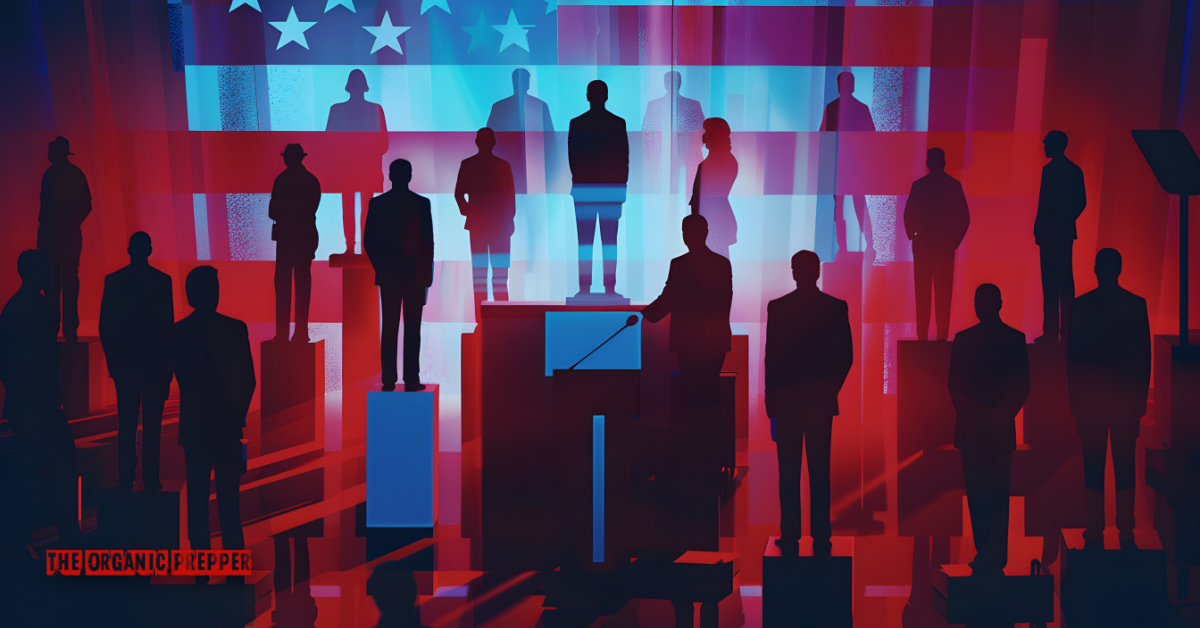
Author of How to Prep When You’re Broke and Bloom Where You’re Planted online course There’s been a lot of buzz about who would be former President Donald Trump’s running mate as he goes head-to-head with current President Joe Biden in November. Former Vice President Mike Pence is out of the question since they had a falling out over him affirming Biden’s victory in front of Congress after the last election, which many people still believe was unfairly rigged. I have to admit, I’m rather disappointed that Tulsi Gabbard and Vivek Ramaswamy don’t appear to be under consideration. With the ages of Trump and Biden, it’s increasingly likely that whoever is the vice president will end up being the president over the next four years. Here are the people who received vetting paperwork for the VP slot. Multiple sources confirm that the following seven people have received paperwork to begin the vetting process for the vice presidential slot. Ohio Sen. J.D. Vance North Dakota Gov. Doug Burgum South Carolina Sen. Tim Scott Florida Rep. Byron Donalds New York Rep. Elise Stefanik Florida Sen. Marco Rubio Arkansas Sen. Tom Cotton Former Housing and Urban Development Secretary Ben Carson Politico reports: The former president has said there is a “good chance” he will announce his vice president pick around the time of the Republican National Convention in Milwaukee in mid-July. During the 2016 campaign, Trump announced then-Indiana Gov. Mike Pence just a few days before the start of the nominating convention. “Anyone claiming to know who or when President Trump will choose his VP is lying, unless the person is named Donald J. Trump,” said Brian Hughes, a Trump campaign spokesperson. Senator J. D. Vance J.D. Vance is a former US Marine who served in the Iraq War. Later, he attended Ohio State University and Yale Law. Vance wrote a bestselling book, Hillbilly Elegy, which was turned into a movie by Netflix. He is a venture capitalist who became the junior senator from Ohio in 2023, making his one of the shorter political careers under consideration. North Dakota Governor Doug Burgum Governor Burgum first came onto my radar during the presidential primary debates, but he’s been governor of North Dakota since 2016. He is a wealthy businessman, worth $100 million, according to Forbes. He has a bachelor’s degree from North Dakota State and an MBA from Stanford Business School. Senator Tim Scott Senator Scott also distinguished himself in the presidential primary debates. Scott grew up poor and was raised by a single mom. He graduated from Charleston Southern University and became a businessman, then ventured into politics. He has served in the Charleston County Council, the South Carolina House of Representatives, the United States House of Representatives, and the United States Senate. Representative Byron Donalds Donalds grew up in Brooklyn and was also raised by a single mother. He graduated from Florida State University and has served in the House of Representatives since 2016. His career has been primarily focused on elder affairs, criminal justice reform, and ensuring that each child has access to a world-class education. He recently came under fire for some comments about Jim Crow, which he said were taken totally out of context. Representative Elise Stefanik Stefanik is the youngest member of the group and the only woman. She attended Harvard University, where she graduated with honors, and was the first person in her family to attend college. She became a member of Congress in 2014, at the time, the youngest woman ever elected to that position. She is also the chair of the House Republican Conference, making her the most powerful female Republican in the Congress. Senator Mark Rubio Rubio is the son of Cuban immigrants. According to his official bio: “Born in Miami, Rubio was drawn to public service in large part because of his grandfather, who saw his homeland destroyed by communism.” He attended  the University of Florida for his bachelor’s degree and received his Juris Doctor cum laude from the University of Miami School of Law. He began his political career serving as a city commissioner in West Miami and as speaker of the Florida House of Representatives. In 2010, he was elected to the US Senate. In the past, Rubio and Trump have been at odds, exchanging many harsh words. Senator Tom Cotton Tom Cotton grew up on a farm in Arkansas and attended Harvard and Harvard Law School. According to his bio, “After a clerkship with the U.S. Court of Appeals and private law practice, Tom left the law because of the September 11th attacks. Tom served nearly five years on active duty in the United States Army as an Infantry Officer. Tom served in Iraq with the 101st Airborne and in Afghanistan with a Provincial Reconstruction Team. Between his two combat tours, Tom served with The Old Guard at Arlington National Cemetery. Tom’s military decorations include the Bronze Star Medal, Combat Infantry Badge, and Ranger Tab.” He served one term in the House of Representatives and then became a senator. Dr. Ben Carson Dr. Carson grew up in Detroit, then attended Yale and John Hopkins Medical School. He is a retired neurosurgeon who performed the first successful separation of conjoined twins that were attached at the head. In 2012, he published a book called America the Beautiful: Rediscovering What Made This Nation Great. This was followed by One Nation: What We Can All Do to Save America’s Future and A More Perfect Union: What We the People Can Do to Reclaim Our Constitutional Liberties. Carson’s books were all co-written with his wife, Candy. He had an unsuccessful run for president, then served as the former secretary of Housing and Urban Development under Trump. He has a reputation for being ultraconservative and a devout Christian. Who do you think will be Trump’s vice president? Who do you think will be chosen? Who do you hope will be chosen? Do you think there are any wildcards we haven’t heard about yet? Let’s discuss it in the comments section. About Daisy Daisy Luther is a coffee-swigging, adventure-seeking, globe-trotting blogger. She is the founder and publisher of three websites.  1) The Organic Prepper, which is about current events, preparedness, self-reliance, and the pursuit of liberty; 2)  The Frugalite, a website with thrifty tips and solutions to help people get a handle on their personal finances without feeling deprived; and 3) PreppersDailyNews.com, an aggregate site where you can find links to all the most important news for those who wish to be prepared. Her work is widely republished across alternative media and she has appeared in many interviews. Daisy is the best-selling author of 5 traditionally published books, 12 self-published books, and runs a small digital publishing company with PDF guides, printables, and courses at SelfRelianceand Survival.com You can find her on Facebook, Pinterest, Gab, MeWe, Parler, Instagram, and Twitter. The post Trump Is Officially Vetting These People for the Vice President Spot appeared first on The Organic Prepper.
Like
Comment
Share
History Traveler
History Traveler
2 yrs

A Timeline of Feudal Japan’s ‘Nanban’ Trade with Europeans
Favicon 
www.historyhit.com

A Timeline of Feudal Japan’s ‘Nanban’ Trade with Europeans

In 1542 or 1543, the first Portuguese merchants reached Japan. They landed on Tanegashima, off the Japanese island of Kyushu, and they did so by accident. But Portuguese sailors were dogged in pursuit of trade opportunities and their discovery of Japan heralded a new phase in the country’s history. From the first arrival of Europeans until the early 17th century Sakoku Seclusion Edicts, Japan engaged in a period of trade dubbed the ‘Southern barbarian trade’ or Nanban trade. (Nanban after the designation routinely applied to other people from southern China, Southeast Asia and beyond.) The Portuguese’ arrival in Japan coincided with the turbulent Sengoku ‘Warring States’ period. While they might exploit this division and their own exotic appeal to their advantage (their matchlock arquebuses were of particular interest), the Portuguese also found themselves subject to the feudal lords’ reversals of fortune. The exchange quickly acquired a religious character as Portuguese missionaries identified Japan as ripe for Christianisation. The encounter between the Japanese and the European interlopers has found purchase in modern culture: Martin Scorsese’s 2016 film Silence adapted Shūsaku Endō’s 1966 novel about the arrival of Jesuit priests in 17th century Japan. Meanwhile John Blackthorne, the fictional protagonist of James Clavell’s acclaimed 1975 novel Shōgun and two television adaptations, is loosely based on a real English navigator. William Adams arrived in Japan in 1600, the first Englishman to do so, and achieved influence as a high-ranking samurai in the service of the Tokugawa shogunate. Timeline of Japan’s Nanban trade 1542/3 The Portuguese were the first Europeans to arrive in Japan, landing on the island of Tanegashima in the company of Southeast Asians, labelled nanban (‘southern barbarian’) by the Japanese. 1549 Following the arrival of Spanish Jesuits including Francis Xavier to Kyushu, Catholicism began to develop as a major religious force in Japan. King John III of Portugal was particularly interested in converting Asians to the Jesuit religion, prompting Francis Xavier’s journeying initially to India, and then to Japan. When Francis Xavier first came to Japan, he considered Buddhism a variation on Christianity. 1580 The Jesuits funded missionary work with profits from their trade post in Nagasaki, which received richly laden Portuguese ships. In May 1580, Ōmura Sumitada, the Christian daimyo in control, gave Nagasaki to the Jesuits. This resulted in a religious domain taking shape in Japan with warlord allies. When Christians were welcomed by rulers, it was generally because trade was believed to follow in their wake. For the subsequent social changes experienced in Japan, the period is also known as the ‘Christian century’. 1587 As Toyotomi Hideyoshi gradually unified Japan, he became concerned of Christianity’s influence. He condemned Christianity as a ‘pernicious doctrine’ and gave Jesuits 20 days to leave Japan. He relented, hesitant of disrupting trade. But he seized Nagasaki the following year, curbing European — and Christian — influence. 1596 When the Spanish ship San Felipe was wrecked on Japan’s coast, its cargo and crew were captured by the local daimyo. Its pilot alluded to the links between existing Portuguese missionaries in Japan and the Spanish empire – for both Portugal and Spain were ruled by the same king at the time. Appalled by a perceived deception by the missionaries, Hideyoshi ordered the crucifixion of 26 Christians. 17th century depiction of the 26 Martyrs.Image Credit: Public Domain 1609 The Dutch followed the Portuguese and Spanish, and in 1609 the Dutch East India Company was granted permission to establish a base at Hirado, near Nagasaki. 1614 The Tokugawa Shogunate, which came to power in 1603, firmly outlawed Christianity. The Tokugawa pursued an isolationist foreign policy, prioritising domestic unity and Japanese control over foreign relationships. Japan’s shōgun Tokugawa Iemitsu was at least partly influenced in his scepticism of the Portuguese and Spanish by the advice of English navigator William Adams. 1635 The Sakoku Edict of 1635 was intended to eliminate foreign influence by forbidding Japanese from leaving the country, banning Catholicism and restricting ports open to trade. An anti-Christian inquisition was set up to crack down on practising Catholics. Suspects were sometimes required to step onto likenesses of Jesus or Mary, or face torture and death. The isolationist policy more or less continued until 1854, when the United States bent the Tokugawa Shogunate’s arm into signing the Kanagawa Treaty, which opened several ports to American vessels. (Commodore Perry had arrived with steam warships and threatened to burn Edo to the ground.) Detail from a print depicting the 1854 Perry expedition.Image Credit: Public Domain 1639 Following the Shimabara Rebellion in which European Catholics were implicated, the Portuguese were excluded from Japan definitively. This meant that for the next 220 years, the Dutch were the only westerners allowed to access Japan. Their right to Hirado’s port was revoked. They were admitted only at Dejima, an artificial island in Nagasaki Bay which was the central route for foreign trade and cultural exchange with Japan between 1600-1869.
Like
Comment
Share
Pet Life
Pet Life
2 yrs

7 Safe And Dog-friendly Snail Bait Alternatives
Favicon 
www.dogingtonpost.com

7 Safe And Dog-friendly Snail Bait Alternatives

Snails are notorious pests in our gardens, and if not kept under control, can destroy our beautiful plants in a short amount of time.
Like
Comment
Share
Hot Air Feed
Hot Air Feed
2 yrs

Activist Baby
Favicon 
hotair.com

Activist Baby

Activist Baby
Like
Comment
Share
Science Explorer
Science Explorer
2 yrs

World’s First Wooden Satellite To Launch This Year Could Combat Space Pollution
Favicon 
www.iflscience.com

World’s First Wooden Satellite To Launch This Year Could Combat Space Pollution

This September could see the world's first wooden satellite launch to space, thanks to scientists in Japan. If it's succesful, it could open doors for more environmentally friendly satellite reentries, something that is increasingly important with the rise of objects being sent to – and returning to Earth from – space.   Researchers at the University of Kyoto together with the logging company Sumitomo Forestry have developed what is likely going to be the first deployed wooden satellite. The mission, part of the LignoStella Space Wood Project, builds on previous studies of the properties of wood in space and seeks to adress the issue of traditional satellites that deposit harmful metal particles in Earth's atmosphere when they burn up on reentry.The mission will see a small cube satellite made of Hoonoki, a type of Magnolia wood, sent to the International Space Station( ISS) where it will then be deployed into low-Earth orbit. The wood has been selected following a 240-day-long test of different types of wood on the ISS. The goal is to demonstrate that replacing the traditional aluminum with wood is a sustainable approach to making satellites, which will burn up more easily in Earth's atmosphere.The amount of space junk in orbit is increasing following the massive increase in private satellites such as SpaceX’s Starlink megaconstellation. The risk of space objects not burning up through the atmosphere has ramped up with the increase in falling space debris onto civilian properties in the last few years, including a piece of a discarded cargo pallet from the ISS going through the roof of a house in Florida and a piece of a SpaceX rocket landing on a farm in Canada just this year. Wood would definitely help prevent that.                It's not the first proposed wooden satellite. The WISA Woodsat was supposed to have launched in 2021 but it did not fly for unclear reasons. But using wood might truly be a way forward. The ISS test showed that despite the extreme environment of space, wood doesn’t seem to be majorly affected by it. There was no cracking, warping, peeling, or surface damage.The development of such a spacecraft is very exciting, and researchers will study how it holds up in space once deployed, particularly looking at how the wood expands and contracts, degrades, and protects the electronic equipment. If it performs well, other applications – including future human habitats in space – might be considered. 
Like
Comment
Share
Showing 25228 out of 56670
  • 25224
  • 25225
  • 25226
  • 25227
  • 25228
  • 25229
  • 25230
  • 25231
  • 25232
  • 25233
  • 25234
  • 25235
  • 25236
  • 25237
  • 25238
  • 25239
  • 25240
  • 25241
  • 25242
  • 25243

Edit Offer

Add tier


Select an image
Delete your tier
Are you sure you want to delete this tier?

Reviews

In order to sell your content and posts, start by creating a few packages. Monetization

Pay By Wallet

Payment Alert

You are about to purchase the items, do you want to proceed?

Request a Refund