YubNub Social YubNub Social
    Advanced Search
  • Login

  • Night mode
  • © 2026 YubNub Social
    About • Directory • Contact Us • Privacy Policy • Terms of Use • Android • Apple iOS • Get Our App

    Select Language

  • English
Install our *FREE* WEB APP! (PWA)
Night mode
Community
News Feed (Home) Popular Posts Events Blog Market Forum
Media
Headline News VidWatch Game Zone Top PodCasts
Explore
Explore Jobs Offers
© 2026 YubNub Social
  • English
About • Directory • Contact Us • Privacy Policy • Terms of Use • Android • Apple iOS • Get Our App

Discover posts

Posts

Users

Pages

Group

Blog

Market

Events

Games

Forum

Jobs

Daily Signal Feed
Daily Signal Feed
2 yrs

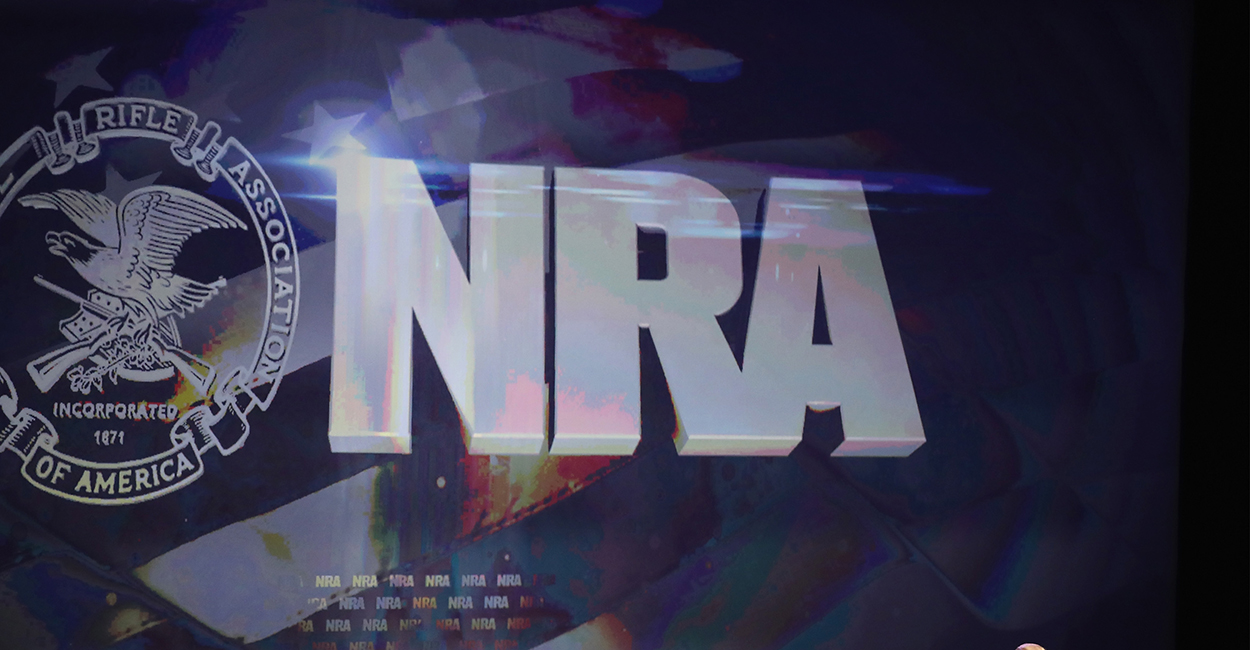
Guns, Germs, and Speech: Unanimous Supreme Court Sides With NRA in First Amendment Case
Favicon 
www.dailysignal.com

Guns, Germs, and Speech: Unanimous Supreme Court Sides With NRA in First Amendment Case

What do epidemiologist Martin Kulldorff and the National Rifle Association have in common? More than is first apparent. Both advocate for views unpopular with left-wing politicians, a “herd immunity” approach to COVID-19 in the doctor’s case and gun ownership in the NRA’s.  Because of their views, both had their dealings with third parties curtailed by government threats. Both responded by filing cases that were argued before the Supreme Court on the same day. And both asked the high court to hold that the government’s ability to speak doesn’t vest it with power to suppress disfavored views. On Thursday, the Supreme Court decided one of those cases, National Rifle Association v. Vullo, less than two months after it was argued. In a surprise to many, Justice Sonia Sotomayor wrote the unanimous opinion ruling in the NRA’s favor. Although the case involved the Second Amendment’s most visible advocates, the case at its core was about the Constitution’s First Amendment protections. And while interesting in its own right, one can’t help but look through the decision for clues forecasting the high court’s still-pending ruling in Dr. Kulldorff’s case, Murthy v. Missouri.   In 2017, Maria Vullo, head of New York’s Department of Financial Services, launched investigations into insurers that did business with the National Rifle Association. Certain NRA-endorsed insurance programs had violated New York state law, but after the 2018 mass shooting at a high school in Parkland, Florida, Vullo and then-New York Gov. Andrew Cuomo leveraged public outrage with the threat of regulatory penalties to get insurers to cut all business ties with the NRA. In private meetings, Vullo stated that her department would cease investigating infractions—many unrelated to the NRA —if the insurers cut ties with the gun rights advocacy organization. Several insurers promptly agreed to end relationships and not enter new ones with the NRA.  The NRA sued, alleging that the Department of Financial Services coerced the insurers because of its pro-gun advocacy. That, the NRA alleged, was censorship and retaliation in violation of the First Amendment.  Although the trial court let the case proceed, the 2nd U.S. Circuit Court of Appeals dismissed the NRA’s claims, reasoning that Vullo’s exchanges with insurers were legitimate regulatory activity and permissible government speech. The Supreme Court reversed the 2nd Circuit with a resounding 9-0 vote. Writing for the court, Sotomayor explained that officials such as Vullo could criticize the National Rifle Association and penalize legitimate infractions, but they could not wield the threat of investigations to penalize the NRA for disfavored speech. The principle is not new, dating back at least to the high court’s 1963 decision in Bantam Books Inc. v. Sullivan, but its application depends on several factors—the official’s authority, tone, reference to consequences, the recipient’s response—none of which are dispositive.   The 2nd Circuit’s error was assessing each of the NRA’s allegations in isolation, rather than taking a comprehensive view of the pressure Vullo exerted on the insurers. The Supreme Court had no difficulty finding that the NRA’s complaint as a whole alleged threats amounting to unlawful coercion, retaliation, or both. Vullo not only communicated her dislike of the NRA to the insurers she regulates, she also made clear that her department would pursue a host of unrelated investigations against them unless they ceased to do any business with the gun rights organization. And as an agency head, she had the authority to make the threats a reality. That holding is a win for the NRA and broad First Amendment protections. But it is far from clear that the decision here portends a similar outcome in the Murthy case. Although similar in substance, the NRA’s case reached the Supreme Court in an earlier procedural posture where courts must credit a plaintiff’s well-pleaded allegations. The Murthy plaintiffs, by contrast, have had the benefit of fact discovery and therefore have the heavier burden of offering evidence that proves their allegations.  In the NRA’s case, a deputy U.S. solicitor general argued that the 2nd Circuit was wrong to find no coercion. Her office argued that same day in Murthy that when White House officials spent months berating Facebook’s and Twitter’s content moderators about supposed disinformation, those officials were merely attempting to persuade. It would not be surprising for the Supreme Court to find that those officials don’t have the same direct authority to punish social media companies that Vullo plainly had over insurance companies. The Murthy plaintiffs also face a difficulty that the National Rifle Association doesn’t: ongoing injury. The NRA has an ongoing injury because the organization’s former insurers refuse to resume business dealings. Meanwhile, counsel for the Murthy plaintiffs had difficulty convincing the justices during oral argument that his clients are or will be the subject of future censorship.  Still, there are some hopeful signs. In her opinion, Sotomayor affirmed that “a government official cannot do indirectly what she is barred from doing directly: A government official cannot coerce a private party to punish or suppress disfavored speech on her behalf.”  Sotomayor acknowledged concerns present in both cases when the government attacks disfavored speech through a third party: This approach, she wrote, “allows government officials to be more effective in their speech-suppression efforts because intermediaries will often be less invested in the speaker’s message and thus less likely to risk the regulator’s ire.”  And although political accountability can check certain forms of government coercion, Sotomayor wrote, when the “government official makes coercive threats in a private meeting behind closed doors, the ‘ballot box’ is an especially poor check on that official’s authority.” Give credit where it’s due: Sotomayor’s diagnosis is sound. Let’s hope that when the Supreme Court grapples with those issues in Murthy v. Missouri, the diagnosis remains the same and the treatment will not be withheld.    The post Guns, Germs, and Speech: Unanimous Supreme Court Sides With NRA in First Amendment Case appeared first on The Daily Signal.
Like
Comment
Share
Reclaim The Net Feed
2 yrs

Tribunal Hears Case of Dismissed Christian Lecturer’s Homosexuality Remarks
Favicon 
reclaimthenet.org

Tribunal Hears Case of Dismissed Christian Lecturer’s Homosexuality Remarks

If you're tired of censorship and dystopian threats against civil liberties, subscribe to Reclaim The Net. Dr. Aaron Edwards, a Christian lecturer, was dismissed from Cliff College, a Methodist institution in Derbyshire, England, after posting his religious views on homosexuality on social media, leading to student complaints about feeling “unsafe.” An employment tribunal heard the details of the case, where Dr. Edwards, who had worked at the college for seven years, defended his stance and actions. In February 2023, Dr. Edwards posted on social media: “Homosexuality is invading the Church. Evangelicals no longer see the severity of this b/c they’re busy apologising for their apparently barbaric homophobia, whether or not it’s true. This is a ‘Gospel issue’, by the way. If sin is no longer sin, we no longer need a Saviour.” Another post followed, asserting, “The acceptance of homosexuality as ‘not sinful’ is an invasion upon the Church, doctrinally. This is not controversial. The acceptance is controversial. Most of the global Church would agree. It is not homophobic to declare homosexuality sinful.” These posts triggered complaints from three female students, who claimed they felt “unsafe.” Despite this, Dr. Edwards maintained that his views were consistent with those he had shared in various academic and religious contexts, including blogs, podcasts, and sermons. He argued that the college was aware of his views long before the controversy arose. Following an investigation, Dr. Edwards was accused of homophobia and bringing the college “into disrepute,” leading to his suspension and subsequent dismissal in March 2023. He is now pursuing a legal claim against Cliff College for harassment, discrimination, and unfair dismissal, seeking damages, compensation, and reinstatement. During the tribunal, Dr. Edwards emphasized that his tweet was made amidst a significant debate within the Church of England regarding same-sex blessings. He expressed that he intended to uphold what he believes to be the truth in a society where such views are increasingly challenged. The tweet garnered significant attention but Dr. Edwards stood by his statements, asserting that they were academically defensible and aligned with his professional and religious convictions. Dr. Edwards criticized the college for its lack of support during the backlash, highlighting that no students had previously expressed concerns about his views during his tenure. He described the college’s response on Twitter as a public betrayal without prior consultation. If you're tired of censorship and dystopian threats against civil liberties, subscribe to Reclaim The Net. The post Tribunal Hears Case of Dismissed Christian Lecturer’s Homosexuality Remarks appeared first on Reclaim The Net.
Like
Comment
Share
Reclaim The Net Feed
2 yrs

Ottawa’s Hidden Agenda: Bill C-26 Aims for Secret Surveillance Backdoors
Favicon 
reclaimthenet.org

Ottawa’s Hidden Agenda: Bill C-26 Aims for Secret Surveillance Backdoors

If you're tired of censorship and dystopian threats against civil liberties, subscribe to Reclaim The Net. Canada’s Bill C-26, currently making its way through the country’s parliament, includes “secretive” provisions that can be used to break encryption, researchers are warning. As far as its sponsors are concerned, Bill C-26 is cyber security legislation intended to amend the Telecommunications Act and other related acts. But the way the Telecommunications Act will be amended is by allowing the government to force companies operating in that industry to include backdoors in networks protected by encryption, a pair of University of Toronto’s Citizen Lab researchers suggest. In case the government decides its surveillance needs require altering “the 5G encryption standards that protect mobile communications” – then this can also be done, should C-26 become law. This raises several important questions, such as whether the bill’s purpose might be precisely to undermine encryption, considering that the government decided not to include amendments in the text that would prevent this. Another worrying aspect is that given the already lacking level of security in the telecommunications space, the government would be expected to try to fix the existing problems, rather than create new ones, the researchers note. The amendment that could have rectified this situation was proposed last year by the Citizen Lab, while civil society and industry leaders and experts also participated in parliamentary hearings concerning C-26 to recommend restricting what are said to be the draft’s broad powers to prevent “technical changes from being used to compromise the ‘confidentiality, integrity, or availability’ of telecommunication services.” However, these warnings fell on deaf ears, with the bill now progressing through parliament without the recommended changes, and despite MPs stating that facilitating and broadening mass surveillance in Canada was not the motive behind C-26. But, Citizen Lab researchers are warning, that the result will be the government giving itself the power to be the only entity to decide “when, and on what conditions, Canadians deserve security for their most confidential communications – personal, business, religious, or otherwise.” As is the case with any undermining of encryption, the door to people’s online communications that the authorities want to unlock only for themselves, in reality, becomes open to everybody – other governments, hackers, criminals of various descriptions. And when experts warn that weakened encryption makes everybody on the internet much less secure, they mean those government officials who push for this type of change, too. If you're tired of censorship and dystopian threats against civil liberties, subscribe to Reclaim The Net. The post Ottawa’s Hidden Agenda: Bill C-26 Aims for Secret Surveillance Backdoors appeared first on Reclaim The Net.
Like
Comment
Share
Hot Air Feed
Hot Air Feed
2 yrs

What's Next?
Favicon 
hotair.com

What's Next?

What's Next?
Like
Comment
Share
Hot Air Feed
Hot Air Feed
2 yrs

Does the Trump verdict change your vote in November?
Favicon 
hotair.com

Does the Trump verdict change your vote in November?

Does the Trump verdict change your vote in November?
Like
Comment
Share
Science Explorer
Science Explorer
2 yrs

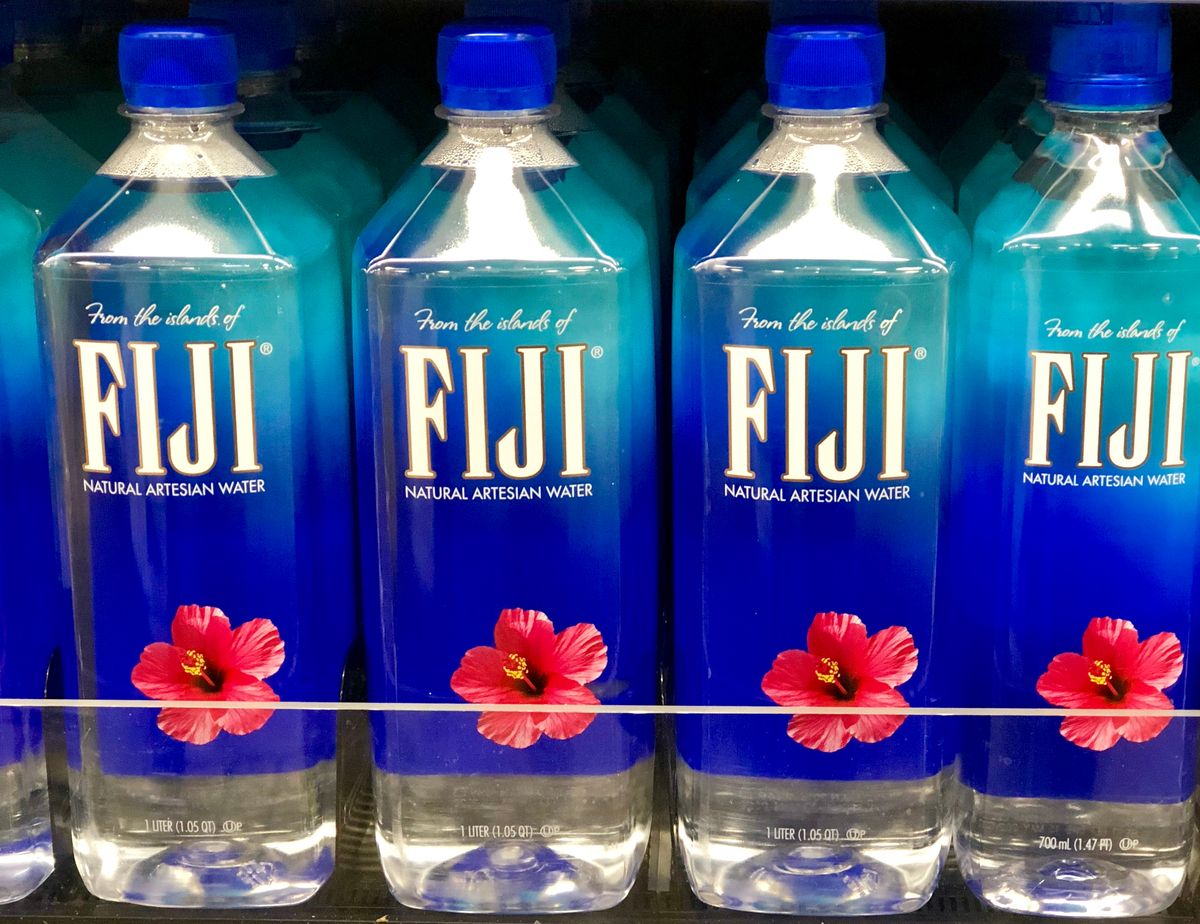
What Is Manganese? All You Need To Know About The Mineral Behind The Fiji Water Recall
Favicon 
www.iflscience.com

What Is Manganese? All You Need To Know About The Mineral Behind The Fiji Water Recall

The US Food and Drug Administration (FDA) recently announced a recall of nearly 79,000 cases of Fiji bottled water, after bacterial contamination and high levels of manganese were discovered. Bacteria in your water is clearly something best avoided – but what’s all this about manganese? What is this vital mineral, and what can happen to the body if you have too much? Here’s all you need to know.What is manganese?If you remember your periodic table, you’ll know that manganese is one of the transition metals, sitting neatly sandwiched between chromium and iron. It’s a hard, brittle metal that is abundant in our planet’s crust, and is essential to all known living organisms.  Manganese is an example of a trace mineral. These are substances that the human body needs, but only in very small amounts. Others include zinc, iodine, and selenium.In nature, manganese usually occurs in one of several different ores.Image credit: Sunshine Seeds/Shutterstock.comManganese is involved in a number of functions within the body, including antioxidant activity, wound healing, and bone development. It’s also found in a number of foods, so it’s not too difficult for most of us to ensure we’re getting enough – sources include peanut butter, spinach, and dark chocolate (yes please).But as with everything diet-related (even plain old water), you can have too much of a good thing.What happens if you have too much manganese?The risks associated with overexposure to manganese are most often linked to people working in the steel industry or as welders. In the course of their work, these people may be exposed to airborne manganese dust, which if inhaled can irritate the lungs and cause a condition known as “metal fume fever”. The pattern of symptoms tends to wane over the weekend, when people aren’t working, and spike again at the start of the working week, and can include fever, muscle pain, and wheezing.Excessive exposure to manganese over a period of time can also result in neurological symptoms that may become permanent, a condition known as manganism. These can include difficulty walking, muscle spasms, and hallucinations.Presumably, the FDA isn’t concerned about people inhaling their Fiji water. However, consuming too much manganese in food and drink can also cause problems.For adults aged 19 and above, US health authorities say an adequate daily intake of manganese is 2.3 milligrams for males and 1.8 milligrams for females. In children, these values are much lower, as kids’ developing brains are thought to be more sensitive to its effects. Consuming excess manganese orally can lead to similar neurological complications to inhaling manganese dust. “There is also an accumulating body of evidence suggesting that exposure to excess levels of manganese in drinking water (≥0.2 mg/L) may lead to neurological deficits in children, including poor school performance, impaired cognitive function, abnormal performance on neurobehavioral tests, and increased oppositional behavior and hyperactivity,” reads a report from the Agency for Toxic Substances and Disease Registry.The reports mentions that the studies we currently have on this often have “limitations that preclude firm conclusions”, but states that the overall evidence does suggest that there could be health risks from consuming a product contaminated with excess manganese.Such as bottled water, for instance.What’s going on with this product recall?The FDA has reported that Fiji has voluntarily recalled numerous 24-bottle cases of its 500-milliliter (17-ounce) bottles of water. This came after tests revealed higher than acceptable levels of manganese in addition to three genera of bacteria. The recall was originally issued in March 2024, but has hit the news now after an update from the FDA to clarify it as a Class III recall. The cases affected were sold via Amazon, and all had production dates in November 2023.The notice, which reportedly encompasses some 1.9 million individual bottles was declared “out of an abundance of caution”, according to one brand spokesperson who talked to Newsweek. “It is also important to note that there is NO RISK of high manganese exposure from the levels of manganese in FIJI Water,” they added.The Environmental Protection Agency (EPA) established a non-mandatory recommendation that manganese levels in drinking water should not exceed 0.05 milligrams per liter, but there’s currently no requirement for testing for manganese in the water system. Some campaigners have expressed concern about the potential impact of exposure to manganese through drinking water, with some saying they have to filter their tap water due to visible black or brown contamination.It's not clear exactly how much manganese was detected in the batches of Fiji water, but the company is stressing that there is no risk to health. Given that the FDA’s own classification of the recall indicates “a situation in which use of, or exposure to, a violative product is not likely to cause adverse health consequences,” it seems likely that the levels were low. The recalled products have now been reclaimed after customers were contacted directly. So, if you’ve not had a message, you can feel confident that this recall doesn’t affect you. Plus, now you know loads about manganese, so it’s a win-win really. All “explainer” articles are confirmed by fact checkers to be correct at time of publishing. Text, images, and links may be edited, removed, or added to at a later date to keep information current. The content of this article is not intended to be a substitute for professional medical advice, diagnosis, or treatment. Always seek the advice of qualified health providers with questions you may have regarding medical conditions. 
Like
Comment
Share
Science Explorer
Science Explorer
2 yrs

What Was The Largest Ape To Ever Live?
Favicon 
www.iflscience.com

What Was The Largest Ape To Ever Live?

The largest species of great ape to ever walk the Earth was Gigantopithecus blacki. Standing over 3 meters (nearly 10 feet) tall and weighing up to 300 kilograms (661 pounds), the extinct species would have easily dwarfed the gorillas, orangutans, chimps, and bonobos of today. What is a Gigantopithecus?G. blacki is sometimes called the “real-life King Kong” owing to its gargantuan size, although it is more closely related to orangutans from the Ponginae family. If you’ve seen the 2016 remake of The Jungle Book, the figure of King Louie is said to have been based on Gigantopithecus.“The Jungle Book basically made him a large orangutan. We don't know how much G. blacki would have looked like an orangutan but it was definitely a Pongine, so in the right family. As for the orange fur – we really don't know,” Associate Professor Kira Westaway, a researcher at Macquarie University who has researched the extinction of G. blacki, told IFLScience in January 2024.Part of the reason we know so little about this prehistoric giant is the lack of physical remains; the only evidence of their existence is a few thousand fossilized teeth and four jawbones. Scientists have deduced the scale of Gigantopithecus based on the size and proportion of these remains compared to those of other great apes that still live on planet Earth today. The first evidence of Gigantopithecus came to light in 1935 when anthropologist Ralph von Koenigswald found an unusual specimen in a traditional Chinese drugstore in Hong Kong. Labeled as "dragon teeth," von Koenigswald discovered the molars belonged to an unidentified species of extinct ape he called Gigantopithecus.People used to think Gigantopithecus was member of the human line of the great ape family, but it is now thought to be closely related to orangutans.Image credit: Clovis Wood Photography/UnsplashWhen did Gigantopithecus go extinct?The current consensus says that Gigantopithecus lived in eastern Asia around southern China from roughly 2 million years ago until it fell into extinction during the Early to Middle Pleistocene, sometime between 300,000 years ago and 100,000 years ago. The extinction of Gigantopithecus was most likely caused by climatic change in the region, according to a study published in January 2024. Around 600,000 years ago, the environment of East Asia became more variable due to the increase in the strength of the seasons, causing a change in the types of plants growing in the forest.The more seasonal climate created dry periods when it was difficult to find to find fruit. Orangutans were able to switch to eating other “fallback food” like shoots, leaves, flowers, nuts, seeds, and insects, but Gigantopithecus struggled to make the transition. Ultimately, they were not mobile enough and too inflexible to stomach the change.The real Bigfoot?It's often been suggested that Gigantopithecus may have been the inspiration for the ape-like creatures that inhabit humans’ folklore, such as Bigfoot, the Yeti, and the Sasquatch.There are a handful of folks who believe Gigantopithecus never fell into extinction. They posit that the animal crossed the Bering Land Bridge into North America, just like prehistoric humans did, and became known as the Sasquatch. Of course, there’s no real evidence this adventure ever occurred, nor any evidence that the Sasquatch has ever existed.
Like
Comment
Share
Science Explorer
Science Explorer
2 yrs

First Patient Gets mRNA Bowel Cancer Vaccine In England, With Thousands More Coming
Favicon 
www.iflscience.com

First Patient Gets mRNA Bowel Cancer Vaccine In England, With Thousands More Coming

There’s great news today for cancer patients in England, as thousands are set to be fast-tracked onto a new program that will give them access to experimental personalized vaccines. The initiative, called the Cancer Vaccine Launch Pad, aims to get more patients onto trials of mRNA vaccines against their specific cancer, in the hopes of accelerating development of these potentially game-changing treatments.The first patient to receive a shot under the new scheme was Elliot Phebve, a 55-year-old university lecturer and father-of-four who was diagnosed with colorectal cancer after routine testing. After surgery to remove the tumor and part of the intestine, Phebve has been undergoing chemotherapy alongside being invited to take part in the trial.“Taking part in this trial tallies with my profession as a lecturer, and as a community-centred person. I want to impact other people’s lives positively and help them realise their potential,” Phebve said in a statement.The hospital where Phebve received the experimental vaccine is one of 30 across England that have signed up for the Cancer Vaccine Launch Pad, with more to follow soon.We’ve seen the potential of mRNA vaccine technology during the COVID-19 pandemic, but the big advantage when it comes to cancer is that these vaccines can be personalized to a specific tumor from a specific patient, giving them the best chance at effectiveness. A landmark Phase 3 trial of a melanoma vaccine was launched recently, followed shortly after by reports of positive early results of a brain cancer vaccine in both humans and our canine best buds.The Cancer Vaccine Launch Pad will hopefully allow more patients access to this new technology, streamlining the process of assessing eligibility and inviting patients onto a suitable trial.“The NHS [the UK’s National Health Service] is in a unique position to deliver this kind of world-leading research at size and scale, and as more of these trials get up and running at hospitals across the country, our national match-making service will ensure as many eligible patients as possible get the opportunity to access them,” explained NHS chief executive Amanda Pritchard.An mRNA vaccine seeks to prime a patient’s immune system to produce antibodies against proteins that are known to play a part in their cancer – this information is obtained via testing of tumor tissue. When used in conjunction with surgery, radiotherapy, and other drug treatments, as deemed appropriate by oncologists, it is hoped these vaccines will help the body clear any residual tumor cells and reduce the risk of recurrence.Iain Foulkes, Executive Director of Research and Innovation at charity Cancer Research UK, commented, “Clinical trials like this are vital in helping more people live longer, better lives, free from the fear of cancer.”The UK government is partnering with vaccine manufacturers BioNTech, pledging to provide 10,000 patients with precision cancer treatment by 2030. There are plans to start broadening the program to other cancer types including pancreatic cancer, which is the 10th most common type in the UK but the fifth most common cause of cancer death.  Vaccines for cancer are looking more and more realistic, thanks to a succession of breakthroughs and positive trial results. Phebve summed up what a new treatment option could mean for the almost half of us who are projected to be affected by cancer within our lifetimes.“Through the potential of this trial, if it is successful, it may help thousands, if not millions of people, so they can have hope, and may not experience all I have gone through. I hope this will help other people.”
Like
Comment
Share
Pet Life
Pet Life
2 yrs

Sad dog saved from shelter reaches over to rescuer and ‘thanks’ her in sweetest way
Favicon 
animalchannel.co

Sad dog saved from shelter reaches over to rescuer and ‘thanks’ her in sweetest way

Shanti’s journey began with hardship, as she was initially owned by someone who fell ill and could no longer care for her. Fortunately, the owner’s mother stepped in, taking responsibility for Shanti. Despite this change, Shanti’s life remained tumultuous. She was eventually rescued in Mexico and brought to the US by a rescue organization in... The post Sad dog saved from shelter reaches over to rescuer and ‘thanks’ her in sweetest way appeared first on Animal Channel.
Like
Comment
Share
The Blaze Media Feed
2 yrs

Leftists are melting down over Florida's civics lessons on America's Judeo-Christian heritage
Favicon 
www.theblaze.com

Leftists are melting down over Florida's civics lessons on America's Judeo-Christian heritage

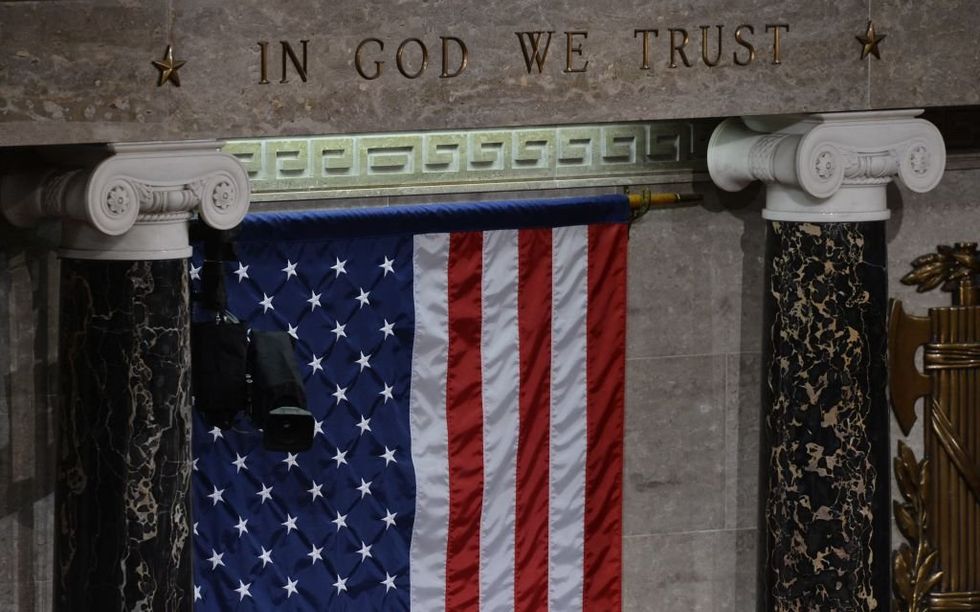
A failed Democratic candidate from Maryland working out of Washington, D.C., has raised the alarm that the Florida Department of Education might be providing some teachers and students with instruction about some of the many ways America has been shaped and influenced by Christianity. Radicals still grieving the elimination of critical race theory and LGBT propaganda from the Florida curriculum have seized upon Judd Legum's report as an opportunity to once again concern-monger about so-called "Christian nationalism" and attack the DeSantis administration. The LGBT activist publication Them, for instance, ran an article entitled, "Under Ron DeSantis, Florida Teacher Trainings Included Christian Nationalist Propaganda," noting, "As concerning as it is that Christian nationalists are trying to warp curricula from the inside, there's a reason they're targeting teachers: education works." The Freedom from Religion Foundation took a break from attacking Supreme Court Justice Samuel Alito online to note, "We will be working to debunk these Christian nationalist lies and to protect Florida's students from indoctrination." Legum appears to have misled his fellow travelers with his report, which Gov. Ron DeSantis' office has called "nonsense" — not only with his framing of the curricular materials but by his omission of what else was being taught. Not only do the offending slides appear to be accurate, they are part of a broader unit identifying other historic influences underlying America's founding ideas on law and government. Background Sociologists Samuel Perry and Andrew Whitehead defined "Christian nationalism" in their 2020 book, "Taking America Back for God: Christian Nationalism in the United States," as "a cultural framework that blurs distinctions between Christian identity and American identity, viewing the two as closely related and seeking to enhance and preserve their union." 'White Christian nationalism is a social construction the meaning of which depends on who is doing the constructing.' It is easy to blur the distinction, assuming a distinction can be made, given the extent to which America, like the West in general, has historically been shaped and influenced by Christianity — an influence Alexis de Tocqueville and countless keen observers have noted. Also, there is great potential for great overlap, given that roughly two-thirds of Americans today are Christians. Kenneth Woodward, the former editor of Newsweek's religion section, recently highlighted in First Things that various exponents have given "Christian nationalism" an identitarian character — calling it "white Christian nationalism," distinct from "black Christian nationalis[m]," which Salon has ostensibly given a pass — and associated it with various "liberal mortal sins" such as support for having children, straight marriage, and "patriarchy." "White Christian nationalism is a social construction the meaning of which depends on who is doing the constructing," wrote Woodward. "Not at all obvious is what same-sex marriage, patriarchy, and encouraging couples to have children (pronatalism) have to do with being white or Christian or nationalist." Democrats and their allies in the liberal media and activists have seized upon this catch-all term to describe their ideological foes who also happen to be Christian. For instance, the Public Religion Research Institute characterized Christian nationalism last year as a "a major threat to the health of our democracy," suggesting that over 51% of Americans either sympathize with or support Christian nationalism. Agreement with these statements apparently make one a Christian nationalist: "The U.S. government should declare America a Christian nation" — as the Supreme Court did in Church of the Holy Trinity v. United States. "U.S. laws should be based on Christian values." "If the U.S. moves away from our Christian foundations, we will not have a country any more." "Being Christian is an important part of being truly American." "God has called Christians to exercise dominion over all areas of American society." Educating educators In December 2019, Florida Gov. Ron DeSantis (R) tasked former Department of Education Commissioner Richard Corcoran with implementing a new civil literacy requirement for high school students, which came to be known as the Civics Literacy Excellence Initiative. Extra to helping students with this initiative, the Florida DOE also offers learning opportunities to educators. There is, for instance, a three-day summer civics professional learning course. Judd Legum, a leftist who used to write for ThinkProgress, recently obtained training materials from one such three-day course allegedly presented last summer, including "a presentation on the 'Influences of the Judeo-Christian Tradition' on the founding of the United States." "Training materials produced by the Florida Department of Education direct middle and high school teachers to indoctrinate students in the tenets of Christian nationalism, a right-wing effort to merge Christian and American identities," wrote Legum. "Thousands of Florida teachers, lured by cash stipends, have attended trainings featuring these materials." Legum noted that in one slide obtained through a public records request executed by the liberal advocacy group Florida Freedom to Read Project, teachers were told that "Christianity challenged the notion that religion should be subservient to the goals of the state." — (@) Another offending slide quoted George Washington's Farewell Address, in which the archetypal American patriot noted, "Of all the dispositions and habits which lead to political prosperity, religion and morality are indispensable supports." The slide also quoted Rev. Dr. Peter Lillback, president and professor of historical theology and church history at Westminster Theological Seminary, as writing, "To be free, you need a republic. To have a republic, you need a constitution. To have a constitution, you need morality (virtue). To have morality (virtue), you need religion." Among the slides that evidently didn't sit well with Legum were two detailing various Judeo-Christian traditions and beliefs that have influenced the United States, such as the notions that government is necessary on account of man's sinful, fallen state; that man is created equal and in the image of God; and that humans, Americans in particular, are "endowed by their Creator with certain unalienable Rights, that among these are Life, Liberty, and the pursuit of happiness." Legum had so-called "Christian nationalism" expert Andrew Whitehead weigh in on the slides. Whitehead suggested the purpose of the training was to fuse "a very particular expression of Christianity with American civic life that the government upholds and vigorously defends" and to altogether advance a key goal of Christian nationalism. Whitehead further said the slides were ahistorical because while the Declaration of Independence references a "creator," it does not explicitly mention Christ and because George Washington did not regularly receive communion. Amanda Tyler, the executive director of the Baptist Joint Committee for Religious Liberty — another supposed expert in "Christian nationalism" — told Legum the presentation focuses "on the mythological founding of the country as a Christian nation, this use of cherry-picked history … is very much a marker of Christian nationalism." What Legum failed to mention was that this civics lesson on "how the Judeo-Christian ethical ideas of justice, individual worth, personal responsibility and the rule of law influenced America's constitutional republic" was part of a broader unit on the "influences of ancient Greece, ancient Rome and the Judeo-Christian tradition on America's constitutional republic." 'That "report: is a bunch of nonsense.' Extra to learning about the influence of biblical concepts on a predominantly Christian country, teachers and students apparently also learn about Rome's influence on American civic participation, republicanism, representative government, rule of law, or separation of powers, and the influence of ancient Greece on American legislative bodies, polis, voting rights and written constitution. Bryan Griffin, Gov. DeSantis' communications director, told Blaze News, "That 'report' is a bunch of nonsense." 'And, of course, American history is inextricable from the positive influence of the Judeo-Christian tradition.' "Florida under Governor Ron DeSantis has stopped the left from utilizing our education system for their campaign of radical indoctrination, and they can’t stand it," said Griffin. "We're refocusing education on core subjects like reading, writing, and math, and leaning into American history and civics, which help students become informed, prepared, and engaged members of society. And, of course, American history is inextricable from the positive influence of the Judeo-Christian tradition." "Our efforts in Florida have made the state #1 in education and #1 in higher education (for the eighth year in a row)," continued Griffin. "This civics training program is a voluntary certification for teachers and comes with a $3,000.00 stipend upon completion. We encourage every educator in the State of Florida to take advantage of it." Chad Ragsdale, academic dean at Ozark Christian College, tweeted, "This whole thread is revealing but not in the way that Judd believes. Mostly it reveals yet again that 'Christian nationalism' has become a vacuous term used for nakedly ideological purposes." "I would genuinely encourage anyone to read this, just to see for yourself how divorced from reality those on the left are," wrote Mark Hemingway of RealClearInvestigations. "What they fear as 'Christian nationalism' is just an inability to acknowledge basic American history." Woodward concluded his essay on so-called Christian nationalism by noting, "Despite the vagueness of the term 'white Christian nationalism' and the difficulty of identifying its adherents, we are certain to hear a great deal more about the threat it poses to American democracy as the election cycle churns on. ... But what will we hear of the Secularists, who are more numerous, wealthier, much better educated, and more politically active than those who have been labeled WCNs? What we will hear is the sound of silence." Like Blaze News? Bypass the censors, sign up for our newsletters, and get stories like this direct to your inbox. Sign up here!
Like
Comment
Share
Showing 26134 out of 56670
  • 26130
  • 26131
  • 26132
  • 26133
  • 26134
  • 26135
  • 26136
  • 26137
  • 26138
  • 26139
  • 26140
  • 26141
  • 26142
  • 26143
  • 26144
  • 26145
  • 26146
  • 26147
  • 26148
  • 26149

Edit Offer

Add tier


Select an image
Delete your tier
Are you sure you want to delete this tier?

Reviews

In order to sell your content and posts, start by creating a few packages. Monetization

Pay By Wallet

Payment Alert

You are about to purchase the items, do you want to proceed?

Request a Refund