YubNub Social YubNub Social
    Advanced Search
  • Login

  • Night mode
  • © 2026 YubNub Social
    About • Directory • Contact Us • Privacy Policy • Terms of Use • Android • Apple iOS • Get Our App

    Select Language

  • English
Install our *FREE* WEB APP! (PWA)
Night mode
Community
News Feed (Home) Popular Posts Events Blog Market Forum
Media
Headline News VidWatch Game Zone Top PodCasts
Explore
Explore Jobs Offers
© 2026 YubNub Social
  • English
About • Directory • Contact Us • Privacy Policy • Terms of Use • Android • Apple iOS • Get Our App

Discover posts

Posts

Users

Pages

Group

Blog

Market

Events

Games

Forum

Jobs

The Lighter Side
The Lighter Side
2 yrs

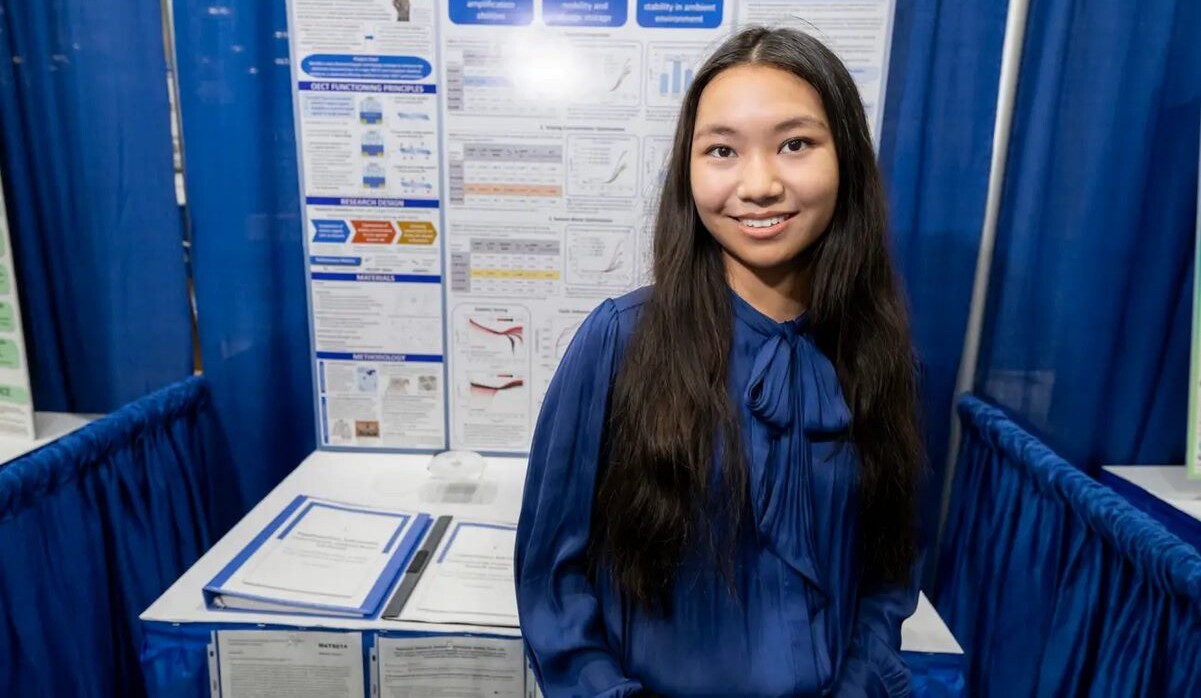
16-year-old Wins $75,000 for Her Award-Winning Discovery That Could Help Revolutionize Biomedical Implants
Favicon 
www.goodnewsnetwork.org

16-year-old Wins $75,000 for Her Award-Winning Discovery That Could Help Revolutionize Biomedical Implants

First prize in the USA’s largest and most prestigious science fair has gone to a 16-year-old girl who found new ways to optimize the components of biomedical implants, promising a future of safer, faster, and longer-lasting versions of these critical devices. It’s not the work of science fiction; bioelectronic implants like the pacemaker have been […] The post 16-year-old Wins $75,000 for Her Award-Winning Discovery That Could Help Revolutionize Biomedical Implants appeared first on Good News Network.
Like
Comment
Share
Science Explorer
Science Explorer
2 yrs

"This Is Not A Place Of Honor": How Do We Warn Of Danger To People Thousands Of Years In The Future?
Favicon 
www.iflscience.com

"This Is Not A Place Of Honor": How Do We Warn Of Danger To People Thousands Of Years In The Future?

In certain places in Japan, there are gigantic slabs of stone, erected centuries ago, that warn of environmental catastrophe.“High dwellings are the peace and harmony of our descendants," one reads. "Remember the calamity of the great tsunamis. Do not build any homes below this point.”Some of the tsunami stones were placed there over 600 years ago, to warn anybody who came across them not to build homes beyond them. Others were placed more recently, like the one mentioned above that was put up in 1933. Built after several major tsunamis across the centuries, the tablets use several different methods of conveying their message. Some list death tolls, others simply tell all who see it to drop everything and get up high after an earthquake.By design, they are supposed to endure through the centuries.“The tsunami stones are warnings across generations, telling descendants to avoid the same suffering of their ancestors,” specialist in the history of natural disasters Itoko Kitahara told the New York Times in 2011.The stones have often been adhered to, and have likely saved many lives from subsequent tsunamis. However, they highlight an interesting problem that we still haven't come up with an ideal solution for: how do you convey danger to your descendants hundreds or even thousands of years in the future?It's not just a hypothetical problem, but something humanity has to address if we want to avoid needless deaths. Nuclear waste can last thousands of years, meaning any warnings we put up around waste storage sites will have to last long enough for our distant descendants to understand them. Simply placing it in a large structure isn't enough, as the pyramids and every other large ancient structure that humanity has seen fit to rummage through over the years will attest. The message would need to survive across all cultural and language barriers that might arrive between now and when some future human stumbles across the nuclear waste in 7000 CE.One idea, explored by Sandia National Laboratories in a 1993 report, is to make the landscape look as menacing as possible, in the apparent hope that humans thousands of years from now still have the NOPE reaction. The report proposed several designs, including a landscape of foreboding rubble made to look like the place had been purposely destroyed, and spikes jutting out of the floor at haphazard angles. One, known as the black hole, aimed to make people uncomfortable in several ways."A masonry slab, either of black Basalt rock, or black-dyed concrete, is an image of an enormous black hole; an immense nothing; a void; land removed from use with nothing left behind; a useless place," the report reads. "It both looks uninhabitable and unfarmable, and it is, for it is exceedingly hot part of the year. Its blackness absorbs the desert’s high sun-heat load and radiates it back. It is a massive effort to make a place that is fearful, ugly, and uncomfortable."Making the place foreboding was only part of the plan. Messages would also be left at the site, with the hope that the terrifying architecture would reinforce that the message was a warning to stay away:"This place is a message... and part of a system of messages... pay attention to it!Sending this message was important to us. We considered ourselves to be a powerful culture.This place is not a place of honor... no highly esteemed deed is commemorated here... nothing valued is here. What is here was dangerous and repulsive to us. This message is a warning about danger.The danger is in a particular location... it increases towards a center... the center of danger is here... of a particular size and shape, and below us.The danger is still present, in your time, as it was in ours. The danger is to the body, and it can kill.The form of the danger is an emanation of energy. The danger is unleashed only if you substantially disturb this place physically.This place is best shunned and left uninhabited."The report suggests that the language should be updated as often as needed, to give future generations the best chance of being able to decipher its contents.This is far from the wackiest idea for how to deal with the problem.In the early 1980s, the Human Interference Task Force attempted to come up with solutions, ready for a nuclear waste storage facility that was proposed to be built near Las Vegas. In true Vegas style, they came up with some strange and highly impractical ideas.Of these, the Atomic Priesthood is clearly one of the coolest. Proposed by linguist Thomas Sebeok, the idea was that an "atomic priesthood" would be appointed by a council, who would then replace themselves as they grow old and retire and/or die. The priesthood – actually comprised of experts rather than the religious folk – would be responsible for passing on knowledge down the generations, partly through "artificially created and nurtured ritual-and-legend, which would be a 'false trail' for the uninitiated, who would be steered away from the hazardous site for reasons other than the scientific knowl[e]dge." This would be used to ward off people visiting the sites, without giving away what they contain, should any nefarious actors come across it.They would create an annual ritual, and the legend of what lies in these locations would be repeated, warding people off. In the meantime, as a backup, they would update any messages at the burial site every three generations or so, to ensure that it could be understood.A more simplified version of this from Vilmos Voigt (sadly lacking priests) proposed that translations of signs near the site be updated every now and then.Perhaps the strangest of solutions (and that's saying something, given that a previous paragraph involved atomic priests) was proposed by author Françoise Bastide and semiotician Paolo Fabbri. They believed that the most sensible course of action was to breed "radiation cats", that would change color when they came near radioactive material.That was the easy bit. Like with the priesthood, the plan would be to install cultural legends and myths around cats that change colorAEON VIDEOS l The Ray Cat Solution from Benjamin on Vimeo.The myths and fairy tales (why not) would then be passed on through poetry, paintings, and music. So hopefully when someone years from now came across a glowing cat, they would know to run like hell. Which, to be fair, you would probably do today as well.Less bizarre ideas involved making sure that people could only access the sites using high-tech solutions, making it unlikely that people would stumble across it, figuring that anybody capable of getting in would have the equipment necessary to detect radiation as well. But it's certainly less fun than stumbling across a field of spikes to an ominous message, only to be confronted by a glowing cat and a menacing-looking science priest.
Like
Comment
Share
Science Explorer
Science Explorer
2 yrs

Manhattanhenge Is Coming: What It Is And How To See It
Favicon 
www.iflscience.com

Manhattanhenge Is Coming: What It Is And How To See It

The Met Gala? That's old news. The most Instagrammable event in Manhattan during May is something anyone can get a ticket to if they happen to be in the city, thanks to an unexpected partnership between the Sun and the street grid known as Manhattanhenge.What is Manhattanhenge?Yes, Manhattanhenge sounds like a made-up word and yes, that’s because it is – but the phenomenon itself is definitely real. It’s a bi-annual event when the sunset lines up with the Manhattan street grid, meaning anyone who happens to be on any street heading east and west – at least those with a clear view down towards New Jersey across the Hudson River – is met with an esthetically pleasing sunset.Why does it happen?If that seems reminiscent of what goes on at Stonehenge, you’re thinking along the right lines.The term “Manhattanhenge” was coined by famed astrophysicist Neil deGrasse Tyson. He named it so because the phenomenon reminded him of the prehistoric monument, where the stones are aligned towards the rising Sun on the summer solstice and the setting Sun on the winter solstice.Whilst there’s some debate over whether Stonehenge was designed like that with some sort of purpose, Manhattanhenge is just a coincidence – even though it would make a great conspiracy theory if it weren’t. The island of Manhattan is tilted roughly 30 degrees east of true north and when authorities were making designs for the street grid, it was tilted in the same way to line up with this.“But doesn’t the Sun set in the west?”, we hear you ask. That’s actually a generalization; the Sun only sets due west twice a year, on the spring and fall equinoxes. The rest of the time, it sets somewhere north or south of due west on the horizon. Since the street grid is at an angle and not lined up from true north to south, that’s why Manhattanhenge happens around late May and mid-July, and not on the equinoxes. How can I see it this year?There are four options for viewing Manhattanhenge this year depending on what you want to see – and if you miss out on those this month, there’s more in July.If you want to view just the half Sun on the grid, that’s happening on May 28 at 8:13 pm ET and July 13 at 8:21 pm ET. For the Manhattanhenge effect in its full glory, head to the island on May 29 at 8:12 pm ET or July 12 at 8:20 pm ET.As for the best place to see it, any east/west street with a view to New Jersey will do, but Tyson recommends some of the most spectacular views to be on 14th, 23rd, 34th, 42nd, and 57th Street.
Like
Comment
Share
Strange & Paranormal Files
2 yrs

Astronomers seek signs of alien terraforming on ‘Snowball Earths’
Favicon 
anomalien.com

Astronomers seek signs of alien terraforming on ‘Snowball Earths’

Astronomers are setting their sights on a new target in the search for extraterrestrial life: terraformed “Snowball Earths.” These planets, which may have undergone deliberate climate engineering, could offer unique opportunities to find signs of alien civilizations. The concept stems from Earth’s own history when our planet experienced global glaciation events known as “Snowball Earth” periods. These frozen epochs, occurring hundreds of millions of years ago, saw Earth’s surface entirely or nearly entirely covered in ice. Life, however, persisted in refuges such as volcanic hotspots and areas with high geothermal activity, reports forbes.com. Scientists believe that if alien civilizations exist and have the technological prowess to terraform their planets, they might choose to transform these frozen worlds into habitable environments. This terraforming could potentially leave detectable signatures for us to observe from Earth. The idea is to look for exoplanets that appear to have been artificially warmed, leading to partial deglaciation. Detecting such changes would involve identifying unusual patterns in a planet’s climate or atmosphere that couldn’t be easily explained by natural processes alone. For instance, a planet with a significant portion of its ice cover mysteriously melted away might suggest the influence of advanced technology. These signs could be detected through various astronomical techniques, including the study of a planet’s atmospheric composition and surface temperatures. The search for terraformed Snowball Earths represents an exciting frontier in the broader quest to find extraterrestrial life. Traditionally, astronomers have focused on finding Earth-like planets in the habitable zones of their stars, where liquid water could exist naturally. However, this new approach broadens the scope by considering planets that might not naturally support life but have been modified by intelligent beings to become habitable. The study of terraformed Snowball Earths is still in its early stages, but it holds great promise. This line of research is part of a growing field known as technosignature searches. Unlike biosignatures, which look for signs of life itself, technosignatures seek evidence of advanced technologies used by alien civilizations. This includes everything from the atmospheric pollutants of industrial activity to large-scale structures like Dyson spheres. The post Astronomers seek signs of alien terraforming on ‘Snowball Earths’ appeared first on Anomalien.com.
Like
Comment
Share
Classic Rock Lovers
Classic Rock Lovers  
2 yrs ·Youtube Music

YouTube
Bon Jovi, Metallica, ACDC, U2, Queen, Aerosmith, Nirvana | Classic Rock 70s 80s 90s Full Album
Like
Comment
Share
The Blaze Media Feed
2 yrs

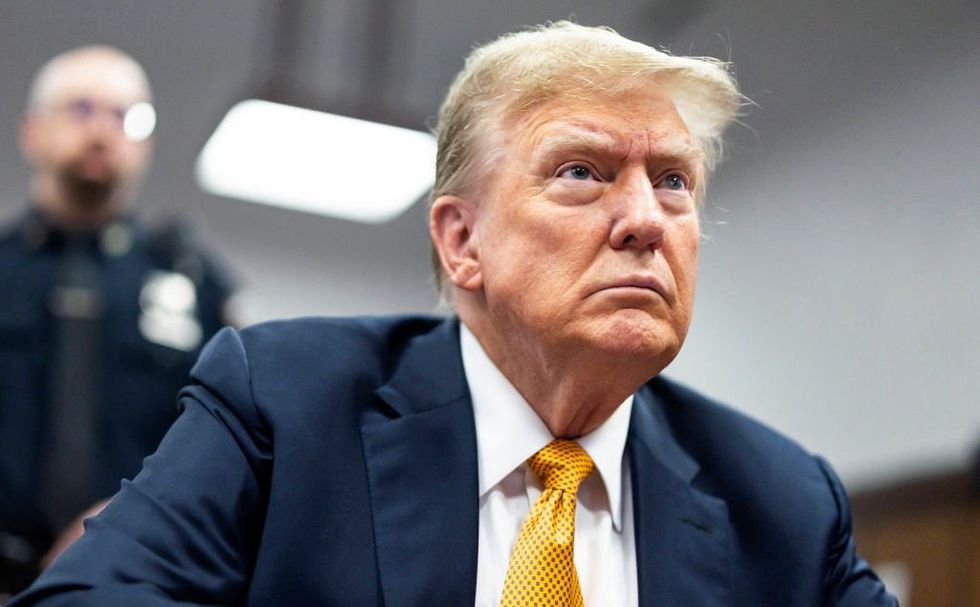
Blaze News original: Bragg's team failed to prove Trump's guilt in New York case, legal experts say
Favicon 
www.theblaze.com

Blaze News original: Bragg's team failed to prove Trump's guilt in New York case, legal experts say

Manhattan District Attorney Alvin Bragg filed 34 felony counts of falsifying business records against former President Donald Trump, but the prosecution's case fails to hold water, several legal experts told Blaze News. What's the background? Bragg's case hinged on testimony from Trump's former lawyer, Michael Cohen, a convicted felon, admitted thief, and repeat liar. According to Cohen, he paid porn actress Stormy Daniels $130,000 in so-called hush money to keep quiet about an alleged affair with the former president. Cohen claimed that Trump instructed him to execute the settlement agreement with Daniels. 'They haven't even alleged a crime here.' Trump paid Cohen $35,000 monthly in 2017, a total of $420,000. The checks made out to Cohen, Trump's personal attorney at the time, were marked as legal expenses. However, Cohen claimed that the funds were reimbursements for a number of costs, including the $130,000 settlement payment to Daniels, $50,000 for technology services to RedFinch, and $180,000 for estimated taxes, and a $60,000 bonus. Will Chamberlain, with the Article III Project, told Blaze News that the New York criminal case against Trump "never should have been brought," explaining that the prosecution's arguments rely "on the testimony of a convicted felon, admitted perjurer, and disbarred attorney." "[Cohen's] testimony is the only evidence at all on necessary intent elements of the alleged crime," Chamberlain stated. "No reasonable juror can rely solely on Cohen to prove anything beyond a reasonable doubt, and [Judge Juan] Merchan should have dismissed the case outright." Criminal defense attorney David W. Fischer told Blaze News, "The prosecution has not established that a criminal offense took place." Witnesses take the stand During Cohen's testimony, he admitted that, despite getting reimbursed by the Trump Organization for a payment to RedFinch, he only paid the technology firm $20,000 and pocketed the remaining $30,000. Cohen's reimbursement for the expense also included another $30,000 in estimated taxes. He claimed Trump shortchanged him on his yearly bonus. "I was angered because of the reduction in the bonus, and so I just felt it was almost like self-help," Cohen admitted to jurors. "And again $130,000 to have my bonus cut by two-thirds was very upsetting to say the least." Chamberlain told Blaze News that Cohen's admission to stealing $60,000 from the Trump Organization undermined his previous testimony that Trump was a micromanager. "Even assuming one would be inclined to embezzle, how stupid would you have to be to embezzle from someone you know is a micromanager?" Chamberlain questioned. The defense team maintained that the payments to Cohen were for his legal services as Trump's personal attorney. Cohen claimed he never had a retainer agreement with Trump and did not expect to be paid as the president's lawyer. While on the stand, Cohen admitted to previously lying under oath many times, but he claimed he did so to protect Trump. Former federal prosecutor and former Trump attorney Jim Trusty told Blaze News, "The reality is, there's no corroboration in Cohen's testimony about what Trump knew and what his intentions were." "In a normal world with a normal jury, this case is a joke. But it's hard to gauge in Manhattan," he noted. Robert Costello, Cohen's former attorney and one of only two witnesses called by the defense, painted Cohen as a self-serving "inveterate liar," according to testimony he provided during a House committee hearing on the Weaponization of the Federal Government. During his time on the stand in the New York criminal trial, Costello claimed that Cohen repeatedly told him in mid-2018 that he did not have any incriminating evidence against Trump and that he made the payment to Daniels without Trump's knowledge. Costello argued that Cohen was desperate to win favor with Trump and secure a spot on his presidential Cabinet. "Michael Cohen said numerous times that President Trump knew nothing about those payments, that he did this on his own. He repeated that numerous times," Costello testified. During his first day on the stand, Costello clashed with the judge overseeing the case, acting Justice Juan Merchan, Blaze News previously reported. The attorney rolled his eyes, audibly sighed, and remarked, "Ridiculous," when the judge ruled to sustain multiple objections from the prosecution during his testimony. Costello's frustration prompted the Merchan to briefly clear the courtroom. Former Deputy Assistant Attorney General John Yoo told Blaze News that Trump's legal team has "done a good job," noting that they "successfully destroyed" Cohen's credibility with Costello. "They have made clear to all that the prosecution has failed to show that the bookkeeping misdemeanor actually advanced some greater felony. That greater felony has barely been mentioned, not to mention proved, at trial," Yoo explained. Trusty told Blaze News, "We're at the end of the trial, and we're waiting with bated breath to hear what the theory of felonization is. That is unlike any trial I could ever think of that you go through the entire trial and it's still an open question of how this is a felony case." The gag order So far, throughout the trial, Merchan has appeared to disproportionately side with Bragg's team, which has some legal experts questioning how the judge will choose to instruct the jury regarding the charges. 'That's an area where the judge's instructions could make a huge difference.' Merchan previously placed a gag order against Trump, prohibiting him from speaking about anyone involved in the case or their relatives. His supporters have sounded the alarm, claiming that the order was, in part, intended to stop Trump from publicly discussing Merchan's daughter, who works for a progressive political consulting firm. The defense made multiple unsuccessful attempts to get Merchan booted from the case over the alleged "actual conflict" and "unacceptable appearance of impropriety." Additionally, the gag order prevents Trump from discussing Matthew Colangelo, a former top-ranking Department of Justice official who effectively took a demotion to join Bragg's prosecution team in the case against the former president. In 2018, Colangelo received $12,000 from the Democratic National Committee for "political consulting," Blaze News previously reported. In a recent letter to Attorney General Merrick Garland, House Judiciary Chairman Jim Jordan (R-Ohio) stated that Colangelo working as a New York prosecutor for Bragg has "given the perception that the Justice Department is assisting in" the "politicized prosecution" of Trump. The restrictive gag order has also inhibited Trump from defending himself from political attacks from witnesses amid his 2024 presidential run. Cohen has repeatedly used his podcast and TikTok account to attack Trump's character and his campaign. At one point during the trial, after several failed attempts to get the gag order removed, the defense proposed placing a similar order against Cohen, but Merchan refused the request. Instead, the judge elected to tell the prosecution to remind Cohen that he should not speak about the trial publicly. What now? The prosecution and the defense are expected to give closing arguments this week. After the defense rested its case on Tuesday, the lawyers discussed the parameters of the jury instruction, arguably one of the most vital stages of the trial. "The jury instructions may tilt the field against the defense, the last thing the judge could do to favor the prosecution," Yoo told Blaze News. Despite not being charged with any election interference-related crimes, the prosecution has argued that the alleged falsified business records amounted to Trump attempting to illegally sway the 2016 election. Trusty described two focal points for the judge's jury instruction. "The first is, how does [the judge] instruct on the government's proof of Trump's knowledge of the false entries?" he said. "There's a big difference between a judge saying that the government must prove that the entries were false and that President Trump knew, or should have known, about them," Trusty told Blaze News. "The other way you could say it is, the government has to prove that these entries that were made were false and that President Trump, beyond a reasonable doubt, was complicit in making these entries." He noted that the jury may decide not to proceed if it determines that the prosecution failed to prove that Trump knew what was being entered on the checks and ledgers. Trusty continued, "That's an area where the judge's instructions could make a huge difference. The other area is the felony part," which claims that the false entries were done in furtherance of another crime. "If the judge instructs that political motivation need only be one part of the overall motivation for false entries, well, that's a no-brainer," Trusty explained. "Even if [Trump] was primarily focused on Melania, or keeping it quiet just for his general reputation, it's not hard to convince a jury that at least some tiny part of it related to the presidential election. But if he says it has to be entirely motivated by politics, by political viability, then that's a much higher burden for the government because being afraid of your wife finding out could be a full defense." Chamberlain told Blaze News that the most significant obstacles for the defense in this case "are the bias of the judge and the potential bias of the jury." "Manhattan is a very blue area, and they have to worry that the jury will look to convict Trump regardless of what the evidence supports," he said. Chamberlain argued that the prosecution has "failed" to prove its case beyond a reasonable doubt. "The defense's best strategy is to try and make this case about the law and the facts and to point out how not credible Michael Cohen is," he added. Yoo explained that the defense "still has to fight not just a politically biased prosecutor but a judge who clearly looks poorly upon the defense." Burden of proof Criminal defense attorney Fischer told Blaze News that he believes there is a more straightforward argument for dismissing the case. "The statute makes it a crime. It deals with the falsification of business records," Fischer said. "To falsify a record means to take an existing record and change it in a way that changes the character of the record." "It is not the addition of a false record into a business. If you carefully go through the indictment ... the most important words to read are the words 'to wit,' which means, essentially, the grand jury specifically charges as follows," he remarked. Bragg's first count against Trump states, "The defendant … on or about February 14, 2017, with intent to defraud and intent to commit another crime and aid and conceal the commission thereof, made and caused a false entry in the business records of an enterprise, to wit, an invoice from Michael Cohen dated February 14, 2017, marked as a record of the Donald J. Trump Revocable Trust, and kept and maintained by the Trump Organization." Fischer explained that because the term "to wit" is used, the prosecution must prove the "elements of the crime" as well as the specific set of facts alleged by the grand jury. "When the grand jury specifically specifies a particular way that the crime was committed, the prosecutors stuck with that allegation," he told Blaze News. Fischer added that a case can be overturned if the judge provides jury instruction that does not align with the exact allegations made by the grand jury. "So what is the false entry that Trump allegedly made in the business records? The false entry is, 'to wit, an invoice from Michael Cohen.' What they've alleged is that Michael Cohen sending an invoice from his law firm to the Trump Organization is a false entry in the business records. Well, that's not a crime," Fischer continued. "That is not an entry in the business records of the Trump Organization. It's basically somebody sending their invoice." Regarding the false entry counts, Fischer believes the prosecution "clearly ha[s] not met their burden." "They haven't even alleged a crime here," he added. Fischer noted the seventh count against Trump, which states that there was a "false entry in the business records of an enterprise, to wit, a Donald J. Trump Revocable Trust Account check and check stub." "In the light most favorable to Alvin Bragg, which is how the court would look at it, how is writing a check on a trust account — how is that making a false entry in the Trump Organization records? It's not," he told Blaze News, adding that Trump's trust is not part of the company. Fischer stated that "there are multiple other arguments" the defense could make, including contending that the prosecution has failed to prove that Trump had anything to do with marking the payments to Cohen as legal expenses. "I don't think they have proof that Trump ordered, 'Hey, write this in the books a certain way.' I mean, what if it had been written in as miscellaneous expenses?" Fischer continued. "I don't believe it was an entry, first of all. But even if it was an entry, it has to be objectively false." Like Blaze News? Bypass the censors, sign up for our newsletters, and get stories like this direct to your inbox. Sign up here!

Like
Comment
Share
The Blaze Media Feed
2 yrs

Henry J. Heinz: Pittsburgh's pious pickle pioneer
Favicon 
www.theblaze.com

Henry J. Heinz: Pittsburgh's pious pickle pioneer

It is wise to be cynical about corporate do-gooding these days; the bigger the rainbow flag, the more likely it covers an oil spill. But 150 years ago, it was different. Nobody cared if you employed 4-year-olds, or put cocaine in your health tonic, or let the occasional human finger slip into your potted chicken. It was in this environment that Henry J. Heinz began to institute the worker and consumer safeguards that we take for granted today. When Heinz started out in 1869, the packaged food industry was just beginning. Operating with no oversight or regulations, producers often used dangerous "preservatives" or deceptive additives (cutting cinnamon with brick dust, for example). The standard colored glass containers served to conceal many flaws until it was too late. Heinz opted to use clear glass in his packaging; he later developed the iconic 8-sided ketchup bottle to allow consumers to examine the product from multiple angles. While this transparency aligned with Heinz's deep Christian beliefs, it also anticipated the organic craze a century later. Heinz's credo, “protect the consumer by owning the product all the way from the soil to the table," would not look out of place on a jar of artisanal preserved lemons purchased at a Bucks County farmer's market. As Heinz went from small horseradish producer to condiment kingpin, he also made sure to treat his employees very well, offering such then-unheard-of amenities as a cafeteria, a gym, a library, and free medical care. While this benevolence was just part of being a good person for Heinz, it also served the fervent capitalist in him, heading off the labor unrest that plagued other companies at the time. Heinz also put his factory's immaculate working conditions to use as a marketing tool, inventing the factory tour and stressing what such cleanliness indicated about the purity of his products. Here again, doing the right thing was good for business. Heinz reasoned that widespread public mistrust of packaged foods would be more expensive in the long run than putting quality control measures into place. His support was crucial to the passage of the Pure Food and Drug Act in 1906.
Like
Comment
Share
Gamers Realm
Gamers Realm
2 yrs

Lenovo gets desperate with new Steam Deck alternative
Favicon 
www.pcgamesn.com

Lenovo gets desperate with new Steam Deck alternative

There's apparently a new version of the Legion Go in the works, with the Lenovo Legion Go Lite possibly bringing lowered specs and a reduced price to match. While the original Legion Go gaming handheld didn't entirely reshuffle the order on our best handheld gaming PC guide, it certainly made a strong impression thanks to its massive screen and genuinely useful Switch-like, detachable controllers. However, its price was rather high, so rumors Lenovo is working on a cheaper version make a lot of sense. Continue reading Lenovo gets desperate with new Steam Deck alternative MORE FROM PCGAMESN: Best gaming laptop, Best gaming PC, Best budget gaming laptop
Like
Comment
Share
National Review
National Review
2 yrs

Tear It Down, and They Will Come
Favicon 
www.nationalreview.com

Tear It Down, and They Will Come

Everyone has gotten the message about the southern border.
Like
Comment
Share
National Review
National Review
2 yrs

Female Prison Guards Traumatized after Being Forced to Strip-Search Male Inmates under California Gender Policy
Favicon 
www.nationalreview.com

Female Prison Guards Traumatized after Being Forced to Strip-Search Male Inmates under California Gender Policy

‘It was really hard on me, even thinking about it today,’ one female guard who was ordered to strip-search a male inmate told NR.
Like
Comment
Share
Showing 26644 out of 56670
  • 26640
  • 26641
  • 26642
  • 26643
  • 26644
  • 26645
  • 26646
  • 26647
  • 26648
  • 26649
  • 26650
  • 26651
  • 26652
  • 26653
  • 26654
  • 26655
  • 26656
  • 26657
  • 26658
  • 26659

Edit Offer

Add tier


Select an image
Delete your tier
Are you sure you want to delete this tier?

Reviews

In order to sell your content and posts, start by creating a few packages. Monetization

Pay By Wallet

Payment Alert

You are about to purchase the items, do you want to proceed?

Request a Refund