YubNub Social YubNub Social
    Advanced Search
  • Login

  • Night mode
  • © 2026 YubNub Social
    About • Directory • Contact Us • Privacy Policy • Terms of Use • Android • Apple iOS • Get Our App

    Select Language

  • English
Install our *FREE* WEB APP! (PWA)
Night mode
Community
News Feed (Home) Popular Posts Events Blog Market Forum
Media
Headline News VidWatch Game Zone Top PodCasts
Explore
Explore Jobs Offers
© 2026 YubNub Social
  • English
About • Directory • Contact Us • Privacy Policy • Terms of Use • Android • Apple iOS • Get Our App

Discover posts

Posts

Users

Pages

Group

Blog

Market

Events

Games

Forum

Jobs

Science Explorer
Science Explorer
2 yrs

Rare Deep-Sea Squid Dazzles And Glows In Mind-Blowing Footage
Favicon 
www.iflscience.com

Rare Deep-Sea Squid Dazzles And Glows In Mind-Blowing Footage

An extremely rare squid has been caught on camera in the dark depths of the Pacific Ocean while displaying some fascinating behavior. As it descends towards the camera, the huge sea beast flashes its bioluminescent arm in an attempt to dazzle its target before grappling with the device. The squid seems to realize the gadget isn’t prey and quickly scuttles off into the dark. The incredible footage (below) was recently captured by scientists from the University of Western Australia and Kelpie Geosciences in the UK while filming at a depth of 1 kilometer (3,280 feet) in the Central Pacific near the Nova Canton Trough.The species is known as a Dana octopus squid (Taningia danae). While they can grow up to 2.3 meters (7.5 feet) in size, this individual was relatively small.“The squid, which was about 75cm [29 inches] long, descended on our camera assuming it was prey, and tried to startle it with is huge bioluminescent headlights,” Associate Professor Heather Stewart, from Kelpie Geosciences and an adjunct at University of Western Australia, said in a statement.                                                       “It then proceeded to wrap its arms around one of other cameras which in turn captured the encounter in even greater detail. I think we were very lucky to have witnessed this,” explained Stewart. The squid’s bioluminescence is created by photophores, a specialized light-producing organ found in an array of organisms, most notably in deep-sea creatures. The photophores of the Dana octopus squid are the largest known to science by a long shot. Most creatures typically wield numerous tiny photophores to luminesce, but this species uses two giant photophores that are comparable in size to a lemon.There are a variety of theories that attempt to explain the squid’s light-emitting abilities. The leading theory suggests they use it to dazzle and disorient their prey, but it might also be used to illuminate the environment, allowing the animal to gauge distance in a dark deep-sea environment. It may also play a role in courtship behavior, used as a pretty display to woo potential mates. Scientists know relatively little about this mysterious species because of their obscure habitat and elusive behavior. As such, short bits of footage like this are a gold mine for marine biologists who are itching to understand the deep sea’s inhabitants. “Many records of this species are from strandings, accidental bycatch or from the stomach contents of whales,” explained Professor Alan Jamieson from the University of Western Australia.“The rarity of live observations of these amazing animals makes every encounter valuable in gathering information on geographic locations, depth, and behaviour, plus it is such a unique animal that we hardly ever get to see, so we had to share it.”
Like
Comment
Share
Science Explorer
Science Explorer
2 yrs

This Is An American Marten. You'll Probably Never See One In The Wild
Favicon 
www.iflscience.com

This Is An American Marten. You'll Probably Never See One In The Wild

From pizza rat to highway sloths, there’s something about seeing a cute little critter in the wild that just can’t be beat. Unfortunately, these chance meetings between humans and animals don’t always work out great for the animal – which may be why some of the more canny ones prefer to avoid us at all costs.And the undisputed king of hiding from humans? The marten.This fella.Image Credit: United States Fish and Wildlife Service, Public DomainSpecifically, the American marten – sometimes referred to as the American pine marten because of its resemblance to its Eurasian cousin of the same name. Living across the whole of the north of the continent, especially in Canada and Alaska, this little weasel likes to hole up in snowy, forested areas such as the Adirondacks in New York. If necessary, their home ranges can be as large as 40 square kilometers (15 square miles) – and yet, chances are, you’ll never see one in person.So how are they so elusive?Nature’s most adorable little killerMartens are not large animals: they grow to lengths of around 35–43 cm (14–17 inches), with a big bushy 18–23-cm (7–9-inch) tail to boot, and weigh between 1 and 2 kilograms (2.2 to 4.4 pounds). Despite that – and their undeniably adorable countenance – they’re quite the bloodthirsty little buggers, using their sharp, semi-retractable claws to take down everything from mice and voles to much larger prey like hares and squirrels.“What they will do is chase squirrels through the trees, lunge, actually [they] can grab them out of mid-air, and then they [give a] bite to the back of the neck,” explains wildlife YouTuber Coyote Peterson in a 2014 video featuring the diminutive mustelid.“These long little canine teeth there are perfect for inflicting that death wound,” he points out, “and then of course, they have their meal.”While cute, they’re also perfectly suited to their habitat, making them a highly successful hunter. “Martens have specific adaptations that give them an advantage in snow relative to other carnivores,” Cody Aylward, then a PhD candidate in the department of wildlife, fish and conservation biology at the University of California Davis, told HowStuffWorks in 2022. “They have wide feet compared to their body weight, which act like snowshoes and allow them to travel more efficiently in deep snow,” he explained, which gives them an important edge over other local predators like foxes and coyotes. They’re even adept at hunting and moving underneath the snow itself – truly earning their nigh invisible reputation.The elusive martenWhen we say martens are good at hiding, we don’t just mean from your average everyday wildlife spotter. These little guys are infamous not just for evading random hikers, but for outwitting the people whose only job is to find them.In fact, the humans even had a head start. “Martens were reintroduced to the Green Mountain National Forest in southern Vermont in 1989,” Aylward told HowStuffWorks. “A few years after the reintroduction, a follow-up study concluded that the reintroduction was unsuccessful. There were no reports of martens in the area for the next twenty years.” But all was not as it seemed. “In 2010, a few martens were captured in fisher traps in southern Vermont and our genetic work showed that these animals were, in fact, descendants of the 1989 reintroduction,” he explained. “So, for over twenty years martens lived in the Green Mountain National Forest without any confirmed records of their existence."How do they stay so reclusive? Part of their secret is in their preferred habitat, Aylward explained: “They prefer to be deep in the forest, far from roads or fields, in areas that receive significant snowfall,” he said. “Their habitat preferences align pretty well with things that make terrain difficult for humans to access.” They’re also crepuscular – that is to say, they’re most active during dawn and dusk, when fewer people are out and able to encounter them. They move silently, in the tops of trees or under snowpack, so your attention is unlikely to be drawn to them even if you are close to one. Caught! In Sitka, AlaskaKameron Perensovich, (CC BY-SA 2.0), via Wikimedia CommonsAnd, of course, there’s another important reason you likely won’t see one in the wild: they don’t want you to. While they’re known to be bold and courageous when necessary – they will fight you, in other words – they prefer to jump under the snow and tunnel away, or use those claws to run up the nearest tree when they feel threatened.“You could never approach and go after one of these animals in the wild,” Peterson says. “This is one of the most agile members of the weasel family.”Are American martens endangered?While evidence for the critters tends to be scant, the American marten is in many ways a success story in the usually gloomy modern era of ecology. Not only is the marten not endangered, but populations of the mustelid are actually increasing in some places: there are now thriving populations in Michigan, for example, after local efforts to reintroduce them to the state in recent decades; just this year martens were spotted in Wisconsin after a century of extinction in the area.And that’s not all. Increasingly, conservationists are helping the martens by creating what’s known as “habitat corridors” – which are pretty much what they sound like, actually. “Habitat corridors are areas of forested habitat that occur between these small and isolated populations,” Aylward told HowStuffWorks. “Even if the corridors themselves cannot support a marten population permanently, they can increase the chances of successful migration between two isolated populations, which increases gene flow and reduces the chances of inbreeding depression.”But just because martens aren’t endangered, that doesn’t mean they’re not in danger. Like so many species – especially those who rely on snow for hunting and hiding – their survival is threatened by climate change. Human interference in the animals’ habitat is a constant worry: Alaska, famously, is at more-or-less perpetual threat of having its wildlife refuge areas sold to fossil fuel companies, and Canada, despite its reputation as America’s more sensible hat, is also pretty gung-ho about the whole climate apocalypse thing.“Even changes as subtle as constructing a dirt road through the forest can negatively affect martens,” Aylward said. “[It makes] these remote areas more accessible to larger carnivores such as foxes and coyotes.”Hopefully, though, thanks to conservation and reintroduction efforts, as well as phasing out of fossil fuels (hey, we can dream) these cute little fuzzballs will be out there killing squirrels for a long, long time.And we – well, we can continue to never see them at it.
Like
Comment
Share
Strange & Paranormal Files
2 yrs

The Mary Russell – The Ship of the Seven Murders
Favicon 
anomalien.com

The Mary Russell – The Ship of the Seven Murders

Up in Blundellsands in the north-west of England, there stands an old Victorian house which overlooks the waters of Liverpool Bay. In the 1950s, a gang of workmen were charged with the task of converting the waterfront house into flats. Before the workmen started their job, the foreman started to inspect the run-down house. In the attic, he came across something unusual: the huge helm wheel of an old ship that had been mounted in front of the garret window. The bemused foreman surmised that the previous occupant of the house had been some sailor or captain, and as he playfully turned the wheel, he looked beyond the dusty attic window at the sea’s horizon. One of the workers meanwhile, was examining an array of maps and charts that dotted the wall. These maps covered every part of the globe. More maritime items were uncovered in the attic that afternoon. A sextant, a finely-balanced compass, a small brass folding telescope – and a huge battered-looking trunk. Blundellsands is an area of Crosby in the ceremonial county of Merseyside, England and in the historic county of Lancashire. The foreman expected the trunk to be locked, but the lid lifted open to reveal nothing but an old sword which resembled an 18th century naval cutlass. The foreman lifted the sword out of the trunk, and as he did, he and the labourer were startled by a strange, eerie noise. They heard an accordion playing in the house somewhere, accompanied by the cries of seagulls. As the foreman turned to the workman with a look of puzzlement, he saw the old ship’s wheel spinning on its axis. The workman turned and witnessed this strange activity too, then backed out of the attic, saying, “I don’t like this.” The foreman was more amazed than frightened, until events took an even stranger turn. Another weird noise also echoed throughout the attic, and it was just like the creaking sounds of a ship’s timbers. Suddenly, the whole floor of the attic seemed to tilt and sway, and the two men thought the whole house was ready to collapse. With the helm spinning and the yells of the phantom seagulls, the foreman felt as if he was standing on the swaying deck of a ship at sea. He decided to run, but as he bolted for the door, something powerful yanked the old sword from his hand. The foreman glanced back, and saw the cutlass suspended in mid-air, as if hanging by an invisible thread. Understandably, the foreman and his gang refused to work in the attic, and instead of converting it into a room, they left it the way it was and simply locked its door. When the landlord of the old house heard this, he took the foreman to court. All the same, even the landlord didn’t like the spooky atmosphere in the attic, and never ventured up there alone. The landlord knew that in the 1860s, a demented sea-captain named William Stewart lived in the Blundellsands house, and, according to old rumours, that captain had been a cruel and twisted man who had committed some unspeakable act of evil on the premises. No one knew just what Captain Stewart had done, but the landlord had heard from his father that there had been a double murder in the house long ago. In 1955, the Blundellsands dwelling was subdivided into six flats, which were occupied by 5 couples and an elderly spinster. In April 1955, the spinster, a Miss Jean Fleming, let out a scream one night at half past twelve. Two medical students and their girlfriends who were lodging at the house ran up to the third-floor flat to see what the matter was. They found Miss Fleming lying on the floor, unconscious. When the spinster came to, she said she had fainted after seeing a terrible apparition. The bodies of a naked man and woman were lying on her bed, dismembered and disembowelled. Their heads, arms and legs had been severed from their torsos, and the apparition had looked so real. Miss Fleming had even seen the blood soaking into her duvet. The spinster was so scared, she left the lodging house that night and stayed with a cousin in Kirkdale. Everyone in the lodging house surmised that the confused old spinster had simply had a bad dream. But later that week, in the dead of night, something took place which turned the lodgers into shambling nervous wrecks. The time was 3.15 a.m., and a young couple on the ground floor were awakened by a loud bang which echoed down the stairway. It seemed to originate…in the attic. The couple listened intently, and they heard a succession of thumps on the stairs. Then the strains of an accordion playing some sort of sea-shanty drifted down the stairway. On the second floor, the medical students and their girlfriends were also awakened by the racket, and one of the girls got out of bed and looked through the keyhole. She let out a terrible scream, then rushed into the arms of her alarmed boyfriend, who was sitting up in bed. “What’s wrong? Who is it?” the student asked. His girl hugged him and started to shake. She said a weird-looking man with wild staring eyes was on the landing outside, trying to carry a barrel down the stairs. The man wore a leather cap and a long black coat, and he had blood on his hands. The student and his girl were so frightened, they refused to budge from that room until first light, and barricaded themselves in. Across the landing, the other medical student, a young man named Robert, had made the mistake of opening the door to see who was making all the noise. He got the clearest view of the strange man before slamming the door and locking it. Robert later described the man as outdated, with a black cap similar to the ones worn by the sea skippers in the 19th century. Robert had seen the bloody hands too, and had also noticed blood around the man’s mouth, on his grizzled beard and moustache. The odd-looking stranger’s glaring mad eyes had also sent a shiver down Robert’s eyes. The couple in the ground floor flat of the house never opened their door to see what all the commotion was about, but they noticed how the rumbling sound and strange music seemed to continue down into the cellar, where it came to an abrupt end. The lodgers soon realised that a ghost was at large in the house, and they contacted the landlord to tell him about the nerve-shattering episode. He visited the house, and instead of dismissing the claims, he seemed very jumpy and continually on edge. The landlord went up to the attic and found that the door had been forced open. He arranged for a new padlock to be fitted to the door, but in the following week, the sinister man in black gave a repeat performance, only this time, the terrified lodgers who were brave enough to peep through their keyholes saw that the seafaring shade was now pulling a trunk down the stairs. On this occasion, the heart-stopping ghost was heard to cackle and mutter to himself in a raspy voice as he made his way down to the cellar. Enough was enough, and early next morning there was nothing short of a mass exodus from the haunted lodging house. All the lodgers had suffered enough sleepless nights living in dread of the disruptive phantom. The landlord begged them to stay but soon found himself alone in the house. As a last resort, a priest was invited into the house to exorcise the ghost, but even the holy man fled when he saw the blade of the old sword being thrust at him through the attic door. As the priest and the landlord flew down the stairs in a state of absolute panic, the sound of laughter reverberated through the house. The landlord later died from a short illness, and the house was bought by a wealthy retired couple from Aintree named Joan and Freddie Osborne. A few days after the Osbornes moved into the Blundellsands house, they too heard the spooky sea shanty being played somewhere by an invisible accordion. Then, in June, 1958, Joan Osborne awoke in bed one night to see the menacing ghost of the bearded sea captain leaning over her. His wide insane-looking eyes gazed at her terrified face. Joan Osborne couldn’t speak or even move with fear. The face of the ghost was spattered with droplets of blood, and he raised his arm. In his hand he brandished a long sword, ready to strike Joan with it. The woman managed to close her eyes. She suddenly regained the power to move, and she let out a scream, thinking some burglar was about to slay her in her bed. Freddie, Joan’s husband bolted upright from the bed and he actually saw the ghostly sea captain melt away into the darkness of the bedroom. The Osbornes got in touch with a local historian friend named Ian MacCauley, who specialised in maritime history. They asked him to research the history of their newly-purchased house, and over two months, the local historian uncovered a disturbing tale of murder and madness which seemed to explain the ghostly phenomena. MacCauley learned that in the 1860s, a Captain William Stewart bought the house now occupied by the Osbornes. Stewart had a streak of insanity which he had undoubtedly inherited from his grandfather, a captain who had murdered seven of his own crew on a ship called the Mary Russell in 1828. Stewart’s grandfather had stood trial for murder, but had been found guilty and insane. After serving seven years at an asylum in Cork, he had been released to return to his hometown of Liverpool. Like his grandfather, William Stewart was also accused of murdering one of the crewmen on a ship named Seabird in 1859, but he was later acquitted. After a prosperous career importing rum and sugar from Barbados, Captain Stewart retired and married an Irish girl named Mary. The couple moved into the waterfront house at Blundellsands, and when Stewart learned that his old ship, the Seabird was being decommissioned, he salvaged the wheel of the vessel, along with sections of the deck. The floorboards of the deck were laid in the attic of the Stewart’s new home and the helm was also mounted in front of the attic window. The ship’s sextant and compass were also recovered by Stewart for sentimental reasons, and he kept them in a trunk, along with his trusty old spyglass and sword. The neighbours of Captain Stewart nicknamed him “Jack Tar”, and often sneered at the way the old seafarer went down to the waterfront promenade each morning to feed the seagulls. But what really amused the neighbours was the way William Stewart stood before his attic window, manipulating the ridiculous wheel of his imaginary ship as he gazed out at the distant horizon of Liverpool Bay. Then Mary Stewart went missing. People asked William what had become of her, but the old seadog would always smile enigmatically and say, “Gone back across the Irish Sea no doubt.” When Mary hadn’t been seen in over a month, the police were alerted by the neighbours of the retired captain, and he was taken into custody and quizzed. There was a thorough search of the house, and bloodstains were found on the mattress of the Stewarts double bed. Traces of blood were also found in a barrel and trunk in the cellar. Stewart was asked to explain the bloodstains, but he gradually became incoherent and started to sing and laugh out loud. He was committed to an asylum for the criminally insane, and in 1870, just before he died, he made a startling deathbed confession. Stewart claimed that he had murdered his wife and her lover upon discovering them in his bed. On the night he discovered his wife was being unfaithful, a thunderstorm was raging, and Stewart was able to enter his house without being heard. In a fit of jealous rage, Stewart entered the bedroom, then impaled Mary and her lover with his old sword in one swift thrust through the man’s lower back. He then hacked the screaming couple to death, dismembering their limbs in the process. Stewart was so enraged at the man who had been to bed with his beloved wife, he sliced off his ears and fried them in a pan before eating them. Stewart hid the body parts in a barrel and trunk he kept in his attic, but later transferred the containers downstairs to the cellar. The arms, legs, torsos and heads were gradually sawed up into small chunks which Stewart fed to the seagulls during his morning walks along the promenades of Blundellsands. The fragmented bones of the murder victims were simply tossed into the sea. When the Osbornes had heard the story of the murderous Captain Stewart, they promptly left their new home and put it up for sale. That house is still standing today, and for some reason, it lies empty. The post The Mary Russell – The Ship of the Seven Murders appeared first on Anomalien.com.
Like
Comment
Share
NewsBusters Feed
NewsBusters Feed
2 yrs

CNN's Jennings Takes a Minute to Undo CNN's 24/7 Trump Trial Hype -- No Minds Will Change
Favicon 
www.newsbusters.org

CNN's Jennings Takes a Minute to Undo CNN's 24/7 Trump Trial Hype -- No Minds Will Change

Before we get to the substance of their dialogue, let's begin by observing that in introducing Scott Jennings on her CNN This Morning panel Tuesday, host Kasie Hunt described Jennings as a "conservative columnist." It said the same on screen.  Question: when's the last time Hunt or any CNN host introduced someone as a "liberal" columnist? Yeah, I can't think of such a time, either. Meanwhile, Kasie Hunt offered no identifiers for Elliot Williams (eight years serving President Obama), reporter Molly Ball (Nancy Pelosi apple-polisher) or "Republican" Sarah Matthews (who really wants Trump to lose). Conservative people are find with being called conservative. What's ridiculous is that everyone who agrees with CNN is presented as nonpartisan or objective. Okay, on to the discussion. In the context of the Stormy Daniels hush money trial, Hunt challenged Jennings: "It's reminding everyone of what we went through as a country when he was President of the United States. Uh, and: I'm just kind of curious. How do you feel about defending him with these allegations out there?" Translation: aren't you ashamed of defending this reprobate? This, from the Clinton News Network that defended all of Bill's #MeToo antics. Jennings, over the course of the discussion, made the obvious point: that this trial reveals nothing new about Trump, and is therefore unlikely to change many votes. As he facetiously put put it in conclusion: "October of 2016. No one knew that Donald Trump had had sex with lots of women out there, some of whom were not his wife. No one could have possibly known!" JENNINGS (on Republicans): But they would say things like, this case should have never been brought. This is a terrible court. This prosecutor is a partisan hack -- whatever. And they would also say this: I don't care about sex paperwork, but I do care about that the president has driven as to an inflationary crisis and is going wobbly on our ally, Israel. You're going to see Republicans all over the country make that argument. And I think whether he is convicted, whether the jury is on or whether he's acquitted, I think this will move the needle for virtually no one. This amounted to a small dissent from the 24/7 Trump-trial hype on CNN, including the dramatic readings of court transcripts.  Note: Jennings in turn challenged Hunt to describe what the crime is that Trump is alleged to have committed. Hunt had to admit, "I understand that you are technically correct," i.e., that no one can describe a crime other than a paperwork snafu. Note: As to Hunt saying that the trial is "reminding everyone of what we went through as a country when he was President of the United States," millions of Americans are thinking, Yeah, reminds me that when Trump was president, I could afford to fill my gas tank and shop for groceries, and we weren't involved in foreign wars. Here's the transcript. CNN This Morning 5/14/24 6:03 am EDT KASIE HUNT: Our panel's here: former federal prosecutor Elliot Williams, Molly Ball, senior political correspondent at at the Wall Street Journal, conservative columnist Scott Jennings, and Sarah Matthews, [disgruntled] former deputy White House press secretary under President Trump. Welcome all! . . .  Scott Jennings, this is a guy that, you know, he's the presumptive Republican nominee for president. It's [the Stormy Daniels hush money trial], it's reminding everyone of, kind of, what we went through as a country when he was President of the United States. And I'm just kind curious: how do you feel about defending him with these allegations out there? SCOTT JENNINGS: Well, nothing new has happened here. I think what you're seeing, such a muted reaction from people, is because it's already priced in, it's baked into his candidacy, it's baked into who he is. Nothing -- we know all of this. And I don't have to, no Republican really has to defend anyone's personal behavior to make this -- HUNT: Well, there are a bunch of Republicans standing up behind him. JENNINGS: Well, but they're not necessarily defending his personal behavior. But they would say things like, this case should have never been brought. This is a terrible court. This prosecutor is a partisan hack: whatever. And they would also say this: I don't care about sex paperwork, but I do care about that the president has driven as to an inflationary crisis and is going wobbly on our ally, Israel. You're going to see Republicans all over the country make that argument. And I think whether he is convicted, whether the jury is on or whether he's acquitted, I think this will move the needle for virtually no one. SARAH MATTHEWS: You don't think if he's convicted, it's not going to make a difference at at all? I mean, there was a CNN poll that showed that 24% of Trump backers said that if there is a conviction, that they would reconsider their support. I will admit, that doesn't mean that they are going to change their support, but they would reconsider. And I mean, on an election that's going to be on the margins, then, I think you would be worried about every vote. JENNINGS: If you are someone who -- I'm trying to envision the voter who would go to the polls, say, you know, I was going to vote for Donald Trump, but then I found out he got the paperwork wrong because he had sex with somebody. I don't know who that person is. I don't know who that person is! HUNT: I don't think that paperwork-wrong thing is, is. I mean, to Sarah's point, I mean, he would be convicted for -- the perception is not going to be paperwork. JENNINGS: What's he being convicted for, then? If it's not a paperwork, what's he being -- HUNT: I understand that you are technically correct. I just think -- can anyone consume this -- it's like -- JENNINGS: The problem with this case is, no one can actually explain what he's being convicted for. It was obvious that the case was brought so they could put people on the stand to try to personally embarrass him. That's what it is. HUNT: They were paying her to keep quiet so that voters, particularly women, wouldn't think badly of Trump before the election, right? JENNINGS: [Facetiously] October, October of 2016: no one, no one IIknew that Donald Trump had had sex with lots of women out there, some of whom were not his wife. No one could have possibly known!
Like
Comment
Share
The Blaze Media Feed
2 yrs

Thai takeout — minus the seed oils and surcharges
Favicon 
www.theblaze.com

Thai takeout — minus the seed oils and surcharges

If there’s one thing I really do miss about my life before kids, it’s being able to eat cheap Asian food on the fly. The Biden economy makes feeding a family of four more expensive than I ever imagined. There is, as always, a silver lining: I’ve learned to do it myself. If you read me regularly, you know how much I appreciate the flavors of the Far East. Here we go again! This time with a pad thai that eschews the hyper-inflammatory seed oils that makes take-out so additionally difficult to justify. This recipe incorporates superfoods like wood ear mushrooms and ginger. You can add as many vegetables as you like. Spiralized peppers and carrots might be a nice touch. Feel free to pare down, too. Not all the herbs are necessary, and many are interchangeable; I’ve indicated which. Initially, you may have to go searching for the basic ingredients of the sauce, perhaps at your local Asian market, but the good news is that once you figure out how to make this, you can do so easily with what’s in the cupboard. In other words, you won’t have to repurchase the unusual ingredients for quite some time. Also, once you figure this out, it's as easy as my Thai curry, which, dear readers, I’m so happy to hear you enjoy so much. I hope this one serves you well, too. NOTE: Fish sauce and oyster sauce are made with a fermented broth of shellfish and the like. If anyone in your family has a shellfish allergy, this recipe is not for you, even if you don’t use the shrimp. The sauce itself would cause an allergic reaction. Those with peanut allergies beware, too. Ingredients (serves family of 4) 16oz rice noodles Sauce: 6 tbsp tamarind puree 6-8 tbsp packed brown sugar (or honey) 8 tbsp fish sauce 6 tbsp oyster sauce Stir Fry: 4 tbsp fat of your choosing (olive oil, butter, or beef tallow are what I prefer) ½ tbsp ginger paste (optional) 1 vidalia onion (my preference, but yellow or red will do), chopped 1 cup wood ear mushrooms (optional; can also use 1 can straw mushrooms) 6 garlic cloves (or a couple heaping scoops of pre-minced garlic) 3 lbs chicken (breast or thigh, sliced) (can also sub beef or shrimp) 8 eggs, whisked 6 cups of bean sprouts 1/2 cup chives, cut into 1 1/4" pieces (interchangeable with green onion and basil)½ cup green onion, chopped (interchangeable with chives and basil) ½ cup basil, chopped (interchangeable with chives and green onion) 1 cup finely chopped peanuts For serving: Lime wedges Basil Ground chili or cayenne pepper Soy sauce More bean sprouts Instructions Place noodles in a large bowl; pour over plenty of boiling water. Soak for five minutes, then drain in a colander and quickly rinse under cold water. Be careful not to overcook! Don't leave them sitting around for more than 5-10 minutes. Mix sauce in a medium-sized bowl. Taste as you go. You may adjust up and down for sweetness. A dash of soy sauce can add a more umami taste. This isn’t an exact science. Heat 3-4 tbsp fat (oil, butter, or tallow, whatever you choose) in a large non-stick pan or well-seasoned skillet (because I’m feeding a family, I use my giant Dutch oven) over high heat. Add garlic, ginger, and vidalia onion; cook for a minute. Add mushrooms and whatever spiralized veggies you have; cook for a minute. Add chicken and cook until mostly cooked through. Push to one side of the pan, and pour egg in on the other side. Scramble, then mix into chicken. Add bean sprouts, noodles, and finally sauce. Toss gently for about 1 1/2 minutes until sauce is absorbed by the noodles. Add herbs and half the peanuts. Toss through quickly, then remove from heat. Serve immediately, sprinkled with remaining peanuts, lime wedges, and additional herbs on the side, with a sprinkle of chili and a handful of extra bean sprouts on the side if desired. Some people might like a splash of soy sauce. Squeeze over lime juice to taste before eating.
Like
Comment
Share
The Blaze Media Feed
2 yrs

Charles III: A portrait of quiet traditionalism
Favicon 
www.theblaze.com

Charles III: A portrait of quiet traditionalism

This week, King Charles III's first royal portrait as king was unveiled in a ceremony at Buckingham Palace. Jonathan Yeo, son of conservative politician Tim Yeo, painted the oil-on-canvas work. Immediately, online observers were struck by the hellishness of the image.The portrait depicts Charles clad in red formal military garb against an abstract field of the same color. Yeo's circular, churning brushstrokes make the background and foreground appear to melt into one another. In the deeper, historical Anglo lore, butterflies were often understood as the souls of the faithfully departed on their way to the afterlife or in purgatory.Charles stands determined, facing the observer directly, his weight evenly distributed, his shoulders straight. Only in his face and hands does the turbulent translucence of his surroundings give way to resolute opacity. On X, Michael Knowles observes, “At risk of being consumed in a sea of (violent, dangerous, red) modernism, His Majesty nevertheless emerges as an emblem of tradition. The regalia have lost some definition, but the face and hands—the man—remain clear.” Keen Royal observers will understand Knowles’ reference. Charles’ quiet traditionalism has been overshadowed by scandal, but it remains nonetheless. Mark Sedgwick writes: “As Prince of Wales, he was famous for his environmentalism—an apparently very modern stance. What could be more up to date than going green? In reality, however, his views are anachronistic. ...The king’s environmentalism derives from his support for a little-known philosophy, Guénonian Traditionalism. ... For [His Majesty], the fundamental problem is that modern Westerners have lost touch with the spiritual tradition that informed the past, and that is why they despoil their surroundings.” René Guénon, French-Egyptian founder of the traditionalist perennialist movement of the 20th and 21st centuries, argued that the “primordial tradition” — the sense of deep connection between people and place — was last widely understood in the West among the scholars of the Middle Ages. For Guénon, and King Charles, “the loss of this primordial tradition is a defining characteristic of modernity. Modernity focuses on technological triumphs that are fundamentally unimportant, ignores all that is truly important, and values illusory ideals such as equality and individual freedom.” The king considers direct natural despoilment to be but one form of this greater spiritual disintegration. His criticism of modern architecture and agriculture share in the basic reactionary premise. King Charles requested a certain detail to be added to his new portrait when asked to think of a message for future generations: a butterfly, landing on his shoulder, meant to sum up his reign for school children in the future. So, we know its purpose, but what does the monarch butterfly — the only other clear subject of the portrait — represent? On one hand, butterflies signify rebirth, transformation, natural beauty, the final journey of a long-gestating caterpillar: all representative of King Charles, whether of his values or his path to the throne. In fact, one of Guénon’s most recognizable works of metaphysics is entitled “The Multiple States of Being,” in which he posits that being itself is best understood in terms of a hierarchy of potentialities, some manifest and some un-manifest, which can be brought into the realm of practical reality through deep focus on what is essential. The butterfly and its journey perfectly represent Guénonian thought. In the deeper, historical Anglo lore, butterflies were often understood as the souls of the faithfully departed on their way to the afterlife or in purgatory. Almost universally, they are associated with the feminine principle. Considering King Charles’ sentimentality, and as another nod to King Charles’ deep sense of traditionalism, I believe the monarch butterfly whispering into his right ear could be another monarch: Queen Elizabeth II, his faithful mother.
Like
Comment
Share
The Blaze Media Feed
2 yrs

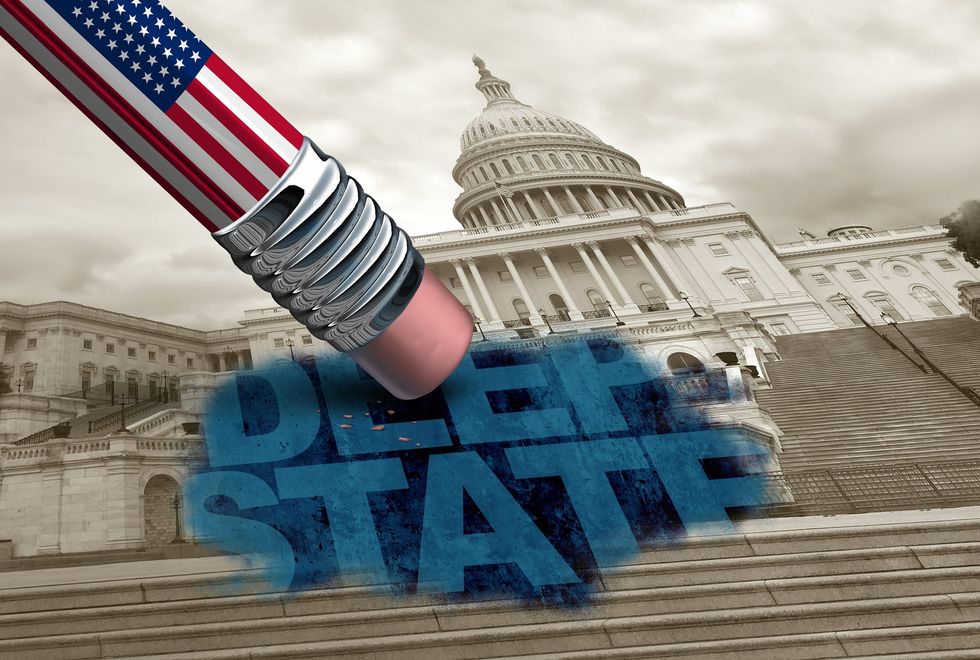
How to drain the swamp next time
Favicon 
www.theblaze.com

How to drain the swamp next time

The rising probability of another Trump administration brings in its wake dire warnings that a second-term Donald Trump will replace career bureaucrats with political appointees. Washington Monthly foretells that Trump’s re-election will mean “out with the nonpartisan experts loyal to the law; in with the cronies loyal to Trump.” Experience, however, suggests that adding political appointees would benefit the next administration. During the first Trump administration, political appointees very often paid greater heed to the law and the Constitution than did career bureaucrats. To drain the swamp more effectively the second time around, the Trump administration will need more, and better, appointees. Self-serving political appointees proved to be the perfect pawns of the administrative state. As a Trump appointee who led an office of career staff, I found that most federal bureaucrats carried out the orders handed down by the White House even though most had voted against the president. Nevertheless, subversives abounded in my agency and in most others. The subversion arose from the culture of the administrative state, rather than a centralized conspiracy, which ensured its survival on the few occasions when subversives received punishments. The subversion began at the top, when partisan lawyers and bureaucrats launched the fraudulent Crossfire Hurricane investigation to unseat the president. Special counsel Robert Mueller’s ensuing probe and the first Trump impeachment sidetracked the administration for two years. Some of the chicanery was so flagrant that its perpetrators were eventually fired or forced out of the FBI and the Justice Department, including Peter Strzok, Kevin Clinesmith, and Bruce Ohr. Others, including FBI analyst Brian Auten, remained active to the end of Trump’s term. At federal agencies, career bureaucrats fed information to sympathetic journalists and inspectors general to sabotage Trump appointees and obstruct policy changes. Trump appointees found their security clearances suspended or revoked on spurious charges by the same security bureaucrats who took no action against Democrats like Jake Sullivan and Colin Kahl for bona fide offenses. Like Viet Cong assassins, the subversive bureaucrats targeted the most committed and effective leaders, while leaving passive and corrupt leaders alone. The main problem with the political appointees was not loyalty to Trump — political appointees are supposed to be loyal to the president. Rather, the problem was loyalty to self. Self-serving political appointees proved to be the perfect pawns of the administrative state. Career staff polished apples for these appointees, showered them with praise in front of others, and helped them prepare for the end of the administration by lining up lucrative jobs at government contractors and nonprofit organizations. In return, the appointees let the bureaucrats do whatever they pleased. I repeatedly found evidence at the U.S. Agency for International Development that bureaucrats were surreptitiously thwarting White House policies and preserving programs that the White House wanted to kill. Career staff prevented the funding of faith-based organizations by citing the fallacious argument of Obama appointees that the Establishment Clause of the First Amendment prohibited it. Career employees concealed agency activities and spending from political appointees as a matter of course. Upon hearing allegations of corruption and mismanagement involving my own subordinates, I consulted the agency’s top human resources official. He said he could order an investigation if I requested one, while noting that many managers ignored misconduct because investigating would ruffle feathers and might cost people their jobs. That remark did much to explain why waste, fraud, and abuse runs wild through the federal bureaucracy. I asked for an investigation, which uncovered evidence of corruption and toxic leadership. The foremost perpetrator would eventually be forced to leave the agency. In the end, however, the bureaucracy took care of its own. It found him a job in another agency and devised an insidious scheme to suspend my security clearance and then end my employment. The scheme depended upon the complicity of a senior political appointee with enough self-loyalty to torpedo another appointee. As it happened, the No. 2 person at USAID fit the bill. She had secured that job even though her husband was the nation’s top lobbyist for the agency’s contractors. The White House can’t drain the swamp when its own appointees are swamp monsters. After my termination, career bureaucrats forced out another senior Trump appointee at the agency through leaks to the press. They denounced him for cutting funding to programs that didn’t support Trump’s national security priorities and insisting that subordinates obtain his approval for expenditures. In other words, he was fired for doing what political appointees are supposed to do. Congress can and should enact sweeping reforms to restore accountability and meritocracy to the civil service. Even if it does, though, political appointees will retain primary responsibility for ensuring the bureaucracy serves the Constitution, the law, and elected officials, rather than itself. The current ratio of one political appointee for every 550 career employees is much too low to fulfill such a mission at agencies where most employees dislike the president’s policies. Should Trump win the coming election, the White House should hire more appointees and ensure that they have the integrity and conviction to see the president’s policies through, no matter the resistance from the career bureaucracy.
Like
Comment
Share
The Blaze Media Feed
2 yrs

Hey, Joe: It’s still the economy, stupid, not ‘junk fees’
Favicon 
www.theblaze.com

Hey, Joe: It’s still the economy, stupid, not ‘junk fees’

If the adage “rearranging deck chairs on the Titanic” occasionally feels shopworn, it nevertheless captures the Biden administration’s efforts to soothe rising discontent among Americans whose economic pain is attributable to Biden’s own policy mismanagement. With Biden’s re-election prospects sinking lower despite media efforts to bubble wrap him, that widespread discontent remains a leading reason. The Biden administration’s narrative about so-called junk fees is a ploy to distract Americans from high inflation and accelerating economic headwinds.Economic growth is grinding to a halt while inflation just doubled from the previous quarter despite premature Biden claims of “mission accomplished.” In fact, inflation hasn’t declined since June 2023. Elsewhere, mortgage rates are back above 7% and home ownership is now costlier than ever. Credit card debt and auto loan delinquencies are rising to alarming levels, and office loan defaults have already returned to 2008-09 financial crisis levels.Consumer sentiment also just sank to levels last seen during the peak inflation days of summer 2022. Meanwhile, Biden’s deficits have resumed their rise toward the $2 trillion mark while the national debt is at record levels and far exceeds the size of the U.S. economy. Rather than confront and correct those negative economic trends, however, the Biden administration just wants to play small ball. Specifically, in recent months, the administration has ostentatiously vowed to eliminate “junk fees” from the economy and promised to save Americans billions of dollars ... somehow. That move transparently reflects a Biden administration desperate to find some sort of political cover for its mismanagement of the nation’s economy. What the administration obviously fails to acknowledge is that inflation, brought about in large part by out-of-control government spending, continues to make life difficult for small businesses and working Americans struggling to absorb punishing day-to-day costs. With economic growth slowing, overall costs for consumer goods up approximately 20%, and gas prices up 62% since Biden took office in January 2021, Americans simply can’t afford political antics of this sort. Instead, what they need from Biden is greater wisdom and political leadership to correct course on economic policies that matter most. Focusing on back-end fees, in contrast, will only lead to higher consumer prices and reduce free market competition while limiting services on which Americans rely. The Biden administration should focus on real reasons why American families struggle with the high cost of living and address more serious threats to our nation’s economy. On a superficial level, “junk fees” can seem frustrating. Upon closer examination, however, they’re essential to many businesses.For example, credit card late fees, the “hidden fee” getting the most attention from the administration, have now been capped at $8. At first glance, reducing delinquent fees might seem beneficial to consumers. But placing limits on them will only force credit card companies to tighten their lending standards, reduce credit limits, cut back on credit rewards, and increase interest rates. Those changes would significantly punish many low-income Americans who already struggle to stay afloat and who could find themselves denied credit and loans as a direct result of the Biden administration’s policy. Fact is, eliminating delinquency fees will only lead to more struggles for consumers and businesses. American consumers would benefit more if Biden prioritized policies that promote economic growth and support middle- and working-class consumers by cutting regulations that raise costs and hinder innovation.In contrast, the Biden administration’s narrative about so-called junk fees is a flimsy political ploy to distract Americans from high inflation and accelerating economic headwinds that punish working Americans most of all. The administration would rather divert Americans’ attention by attacking banks, credit card companies, and businesses providing essential service to families across our country. Don’t let the administration’s bait-and-switch tactics divert the conversation and ignore the true problems plaguing our economy.
Like
Comment
Share
History Traveler
History Traveler
2 yrs

Benjamin Franklin Was the Nation’s First Newsman
Favicon 
www.smithsonianmag.com

Benjamin Franklin Was the Nation’s First Newsman

Before he helped launch a revolution, Benjamin Franklin was colonial America’s leading editor and printer of novels, almanacs, soap wrappers, and everything in between
Like
Comment
Share
National Review
National Review
2 yrs

Exclusive: Former Top Public Health Official Admits Covid Origins Not Settled, No Science to Back Social-Distance Guidance
Favicon 
www.nationalreview.com

Exclusive: Former Top Public Health Official Admits Covid Origins Not Settled, No Science to Back Social-Distance Guidance

When asked if he recalled scientific evidence to support the six-food social distancing guidance during the pandemic, Dr. Francis Collins said ‘I do not.’
Like
Comment
Share
Showing 28167 out of 56670
  • 28163
  • 28164
  • 28165
  • 28166
  • 28167
  • 28168
  • 28169
  • 28170
  • 28171
  • 28172
  • 28173
  • 28174
  • 28175
  • 28176
  • 28177
  • 28178
  • 28179
  • 28180
  • 28181
  • 28182

Edit Offer

Add tier


Select an image
Delete your tier
Are you sure you want to delete this tier?

Reviews

In order to sell your content and posts, start by creating a few packages. Monetization

Pay By Wallet

Payment Alert

You are about to purchase the items, do you want to proceed?

Request a Refund