YubNub Social YubNub Social
    Advanced Search
  • Login

  • Night mode
  • © 2026 YubNub Social
    About • Directory • Contact Us • Privacy Policy • Terms of Use • Android • Apple iOS • Get Our App

    Select Language

  • English
Install our *FREE* WEB APP! (PWA)
Night mode
Community
News Feed (Home) Popular Posts Events Blog Market Forum
Media
Headline News VidWatch Game Zone Top PodCasts
Explore
Explore Jobs Offers
© 2026 YubNub Social
  • English
About • Directory • Contact Us • Privacy Policy • Terms of Use • Android • Apple iOS • Get Our App

Discover posts

Posts

Users

Pages

Group

Blog

Market

Events

Games

Forum

Jobs

Trending Tech
Trending Tech
2 yrs

This is the biggest change in RAM technology we’ve seen in years
Favicon 
bgr.com

This is the biggest change in RAM technology we’ve seen in years

Micron has started shipping a brand new type of upgradeable laptop RAM that is available to buy individually and in the latest Lenovo ThinkPad P1 Gen 7. The new type of RAM module integrates LPDDR5X memory with speeds up to 7,500 MT/s. That’s really impressive, given the size and the fact that it’s even easier to install in a laptop than any other RAM module on the market. The new module is called LPCAMM2, and it’s available in both 32GB and 64GB densities right now. Because of the larger memory pool, it’s unlikely we’ll see Micron’s new module appearing on any budget laptops anytime soon. But, if you’re buying a premium laptop in the future, it could make use of the new module, allowing you to upgrade in the future if you need more memory. https://www.youtube.com/watch?v=K3zB9EFntmA&ab_channel=iFixit What makes this new upgradeable laptop RAM module so unique is its easy installation. It utilizes three screws on the module, which can easily be unscrewed to remove the RAM and replace it with another similar module. However, the LPCAMM2 does require a new socket on motherboards, which will likely ramp up the costs of the laptops that include it, at least for now. The saving grace here, though, is that the new form factor will take up less than half the space of current form factors while also retaining dual-channel support. Micron says that the new module should be “future-proof” and will help enable better speeds and battery life on supporting laptops. The hope, on my end, is that this new type of upgradeable laptop RAM will open new doors for thinner, lighter gaming laptops, too. While those usually require SO-DIMM memory, which requires thicker slots and usually non-replaceable memory, the LPCAMM2 could meet in the middle, offering high-performance RAM that can also be upgraded. Of course, we’ll have to wait to see just how many laptop manufacturers actually adopt the new form factor. Don't Miss: SpaceX’s new spacesuit has a futuristic head-up display The post This is the biggest change in RAM technology we’ve seen in years appeared first on BGR. Today's Top Deals Amazon gift card deals, offers & coupons 2024: Get $350+ free Best Echo Dot deals for May 2024 Today’s deals: $179 AirPods Pro 2, $599 Lenovo ThinkPad X1 Nano laptop, COSORI air fryers, Bose sale, more Today’s deals: $179 AirPods Pro, $299 Apple Watch Series 9, $300 off Bose Smart Soundbar, more
Like
Comment
Share
Trending Tech
Trending Tech
2 yrs

OpenAI’s new ChatGPT privacy tool lets creators hide their work from the AI
Favicon 
bgr.com

OpenAI’s new ChatGPT privacy tool lets creators hide their work from the AI

OpenAI has been in hot water regarding data privacy ever since ChatGPT was first released to the public. The company used a lot of data from the public internet to train the large language model powering ChatGPT and other AI products. But that seems to have included copyrighted content. Some creators went ahead and sued OpenAI, and several governments have opened investigations. Basic privacy protections, like opting out of training the AI with your data, were lacking for regular users, too. It took pressure from regulators for OpenAI to add privacy settings that let you remove your content so that it won't be used to train ChatGPT. Going forward, OpenAI plans to deploy a new tool called Media Manager that will let creators opt out of training ChatGPT and other models that power OpenAI products. The feature might have been introduced much later than some people expected, but it's still a useful privacy upgrade. Continue reading... The post OpenAI’s new ChatGPT privacy tool lets creators hide their work from the AI appeared first on BGR. Today's Top Deals Today’s deals: $989 M3 MacBook Air, $20 Echo Pop, TheraGun massagers, Bose headphones, more Best Apple Watch deals for April 2024 Best deals: Tech, laptops, TVs, and more sales Today’s deals: $179 AirPods Pro 2, Mattel toys, Kindles, Fitbit sale, $12.50 Matter smart plugs, more
Like
Comment
Share
Trending Tech
Trending Tech
2 yrs

There’s one iPad Pro feature that could get me to switch from my iPad mini
Favicon 
bgr.com

There’s one iPad Pro feature that could get me to switch from my iPad mini

I love my iPad mini. It's the best iPad I've ever owned — even after owning an iPad Air and iPad Pro in the past. However, there's one feature of the new iPad Pro that has me wondering if it might make sense to give the Pro another go. On Tuesday, Apple hosted its “Let Loose” event and announced a new iPad Pro and iPad Air as well as its new Apple Pencil Pro and next-generation Magic Keyboard. In addition, the company announced new versions of Final Cut Pro and Logic Pro. Continue reading... The post There’s one iPad Pro feature that could get me to switch from my iPad mini appeared first on BGR. Today's Top Deals Today’s deals: $299 Apple Watch Series 9, Dell laptop sale, KitchenAid mixers, $349 iPad 10, more Today’s deals: $50 camera drone, $44 Soundcore Q20 headphones, Super Mario Bros Wonder under $50, more Best deals: Tech, laptops, TVs, and more sales Today’s deals: $3 Alexa smart plugs, Peloton sale, $250 HP laptop, Sony XM5 headphones, more
Like
Comment
Share
History Traveler
History Traveler
2 yrs

For the Love of Speech – The Art of Rhetoric in Ancient Greece
Favicon 
www.historyisnowmagazine.com

For the Love of Speech – The Art of Rhetoric in Ancient Greece

As Gandalf tells us in The Lord of the Rings: The Two Towers, "Perilous to us all are the devices of an art which we do not possess ourselves." Of course, Gandalf is talking about a dangerous, magical object that can communicate across space and time: a palantír stone. But the message rings true, too, about the powers of language and writing, which--like a palantír stone--can also traverse boundaries of space and time. Step into a library and you might have dialogues with thousands of the dead. Some of history's most dangerous and destabilizing figures were masters of the art of speech. They possessed great oratorical skills, but were devoid of a greater sense of ethics. In Plato's reckoning, a true rhetorician must unite their art of speech with philosophy. After all, if we do not possess ourselves a sense of how language can persuade us and work us over, then we will be all the more susceptible to those who might wield rhetoric against us. In the following excerpt, Dr. Daniel Lawrence (author of a recent book here: Amazon US | Amazon UK) goes back to the world of the ancient Greeks, where one's ability to speak well could literally be a matter of life and death. It's no wonder, given these circumstances, that an art of persuasion and various theories of language and perception emerged. Yet, as many rhetorical scholars have now documented, many different people at many different times and places developed arts and theories of writing and speech: the ancient Egyptians, the ancient Chinese, and various Indigenous peoples across the world. Wherever there is writing, language, and technology, there seems to emerge a human critique of its power. The author believes this rich tradition of critique--this art of rhetoric--is precisely what we need more of in our world today to help combat the growing dangers of digital disinformation and the unsettling, persuasive abilities of artificial intelligence.  Oratorical skills are referenced in Homer’s Iliad. Above picture: Iliad, Book VIII, lines 245–253. The ancient Greeks loved speeches. In the beginning of Phaedrus, one of my favorite dialogues by Plato, the titular character Phaedrus tells Socrates that he has just returned from a morning of making speeches with his friend Lysias. This would seem to be a rather funny thing in today’s world: to meet a friend for lunch, ask them how they spent their morning, and be told, “Oh, I was just over at Jane’s apartment. We were making speeches all morning.” Though this would not be a common occurrence today, the art of making speeches was close to the heart of ancient Greek culture. In a world where writing was a relatively new technology, writing tools and materials were expensive, and there was a reliance on oral tradition. Thus, speechmaking was a valued pastime. In many ways, this same desire for communication and storytelling is now fed by our media addictions: television, YouTube, film, podcasts, or binging a Netflix series. We don’t want to dismiss the important differences in our cultures, but we also shouldn’t forget just how similar humans can be across time and space. Not all funBut rhetoric wasn’t all fun, games, and entertainment for the ancient Greeks. The renowned classicist and scholar of rhetoric, George Kennedy, explains in his seminal A New History of Classical Rhetoric that this fascination with speeches was at least partially due to the vital, life-saving necessity of wielding language persuasively. Because there was no regular system of legal representation in ancient Greece, citizens would often be required to defend themselves in a court of law or to lay out their case against an opponent. In these early days of democratic society, your ability to speak could literally be a matter of life or death. If your neighbor accused you of stealing their goat—or worse, their horse—then you better have been able to make a compelling argument about why it wasn’t possible that you stole it as you proved your innocence. Perhaps you would make an appeal to ethos—that is, your character and credibility—and say, “I am an honest and law-abiding citizen of Athens. How could a person like me commit such a crime?” Perhaps you would make an appeal to pathos—that is, the emotions of your listeners—by pleading, “I am a father of five children and must work hard to provide for them. Would you rob these children of their father by imprisoning me based on the false claims of this greedy accuser?” Or perhaps you would appeal to the logos (or logic) of the audience and claim, “I was all day yesterday at the Theatre of Dionysus, a fact to which many of my fellow citizens can attest. How could I have been in two places at once?”Today, we don’t take language seriously enough. The rhetorician Lloyd Bitzer wrote in his oft-cited essay (and bane of disinterested undergraduate students everywhere) “The Rhetorical Situation” that “rhetoric is a mode of altering reality,” not by physically moving material objects around, but by “the creation of discourse which changes reality through the mediation of thought and action.” This is just an academic way of saying that speech and language can literally change the way we perceive the world, the way we think, and the way we act. And certainly, we know this to be the case. We might hear a powerful sermon and be swayed into a life of service to a god, or we might see a compelling video advertisement which, even imperceptibly or insensibly, cements an idea in our mind of which make and model of automobile we want to purchase. Language can have life-altering effects on us. We may be convinced to take a job in a new city or to vote for a particular political candidate. Gorgias, the rockstar rhetorician of ancient Greece, likened language to a kind of drug, or pharmakon. To me, that appears to be a reasonable explanation for the brainwashing and spellbinding experienced by the German population under Hitler in the early-to-mid twentieth century. But then, it’s easy to see when it’s happening to other people: “How could all those Germans have just fallen right in line with that evil man? Couldn’t they see through his lies?” No, most could not. It’s easy to see when others are being persuaded. It’s painful and difficult to observe it in ourselves. We like to believe we are immune to persuasion, but we are all persuadable. PersuasionIt’s not just language that is persuasive, though. It is the combined effects of rhetoric that persuade us. Hitler’s powers of persuasion included his mannerisms, gesticulations, the timbre and inflection of his voice, his word choice (diction), the way he constructed sentences (syntax), and his use of rhetorical techniques like allusion or antithesis. It was his use of symbolism and architecture (such as the golden eagle, standard in the grand Nazi-party rallies and the ubiquitous swastika) as well as his deft wielding of then-new technologies such as radio, film, and fast travel by airplane. As Quintilian told us, even “the mere look of a man can be persuasive.” Contemporary psychology tells us just as much. Tall people make more money over their lifetime, according to findings on a “height-salary link” that was documented in one study by Timothy A. Judge, PhD and Daniel M. Cable, PhD. In another uncomfortable set of studies, researchers found that attractive women received higher grades in college courses—an effect that diminishes when teaching is conducted remotely and online. We like to think that we’re objective, rational, and fair, but there’s a broad expanse of research that shows the opposite to be true; we’re easily persuaded and carry many deeply held biases and values within us, and these affect the way we perceive and interact with others and the world around us.We don’t understand, fully, comprehensively, scientifically, how persuasion works. There is, at present, no satisfactory or complete picture of persuasion in the neurological, psychological, rhetorical, or sociological literature. It’s a tricky beast to pin down precisely. Persuasion is complicated. We are practically left with the same conundrum today as our ancestors faced thousands of years ago. In some sense, I am grateful for this. I have no doubt that if a universal theory of persuasion were discovered, corporations, political parties, and governments would take full advantage of the knowledge, and democracy would be in further jeopardy. Yet, even without a universal theory of persuasion, this is essentially the place we find ourselves in. Using imagery, video, hyper-targeted social media advertisements, psychographic profiling techniques, big data, modern computing power, and complex technological distribution mechanisms, persuasion and propaganda have become more powerful and more dangerous today than ever before. As I will write about later in this book, the UK firm Cambridge Analytica used weaponized social media advertising strategies to influence elections all over the world, while companies at present are spending more money on digital advertising than print, billboards, mailers, leaflets, radio, television, magazine, newspaper, and all other forms of traditional advertising combined. And they called those they targeted with the bulk of their budget “The Persuadables.” The Persuadables were a demographic of centrists Cambridge Analytica profiled as being on-the-fence and able to be pushed to vote for one candidate over another. While we don’t know the extent to which Cambridge Analytica influenced presidential results in the U.S. in 2016, we can rightly assume that companies wouldn’t be paying for such services if they didn’t yield results. Digital disinformation is a massive global undertaking, and we are the targets.ConclusionNow, I’m not suggesting that we return to the oral culture of the ancient Greeks and all start making speeches as a form of entertainment. (It might be fun, though.) We can’t force a cultural change like that. But what should be most shocking to us is that we have completely abandoned the one field of study that deals directly with disinformation, propaganda, and information literacy in this time of crisis, when there is more technologically advanced disinformation threatening democracy than ever be- fore in the history of humanity. The field of study that deals with these extraordinary questions of truth, credibility, disinformation, propaganda, and information literacy is the study of rhetoric. I know that teaching and learning about rhetoric can be interesting (and even fun) when done right. Furthermore, there may not be anything more powerful for a person to learn than how to speak and write effectively and persuasively. How can we live in a time like this and not teach our children about rhetoric, the field of study that could empower them to disarm disinformation, advocate for their rights and values in an increasingly polarized realm of political discourse, and be resilient to the thousands of advertisements and propagandic messages that are launched at them daily from smart phones, computer screens, and the increasing number of screens in our homes, schools, and places of work? How else to protect them from the idealogues that fill our schools, companies, and communities? Rhetoric is that secret, ancient discipline that can help us in our great time of need. We are all persuadables, and we need help. Dr. Daniel Lawrence has a recently published book: Disinformed: A History of Humanity's Search for the Truth. It is available here: Amazon US | Amazon UK
Like
Comment
Share
History Traveler
History Traveler
2 yrs

Largest collection of 16th-17th c. fabrics in Europe found in Poland
Favicon 
www.thehistoryblog.com

Largest collection of 16th-17th c. fabrics in Europe found in Poland

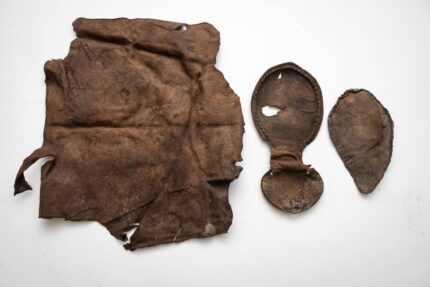
Archaeologists have uncovered the largest collection of 16th-17th century fabrics and footwear in Europe at a construction site in Toruń, Poland. The collection includes entire shoes in both eastern and western styles, fragments of pleated dresses, neckline trim, woolen stockings, very expensive gold cloth and silk. Toruń was one of the most important cities in the Hanseatic League. It was the fulcrum of a vast trade network throughout Europe and the Near East. With access to the best raw materials, Toruń developed a highly-skilled and varied community of cratsmen to create the best quality products made of horn, metal, ceramics, fabric and leather for sale to the wealthy and elites of Europe. The site was being excavated in advance of construction of a new film studio when footwear was found in a trench. There were shoes that would have been worn by the working class and footwear that could only have been afforded by the wealthy. Spur mounts on high boots point to them having belonged to military officers. The fragments of silk and gold cloth were imported from Turkey or Persia, and were extremely costly. Previous to this find, silk had only been found in the crypts of churches, most of them small fragments. The pieces found in this dig are much larger. A lady’s woolen glove lined with silk is so fine it is comparable only to liturgical gloves found in the graves of bishops. The workmanship and materials in some pieces from the collection are so fine that you’d expect to find them only in the city where wealthy townspeople could buy them, but when this collection was deposited, it was in a suburb of Toruń. Similar finds in the suburbs of Gdańsk, for example, are of much lower quality and cost. The quantity of items is also remarkable. Woolen stockings, for example, when they survive at all are usually found individually. There were 11 wool stockings found in this group, and three quarters of them were in an excellent state of preservation. The shoes and textiles all show signs of wear, and the fact that scraps were being collected suggests they may have belonged to a shoemaker’s workshop and a clothes repair shop in the area.
Like
Comment
Share
History Traveler
History Traveler
2 yrs

Pre-Roman Iron Age necropolis unearthed near Naples
Favicon 
www.thehistoryblog.com

Pre-Roman Iron Age necropolis unearthed near Naples

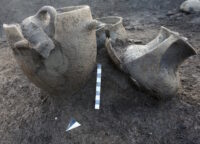
An Iron Age necropolis that predates the rise of Rome has been discovered in the town of Amorosi, 30 miles northeast of Naples. A preventative archaeology excavation before construction of a power plant at a site near the Volturno river unearthed a large funerary area in use between the third quarter of the 8th century B.C. and the late 7th century B.C. Archaeologists excavated a total of 88 tombs, both cinerary and inhumation burials, replete with grave goods identifying them as belonging to the Culture of the Pit Tombs, a pre-Samnite people that inhabited the interior of the region that is today known as Campania. The grave goods evince distinct gender differences. Males were buried with weapons, while women’s graves contained jewelry and ornaments made of bronze, amber and worked bone. Both men and women were buried with pottery of various shapes and sizes, usually placed at the feet of the deceased. Some burials were notable for the exceptional objects, for example a large, richly decorated bronze belt found in one grave. In addition to the pit tombs, two stand-out graves in the literal sense were large mound burials 50 feet in diameter that must have belonged to the highest ranking elites of the community at that time. The archaeological team recovered several parts of the graves in soil blocks. The local Superintendency of Archaeology of Caserta has enlisted experts to carry out micro-excavations of the soil blocks in a warehouse laboratory specially set up for this task. The materials they recover will be analyzed, as will the bone remains and the soil itself. The municipality of Amorosi has begun to plan a museum to exhibit the archaeological treasures found in the excavation (and future ones) in the hope of attracting cultural heritage tourism. Next year is a Jubilee year, and millions of visitors are expected to descend on Italy. The town is moving quickly to get a museum up and running to take advantage of the influx of Jubilee crowds.
Like
Comment
Share
History Traveler
History Traveler
2 yrs

Massive Bronze Age torc stolen from Ely Museum
Favicon 
www.thehistoryblog.com

Massive Bronze Age torc stolen from Ely Museum

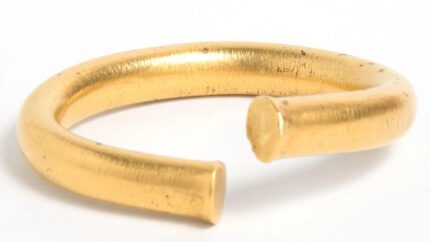
One of the largest gold torcs ever discovered was stolen from the Ely Museum Tuesday. Thieves broke into the closed building in the wee hours on the morning of May 7th and stole the Bronze Age gold torc and a heavy gold bracelet from the same period. Only the two gold objects were taken. Both of the stolen artifacts were found by metal detectorists in East Cambridgeshire. The solid gold bracelet was discovered in 2011. The torc was discovered in a recently ploughed field in September 2015. The four-flange spiral twisted bar torc is more than 4’10” long from trumpet terminal to trumpet terminal and weighs 732 grams (1.6 pounds). It dates to around 1300-1100 B.C. Not only is it exceptional for its size and weight, but also for its purity. Analysis found it is composed of 86-87% gold and 12-13% silver, which makes it 20-21 carat gold by today’s standards. Dr Wilkin, who is responsible for the British Museum’s British and European Bronze Age Collection, described it as “one of the most important Bronze Age finds that’s ever been made in England”. He said the torc is the “largest of its type in the whole of Europe” and its diameter is “larger than any adult male trousers that you can buy in a shop today”. He speculated the torc could have been worn over bulky clothing or by a sacrificial animal but its use “remains a guessing game”. At this time in the Bronze Age, people were no longer being buried with important objects – instead they deposited them at “important places in the landscape”. Dr Wilkin said: “We don’t necessarily know why, but we think it was a gift to the gods, designed to secure good harvests or a healthy family. I’ve calculated you could probably make 10 smaller objects out of this one, so it’s a really big sacrifice of wealth and status.” The Ely Museum acquired the torc in September 2017. After it was determined to be treasure at a coroner’s inquest, the British Museum’s valuation committee assessed its fair market value at £220,000 ($275,000). Local museums are given first crack at raising the sum, and the Ely Museum secured grants, including a large one of £138,600 from the National Heritage Memorial Fund, and donations from the public to reach the goal. A month later, the torc was on display at the Ely Museum, the pride and joy of its permanent collection. Elie Hughes, curator at Ely Museum, said: “We are devastated by the loss to the museum and to the local heritage of the region. It is a huge blow after the incredible support from the community in acquiring the torc in 2017. As a culturally significant object, it cannot be replaced. Our priority now is working with the police to locate the stolen objects.” The museum is housed in Ely’s Old Gaol building since 1997.  The 700-year-old building was extensively redeveloped to improve access, display space and security in 2021, so it’s not like its systems are old junk. The break-in was just swift and targeted. The worst part of this is that the torc is obviously completely unsalable. It is far too famous and unique to be passed off on the sly, and the odds of this being a commissioned theft for an unscrupulous private collector are miniscule. The real danger is that the priceless archaeological artifacts will be melted down for their mere gold value. The Cambridgeshire Constabulary are investigating the crime. They are currently looking for two people who seen on e-scooters in the vicinity of the museum between midnight and 2:00 AM Tuesday. Anybody with information can contact the police by dialing 101 in the UK or through its online chat service.
Like
Comment
Share
History Traveler
History Traveler
2 yrs

Teacher pulling weeds pulls up ogham-inscribed stone
Favicon 
www.thehistoryblog.com

Teacher pulling weeds pulls up ogham-inscribed stone

A rare stone with an ancient ogham inscription was discovered by Coventry geography teacher while weeding his flowerbed. Graham Senior was digging up weeds and rocks in his garden on May 28th, 2020, when just four or five inches below the surface he encountered up a quasi-rectangular stone with parallel and diagonal incisions. He washed it and sent a photograph of the stone to an archaeologist relative of his who thought it worth reporting to the Portable Antiquities Scheme. The finds liaison officer sent photos to a University of Glasgow professor who confirmed that the markings were ogham script. Ogham is an early medieval alphabet used to write the Archaic Irish language from the 4th to the 6th century and Old Irish from the 6th to the 9th century. It was the first written language in Ireland and is typically found carved on stones in Ireland, Wales and western Britain. There are about 400 inscriptions from the Archaic Irish period known, and most of them are pillars with family names that were erected to broadcast ownership of land. The rock found in Coventry is a small rectangle of sandstone with rounded ends 110 mm (4.3 inches) long, 38 mm (1.5 inches) wide and 19 mm (.75 inches) wide. It is inscribed on three of the long sides in  early ogham. The inscription therefore dates to the 5th or 6th century, but may have been engraved as early as the 4th century. It translates to MALDUMCAIL / S / LASS. The first side is a version of the personal name Mael Dumcail, but the meaning of the S and LASS is unclear. Given the usual purpose and significance of ogham stones, it may be a location reference.     Teresa Gilmore, am archaeologist and finds liaison officer for Staffordshire and West Midlands based at Birmingham Museums, said : “This is an amazing find. The beauty of the Portable Antiquities Scheme is that people are finding stuff that keeps rewriting our history. “This particular find has given us a new insight into early medieval activity in Coventry, which we still need to make sense of. Each find like this helps in filling in our jigsaw puzzle and gives us a bit more information.” […] Gilmore said such stones were “very rare and have generally been found in Ireland or Scotland … so to find them in the Midlands is actually unusual.” She suggested it could be linked to people coming over from Ireland or to early medieval monasteries in the area. “You would have had monks and clerics moving between the different monasteries.” Senior has donated to the rock to the Herbert Art Gallery and Museum in Coventry where it will go on public display on Mary 11th in the new Collecting Coventry exhibition.
Like
Comment
Share
History Traveler
History Traveler
2 yrs

Svalinn, the Most Important Shield in the Norse World
Favicon 
www.ancient-origins.net

Svalinn, the Most Important Shield in the Norse World

In the incredible complexity and richness of the old Norse mythology, amidst the pantheon of gods, giants, and cosmic beings, stands the enigmatic epic shield  Read moreSection: NewsMyths & LegendsEuropeRead Later 
Like
Comment
Share
History Traveler
History Traveler
2 yrs

The History of the Comanche Tribe is One of Conquest
Favicon 
www.ancient-origins.net

The History of the Comanche Tribe is One of Conquest

The history of the Native American Comanche tribe includes their move from ancestral homelands in Wyoming to more southerly parts Read moreSection: NewsGeneralAncient PlacesAmericasHistoryAncient TraditionsRead Later 
Like
Comment
Share
Showing 29321 out of 56670
  • 29317
  • 29318
  • 29319
  • 29320
  • 29321
  • 29322
  • 29323
  • 29324
  • 29325
  • 29326
  • 29327
  • 29328
  • 29329
  • 29330
  • 29331
  • 29332
  • 29333
  • 29334
  • 29335
  • 29336

Edit Offer

Add tier


Select an image
Delete your tier
Are you sure you want to delete this tier?

Reviews

In order to sell your content and posts, start by creating a few packages. Monetization

Pay By Wallet

Payment Alert

You are about to purchase the items, do you want to proceed?

Request a Refund