YubNub Social YubNub Social
    Advanced Search
  • Login

  • Night mode
  • © 2026 YubNub Social
    About • Directory • Contact Us • Privacy Policy • Terms of Use • Android • Apple iOS • Get Our App

    Select Language

  • English
Install our *FREE* WEB APP! (PWA)
Night mode
Community
News Feed (Home) Popular Posts Events Blog Market Forum
Media
Headline News VidWatch Game Zone Top PodCasts
Explore
Explore Jobs Offers
© 2026 YubNub Social
  • English
About • Directory • Contact Us • Privacy Policy • Terms of Use • Android • Apple iOS • Get Our App

Discover posts

Posts

Users

Pages

Group

Blog

Market

Events

Games

Forum

Jobs

History Traveler
History Traveler
2 yrs

5 (or More&;#63;) of Jack the Ripper’s Victims
Favicon 
www.thecollector.com

5 (or More&;#63;) of Jack the Ripper’s Victims

  One of the most famous serial killers of all time‚ Jack the Ripper‚ terrorized the Whitechapel District in London’s East End in the late 1800s. He was never identified‚ and the case was never solved‚ though a litany of suspects have been identified. Since Jack’s identity was never ascertained‚ it is impossible to know for sure how many victims he had. However‚ law enforcement officials have created a list of probable Ripper suspects based on modus operandi and victimology. Who were the women who fell prey to this mysterious killer‚ and what led them to become associated with history’s most notorious murderer&;#63;   1. Early Victims&;#63; A Whitechapel alleyway today. Source: Lisa Haseldine / MyLondon   While experts are in agreement that there are definitely five women who are the “canonical” victims of Jack the Ripper‚ there are some murders that came later that some detectives believe are likely to be Ripper victims as well. In addition‚ forensic professionals believe it is highly unlikely that someone would be able to start killing so effectively (and get away with it so efficiently) as Jack the Ripper did with the canonical five; they think he’d had practice before. So‚ who were the Ripper’s potential first victims&;#63;   Prostitution was a common profession in Whitechapel and other areas of urban Victorian England. Source: The London Economic.   Whitechapel was a notoriously high crime area. It was not unusual for crimes‚ even murder‚ to occur on a regular basis. There were about 1‚200 prostitutes working in Whitechapel in 1888‚ several gangs operating in the area‚ several drinking establishments‚ overcrowded housing‚ and issues with policing.   The murders of the Canonical Five occurred in the autumn of 1888‚ with some experts positing that similar murders occurring earlier that year might be attributed to the Ripper. One such death is that of Annie Millwood‚ who didn’t actually die from her attack but from natural causes after being attacked. Ms. Millwood was admitted to the Whitechapel Workhouse Infirmary with stab wounds to her legs and abdomen on February 25‚ 1888. She stated that she had been attacked by a man she didn’t know who had stabbed her with a knife. The 38-year-old widow later fell and died that evening‚ but after an inquest and autopsy‚ the death was attributed to natural causes.   It has been suggested by some that the location of the attack‚ along with the area of the body targeted‚ makes Millwood a likely Ripper case‚ while others argue there is limited proof that the attack even happened and that the injuries may have even been self-inflicted.   Nineteenth-century Whitechapel citizenry. Source: Old Spitalfields Market   Another suspected victim was Martha Tabram‚ who was found on a first-floor landing of a Whitechapel building in August of 1888. Martha was a local prostitute who had been seen about town the evening before drinking with another working girl. The two had met a pair of men‚ allegedly soldiers‚ and had gone their separate ways with them.   Nothing else was heard from Martha‚ and her body was found the next day. She had been stabbed in the throat and abdomen in a rather frenzied attack. Ripper experts argue that this is unlike the Canonical Five offender‚ who was more precise in his methods. Those who argue for Tabram as a Ripper victim state that this could have been a learning curve for the murderer and that he targeted her neck and abdomen‚ just like the Ripper did in his other victims. Some also propose that this murder helped the Ripper learn to minimize the forensic evidence left at future crime scenes. He most certainly would have been covered in blood after this crime‚ which led him to first asphyxiate future victims and therefore minimize blood spatter.   2. Mary Nichols The Police News of September 8‚ 1888 depicting Mary Ann Nichols. Source: European Writers Tour   Mary Ann Nichols was the first of the Canonical Five and therefore considered by some scholars to be the first Jack the Ripper victim. Nichols was a married mother of six when her husband left her to begin an affair with a neighbor. Alone and destitute‚ Mary turned to alcohol‚ which only worsened her problems.   Eventually‚ she found herself frequenting the East End and turned to prostitution to pay for a bed in a lodging house. She was last seen on August 31‚ 1888 around 2:30 AM‚ when an acquaintance spotted her drunk and walking at the corner of Osborn Street and Whitechapel Road. Just over an hour later‚ two men‚ Charles Cross and Robert Paul‚  were walking along a road called Buck’s Row when they encountered Mary’s body lying on the footpath. Her throat was cut‚ and she was sprawled in her own blood.   When her body was transported to the local mortuary and her clothes removed‚ it was revealed that there were numerous deep incisions to her abdomen‚ so brutal that her intestines were threatening to escape. The heinous nature of this attack set it apart from the usual set of Whitechapel crimes and got the attention of law enforcement.   3. Annie Chapman A retouched image of Annie Chapman clipped from her wedding photo. Source: Foller   Annie Chapman lived a relatively comfortable life with her husband John in Windsor. They had three children; however‚ their oldest‚ Emily Ruth‚ died of meningitis‚ and their son John Alfred was “a cripple” who was sent to a convalescent home to live. With these losses and other troubles‚ including alcoholism on both of their parts‚ Annie and John separated in 1884 or 1885. John would continue to support his ex-wife until his death at the end of 1886. She then started selling flowers and crochet work to get by‚ but eventually turned to prostitution to make a living and fund her alcoholism.   A memorial sign to Annie Chapman in Manor Park Cemetery. Her actual grave has been buried over. Source: Jack the Ripper 1888   Chapman was killed early in the morning of September 8th‚ 1888. She was seen multiple times by different people throughout the night of the 7th-8th‚ for the last time at 5:30 AM‚ speaking to a man. Her body was discovered just before 6:00. At the coroner’s inquest‚ her body was described as “terribly mutilated‚” with injuries consistent with a surgical instrument.   The doctor stated that Chapman was not a healthy woman but that her medical issues had not contributed to her death. She did not appear to have been drunk at the time of her death. Her throat was cut quite severely‚ and the abdomen laid open entirely. Several of her organs had been lifted from the cavity and placed on the upper portion of the body‚ but the uterus and its appendages had been removed and could not be located. The coroner felt that it would take a trained surgeon such as himself about 15 minutes to perform the injuries described and someone not trained in these practices over an hour. This led to the first supposition that Jack the Ripper may have ties to the medical field.   4. Elizabeth Stride Elizabeth Stride in life (left) and death (right). Source: VPics   Swedish by birth‚ Elizabeth “Long Liz ” Stride (n&;eacute;e Gustafdotter) moved to London in 1866. She had previously worked as a prostitute in her home country‚ but in London‚ she married a man named John Stride and opened a coffee shop. The business failed‚ and her husband died in 1884. After the death of her husband‚ she lived in poverty and had trouble with alcohol. Liz was arrested several times for drunk and disorderly conduct. She took up with a man named Michael Kidney‚ with whom she had a “stormy” relationship and whose relationship was on and off for several years.   Stride was killed on September 30‚ 1888. Her throat was cut‚ but her abdomen was not mutilated as the previous victims had been. Some believe that this means that the offender was interrupted in his actions.   5. Catherine Eddowes Catherine Eddowes in life (left) and her mortuary photo on the right. Source: Spiderman Animated Wikia   Perhaps because he was interrupted in his murder of Elizabeth Stride‚ the Ripper would take a second victim on the night of September 30th. Catherine Eddowes had actually been released from jail at the approximate time that Liz Stride was being murdered. Eddowes had been taken into custody after a display of public drunkenness but was released around 1 AM when the officer on duty determined she had sobered up enough to do so.   The Illustrated Police News. Source: ThoughtCo   Catherine would be killed by a cut to the throat in Mitre Square‚ less than ten minutes walking distance from the police station. Three men spotted Catherine in Mitre Square with a man‚ and one of the passersby got a good look at her companion. He was able to give the police what is considered to be a description of the man who is highly likely to be Jack the Ripper: about 30 years of age‚ about 5′ 9”‚ medium build‚ fair‚ with “the appearance of a sailor.”   Catherine Eddowes’ shawl was auctioned in 2007 and then DNA tested in 2011. The DNA matched a suspect‚ but experts feel this is inconclusive proof given Eddowes’ profession and the lack of proper evidence handling. Source: Russell Edwards photo via ArtNet   Other clues to Catherine’s killer were left behind. A piece of her apron‚ bloodstained‚ was cut and found in a doorway‚ where above‚ anti-Semitic graffiti had been scrawled. A shawl belonging to Eddowes was also found at the scene‚ stained with blood and semen‚ though the DNA provided by these biological clues would not be useful until decades later. Catherine’s murder was exceptionally heinous‚ as she was not only eviscerated but cut on her face as well.   6. Mary Kelly Mary Kelly was the 5th and most brutally killed victim. Source: All That’s Interesting   Shocking the public and police alike‚ the murder of Mary Kelly would top even that of Catherine Eddowes in brutality. The entire month of October would pass without any murderous events‚ and Whitechapel breathed a sigh of relief‚ many believing that Jack’s reign of terror had come to an end. However‚ on November 9th‚ the Ripper returned and took his crimes indoors for the first time on record‚ killing Mary Kelly in her room. Blood saturated the bed and floor beneath her. She was completely eviscerated‚ and her organs were placed around her body. Her breasts were sliced off‚ her arms cut all over‚ and her face slashed multiple times. Her neck was cut to the vertebrae.   Little was known about Mary’s life. Most of what is recorded about her history was hearsay from an off-and-on boyfriend named Joseph Barnett‚ and he got his information from Mary herself. Some of the information conflicts and is believed to be embellished or even fabricated. However‚ she was believed to have originally been from Ireland. She was about 25 years old and had been living in London for about four years‚ working in a brothel and as a maid. She was last spotted at about 3:00 that morning‚ accompanied by a man. Approximately an hour later‚ two women heard the faint cry of “Oh murder&;#33;” from their beds in neighboring buildings but thought nothing of it due to the high crime rate in Whitechapel.   7. The Ripper Returns&;#63; London newspapers wondered if the Ripper had returned. Source: Jack the Ripper Tour   Just as with potential earlier victims‚ there is some doubt as to whether Jack the Ripper had any more victims after the Canonical Five. However‚ murder in Whitechapel did not cease after the death of Mary Kelly‚ and law enforcement and the citizens of London could not help but wonder if he was still out there. The day after Mary Kelly’s burial‚ a woman named Annie Farmer was attacked by a client who had engaged her for sex‚ and her throat was lightly cut. However‚ her injuries were superficial‚ and the blade blunt‚ very dissimilar to the injuries left by the Ripper. The police failed to take Annie’s claim that she had been attacked by the Ripper seriously and did not investigate‚ though she never would recant her story.   Mary Evans and her murderer. Source: National Geographic   Prostitute Alice McKenzie was murdered eight months after the last canonical victim‚ in July 1889. She had a zig-zag wound from her chest to her abdomen‚ and some speculated that the Ripper had returned. The new police commissioner‚ who was not in office during the Canonical Five‚ felt that the murder was similar to the Ripper cases‚ as did the coroner. However‚ Dr. George Phillips‚ who was involved in or attended the autopsies of four of the five canonical victims‚ did not believe this murder was consistent with Jack’s M.O.   A political cartoon from the era wearing a cap labeled “crime.” Source: Future Zone   Was Jack back&;#63; It would remain a mystery. Other murders were attributed to him in the years that followed‚ but none with certainty. The world remains at a loss regarding Jack the Ripper’s identity and motive. This mystery adds to the impression he left on England and the world‚ from the nineteenth century echoing into today.
Like
Comment
Share
History Traveler
History Traveler
2 yrs

From Wartime Reserve to Pop Culture: What Is the History of ‘Keep Calm and Carry On&;#63;’
Favicon 
www.thecollector.com

From Wartime Reserve to Pop Culture: What Is the History of ‘Keep Calm and Carry On&;#63;’

  The ubiquitous catchphrase ‘Keep Calm and Carry On’ has become the quintessential symbol of the United Kingdom‚ representing stoical resolve and restraint in the face of hardship and struggle. Today the phrase appears everywhere from posters and mugs to tea towels. Often printed in a vintage font and featuring the British crown‚ the phrase conjures up the plucky‚ patriotic determination expected of Brits during World War II under the leadership of Winston Churchill‚ a sentiment that can also be applied to a myriad of new situations today. But where did the phrase actually come from‚ and how did it become so widespread&;#63;   Wartime Propaganda Your Courage… Will Bring Us Victory‚ World War II propaganda. Source: Heritage Posters   During the buildup to World War II‚ the British Government established the Ministry of Information (MOI) to produce a series of morale boosting posters for display across Britain. Designed with bold‚ big text‚ and catchy slogans‚ alongside the British crown‚ the aim was to capture as many Britons as possible. Of the slogans the team came up with were ‘Freedom Is in Peril – Defend it With All Your Might”‚ along with “Your Courage‚ Your Cheerfulness‚ Your Resolution Will Bring Us Victory.” The third‚ perhaps unsurprisingly‚ read “Keep Calm and Carry On.”   Freedom Is in Peril‚ poster in situ in London during World War II. Source: TIME Magazine   However‚ the third ‘Keep Calm” poster was never officially sanctioned for display. Instead‚ although it was printed‚ it was kept in reserve‚ while the other two were more widely circulated throughout notice boards‚ public transport and hoardings across the UK.    A Wartime Reserve Front cover for Keep Calm and Carry on: The Truth Behind the Poster (2017)‚ by Bex Lewis. Source: Manchester Metropolitan University   The MOI had originally envisioned the ‘Keep Calm and Carry On” as a fitting message which would only be issued if Britain faced a ground invasion by Germany‚ which would have resulted in widespread panic. As this never happened‚ the poster never made its way out into the public eye. Meanwhile the other two posters were deemed a more suitable message of courage and fortitude. In 1945‚ the majority of the reserve ‘Keep Calm’ posters were destroyed after the war in 1945. Author Bex Lewis‚ who Wrote Keep Calm and Carry on: The Truth Behind the Poster (2017) noted‚ “There was a fear that morale would fall apart‚ but it turned out that people didn’t need to be told to keep their chins up – they just wanted to be told what to do.”   Rediscovery in the Early Aughts Inside Barter Books in Northumberland‚ England. Source: Visit Alnwick   Some 60 years later‚ during the early aughts‚ one of the few remaining Keep Calm and Carry On posters was rediscovered by a bookseller from Barter Books hidden in amongst a pile of books in an auction. The bookseller hung the poster over the cash register of their store in Northumberland‚ where customers began asking where they could buy their own copy. Shop owners Stuart and Mary Manley began printing their own copies due to popular demand‚ but they had no idea just how widespread the catchphrase would become.    Recent Times The Keep Calm and Carry On emblem has appeared on a wide range of merchandise. Source: suwalls.com   It wasn’t until 2008 that the Keep Calm and Carry On slogan became mass-produced‚ and by the following year it was firmly in place across British society. The shop at the Victoria and Albert Museum in London played a significant role in bringing the caption out into the public eye. For some‚ it encapsulated the instability of the banking crash‚ when an age of austerity was suddenly being ushered in by politicians (who weren’t following the same rules themselves)‚ followed by the looming threat of terrorism. The term ‘austerity nostalgia’ as been applied to the rising interest in such wartime memorabilia as the ‘Keep Calm’ slogan‚ symbolizing a popular desire to resurrect some idealized version of modernist times‚ when it seemed as though British people had the grit and reserve to weather any storm.   Rosie the Riveter poster titled “We Can Do It&;#33;” by J. Howard Miller‚ 1942. Source: US Department of Defense   Nowadays‚ you can still expect to find the phrase printed on merchandise in museums stores‚ gift shops and tourist attractions across the UK‚ where it has become as familiar and overused as the Coca-Cola emblem‚ or perhaps the similar wartime vintage poster featuring ‘Rosie the Riveter’. Meanwhile‚ several copies of the original belong to the National Archives and The Imperial War Museum in London. In fact‚ the phrase is now so well-known and cliched across the UK and beyond that it has been parodied many times over‚ from ‘Keep Calm and Save the NHS’‚ to the more playful ‘Freak Out and Run.’
Like
Comment
Share
History Traveler
History Traveler
2 yrs

Why Was The Well of Loneliness by Radclyffe Hall Put on Trial&;#63;
Favicon 
www.thecollector.com

Why Was The Well of Loneliness by Radclyffe Hall Put on Trial&;#63;

  Radclyffe Hall’s 1928 novel The Well of Loneliness made her an icon of queer literature and went on to herald a wave of pulp lesbian fiction later in the twentieth century – but not without serious legal battles. Tried for obscenity in both the UK and the US legal systems‚ Hall’s novel was alternately vilified as dangerous propaganda that would corrupt the morals of its readers and championed as a necessary plea for tolerance and acceptance (as opposed to fear and hatred) of lesbian relationships. Here‚ we will explore Hall’s landmark novel‚ where the UK law stood on same-sex relationships between women in the early twentieth century‚ the outcome of the UK trial‚ and the ways in which it differed from the US trial that followed shortly after.   Background: Radclyffe Hall and a Summary of The Well of Loneliness UK first edition of The Well of Loneliness‚ 1928. Source: Swann Galleries   Born Marguerite Antonia Radclyffe Hall‚ the writer Radclyffe Hall was a woman of considerable fortune‚ which she had inherited from her womanizing father and which freed her from any financial incentives to marry. Instead‚ Hall‚ an out lesbian who dressed in traditionally masculine clothes‚ spent much of her twenties in relationships with other young women before meeting Mabel Batten‚ an older married woman with an adult daughter‚ and later (through Batten) Una Trourbridge‚ Batten’s cousin‚ with whom Hall would remain until her death.   Like Hall‚ Stephen Gordon‚ the protagonist of The Well of Loneliness‚ is a masculine-presenting lesbian who enjoys typically male sporting pursuits‚ hates wearing women’s clothing and wearing her hair long‚ and is attracted to other women. Named Stephen as her parents had been hoping for a boy‚ even as a child‚ she is described as “narrow-hipped” and “wide-shouldered‚” and she longs to be a boy. She is doted on by her father‚ who understands her homosexuality‚ though he dies without ever stating as much.   Spurned by society and her own mother‚ Stephen’s quest for love and acceptance takes her to the battlefields of World War I (based heavily on the lived experiences of Hall’s friend Toupie Lowther within the only women’s unit to serve on the French frontline) and to Paris‚ where there were no laws prohibiting same-sex relationships between men (unlike in the United Kingdom) and so gay subculture thrives. Yet Stephen finds that society’s view of sexuality is at odds with her happiness‚ and the novel ends with Stephen’s earnest prayer to God to “[g]ive us also the right to our existence.”   The Case for the Prosecution: Why Was The Well of Loneliness Put on Trial&;#63; Photograph of Radclyffe Hall. Source: Literature Cambridge   Before the novel came to publication‚ Hall knew she was dealing with dangerous material and was‚ by her own admission‚ attempting something never before broached in literary fiction. She wrote to her publisher‚ Jonathan Cape‚ earlier in 1928‚ stating that she had “put [her] pen at the service of some of the most persecuted and misunderstood people in the world” – a group to which Hall‚ as an out lesbian‚ herself belonged. Jonathan Cape‚ however‚ was not to be deterred‚ and the novel was published in July 1928.   In describing the life and experiences of her out lesbian protagonist‚ Stephen Gordon‚ Hall was dealing with subject matter that was not only considered taboo but unnatural among more conservative circles (whose views are echoed by the character of Stephen’s own mother‚ who tells her that “[t]his thing [she is] is a sin against creation”). Though the Labouchere Amendment had criminalized all sexual acts between two men‚ homosexual acts between women were not‚ strictly speaking‚ classed as criminal acts – though that does not mean the law did not find ways of punishing lesbian couples. For instance‚ Caroline Derry notes that‚ during the eighteenth century‚ there were cases of marriage between outwardly heterosexual couples in which the “husband” was later found to be legally a woman.   Photograph of D. H. Lawrence. Source: Biography   It was on these grounds‚ then‚ that James Douglas‚ the editor of the Sunday Express‚ vociferously objected to Hall’s novel‚ arguing that it was a work of propaganda mislabeled as fiction. He even went so far as to state that he would sooner “give a healthy boy or a healthy girl a phial of prussic acid than this novel” – statements that implied that The Well of Loneliness had the capacity (if not the outright intention) of corrupting the morals of young men and women‚ or‚ to borrow Douglas’ own phrase‚ of “defiling young souls.” Douglas’ wording is pointed‚ as‚ according to the Hicklin test‚ a work could be deemed obscene on the basis that it might “deprave and corrupt those whose minds are open to such immoral influences.”   Such was Douglas’ loathing of The Well of Loneliness that he pushed for the British Home Secretary to have the novel suppressed. Douglas and William Joynson-Hicks‚ the Home Secretary at the time‚ were well-matched in their conservative sensibilities. Joynson-Hicks also seized typescripts of D. H. Lawrence’s poetry collection Pansies in 1929‚ suppressed birth control publications‚ and had designs to crack down on nightclubs by organizing raids. Hall and The Well of Loneliness were thus duly taken to court over charges of obscenity‚ with the trial commencing on November 28‚ 1928.   The Defense Sunday Express headline covering their public campaign against The Well of Loneliness (1928). Source: Historic England   In early reviews of the novel – before the trial had even been mooted – many fellow writers had praised Hall’s frankness‚ including the writer Vera Brittain‚ who observed that The Well of Loneliness was further proof “that there is no problem which is not better stated frankly than concealed‚” since “persecution and disgusted ostracism have never saved any difficult in the world.”   Moreover‚ Leonard Woolf and E. M. Forster co-drafted a letter protesting against the suppression of Hall’s novel‚ which bore signatures from the likes of T. S. Eliot‚ Arnold Bennett‚ Ethel Smyth‚ and the aforementioned Vera Brittain. However‚ the letter was never published‚ as Hall wanted Woolf and Forster to argue that the novel was a work of literary genius – a view they did not share.   Photograph of Vita Sackville-West. Source: The Paris Review   Confident‚ therefore‚ of the support of the day’s writers and intellectuals‚ Hall’s publishers sent 160 letters to those they felt would likely bear witness in the trial against the novel’s censorship. Not as many writers and thinkers as they had hoped‚ however‚ were forthcoming – which Virginia Woolf lambasted in a letter to her nephew: “Most of our friends are trying to evade the witness box; for reasons you may guess. But they generally put it down to the weak heart of a father‚ or a cousin who is about to have twins.”   The trial‚ however‚ did put some queer members of the Bloomsbury Group in something of a bind. While Woolf’s lover Vita Sackville-West was prepared to testify‚ she was also a married woman of wealth‚ power‚ and connections‚ being married to the diplomat (and later Labour politician) Harold Nicolson.   Photograph of T. S. Eliot‚ who supported Hall’s novel and opposed the charge of obscenity. Source: The Poetry Foundation   Lytton Strachey‚ a fellow queer member of the Bloomsbury Group‚ was also willing to testify‚ though he wrote to E. M. Forster that he personally thought the literary quality of the novel was “pretty dreadful.” These sentiments were echoed by Woolf herself‚ who dismissed The Well of Loneliness as a “pale tepid vapid book.”   The judge’s ruling that fellow writers of fiction could only make pronouncements on a work’s artistic value rather than its obscenity thus rescued Woolf and her contemporary writers from taking the stand. Nonetheless‚ 57 writers‚ intellectuals‚ and scientists did agree to take the stand in defense of The Well of Loneliness.   The Verdict &; Aftermath Photograph of Ernest Hemingway‚ who took part in the US trial in support of Hall’s novel. Source: Biography   A week after the trial had begun‚ the judge‚ Sir Chartres Biron‚ ruled that The Well of Loneliness was indeed obscene‚ copies of the novel were to be confiscated and destroyed‚ and the defendants were to cover all legal fees incurred by the trial. Though this ruling was appealed‚ Biron’s ruling was upheld by five other magistrates.   Initially‚ US publishers were somewhat cowed by the UK trial‚ so though Alfred A. Knopf had acquired the rights to the novel‚ they declined to publish it. However‚ Pascale Covici and Donald Friede took out a $10‚000 bank loan in order to buy the rights to the novel from Jonathan Cape. Having secured the rights‚ they then took preemptive measures to defend the novel against similar accusations of obscenity. For example‚ they contacted the head of the New York Society for the Suppression of Vice with the offer of selling him a copy of the novel.   By the time the NYPD confiscated 865 copies of the novel at the publisher’s office‚ the novel had been in circulation in the States for a year‚ selling 100‚000 copies‚ thanks in no small part to the hint of infamy attached to it following the UK trial. Unlike in the UK‚ however‚ under US federal law‚ the argument of literary merit was permitted as mitigation against the charge of obscenity – a fact that the defense used to their advantage this time around. Among those who took to the stand to defend Hall’s novel were Ernest Hemingway‚ F. Scott Fitzgerald‚ Sherwood Anderson‚ Upton Sinclair‚ John Dos Passos‚ and Edna St. Vincent Millay.   Photograph of Virginia Woolf‚ by Man Ray‚ November 27‚ 1934. Source: AnOther Magazine   On August 19‚ 1929‚ New York’s Court of Special Sessions ruled that‚ in grappling with what it termed “a delicate social problem‚” the novel had not‚ in fact‚ broken the law. The charges against The Well of Loneliness were dropped‚ and the novel could therefore be circulated freely.   It is noteworthy that three other novels that deal with lesbianism were also published in the UK in 1928: Elizabeth Bowen’s The Hotel‚ Compton Mackenzie’s Extraordinary Women‚ and Virginia Woolf’s Orlando. Woolf and Mackenzie both adopt a more playful tone than that of Hall‚ while Bowen’s treatment of same-sex relationships is far more oblique.   In the aftermath of the UK trial’s guilty verdict‚ Woolf expressed her fear that‚ since writers can only “produce great literature” if they have “free minds” and as nothing prevents freedom of thought like a “taboo‚” writing itself would become “cramped” and overly cautious. The publication of Orlando‚ The Hotel‚ and Extraordinary Women‚ however‚ would suggest that the trial of The Well of Loneliness did not have entirely the chilling effect she had feared.   Nonetheless‚ The Well of Loneliness remains a landmark work of lesbian fiction as the first work to depict‚ openly and earnestly‚ the lived experience of a lesbian woman in the early twentieth century‚ during a time when homosexual acts between men were illegal in the United Kingdom‚ and to call for social change. The UK trial and the verdict Sir Biron reached was therefore every bit as illiberal as Woolf had feared. Yet‚ thanks to Covici and Friede‚ even a guilty verdict could not stop Hall from becoming an icon of queer literature.
Like
Comment
Share
History Traveler
History Traveler
2 yrs

What Is the History and Significance of Mayday&;#63;
Favicon 
www.thecollector.com

What Is the History and Significance of Mayday&;#63;

  Mayday‚ also commonly known as Labor Day‚ or International Workers’ Day‚ is a public holiday for many that takes place on the 1st of May each year. Celebrated across parts of Europe‚ the United States‚ Canada and Asia‚ this day of celebration has a long history connected to the celebration of spring‚ the advancement of warmer weather‚ and the coming together of communities. We track the long history of Mayday and spring celebrations‚ which date as far back as ancient times.   Rites of Spring Detail of Flora from Primavera by Sandro Botticelli‚ 1480. Source: Uffizi Gallery‚ Florence   Some of the earliest May celebrations took place in ancient Rome‚ most notably The Floralia‚ or the Festival of Flora‚ a tribute to the goddess of spring‚ flowers and fertility which took place from the 28th of April to the 3rd of May. Along with civilized events including theatre and athletic games‚ Romans also carried out raucous affairs such as throwing vegetables at one another and releasing wild hares and deer into unsuspecting crowds.    The Beltane Festival Beltane fire celebrations. Source: Lux Heart   The Beltane Festival was a Gaelic celebration for the warmer months of spring and summer‚ dating back to at least as far as the early medieval period. The festival typically involved fire displays and bonfires which communities believed had special protective powers‚ along with the adorning of doors and windows with wild flowers. While the festival waned in popularity during the early 20th century‚ some have resurrected Beltane in recent years as part of Pagan celebrations that connect with the forces of the natural world.    Mayday The Procession of the May Queen‚ by Herbert Wilson Foster (1846–1929). Source: Rushcliffe Borough Council/Art UK   The 1st of May emerged as a Mayday celebration during the medieval period throughout the British Isles‚ when a series of eccentric community-led activities took place. A random ‘lord and lady’ would be picked out from the crowd to rule the town for the entire day. Eventually over time the tradition changed to involve just the ‘lady’‚ who became known as the ‘May Queen.’ During the Victorian era the May Queen was typically a young girl‚ who wore a white dress and a floral crown‚ who came to embody the innocent and hopeful beauty of spring‚ surrounded by a ‘court’ of other girls dressed in similar attire. Meanwhile‚ the practice of dancing around the maypole with long ribbons that has become so synonymous with Mayday today first emerged out of 14th century Wales‚ before being adopted across much of England and beyond.    International Workers’ Day (or Labor Day) Source: BC Federation of Students   In 1891‚ the first day in May was selected during the Marxist International Socialist Congress in Paris to be International Workers’ Day‚ a time when workers could unite and bring together industrial action. The first protest that took place was on the 1st of May 1886‚ when many workers went on strike across the United States‚ demanding an eight-hour working day. They chose this date because it was most commonly the start of the accounting year for American businesses. The event ended tragically with violence and several deaths‚ and became known as The Haymarket Affair.   Across the world‚ the shock of the event led the date of May 1st to become a time for socialist parties and trade unions to carry out peaceful protests‚ arguing for the 8-hour working day. Once this battle was finally successfully won for approximately 200‚000 workers‚ the day became a special date when workers would stage strikes and protests for all kinds of different rights. People from a range of professional backgrounds would take the day off as an act of resistance and solidarity.    Continuing Relevance Today Mayday celebrations. Source: History.com   The date remained a popular time for protest amongst socialists across the US‚ but as the Cold War progressed‚ the date’s association with socialism became politically fraught‚ prompting International Workers’ Day‚ (or Labor Day as it is now commonly known)‚ to be moved to the first Monday in September throughout the US and numerous other nations‚ a practice which continues to this day. However‚ many other nations held on to the 1st of May as Labor Day‚ including the United Kingdom. Meanwhile‚ Mayday was introduced as a Bank Holiday in the United Kingdom by Michael Foot‚ the Labor Employment Secretary in 1978‚ and it remains in place across the UK and Ireland today‚ when traditional celebrations continue to be carried out in many towns and villages‚ including‚ of course‚ the maypole dance.
Like
Comment
Share
History Traveler
History Traveler
2 yrs

A Modern Sacred Band&;#63; Homosexuality in Nazi Germany
Favicon 
www.thecollector.com

A Modern Sacred Band&;#63; Homosexuality in Nazi Germany

  Throughout the history of warfare‚ perhaps no theme has remained as constant as the semi-mythical bond shared between brothers in arms. From the heavily armored hoplite of ancient Greece to the defenders of Ukraine‚ the shared hardships of military life have forged an unparalleled bond among warriors.   But the nature of that bond has been drastically different throughout history. Relationships between comrades have been platonic and‚ on occasion‚ romantic.   But how did those relationships work in one of the most homophobic societies—Adolf Hitler’s Germany—of the 20th century&;#63;   This article will examine the complex history of same-sex relations in 20th-century Germany until the end of World War II and how various political and cultural groups viewed homosexuality.   The Backdrop: Sexuality in the Imperial German Military  A French propaganda postcard depicting the Kaiser as a cross-dresser. The homosexuality of the officer corps was the source of several scandals in the decades leading up to the war. Source: LGBTQ Nation   By the end of the First World War‚ the world that had started the conflict was gone. It had been destroyed in revolutions that toppled empires and shook societies to their very core.   When the conflict began‚ masculinity was inextricably linked with soldierly stoicism‚ bravery‚ and moral cleanliness. This ideal picture of the German soldier was rooted in “Prussian discipline‚” which called for order‚ diligence‚ emotional self-control‚ and duty to one’s nation.   The soldier who did his duty‚ controlled his emotions‚ and served his nation was the highest aspiration for a German of the early 20th century.   But this ideal was shattered by storms of lead and clouds of gas.   Many soldiers could not cope with the stresses of modern war; as a result‚ they looked for an outlet‚ a way to escape the carnage and industrial-scale slaughter that surrounded them.   For many‚ this escape came in relationships with local women or a trip to the military-organized brothel.   A British army propaganda poster trying to warn its troops about the dangers of venereal disease in army brothels 1916. Source: Buzzfeed   For others‚ this release came from their comrades. This escape could be something as simple as playing cards or as “scandalous” as an affair.   One officer‚ writing to sexologist Dr. Magnus Hirschfeld‚ recounted his experiences during the war:   “One day‚ there came an ensign from the cadet corps‚ Count L.‚ with whom I immediately fell in love… He returned my love entirely. Soon‚ we became inseparable friends‚ and the major and other older officers rejoiced at the splendid relationship which had grown up between superior and subordinate… When we didn’t go out of an evening‚ we dismissed the servants and sat for a long time arm in arm‚ in close embrace‚ saying many tender and lovely things to each other… For two whole months we enjoyed our love [and] happiness together.” (Cited from Jason Crouthamel’s excellent work An Intimate History of the Front: Masculinity‚ Sexuality‚ and German Soldiers in the First World War)   And as the guns fell silent and the soldiers returned home to a new Germany‚ they brought with them a very new view of masculine identity.   Sexuality in the Weimar Republic Dr. Magnus Hirschfeld‚ a leading German sexologist and gay rights advocate during Weimar‚ n.d. Source: Scientific American   Weimar has sometimes been portrayed as a veritable paradise for LGBTQ individuals. This generalization‚ however‚ misses the mark.   Despite being the home of the modern world’s first homosexual rights movement‚ same-sex relations remained illegal under Paragraph 175 of the criminal code‚ at least for men. Additionally‚ most Germans viewed the LGBTQ minority with disdain‚ only tacitly approving sexual freedom if it was confined to the bedroom.   Nonetheless‚ Weimar’s “relative” openness allowed for a cultural debate on the “morality” of homosexuality across the political divide.   One side of the spectrum was best represented by Dr. Magnus Hirschfeld‚ a sexologist and the founder of Berlin’s Institute for the Science of Sexuality in 1919. Hirschfeld argued that homosexual men embodied a “third sex” that combined masculinity and femininity. Many homosexual veterans embraced his concept‚ arguing that their ability to maintain both a “hard” masculine side and a “soft” feminine side made them the ideal comrade.   Not everyone shared Hirschfeld’s views‚ of course‚ including other LGBTQ activists. Adolf Brand began publishing Der Eigene (“The Own”) in 1896. Brand agreed with Hirschfeld’s belief that homosexuality should be decriminalized and society should be more tolerant.   Despite their vision of a better future for homosexual men‚ Brand vehemently opposed Hirschfeld’s claim that homosexual men were more effeminate than straight men. Brand argued homosexual men were essentially bisexual‚ equally capable of loving both men and women.   Adolf Brand in a 1924 engraving. Source: Torpedo the Ark   Brand and his followers strongly advocated a “return to the Greek ideal” as the mainstay of same-sex relationships. Pederasty—which literally translates as “love of boys”—was a practice in ancient Greece where a young boy (at or over the age of 16) would be paired with an older man who would educate them on all matters.   These lessons could range from philosophical debates‚ how to hunt‚ perform a trade‚ conduct themselves as a citizen‚ and engage in sexual activity. To Brand and his followers‚ these intergenerational relationships would help create a more cohesive and unified society.   Another strand of thought was popularized by Major Ernst R&;ouml;hm‚ the leader of the Nazi Party’s paramilitary wing‚ the brown-shirted Sturmabteilung. R&;ouml;hm’s conception of homosexuality can best be described as a hyper-masculine bond between brothers in arms. One way to express that bond was through sex.   R&;ouml;hm vehemently rejected Hirschfeld’s view that homosexual men were effeminate. To him‚ homosexual men who had fought in the trenches of the Great War had learned the one universal truth of mankind: “only the real‚ the true‚ the masculine [ideal] held its value.”   Ernst R&;ouml;hm‚ the openly gay leader of the Sturmabteilung‚ the Nazi Party’s paramilitary organization‚ 1933. Source: IMDB   As Nazism transformed from a Bavarian fringe movement to a national political juggernaut in the late 1920s and early 1930s‚ political opponents on all sides attacked R&;ouml;hm for his sexuality.   The veteran defended himself‚ viciously attacking the upholders of the traditional status quo. As he wrote in his memoirs‚ published during the Nazi’s rise to power:   “Nothing is more phony than the so-called morality of society. The term shelters every kind of loose conduct. I want to state straight away that I am no goody-goody and I do not wish to be considered as such‚ and neither am I ‘morally upright‚’ for in my experience the morals of the morally upright are not so far removed from looseness.”   With his power as the undisputed leader of the SA‚ R&;ouml;hm went about creating an organization that mirrored his image. The young‚ ultra-nationalistic recruits of the brownshirts were taught that homosocial relations were the bedrock of society. These relations often manifested in violence‚ sport‚ or training—all of which had a high degree of homoeroticism and male closeness.   Shared physical activity was a favorite tact of the Hitlerite regime to build a sense of community. R&;ouml;hm’s SA took this to extremes‚ 1937. Source: British Path&;eacute;   Hitler and the other Nazi elites tolerated R&;ouml;hm and the SA for as long as they were useful. After Hitler became Chancellor‚ however‚ R&;ouml;hm continued clamoring for a violent national revolution in which his brownshirts‚ the pinnacle of masculinity and Germanic society‚ would reign.   R&;ouml;hm refused to back down throughout 1933 and into early 1934‚ preventing Hitler from reaching a compromise with the conservative officer’s corps that controlled the Reichswehr.   After much prodding by Heinrich Himmler‚ the leader of the SS‚ and President of the Reichstag Hermann Goering‚ Hitler infamously purged the SA during the Night of the Long Knives in June 1934.   R&;ouml;hm’s homosexuality‚ long-known to the elites of the NSDAP‚ was publicly revealed in the aftermath to partially justify the slaughter of the “ludicrous apes” of the SA.   However‚ the death of R&;ouml;hm and the dismantling of the SA was just the beginning of Nazism’s odd relationship with homosexuality.   A Political Issue: Homosexuality vs. Lesbianism  Police guarding the Eldorado nightclub in Berlin‚ 1933. Source: United States Holocaust Memorial Museum‚ Washington DC   Shortly after the Nazi seizure of power‚ they began clamping down on the gay rights movement that had sprung up in Weimar. Newspapers‚ journals‚ and publishing houses were closed. Organizations (such as Hirschfeld’s Institute for the Sexual Sciences) were dissolved‚ and their property was seized by the state.   The police (augmented by the regime’s political police‚ the infamous Gestapo) began standing watch at nightclubs‚ bars‚ and other gathering places frequented by the LGBTQ community.   All levels of government vehemently enforced paragraph 175. Local police forces had kept a list of men they believed to be engaging in same-sex relations; by order of the Party‚ these lists were sent to the Gestapo. Men were detained and questioned. Some were beaten; others were sent to concentration camps.   At the camps‚ homosexual prisoners (identified by a pink triangle) were abused by their fellow prisoners and the guards.   Wilhelm Frick‚ Reich Minister of the Interior from 1933-1943 and the Reichsprotektor (Governor) of Bohemia and Moravia from 1943 until the end of the war‚ 1933. Source: United States Holocaust Memorial Museum‚ Washington DC   While lesbianism was forbidden‚ it was not technically illegal. No legislation (like Paragraph 175) outlawed same-sex relations between women. So why did the Nazis seemingly crack down on homosexuality and only pursue lesbians half-heartedly&;#63;   This is because Nazi ideology believed that Germanic men were the future of their state (and race’s) survival. To survive‚ their race needed‚ in their eyes‚ Lebensraum (living space). The only way to acquire land was by force. This meant war.   If there was to be another major contest of arms (as the Nazis always wished there to be)‚ then the state couldn’t risk their men being unprepared for war. They could not allow them to become “emasculated” through homosexuality.   Wilhelm Frick‚ the Reich Minister for the Interior‚ expressed this sentiment quite clearly when he said‚ “men practicing unnatural lechery between men must be persecuted with utmost severity. Such vices will lead to the disintegration of the German people.”   Homosexuality was‚ in the Nazi psyche‚ a weakness that‚ if left unchecked‚ could cause the ultimate destruction of the Aryan Race.   Homoerotic Comradeship in Hitler’s Germany A poster promoting the comradery among German youth. The caption reads‚ “We build body and soul‚” mid-1930s. Source: Calvin University   Perhaps paradoxically‚ despite the Party’s fear of homosexuality‚ homoerotic worship of the male body remained a constant in Nazi media. The fit‚ young‚ blonde-haired‚ blue-eyed Aryan was‚ in the eyes of the Nazis‚ the future of Western civilization. The ideal German everyone should aspire to be.   Good German boys‚ whether as members of the Hitler Youth‚ laborers in the Reich Forestry Service‚ or as soldiers in the Wehrmacht‚ were expected to bond with their comrades   But what was acceptable behavior&;#63;   The matter was concerning enough that‚ during the Second World War:   “Medical personnel (in the Wehrmacht) received detailed instructions for preventing homosexual acts from taking place in communal quarters at the front; officers‚ for their part‚ were instructed to keep an eye out for sexual horseplay‚ nude swimming‚ and ‘an overheated sexual atmosphere.’”   But what constituted “an overheated sexual atmosphere”&;#63; The regulations continued explaining that “sexual jokes‚ songs‚ and stories [are an] integral part of comradely bonding.” But at no point should this “degenerate into “sexual aberrations.”   The vagueness of the directive left much room for commanders to interpret what was merely comradery or sexual deviance. But what happened when soldiers were found engaging in sexual deviance&;#63;   Sexual Deviance and Forgiveness&;#63; Josef Thorak’s Comradeship‚ presented at the Paris World Exhibition in 1937. Source: J. Willard Marriot Digital Library   It’s impossible to know the experiences of most German soldiers during the Second World War. Anywhere from 3.4 to 3.8 million German soldiers were killed or missing by the end of hostilities. Many millions of survivors never talked about their experiences. Plus‚ engaging in sexual activities with their comrades was‚ at the time‚ illegal. Many men may have also been ashamed of their actions. Nonetheless‚ the few German military documents investigating §175 violations provide valuable insight into this fascinating topic.   In early 1940‚ two SS recruits—aged 17 and 18—were found lying naked in bed together. At their court-martial‚ the SS tribunal found that “lying side by side in a bed does not in itself constitute an indecent act in the sense of the criminal code.” The men went unpunished‚ and the investigation was immediately closed.   Rather than being convicted in a show trial before the People’s Court (pictured here)‚ the recruits went unpunished‚ 1944. Source: Holocaust Memorial &; Tolerance Center of Nassau County   Another SS man‚ a sergeant‚ was a guard at SS headquarters in Berlin. One evening in March 1941‚ the sergeant invited his male lover to join him on duty. During the night‚ the two stopped the elevator between the floors and had sex in the confines of SS headquarters. Despite investigating the incident‚ the sergeant had friends in high places. The investigation was closed when the sergeant was promoted later that year.   In early 1945‚ a Wehrmacht officer was convicted of violating §175 and executed—one of the few instances in which soldiers tried for “immoral acts” were executed. But the court martial did not sentence the officer to death for sleeping with his men. He was executed because he used his rank to force himself on his men; the abuse of his station‚ not his sexuality‚ was the impetus behind his fate.   The previous year‚ in late 1944‚ an SS soldier‚ Hans G.‚ was sentenced to death for “five completed and two attempted homosexual acts.”   Major General Felix Steiner‚ the commander of the Third SS-Panzer Corps‚ wrote directly to Heinrich Himmler to appeal for mercy on behalf of Hans G.‚ 1944. Source: World War II in Color   Despite the initial sentence‚ the commander of the Third SS-Panzer Corps‚ Lieutenant General Felix Steiner‚ wrote a letter of appeal to Heinrich Himmler:   “I do not believe his action can be judged to be the consequence of a sick or depraved disposition‚ because he has never before come under suspicion of similar offenses or a similar disposition. Rather‚ this really does seem to be an example of sexual deprivation… In my opinion we have here a strong psychic and erotic aberration that has been formed by the conditions of war. The accused is certainly no national parasite‚ since he has continuously been in action of the most dangerous kind for his country.”   The outcome of the case is ultimately unknown. Nonetheless‚ in Steiner’s letter‚ he claims that Hans is not an “effeminate” homosexual because “he has continuously been in action of the most dangerous kind for his country.”   He was‚ therefore‚ not the person who would bring about “the disintegration of the German people‚” as Frick put it a decade and a half earlier. He was a good German who deserved to redeem himself through combat.   Conclusion: The Complicated Case of Homosexuality in Nazi Germany A propaganda poster praising comradeship during the First World War disseminated by Goebbels shortly after he became Minister of Propaganda‚ 1933. Source: Calvin University   Ideas of culture‚ sexuality‚ and identity are never easy to pin down‚ especially in a hyper-masculine‚ authoritarian‚ and destructive society like Nazi Germany‚ where being outed as a homosexual or lesbian could carry draconian punishment.   Nonetheless‚ the rather odd politicization of homosexuality in Nazism provides another lens through which to view one of the most destructive societies the world has ever seen.
Like
Comment
Share
History Traveler
History Traveler
2 yrs

The 8 Largest Cities of the Medieval World
Favicon 
www.thecollector.com

The 8 Largest Cities of the Medieval World

  One of the pastimes of medieval nobility was building a grander empire‚ a strength never before seen by the world. This‚ of course‚ meant searching for more land and more subjects. The places that housed such subjects became major urban developments and became symbols of power that benefited their rulers. These eight cities were not necessarily the largest in terms of land area or even population in some cases‚ but they were large in their sense of importance to the medieval era.   1. Angkor Angkor Wat‚ the largest temple of medieval Angkor. Source: Lonely Planet   Ankor was once the jewel of the Khmer Empire in present-day Cambodia. The city was massive‚ both in land and population and in 1100 CE‚ it was considered the largest city in the world. The metropolis sprawled over 1‚000 square kilometers (390 square miles) and housed around one million people.   While the only thing remaining from the grand city today is its central temple‚ Angkor Wat‚ the capital city of the Khmer Empire was once a modern urban center‚ with roads as wide as airplane runways‚ canals‚ rice farms‚ the world’s largest hand-cut water reservoir‚ and an intricate system of working with the monsoon season to make its harvests bountiful.   The city of Angkor was a city of god-kings‚ who all were supposed earthly incarnations of the Hindu God Shiva. The city’s population flourished‚ with schools‚ public hospitals‚ and an intricate irrigation system that allowed rice cultivation on a massive level.   The “temple city‚” as it is called today‚ was abandoned around the 1400s‚ but today is still an incredibly popular tourist site. However‚ several conflicts throughout the past few hundred years have made the excavation and analysis of the site difficult‚ so archaeological work is still ongoing.   2. Baghdad A map of Baghdad between the 8th and 10th centuries by William Muir‚ 1883. Source: Muhammadism.org   Baghdad‚ in modern Iraq‚ was the capital city of the Abbasid Caliphate beginning in the early Middle Ages. Construction on the city began in 762 CE‚ and by the end of the eighth century‚ the city was already home to half a million residents. It was the political and cultural center of the Middle East during its height‚ and between the 700s and 900s‚ approximately one million people lived in Baghdad or its suburbs.   The city was built in two semi-circles on either side of the Tigris River. The infrastructure of the city was modern‚ with aqueducts and sewage systems‚ several public squares and gardens‚ and wide avenues. According to Yaqut‚ an Arabic scholar who lived a few centuries after the city’s heyday‚ the avenues of the city were built to be 40 cubits (60 feet) wide‚ and the city did not allow garbage or refuse to collect within the walls.   While Baghdad remained important throughout the Middle Ages and into the modern day‚ the Abbasid Caliphate was not what it once was after the 10th century‚ and the city declined. Two major attacks occurred during the Middle Ages‚ one in 1258 and one in 1401. Today‚ it is still the capital of modern Iraq and is the second-largest city in the Arab world.   3. Constantinople Constantinople‚ as it would have looked around the 10th century‚ rendering by Antoine Helbert. Source: Vivid Maps   Constantinople served‚ and continues to serve‚ as the great epicenter of the Byzantine Empire. Though it was founded in 330 CE by the Roman Emperor Constantine the Great‚ the city reached its zenith in the early medieval period. The fall of the Western Roman Empire shifted global focus to the Eastern Roman Empire‚ with its Emperor‚ Justinian‚ ruling from Constantinople.   The city itself was large throughout the transitions it faced‚ from Roman to Byzantine to Ottoman and back again. The population‚ at various periods in history‚ was approximately one million people‚ and it served as a major hub for trade. Constantinople’s unique position that straddled Europe and Asia poised the city to become a key player in international affairs and commerce. The Venetians‚ along with traders and merchants from the Middle and Far East‚ came to the city to do business‚ making its economy boom.   However‚ Constantinople faced near-constant challenges‚ with sieges and battles often threatening to wipe it away. However the city endured throughout the age of great medieval cities‚ becoming the capital of the Ottoman Empire in 1453. The city would remain a key player throughout the Middle Ages and into the modern period. Today‚ Constantinople is known as Istanbul in modern-day Turkey and is still a huge city with strategic importance in the international affairs of both Europe and Asia.   4. Cairo Cairo’s Citadel‚ built in the 12th century. Source: medievalists.net   Cairo‚ Egypt‚ was built in 969 CE by the Fatimid Dynasty to rival Baghdad as the largest city in the Islamic world. It was the capital of the dynasty‚ and served as an example of the power and enlightenment of Islam during the Middle Ages.   Cairo is known as “The City of a Thousand Minarets” for good reason. A truly Islamic city‚ the number is not fabricated‚ and some claim that there are even more than 1‚000 mosques throughout the city. These places of worship‚ however‚ also served as places of administration and learning in the medieval city of Cairo. The Al-Hassan Mosque‚ Cairo’s first‚ was a center of education where thousands of young Egyptians and foreigners could learn‚ whether they were rich or poor.   When the city was taken over by the Mamluk Dynasty‚ mosques also served as hospitals and centers of community. The rulers‚ who had risen from slavery to power‚ cared for the lower classes of the city‚ and helped fortify the city as an Islamic stronghold against the Crusades. Cairo was also a key hub of commerce‚ as it sat at the confluence of European‚ African‚ and Asian trade. This position would make Cairo one of the world’s wealthiest medieval cities.   Today‚ Cairo is still the capital of Egypt‚ and is the largest city in the Arab world. It is a center of Islamic power in Northern Africa‚ despite several modern conflicts.   5. Hangzhou Leifeng Pagoda‚ built in the 10th century in Hangzhou. Source: Hangzhou Tours   One of the seven ancient capitals of China‚ Hangzhou may have been one of the largest cities in the world in the twelfth century. With a population of at least one million people and its position at the end of the Grand Canal‚ Hangzhou thrived as a capital for several Chinese dynasties.   Hangzhou’s location was paramount to its prosperity‚ as it sat directly within the Silk Road trade network. It flourished as a trading city‚ with archaeological evidence of products from Hangzhou being found as far away as Iran. It was the capital for both the Wuyue Kingdom and the Southern Song Dynasty. Even when it was not serving as a capital city‚ the strategic location of Hangzhou made it a powerful city.   Though it was well known for its wealth‚ Hangzhou was also a great center of Chinese culture‚ especially as it related to early literature and Buddhism. Its cultural and economic prowess attracted travelers like Marco Polo and Ibn Batuta‚ who wrote of the city in grandiose terms. Marco Polo declared that it was “without a doubt the finest and most splendid city in the world‚” and he marveled at the city’s paved streets and numerous bridges. Polo’s writings elucidate the splendor of Hangzhou in the 13th century‚ when it was still the largest city in the world.   Hangzhou is still an important economic and cultural center today‚ with thriving rice and silk production. Though it is no longer a capital‚ it is still a metropolis with a modern population of at least ten million people.   6. Paris The Right Hand of God Protecting the Faithful against the Demons by Jean Fouquet‚ ca. 1452-1460. Source: Metropolitan Museum of Art‚ New York   Still the capital of France today‚ Paris came out of relative obscurity and developed into the large‚ cosmopolitan city we know today beginning in the Middle Ages. In the 10th century‚ Paris was considered little more than a provincial city that housed a cathedral and not much else. This changed‚ however‚ when the Capetian Kings decided to rule France from the &;Icirc;le de la Cit&;eacute;‚ not only making it the site of their royal palace‚ but also of the new Notre Dame Cathedral.   Under the Capetians‚ Paris became a city that was important on three fronts: religious‚ educational‚ and commercial. The Left Bank of the Seine was a hub for important French monasteries‚ as well as several colleges‚ which‚ at the time‚ became the leading educational institutions in Europe. On the Right Bank‚ the ports‚ merchants‚ and markets made the city into a commercial hub. Its prosperity‚ combined with a focus on religion and education‚ led to Paris becoming an important center of illuminated manuscripts and the first city to develop buildings in the Gothic style.   Before 1328‚ there were no concrete numbers of people living in Paris. However‚ the census of that year counted over 61‚000 households within the city‚ making the population estimate anywhere from 210‚000 to 270‚000. Though the city faced several hardships‚ including sieges and the Bubonic plague‚ it recovered to become one of the most populous cities in the western world during the Middle Ages.   7. Tenochtitlan A map of Tenochtitlan‚ published in Nuremberg in 1524. Source: Dumbarton Oaks   Perhaps the largest city in pre-Columbian America‚ Tenochtitlan was the capital of the expanding Aztec Empire from the 14th to the 15th century. It was built on an island in the middle of Lake Texcoco and was the site of royal palaces‚ temples‚ markets‚ and other public buildings that served the Aztec people well and contributed to the prosperity of the city and the empire.   The Aztec Empire‚ from Tenochtitlan‚ had vast trade networks from the Gulf of Mexico and possibly into the Inca Empire. The population was probably around 200‚000 people‚ and was split into complex social classes‚ the most complex in the Mesoamerican world.   When Spanish conquistadors arrived in the capital‚ they found a thriving city that was rivaled in population only by Paris or Venice in Europe. The palace of the emperor‚ Moctezuma II‚ was a sprawling complex that boasted zoos‚ botanical gardens‚ and aquariums. The city was‚ however‚ conquered by the Spanish‚ led by Hernan Cortes‚ and turned into a municipality of the Viceroyalty of New Spain.   While the city remained under Spanish rule for several hundred years‚ the capital of Mexico did not move‚ and was built around the medieval capital. Tenochtitlan sits at the historic center of modern day Mexico City and is still one of the most populous cities in the Americas‚ with a population of almost ten million people.   8. Venice The Miracle of the Relic of the True Cross on the Rialto Bridge by Vittore Carpaccio‚ 1494. Source: British Library   Considered by many to be the greatest maritime power of the Middle Ages‚ Venice began as a safe haven for refugees fleeing from the collapse of the Western Roman Empire. The marshy lagoon would serve as an important strategic location for what would become the Republic of Venice‚ as its access to the Mediterranean Sea allowed trade on a wider scope than the rest of Europe.   The city-state of Venice began conquering areas within the Western Mediterranean while it retained a high level of independence‚ both in religion and government‚ from Rome and other powers on the Italian peninsula. Venice was ruled by a doge‚ or a duke‚ who served for life and was elected by the Great Council of Venice. It was billed as a republic but was‚ in practice‚ ruled by oligarchs of the merchant classes.   The city-state of Venice grew steadily and became a great center of art‚ architecture‚ and publishing during the Middle Ages. Its Renaissance‚ considered to have begun before the general Italian Renaissance‚ was a direct result of its economic prowess and fostering of the arts in service to the maritime republic. Venice’s power was relatively unchecked until trade routes to the East Indies and Americas opened in the 16th century‚ granting other European powers the same ability to foster effective trade as Venice.   Venice was incorporated into a unified Italy in the late 19th century‚ and though it is still a center of culture within Italy‚ it is not considered the power that it once was. Venice was a unique and completely maritime-focused power‚ thanks to its canals‚ which are now used for the likes of tourist gondola rides and water taxis rather than vast naval fleets.
Like
Comment
Share
History Traveler
History Traveler
2 yrs

Sybil Ludington: The Girl Who Rode Twice As Far As Paul Revere&;#63;
Favicon 
www.thecollector.com

Sybil Ludington: The Girl Who Rode Twice As Far As Paul Revere&;#63;

  Every American is familiar with the story of Paul Revere‚ the man who rode into the dead of night‚ rallying the colonial militia with his cries. “The British are coming&;#33;” is a familiar refrain that served to prepare the colonial troops for the oncoming battle of Lexington and Concord in 1775. However‚ Revere wasn’t the only patriot to ride out at midnight‚ warning troops about imminent invasion. Two years later‚ a 16-year-old girl did the same but is less remembered for her actions. This is the story of Sybil Ludington.   Sybil Ludington’s Beginnings The Long Island Sound‚ near the Ludington property‚ today. Source: Riverhead News-Review   Sybil (sometimes spelled Sibbell) Ludington was born on April 5‚ 1761 in Fredericksburg‚ New York (now known as Kent). She was the first of twelve children born to Henry and Abigail Ludington.   Henry Ludington was a gristmill owner‚ and the family’s farm sat in an area between Connecticut and the coast of the Long Island Sound. This area was particularly alluring to the British troops‚ as it gave access to the wider colonies but allowed a sea route for attack as well.   In addition to his profession as a gristmill owner‚ Henry Ludington had served in the British military for decades‚ including in the French and Indian War. However‚ by the time of the American Revolution‚ Ludington had switched sides and hedged his bets on the Patriot cause and American independence.   While the Revolutionary War raged‚ the Ludington family lived in Dutchess County (now known as Putnam County)‚ and Colonel Henry Ludington was named commander of the county militia.   Not much else is known about Sybil’s life before April of 1777 when her actions shot her into the spotlight.   The Midnight Ride Woodblock print entitled “The Fight at Ridgefield.” Source: Keeler Tavern Museum‚ Ridgefield‚ Connecticut   The story goes that on April 26‚ 1777‚ 16-year-old Sybil and her family encountered a rider at their home. The rider warned Colonel Ludington that the British had arrived in the nearby town of Danbury‚ Connecticut‚ and were burning it to the ground.   Danbury‚ a revolutionary stronghold‚ was stockpiled with arms and munitions storage. British General William Tyron sought to capture and destroy the important base of power in Western Connecticut with the help of some 2‚000 British troops.   Upon hearing the news‚ Colonel Ludington knew that rallying the troops was important if they were to catch up with the Redcoats. The problem was that the militia had disbanded for the season and were scattered around the county throughout the New York and Connecticut border areas. The Colonel only commanded around 400 troops‚ but every last soldier was necessary to track the British down as they retreated.   A statue of Sybil Ludington On the banks of Lake Gleneida in Carmel‚ New York. Source: Veteran Life   Accounts vary; some say that Sybil Ludington volunteered for the job of raising the alarm‚ while others claim that her father asked for her help. Either way‚ legend states that the 16-year-old fearlessly mounted her horse and rode off into the night‚ facing total darkness‚ rough terrain‚ and stormy weather.   Sybil rode all through the night‚ alerting her father’s men of the attack on Danbury. Her ride‚ in total‚ was said to have been around 40 miles‚ or almost triple the length of Paul Revere’s ride. While she made it back to her family farm around dawn‚ Sybil could have certainly been captured by British troops or highwaymen with no allegiance to either side at any time. The ride was a dangerous one‚ but she was knowledgeable enough to track down all of her father’s troops.   Troops across New York and Connecticut rallied thanks to midnight riders like Sybil‚ and they caught up with the British troops near Ridgefield‚ Connecticut‚ the following day. A major conflict followed‚ with one American General‚ David Wooster‚ killed‚ and General Benedict Arnold (who had not yet been discovered as a traitor) had his horse shot out from under him.   Still‚ due to the quick response of riders like Sybil‚ the British suffered heavy casualties and were forced to retreat to the Long Island Sound.   Accounts of the Ride  The Historical Marker for Sybil Ludington in New York’s Hudson Valley via Lite FM   Interestingly‚ no contemporary accounts of Sybil’s ride exist. The earliest version of her story thought to exist appeared in a history book from 1880‚ which cites no primary or contemporary secondary sources.   Though there was never any mention of her ride in Sybil’s own correspondence‚ her nephew‚ Charles H. Ludington‚ penned a petition for her inclusion in a ceremony honoring Revolutionary War heroes in 1854.   Ludington’s letter states‚ “My aunt Sybil rode on horseback in the dead of night…through a country infested with Cowboys and Skinners (highwaymen) to inform Gen’l (Israel) Putnam.” Thus‚ her nephew’s letter‚ written nearly 80 years after the event‚ became the earliest written account of the daring female Paul Revere.   Several other accounts followed‚ which ensconced Ludington in heroism and patriotism to the American people forevermore. In 1940‚ a poem was written about Sybil Ludington‚ claiming her cries‚ described as a “high-pitched feminine halloo‚” pierced through the night. She went on to shout to the soldiers:   Up‚ Up there‚ soldier. You’re needed‚ come&;#33; The British are marching&;#33;” and then the drum Of her horse’s feet as she rode apace To bring more men to the meeting place.   Sybil Ludington was memorialized as a Revolutionary War heroine through later accounts‚ but without any contemporary evidence‚ it begs the question‚ did the ride of Sybil Ludington really happen&;#63;   The Colonial Revival Period A print made for the centennial of the American Revolution in 1876 by William R. Smith. Source: Library of Congress   During the mid-to-late 19th century‚ a sort of nostalgia emerged out of the coming centennial of American independence. This patriotic era is notable for producing and making famous several stories of Revolutionary heroes‚ the symbolic patriots that all Americans should strive to be.   Sybil Ludington’s story came about early in this period in the aforementioned letter from her nephew‚ petitioning to include Sybil in a ceremony that honored Revolutionary War heroes. Ludington was one of a cast of characters that symbolized the struggle for freedom and the patriot cause. Other such patriots included Betsy Ross and the story of her first flag‚ as well as Paul Revere and his midnight ride.   During and after the centennial‚ patriotic family stories became more widely circulated and allowed these household names to be cemented in the American psyche. Women like Ludington and Ross left behind very few documents of their own‚ meaning that their stories could be adapted and changed to fit the narrative of the time.   Betsy Ross‚ 1777 by Jean Leon Gerome Ferris‚ ca. 1930s. Source: Library of Congress   Whether or not Betsy Ross sewed the first American flag is irrelevant because it became a story ingrained into the fabric of the country and the role that women played in the Revolution‚ as is the case with Sybil Ludington. The colonial revival period sparked an admiration for the courage and valor of those Revolutionaries who had built the nation‚ and they were stories that could endure for various causes.   As Smithsonian Magazine author Abigail Tucker writes in her article “Did the Midnight Ride of Sybil Ludington Ever Happen&;#63;‚” Ludington is an inspiration to several factions within the United States‚ from feminist groups who seek to uncover the integral role that women have played in building society‚ to the National Rifle Association‚ who honor Ludington’s memory with the Sybil Ludington Women’s Freedom Award‚ which has been given to the likes of former vice presidential candidate Sarah Palin and other female leaders.   Sybil Ludington: Symbol of Patriotism  The Sybil Ludington Postage stamp. Source: National Postal Museum‚ Smithsonian Institution‚ Washington DC   Vincent Dacquino‚ a New York historian‚ is the definitive voice on Sybil Ludington‚ as he has written four books on the lesser-known midnight rider. In his research‚ he has discovered several documents from Ludington’s lifetime‚ including letters that she wrote later in life. It is important to note that she never mentions her famed ride in life; however‚ it could have been because that one event was overshadowed by the other chapters of her story.   Ludington married Edmond Ogden in 1784‚ who later died young of yellow fever. Sybil was left widowed with a young son‚ Henry‚ whom she raised and provided for by working as an innkeeper in Catskill‚ New York. Perhaps the story of her ride was apocryphal‚ but Sybil Ludington endured silently as a single mother throughout her life‚ one who raised a son who would go on to become a prominent lawyer and a New York State assemblyman in 1819. Sybil Ludington died in 1839 at the age of 77 and is buried near her father in the Patterson Presbyterian Cemetery in Patterson‚ New York.   Sybil (spelled Sibbell here) Ludington’s grave. Source: boneladyblog   Sybil Ludington’s story has never faded into the background and gained traction from the 20th century onward. A towering statue‚ sculpted by Anna Hyatt Huntington‚ stands by the lakeshore in Carmel‚ New York‚ depicting Sybil on her horse‚ shouting her warning about the attack on Danbury. The statue was dedicated in 1961 and can still be seen today.   More recently‚ her story has been marked by road signs throughout Putnam County‚ New York‚ she has been featured on a US postage stamp‚ and even appeared on television in an episode of Comedy Central’s “Drunk History.” In addition to these cameos‚ her alleged path through the countryside is now the course of an ultramarathon named in her honor.   Though it is difficult to prove whether or not Sybil Ludington’s midnight ride really happened‚ she is still ensconced in American history as a symbol of the patriot spirit during the Revolutionary War. Her story shows the lengths that even teenagers were willing to go to in the fight for freedom on the homefront‚ as well as the important‚ if not understated‚ role that women have often played in American history. Her story exemplifies what being an American should look like‚ even 300 years later.
Like
Comment
Share
History Traveler
History Traveler
2 yrs

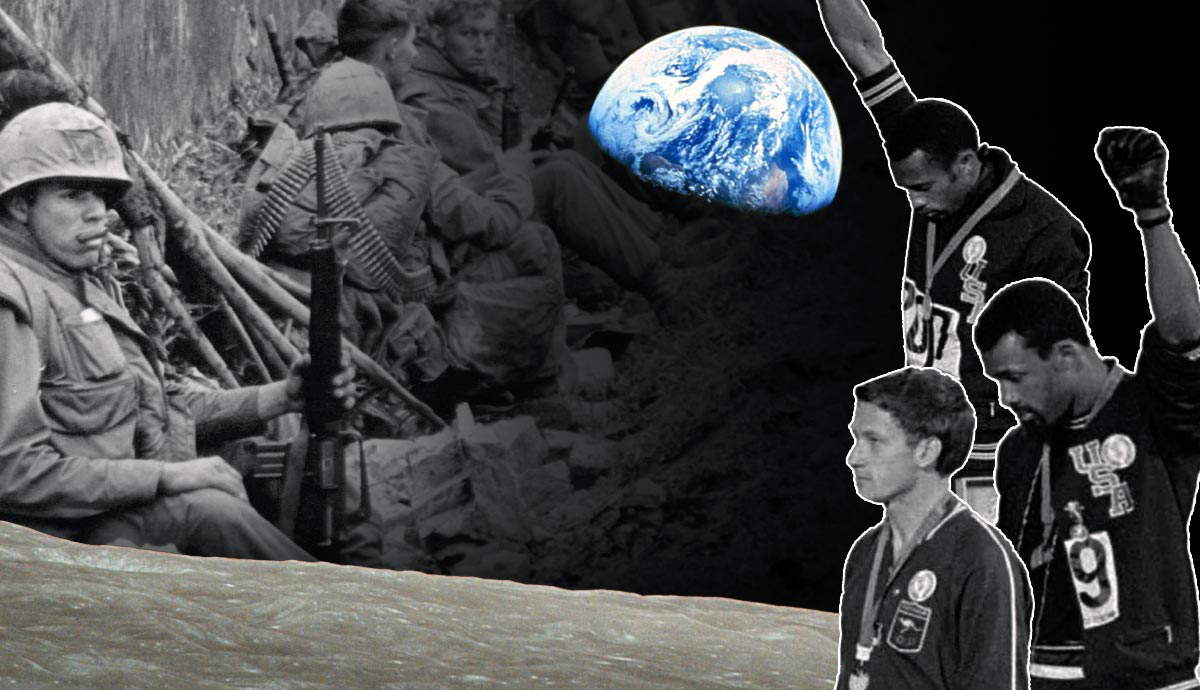
1968 in America: One of the Most Tumultuous Years in US History&;#63;
Favicon 
www.thecollector.com

1968 in America: One of the Most Tumultuous Years in US History&;#63;

  The United States was reaching new frontiers by the 1960s‚ with the crew of Apollo 8 orbiting the moon and Boeing’s first 747 taking flight. However‚ on American and foreign soil‚ tragedies abounded. The deaths of Martin Luther King Jr. and Robert F. Kennedy and protests of the Vietnam War were just a few of the stories that rocked the nation. Whether the year tipped toward good or evil‚ the United States was surely never the same. Here are eight events that would contribute to that change in 1968.   1. January 23: North Korea Captures the USS Pueblo  The surviving crew members of the USS Pueblo as they arrive in North Korea following their capture on Jan. 23‚ 1968. Source: National Public Radio (NPR)   The United States Navy was operating a surveillance mission from the Tsushima Strait‚ a channel that divides Japanese from North Korean waters. According to the Navy‚ the surveillance ship was called the USS Pueblo and was conducting the mission in international waters. However‚ the North Korean military claimed the vessel had entered its territory.   North Korea sent planes and warships to intercept the Pueblo‚ and in the struggle to do so‚ US crewman Duane Hodges was gunned down. The other 82 crew members were captured‚ with their ship being brought to port in North Korea. The American sailors were sent to a POW camp‚ where they were reportedly starved and severely beaten.   Despite their cruel treatment‚ the crew of the USS Pueblo was forced into a news conference‚ where they were to acknowledge the “kind treatment” they had received from their North Korean captors. The crew’s remarks were‚ however‚ intentionally sarcastic and mocking the North Koreans. This earned them harsher treatment once their captors had realized the mockery.   What began at the beginning of 1968 finally concluded in the final days of the year. On December 23rd‚ after negotiations‚ the crew was allowed to return to South Korea. The United States‚ as a concession to North Korea‚ was supposed to acknowledge that the Pueblo was conducting espionage‚ but once the crew was safe‚ the government immediately retracted its concessions.   While the crew of the Pueblo made it back to the United States‚ their ship never did‚ and it is still thought to be in the possession of North Korea today.   2. January 30: The Launch of the Tet Offensive A unit of the 1st Battalion‚ 5th Marine Regiment‚ sitting on the wall of Hue’s imperial palace after a battle for the citadel in February 1968‚ during the Tet Offensive. Source: NPR   The beginning of the end of the United States’ involvement in Vietnam was the launch of the Tet Offensive on January 30th‚ 1968. The attack‚ coordinated by the North Vietnamese and the Viet Cong‚ was named after and carried out on Tet‚ the Vietnamese Lunar New Year. Previously‚ the two sides had observed a truce during the holiday‚ but 1968 changed that and took all the Southern Vietnamese forces by surprise.   Eighty-five thousand Viet Cong and Northern Vietnamese soldiers attacked 36 major cities and towns in South Vietnam‚ catching the United States‚ as well as Southern Vietnamese forces‚ by surprise. The media coverage of the attack also took Americans on the homefront by surprise‚ as their confidence in the Johnson Administration to bring victory out of Vietnam waned.   Both sides sustained heavy casualties during the attack‚ and by the end‚ both sides claimed victory. The North Vietnamese were not as weak as President Johnson had claimed‚ even though the United States swiftly retook all occupied cities and towns.   The Tet Offensive was not only a test of the US Military’s strength but also a test of how much the American public could support their country’s intervention in the conflict. Public support of the war only diminished after the Tet Offensive and gave way to the several large protests that would crop up throughout 1968 and beyond.   3. April 4: Dr. Martin Luther King Jr. Assassinated Civil rights leader Andrew Young (L) and others on the balcony of Lorraine Motel pointing in the direction of the assailant after the assassination of Dr. Martin Luther King‚ Jr.‚ who is lying mortally wounded at their feet. Source: Thirteen   On April 3rd‚ Dr. Martin Luther King Jr. arrived in Memphis‚ Tennessee to prepare for a march in solidarity with striking sanitation workers throughout the city. The next night‚ as Dr. King stepped out onto the balcony of his room‚ number 306‚ at the Lorraine Motel‚ he was shot once by a hidden gunman at 6:01 PM.   Dr. King sustained injuries to the lower right side of his face‚ and once he lost consciousness‚ he never woke again. He was pronounced dead at 7:05 PM on April 4‚ 1968. While his fellow pioneers of civil rights begged for a nonviolent response to his death‚ the assassination inspired riots in over 100 cities throughout the United States.   The same night‚ Democratic presidential nominee Robert F. Kennedy was in Indianapolis‚ Indiana on a campaign stop when he received the news of King’s death. He announced the terrible news to those in the crowd who had gathered to listen to his speech. Despite the crowd’s emotional response‚ Kennedy urged them to embrace King’s message of love‚ nonviolence‚ and compassion. It is believed that because of Kennedy‚ riots were prevented in Indianapolis that night.   Two months after the shooting‚ police apprehended James Earl Ray at London Heathrow Airport after fingerprints had been found that linked him to the crime. Ray was a fugitive who had escaped from a Missouri prison in 1967.   After his capture and subsequent extradition‚ Ray entered a guilty plea to avoid the death penalty. However‚ shortly after he was sentenced to 99 years in prison‚ Ray recanted his confession and maintained until his death that he was innocent. While the FBI did perform an internal investigation after Ray’s death on behalf of the King family‚ no sufficient evidence was found to prompt further investigation.   4. April 23: Students Protest the Vietnam War &; Racism Strikers on the ledge of Mathematics Hall‚ one of five buildings at Columbia University that students took over in April 1968. Source: New York Times   On April 23rd‚ around one thousand Columbia University and Barnard College students gathered on Columbia’s campus and began a protest that would force the university to shut down for the rest of the school year.   The students were protesting both the war in Vietnam as well as the university’s plan to build a gymnasium over Morningside Park‚ public land that catered to the majority Black residents of Harlem. The movement was particularly poignant on behalf of the Vietnam War‚ as students fought for the safety of soldiers who were‚ on average‚ their age or younger.   The students occupied five buildings on Columbia’s campus for nearly a week before university officials called in the NYPD‚ who beat and arrested several hundred protestors. According to former Tactical Patrol Force officer Mike Reynolds‚ who was involved in the bust‚ “We thought the students were a bunch of spoiled kids…who needed a good spanking.”   Even after the violent bust of the occupation‚ Columbia students refused to go to class‚ forcing the university to close for the remainder of the school year. This inspired a wave of student activism worldwide‚ with demonstrations in Mexico City‚ Paris‚ Italy‚ and West Germany‚ among others.   In Paris‚ particularly‚ the students and police clashed on what is now known as “Bloody Monday” for the hundreds of injuries incurred. Eventually‚ when workers joined the movement‚ President Charles de Gaulle dissolved the National Assembly and threatened military intervention if the demonstrations did not stop.   The Columbia occupation inspired an era of student-led movements‚ where the young people of America and beyond could fight for the rights of themselves and others.   5. June 5: Robert F. Kennedy Assassinated Senator Robert F. Kennedy gives a speech at the Ambassador Hotel shortly before being shot and killed. Source: Politico   Shortly after being confirmed as the Democratic primary winner in California and South Dakota on June 4th‚ Robert F. Kennedy gave a speech at the Ambassador Hotel in Los Angeles. After the speech‚ Kennedy’s security detail led him out of the hotel through the kitchen‚ citing the need to protect the presidential candidate by taking him out of a back entrance.   However‚ in a hallway of the Ambassador’s kitchen‚ Sirhan Sirhan‚ a 25-year-old Palestinian man‚ shot Kennedy three times‚ once in the head and twice in the back. Five others were shot at the same time‚ all of whom recovered except for Kennedy. Robert F. Kennedy was pronounced dead almost 25 hours later at Good Samaritan Hospital.   Sirhan was apprehended immediately and‚ although he confessed on record‚ entered a not-guilty plea‚ resulting in a large‚ highly publicized trial. Sirhan was convicted of the murder and given the death sentence in 1969. However‚ his sentence was commuted as a result of People v. Anderson. He remains in prison in California‚ serving a life term. As of April 2023‚ his request for parole has been denied 17 times.   Kennedy’s death prompted the Secret Service to begin protecting presidential candidates and was the last of four monumental assassinations to occur in the 1960s.   6. September 30: Boeing’s 747 “Jumbo Jet” is Launched The Launch Day of the 747 Jumbo Jet with several airlines’ flight attendants posing with the aircraft. Source: Northwestern University   Air travel experienced such a boom in the 1960s that companies who manufactured planes‚ like Boeing‚ had to come up with new and creative ways to fit more passengers and make more journeys. Thus‚ the 747 Jumbo Jet was born.   Unveiled in September of 1968‚ the 747 was the largest commercial plane on the market at the time. It had a capacity of 374 passengers‚ stood six stories tall‚ and weighed around 300 tons. The superjet made air travel more feasible for the average American‚ which made way for the modern relative ease of travel that we experience today.   The 747‚ however‚ was not simply a phenomenon of the 1960s. Over 50 years after its unveiling‚ the 747 is still one of the most widely used aircraft for commercial flights.   7. October 16: United States Athletes Protest at the Olympics Tommie Smith (center) and John Carlos (right) raise their fists in protest after winning the 200-meter race at the 1968 Summer Olympics in Mexico City. Source: New York Times   During the 1968 Summer Olympic Games in Mexico City‚ two American athletes changed the nature of politics in sports forever. Tommie Smith and John Carlos won the gold and bronze medals‚ respectively‚ for their participation in the 200-meter race. As they were awarded the medals‚ the two athletes lowered their heads and raised a black-gloved fist during the playing of the Star Spangled Banner.   All three athletes on the podium‚ including silver medalist Australian runner Peter Norman‚ wore the badge of the Olympic Project for Human Rights‚ which fought against segregation and racism in sports. Smith and Carlos wore no shoes and black socks‚ which they said symbolized Black poverty. Smith’s raised right fist symbolized Black Power‚ while Carlos’s raised left fist stood for Black unity‚ and together‚ the fists formed an arch of unity and power.   As they walked away from the ceremony‚ the athletes were booed and were subsequently cut from Team USA. Many felt that the display unnecessarily brought politics into sports and dampened the spirit of the Olympics. Smith‚ however‚ countered this sentiment by saying‚ “If I win I am an American‚ not a black American…But if I did something bad then they would say ‘a Negro.’ We are black and we are proud of being black.”   The two athletes were stripped of their status but ultimately returned home as heroes of the African American community‚ and their protest became one of the most famous images in sports history.   8. December 24: Apollo 8 Becomes the First Manned Spacecraft to Orbit the Moon “Earthrise‚” the most iconic photo taken on the Apollo 8 mission of December 1968. Source: The Guardian   On Christmas Eve of 1968‚ three astronauts became the first humans to travel to the moon. Bill Anders‚ Frank Borman‚ and Bill Lovell orbited the moon ten times‚ with Lovell reporting back after their reappearance from the dark side of the moon‚ “Houston‚ please be informed there is a Santa Claus.”   The week-long mission came after an intense “space race” with the Soviet Union and was full of firsts for space exploration. Apollo 8 was the first mission where humans took photos of Earth from deep space‚ including the iconic “Earthrise” photo; it was the first time the surface of the moon was broadcast on live television‚ the first time humans had gone to the dark side of the moon‚ and reached a record rocket speed of 24‚200 miles per hour.   NASA was eager to fulfill former President Kennedy’s wishes to land on the moon by the end of the 1960s‚ and the Apollo 8 mission was a necessary first step that led to the Apollo 11 mission to the lunar surface seven months later.   Apollo 8 was a high point in an otherwise tragedy-filled year. According to his book A Man on the Moon‚ Andrew Chaikin claims that the astronauts received several thousand telegrams after the mission‚ but none that affected them as much as a simple one that read “You saved 1968.”
Like
Comment
Share
History Traveler
History Traveler
2 yrs

Emily Bront&;euml;: Misanthrope or Literary Genius (or Both)&;#63;
Favicon 
www.thecollector.com

Emily Bront&;euml;: Misanthrope or Literary Genius (or Both)&;#63;

  Part of an illustrious literary family‚ Emily Bront&;euml; was arguably the most spectacularly talented of all the Bront&;euml; family. It was‚ after all‚ her remarkable poetry that first fanned Charlotte’s ambition that she and her sisters should pursue publication to a flame. Yet Emily herself did not share Charlotte’s burning desire for fame and is often considered something of a socially awkward recluse by her modern biographers. Alternately vilified as a misanthrope and celebrated as a genius‚ here we will take a closer look at the life and work of one of the greatest writers of all time.   Early Years: Birth‚ Bereavement‚ &; Cowan Bridge Known as the Getty Portrait‚ this (supposed) portrait of Emily Bront&;euml; is widely contested. Source: IMDb   Emily Jane Bront&;euml; was born on July 30‚ 1818 in Haworth‚ West Yorkshire. By the time of her birth‚ her parents‚ the Reverend Patrick Bront&;euml; and Maria Bront&;euml; (n&;eacute;e Branwell)‚ had already had four children: her elder sisters Maria (born late 1813 or early 1814)‚ Elizabeth (born 1815)‚ and Charlotte (born 1816)‚ as well as her brother‚ Branwell (born 1817). Around eighteen months later‚ a younger sister‚ Anne‚ was born on 17 January 1820‚ and in April of that year‚ the family moved to the parsonage in Haworth with which they are so closely associated.   The children’s mother‚ however‚ developed uterine cancer. A year after their move to Haworth‚ her sister‚ Elizabeth Branwell‚ arrived at the parsonage to nurse her. She died later that year on September 15‚ 1821. Her sister‚ known to the children as Aunt Branwell‚ remained at the parsonage to care for them.   Reproduction of the profile portrait of Emily (originally part of a group painting of the Bront&;euml; siblings) by Branwell Bront&;euml;‚ c. 1833-34. Source: Encyclopedia of Trivia   On November 25‚ 1824‚ Emily was sent to board at the Clergy Daughters’ School at Cowan Bridge‚ where Maria and Elizabeth had been sent in July of that year‚ with Charlotte following them in August. This was her first time away from home‚ and Charlotte would later immortalize the school as Lowood in her 1847 novel Jane Eyre. While conditions were typically miserable‚ in 1824-25‚ a typhoid epidemic at the school killed many pupils.   It was not typhoid‚ however‚ but tuberculosis that Maria and Elizabeth caught. Maria was sent home to Haworth in February 1825 to recover but died on May 6. Three weeks later‚ Elizabeth returned to Haworth‚ also with tuberculosis‚ and died on June 15. Charlotte and Emily were then brought home the day after Elizabeth returned to Haworth in fear that they might succumb to the same fate if they remained any longer at Cowan Bridge.   Education &; the Creation of Imaginary Worlds Photograph of Charlie Murphy (who played Anne)‚ Chloe Pirrie (who played Emily)‚ and Finn Atkins (who played Charlotte) in the 2016 BBC dramatization of the lives of the Bront&;euml;s‚ To Walk Invisible: The Lives of the Bront&;euml; Sisters. Source: IMDb   After returning home from Cowan Bridge‚ Charlotte and Emily remained at Haworth to be taught at home alongside their two remaining siblings. She therefore received little by way of formal education‚ though her father’s evening oral lessons in history and religious teachings also far exceeded the educational lot of most middle-class girls of the period. Later‚ in 1829‚ the children would also receive art lessons from John Bradley.   While their father attended to the needs of his parishioners in the afternoon‚ the children would go for walks on the moors. In September 1824‚ Emily‚ Branwell‚ and Anne were accompanied by the family’s servants‚ Nancy and Sarah Garrs‚ for one such walk when a bog at Crow Hill (located behind the parsonage) erupted‚ creating a seven-foot-high wave of peat‚ mud‚ and water that catapulted boulders into the air.   Emily Bront&;euml;’s diary page‚ 26 June 1837. Source: Wikimedia Commons   The moors proved to be a place of lifelong inspiration for the children – and for Emily in particular. On June 5‚ 1826‚ Patrick returned home from a clerical conference in Leeds with presents for each of his children: ninepins for Charlotte‚ a toy village for Emily‚ a dancing doll for Anne‚ and a box of toy soldiers for Branwell. It was the latter present‚ however‚ that most delighted all four siblings. In a diary paper from three years later‚ Charlotte writes:   “I snatched up one and exclaimed this is the Duke of Wellington it shall be mine&;#33;&;#33; When I said this Emily likewise took one and said it should be hers. When Anne came down she took one also. […] Emily’s was a grave looking fellow [and so] we called him Gravey. Anne’s was a queer little boy thing much like herself. He was called Waiting-Boy. Branwell chose Bonaparte.”   Extract from Emily Bront&;euml;’s “Gondal Poems” notebook. Source: DP Traduction   In fact‚ Anne’s toy soldier went on to become Ross – after John Ross‚ the Arctic explorer – and Emily’s became Parry‚ after Sir William Edward Parry‚ John Ross’ companion-turned-nemesis and fellow explorer who led five expeditions to the North-West Passage. Emily thus made Parry King of Parry’s Land‚ which geographically resembled the wild moors of West Yorkshire and was one of the four islands that made up the siblings’ fictional city of Glass Town‚ the capital of Angria.   Charlotte and Branwell‚ however‚ as the two oldest children‚ dominated the stories the siblings played out in this imaginary world. Therefore‚ when Charlotte left Haworth to attend Roe Head School in January 1831‚ Emily and Anne created their own imaginary kingdom of Gondal – somewhere Emily would imaginatively return to for the rest of her life and would never cease writing about.   Charlotte remained at Roe Head (where she made two lifelong friends in Ellen Nussey and Mary Taylor) until June 1832. She later returned to Roe Head as a teacher‚ taking Emily with her as a pupil on July 2‚ 1835 (Miss Wooler‚ who ran the school‚ offered Charlotte the position on the suggestion that her wage would subsidize Emily’s tuition fees).   However‚ after spending three months at Roe Head‚ Emily returned to Haworth in October‚ and Anne took her place at the school. Many reasons have been suggested as to why Emily left the school relatively soon after arriving‚ including her shyness‚ homesickness‚ and (as Robert Barnard suggests) that she may well have found the level of teaching at Roe Head to be “childish and unstimulating” after the informal but far more advanced education she had received from her father (see Further Reading‚ Robert Barnard‚ p. 27).   The World of Work Photograph of Chloe Pirrie (who played Emily)‚ Charlie Murphy (who played Anne)‚ and Finn Atkins (who played Charlotte) in the 2016 BBC dramatization of the lives of the Bront&;euml;s‚ To Walk Invisible: The Lives of the Bront&;euml; Sisters. Source: IMDb   Whatever her reasons for returning home‚ Bront&;euml; was nonetheless determined to earn a living. In September 1838‚ she took up a teaching position at Law Hill School in Halifax. She had forty pupils‚ of whom she said that she preferred the school dog (Emily Bront&;euml; was an animal lover and had a particularly strong bond with her dogs Grasper and‚ later‚ Keeper). She returned home in March 1839 as her health deteriorated. Once back at the parsonage‚ her lessons with her father resumed‚ during which she read the Four Gospels and learned Latin.   As the daughters of an impoverished clergyman‚ however‚ all three of the Bront&;euml; sisters had been educated with a view to them going on to earn their livings as teachers or governesses. Led by Charlotte‚ the three sisters planned to open their own school. In pursuit of this aim‚ Charlotte asked their Aunt Branwell to finance further education for Emily and herself in Brussels to improve their language skills. Aunt Branwell consented‚ and in February 1842‚ Charlotte and Emily made their way to Brussels to attend the Pensionnat H&;eacute;ger.   Here‚ Emily made quite the impression on the school’s master‚ M. Constantin H&;eacute;ger‚ who would later recall her “stubborn tenacity of will” and that Emily “strongly – and vocally” expressed disapproval of his pedagogical methods. Nonetheless‚ he also recognized her genius.   However‚ the sisters’ time in Brussels was cut short when they learned that Aunt Branwell was ill. They prepared to make the journey back home‚ arriving in early November‚ by which time‚ however‚ Aunt Branwell had already passed away. The siblings each inherited £350 from their aunt. As her inheritance relieved some of the pressure on her to earn a living by teaching‚ Emily decided to stay behind‚ taking on housekeeping duties for her father at the parsonage.   Writing Title page of an 1858 edition of Wuthering Heights and Agnes Grey. Source: Jonkers Rare Books   Back at home‚ Emily began learning German‚ and in 1844‚ she began dividing and transcribing her poems in two notebooks: one titled “Gondal Poems” and the other untitled‚ though it is now known as the “Honresfeld manuscript.” One year later‚ Charlotte opened the drawer of Emily’s writing desk and found one of these notebooks open. On reading the poems‚ Charlotte was amazed by their quality‚ immediately noticing “that these were not common effusions” but “condensed and terse‚ vigorous and genuine.”   Convinced that the poems merited publication‚ she approached Emily – who was (understandably) furious that Charlotte had invaded her privacy – with this suggestion. Charlotte‚ however‚ persisted‚ and when Anne offered some of her own poems to form part of a joint publication‚ Emily relented.   Between September 1845 and January 1846‚ she systematically reviewed her notebooks to select and refine the poems for publication. Using the pseudonyms Currer‚ Ellis‚ and Acton Bell‚ the collection – containing 21 poems by Emily‚ another 21 by Anne‚ and 19 by Charlotte – was published (at the sisters’ own expense) in 1846. Despite receiving some favorable critical reviews‚ the collection only sold two copies in the first year of publication.   This convinced Charlotte that the sisters should turn their attention to the more lucrative business of writing novels. In December 1847‚ Emily’s Wuthering Heights and Anne’s Agnes Grey were published in a single edition by Thomas Cautley Newby. Wuthering Heights scandalized readers with its portrayal of fierce love and equally fierce hatred‚ with one reviewer advocating for “burn[ing] Wuthering Heights.” Nonetheless‚ in one review kept by Bront&;euml; herself‚ her writing was deemed “better in its peculiar kind than anything that had been produced since the days of Fielding.”   Illness and Death Anatomical drawing of the lungs of a patient who died of pulmonary tuberculosis‚ Plate V‚ by Samuel George Morton‚ 1834. Source: Wellcome Collection   A year after the publication of Wuthering Heights‚ her brother‚ Branwell (who had become an alcoholic and an opium addict)‚ died on September 24‚ 1848. His cause of death was listed as “Chronic bronchitis” and “Marasmus” (meaning emaciation)‚ though it is likely that he died of tuberculosis‚ as four days after his death‚ Emily caught what was thought to be a cold at his funeral.   Despite her family’s concern‚ she carried on with her household duties as her tuberculosis “galloped.” She refused to see a doctor until‚ at midday on December 19‚ 1848‚ she relented. She died later that day at two o’clock‚ aged 30‚ with her dog‚ Keeper‚ by her side.   At the time of its publication‚ Wuthering Heights (and‚ by extension‚ its author) was widely vilified by the critics. Even Emily Bront&;euml;’s sister‚ Charlotte‚ would go on to disparage the novel‚ albeit in an attempt to mitigate some of the criticism being leveled at her sister posthumously‚ casting Emily as a “nursling of the moors” – that is‚ as an innocent who knew not what she did.   “Whether it is right or advisable to create beings like Heathcliff‚” Charlotte wrote in her 1850 preface to Wuthering Heights‚ “I do not know: I scarcely think it is.” Today‚ however‚ Wuthering Heights is celebrated as a masterpiece of English fiction‚ and Bront&;euml;’s achievement is all the more remarkable when one considers that she was not yet thirty when she wrote it. Despite her untimely death‚ therefore‚ Emily Bront&;euml;’s legacy as one of the greatest English writers of all time is assured.   Further Reading:   Barnard‚ Robert‚ Emily Bront&;euml; (Oxford: Oxford University Press‚ 2000). O’Callaghan‚ Claire‚ Emily Bront&;euml; Reappraised: A View from the Twenty-First Century (Salford: Saraband‚ 2018).
Like
Comment
Share
History Traveler
History Traveler
2 yrs

4 Ways that Magical Realism Rewrites History
Favicon 
www.thecollector.com

4 Ways that Magical Realism Rewrites History

  In a particularly striking scene from Gabriel Garc&;iacute;a M&;aacute;rquez’s Nobel prize-winning novel One Hundred Years of Solitude‚ a trickle of blood takes on a life of its own‚ flowing from room to room‚ going around the carpets‚ crossing terraces‚ and climbing over curbs as it makes its way across town‚ unnoticed by all. Notably‚ this supernatural event is told in a most matter-of-fact language‚ blurring the line between the real and the magical—a literary mode that came to be known as magical realism.   In magical realism‚ supernatural elements seamlessly integrate into ordinary settings‚ assuming an unquestioned faith on the reader’s part. Many renowned works from this genre interlace magical elements to defy Eurocentric notions and write marginalized voices back into history. Here are 4 ways this literary movement accomplishes this.   1. Writing Subalternized Voices Back into History  La jungla (The Jungle) by Wilfredo Lam‚ 1943. Source: Museum of Modern Art‚ New York   Magical realism became a potent political instrument for rewriting history from the lens of colonized communities throughout the 1960s and 70s. Alejo Carpentier‚ a Cuban writer who introduced the concept of the marvelous real–a counterpart to magical realism–famously asked: “After all‚ what is the entire history of America if not a chronicle of the marvelous real&;#63;” For Carpentier and his contemporaries‚ the intricate realities of Latin America were impossible to depict with conventional forms of literary realism.   Bwa Kayiman Haiti 1791 by Nicole Jean-Louis‚ 2011. Source: Fine Art America   Carpentier introduced his theory of the marvelous real as a prologue to his 1949 novel‚ The Kingdom of This World. Set against the tumultuous backdrop of the Haitian Revolution‚ the novel offers a subjective perspective on history from a slave’s viewpoint. Carpentier portrays the struggles of enslaved populations of Haiti through the eyes of Ti Noel‚ the protagonist whose life spans the turbulent events before‚ during‚ and after the Haitian Revolution.   Within this narrative‚ Makandal‚ an enslaved Black person embodying the Afro-Caribbean hybrid identity‚ gains recognition for his supernatural powers‚ becoming a symbol of resistance against colonization. Carpentier’s idea of the “marvelous real” comes to life through this character who has the power to shape-shift into different animals‚ miraculously evade colonial authorities‚ and defeat them with potent mountain herbs. By blending historical events with magical occurrences‚ Carpentier invites the Afro-Carribean perspective and identity into the retelling of the history of Haiti and its struggle for freedom.   2. Defying Conventional Notions of Time The Aftermath of Macondo by Michael Young‚ circa 2016. Source: Michael Young Fine Art   In his most famous novel‚ entitled Hopscotch‚ Argentine Julio Cort&;aacute;zar allows his readers to hopscotch around the text and read it in multiple chronologies. For many authors representing Latin America’s literary boom era‚ such non-linear narratives were a brilliant way to play with Eurocentric and conventional notions of time and history.   With origins in Europe‚ magical realism gained resonance in Latin America in the 1960s as both an effort to subvert European literary norms and craft narratives that could revise the colonial past. Literary critic Steven Stern notes that the unresolved colonial legacy in Latin America “unsettles unilinear notions of the march of historical time” (1996). The following line from M&;aacute;rquez’s One Hundred Years of Solitude perfectly encapsulates this endeavor: “Melqu&;iacute;ades had not put events in the order of man’s conventional time‚ but had concentrated a century of daily episodes in such a way that they coexisted in one instant.”   Illustrations for the 50th anniversary edition of M&;aacute;rquez’s One Hundred Years of Solitude by Luisa Rivera‚ 2017. Source: Luisa Rivera   Like many other authors from this epoch‚ M&;aacute;rquez challenges chronology and historical time to suggest that there is no single way of perceiving time. The Colombian author takes the reader from past to present in a non-linear manner over multiple generations of the Buend&;iacute;a family. The novel opens with Colonel Buend&;iacute;a’s execution as he faces the firing squad‚ as though looking at his past unfold right in front of him while he waits for the reader to catch up to that present moment. It is as if the hundred years in M&;aacute;rquez’s fictional town of Macondo coexisted in that single instant.   This endeavor of unsettling notions of time is far from arbitrary; it grounds itself in the beliefs of many indigenous cultures of Latin America. For the Aymara people of the Andes‚ for instance‚ the past lies ahead of us while the future resides behind us. In this stark departure from European frameworks of time‚ the future remains concealed from view‚ and one must gesture towards their back to refer to it. The past‚ however‚ is visible‚ lying right before our eyes.   Above all‚ One Hundred Years of Solitude comments on the cyclical nature of history in the postcolonial experience. The narrative moves back and forth between the past‚ present‚ and future. Yet‚ nothing ever seems to happen in Macondo. There is only solitude.   3. Offering Postcolonial Critique through Local Cosmogenies Banana workers carrying bananas during early 20th century Colombia. Source: Collecteurs‚ the Museum of Private Collections   Alongside challenging notions of time‚ magical realist authors created a space for European and indigenous cosmogenies to intermingle and provide a widened perspective of time‚ history‚ and what is considered real. Numerous texts from the Latin American Boom era set out to re-imagine pre-Columbian civilizations and re-articulate postcolonial realities in Latin America. This effort implied weaving pre-Columbian cosmovisions into literary fiction and providing fictional renderings of historical episodes.   In One Hundred Years of Solitude‚ M&;aacute;rquez provides an account of the tragic event known as the Banana Massacre. The event took place in Ci&;eacute;naga‚ Colombia‚ in 1928‚ following a labor strike by banana plantation workers‚ who were demanding improved working conditions. M&;aacute;rquez’s portrayal of the tragic event‚ in which plantation workers were killed by the Colombian military forces at the behest of the United Fruit Company‚ challenges the official historical narrative and provides an alternative account. Magical realism‚ then‚ as Homi Bhabba puts it‚ “becomes the literary language of the emergent postcolonial world” (Bhabha‚ 1990).   The Aztec Stone of the Sun (also referred to as the Calendar Stone). Source: American Museum of Natural History‚ New York   The inclusion of pre-Columbian perspectives and cosmogenies further contributed to the creation of this distinctive literary language. This intention is brilliantly exemplified in Julio Cort&;aacute;zar’s “The Night Face Up‚” a short story that blurs the line between dream and reality‚ past and present. Following a motorcycle accident‚ the story’s protagonist finds himself drifting between two realms. In one‚ he is lying on a hospital bed in modern-day Mexico‚ receiving medical treatment. In the other‚ he is a captive warrior about to be sacrificed to the gods of a fictional Mesoamerican civilization called Motecas (a witty wordplay between Spanish “motocicleta” (motorcycle) and “Aztecas” (Aztecs)).   As the protagonist travels from one world to another‚ unable to tell which one is real‚ so does the reader. The ending of the story is nothing short of unexpected. Implicitly‚ the story seems to suggest that the real world experienced by the protagonist is not the hospital bed in present-day Mexico but rather the ancient world of the Motecas. The protagonist’s accident and his subsequent treatment in the hospital is‚ in fact‚ the hallucination or the dream. With this reversion of historical time‚ Cortazar poignantly re-inserts a pre-Coloumbian perspective back into history to disturb Eurocentric perceptions of time. This comes as a subtle wink to the implied reader‚ playfully teasing their expectations.   4. Reclaiming Female Stories Illustrations for the 50th anniversary edition of One Hundred Years of Solitude by Luisa Rivera‚ 2017. Source: Luisa Rivera   While male voices dominated magical realism in Latin America throughout the 1960s and 70s‚ a feminist approach did not take too long to emerge‚ the most vivid example being Isabel Allende’s bestselling 1982 novel The House of the Spirits. Released 15 years after the original publication of One Hundred Years of Solitude‚ the novel has often been interpreted as the feminist counterpart to the quintessential Latin American magical realist novel.   Originally written as a letter to her dying grandfather during her time in exile in Venezuela‚ Allende’s novel interlaces magic and the female experience to address the country’s complex socio-political realities. In an interview‚ Allende mentions that she wanted to write a letter to her grandfather so she would not forget her family’s history. As the niece of the former Chilean President Salvador Allende‚ who tragically ended his life during the coup orchestrated by General Augusto Pinochet‚ the writer experienced firsthand the effects of the subsequent military dictatorship and exile.   Military coup‚ Santiago de Chile‚ September 11‚ 1973‚ by Koen Wessing. Source: The Guardian   As a magical realist text that weaves a multi-generational story‚ comparisons were inevitably drawn between The House of Spirits and One Hundred Years of Solitude. Markedly centered around women‚ however‚ Allende’s text goes beyond mere imitation. The Chilean writer creates a stellar parody of M&;aacute;rquez’s text while putting female characters and their magical abilities at the core of her narrative. The unmistakable magical realist cues interwoven in the novel serve as a witty nod to the M&;aacute;rquezian world but masterfully transcend it by drawing upon a distinctively female perspective.   The House of Spirits‚ which propelled Allende to international bestseller status‚ remains one of the most prominent magical realist novels that intends to write female voices back into history and the genre. Amid the backdrop of political events and social injustices‚ Allende weaves in magical occurrences‚ clairvoyance‚ and spirituality‚ masterfully writing women as a “site of history” (Foreman‚ 1992). Other notable works that took the magical realist route to delve into feminist perspectives are Like Water for Chocolate (1992) by Mexican Laura Esquivel and So Far From God (1993) by Mexican-American author Ana Castillo.   References:    Bhabha‚ K. H.  (1990). Nation and narration. Routledge.   Foreman‚ G. (1992). Past-on stories: History and the magically real‚ Morrison and Allende on call. Feminist Studies 18(2)‚ 369–88.   Stern‚ J. S. (1996). The tricks of time: Colonial legacies and historical sensibilities in Latin America. The Princeton University Library Chronicle‚ 57(3)‚ 371–92.
Like
Comment
Share
Showing 29590 out of 56670
  • 29586
  • 29587
  • 29588
  • 29589
  • 29590
  • 29591
  • 29592
  • 29593
  • 29594
  • 29595
  • 29596
  • 29597
  • 29598
  • 29599
  • 29600
  • 29601
  • 29602
  • 29603
  • 29604
  • 29605

Edit Offer

Add tier


Select an image
Delete your tier
Are you sure you want to delete this tier?

Reviews

In order to sell your content and posts, start by creating a few packages. Monetization

Pay By Wallet

Payment Alert

You are about to purchase the items, do you want to proceed?

Request a Refund