YubNub Social YubNub Social
    Advanced Search
  • Login

  • Night mode
  • © 2026 YubNub Social
    About • Directory • Contact Us • Privacy Policy • Terms of Use • Android • Apple iOS • Get Our App

    Select Language

  • English
Install our *FREE* WEB APP! (PWA)
Night mode
Community
News Feed (Home) Popular Posts Events Blog Market Forum
Media
Headline News VidWatch Game Zone Top PodCasts
Explore
Explore Jobs Offers
© 2026 YubNub Social
  • English
About • Directory • Contact Us • Privacy Policy • Terms of Use • Android • Apple iOS • Get Our App

Discover posts

Posts

Users

Pages

Group

Blog

Market

Events

Games

Forum

Jobs

SciFi and Fantasy
SciFi and Fantasy  
1 y

Tolkien’s Precious Words and the Rise of Canon Gatekeeping
Favicon 
reactormag.com

Tolkien’s Precious Words and the Rise of Canon Gatekeeping

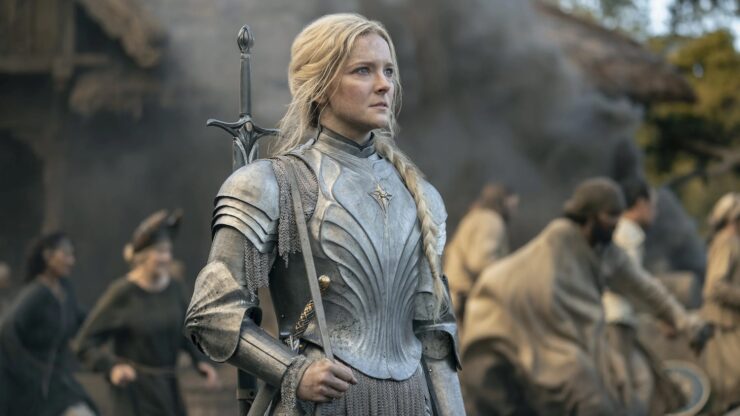
Books The Lord of the Rings Tolkien’s Precious Words and the Rise of Canon Gatekeeping With apologies to overzealous fans, there is no One Canon to rule them all… By Curtis A. Weyant | Published on November 18, 2024 Credit: Amazon Prime Video Comment 0 Share New Share Credit: Amazon Prime Video After the airing of The Rings of Power Season 2 finale, the official Lord of the Rings on Prime account on X (formerly Twitter) shared an interview clip with Dr. Corey Olsen, in which he states, “First thing to specify is that there’s no such thing, really, as canon in Tolkien.” Hundreds of knee-jerk responses latched onto this claim, resorting to ad hominem attacks calling Olsen a paid shill, a hack, and even Morgoth—though this last claim seems improbable, since according to The Silmarillion, Morgoth was “thrust through the Door of Night beyond the Walls of the World, into the Timeless Void” due to his unruly shenanigans. Other replies called The Rings of Power “a trash embarrassment” and “an insult to Tolkien and his legacy,” while still others expressed their displeasure via some unsavory memes. These and other responses demonstrate a loud and angry contingent of The Lord of the Rings fandom who consider only works formally published during J.R.R. Tolkien’s lifetime—and, perhaps, The Silmarillion—to be part of his “canon.” Anything which deviates from Tolkien’s precious words must not merely be ignored, but must be laid to waste like Osgiliath. Under thoughtful scrutiny, however, such claims fall apart quickly. With respect to Tolkien’s attitudes toward his own legendarium and the idea of “canonicity”—which he would have understood differently from today’s idea of “franchise canon”—Olsen has the much better claim: Like wings on a Balrog, there is no Tolkien canon. From Canaticism… In April 2023, Dawn Walls-Thumma published an article on defining canon at the Silmarillion Writers’ Guild, the largest online community of Middle-earth fanfiction. She took a qualitative approach to understanding how “canon” is used among those who engage creatively with Tolkien’s legendarium. As part of her analysis, Walls-Thumma points out that no discussion of Tolkien canon is complete without talking about “canaticism,” a portmanteau of “canon” and “fanaticism.” Essentially, canaticism ramps up the “no true Scotsman” tendency of gatekeepers by dictating which works may be considered authentic and valid for “true fans” to reference. Canaticism is in decline among fanfiction authors delving into Tolkien’s legendarium, according to Walls-Thumma. However, as responses to Olsen and The Rings of Power exhibit, there’s a thriving community of “orthodox canatics” (as I deem them) who loudly and abusively resist any modification of Tolkien’s works as originally published. Or as secondarily published, it might be more appropriate to say. Tolkien famously revised The Hobbit to align with his then-in-progress sequel. In the first edition (1937), Bilbo’s game of wits in Chapter 5, “Riddles in the Dark,” ends with Gollum giving him a “present,” a magic ring that turns the wearer invisible. In the second edition (1951), Tolkien rewrote much of the “Riddles in the Dark” to remove references to a present and to furnish Gollum with sinister motives.1 Gandalf refers almost offhandedly to both versions of Bilbo’s story in The Fellowship of the Ring: “…I heard Bilbo’s strange story of how he had ‘won’ it [the ring], and I could not believe it. When I at last got the truth out of him, I saw at once that he had been trying to put his claim to the ring beyond doubt. Much like Gollum with his ‘birthday-present’. The lies were too much alike for my comfort.” (Book I, Ch. 2, p. 48) While editing The Hobbit in the 1940s, Tolkien wrote at the top of his revisions that “if The Hobbit ran so the Sequel would be a little easier…though not necessarily ‘truer’”2. With this note, he demonstrates his understanding that discrepancies in his stories did not make one version better or more accurate than another. The basis for this attitude stems from Tolkien’s work with real-world stories like the Middle English Sir Orfeo, which survives in three separate manuscript versions. In 1922, Tolkien’s first published book was a glossary companion to Sir Orfeo and other 14th-century poetry compiled by Kenneth Sisam. Tolkien later produced his own edited version of Sir Orfeo for a naval cadets’ course in 1944, and he translated it around the same time. (The translation was published posthumously in 1975.) Working with Sir Orfeo and similar tales throughout his professorial career gave Tolkien an expert understanding of how stories changed over time, introducing inconsistencies along the way. He wanted to evoke a similar effect in his own tales, giving them different sources and even their own discrepancies and inconsistencies—like the two versions of Bilbo’s ring-acquisition story. Strangely, it’s these very types of discrepancies and inconsistencies that orthodox canatics criticize in post-Tolkien legendarium works, including The Rings of Power, the Peter Jackson films, video games like Shadow of Mordor or The Lord of the Rings Online, and other adaptations. Canatics insist on a level of consistency and continuity that Tolkien never attempted to achieve in his own work. …To Cauldron In perhaps his most famous of essays, “On Fairy-stories,” Tolkien writes about the “mishmash” of elements from which storytellers create new tales. He refers to the story that authors “serve up” as a “soup” made from the historical “bones” of source material: “Speaking of the history of stories and especially of fairy-stories we may say that the Pot of Soup, the Cauldron of Story, has always been boiling, and to it have continually been added new bits, dainty and undainty. For this reason…the fact that a story resembling the one known as The Goosegirl (Die Gänsemagd in Grimm) is told in the thirteenth century of Bertha Broadfoot, mother of Charlemagne, really proves nothing either way…”3 Tolkien appreciated that fairy-tales, folklore, legends, and myths changed over time. New elements were added, and the stories were adapted by their authors to fit their respective audiences, social contexts, and even didactic goals. Stories that taste different despite originating from the same “Cauldron of Story” were not a problem in Tolkien’s eyes. Examples abound of Tolkien’s incorporation of “new bits, dainty and undainty” into his own work. He borrowed from Beowulf the idea of Bilbo taking a gold cup from Smaug’s hoard. He likely knew of several stories related to invisibility rings, including tales from Andrew Lang’s fairy books, Arthurian legends like “The Lady of the Fountain” and its predecessors, and Plato’s anecdote of the Ring of Gyges.4 In his letters, Tolkien frequently refers to his Númenorean story as a retelling of the Atlantis myth. Many such bits have been uncovered and studied exhaustively across Tolkien fandom and scholarship. When it comes to his non-legendarium stories, Tolkien was aware of the medieval tradition of changing and expanding stories from one tradition, culture, or language to another. In addition to Sir Orfeo, he made translations and adaptations of many older stories—some might call them fanfiction—including Pearl, Sir Gawain and the Green Knight, Beowulf, The Story of Kullervo, Sigurd & Gudrun, The Lay of Aotrou and Itroun, and The Fall of Arthur. Oddly, few orthodox canatics seem concerned about his changes to these stories that differ from their “canonical” sources. Preserving the Precious Tolkien was comfortable adapting his own and others’ stories, but it’s fair to ask if he would have wanted his legendarium to be treated the same way. Orthodox canatics seem to believe he would prefer his tales to remain exactly as he wrote them. They try to preserve them much like the Elves used their three rings to preserve parts of Middle-earth from decay in the Third Age. In his well-known letter to Milton Waldman, Tolkien criticized such behavior. The Elves: “…wanted to have their cake without eating it. They wanted the peace and bliss and perfect memory of ‘The West’, and yet to remain on the ordinary earth where their prestige as the highest people…was greater than at the bottom of the hierarchy of Valinor.… They became sad, and their art (shall we say) antiquarian, and their efforts all really a kind of embalming…”5 The errors of Tolkien’s Elves can be applied to orthodox canatics who want “to have their cake without eating it” by preserving the “perfect memory” of Tolkien’s words. In doing so, they assert “prestige as the highest people” by compelling new creators to engage with Tolkien’s legendarium only in a certain way—and castigating anyone who deviates from the established path. Thus, they perform “a kind of embalming” of Tolkien’s work, disavowing anything that differs from it. This attitude runs counter to Tolkien’s stated goals of his legendarium. As he describes earlier in the same letter: “But once upon a time…I had a mind to make a body of more or less connected legend, ranging from the large and cosmogonic, to the level of romantic fairy-story…. I would draw some of the great tales in fullness, and leave many only placed in the scheme, and sketched. The cycles should be linked to a majestic whole, and yet leave scope for other minds and hands, wielding paint and music and drama.” Written in the early 1950s, well into his penning of The Lord of the Rings, this passage shows that Tolkien was eager to have others explore the world he was creating. That’s not to say he always liked how others explored that world. In 1957, three years after publishing The Lord of the Rings, Tolkien was open to adapting his story, but the details of doing so annoyed him. When asked to review a synopsis for a proposed film of The Lord of the Rings, he called it “bad, and unacceptable,” with some uncharitable remarks about the plot and particular story elements. Nonetheless, Tolkien remained amenable to the idea of a film adaptation: “An abridgement by selection with some good picture-work would be pleasant, & perhaps worth a good deal in publicity… I am quite prepared to play ball, if they are open to advice.”6 Some orthodox canatics might point at this letter in defense of their position, as though channeling Tolkien’s own attitude toward adaptation. Strict adherence to every pedantic detail of Tolkien’s work, however, contradicts his propensity toward revision, his awareness of how stories evolve over time, and his professed willingness to “play ball” when it comes to adapting his own tales. It’s also worth noting that Tolkien sometimes disagreed with his fans about his stories. Such disagreements included his “most devoted ‘fans’” like C.S. Lewis, who among other things thought (in Tolkien’s words) “hobbits are only amusing in unhobbitlike situations” and that the poems in The Lord of the Rings were “poor, regrettable, and out of place.”7 Given that one of his closest friends—“the man who was for so long my only audience,” according to Tolkien himself—sometimes got things wrong (insofar as Tolkien would have considered such opinions ”wrong”), it’s hard to take seriously canatics’ claims of special jurisdiction over Tolkien’s works in the form of “canon” more than fifty years after his death. Franchise Canon and Its Forebears The idea of “franchise canon” evolved out of older concepts of literary and religious canons. However, it has a fundamentally different purpose. Religious canons are assembled by religious authorities to codify which texts constitute proper guides to morality and piety. Literary canons are assembled by scholars to constrain (or sometimes to expand) academic discussions. To be sure, the process of establishing religious and literary canons can be just as vicious as fandom debates. But they are fundamentally collections of completed texts, although the canon itself might grow and change over time. The distinction with franchise canons is that they are overseen by intellectual property owners who are working within living, expanding fictional worlds. Two developments gave rise to franchise canon as we know it today: (1) the internet, and (2) the expansion of copyright protections. The use of “canon” in reference to franchise fandom arose in early internet discussion groups. For example, in 1996 a Star Trek fanfiction author wrote on alt.startrek.creative, “I used to stick to canon religiously. Now, I just say ‘screw it’ for Trek.” Going the opposite direction, a 1997 Usenet poster says about Star Wars, “I can write a book with Luke and Leia in it and call it Star Wars, but the story and the things in that book isn’t SW, it’s just my imagination.” While conversations like these were going on, franchise owners were pushing for expansions of copyright protections in a new digital age. In the U.S., the 1998 Sonny Bono Copyright Term Extension Act expanded copyright protections to the life of an author plus 70 years (or a flat 95 years for corporate works). This and similar legislation in areas around the world paved the way for popular franchises like Star Wars and Star Trek to expand further, while enabling franchises like Doctor Who and Tolkien’s legendarium to respawn with greater power, a la Gandalf the White. The internet also increased communication between fans and franchise owners. In response, franchises were forced to pay more attention to continuity and consistency. They did this in part by defining the boundaries of canon through proclamation. For example, Lucasfilms created a hierarchy with cascading tiers of canonicity. When Disney acquired Lucasfilm in 2012, the company rebranded its Expanded Universe stories as “Legends” and grafted a new branch of canon stories onto a trunk of older tales. Some of those tales, like Tolkien’s stories, had already been revised multiple times by their original creator—but new canon directives overrode the old versions. (Insert obligatory “Han shot first!” protest.) Some franchise owners are more rigorous about canon than others. What constitutes “canon” in the Wizarding World seems to depend on J.K. Rowling’s mood on any given day. Meanwhile, the BBC has eschewed declaring any Doctor Who story as canon (or not), whether television series, novels, audiobooks, or other media. On the spectrum of franchise canon, both Tolkien and the Tolkien Estate historically lie closer to the BBC than Lucasfilm. This leaves fans to debate what, if anything, might constitute canon in a new age of post-Tolkien legendarium franchise. Incomplete Inconsistency Not all urges to define canon are malignant or mean-spirited. As Walls-Thumma points out, with regard to fanfiction some writers adhere to Tolkien’s “canon” (as they individually define it) as a creative choice or challenge. Others are more interested in writing tales compatible with their interpretations of Tolkien’s values and themes, rather than specific details of his stories. In broader fandom discussions, there are valid conversations to be had about the stories as Tolkien told them versus later adaptations. Amiable conversations tend to refer to these as discussions about “lore” rather than canon. Less friendly conversations wind up like stone-giants hurling rocks at each other on a thunderstorm-y night. On a personal level, it’s also fine to dislike changes to the stories, whether big or small. When it comes to The Rings of Power, I’m not particularly fond of Galadriel’s premonitions—what I’ve come to call “Nenyavision.” And I have serious questions about the showrunners’ understanding of Second Age geography. It wouldn’t take a very strong vintage of the Old Winyards for me to admit to disliking other things about the series. But those dislikes have nothing to do with adhering to a non-existent canon. I’m able to admit that they’re matters of my own preference, without trying to summon Tolkien’s spirit like some keyboard Necromancer. In trying to assert “canon,” orthodox canatics ironically impose an intent and practice that Tolkien simply did not embrace. As Christopher Tolkien writes in his Foreword to The Silmarillion: “A complete consistency…is not to be looked for, and could only be achieved, if at all, at heavy and needless cost. Moreover, my father came to conceive The Silmarillion as a compilation, a compendious narrative, made long afterwards from sources of great diversity…” This conception also applies to The Hobbit and The Lord of the Rings, which are (ahem) “canonically” translations of tales found in a fictional Red Book of Westmarch, itself assembled from alleged earlier sources. There are a lot of layers, and which ones get peeled away is a highly personal choice about how deeply one wants to dive into Tolkien’s fabricated history. Even if we consider canon to consist of the most basic precepts that all fans can agree on, things get murky fast. Asking ten fans, “Do Balrogs have wings?” is likely to generate more than ten responses. (They don’t, by the way—unless you mean metaphorical shadow wings, in which case, sometimes they do.) Trying to achieve general fandom agreement about what constitutes canon on any larger scale is as pointless as turning the story of Túrin and Beleg into a buddy comedy. In other words, there is no One Canon to rule them all. Tolkien was familiar with both religious and literary canon, as indicated in his letters, but he likely would have rejected top-down, author-proclaimed franchise canon as we know it today. Neither would he have appreciated the efforts of orthodox canatics who guard his precious words like the Black Gates keeping Frodo and Sam out of Mordor. In fact, I think he would have found them to be rather orcish.[end-mark] In The Annotated Hobbit, Douglas A. Anderson provides the text of the first edition of The Hobbit alongside the second edition story, noting where “present” was edited out. See in particular Ch. 5, note 25 (pp. 128-131) and Ch. 6, notes 2-3 (pp. 140-141). ︎See The History of the Hobbit by John Rateliff (p. 732). ︎See Tolkien On Fairy-stories, edited by Verlyn Flieger and Douglas A. Anderson, “Origins” (pp. 38-49). ︎See The History of the Hobbit (pp. 174-182). ︎See Letter 131 in The Letters of J.R.R. Tolkien (expanded edition), edited by Humphrey Carpenter and Christopher Tolkien. Quoted sections are on pp. 211-212 and 203-204, respectively. This letter is sometimes included as prefatory material in The Silmarillion. ︎See Letter 201 (p. 376). ︎See Letters 31 (p. 49) and 137 (p. 245). ︎The post Tolkien’s Precious Words and the Rise of Canon Gatekeeping appeared first on Reactor.
Like
Comment
Share
Nostalgia Machine
Nostalgia Machine
1 y

The Stories Of Germany’s Largest Concentration Camp
Favicon 
www.pastfactory.com

The Stories Of Germany’s Largest Concentration Camp

The Auschwitz concentration camp was a labor and extermination camp operated by the Nazi Regime during World War II. One of the major sites of the Nazi's Final Solution to the Jewish Question, it was a place of untold horrors where millions of Jewish people and other minorities were mass murdered by the thousands and forced to live in conditions no human should have to endure. Of the 1. Source
Like
Comment
Share
Reclaim The Net Feed
1 y

Former Biden Press Sec. Psaki Demands New Laws to Curb Online “Disinformation” After Harris Loss
Favicon 
reclaimthenet.org

Former Biden Press Sec. Psaki Demands New Laws to Curb Online “Disinformation” After Harris Loss

If you're tired of censorship and dystopian threats against civil liberties, subscribe to Reclaim The Net. Former White House press secretary, notorious for saying that the Biden administration had been flagging social media posts for “misinformation” recently voiced concerns on the Next Question podcast with Katie Couric about the pervasive spread of “disinformation” on social media, attributing it as a significant factor in Vice President Kamala Harris’s electoral defeat to President-elect Donald Trump. Psaki called for legislative changes to enhance accountability for social media platforms. https://video.reclaimthenet.org/articles/psaki-censor-93845.mp4 “One of the things that’s changed even since I got involved in politics is just the rise of the percentage of people who get their information off of platforms that have no fact-checking mechanism and no accountability for having disinformation spread,” Psaki said. During their discussion, Psaki lamented the evolution of information dissemination, noting the increasing reliance on platforms free of legacy control. She highlighted the discrepancy in standards between local TV and social media, stating, “Local TV is held to a higher standard of accountability than social media platforms in terms of accurate information on their platforms. That is crazy!” Psaki added, “Laws have to change. I don’t even know the entire answer to it but that seems to me to be a core issue.” Psaki didn’t mention the First Amendment. If you're tired of censorship and dystopian threats against civil liberties, subscribe to Reclaim The Net. The post Former Biden Press Sec. Psaki Demands New Laws to Curb Online “Disinformation” After Harris Loss appeared first on Reclaim The Net.
Like
Comment
Share
Hot Air Feed
Hot Air Feed
1 y

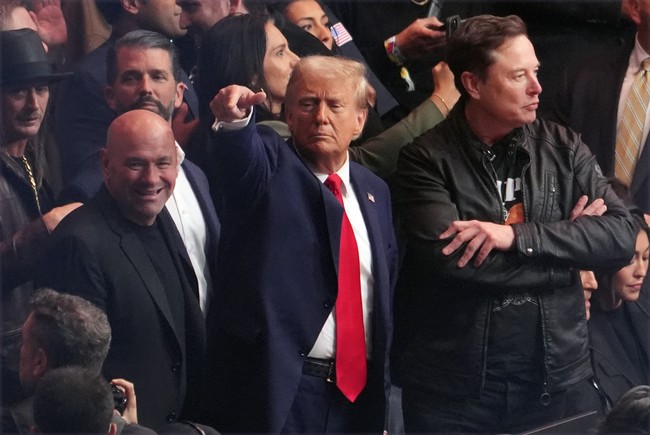
Trump: I'll Declare National Emergency to Use Military in Mass Deportations
Favicon 
hotair.com

Trump: I'll Declare National Emergency to Use Military in Mass Deportations

Trump: I'll Declare National Emergency to Use Military in Mass Deportations
Like
Comment
Share
Science Explorer
Science Explorer
1 y

Africa’s Most Endangered Carnivore Has Been Around For Over 1 Million Years
Favicon 
www.iflscience.com

Africa’s Most Endangered Carnivore Has Been Around For Over 1 Million Years

After all that time, it is now threatened with extinction.
Like
Comment
Share
Science Explorer
Science Explorer
1 y

Meet The Anurognathidae: Tiny Bat-Like Ptersosaurs With Huge Eyes
Favicon 
www.iflscience.com

Meet The Anurognathidae: Tiny Bat-Like Ptersosaurs With Huge Eyes

All the better to see insects with.
Like
Comment
Share
Science Explorer
Science Explorer
1 y

Densest Ultra-Short Period Planet Discovered 750 Light-Years From Earth
Favicon 
www.iflscience.com

Densest Ultra-Short Period Planet Discovered 750 Light-Years From Earth

The planet has been measured to be as dense as lead.
Like
Comment
Share
Strange & Paranormal Files
1 y

Physicists Explore a Possible Breakthrough for Time Travel
Favicon 
anomalien.com

Physicists Explore a Possible Breakthrough for Time Travel

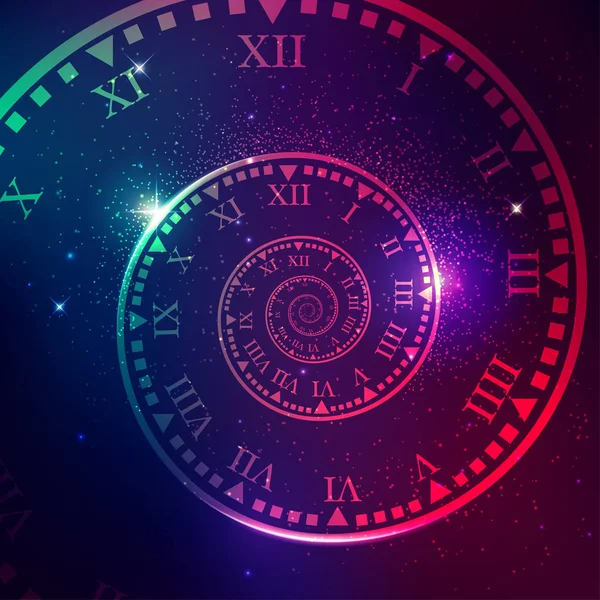
Scientists are uncertain whether cosmic strings exist, but if they do, these mysterious structures could revolutionize our understanding of the universe—and even make time travel possible. If physicists can confirm the existence of cosmic strings, they may pave the way to achieving the “Holy Grail” of physics: a unified theory that combines quantum mechanics with Einstein’s general theory of relativity. Beyond this, cosmic strings could hold the key to bending spacetime and enabling time travel. Theoretical models suggest cosmic strings are extraordinarily thin, far smaller than the nucleus of an atom, yet immensely massive—equivalent to tens of thousands of stars. These long, thread-like structures are believed to either stretch infinitely across the universe or form closed loops. As they oscillate and gradually shrink, they emit gravitational waves. A typical loop of a cosmic string might span 10 to 20 light-years. Physicists theorize the existence of two types of cosmic strings. Cosmic Superstrings: Rooted in string theory, these strings are thought to be stretched throughout the cosmos. String theory posits that the fundamental particles of the universe are tiny, vibrating strings, and it strives to develop a “theory of everything.” Superstrings could offer insights into the fabric of reality and might even provide a mechanism for time travel. Relics of the Early Universe: These cosmic strings are hypothesized to have formed during the universe’s earliest moments, as it cooled after the Big Bang. During this period, the four fundamental forces—gravity, electromagnetism, and the strong and weak nuclear forces—began to separate. This process may have created “cracks” in spacetime, leaving behind these structures, often referred to as the “hidden scars” of the universe. Astrophysicist J. Richard Gott of Princeton University suggests that cosmic strings could unlock the secret of time travel. According to his theory, two cosmic strings moving near the speed of light could distort spacetime in such a way that they form a loop—a wormhole through which time travel might be possible. Einstein’s general theory of relativity allows for the possibility of spacetime curving back on itself, creating time loops. Gott theorizes that the immense gravitational pull of cosmic strings could bend spacetime into shortcuts, or wormholes. For instance, if a spaceship traveled between two planets and encountered a cosmic string, it could traverse the distance far faster than light traveling in a straight line. This might allow the travelers to arrive at their destination before observing themselves leaving. Furthermore, two cosmic strings moving in opposite directions and intersecting could create a time loop. By traveling along this loop, one could theoretically journey into the past. Detecting cosmic strings, however, is extraordinarily challenging. Their extreme density should warp spacetime, causing a gravitational lensing effect that would make distant galaxies appear duplicated. Yet, if cosmic strings are lighter than expected, this lensing might not occur. Gott proposes another detection method: observing gravitational microlensing events. These occur when a passing cosmic string briefly magnifies the brightness of a star. Such observations could confirm the existence of cosmic strings and potentially lead to a Grand Unified Theory—a framework that unifies all known physics into a single, coherent model. The post Physicists Explore a Possible Breakthrough for Time Travel appeared first on Anomalien.com.
Like
Comment
Share
NewsBusters Feed
NewsBusters Feed
1 y

The NY Times Finds Scared New Yorkers After Trump Win: 'People Raged or Wept Openly'
Favicon 
www.newsbusters.org

The NY Times Finds Scared New Yorkers After Trump Win: 'People Raged or Wept Openly'

A sometimes-amusing bout of liberal hand-wringing appeared in Sunday’s New York Times, as reporters John Leland and Hurubie Meko scoured the streets of Manhattan and found triumphant Trump supporters and scared but still pompous liberals. When progressives held a post-election march in Manhattan last weekend, one New Yorker knew she had to be there. With her Trump flag. Mikaela Widlanski, who lives on Manhattan’s Upper West Side, does not display the flag in her famously liberal neighborhood. But this was a special occasion. “If they’re upset,” she said, waving her flag at the demonstrators, “it’s not my fault.” More than a week after Election Day, New Yorkers are still grappling with a changed reality, not just in Washington, but at home as well. The city, which had resoundingly rejected Donald J. Trump in his first two election bids, inched closer to him this year. The paper summarized Harris's substantial vote decline in the city, while adding a baleful judgment: She received nearly 600,000 fewer votes in the city than Joseph R. Biden Jr. had in 2020, while Mr. Trump gained almost 100,000. Where once New Yorkers could see Mr. Trump as somebody else’s doing, now the city was implicated. Mr. Trump improved his results throughout the city, but some of the biggest gains were in neighborhoods with large low-income or immigrant populations. This was especially hard for some progressives, who campaigned for immigrant rights and a strong social safety net. So much for tough New Yorkers! Eight years ago, when Mr. Trump won a surprise victory while losing the popular vote, New Yorkers took the lead in the resistance, a bond that seemed to hold disparate elements of the city together. People raged or wept openly on city streets. This year, the mood in the city felt more subdued than apocalyptic. Sophisticated urban liberals apparently can’t handle proximity toward someone who might not agree with them politically, or was dressed in, gasp, patriotic colors in a liberal neighborhood. The day after the election, Nandita Shenoy, a playwright and actor, was walking near her home on the Upper East Side when she saw a cluster of people she took to be Trump supporters in red, white and blue regalia taking photos of themselves -- something she had never seen in her neighborhood. “I felt uncomfortable and gave them a wider berth,” she said. The election has made her feel less safe in the city. “Democrats have been called scum and vermin,” she said. “That is specifically what makes me feel nervous.” She should hear what Democrats call Trump supporters! Reading between the Times lines revealed liberal intolerance and intellectual snobbery among New Yorkers, even when they think they’re reaching out. At the Protect Our Futures march, many demonstrators said they had simply stopped talking to relatives or acquaintances who supported Mr. Trump. But one, Masha Rojkova, 29, tried to start a conversation. She approached Ms. Widlanski, who was waving her Trump flag at the crowd, and asked her why she supported Mr. Trump. .... Afterward, Ms. Rojkova, an actor, said she felt bad for the other woman, saying she was “undereducated.” “Poor girl,” she said, adding that what she felt was “not quite pity, it’s more like empathy. I hope she finds her way.”
Like
Comment
Share
The Blaze Media Feed
1 y

Biden reportedly clears Ukraine to take actions that Putin suggested would trigger NATO-Russia war
Favicon 
www.theblaze.com

Biden reportedly clears Ukraine to take actions that Putin suggested would trigger NATO-Russia war

The Biden administration has reportedly cleared Ukraine to use American long-range missile systems against targets in Russia — a move long urged by Ukrainian officials, resisted by U.S. officials concerned about escalation, and identified by Russian President Vladimir Putin as a trigger for a direct conflict between NATO and Russia. Background In February, President Joe Biden secretly signed off on the transfer of the Army Tactical Missile Systems to Ukraine. Pentagon spokesman Lt. Col. Garron Garn told CNN that following Biden's approval, the ATACMS were included in the $300 million aid package announced on March 12 then delivered the following month. The American-made supersonic missiles have a range of up to 190 miles. Ukraine also has British-made Storm Shadow missiles, which have a range of 155 miles. The U.S. has blocked the use of such weapons in recent months over fears of escalation. However, Secretary of State Antony Blinken revealed in September that the Biden administration was considering clearing Ukraine to start lobbing them into Russia, citing the need to adjust and adapt "as needs have changed, as the battlefield has changed." Putin, whose nation has over 5,000 nuclear warheads and boasts a supersonic missile with a range of 625 miles, responded to Blinken's suggestion by telling a reporter, "It would mean that NATO countries, the US, European countries, are at war with Russia." Putin, who invaded Ukraine on Feb. 24, 2022, claims the use of ATACMS would constitute direct action on the part of the U.S. because American satellite reconnaissance would allegedly be necessary for successful missile strikes. He noted in June, "Ukrainian servicemen cannot do everything on their own and strike with this missile. They are simply technologically incapable of doing this." He equated an ATACMS strike as the work of the Pentagon and a Storm Shadow strike as the work of the British government. Escalation According to Reuters, two American officials and a third source familiar with the decision confirmed that the Biden administration has cleared Ukraine to employ the missiles internationally and that the first of the long-range missile strikes are expected to take place in the coming days. A U.S. official told CNN that the missiles will likely hit targets in the Kursk region of Russia, where Kyiv launched its summer counteroffensive and where Moscow recently deployed nearly 50,000 troops, including North Korean soldiers. According to one official, the decision to authorize the use of the ATACMS was driven in part by the recent involvement of the North Korean troops in the fighting. 'This is an impeachable offense.' By maintaining a foothold in Kursk with the help of long-range missiles, Ukraine might be in a better bargaining position in January should Trump bring Ukrainian President Vladimir Zelenskyy and Putin to the negotiating table. The New York Times indicated that Ukrainians hope to be able to trade territory in Kursk for Ukrainian territory presently occupied by Russian forces. Reaction Zelenskyy noted Sunday evening, "I am deeply grateful to all our partners who support us with air defense systems and missiles. This is a truly global effort." "The plan for strengthening Ukraine is the Victory Plan that I presented to our partners. One of its key elements is providing our army with long-range capabilities," continued Zelenskyy. "There's been much said in the media today that we have received approval to take relative actions. But strikes are not carried out with words. These things are not announced. The missiles will speak for themselves." Putin's press secretary Dmitry Peskov told Russian state media, "If such a decision was really formulated and brought to the attention of the Kyiv regime, then, of course, this is a qualitatively new round of tension and a qualitatively new situation in terms of the involvement of the United States in this conflict." The Washington Post noted that the decision was not altogether unexpected in Moscow. "The standoff will become even fiercer, and the talks will become more difficult," said Andrei Kartapolov, a former Russian Army officer and chairman of the parliamentary defense committee. "We expected them to escalate before the end of Biden's office — that was completely obvious." The Biden administration's decision, which comes with only months remaining in the Democratic president's term, amounts to a significant escalation that has various adversarial nations, especially China — whose alliance with Russia has grown considerably since Putin's invasion of Ukraine — paying close attention. 'Ukraine can't properly defend itself if one hand is tied behind its back.' There are presently tens of thousands of North Korean troops engaged in combat with Ukrainian forces. North Korea not only has a defense treaty with Russia but a firm mutual defense pact with China. Despite its defense obligations, China has emphasized that North Korea's presence in Ukraine is its "own business" and has signaled a reluctance to get directly bogged down in the conflict. Nevertheless, China's foreign ministry spokesman Lin Jian desperately impressed upon his American counterparts the need for de-escalation. Responding to reports that the U.S. has cleared the use of the Army Tactical Missile System by Ukraine against Russia-based targets, Lin Jian, the spokesman for the Chinese foreign ministry, stated, "China's position on the Ukraine issue is consistent and clear, and an early ceasefire and pursuit of a political solution are in the interests of all parties. Promoting a de-escalation of the situation as soon as possible is the top priority." The Chinese regime also insisted that Russia, which executed a large-range missile and drone attack against Ukraine's civilian infrastructure over the weekend, should similarly pursue de-escalation. Some American lawmakers have expressed support for Ukraine's use of the missiles, including Democratic Rep. Jake Auchincloss, who stated, "Biden's decision to lift restrictions on Ukraine's use of ATACMS in Russia is long-awaited progress. But it's critical that authorized targets include Russian oil refineries, which pump out the lifeblood of the Kremlin's war machine." Mississippi Sen. Roger Wicker (R) similarly expressed optimism over the development, stating Sunday, "If initial press reports are true, I am encouraged at the prospect of allowing Ukraine to use long-range ATACM missiles supplied by the U.S." Republican Rep. Mike Turner (Ohio) wrote, "Ukraine can't properly defend itself if one hand is tied behind its back. Today's news that the Biden Administration is finally allowing Ukraine to use some U.S.-provided ATACMS to strike limited targets within Russian territory is long overdue." Turner stressed the need to "put pressure on Vladimir Putin" ahead of Trump taking office. Other American lawmakers are less than enthused over the prospect of a shooting war with Russia. Rep. Thomas Massie (R-Ky.) tweeted, "By authorizing long range missiles to strike inside Russia, Biden is committing an unconstitutional Act of War that endangers the lives of all U.S. citizens. This is an impeachable offense, but the reality is he’s an emasculated puppet of a deep state." Montana Rep. Matt Rosendale (R) wrote, "American long range missiles being used to attack Russia? As many as 12,000 North Korean troops staged in Russia. When will Congress reclaim its authority and stop this proxy war we are entangled in?!" Like Blaze News? Bypass the censors, sign up for our newsletters, and get stories like this direct to your inbox. Sign up here!
Like
Comment
Share
Showing 3512 out of 56670
  • 3508
  • 3509
  • 3510
  • 3511
  • 3512
  • 3513
  • 3514
  • 3515
  • 3516
  • 3517
  • 3518
  • 3519
  • 3520
  • 3521
  • 3522
  • 3523
  • 3524
  • 3525
  • 3526
  • 3527

Edit Offer

Add tier


Select an image
Delete your tier
Are you sure you want to delete this tier?

Reviews

In order to sell your content and posts, start by creating a few packages. Monetization

Pay By Wallet

Payment Alert

You are about to purchase the items, do you want to proceed?

Request a Refund