reactormag.com
The Rat Race: Augmented Intelligence in Science Fiction From Algernon Onward
Books
intelligence
The Rat Race: Augmented Intelligence in Science Fiction From Algernon Onward
From “Flowers for Algernon” on, SF has posed thorny questions about the nature, limits, and value of hyperintelligence.
By Ryan Berger
|
Published on October 7, 2024
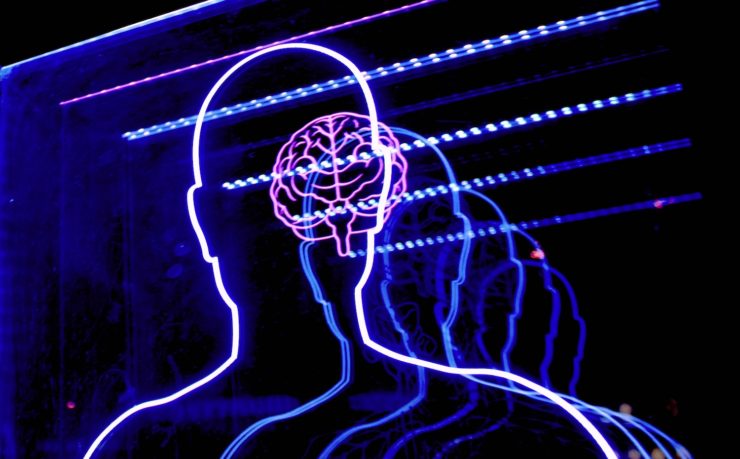
Photo: Bret Kavanaugh [via Unsplash]
Comment
0
Share New
Share
Photo: Bret Kavanaugh [via Unsplash]
There’s a moment in Daniel Keyes’ Flowers for Algernon when Charlie Gordon, after undergoing a procedure that transforms his mental handicap into a near-superhuman intellect, discusses the remarkable findings of his treatments with fellow scientists and psychologists. One observer inquires about the origins of Charlie’s disability on a biological level. Professor Nemur, the project lead, begins to explain his theories regarding the friction between competing enzymes in the brains, molecule shape, brain tissue, and so on. Charlie can’t help but interject.
“What about Rahajmati’s work in that field?” Charlie asks, earning slack expressions.“Who?”
Charlie cites Rahajamati’s new theory of enzyme fusion in the Hindu Journal of Psychopathology, released just days prior, and refutes much of what Nemur was suggesting. When the fellow panelists admit to not having read the journal as it has yet to be translated into English, Charlie becomes irate not only for their lack of aptitude for languages, but for their complacency in not having a finger on the pulse of their own field and insists that this is an academic embarrassment of the highest order. He puts the scientists on the backfoot, forcing them to reveal blind spots in their knowledge. Hindu? Japanese? Russian? Chinese? Portuguese? They are forced to admit the limits of their ability to research, including the fact that they haven’t read anything written and published in non-European languages.
The verdict? “Frauds—both of them. They had pretended to be geniuses. But they were just ordinary men working blindly, pretending to be able to bring light into the darkness. Why is it that everyone lies? No one I know is what he appears to be.” In Charlie’s mind, these men had no business entering the realm of medical discourse if they were intent on being strangers to the leading edge. How can these people be considered trusted thinkers in their field if they can’t even see all of it?
This moment encapsulates much of why conversations about knowledge and expertise are so thorny. What does it mean for any person to be “informed” on any subject when few can claim to be reading the literature from all corners of the world? Mind you, this was written in the late ’50s where this type of monolingualism was significantly more understandable, if still undesirable. In our global age—has the bar moved, the standards for being “informed” raised? If it has—how then, can anyone accomplish all the necessary readings when there are only so many hours in the day? Where is the line where we can accept unfamiliarity as permissible? Is there a place in the world for the specialist who goes an inch wide and a mile deep, or is their scope too narrow to fit in with a changing world of scholarship? And if we agree that it is unfair to draw the line because of these acknowledged limitations, how then, can anyone speak with any degree of confidence about anything?
Spend any amount of time on social media and you will inevitably witness people nailed to the wall for the mortal sin of Not Knowing. These trespasses range from the genuinely harmful (spread of misinformation, dangerous rhetoric, declarative statements that lack important context) to annoying bouts of incuriosity (“These Olympic skateboarders suck?”, “How is this Rothko painting good?”). When faced with these kinds of intellectual miscues, the internet reacts explosively and dissenters are often rewarded algorithmically for the greatest show of pyrotechnics. Whether people are acting (in their own minds) justly as they shame the guilty party, are genuinely vigilant about misinformation, or are simply using the offending claim as a naked attempt to flex their own depth of knowledge—they are acting. Few causes compel people to speak up than an attempt to correct someone and push them down the Informed Opinion Totem Pole. The hunger to make an example out of someone via public admonishment under the guise of upholding the truth goes hand in glove with these types of interactions. In the words of Richard J. Needham: “The person who is brutally honest enjoys the brutality quite as much as the truth. Possibly more.”
Part of what makes Flowers such an enduring classic, aside from its soul-rending emotional arc, is how Keyes renders the unacknowledged caste system of intelligence within our society. It begins by illustrating the plights of the intellectually disabled (the abuse, neglect, lack of respect etc.) but quickly careens into the world of academia as Charlie’s condition develops. Once Charlie enters a new caste, he admonishes everyone he deems to be below himself. When he lashes out at these scientists for Not Knowing, he is guilty of the same sin once done unto him. His attempt to diminish the panel of experts, though disguised in the righteous clothes of capital T Truth-Seeking, is little more than a small man’s attempt to assert his dominance over a class of intellect that once looked down on him.
This is Keyes’ most interesting suggestion in the book—that in the pursuit of knowledge there always be a new plateau from which to look down on others from, and the impulse to do so is difficult to resist. We are all too familiar with the divide between economic classes and the tall fences between them, but what’s gone unscrutinized is the animosity between castes of intelligence: Self-described intellectuals sneering at the masses for polluting their art, voting against their own interests, or seeming all too content with their anti-intellectualism. From their ivory towers they launch insults and decry the common man. The masses then fire back with gripes about the insular, highfalutin academic class that has lost all touch with the real world. Whether these grievances are valid is beyond the scope of this essay—but one’s intelligence can become a difficult ghetto to escape, and attempting to rise can make one a pariah. In the most famous allegory about glimpsing true knowledge, Plato’s Allegory of the Cave (from which Flowers draws its epigraph), the former prisoners are not welcomed as enlightened heroes, but instead shunned and mocked—“the men of the cave would say that up he went and down he came without his eyes.” As readers know, Charlie’s journey is not one of enlightenment but alienation.
Though Flowers is a story of augmented superintelligence, it has little to say about the wider implications of such a breakthrough. Charlie, in a sense, is functioning as a horror movie monster where the point of the narrative has very little to do with the subject itself, but instead what does it reveal about society. A superintelligent being is only fascinating because it forces us to confront intelligence for its invisible thorns, fickle nature, and arbitrary rules and not because we cower before the awesome power of what the human mind is now capable of.
For a broader look at the implications of augmented intelligence, we must probe beyond the classics. In 1973, the concept of augmented intelligence would be re-addressed, its informal class system examined again, but this time while tracking the global shift that comes when our relationship to thinking changes. In R.A. Lafferty’s Hugo-winning absurdist short story “Eurema’s Dam,” Albert, a prolific inventor yet self-described “idiot” (a label with ambiguous meaning in the context of the narration), prods society for its attempt to eliminate the lower bound of IQ using robots. Albert, despite inventing the machines, is skeptical of their pervasiveness. He believes that the gutter is the only suitable cradle for innovation as “it is not the fine bulls and wonderful cattle who make the new paths. Only a crippled calf makes a new path. In everything that survives there must be an element of the incongruous.” Attempting to uplift everyone through mechanical aid is a noble cause but trying to force all thought through the pipet of machinery would eliminate the iconoclasts who blaze new trails for the rest to follow. They are forced to see society from the outside and invent new ways to vault it. The alternative is stagnation.
Kurt Vonnegut also questioned the collective desire for uniformity, this time using augmented intelligence to impede rather than enhance. In “Harrison Bergeron” people must embody the most average of all possible traits, with adherence to the mean policed by force and heavy surveillance. The beautiful are fixed to ugly masks, the swift weighed down, the intelligent dumbed-down by radio waves that dim complex thought. Rather than a scientific tide that lifts all ships as in Lafferty’s story, Vonnegut’s dystopia places a low ceiling on humanity, preventing the higher range of intelligences (as well as beauty, speed, even height) from occurring at all in the name of establishing a misguided harmony.
Both of these stories use absurdism to illustrate the extremes of the knowledge debate and ultimately advocate for the far poles to coexist (Lafferty’s defense of the “stupid” as a way to produce boundary-pushing outsiders and Vonnegut’s insistence that the exceptional shouldn’t be arbitrarily punished and that our differences should be celebrated). Yet for all the quibbling about how to treat intelligence or what to apply it to, it is easy to let an underlying assumption go unquestioned: does intelligence do us any good?
Thomas M. Disch’s Camp Concentration is an underread masterpiece that similarly deals in augmented intelligence and tries to tear out the beating heart from our curse of consciousness. The novel centers around the journal entries of Louis Sacchetti, a poet heralded for his reputation as a polymath, during his incarceration at Camp Archimedes: a prison run by a Mormon brand of American fascists who perform hyperintelligence experiments on the inmates. Prisoners are injected with Pallidine, a drug that pushes the capacity for learning and retention past all limits at the cost of a rapid deterioration of their body. This condition comes with near-total freedom within the camp’s walls. The prisoners are well-fed and cared for, given any book or equipment they have want of, free to invent in laboratories and walk around the facility mostly unimpeded. Sacchetti is brought in to observe and comment upon his fellow inmates’ behavior, which mostly revolves around philosophical discourse and putting on community theater plays.
Sometimes described as Flowers for Algernon’s evil twin, Camp Concentration asks a darker, yet parallel question of its readers. Flowers portrays the rise and fall of a man along the curve of intelligence and interrogates his happiness at every step, then asks, “Is ignorance bliss?” Camp has a dimmer view of intelligence and creates a crucible of utterly useless hyperintelligence to ask “Is knowledge power?”
The true objective of Camp Archimedes (and Disch by extension) is at least partly to reveal the world as the sinister, immeasurably hostile place that it is. Knowledge, once thought to be the noblest of pursuits and highest of all mortal powers, is revealed to be a limp weapon against the cold calculus of the universe and the iron fists of the brutes in charge. It is a taunt against knowledge itself: Create an entire cadre of geniuses the likes of which the world has never seen and watch them swim to the edges of their fishbowl until they expire.
But Disch is not merely interested in declaring brawn more powerful than brains. It is the terrible knowledge at the end of omnipotence, the terminus point of genius, that horrifies him. The more knowledge we accumulate, the more certain it seems that the universe is nothing but an incomprehensibly large concentration camp. Life itself nothing more than a diversion, grasping at cracks in the porcelain as we circle the drain—simply a test of who can kill, eat, and expel the most heat. Sacchetti (who later receives the drug) often spars with Dr. Skilliman, a scientist who takes over the project in the latter half of the book and seems to anticipate every argument for the inherent goodness in intelligence and understanding. As the resident poet, Sacchetti argues on the side of art, the (natural) pursuit of knowledge, and continued human existence. Skilliman handily wins these debates and Sacchetti spends most of the novel’s second half languishing due to his poor health and, despite his rapidly expanding intellect, is unable to counter Skilliman’s offensive. Even with an inexhaustible pool of knowledge, he still finds himself floundering against someone taking a stance of opposition to life itself with all its slings and arrows.
This kind of raw pessimism is usually framed as an extreme point of view rather than an objective, if morbid enlightenment. But Disch’s aim here is to use the gift of superintelligence to achieve escape velocity out of the confines of a simple difference in perspective. The more Sacchetti learns, the harder it is for him to argue his chosen side. Art, once thought to be his salvation, is the first and arguably greatest betrayal of his new enlightenment. Milton’s Paradise Lost (among other works, especially Faust) features heavily in Camp and though Skilliman argues against art, he is still able to use Sacchetti’s own tools (including literary criticism) against him, using art to further his case for nihilism: “Some scholars have professed to find it odd that Milton’s sympathies were with his fiend and not with God, but there’s nothing remarkable in that. Even the Evangelist more often purloins his fires from hell than heaven. He certainly gives it much closer attention. It’s simply so much more interesting, not to say relevant. Hell is closer to the facts we know.” In the end, Sacchetti turns his back on poetry, lamenting that “We pretend that art redeems the time; in truth, it only passes it.”
Their philosophical chess matches are not unlike Cormac McCarthy’s play The Sunset Limited in which two men, simply labeled White and Black, debate life’s redeeming qualities in what is the pessimistic zenith of McCarthy’s oeuvre. Black saves White from the subway tracks, unaware that White is trying to end his life. The two men then debate life’s inherent value in the weak light of Black’s NYC apartment. The play offers a similar grudge match where Black fights to articulate some philosophical framework that can allow for a rosy view of life that won’t get laughed out of the room. White, a professor at a local university, is a product of formal education to Black’s school-of-hard-knocks wisdom heavily informed by Christianity. Though this story does not deal in augmented intelligence, a similar dialogue plays out where both men are on the same footing within their own practice (a “hard” intelligence vs sentimental wisdom), arguing not as individuals but instead embodying entire schools of thought; Black against White, Light against Dark, Nihilism vs Optimism. On the killing fields of logic, reason, and argumentation—it is nigh impossible for the light to win. Life itself is an evil, rigged game from the start and dropping out of it is the only winning move. In the play’s chilling final lines, White is emboldened to continue his suicide attempt not out of despair but through an inverted Eureka moment, his way of escaping life’s monotonous drone. “Now there is only the hope of nothingness. I cling to that hope.”
The Sunset Limited ends with White speeding off to end his life, Black’s arguments and entreaties to convince him to stay in the game having failed. In a battle of facts, nihilism wins, unsurprisingly, because the deck is stacked. As Skilliman puts it to Sacchetti when the poet reaches a similar defeat: “I was bound to get the better of you. I have the universe on my side.”
The ending of Camp Concentration, however, opts for the desperation play and succeeds. If the light of the universe cannot win on the grounds of logic and facts—then optimism must win by embracing illogic. It must accept the absurdity, violence, chaos, and maliciousness of the universe and proceed anyway. This requires putting the grudge against an unjust—what we might concede is an “objectively” evil universe, aside.
In the final climactic gunfight Sacchetti is saved by Mordecai, a fellow inmate once thought dead who was able to escape his deteriorating health by swapping minds with one of the generals overseeing the prison via a device created in the prison laboratory and developed using an invented nonverbal language among the inmates—a final bit of human ingenuity in the face of hopeless odds that throws some cold water on the idea that violence always trumps cleverness. Sensing defeat, Skilliman fires his last bullet not at his attacker but up into the air—at the stars themselves. One last strike against a universe that exists to farm suffering. It’s a feeble act of self-indulgence, refusing his final attempt at total victory to massage his despair.
This late turn towards optimism is a surprising one but speaks to the idea that creating art is an inherently illogical human act. In creating effective art that is ostensibly about the uselessness of the act, Disch transcends the claustrophobic cells of logic and accesses a higher plane of knowledge above the empirical. Perhaps this is what the critic Roland Barthes means when he says that literature is like phosphorus: “it shines with its maximum brilliance at the moment when it attempts to die.”
While on the mend, Sacchetti spends the book’s final moments looking forward to applying his abilities by accepting that even with a hyperintelligence beyond anything human—he still cannot possibly know a universe as vast as his own. In the end, he declares closing the book on the nature of the universe to be nothing more than solipsism. He strides forth with a poet’s soul and a scientist’s drive: “Much that is terrible we do not know. Much that is beautiful we shall still discover. Let’s sail till we come to the edge.”[end-mark]
The post The Rat Race: Augmented Intelligence in Science Fiction From Algernon Onward appeared first on Reactor.


 News Feed (Home)
 Popular Posts
  Events
  Blog
Blog  Market
  Forum
Forum  Headline News
 VidWatch
 Game Zone
 Top PodCasts