YubNub Social YubNub Social
    Advanced Search
  • Login

  • Night mode
  • © 2025 YubNub Social
    About • Directory • Contact Us • Privacy Policy • Terms of Use • Android • Apple iOS • Get Our App

    Select Language

  • English
Install our *FREE* WEB APP! (PWA)
Night mode
Community
News Feed (Home) Popular Posts Events Blog Market Forum
Media
Headline News VidWatch Game Zone Top PodCasts
Explore
Explore Jobs Offers
© 2025 YubNub Social
  • English
About • Directory • Contact Us • Privacy Policy • Terms of Use • Android • Apple iOS • Get Our App

Discover posts

Posts

Users

Pages

Group

Blog

Market

Events

Games

Forum

Jobs

YubNub News
YubNub News
1 y

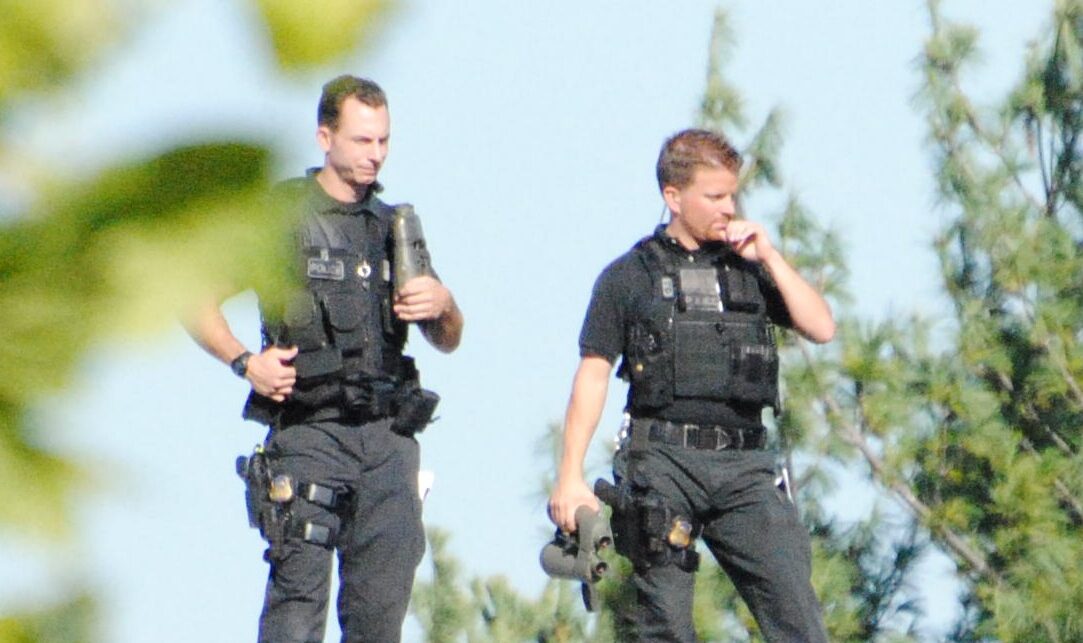
Secret Service Fire on Mar-al-Lago Gunman, Trump Rushed to Safety
Favicon 
yubnub.news

Secret Service Fire on Mar-al-Lago Gunman, Trump Rushed to Safety

The Secret Service opened fire on a gunman Sunday afternoon at the former President Donald Trump’s Mar-al-Lago golf course. Trump, who was out golfing on the course, was not harmed and was taken to…
Like
Comment
Share
Science Explorer
Science Explorer
1 y

Studying Stars from the Lunar Surface with MoonLITE, Courtesy of NASA’s Commercial Lunar Payload Services
Favicon 
www.universetoday.com

Studying Stars from the Lunar Surface with MoonLITE, Courtesy of NASA’s Commercial Lunar Payload Services

Optical interferometry has been a long-proven science method that involves using several separate telescopes to act as one big telescope, thus achieving more accurate data as opposed to each telescope working individually. However, the Earth’s chaotic atmosphere often makes achieving ground-based science difficult, but what if we could do it on the Moon? This is what a recent study presented at the SPIE Astronomical Telescopes + Instrumentation 2024 hopes to address as a team of researchers propose MoonLITE (Lunar InTerferometry Explorer) as part of the NASA Astrophysics Pioneers program. This also comes after this same team of researchers recently proposed the Big Fringe Telescope (BFT), which is a 2.2-kilometer interferometer telescope to be built on the Earth with the goal of observing bright stars. Here, Universe Today discusses MoonLITE with Dr. Gerard van Belle, who is an astronomer at the Lowell Observatory in Flagstaff, Arizona, regarding the motivation behind proposing MoonLITE, the science they hope to achieve, lunar surface location preference, the cost of MoonLITE, and next steps to make MoonLITE a reality. Therefore, what is the motivation behind proposing MoonLITE? “The real barrier to doing super sensitive high resolution optical interferometry is the Earth’s atmosphere,” Dr. van Belle tells Universe Today. “It’s a boiling, turbulent medium that means the exposure time of your telescope is ultimately limited to less than a millisecond or so. Telescopes that expose longer than that can achieve greater sensitivity, but at the expense of angular resolution – things smear out. MoonLITE, with two-inch (50mm) apertures, would be more than a thousand times more sensitive than terrestrial apertures is 8-meter collecting apertures, because it can stare for many minutes at a time. In comparison to millisecond exposure times on the Earth, the amount of light grabbed by these tiny dime-store sized telescopes exceeds giant industrial facility telescopes within the first second of having the shutter open.” Much like with the recently proposed BFT, MoonLITE has a number of scientific objectives it hopes to accomplish, as the study notes three science cases, including studying the radii of low-mass stars (M-dwarfs) and brown dwarfs, young stellar objects (YSOs), and active galactic nuclei (AGN). For the M-dwarfs and brown dwarfs, the team aspires to obtain long-sought data regarding their sizes and temperatures since observing them from ground-based telescopes has proven difficult. For YSOs, the researchers hope to gain greater understanding of the formation and evolution of habitable exoplanets within the protoplanetary disks of pre-main sequence stars, with MoonLITE being capable of ascertaining the inner regions of these stars and the star sizes, as well. For AGNs, the researchers aspire to learn more about supermassive black holes, and specifically the jets that emanate from them, with MoonLITE being able to observe these objects in optical wavelengths for the first time. But what else can we learn from these three science cases? “So, we actually have more science cases than that – so many, in fact, that we realized the new capabilities of MoonLITE were beyond our collective imagination for covering all the bases,” Dr. van Belle tells Universe Today. “So, we built into the program a 20% slice of the overall observing time to put up for competitive selection by the community – you know, crowdsource for the really creative ideas. The three we wrote up were just what we felt highlighted what one could do with greater sensitivity from the Earth’s surface. For example, the stars that are the smallest – 10% the size of our sun – are also the faintest. And measuring the sizes of those is out of reach of terrestrial interferometers. Same for YSOs and AGNs – there’s a few that can be done from Earth, but for more general samples – ones that represent the more typical objects, not the super-bright oddballs – you need lots of sensitivity.” Diagram conveying the setup for MoonLITE on the lunar surface, beginning with a lander being delivered by NASA’s Commercial Lunar Payload Services (1), which unrolls a fiber umbilical over 100 meters (328 feet) (2), concluding with deploying the siderostat station (3). Science operations begin once instrument calibration is performed. (Credit: van Belle et al. (2024)) One of the unique aspects of MoonLITE is it could be brought to the lunar surface via NASA’s Commercial Lunar Payload Services (CLPS), which is a collaboration with the private sector to deliver scientific and technical payloads to the Moon to test technologies that can help with both human missions as part of the Artemis Program, and scientific missions to further our understanding of the universe, like MoonLITE. Examples of companies participating in upcoming CLPS missions include Intuitive Machines, Astrobiotic, Firefly Aerospace, and Draper, all of which are delivering payloads to various locations on the lunar surface. But is there a specific location where MoonLITE would work best? “We designed MoonLITE to be entirely site agnostic,” Dr. van Belle tells Universe Today. “For a small experiment like this, it’s going to catch a ride on board a NASA CLPS lander as a minor guest – and putting a minimal number of requirements on your ride improves one’s chances of getting a ride assignment. So polar or equatorial latitudes both work, as well as nearside versus farside.” As noted, this same team of researchers recently proposed the Big Fringe Telescope, which is slated to be a 2.2-kilometer interferometer telescope comprised of 16 smaller telescopes that are 0.5-meters in diameter. Along with conducting cutting-edge science, including observing binary star systems and making exoplanet transit “movies”, one of the most notable features of the BFT is its extremely low cost compared to current optical interferometers around the world, coming with an approximate price tag of $28,496,000. In contrast, the cost of the European Southern Observatory’s Very Large Telescope Interferometer (VLTI), which is comprised of four 8.2-meter telescopes and four movable 1.8-meter telescopes, has been estimated in the hundreds of millions of dollars. Therefore, what is the potential cost for MoonLITE compared to other Earth-based interferometers? “MoonLITE was designed to work within the cost box for the NASA Pioneers call for proposals,” Dr. van Belle tells Universe Today. “This CfP [Call for Projects] stipulates a couple of things: a $20M cost cap, including a 25% uncommitted reserve, so the actual budgeted level of activities and hardware was $15M. The CfP does let you request some things – first off, a CLPS ride, though you have to then fit within the CLPS mass cap of 50kg. The notional CLPS lander in the CfP was to provide some other things as well – power, communications, mobility with a rover. So, there’s actually quite a bit of in-kind support wrapped up in that CLPS ride.” Submitting a proposal to NASA is a very in-depth process involving several steps, also known as phases, resulting in a very small acceptance rate, often with several rejections and improvements before being accepted. These proposals range from CubeSats to full-blown, multi-billion-dollar space missions, with most taking years to become real-world missions even after selection, if at all. For example, of the four proposals selected for further development in January 2021 Astrophysics Pioneers Program, (Aspera, Pandora, StarBurst, and PUEO), only two of them have definitive launch dates (StarBurst in 2027 and PUEO in 2025). Therefore, if MoonLITE is to be selected for advancement, it could be years, or even decades, before it officially lands on the lunar surface to conduct science. Unfortunately, while Dr. van Bells says the 2024 Pioneers proposal term was canceled due to federal budget issues, what are the next steps to make MoonLITE a reality? “We submitted for the 2023 NASA Pioneers call and got turned down,” Dr. van Belle tells Universe Today. “But we got a good review and have been encouraged to improve things, address perceived issues, and resubmit. We’re trying to reduce risk by doing some lab and ground-based tests. This is another nice element of MoonLITE – we can just build a representative system on the ground and test it straight up here. We don’t get the exquisite sensitivity like we would on the moon, but otherwise it’ll work just the same – we just need to look at bright things here from Earth. So, we’re keen to address some of these issues from the review panel and resubmit for 2025.”  As NASA prepares to send humans back to the Moon with the Artemis Program for the first time since 1972, the level of science that can be achieved on the lunar surface is unprecedented. This is specifically evident given the lack of a Moon’s atmosphere, allowing for more accurate data to be obtained and potentially providing scientists with a greater understanding of our universe, and our place in it. With MoonLITE, scientists hope to gain insight into low-mass stars and brown dwarfs, young stellar objects, and active galactic nuclei from potentially anywhere on the lunar surface, allowing for greater diversity is site selection and what celestial objects can be observed. Dr. van Belle concludes by telling Universe Today, “MoonLITE is super exciting, not just because it’s a really high-impact experiment in a remarkably affordable package – but because it will show the whole approach works and can be taken much, much further. As an example, high precision astrometry from a lunar interferometer could characterize the masses of terrestrial-scale extrasolar planets. Mass measures are needed in advance of the Habitable Worlds Observatory of the 2040’s, to understand the spectral HWO will get, and disentangle those spectra for signs of life.” How will MoonLITE contribute to optical interferometry on the lunar surface in the coming years and decades? Only time will tell, and this is why we science! As always, keep doing science & keep looking up! The post Studying Stars from the Lunar Surface with MoonLITE, Courtesy of NASA’s Commercial Lunar Payload Services appeared first on Universe Today.
Like
Comment
Share
Conservative Voices
Conservative Voices
1 y

Secret Service Fire on Mar-al-Lago Gunman, Trump Rushed to Safety
Favicon 
www.theamericanconservative.com

Secret Service Fire on Mar-al-Lago Gunman, Trump Rushed to Safety

On Sunday afternoon, the Secret Service opened fire on a gunman at former president Donald Trump’s Mar-al-Lago golf course. Trump, who was out golfing on the course, was not harmed, and was taken to safety by his bodyguards. The gunman, who did not fire his weapon during the course of events, fled the scene after being detected by the Secret Service. Local police announced later the same day that the gunman had been arrested and taken into custody. No details of his identity have been released. In response to the incident, Trump released a statement: There were gunshots in my vicinity, but before rumors start spiraling out of control, I wanted you to hear this first: I AM SAFE AND WELL! Nothing will slow me down. I will NEVER SURRENDER! The Secret Service has since closed down the roads around Mar-al-Lago. This appears to be the second attempt to assassinate the Republican presidential candidate, after a gunman fired on Trump at a rally on July 13 of this year, wounding him and two other attendees and killing one. The post Secret Service Fire on Mar-al-Lago Gunman, Trump Rushed to Safety appeared first on The American Conservative.
Like
Comment
Share
Clips and Trailers
Clips and Trailers
1 y ·Youtube Cool & Interesting

YouTube
Punching Old People | Hot Fuzz | CLIP
Like
Comment
Share
Classic Rock Lovers
Classic Rock Lovers  
1 y

Who invented the music genre shoegaze?
Favicon 
faroutmagazine.co.uk

Who invented the music genre shoegaze?

The origins of the scene that celebrates itself. The post Who invented the music genre shoegaze? first appeared on Far Out Magazine.
Like
Comment
Share
Classic Rock Lovers
Classic Rock Lovers  
1 y

The guitar solo that links The Doors, Kiss and Pearl Jam
Favicon 
faroutmagazine.co.uk

The guitar solo that links The Doors, Kiss and Pearl Jam

An interesting connection. The post The guitar solo that links The Doors, Kiss and Pearl Jam first appeared on Far Out Magazine.
Like
Comment
Share
Classic Rock Lovers
Classic Rock Lovers  
1 y

‘In-A-Gadda-Da-Vida’: The accidental jam that sold 30 million copies
Favicon 
faroutmagazine.co.uk

‘In-A-Gadda-Da-Vida’: The accidental jam that sold 30 million copies

A manic episode. The post ‘In-A-Gadda-Da-Vida’: The accidental jam that sold 30 million copies first appeared on Far Out Magazine.
Like
Comment
Share
Conservative Satire
Conservative Satire
1 y Funny Stuff

rumbleRumble
Top Harris-Walz surrogate Healy gets nuked over Kamala's claim that no active duty U.S. troops are stationed in combat zones: "You say she demonstrated her ability to be commander-in-chief, but did she not know...?"
Like
Comment
Share
Let's Get Cooking
Let's Get Cooking
1 y

Walmart's Orange Chicken Is Nothing Like The Iconic Fast Food Original
Favicon 
www.mashed.com

Walmart's Orange Chicken Is Nothing Like The Iconic Fast Food Original

Walmart is home to a series of items that look like substitutes for popular fast foods. However, its take on orange chicken misses the mark.
Like
Comment
Share
Fun Facts And Interesting Bits
1 y ·Youtube General Interest

YouTube
The Yellowstone Officials FINAL WARNING Terrifies The Whole World!
Like
Comment
Share
Showing 12076 out of 56669
  • 12072
  • 12073
  • 12074
  • 12075
  • 12076
  • 12077
  • 12078
  • 12079
  • 12080
  • 12081
  • 12082
  • 12083
  • 12084
  • 12085
  • 12086
  • 12087
  • 12088
  • 12089
  • 12090
  • 12091

Edit Offer

Add tier


Select an image
Delete your tier
Are you sure you want to delete this tier?

Reviews

In order to sell your content and posts, start by creating a few packages. Monetization

Pay By Wallet

Payment Alert

You are about to purchase the items, do you want to proceed?

Request a Refund