YubNub Social YubNub Social
    Advanced Search
  • Login

  • Night mode
  • © 2025 YubNub Social
    About • Directory • Contact Us • Privacy Policy • Terms of Use • Android • Apple iOS • Get Our App

    Select Language

  • English
Install our *FREE* WEB APP! (PWA)
Night mode
Community
News Feed (Home) Popular Posts Events Blog Market Forum
Media
Headline News VidWatch Game Zone Top PodCasts
Explore
Explore Jobs Offers
© 2025 YubNub Social
  • English
About • Directory • Contact Us • Privacy Policy • Terms of Use • Android • Apple iOS • Get Our App

Discover posts

Posts

Users

Pages

Group

Blog

Market

Events

Games

Forum

Jobs

Living In Faith
Living In Faith
1 y

England’s Assisted Suicide Bill and the Disordered Western Soul
Favicon 
www.thegospelcoalition.org

England’s Assisted Suicide Bill and the Disordered Western Soul

Thirty-five years ago, Canadian philosopher Charles Taylor published Sources of the Self—a dense but stunning portrait of modern Western people and the moral narratives that shape our lives. In the subsequent years, many Western cultures have kept on following lines elegantly charted in his careful work. This is most markedly so on the issue of assisted suicide, which may provide the clearest window into the disordered Western soul. Following Canada, Switzerland, the Netherlands, Belgium, and some U.S. states, England and Wales are on the verge of relativizing the most foundational of social values: that every life is sacred and unconditionally valuable, that human dignity is indelible (even in the face of illness, poverty, or disability), and that doctors sustain (rather than end) lives. The same issue is currently under debate in Scotland, as well as in other parts of Europe. For Christians, it’s disorienting as we try to understand how some of our neighbors and politicians undermine these values with a sense of joy while others feel terror and devastation. In London, as wheelchair users wept with grief outside the Houses of Parliament, one member of Parliament reported that pro-assisted-suicide colleagues celebrated with champagne in the members’ dining room. Within shouting distance of bewildered, fearful disability activists, powerful celebrity campaigners were congratulated on live TV by journalists. How do we begin to make sense of that scene? Price of Individualism Taylor argues modern Western people have a particular sense of self. Compared to their ancestors (and many non-Western people today), they feel morally obligated to express their inner sense of self, to assert their ideals of freedom and individuality. Not to do so is its own kind of moral failure. Those moral obligations are hard to live out, of course, because no individual is the only individual. Pushing your individual sense of self necessarily impinges on someone else’s different expression of individuality. Knowing how far to push it is a constant source of tension. After all, what if I conclude that for me to be me—for my highest expression of individuality to be expressed—another individual must pay a high price? That calculus goes on deep in the Western psyche, although (as Taylor also identifies) we greatly struggle to describe the ethics involved. Modern Western people are plagued by what Taylor calls the “ethics of inarticulacy.” The recent parliamentary debates in England and Wales serve as a perfect example: to address (literal) life-and-death-defining issues for an entire society, only five hours of debate were held, with each speaker granted only minutes to respond to a bill published mere weeks before. Critics have pointed out that many of our parliamentarians seemed not to understand basic features of the bill they supported. Why, that critique goes, did they legislate for such grave matters on the basis of vibes? Unfortunately, if Taylor is right, that’s how modern Western culture at large deals with ethics. Revaluation of Dignity Taylor also pointed out that compared to many other periods in history, modern Western people have taken on an unusual notion of “dignity”—one of the buzzwords in our inarticulate discussions of assisted suicide. We talk a great deal about dignity, although we treat it in ways that would make little sense to our ancestors. In the distant pre-Christian past, dignity was an accomplishment achieved more so than an innate quality. It was something attained by overcoming adversity or suffering. Christianity changed this notion, teaching people to see dignity as both something inherent (and God-given), and a goal to strive toward. Nowadays, that understanding has been hollowed out. In the modern secular sense, dignity has become a self-declaration (“As a free individual, I’m dignified because I say so”). Stare at it for long enough, though, and you realize a free individual also has the power to make a terrible proclamation: “I’m no longer dignified because I say so.” (Critics of assisted suicide have often pointed out that vulnerable individuals are highly susceptible to coercion on that front: what if that individual’s proclamation is actually the fruit of a society’s implicit assumption that her life is not worth living?) Alongside this modern declaration, Taylor also saw that modern Western people had become unusually fearful of suffering and death. Unlike our ancestors, we mostly have little experience of caring for the sick in our homes and communities. Death usually happens in private, sterile places, far from our ordinary experience. And in our world without God, we have no shared narratives that help us make sense of death existentially. (In the United Kingdom, incidentally, healthcare professionals who serve the dying are generally much less supportive of assisted suicide than irreligious politicians.) All this taken together, it’s no surprise that assisted suicide is a creation of secularized Western culture and that many people produced by those cultures would celebrate its advance as a positive good. However, even within secular Western culture, assisted suicide will never be celebrated as a universal good. Again, how do we make sense of champagne flutes in the members’ dining room while wheelchair users weep outside? How We Got Here: Two Secular Approaches Taylor is useful here as well. For some of us, secularization might do away with God, but it still requires us—as free individuals—to live for something, or for some things. We might deem many things good (freedom, self-mastery, fame, career, authenticity, self-acceptance, and so on). However, our lives are only functionally livable insofar as some of those things strike us as more important than others. To be a total relativist, and live without any sense of particular things being more important than others, simply does not work. Instead, Taylor argues, secularized people follow two paths. In the first, of all the possible “good” things, you choose one and elevate it far above all others. In effect, it becomes your idol, the only good—not only for you but also for others. In an inarticulate way, you become ready to impose your highest good on others. Consider the Just Stop Oil protester who throws soup over a priceless Van Gogh, just as others in the room enjoy a wonderful experience in looking at it. In that scenario, the protestor has taken one “good” (care for the planet) and elevated it dramatically. In her mind, it’s now the only real good. The enjoyment or artistic ideals of other onlookers no longer matter. Or consider the deeply secularized politician who treats autonomy as the only real good, votes for assisted suicide and feels unmoved by the tears of nearby disability activists. Although the highest good is different—individual autonomy rather than climate change—the same sense of self is at work. Elevating one good to that incomparable status, however, isn’t the only option. Taylor also points out that some secularized people prioritize a few different “goods,” elevating them together more modestly and trying to find an impossible balance between them. Think of the person who wouldn’t dream of destroying a Van Gogh but buys a bamboo toothbrush, eats meat only a couple of times a week, and pays to offset the carbon footprint of a flight (which she justifies because it serves another good, caring for family who live far away, and is her only flight that year), always anxious about whether she has done enough in those efforts at balancing her conflicted “goods”. Or consider the kind of secularized politician who “supports assisted suicide in principle” but struggles with how the principle of autonomy might be worked out in relation to other things he deems good (such as the idea that every life is of equal value). That kind of deliberation can go either way and is fraught with anxiety in every outcome. In England, one high profile supporter openly admits that the real cost of autonomy will be borne by the disabled and the poor. While this makes him “queasy,” he supports it nonetheless. By contrast, other MPs have given only conditional support to assisted suicide, while they ponder how the cost of autonomy will be divvied up across society. Bear Witness to a Gospel of Life On this point, secularization is a human tragedy and a mess. Why respond to it with philosophical analysis from Charles Taylor? We have good reason to do so. The earliest Christians lived in a brutal and violent world. Remarkably, their presence transformed it for the better. Much of that transformation took place in practical ways. By adopting abandoned infants, refusing to go to gladiatorial games, ministering to those dying of plague, and so on, Christians challenged and changed their world and won many converts to Christ and his church. In our day, we must be no less practical. Our churches need to be places where those vulnerable to a secular message of human dignity hear that God views them with infinite value. That message must also be tangible in the church’s practical care for those least valued by the wider society. However, this wasn’t all the early church did. Figures like Tertullian, Clement of Alexandria, and above all Augustine assumed the Roman world struggled with something like Taylor’s “ethics of inarticulacy.” Their pagan neighbors lived and died by intuitions and narratives that they took for granted, but often inhabited passively and uncritically. So they set about the task of narration, explaining pagan culture to pagans and how the gospel ultimately subverted and fulfilled that culture’s highest goods. In this, they also won converts and saved many lives. In our day, we must do the same—and we need all the resources we can get.

Like
Comment
Share
Daily Caller Feed
Daily Caller Feed
1 y

Red State Bill May Stop Child Sex Changes In Their Tracks
Favicon 
dailycaller.com

Red State Bill May Stop Child Sex Changes In Their Tracks

'Life-changing decision that is irreversible'
Like
Comment
Share
Daily Caller Feed
Daily Caller Feed
1 y

STEVE CORTES: Hope Vanished Into Thin Air Under Biden-Harris Economy. Trump’s Win Is Making Americans Feel It Again
Favicon 
dailycaller.com

STEVE CORTES: Hope Vanished Into Thin Air Under Biden-Harris Economy. Trump’s Win Is Making Americans Feel It Again

'The economy was the driving factor for voters in the election'
Like
Comment
Share
Daily Caller Feed
Daily Caller Feed
1 y

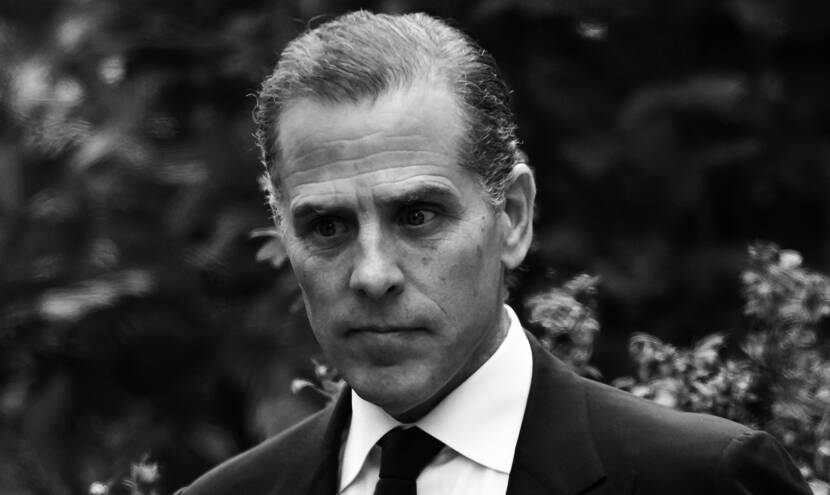
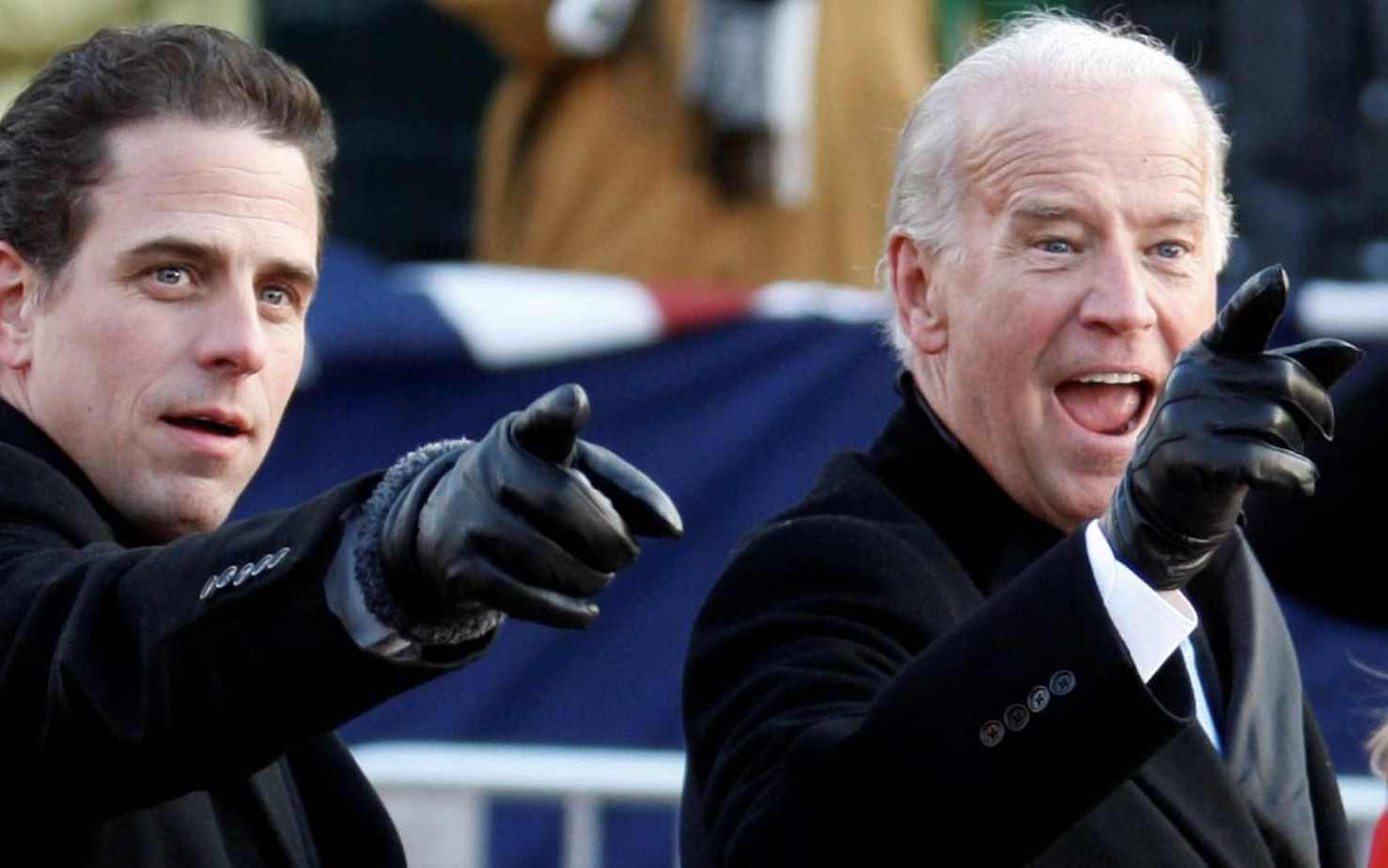
Master Of Evasion Joe Biden Jets Off To Foreign Continent After Pardoning Hunter
Favicon 
dailycaller.com

Master Of Evasion Joe Biden Jets Off To Foreign Continent After Pardoning Hunter

Good for you, Joe
Like
Comment
Share
Daily Caller Feed
Daily Caller Feed
1 y

Biden Just Can’t Help Giving Trump All The Ammo He Needs To Take On The Swamp
Favicon 
dailycaller.com

Biden Just Can’t Help Giving Trump All The Ammo He Needs To Take On The Swamp

There's no shortage of political prisoners from the last four years under the Biden regime
Like
Comment
Share
Daily Caller Feed
Daily Caller Feed
1 y

LeBron James’ SpringHill Reportedly Joins Long List Of Losers, Bleeding Tens Of Millions Per Year
Favicon 
dailycaller.com

LeBron James’ SpringHill Reportedly Joins Long List Of Losers, Bleeding Tens Of Millions Per Year

HAHAHAHAHA
Like
Comment
Share
Daily Caller Feed
Daily Caller Feed
1 y

KJP Takes Verbal Flogging From Reporters After Biden Pardons Hunter
Favicon 
dailycaller.com

KJP Takes Verbal Flogging From Reporters After Biden Pardons Hunter

'He said he wrestled with this'
Like
Comment
Share
SciFi and Fantasy
SciFi and Fantasy  
1 y

Babylon 5 Rewatch: “All Alone in the Night”
Favicon 
reactormag.com

Babylon 5 Rewatch: “All Alone in the Night”

Column Babylon 5 Rewatch Babylon 5 Rewatch: “All Alone in the Night” Sheridan is kidnapped, and Delenn appears before the Grey Council. By Keith R.A. DeCandido | Published on December 2, 2024 Credit: Warner Bros. Television Comment 0 Share New Share Credit: Warner Bros. Television “All Alone in the Night”Written by J. Michael StraczynskiDirected by Mario DiLeoSeason 2, Episode 11Production episode 211Original air date: February 15, 1995 It was the dawn of the third age… Delenn has been asked to appear before the Grey Council. They have picked a new leader, and Delenn is concerned with how the council will deal with her transformation. She’s left instructions for Lennier on what to do while she’s gone and also if she never comes back. However, Lennier surprises her by accompanying her to the council for moral support. Delenn is grateful for Lennier’s constant, unwavering support. Ivanova reports that several ships have gone missing near the station. It doesn’t appear to be raiders—and it needs to be investigated. Sheridan volunteers himself to take a Starfury to check it out. Ivanova objects, but Sheridan hasn’t logged flight time in a while and he needs to in order to keep his certifications up. Ivanova relents, but insists on an escort. A Narn ship is attacked by an unknown vessel. The ship is destroyed, and the Narn pilot, Ta’Lon, is able to eject his pod—which is then taken by the vessel. Credit: Warner Bros. Television As he’s preparing to fly off in his Starfury, Sheridan is informed by Ivanova that General Hague will be arriving early—which is the first Ivanova has heard that Hague was arriving at all. Sheridan insists (a) that it’s just an informal visit, nothing official, and (b) he’ll be back in plenty of time. Neither of those points will prove to be entirely true… One of Sheridan’s escort pilots is Lieutenant Carlos Ramirez, who has a friendly argument with Garibaldi and Franklin about the upcoming baseball playoffs, with a wager laid down before Ramirez is called to the launch bay. However, their search turns up bupkis—at least until they give up and head back to the jump gate. Suddenly, a ship appears and attacks. Two of the escort Starfuries are destroyed, while Sheridan’s and Ramirez’s are badly damaged. Sheridan himself ejects, the same way Ta’Lon did, and is also captured the same way. Ramirez is left alone in space in a damaged Starfury. Radiation leakage has already reached fatal levels, and his communication systems are down. His only option is to return to B5. Delenn and Lennier arrive at the Grey Council’s mobile headquarters. Delenn is shocked to see that only Hedronn is present. He is there to pass on the council’s judgment: she has been stripped of her position in the council. (Yes, they had her fly all the way to the ship just to say she’s been fired. This meeting could’ve been an e-mail.) Delenn asks about her position as ambassador to B5, and Hedronn says they’re still debating. Delenn does have the right to speak before the council on that matter, which she invokes. Hedronn says he will summon the other eight, including the new leader. Credit: Warner Bros. Television Sheridan is captured and tortured by a bunch of devices that look like they belong in a dentist’s office, one of which may be the nozzle. After he is injected, inspected, detected, infected, neglected, and selected, he is given a staff and an opponent: a Drazi. The Drazi is wearing some kind of control device on his head. Sheridan tries to reason with the Drazi, but that doesn’t work. The Drazi is then killed by Ta’Lon, who also has a control device on his head. At one point, Ta’Lon begs Sheridan to kill him, but Sheridan instead renders him unconscious. Hague arrives on B5, greeted by Ivanova alone, as he specifically requested a lack of honor guard, which tracks with Sheridan’s line about it being an informal visit. Hague is concerned that Sheridan isn’t back yet, as is Ivanova. That concern blows up into worry when Ramirez returns to the station dying of radiation poisoning. He reports what happened before succumbing to the radiation. Hague calls in the EAS Agamemnon, Sheridan’s former command, to aid in the search. Delenn is appalled to see that Neroon has replaced her on the council. This is an issue only insofar as the council has always been balanced: three members of each caste (Warrior, Religious, Worker). Delenn’s replacement should have also been of the Religious Caste, but now the Warrior Caste has four seats, with the Religious Caste only two. Neroon angrily points out that, if Delenn’s right about a great war coming upon us all, then the Warrior Caste will be relied upon to a significant degree. Neroon is also disgusted by her transformation. She is permitted to return to B5 as ambassador, mostly because it keeps her and her icky part-human self the hell out of Minbar. Delenn returns to B5 with Lennier, offering him a chance to leave her service and go back to his studies on Minbar where it’s safe. Lennier refuses and insists he will always stand by her side. On the way back, Delenn receives a report on Sheridan’s kidnapping and recognizes his abductors: the Streib. They abduct members of a species to test them for possible invasion. They made the mistake of trying it on the Minbari once, and the Minbar remonstrated with them quite thoroughly. Delenn provides the coordinates for the Streb homeworld, and the Agamemnon, supported by some B5 Starfuries lead by Ivanova, heads there. Credit: Warner Bros. Television Ta’Lon wakes up long enough to tell Sheridan that he asked the captain to kill him because there is no escape. Then he passes out again. Sheridan does likewise a bit later, and has an odd dream that includes Ivanova with a raven, Garibaldi with a dove, Sheridan himself wearing a Psi Cop uniform, and Kosh talking directly to him, saying this is the first time his mind has been clear enough. When Sheridan asks why he’s here, Kosh replies that he’s always been here. He wakes up to see that a door, which rises upward, is partly open. Grabbing his staff, he tries to lever it all the way up, or at least enough for him and Ta’Lon to escape the room. The ship shudders several times; at first, Sheridan thinks they’re transitioning to normal space, but then he realizes that they’re under attack—which they are, by the Agamemnon and the Starfuries. They make it to an escape pod and leave the ship, Sheridan sending out an SOS in Morse code, which Ivanova picks up, enabling them to be rescued. They return to B5. Sheridan is disheartened that he lived while Ramirez died. (No mention is made of the other two pilots who also died.) He then meets with Hague— —at which point, the other shoe drops. Sheridan angrily asks what took Hague so long to debrief him. Turns out both Hague and Sheridan are part of a group that is concerned about the creeping fascism on Earth. Sheridan says that his senior staff is loyal to Earth and can be read in. Hague agrees, and thinks that President Clark views Sheridan as a loyal soldier and won’t look too closely at him, which frees him to act. Sheridan then meets privately with Ivanova, Garibaldi, and Franklin and recruits them. They all agree. Credit: Warner Bros. Television Get the hell out of our galaxy! Sheridan has been covertly working for Hague all these months, part of a group of military personnel who are concerned with the growing power of Psi Corps and the possible assassination of Santiago. Ivanova is God. Ivanova spends most of the episode being frustrated—by Sheridan’s gung-ho attitude, by nobody telling her about Hague’s arrival, and by Sheridan’s disappearance—but she gets to save the day in the end, since she’s the one who detects Sheridan’s SOS. The household god of frustration. Though it’s not mentioned specifically, Garibaldi’s discovery of the plot to assassinate President Santiago—and the inability of anyone to corroborate his findings, or even any interest in doing so—in “Chrysalis” and “Revelations” is likely why he so unhesitatingly joins Sheridan and Hague’s cabal. If you value your lives, be somewhere else. Delenn’s ouster from the Grey Council, a process started in “Babylon Squared,” is solidified here, thanks mainly to her making herself part-human, a metamorphosis nobody on the council seems particularly comfortable with. The Corps is mother, the Corps is father. Psi Corps’ growing influence is a major concern for Hague and his cabal. Also at one point in his weird-ass dream, Sheridan is wearing a Psi Cop’s uniform. The Shadowy Vorlons. Kosh goes full cryptic in this one, appearing in Sheridan’s dream, and possibly being responsible for it, with the comment in the dream that this is the first time Sheridan’s mind has been quiet enough for him to hear Kosh, plus Kosh repeats in person what he said in Sheridan’s dream. Looking ahead. Sheridan’s dream is full of weird images and cryptic nonsense. The reference to the man in the middle is likely to be Justin, who we’ll meet in “Z’ha’dum,” though it could also be Lorien, who will recur starting in “The Hour of the Wolf.” Ivanova wearing black and half hidden in shadow is possibly referencing that she has a secret; that secret will be revealed in “Divided Loyalties.” There’s all kinds of potential symbolic meanings to Kosh’s “You have always been here line,” which is repeated by the real Kosh at the end of the episode, most of those meanings relating to Sheridan’s importance. (One could uncharitably call it an attempt at a retcon: “no no, Sheridan has always been the commander of the station; Jeff who?”) Credit: Warner Bros. Television Welcome aboard. Nick Corri plays Ramirez. Marshall Teague, last seen as Drake in “Infection,” debuts the recurring role of Ta’Lon; he’ll be back in “A Day in the Strife.” Robin Sachs is back from “Points of Departure” as Hedronn; he’ll be back in that role (though named Coplann) in In the Beginning. John Vickery is back from “Legacies” as Neroon; he’ll be back in that role in “Grey 17 is Missing.” Both Sachs and Vickery will next appear in “The Fall of Night,” albeit in different roles. Robert Foxworth makes his second and what turns out to be his final appearance as Hague, following “Points of Departure.” The role was intended to be recurring, but he was unavailable to appear in “Severed Dreams,” so the character was killed off-screen. And finally, we have recurring regulars Joshua Cox as Corwin (last in “GROPOS,” next in “Acts of Sacrifice”) and Ardwight Chamberlain as Kosh (last in “The Coming of Shadows,” next in “Hunter, Prey”). Trivial matters. Ta’Lon is not named in this episode, and is credited only as “Narn.” He’ll get the name when he returns in “A Day in the Strife” in season three. The Streib are named after Whitley Streiber, author of Communion, his account of being abducted by aliens. The Streib look like the alien pictured on the cover of Communion, which is the now-iconic “gray” bald alien look with black eyes. This is the second time we saw a “gray” alien on B5, the first being a gag bit in the station courtroom in “Grail.” Ivanova and Sheridan mention that raiders haven’t been a problem lately, which dates back to “Signs and Portents.” The episode title comes from the opening-credits monologue, as both Sinclair last season and Sheridan this season refer to the station as being all alone in the night. The echoes of all of our conversations. “The Dodgers will never make it to the World Series. Hell, they’ll be lucky if they make it through the playoffs without embarrassing themselves.” “Your diagnosis, Doctor?” “Oh, the patient is confused, delusional, unable to separate his natural sense of loyalty for his home team from the reality that they stink, and they only got into the playoffs on a technicality.” —Ramirez, Garibaldi, and Franklin talkin’ baseball. Credit: Warner Bros. Television The name of the place is Babylon 5. “The first obligation of a prisoner is to escape, right?” One of my personal frustrations with season two of B5 when it aired was the complete inability of J. Michael Straczynski and his writing staff to make Keffer in any way interesting. It would later come out that Keffer was put in at the insistence of the studio, as Warner Bros. wanted a “hotshot pilot” character, and Straczynski’s rather immature reaction to that was to not do anything interesting with him and then kill him off in a manner nobody could possibly care about. (We’ll get into that more when we hit “The Fall of Night.”) Tempting as it is to view this as an inability on Straczynski’s part, we turn ourselves to Ramirez in this episode. It’s not much, but we learn more about Ramirez in one charming sixty-second scene in the Zocalo discussing baseball among him, Garibaldi, and Franklin than we do about Keffer across the six episodes he appears in. This is how you do a redshirt death: establish who he is, make us actually like the guy, have him act selflessly and heroic, and then when he dies, it actually matters. I have to add that this is also how you don’t do a redshirt death, as there were two other pilots who got blown to smithereens by the Streib, who don’t get the courtesy of names or billing or being mourned. The Sheridan-is-kidnapped part of the plot is a serviceable riff on the bog-standard character-is-kidnapped plot that we’ve seen a gajillion times before. After creating no impression whatsoever as the big scary enhanced dude in “Infection,” Marshall Teague does a very nice job with Ta’Lon, establishing a nice rapport with Bruce Boxleitner’s Sheridan as they struggle to escape together. The meat of this episode, though, is Delenn’s side of the plot, as it becomes clear that the gamble she took in transforming herself is not paying off the way she thought it would. The Grey Council has snipped off her metaphorical cufflinks and turned their back, not just on her, but on her entire caste, as the Religious Caste is weakened in the council in favor of the Warrior Caste. It’s also great to see both Robin Sachs and John Vickery return as their respective Minbari, as both actors are excellent as usual, their sharp voices magnificently filling the dimly lit council chamber. In particular, both do a wonderful job conveying the utter contempt they both feel for Delenn. In the end, she’s sent back to B5, but where her initial assignment to the station was a cover for her work with the council, now it’s an exile for a person who has fallen out of favor and whom the government wishes to be both out of sight and out of mind. (This is an interesting reversal of the journey Mollari has gone on, as he was initially exiled to B5 to get him out of the way, but he has parlayed that into a position of power and authority in the Centauri Republic.) And then we have the revelation at the end that Garibaldi isn’t the only one who saw Santiago’s death as something more than an accident. Hague and Sheridan are part of a group that is concerned about the direction Earth is heading. This isn’t much in this episode—just a tag at the very end to get the ball rolling—but it sets the tone for much of what will be happening on the station moving forward… Next week: “Acts of Sacrifice.”[end-mark] The post <i>Babylon 5</i> Rewatch: “All Alone in the Night” appeared first on Reactor.
Like
Comment
Share
Nostalgia Machine
Nostalgia Machine
1 y

“30 Helens Agree” — The Brilliant Sketch Comedy Show, Kids In The Hall
Favicon 
www.pastfactory.com

“30 Helens Agree” — The Brilliant Sketch Comedy Show, Kids In The Hall

When it comes to sketch comedy, most people think of the most popular show of all — Saturday Night Live, which has been on the air for more than four decades. Other shows might come to mind, too, like In Living Color or Mad TV. These shows had great moments, to be sure, but there's another, often overlooked, sketch comedy show that came out of Canada in the late 1980s through the mid-1990s: The... Source
Like
Comment
Share
Fun Facts And Interesting Bits
1 y

Remember That Show? Ep. 25: Mama’s Family
Favicon 
theretronetwork.com

Remember That Show? Ep. 25: Mama’s Family

Adam & Will explore the dense history of Mama’s Family from its 70s sketch comedy origins to TV movies, failed network seasons and perfected syndicated version in the 80s. Plus, we discuss our favorite “Old CONTINUE READING... The post Remember That Show? Ep. 25: Mama’s Family appeared first on The Retro Network.
Like
Comment
Share
Showing 1582 out of 56669
  • 1578
  • 1579
  • 1580
  • 1581
  • 1582
  • 1583
  • 1584
  • 1585
  • 1586
  • 1587
  • 1588
  • 1589
  • 1590
  • 1591
  • 1592
  • 1593
  • 1594
  • 1595
  • 1596
  • 1597

Edit Offer

Add tier


Select an image
Delete your tier
Are you sure you want to delete this tier?

Reviews

In order to sell your content and posts, start by creating a few packages. Monetization

Pay By Wallet

Payment Alert

You are about to purchase the items, do you want to proceed?

Request a Refund