YubNub Social YubNub Social
    Advanced Search
  • Login

  • Night mode
  • © 2026 YubNub Social
    About • Directory • Contact Us • Privacy Policy • Terms of Use • Android • Apple iOS • Get Our App

    Select Language

  • English
Install our *FREE* WEB APP! (PWA)
Night mode
Community
News Feed (Home) Popular Posts Events Blog Market Forum
Media
Headline News VidWatch Game Zone Top PodCasts
Explore
Explore Jobs Offers
© 2026 YubNub Social
  • English
About • Directory • Contact Us • Privacy Policy • Terms of Use • Android • Apple iOS • Get Our App

Discover posts

Posts

Users

Pages

Group

Blog

Market

Events

Games

Forum

Jobs

The Blaze Media Feed
2 yrs ·Youtube News & Oppinion

YouTube
Trump Needs to Say THIS in His RNC Speech after Assassination Attempt
Like
Comment
Share
The Lighter Side
The Lighter Side
2 yrs

Mother Reveals Heartwarming Reason Her Daughter Walks With Her Hands Behind Her Back
Favicon 
www.inspiremore.com

Mother Reveals Heartwarming Reason Her Daughter Walks With Her Hands Behind Her Back

One mom just realized how deeply her daughter respects her great-grandfather, and it touched her heart so much that she had to share! It all started when this woman noticed that her child had developed a peculiar quirk. She always walked with her hands behind her back. Obviously, there was nothing wrong with that, but it did strike this mother as odd. @caitlinbattyyyy A bond that will never be broken #grandparentsoftiktok #grandpa #greatgrandparents #greatgrandad #threegenerations ♬ original sound – . It wasn’t until she saw her daughter doing this around her great-grandfather that she figured it out. Great-grandpa walked like that, too! Her little girl wanted to be just like the elderly man. Isn’t that adorable? Mom captured the sweetest footage of the child trailing behind him, imitating his particular walk. “Then it all made sense…” wrote the mom on social media. “She was following her great-grandad’s footsteps.” This mom’s beautiful video of her daughter copying her great-grandfather has received over 31 million views! Commenters thought the footage was absolutely precious. “Omg I’m crying this is so cute,” wrote one user. Another added, “She has an old soul hahaha.” However, Great-grandfather isn’t the only person that this young daughter wants to emulate. She’s also a big fan of her mother! In another heartwarming video, Mom caught the little girl “parenting” her baby dolls. It’s amazing to see how carefully she tucks her “children” into bed! @caitlinbattyyyy Single mum #singlelife #toddlermom ♬ I’m A Survivor (Made Famous by Reba McEntire) – Ladies Of Country “Whenever I think I’ve got it rough, I look at my toddler who’s got four babies and she just gets on with it,” joked the girl’s mom. Social media users thought this was too funny. “There’s always that one mom who makes it look easy,” one person joked. What a sweet and empathetic little girl! We just know she’s going to grow up into such a kind and caring adult. You can find the source of this story’s featured image here. The post Mother Reveals Heartwarming Reason Her Daughter Walks With Her Hands Behind Her Back appeared first on InspireMore.
Like
Comment
Share
Daily Caller Feed
Daily Caller Feed
2 yrs

Major Enviro Orgs Shack Up With Foreign Oil Giants To Industrialize The Ocean
Favicon 
dailycaller.com

Major Enviro Orgs Shack Up With Foreign Oil Giants To Industrialize The Ocean

'Fake environmentalists are collaborating with foreign energy companies'
Like
Comment
Share
The Lighter Side
The Lighter Side
2 yrs

Spanish School of Bell-Tolling Graduates its First Class to Keep Village Traditions Alive – WATCH
Favicon 
www.goodnewsnetwork.org

Spanish School of Bell-Tolling Graduates its First Class to Keep Village Traditions Alive – WATCH

There are over 2,000 bell towers across Catalonia alone, and they all need tolling each half-hour; but it’s actually so much more than that. To better interweave communities and keep long-practiced traditions alive, Spain is witnessing a class graduate from its first bell-ringing school. This strange idea is all about reviving a dying art that […] The post Spanish School of Bell-Tolling Graduates its First Class to Keep Village Traditions Alive – WATCH appeared first on Good News Network.
Like
Comment
Share
Daily Signal Feed
Daily Signal Feed
2 yrs

Cruz Targets Biden Regs That Favor Tiny Lizard Over Oil, Gas Drilling
Favicon 
www.dailysignal.com

Cruz Targets Biden Regs That Favor Tiny Lizard Over Oil, Gas Drilling

DAILY CALLER NEWS FOUNDATION—Sen. Ted Cruz introduced a new bill to nix the Biden administration’s protections for a lizard species that critics argue will restrict oil and gas development. The Texas Republican unveiled his Congressional Review Act bill to walk back the Biden administration’s decision to protect the dunes sagebrush lizard, a species that is indigenous to parts of New Mexico and West Texas, under the Endangered Species Act. Cruz and other critics of the designation have asserted that the lizard’s protections are more likely intended to complicate oil and gas development in the Permian Basin, an oil- and gas-rich region of West Texas and New Mexico. The lizard is less than 3 inches long, excluding the length of its tail, according to the Fish and Wildlife Service. “The Biden administration has used the federal government to suppress American energy production at the exact time when the country, and indeed the world, needs access to affordable American energy,” Cruz said in a statement shared with the Daily Caller News Foundation. “This disastrous rule threatens American jobs and undermines the production of energy in the Permian Basin. I call on the Senate to expeditiously take up and pass my legislation to reverse it.” Ted Cruz CRA Bill on Scribd: 749766337-Ted-Cruz-CRA-Bill-1Download The Fish and Wildlife Service listed the tiny dunes sagebrush lizard under the Endangered Species Act in May, citing the “best available science” and stating that the rule would “protect the rare lizard and its habitat” from habitat loss attributable to oil and gas activity. Oil and gas interests, meanwhile, have questioned whether or not the science underlying the decision is truly solid, and have also indicated that the protections could delay permitting processes and drive up production costs, according to The Texas Tribune. Specifically, the lizard’s endangered status would make the process of building access roads more time-consuming, difficult, and costly, which would increase the costs of production. At least some of those costs would ultimately be passed on to consumers. “Listing the dunes sagebrush lizard as an endangered species is another effort by the Biden administration to shut down drilling in the Permian Basin,” Rep. August Pfluger, R-Texas, said in a statement shared with the Daily Caller News Foundation. “Our Congressional Review Act is President [Joe] Biden’s attempt to use a lizard as a weapon against the oil & gas industry. We will not allow the President to take control of private property and kill energy jobs in the Permian Basin.” Republican Sens. John Cornyn of Texas, Mike Lee of Utah, and Cynthia Lummis of Wyoming joined Cruz in introducing the Congressional Review Act legislation. A number of industry groups support the bill, including the Permian Basin Petroleum Association, the Independent Petroleum Association of America, the American Petroleum Institute, and the American Exploration and Production Council. The Fish and Wildlife Service did not respond immediately to a request for comment. Originally published by the Daily Caller News Foundation. The post Cruz Targets Biden Regs That Favor Tiny Lizard Over Oil, Gas Drilling appeared first on The Daily Signal.
Like
Comment
Share
Pet Life
Pet Life
2 yrs

12-Year-Old Pit Bull Elected As New Dog Mayor Of Mooresville
Favicon 
www.dogingtonpost.com

12-Year-Old Pit Bull Elected As New Dog Mayor Of Mooresville

On June 30, Sunday, the Mooresville Youth Council (MYC) announced Reya, a 12-year-old Pit Bull, as the town's official Dog Mayor.
Like
Comment
Share
Science Explorer
Science Explorer
2 yrs

Uncontacted Tribe Shown "Dangerously Close" To Logging Areas In New Footage
Favicon 
www.iflscience.com

Uncontacted Tribe Shown "Dangerously Close" To Logging Areas In New Footage

New images show members of an uncontacted tribe in the Peruvian Amazon living in an area “dangerously close” to parts of the forest being eyed up by logging companies.Survival International, who released the footage, and local Indigenous organizations say the images starkly highlight the need to revoke all the logging licenses in the region and recognize that the territory belongs to the uncontacted peoples. The images show the Mashco Piro people, a community of nomadic hunter-gatherers thought to be one of the largest uncontacted tribes in the world with an estimated 750 members.In the late 19th century, the tribe endured huge suffering at the hands of colonial rubber barons in the western Amazon. Thousands were enslaved, while countless others were hunted down, beaten, chained, robbed, raped, and murdered. There's an estimated 750 members of the group, making them one of the biggest known uncontacted tribes.Image courtesy of Survival InternationalAgainst the odds, they managed to survive with their traditional culture intact. However, the tribe continues to face the ever-growing threat of logging and deforestation. Several logging companies hold timber concessions inside the territory that belongs to the Mashco Piro people, just a few miles from where the new footage was filmed.“These incredible images show that very large numbers of uncontacted Mashco Piro people are living just a few miles from where loggers are poised to start operations. Indeed one logging company, Canales Tahuamanu, is already at work inside Mashco Piro territory, which the Mashco Piro have made clear they oppose,” Caroline Pearce, Survival International Director, said in a statement.“This is a humanitarian disaster in the making – it’s absolutely vital that the loggers are thrown out, and the Mashco Piro’s territory is properly protected at last,” she noted.In one piece of footage, a group of 17 Mashco Piro people appeared near the village of Puerto Nuevo in southeastern Peru. In another, over 50 are seen near the neighboring village of Monte Salvado. This settlement is inhabited by the Yine, an Indigenous people in Peru who maintain contact with the wider world but speak a language related to Mashco Piro. The Yine has reportedly said that the Mashco Piro have previously expressed anger at the presence of loggers on their land.  Off the back of this new footage, Survival International is calling on the Forest Stewardship Council (FSC) – an independent non-profit that intends to promote the ethical and responsible management of the world's forests – to retract their certification given to the companies operating in the area.“The FSC must cancel its certification of Canales Tahuamanu immediately – failure to do so will make a mockery of the entire certification system,” added Pearce. “This is irrefutable evidence that many Mashco Piro live in this area, which the government has not only failed to protect, but actually sold off to logging companies. The logging workers could bring in new diseases which would wipe out the Mashco Piro, and there’s also a risk of violence on either side, so it’s very important that the territorial rights of the Mashco Piro are recognized and protected in law,” added Alfredo Vargas Pio, President of local Indigenous organization FENAMAD.
Like
Comment
Share
Science Explorer
Science Explorer
2 yrs

Observations Of Distant Galaxies Throw Up New Mystery For Dark Matter
Favicon 
www.iflscience.com

Observations Of Distant Galaxies Throw Up New Mystery For Dark Matter

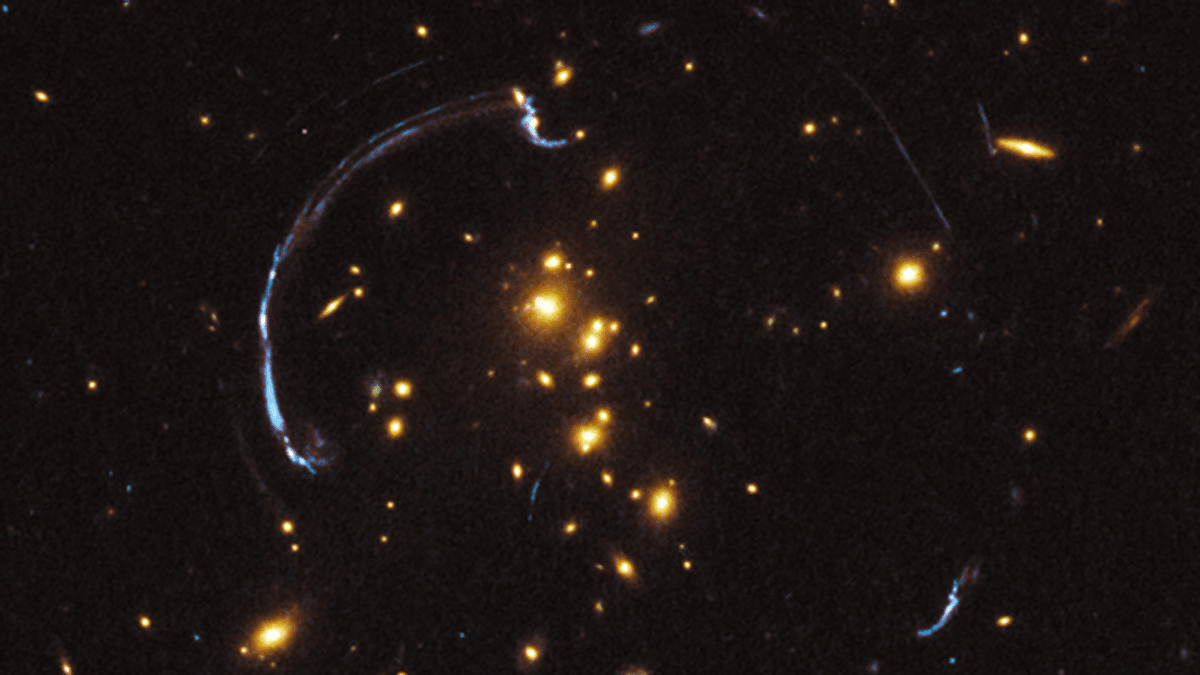
Observations of the gravitational lensing of galaxies have thrown up a new mystery for our best understanding of cosmology; how galaxies are held together with dark matter.In 1933, Swiss astronomer Fritz Zwicky studied the Coma Cluster – a large galaxy cluster more than 20 million light-years in diameter, containing thousands of galaxies – and found something quite odd. Galaxies within the cluster were moving at such high speeds that they should fly away from each other, given the amount of visible mass within the galaxies and the cluster. He hypothesized that the region must contain a large amount of "Dunkle Materie" (dark matter) in order to keep the cluster stable. If that sounds unintuitive to you, here is it explained very simply with a rope through a basketball.        Further work, conducted by Vera Rubin and Kent Ford, plotted the velocities of stars within spiral galaxies by looking at the shift in wavelengths of light as they move toward and away from us. They found the same odd phenomenon as Zwicky, and many, many observations since. Stars at the sparsely-populated edges of spiral galaxies were moving just as fast as stars toward their galactic centers.Physicists largely concluded (though other ideas are available) that there is a mysterious substance in these galaxies and galaxy clusters known as "dark matter" which doesn't emit, reflect, or absorb light, and only interacts with normal matter through gravity. What's more, there should be about five times as much of it in the observable universe than regular matter which makes up the stars, planets, dust, and everything else we enjoy.But nearly a century after it was first proposed, we still don't know what it is. In a new study, a team of scientists at Case Western Reserve University have found puzzling observations that could throw a new spanner in the works for dark matter models. The team looked at a catalog of 130,000 galaxies and analyzed how much a galaxy in the foreground gravitationally lensed galaxies in the background. This is where objects with large mass bend spacetime, making light bend around them.      If the observed fast rotation of stars at the edge of galaxies is the result of dark matter clumped within them, we should expect the dark matter halo to drop off at a certain distance from the galactic center. However, the team found that the bending of light continued at much further distances than dark matter models would expect. "The circular velocity curves are consistent with being flat out to hundreds of kiloparsecs," the team explains in their paper, "perhaps even 1 Mpc, with no sign of having reached the edge of the DM halo."Rotation speed remains flat out to 750 kiloparsecs, according to the study.Image credit: Case Western Reserve UniversityThe observations are challenging to existing models, which would expect a drop-off in velocities of orbiting stars as you move further away from the galactic center. A star placed in these further out regions, according to the team, would show the same flat velocities as stars at the visible galactic edge. According to the team, it is possible that the observations suggest that dark matter halos extend much further than we thought. Alternatively, if the effect is confirmed or found to extend even further, it could indicate that our understanding of gravity is missing something.“The implications of this discovery are profound,” Stacy McGaugh, professor and director of astronomy in the College of Arts and Sciences, said in a statement. “It not only could redefine our understanding of dark matter, but also beckons us to explore alternative theories of gravity, challenging the very fabric of modern astrophysics.”There are alternatives to dark matter cosmology, including Modified Newtonian Dynamics (MOND).  In MOND, the odd rotation of galaxies is explained by modifications to gravity experienced by objects with very low acceleration, like those at the edge of galaxies. When gravitational acceleration is tiny enough, different gravitational behavior takes place.Dark matter remains the explanation favored by the majority of physicists, having the advantage that it allows scientists to make predictions about the universe and objects within it, which MOND has not yet been able to do. Its explanation is also challenged by the existence of the bullet cluster, a collision between two galaxy clusters which shows mass distribution consistent with dark matter models.It is nevertheless an interesting set of observations and requires further attention and investigation. Perhaps dark matter halos extend further than we thought, or our understanding of gravity is incorrect. Thankfully, we may soon get a more complete picture as the European Space Agency's Euclid mission maps the large-scale structure of the Universe.The study is published in the Astrophysical Journal Letters

Like
Comment
Share
Science Explorer
Science Explorer
2 yrs

Spotting "Stars In Their Eyes" Lets Astronomers Detect Deep Fakes
Favicon 
www.iflscience.com

Spotting "Stars In Their Eyes" Lets Astronomers Detect Deep Fakes

AI images are now omnipresent online. While some are absolutely ridiculous, dubbed by Gen Z and Gen Alpha as "Boomer Art", others can fool even people paying close attention. This is particularly important when it comes to deep fakes, the made-up images of real people.Counteracting the spread of these images is extremely important as they are used to spread misinformation, attack political adversaries, and violate people. A possible solution to spot the most realistic deepfakes comes from techniques used in astronomy, although astronomy borrowed it from statistics applied to wealth inequalities. It’s called the Gini Coefficient.It is not a silver bullet but this method provides us with a basis, a plan of attack. This is an armed race. It can help now in 2024, but if we do not keep up the deepfake of 2028 will have overcome this issue.Prof Kevin PimbbletBefore we dive into the stats, it's important to discuss the approach the researchers used. Machine learning algorithms that make fake images are still not good at representing reality completely. Until a few months ago, even the best ones couldn't replicate a realistic hand and they really struggle to get the reflections you see in human eyes correctly. Both images seem real but the ‘stars in their eyes’ reveal that only Scarlett Johansson is real. The person on the right doesn’t exist.Image Credit: Adejumoke OwolabiAmbient light and objects are reflected in the eyes of a person photographed. The reflection in one eye is consistent with the reflection in the other, and this can be assessed statistically. The researchers do note that it is not perfect though, as the statistical analysis of the data distributions might lead to the occasional mistake.“It is not a silver bullet.  There could be false positives or false negatives. It's not going to get everything. But this method provides us with a basis, a plan of attack. This is an armed race. This can help now in 2024, but if we do not keep up the deepfake of 2028 will have overcome this issue,” Professor Kevin Pimbblet, from the University of Hull, told IFLScience. The Gini coefficient is used to estimate wealth inequality, so if a country has a dramatic difference between the wealth of rich people and the wealth of poor people, then that country – for example, the United States – will have a high Gini coefficient. But in general, the number is used to work out the inequality among the values of a frequency distribution, and that is applicable to all data, including when you want a computer to work out the morphology of a galaxy – basically, what it looks like.“This is a way to analyze the morphology of galaxies. Traditionally, morphology was judged by eye. I hope it is obvious that the human eyeball is a fantastic device in a physics sense, but we are biased,” Professor Pimbblet told IFLScience. “What we really want  is an unbiased way to quantify galaxy morphology and preferably one that makes very few assumptions.”Gini and other astronomy methods that are used in the classification of galaxies were used in this project but according to the preliminary work, only the Gini coefficient has been good enough when it comes to identifying the eyes of deep fakes.The current research is part of a master's project by Pimbblet’s student Adejumoke Owolabi and was presented at the National Astronomy Meeting this week. Owolabi and Pimbblet are now planning to submit a paper with the findings.   
Like
Comment
Share
Science Explorer
Science Explorer
2 yrs

Caught In A "Dopamine Trap" – What Does That Mean?
Favicon 
www.iflscience.com

Caught In A "Dopamine Trap" – What Does That Mean?

Binge-watching TV shows, doom-scrolling on social media, excessive gaming. All these behaviors have been associated with being caught in a “dopamine trap”. But what does this mean and what is dopamine’s role in our compulsive behaviors?What is dopamine?Dopamine is one of the main signaling molecules in the brain. It is often sensationalized as a rewarding “feel good” molecule, but it is actually involved in a whole host of things: movement, learning, and even breast milk production.Dopamine is also linked to addiction, tying it to compulsive behaviors that give us instant gratification. Is the irresistible scrolling, swiping, or gaming a form of addiction? This is where the “dopamine trap” theory comes in. What is a “dopamine trap”?Every time you scroll or watch an episode, you get a tiny hit of rewarding dopamine. And then another. And another. But that is quickly followed by a comedown or dopamine dip. “Our brain compensates by bringing us lower and lower and lower,” said Dr Anna Lembke to The Guardian. She is a psychiatrist studying addiction and the opioid epidemic, and the author of Dopamine Nation: Finding Balance in the Age of Indulgence.So you keep scrolling, compelled to seek that rewarding experience.Dopamine and addictionDopamine was first linked to addiction in the 1970s when researchers found that rats would compulsively self-stimulate dopamine-related brain areas with electricity. Addiction was initially only thought of in the context of substance abuse. The level of dopamine in the brain increases in response to many addictive drugs, even those that don’t directly act on the dopaminergic system. This release in dopamine allows you to unconsciously learn an association between the behaviors and contexts that led to that pleasurable experience. Over repeated consumption, dopamine becomes associated with those behaviors, reinforcing the drug-seeking behavior, which becomes habitual.It wasn’t until the 2010s that addiction was extended to include what is now known as behavioral addiction. In these disorders, dopamine increases also reinforce certain behaviors (like gambling, gaming, and shopping), making them habitual, even compulsive. Social stimuli, like smiling faces, messages, and possibly even likes and notifications, can activate our dopaminergic system. The link between dopamine and the passive consumption of social media content and compulsive scrolling has not been established. However, in mice, dopamine has been found to spontaneously increase during certain behavioral patterns – and those behaviors were then more likely to occur again and again. This shows that dopamine can reinforce any small behavior and make it habitual.Addictions are also defined by their detrimental effects on mental and physical health – and on our perseverance in the behaviors despite the negative effects. Endless scrolling has been associated with worsening mental health (especially in teenagers), likening it to other addictive behaviors. Maybe it’s time to find our way out of the “trap”.All “explainer” articles are confirmed by fact checkers to be correct at time of publishing. Text, images, and links may be edited, removed, or added to at a later date to keep information current.
Like
Comment
Share
Showing 20158 out of 56670
  • 20154
  • 20155
  • 20156
  • 20157
  • 20158
  • 20159
  • 20160
  • 20161
  • 20162
  • 20163
  • 20164
  • 20165
  • 20166
  • 20167
  • 20168
  • 20169
  • 20170
  • 20171
  • 20172
  • 20173

Edit Offer

Add tier


Select an image
Delete your tier
Are you sure you want to delete this tier?

Reviews

In order to sell your content and posts, start by creating a few packages. Monetization

Pay By Wallet

Payment Alert

You are about to purchase the items, do you want to proceed?

Request a Refund