YubNub Social YubNub Social
    Advanced Search
  • Login

  • Night mode
  • © 2026 YubNub Social
    About • Directory • Contact Us • Privacy Policy • Terms of Use • Android • Apple iOS • Get Our App

    Select Language

  • English
Install our *FREE* WEB APP! (PWA)
Night mode
Community
News Feed (Home) Popular Posts Events Blog Market Forum
Media
Headline News VidWatch Game Zone Top PodCasts
Explore
Explore Jobs Offers
© 2026 YubNub Social
  • English
About • Directory • Contact Us • Privacy Policy • Terms of Use • Android • Apple iOS • Get Our App

Discover posts

Posts

Users

Pages

Group

Blog

Market

Events

Games

Forum

Jobs

The Lighter Side
The Lighter Side
2 yrs

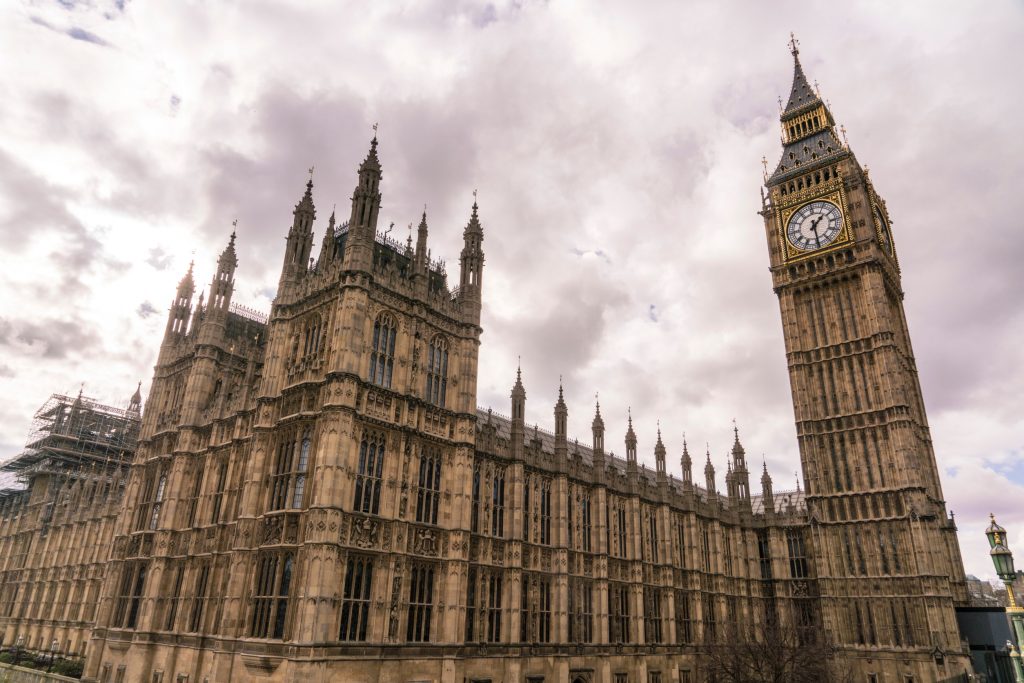
The United Kingdom just elected its most diverse Parliament ever
Favicon 
www.optimistdaily.com

The United Kingdom just elected its most diverse Parliament ever

BY THE OPTIMIST DAILY EDITORIAL TEAM Britain has elected its most diverse parliament in history, signalling a substantial shift in representation as Prime Minister Keir Starmer enters office after a landslide victory. This election ended 14 years of Conservative rule and introduced unprecedented diversity to the House of Commons. Achieving more racial and ethnic diversity According to British Future think tank research, Black, Asian, and ethnic minority parliamentarians will now make up roughly 13 percent of the House of Commons, up from 10 percent in 2019. This is the highest proportion of representatives from underrepresented groups ever seen in the House of Representatives. “The 2024 election is a landmark for representation, with record diversity in our parliament, closer than ever to that of the electorate,” said Sunder Katwala, director of British Future. Minority representation in Britain’s parliament has increased from zero to roughly one in every seven parliamentarians in the 44 years since the birth of outgoing Prime Minister Rishi Sunak. However, the share still does not fully reflect the diversity of the population, as around 18 percent of people in England and Wales come from a Black, Asian, mixed, or ethnic minority background, according to official data. Record female representation The new parliament will also have a record number of female legislators, with 242 women elected, 22 more than in the last election. This achievement comes nearly four decades after Labour’s Diane Abbott became Britain’s first Black female legislator in 1987, when there were just 41 women in the House of Commons. Abbott, who was re-elected to her seat in northeast London, will now have the honorary title of ‘mother of the house’ as the longest-serving female minister. Labour’s victory and diverse representation In Thursday’s parliamentary election, Labour won around 412 seats, giving the party a 174-seat majority. The new ruling party will have the most ethnic minority MPs, with 66 of the 87 seats elected. However, it is uncertain how much this diversity will be reflected in Prime Minister Starmer’s cabinet. Shadow Foreign Affairs Minister David Lammy, Justice Minister Shabana Mahmood, and Energy Minister Ed Milliband are among the senior politicians expected to come from ethnic minority backgrounds.  The Conservative Party’s diversity legacy Despite its defeat, the Conservative Party maintains a strong record of cabinet diversity. Rishi Sunak’s final statement as prime minister emphasized the country’s appreciation of diversity. “One of the most remarkable things about Britain is just how unremarkable it is that two generations after my grandparents came here with little, I could become prime minister,” said Sunak, the country’s first British-Indian leader. The Conservative Party also produced three female prime ministers. New milestones for government roles Despite the Conservative Party’s history, Labour is making new ground with Rachel Reeves becoming Britain’s first female Chancellor of the Exchequer. This appointment marks another step toward gender equality in the UK’s highest offices. The 2024 UK parliamentary election established a new standard for diversity and representation. With a record number of women and ethnic minority MPs, the newly elected parliament is getting closer to reflecting the diversity of the British people. The nation is watching attentively to see how Prime Minister Keir Starmer will represent diversity in his cabinet.The post The United Kingdom just elected its most diverse Parliament ever first appeared on The Optimist Daily: Making Solutions the News.
Like
Comment
Share
Living In Faith
Living In Faith
2 yrs

What Does the Bible Teach About Divorce and Remarriage?
Favicon 
www.thegospelcoalition.org

What Does the Bible Teach About Divorce and Remarriage?

Carol, a young wife with an infant son, discovered her husband Ryan, a police officer, was in an adulterous relationship with a female coworker. When Carol confronted Ryan, he went into a rage, waving his police handgun and pointing it first at himself then at Carol and their baby. Carol fled for safety then came into the church office a week later. “Do I have to stay in this marriage?” Carol asked. As her pastor, my first response was to show compassion and work with a team of church members to ensure Carol’s ongoing safety. But I also had a responsibility to give a clear answer to Carol’s question. Before God’s Word, what are her options? My understanding is that the Bible permits divorce and remarriage in particular instances. But not every Christian agrees with this conclusion. So what are the common evangelical views on divorce and remarriage, and how do we evaluate them biblically? 2 Views on Divorce and Remarriage When I first entered pastoral ministry, I was aware that divorce is common, but I didn’t realize how many divorces and remarriages take place among Christians. I also wasn’t aware of how challenging and complex these situations can be pastorally. Evangelicals typically take one of two approaches to divorce and remarriage. Some respected Bible teachers hold what is called the permanence view of marriage. Many who hold this perspective say a believer must never initiate a divorce, and all say that a divorced believer is not free to remarry so long as his or her former spouse is alive. While these teachers would sympathize with Carol and acknowledge her right to seek physical safety, when it comes to divorce and remarriage, they’d say we can’t let one person’s story overrule what they see as Scripture’s clear teaching. On the other hand, the more mainstream evangelical view (as reflected in chap. 24 of the Westminster Confession of Faith) teaches that while divorce always violates God’s ideal, he provides protection and an exception for a spouse whose partner has heinously violated the marriage covenant. Honor Marriage. Make Divorce a Last Resort. God designed marriage to be a lifelong covenant of companionship (Gen. 2:24). The biblical ideal isn’t merely that couples remain married but that they find great joy together (Eccl. 9:9). Because God joins a man and a woman in matrimony, marriage should be honored and protected (Matt. 19:6). We must guard our own marriages from infidelity and neglect. We also must respect the marriages of others through both our actions and the counsel we give. We should never encourage unbiblical divorces. After all, some people are called by God to endure difficult marriages, many of which can be transformed by God’s grace. Due to our increasingly therapeutic culture and its expansive definitions of “abuse,” the pendulum has swung in our day from protecting marriage at the expense of not protecting victims of abuse to protecting alleged victims at the expense of not adequately protecting marriage. As a result, some unhappy spouses give up on their marriages too easily and divorce without biblical grounds. Yet, in both the Old and New Testaments, God does give biblical grounds for divorce. When Does God Permit Divorce and Remarriage? The essence of divorce is the termination of marital obligations. As illustrated in Deuteronomy 24:1–4, this assumes and entails the freedom to remarry. While Jesus makes it plain that divorce and remarriage without biblical grounds is sinfully adulterous (Matt. 19:9; cf. 1 Cor. 7:10–11), he also acknowledges that those who are divorced are truly divorced (not still married in God’s eyes) and those who have remarried are truly married. Given that God hates divorce, why does he permit divorce and remarriage? Jesus explains: “Because of your hardness of heart” (v. 8). In a fallen world, some spouses will break the marriage covenant; thus divorce must be regulated. While every divorce is due to human sin, not everyone who divorces sins. I’d argue that divorce for adultery shows how seriously the Lord takes violations of the marriage covenant. Divorce can offer protection for the innocent party, and a godly remarriage can be a blessing. So what are the instances when the Bible allows divorce and remarriage? 1. God permits divorce on the grounds of sexual sin. Those holding the mainstream view observe that Jesus twice declares divorce and remarriage are permitted in cases of sexual immorality (porneia, Matt. 5:32; 19:9). Advocates of the permanence view argue the clearest texts about divorce mention no exceptions (Mark 10:1–9; Luke 16:18) and that it’s explicitly stated one is only free to be remarried after the death of one’s spouse (Rom. 7:2–3; 1 Cor. 7:39). They also find support from church fathers who rejected all divorce and remarriage. While every divorce is due to human sin, not everyone who divorces sins. Some holding the permanence view claim the exception refers to adultery during betrothal but before marriage (see Matt. 1:18–19). But in Matthew 19, Jesus wasn’t being questioned about breaking an engagement but about married people divorcing and remarrying (vv. 3–5). Those holding to the permanence view have great difficulty explaining the porneia exception. The mainstream view is that the Mark and Luke passages refer to the general rule about divorce, but as Matthew makes clear, there are exceptions. For example, a speed limit sign presents a general rule, but a speeding ambulance isn’t violating the law. The general rule is that marriage ends with the death of one’s spouse, but there are exceptions for divorce when one party violates the covenant. Those who believe in the porneia exception must define the nature and extent of sexual sin that constitutes grounds for divorce. Some cases are clear, such as adultery and homosexual acts. In other cases, such as pornography or emotional affairs, wisdom is required. My view is that pornography is generally less heinous than physical adultery, but it could be grounds for divorce if the guilty party refuses to fight this temptation and neglects his or her spouse, or in cases of illegal child pornography. Sexual immorality doesn’t end the marriage; rather it gives the innocent spouse the right to divorce. In many cases, through repentance and forgiveness, such marriages can be saved or restored. 2. God permits divorce on the grounds of abandonment. While Paul encourages believers who are married to unbelievers to remain in their marriages, he also states that if the unbeliever leaves, the believer is no longer bound (1 Cor. 7:12–16). This exception clearly applies when an unbelieving spouse initiates divorce or moves out. I also believe willful neglect of marital responsibilities can be grounds for divorce. This is consistent with Exodus 21:10–11, which teaches that a wife whose husband fails to meet his basic marital responsibility to provide food, clothing, and conjugal rights can be free (presumably to remarry, cf. 1 Cor. 7:15, 39). As in cases of sexual immorality, wisdom is needed to discern what degree of neglect constitutes grounds for divorce. We’ve all fallen short of fulfilling our marriage vows. In my view, the abandonment exception clearly applies in cases of willful, hard-hearted neglect by an unbeliever. But if the partner who abandons his spouse professes to be a believer, a process of confrontation and church discipline is appropriate to give the individual an opportunity to repent. Ideally, divorce should be delayed until such a time when the church has determined to treat the unrepentant spouse as an unbeliever. 3. Abuse may also be grounds for divorce as a form of abandonment. Rather than seeing it as a third exception, it’s best to look at spousal abuse as a particularly heinous form of marital neglect. In recent years, churches have explicitly recognized that we must take seriously all patterns of oppression and coercion, not just physical violence. As with the other grounds for divorce, we need discernment to recognize the difference between ordinary marital conflict and abuse. Rather than seeing it as a third exception, it’s best to look at spousal abuse as a particularly heinous form of marital neglect. We don’t want to be guilty of encouraging anyone to violate Scripture by sinfully leaving a hard marriage or remarrying adulterously. Nor do we want to restrict people from enjoying the protection and freedom God gives to those whose spouses have irreparably broken the marriage covenant. Carol’s case was clear. Ryan was unrepentantly in an adulterous relationship. He’d abusively threatened the lives of his wife and child as he sought to regain control. Our church leadership team reported Ryan to the authorities, and he’s no longer a police officer. They divorced. We looked on Carol as being like a young widow who’d benefit from being remarried (1 Tim. 5:14). After some time, the Lord provided a godly husband with whom she enjoys a happy and fruitful marriage.
Like
Comment
Share
Living In Faith
Living In Faith
2 yrs

Suffering Is Not the End of Your Story
Favicon 
www.thegospelcoalition.org

Suffering Is Not the End of Your Story

“Beloved, I urge you as sojourners and exiles to abstain from the passions of the flesh, which wage war against your soul. Keep your conduct among the Gentiles honorable, so that when they speak against you as evildoers, they may see your good deeds and glorify God on the day of visitation.” (1 Pet. 2:11–12) If you’re familiar with Peter’s story, you might not expect him to be the disciple who’d write the primary letter in the New Testament on suffering. Instead, you could assume he’d write on overcoming pride, finding forgiveness, or the dangers of sinking when taking your eyes off Jesus. This Galilean fisherman left all to follow Jesus and supernaturally confessed him as the Christ (Matt. 16:16). But when Jesus revealed he was going to suffer and die, Peter rebuked him. In response, Jesus said, “Get behind me, Satan! You are a hindrance to me. For you are not setting your mind on the things of God, but on the things of man” (v. 23). How awkward is that? Peter got it spectacularly wrong; he failed to understand that the cross was the ordained means for the Suffering Servant to save his people from their sins. Peter also failed when the time came for him to suffer. When his association with Jesus threatened his life, Peter denied knowing his Lord. Although he was the first disciple to follow Jesus, Peter was also the first genuine disciple to disown Jesus. So how does this man write a letter to suffering Christians? The only explanation is the resurrection. Peter walked into Jesus’s hollow tomb, saw the linen clothes, and found his body was gone. Along with the other apostles, Peter was an eyewitness to Jesus’s resurrection from the dead. And it was the risen Lord who graciously appeared to Peter, asked him to affirm his love, and gave him the call to feed his sheep (John 21:15–19). Through Jesus’s restoration and the Spirit’s power, Peter matured from the unpredictable firecracker of a disciple we see in the Gospels to the bold rock in the book of Acts who endured persecution. This man who collapsed under the threat of suffering now had courage to stand before authorities and testify to this Jesus whom God raised from the dead (Acts 2:32). This is the Peter who wrote to believers in Pontus, Galatia, Cappadocia, Asia, and Bithynia (1 Pet. 1:1), encouraging them to endure as elect exiles. He was no longer turned off by the idea of suffering. Since Peter knew believers would face fiery trials, he wanted them—and us—to understand that, as for Christ, suffering isn’t where our story ends. Not Yet Home Most commentators believe the audience of 1 Peter to be Gentile Christians. Throughout the letter, he references their former way of living. He writes, “For the time that is past suffices for doing what the Gentiles want to do, living in sensuality, passions, drunkenness, orgies, drinking parties, and lawless idolatry. With respect to this they are surprised when you do not join them in the same flood of debauchery, and they malign you” (4:3–4). This suggests Peter’s readers were once part of an idolatrous, unbelieving community. Since their friends are surprised at their lack of participation in debauched practices and idol worship, we assume that prior to regeneration they were living like all the other Gentiles in the empire. Throughout the letter, Peter employs Jewish motifs to supply these Gentile Christians with a new identity. For example, he starts the letter off by calling them “elect” (1:1) and later “a chosen race, a royal priesthood, a holy nation” (2:9). These same words were spoken during the exodus journey when the Israelites escaped Pharoah (Ex. 19:5–6). By using similar language, Peter connects the identity and experience of these Gentile believers under the evil rule of Rome with Israel in the wilderness having just escaped Pharoah. He also calls his readers “exiles of the Dispersion” (1 Pet. 1:1). “Dispersion” or “Diaspora” was a term often used to refer to Jewish people scattered throughout the nations (John 7:35). But it was later used to describe Christians (James 1:1). Again, Peter connects the identity of his Gentile audience with God’s people in the old covenant. Like Israel, these exiles were sojourners and strangers, temporary residents far from home. The life of Olaudah Equiano illustrates what this exile can look like. Equiano was born in Benin in 1745 and authored the first autobiography of an enslaved person. He was stolen in West Africa before being sold to European slavers and sent to the West Indies, eventually ending up in Virginia. Equiano indeed was a stranger in a foreign land. The larceny, land, language, and labor were all unfamiliar. Once Equiano converted to Christianity, he understood what it was to be an exile not only geographically but also spiritually, leading him to write about the blatant hypocrisy of Christians who championed chattel slavery: O, ye nominal Christians! might not an African ask you, learned you this from your God, who says unto you, Do unto all men as you would men should do unto you? Is it not enough that we are torn from our country and friends to toil for your luxury and lust of gain? Along with many other Africans who were abducted, sold as chattel, and forced into a life of endless slavery, Equiano knew what it was to suffer as an exile. While the circumstances in Peter’s day were different, their sufferings were similar. These Gentile Christians were exiles spiritually. Because of their commitment to Christ and his commands, they couldn’t live with a sense of belonging in their communities. And they were exiles geographically. Perhaps some were displaced from their physical homes, but all were strangers on earth and far from heaven. The suffering these believers faced was extensive. They endured fiery trials (1 Pet. 4:12–13, 16) and experienced grief (1:6). They suffered with sin and were tempted to return to their former behaviors (2:1–3). They were insulted (4:14) and intimidated (3:14). They had unbelieving spouses (3:1) and lived under unjust human authorities (2:13–18). On top of that, their adversary the Devil wanted to devour them (5:8). Aren’t these the types of sufferings we experience too? Trials of the flesh, the world, and the Devil. But Peter tells them and us not to be shocked when we face these difficulties (4:12) since we know “the same kinds of suffering are being experienced by [our] brotherhood throughout the world” (5:9). All Christians face this suffering. None of us is at home. Instead, we’re living in the now-but-not-yet reality of Christ’s kingdom. While we do have the hope that when Christ returns we’ll be exiles no more, that’s not our experience now. Living as Exiles Now So how do we live as exiles now? If we looked for answers within ourselves or on social media, we’d have a different how-to guide than what Peter gives. Here’s how he calls us to live during our present exile. 1. Exiles should be holy. None of us is at home. Instead, we’re living in the now-but-not-yet reality of Christ’s kingdom Exiles should be holy because we’ve been chosen by the Father, redeemed by Christ’s blood, and filled with the Holy Spirit. The new birth we now have because of Christ’s resurrection affords us the ability not to be conformed to the passions of our former ignorance (1:14). The same power that resurrected Christ from the dead is at work inside Christians to resurrect us from our sin nature. Christians should be holy in all our conduct (v. 15) because our sacrificial Lamb is holy. His spotless sacrifice is what saves our souls and allows us to imitate him. Like Christ, we’re sons of God while strangers on earth. Peter calls us to display our distinct nature in love, faith, and hope (v. 8). Holiness looks like loving God deeply. Even though we haven’t seen him, we love him, ultimately because he first loved us and gave us the ability to trust him. What a grace it is to have a faith in Christ that isn’t destroyed by trials but is purified and strengthened by them. By setting our hope on things above, on the future return of Christ (v. 13), we’re able to live in holiness now as we anticipate the place Christ is preparing for us. The hope of a future home is what enables exiles to be holy. 2. Exiles should do good. Not only are Christians called to be holy, but we’re also called to do good works. We’re not to become holy hermits who segregate ourselves from the world into a Christian snow globe. Peter tells us to “turn away from evil and do good” (3:11). It’s not enough for us to reject evil. We must pursue good works, which God created in advance for us to walk in (Eph. 2:10). These good works are to be done in the world. As Peter says, “Keep your conduct among the Gentiles honorable, so that when they speak against you as evildoers, they may see your good deeds and glorify God on the day of visitation” (1 Pet. 2:12, emphasis added). Believers should stand out as Good Samaritans while living among those who think differently, worship differently, and hold different values. God calls us to love our neighbors, and he determines who those neighbors are. By the Spirit we must love and serve our Muslim neighbors, our LGBT+ neighbors, and our neighbors with no religious affiliation. Neighbors who don’t speak our language. Neighbors who post signs in their yard that we disagree with. Neighbors who irk us and do things we can’t stand. Our good works shouldn’t be driven by partiality or comfort. As Peter says, we should never return “evil for evil or reviling for reviling” but instead bless our enemies (3:9). Of course, this requires faith for exiles who are themselves slandered and mocked. But we can do it by faith as we entrust ourselves to our faithful Creator and Judge (4:19; cf. 2:23). We recognize living a distinctly Christian life is an evangelistic tool God uses to reach those in our path. As they see our good works, it will lead some to glorify God (2:11–12). 3. Exiles should speak the truth respectfully. When speaking the truth, we’re often focused on what we’re saying while ignoring how we say it. If someone points this out, we might accuse them of being the “tone police.” But Peter says what and how we speak both matter to God. When we share with unbelievers about the hope we have, we’re to do it respectfully and with a clear conscience (3:15–16). If we must suffer for speaking up, it should be because we’ve done good and not evil. If we must suffer for speaking up, it should be because we’ve done good and not evil. Peter says those who falsely accuse us will one day be silenced and put to shame (2:15; 3:16). Sadly, Christians in the public square are often the ones put to shame when they’re not speaking the truth or they’re not speaking respectfully. If what we say and how we say it is wrong, it may bring suffering, but it’s not suffering for Christ’s sake. How many times have we felt like we’re suffering for righteousness’ sake when, in reality, it was brought on by our own sinful speech? How often has our exile been our own fault? So Peter reminds us to imitate Christ, who has no deceit in his mouth (2:22–23), rather than imitate the Gentiles, who themselves struggle with sins of the tongue when they slander (4:4). 4. Exiles should love sincerely. There’s one passage in all of 1 Peter that references our love for God (1:8); there are four that speak of our love for other believers. Peter says the reason we purified our souls through obedience to God’s gospel was for the purpose of loving our brothers and sisters in Christ (1:22). Peter commands us to love the brotherhood (2:17). He commands us not only to love them but to keep fervent in our love for one another because love covers a multitude of sins (4:8). To be fervent in love is to be zealous and earnest because of a shared goodwill, a supernatural affection, and an eternal bond. This bond helps us greet one another with the kiss of love (5:14), which means we accept each other with an impartial love. This loving acceptance shouldn’t be ravaged by political parties, caste systems, cultural differences, or denominational distinctions. Because none of these is our home. America isn’t our home. No constituency, culture, or class is our home. No matter where we live, we’re not home yet. We’re just passing through. We’re making our way to an eternal home inhabited by believers from all different backgrounds—even people we disagree with. Living in a hostile world, exiles can’t afford to fight with each other. Instead, we should fight for unifying love, laying aside secondary concerns for what’s of first importance (1 Cor. 15:1–4). As we gather around the glorious gospel of Christ, we can join hands with one another, knowing Christ’s body includes a global church that extends far beyond the eyes we peer into each Sunday. It even reaches beyond those who are alive now to a faith that has existed for thousands of years, spans a plethora of cultures, and includes people from a variety of political parties—and even some who choose not to vote. It’s a faith that tells us we can’t say we love God if we don’t love our brothers and sisters (1 John 4:20). There’ll be times we’re tempted not to love—maybe because we’re offended or there’s a disagreement. Rather than cancel each other or question the faith of a brother, may our love be like a thick, grace-filled blanket over the saints to cover their sins, so we can truly greet one another with a genuine kiss of love (1 Pet. 5:14). Temporary Trials, Eternal Glory It’s interesting that Peter tells elect exiles our suffering is for a short time, only “for a little while” (1:6). Wait, what? How can Peter say that? Suffering rarely feels short. Typically, when we suffer, the days, months, and years drag on like a toddler attempting to tell a story. Job said if his grief could be weighed, it would outweigh the sand of the seas (Job 6:1–3). And anyone who’s suffered knows the temptation for it to be all-consuming. Exiles can’t afford to fight with each other. We should fight for unifying love, laying aside secondary concerns for what’s of first importance. So when Peter emphasizes the shortness of our suffering, it can only be understood in one way: in light of eternity. This is Peter’s point. His view of suffering had been transformed by Christ’s resurrection, and likewise, he wants exiles to rejoice in hope of their future resurrection (1 Pet. 1:3). As we’re elect exiles, suffering isn’t the end of our story, because suffering isn’t the end of the story for Jesus. His story includes eternal glory (v. 21). And when he returns to make all things new, believers will share in his reward. If we suffer with Christ, we’ll also share in his glorious splendor and joy. With an imperishable inheritance (v. 4). With an unfading crown (5:4). On that day, all the pain of fighting against our flesh, this world, and the Devil will be worth it when we see our Lord’s face and hear those coveted words from him: “Well done, good and faithful servant. You have been faithful over a little; I will set you over much. Enter into the joy of your master” (Matt. 25:21). And what a joy it will be when we’re finally welcomed home. Never to leave his presence. Never again to experience the agony of suffering. Our identity as exiles replaced with glory. What a celebration there’ll be on that day.
Like
Comment
Share
Gamers Realm
Gamers Realm
2 yrs

TFT Set 12 has one charm that’s almost “impossible” to get
Favicon 
www.pcgamesn.com

TFT Set 12 has one charm that’s almost “impossible” to get

If there's one thing I love about a new Teamfight Tactics set, it's getting used to unique mechanics. As the auto battler shifts from Inkborn Fables into the new, sparkle-shrouded Magic n' Mayhem, Riot has introduced charms, a unique system that sees powerful abilities added to your in-game store. You can do everything from summoning a 2,000HP dragon to boosting your specific trait's power for a relatively fair chunk of gold, but there's one TFT Set 12 charm you'll probably never get - and it's absolutely wild. Continue reading TFT Set 12 has one charm that’s almost “impossible” to get MORE FROM PCGAMESN: LoL tier list, Best auto battlers, LoL ranking system explained
Like
Comment
Share
YubNub News
YubNub News
2 yrs

Fico: Assassination Attempt On Trump ‘Scripted Like Through A Copybook’
Favicon 
yubnub.news

Fico: Assassination Attempt On Trump ‘Scripted Like Through A Copybook’

The prime minister of Slovakia, Robert Fico, who was severely wounded in an assassination attempt in May, took to Facebook Sunday to draw a comparison between the attempt on Trump’s life and the attempt…
Like
Comment
Share
YubNub News
YubNub News
2 yrs

The American State–Media Complex Is Escalating the Ukraine War
Favicon 
yubnub.news

The American State–Media Complex Is Escalating the Ukraine War

A pair of recent military strikes on civilian targets in the Ukraine war demonstrate the expanding risk of escalation. Unfortunately, the United States and its European allies are directly contributing…
Like
Comment
Share
Science Explorer
Science Explorer
2 yrs

Almost 50% of Cancer Deaths in US May Be Preventable, Study Finds
Favicon 
www.sciencealert.com

Almost 50% of Cancer Deaths in US May Be Preventable, Study Finds

A giant wake-up call.
Like
Comment
Share
Conservative Voices
Conservative Voices
2 yrs

The American State–Media Complex Is Escalating the Ukraine War
Favicon 
www.theamericanconservative.com

The American State–Media Complex Is Escalating the Ukraine War

Politics The American State–Media Complex Is Escalating the Ukraine War Civilians pay the price as Western elites cheer on an unwinnable war. A pair of recent military strikes on civilian targets in the Ukraine war demonstrate the expanding risk of escalation. Unfortunately, the United States and its European allies are directly contributing to that risk through their provision and likely operation of advanced weapons systems in Ukraine—all while simultaneously refusing to countenance a realistic solution to the conflict. The first attack took place several weeks ago when an American provided ATACMS utilizing cluster munitions struck a packed beach in Crimea. The result was over 100 injuries and multiple deaths among the beachgoers. Those killed included three children.  Coming from the Russian side, a children’s hospital in Kiev was likewise hit this past week with a missile. It is believed that at least two people were killed and 17 wounded in the attack, drawing significant rebuke in the Western press. These twin attacks demonstrate the ways in which the U.S. decision to supply long-range precision munitions in Ukraine is not merely prolonging the war, but also forcing Putin’s hand in regard to expanding the scope of the conflict. Russia maintains escalation dominance in the area—or at least should—but the actions of the United States continue to push the boundaries. The stakes therefore keep getting higher, with no apparent off-ramp for either side.  This was evidenced in both of the recent strikes on civilians. In Crimea, it was speculated that the Ukrainian-fired ATACMS missile was intercepted by Russian air defense, causing the projectile to disperse over the beach rather than at its intended military target.  Of course, many on the Russian side instead perceived an intentional and symbolic strike on ethnic Russians celebrating an Orthodox holiday in formerly held Ukrainian territory. The attack even raised tensions enough to elicit a direct phone call between U.S. Secretary of Defense Lloyd Austin and Russian Defense Minister Andrei Belousov. That in itself was evidence of the situation’s gravity given the fact that diplomatic relations between the two countries are practically nil. Permanent Representative of Russia to the UN Vasily Nebenzya subsequently laid the blame for the attack squarely at the feet of the United States, stating, Ukraine launched 5 U.S. supplied ATACMS missiles armed with cluster munitions. All flight missions were introduced by U.S. experts based on the U.S. satellite intelligence. An American global hawk UAV was patrolling the airspace over the Crimea peninsula. “The involvement of the United States, the direct involvement, as a result of which Russian civilians are killed, cannot be without consequences,” added the Kremlin spokesman Dmitri Peskov. Meanwhile, the attack on the hospital in Kiev came as a part of a massive wave of Russian missile strikes on major military and infrastructure targets across the entire country. Ukraine claims that the missile that struck the hospital was a Russian KH-101cruise missile. The hospital was hit amid a salvo of KH-101s launched at the Artyom factory, which is located less than one kilometer away from the Okhmatdyt children’s hospital. Moscow claims that Artyom is a major munitions and military components producer—although that claim is disputed by Western sources—and six Russian missiles did indeed reach their destination and strike the factory. As with the attack on the beach in Crimea, Russia of course has its own side of the story. Kiev is one of the most heavily defended Ukrainian regions in terms of aerial defense capabilities. Missile systems in the area include Patriot anti-ballistic missile systems, as well as Western provided (and likely operated) NASAMS (National or Norwegian Advanced Surface-to-Air Missile Systems); the latter fires AIM-120 AMRAAMs (Advanced Medium Range Air-to-Air Missiles), which resemble the projectile seen in the footage of the hospital strike.  Moscow therefore posits that the terrible strike on the hospital was the result of Ukrainian aerial defense attempting to shoot down Russian missiles on their way to the Artyom factory. Of course, the Ukrainians—with the backing of the entire international press—perceive only a sadistic and intentional attack, perhaps even in response to the Crimean beach incident. Both narratives seem plausible. Yet the very exchange demonstrates the dynamic that is currently prolonging the war—and how the United States and the collective West are directly implicated in enabling that dynamic.  Things like strikes on civilian targets in Crimea elicit a strong emotional response from the Russian public, increase resolve, and assert greater subsequent pressure to expand the conflict. In turn, the Russian response—in which developments such as that at the Okhmatdyt children’s hospital are inevitable, whether they be collateral and unfortunate or spiteful and vengeance-seeking—then further increases the likelihood of retaliatory strikes by Ukraine on Russian targets, and so on and so on.  Of course, that spiral does aid in the Ukrainian sales pitch for the continued flow of U.S. weaponry in both greater volume and of more deadly kind. In order to stay in the fight, Kiev must be provided offensive military capabilities; however, it also requires a means of replenishing its rapidly diminishing stock of manpower. Ukraine’s long-term hope is therefore almost exclusively in Russia either directly attacking Western elements in the country, or asymmetrically responding to provocatory actions—perhaps in a particularly heinous manner that could then be amplified by the international press—and thus inducing the greater involvement of foreign forces. Support for the latter remains very low in both Europe and the United States (especially the United States), so changing public opinion requires emotionally appealing to Western audiences.  As mentioned, the press is more than happy to fulfill that function. For instance, headlines and individual commentators continue to mix reporting on the hospital strike with general coverage of the massive missile attack that took place across the entire country. That allows them to link the total number killed everywhere—about 40—with dead children. Any dead civilian is a tragedy, but there is clearly an active attempt to portray the strike as resulting in dozens of murdered children. Putting the image of 40 dead kids in the public’s mind is of course much more striking than the real number killed in the hospital strike, which appears to be zero (the two deaths were both adults). The media is right to report on the event, but there is also clearly an attempt to push a political agenda through the manner of that reporting. This is not unique to the Western press. In the information age—although really in all ages—the media consumer is an essential part of the war effort, even if it is in providing tacit consent. Those who want—need, even—greater foreign involvement in the war are very aware of this fact. Getting dragged into a war with Russia is obviously not in the American national interest. Yet that is the logical conclusion of Washington’s current Ukraine policy. It is apparent to all honest observers that Kiev is rapidly losing territory and hemorrhaging men, with no hope of reversing the tide unless foreign forces become directly involved in the conflict. While the more sober elements of Western leadership acknowledge the folly of such a prospect, they also appear incapable of changing the current trajectory.  The likelihood of escalation therefore seems very likely as more and deadlier weaponry continues to be provided to Ukraine. So too while actions such as the Crimea beach strike and children’s hospital tragedy continue to proliferate. The recent announcement that F-16s are currently in transit to Ukraine will certainly increase that risk. Such provocatory developments will in turn continue to elicit larger and deadlier Russian attacks on Ukraine—as well as expand the scope of what Moscow classifies as legitimate targets for its offensive operations, including the logistical and operational support capabilities that are provided by foreign forces.  It is only a matter of time until this then precipitates a direct confrontation between Russia and a member of NATO, perhaps even the United States. While that it is not guaranteed to trigger Article 5, it will certainly risk spiraling toward that end. Unfortunately, that is an end to which our ideology-driven ruling caste seems entirely committed. And, as always, the loyal press is more than happy to oblige the sentiment. The post The American State–Media Complex Is Escalating the Ukraine War appeared first on The American Conservative.
Like
Comment
Share
Conservative Voices
Conservative Voices
2 yrs

Can the President Now Kill Americans?
Favicon 
www.theamericanconservative.com

Can the President Now Kill Americans?

Politics Can the President Now Kill Americans? Never mind the Supreme Court and immunity; he’s had the power to kill an American citizen since 2010. Credit: Isaac Brekken/Getty Images/AFP via Getty Images Associate Justice Sonia Sotomayor, in her dissent from the Supreme Court’s majority decision in Trump v. United States to grant the president immunity from criminal prosecution for official acts he commits while in office, wrote:  The long-term consequences of today’s decision are stark…. The president of the United States is the most powerful person in the country, perhaps the world. When he uses his official powers in any way, under the majority’s reasoning, he will now be insulated from criminal prosecution. Orders the Navy’s Seal Team Six to assassinate a political rival? Immune. Picking up on Sotomayor’s fears, left-wing media and pundits fantasized about President Joe Biden having Donald Trump and the conservative Supreme Court justices killed as an official act following the Supreme Court’s presidential immunity decision. “If I was Biden I’d hurry up and have Trump murdered on the basis that he is a threat to America’s security,” a radio host wrote on X. Is that OK now, as he reasoned? The biggest problem with willy-nilly assassinations is the Fifth Amendment, which provides for due process before an American is deprived by the government of life, liberty, or property. Capital cases require a grand jury. So while Biden may claim immunity if ordering Trump’s murder, he can’t get around the unconstitutional nature and thus impeachability of his action, immunity or not. Right? Where things start to get fuzzy is with the assassination thing and Seal Team Six. The Seals conduct targeted killings all the time, nailing a terrorist here, an insurgent there across the Middle East. Officially these are labeled as “catch or kill” missions, but there seems to be very little catching. The bin Laden raid is one high-visibility example where the kill option was explicit and primary. Of course when the Seals are busy elsewhere, drone assassinations are always a presidential option, as in the case of the Iranian General Qasem Soleimani. None of these people are Americans with any Constitutional rights, and none were killed on American soil, so it all falls loosely under some category of acts of war (or whatever). Which brings us to Anwar al Awlaki. Al Awlaki and his 16-year-old son were American citizens assassinated via targeted drone attack in Yemen by the United States in autumn 2011. Al Awlaki was once friendly with the American military; in the aftermath of 9/11, he lunched at the Pentagon. A few years later, the same U.S. government linked al Awlaki to al Qaeda, deciding he was a propagandist who might be agitating online for Westerners to join the cause. In 2012, defending the al Awlaki killing, Attorney General Eric Holder said the “U.S. can lawfully target American citizens” and “that a careful and thorough executive branch review of the facts in a case amounts to ‘due process’ and that the Constitution’s Fifth Amendment protection against depriving a citizen of his or her life without due process of law does not mandate a ‘judicial process.’” It was unknown at the time, but Holder was citing a then-secret white paper prepared by the Office of the Legal Counsel, which gave the legal justification for the American government to kill one of its own citizens extrajudicially in apparent violation of the Fifth Amendment. The white paper was finally released in 2014 and showed a convoluted process had been created to sort of legalize the American citizen killings and thus render the president immune for having ordered them. The document’s central argument is that “an informed, high level official of the U.S. government has determined that the targeted individual poses an imminent threat of violent attack against the United States.” Capture must be for all practical purposes off the table, and the kill must conform to the laws of war. The justification flows perversely from there: The president is obligated to protect the nation, al Qaeda vel sim. pose threats to the nation, and being in al Qaeda is more relevant than the target’s citizenship or where he is at the time (“citizenship does not immunize the target”). If the U.S. decides the host nation is “unwilling or unable to suppress the threat posed by the individual targeted,” sovereignty issues are no object. But what about that due process promised Americans in the Fifth Amendment? The Fifth Amendment right to due process (and, perhaps, the Fourth Amendment right against unwarranted seizure—that is, seizure of a life) is shrugged off. The white paper claims that the U.S. interest in “forestalling the threat of violence and death to other Americans that arises” outweighs a citizen’s constitutional right. This is described as part of a Fifth Amendment “balancing process.” This process, according to the white paper, stems from a 1976 Supreme Court case, Mathews v. Eldridge, where the Court held that individuals have a statutorily granted property right in Social Security benefits, that the termination of those benefits implicates due process, but that the termination of those benefits does not require a pre-termination hearing. The Fifth Amendment balance test to apply to murders has three components (notes added): (1) The importance of the private interest affected. [In a kill case, the private interest is the life of an American citizen.] (2) The risk of erroneous deprivation through the procedures used, and the probable value of any additional or substitute procedural safeguards. [In a kill case, since the American will be dead, it is impossible to ever “correct” the mistake. The Court held that “If the risk of error is minimal, then the need for additional procedures declines. If the risk is high then additional procedures would be merited.” So, with the potential of a recoverable error, less process is needed. The more serious a mistake might be if committed, the more (perhaps non-judicial) process needed.] (3) The importance of the state interest involved and the burdens which any additional or substitute procedural safeguards would impose on the state. [According to the kill white paper, the idea that killing the American saves potentially thousands of other Americans lies is the state’s interest. The burden of the U.S. government to follow any procedural safeguards, such as a trial in absentia where the target could have his side presented by a lawyer, is not addressed in the kill white paper] In short, the balancing test says that in some situations, the president can kill an American citizen extrajudicially. No need for Supreme Court–granted immunity; like Dorothy in the Wizard of Oz, he has always (at least since 2010) had the power. “Where national security operations are at stake, due process takes into account the realities of combat,” then-Attorney General Eric Holder said. “Some have argued that the president is required to get permission from a federal court before taking action against a United States citizen who is a senior operational leader of al Qaeda or associated forces. This is simply not accurate… our government has the clear authority to defend the United States with lethal force [and] our legal authority is not limited to the battlefields of Afghanistan.” So can the president really kill an American in America? There are no known test cases, but some very disturbing testimony by then–FBI Director Robert Mueller. Mueller, appearing before a House subcommittee in 2012 on whether the same criteria used to kill Americans abroad also would apply in the United States, and whether the President retained the “historical” right to order such an assassination on American soil, said that he simply did not know. “I have to go back. Uh, I’m not certain whether that was addressed or not,” he said. “I’m going to defer that to others in the Department of Justice.” Note that Mueller had the option of saying, flat-out, “No, no, of course not, the FBI can’t order an American killed in the U.S.” Or, maybe, “No, even the President can’t order a hit on an American here in the U.S. where the full judicial system, Constitution, and other protections apply.” Mueller did not say those things. Instead, under oath before Congress, the senior G-man of the United States, bound by oath to uphold the Constitution, was so worried about perjury that he was unable to say whether or not the U.S. government can indeed kill one of its own citizens inside the United States without trial. Immunity 2024 may have its dangers, but it is only a small part of the problem given the vast expansion of presidential capital power in the aftermath of 9/11. Best watch your back. The post Can the President Now Kill Americans? appeared first on The American Conservative.
Like
Comment
Share
Intel Uncensored
Intel Uncensored
2 yrs

Trump assassination psyop explained - was it a psyop?
Favicon 
api.bitchute.com

Trump assassination psyop explained - was it a psyop?

UTL COMMENT:- Trump assassination psyop explained, noting some peculiarities in the assassination attempt. The ONLY gunshot that we could hear was the gunshot from the secret service agent that was pointing in the other direction towards the assassin!!?? So how was the bullet that nicked Trump ever shot in the first place? Many people are calling the attempt a fake psyop??? Watch this video and you decide.... Question everything!! Quite convincing evidence to be honest....
Like
Comment
Share
Showing 20486 out of 56670
  • 20482
  • 20483
  • 20484
  • 20485
  • 20486
  • 20487
  • 20488
  • 20489
  • 20490
  • 20491
  • 20492
  • 20493
  • 20494
  • 20495
  • 20496
  • 20497
  • 20498
  • 20499
  • 20500
  • 20501

Edit Offer

Add tier


Select an image
Delete your tier
Are you sure you want to delete this tier?

Reviews

In order to sell your content and posts, start by creating a few packages. Monetization

Pay By Wallet

Payment Alert

You are about to purchase the items, do you want to proceed?

Request a Refund