YubNub Social YubNub Social
    Advanced Search
  • Login

  • Night mode
  • © 2026 YubNub Social
    About • Directory • Contact Us • Privacy Policy • Terms of Use • Android • Apple iOS • Get Our App

    Select Language

  • English
Install our *FREE* WEB APP! (PWA)
Night mode
Community
News Feed (Home) Popular Posts Events Blog Market Forum
Media
Headline News VidWatch Game Zone Top PodCasts
Explore
Explore Jobs Offers
© 2026 YubNub Social
  • English
About • Directory • Contact Us • Privacy Policy • Terms of Use • Android • Apple iOS • Get Our App

Discover posts

Posts

Users

Pages

Group

Blog

Market

Events

Games

Forum

Jobs

The Lighter Side
The Lighter Side
2 yrs

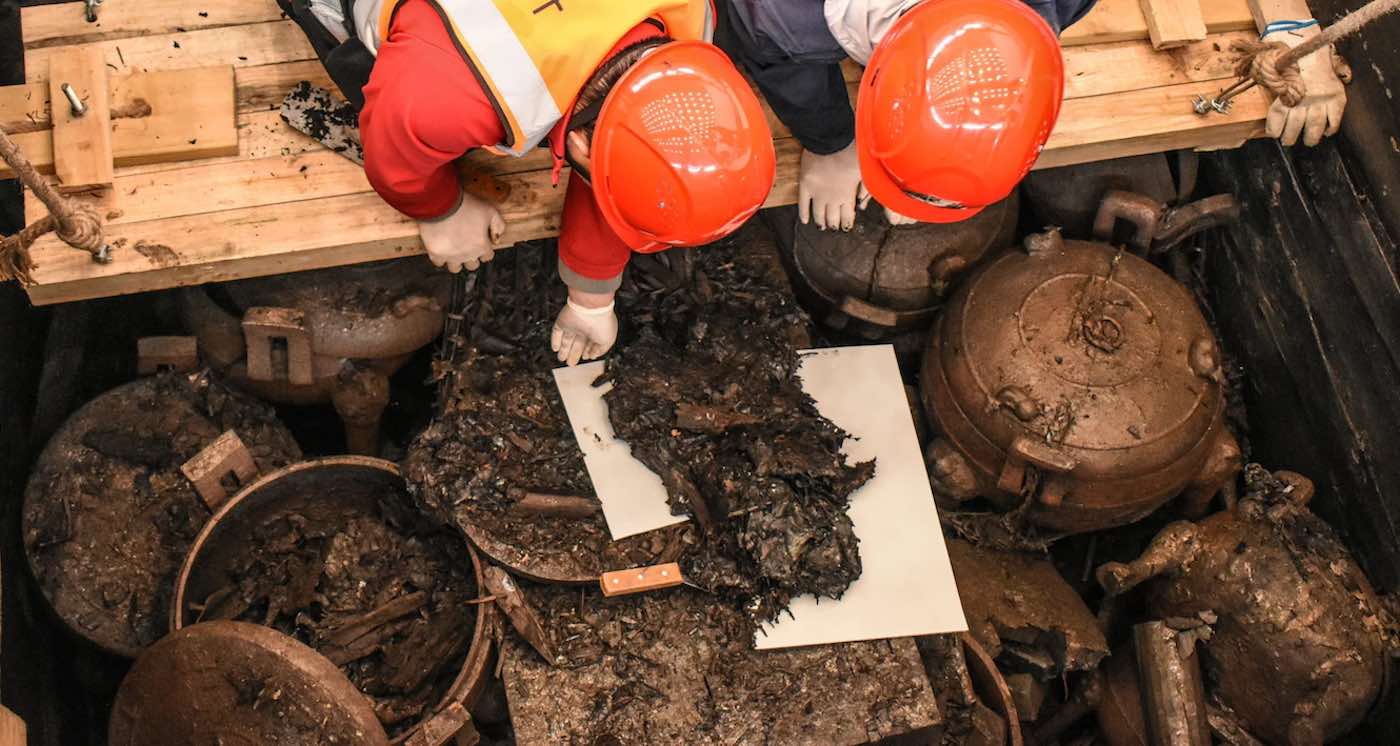
Extremely Elaborate 2,200-Year-old Tomb Discovered That May Have Belonged to a King–‘Most Complex Structure of its Kind’
Favicon 
www.goodnewsnetwork.org

Extremely Elaborate 2,200-Year-old Tomb Discovered That May Have Belonged to a King–‘Most Complex Structure of its Kind’

In mid-April, Chinese archaeologists announced they had completed the first stage of excavations on a kingly tomb believed to date back 2,200 years to the state of Chu. An integral part of fledgling Chinese history, Chu was a powerful kingdom that once conquered and annexed the state where Confucius was born, and the archaeologists believe […] The post Extremely Elaborate 2,200-Year-old Tomb Discovered That May Have Belonged to a King–‘Most Complex Structure of its Kind’ appeared first on Good News Network.
Like
Comment
Share
Gamers Realm
Gamers Realm
2 yrs

Wuthering Waves 1.0 banners – resonators, weapons, and rarities
Favicon 
www.pcinvasion.com

Wuthering Waves 1.0 banners – resonators, weapons, and rarities

The main way to get new resonators in Wuthering Waves is through the gacha system, although the available resonators will change over time. Upon launch, the 1.0 banners will have some exciting characters to pull from. How do banners work in Wuthering Waves? We have a lot of information about how the banners will work in Wuthering Waves. It will cost one Radiant Tide to pull from the Convene Banners, which will let players pull for limited-time resonators. Naturally, getting these characters will be incredibly rare, and so there is a failsafe at 80 pulls, which will trigger the pity system. You can pull ten times at once for a 20% discount, costing you only eight Radiant Tides for ten pulls. Each Convene Banner will consist of four resonators – one of which will be 5-star rarity and will be the hardest to get. The 5-star resonator will likely not be as available from any other banner, so you’ll have a limited time to get your hands on them if you really want t...
Like
Comment
Share
Pet Life
Pet Life
2 yrs

Dog Abandoned Outside A Shelter With A ‘Good Puppy’ Note Finds Forever Home
Favicon 
www.dogingtonpost.com

Dog Abandoned Outside A Shelter With A ‘Good Puppy’ Note Finds Forever Home

A 5-month-old puppy who was abandoned outside an animal shelter with nothing but a 'Good Puppy' note finds her forever home.
Like
Comment
Share
Survival Prepper
Survival Prepper  
2 yrs

SHTF Meaning: Survival Guide to Prepping for the Worst
Favicon 
preppersdailynews.com

SHTF Meaning: Survival Guide to Prepping for the Worst

SHTF Meaning: Survival Guide to Prepping for the Worst
Like
Comment
Share
Survival Prepper
Survival Prepper  
2 yrs

How To Make Your Own MREs
Favicon 
preppersdailynews.com

How To Make Your Own MREs

How To Make Your Own MREs
Like
Comment
Share
Hot Air Feed
Hot Air Feed
2 yrs

Nikole Hannah-Jones Is As Good At Economics as Paul Krugman
Favicon 
hotair.com

Nikole Hannah-Jones Is As Good At Economics as Paul Krugman

Nikole Hannah-Jones Is As Good At Economics as Paul Krugman
Like
Comment
Share
Science Explorer
Science Explorer
2 yrs

Lungless Frog Is Lungless No More As Scientists Find Tiny Respiratory Organs
Favicon 
www.iflscience.com

Lungless Frog Is Lungless No More As Scientists Find Tiny Respiratory Organs

The only lungless frog in the world has been exposed as a fraud, in fact being the secret owner of a tiny pair of lungs and glottis – respiratory organs that had previously been declared as absent in the rare Bornean flat-headed frog. New research looked at museum specimens using a high-resolution micro-CT scanner and discovered that the previous conclusion that they were lungless frogs was, in fact, incorrect.Lungless tetrapods – that is, animals on four legs like amphibians, reptiles, and mammals – are relatively rare, but include one caecilian and numerous salamanders. Instead of breathing with lungs they breathe through nonpulmonary tissues, like the skin and mucus membranes in their mouths and throats.The Bornean flat-headed frog, Barbourula kalimantanensis, was believed to be a part of the lungless crew. Living in cold, oxygen-rich waters, scientists figured that it must be getting its full oxygen quota through its skin.That was until a team of scientists embarked on a large-scale project to use micro CT scanning to look at the internal anatomy of various vertebrates. Using two specimens that had been pivotal in the initial “discovery” that Bornean flat-headed frogs were lungless, they realized that there was in fact a tiny set of lungs tucked inside their bodies.“As in other frogs, the pulmonary apparatus of B. kalimantanensis contains a glottis that is located posterior to the tongue on the floor of the buccal cavity and just dorsal to the hyoid plate,” write the study authors. “The glottis is also visible in preserved specimens, and may have been overlooked because of the folds of the buccal floor. The presence of the laryngeal dilator muscles, which open the glottis during breathing in other frogs, suggests a typical functional respiratory system in B. kalimantanensis.”That the lungs are so minute suggests that Bornean flat-headed frogs probably do also rely on skin breathing, but evidently, planet Earth is no longer a place that can claim to be home to a lungless frog. Having such small lungs may benefit these animals in making them less buoyant, as getting swept away in currents is a considerable threat in fast flowing waters. It may also influence how their vocalizations transmit in the water, as has been seen among other aquatic frogs.The authors sign off their study expressing that we have the sharing of biological specimens from natural history collections to thank for the discovery, as without these, they’d never have been able to dive into the anatomy of the “world’s only lungless frog”. Now, who fancies a trip to the museum?The study is published in Current Biology.
Like
Comment
Share
Science Explorer
Science Explorer
2 yrs

What Are The Symptoms Of The New COVID-19 Variants?
Favicon 
www.iflscience.com

What Are The Symptoms Of The New COVID-19 Variants?

COVID-19 is very much still with us – and if you’re anything like us, you’ll have noticed more and more people complaining that they’re getting sick over the last couple of weeks. We know that there are some new COVID variants doing the rounds, but what are the symptoms to look out for?The saucily named COVID-19 FLiRT variants have been surging to global dominance in recent weeks, overtaking the previous leading variant (JN.1) so that one of them, KP.2, is now responsible for the biggest proportion of infections. That’s according to the latest figures from the Centers for Disease Control and Prevention (CDC).Fortunately, experts say there’s reason to believe that any previous vaccines you’ve had, or a recent COVID infection, could still offer you some protection, a viewpoint that’s also backed by some promising recent research. But we know that the SARS-CoV-2 virus is a wily one. While vaccines have undoubtedly shifted the course of this pandemic on a monumental scale, they don’t offer absolute protection against infection.Although the Northern Hemisphere is now outside the typical peak season for respiratory viruses, COVID-19 is not the only bug out there. How can you tell if you’ve been infected?The symptoms of COVID have changed over time, along with our understanding of how this disease can present very differently in different people. “When COVID first came, it was characterized by these very odd, vague symptoms – from brain fog, feeling exhausted, and losing taste and smell,” Ziad Tukmachi, a London-based GP, told BBC Future. “Now I feel it's mutated to more similar symptoms to the flu, where it's very difficult clinically to distinguish between the two.”The CDC last updated its guidance on COVID-19 symptoms on March 15 of this year as of the time of publication, so the list of possible symptoms reflects what we know about the most recent circulating variants. They include:Fever/chillsCoughShortness of breathFatigueMuscle achesHeadacheLoss of taste or smellSore throatRunny noseNausea/vomitingDiarrheaThese last two can surprise people, who may assume they’re suffering from a stomach bug instead. Equally, you may have symptoms so mild that you might mistake them for a cold or even hay fever. Symptoms like the loss of taste and smell, which were so characteristic of COVID in the early days, now appear to be much less common.The upshot of this is that it’s probably more difficult than ever to tell whether you’ve actually got COVID, and not some other illness, without getting a test. If you have cold and flu symptoms, the safest thing to do is to stay home and keep your distance from others. If you have risk factors that may make you more likely to get severe symptoms, the CDC recommends you seek medical attention promptly, as there are now treatments available that can help if they’re taken soon enough.COVID-19 can still cause long-term impacts that science is racing to try and understand. While for most of us, the times of mask mandates and toilet paper shortages are likely behind us, it’s important we are mindful of those in our communities who are more vulnerable, and who may not have yet been able to drop their defenses in the same way. Basic precautions like staying away from others when we’re sick, and seeking a test to double-check what symptoms might mean, can help everyone continue to navigate this pandemic as safely as possible.The content of this article is not intended to be a substitute for professional medical advice, diagnosis, or treatment. Always seek the advice of qualified health providers with questions you may have regarding medical conditions.All “explainer” articles are confirmed by fact checkers to be correct at time of publishing. Text, images, and links may be edited, removed, or added to at a later date to keep information current.   
Like
Comment
Share
Strange & Paranormal Files
2 yrs

The Atrahasis, Akkadian-Babylonian epic of the Great Flood
Favicon 
anomalien.com

The Atrahasis, Akkadian-Babylonian epic of the Great Flood

Atra-Hasis, also spelled Atrahasis, is an eighteenth-century B.C.E. Akkadian epic, named after its human hero. It contains both a creation myth, explaining how the gods created humankind and an early flood account which was later incorporated into the Epic of Gilgamesh and is also thought to have influenced the biblical flood story. The Atrahasis is the Akkadian/Babylonian epic of the Great Flood sent by the gods to destroy human life. Only the good man, Atrahasis (his name translates as `exceedingly wise’) was warned of the impending deluge by the god Enki who instructed him to build an ark to save… This premium content is for PLUS+ members only. Visit the site and log in/register to read. The post The Atrahasis, Akkadian-Babylonian epic of the Great Flood appeared first on Anomalien.com.
Like
Comment
Share
The Blaze Media Feed
2 yrs

America’s hidden supply crisis: An educated workforce
Favicon 
www.theblaze.com

America’s hidden supply crisis: An educated workforce

In tomorrow’s interconnected world, the role of education in shaping a country’s ability to compete on the global stage cannot be overstated. A well-educated workforce is a prerequisite to any American company’s ability to drive the innovation and productivity needed to compete on the global stage while improving economic prosperity and social well-being at home. Yet in the face of this increased demand for educated employees, the narrative against academia in America is deafening. We hear Ivy League-educated pundits, sporting prep-school fashion, railing against intelligentsia and the “elites.” We witness congressmen grilling university presidents as if they were enemies of the state. As parents revolt against school boards, donors threaten to defund universities, and tech entrepreneurs like Peter Thiel toss around incentives for our youth to “just say no” to postsecondary education, our country’s values clearly have changed.Our demand for an educated workforce is steadily growing while our supply is heading in the wrong direction. Parents from all over the planet still dream of sending their children to America for the finest education attainable. In contrast, a recent Wall Street Journal article addressed “Why Americans have lost faith in the value of college.” While one cannot discount the challenges facing our academic institutions today and the barriers to education, we must not let inertia and polarization take over our ability to improve the system.Many articles today point to a dramatic increase in the cost of a college education. They point out that the average cost to attend college in 1980 was approximately $10,000 per year, but few complete the analysis to show that the comparison in today’s dollars would be nearly $40,000 or that the minimum wage in 1980 was just over $3 an hour.Meanwhile, college discount rates at some of the finest schools have increased to between 40-50%. In other words, the $80,000 sticker price at many of our most prestigious institutions equates to nearly half that amount being paid by the average student. This is a result of the increasing generosity of donors building huge endowments that can help fund discounts to underprivileged students.On balance, the actual cost of attending college today isn’t nearly as prohibitive as many would believe. While the cost of a quality education is too high for many, we can help students overcome this obstacle by making them aware of scholarships and helping to provide access to financial aid.Another obstacle: Many of our students aren’t prepared for their college education.English language proficiency and early learning programs have become a much greater challenge as the population has grown more diverse. Increased urbanization, a dramatic decrease in two-parent households, and a host of other societal changes created new problems. Change is always difficult but especially for those institutions providing basic government-funded services. State and local governments have struggled to keep pace with the changing needs.American students have performed in the middle of the pack in reading and science but significantly below other Organization for Economic Cooperation and Development countries in math. Postsecondary graduation rates are down, especially among males. Meanwhile, other developed countries have increased their emphasis on education and have shown steady improvement in PISA scores and graduation rates.As a result, U.S. companies are increasingly turning to foreign nationals to fill professional roles. For example, roughly one in four physicians and surgeons practicing in the United States are foreign-born. While there may be many reasons for this trend toward foreign-born professionals in our workforce, the reality is that our demand for an educated workforce is steadily growing while our supply is heading in the wrong direction. The ability of American companies to sustain or grow their ability to compete globally is at stake. I saw this from the helm of both 7-Eleven and Blockbuster over 20 years ago as we struggled to fill the jobs needed to manage thousands of stores across the country. As with any supply-chain problem, I believe that corporations will ultimately rise to the challenge. Just as we have with so many business solutions, we must harness the power of technology to help us transform the supply chain of our most valuable resource: human knowledge. Technology has been able to help us completely reinvent other aspects of American life from the way we buy groceries to the way we communicate. We must leverage the advancements in technology today to improve the way we teach and learn.In the near term, we can certainly encourage the use of technology to supplement traditional, in-class learning. The pandemic gave us a gift in some ways. For example, the urgency of at-home learning caused companies like AT&T, Microsoft, Apple, and many others to step up with Wi-Fi hotspots, hardware, and software that make online learning accessible to high school students across the country. Such urgency accelerated students’ access to technology by as much as 20 years. This near-term capability is present today, and students have free, unlimited access to tools like Kahn Academy to bolster their in-class learning. Young people have more access to learning in the palm of their hands than ever before in the history of mankind.An important next step is to encourage corporations to assess the cost-benefit of investment in public education. In other words, corporations should consider support for public schools as an investment, not philanthropy. Companies can find a measurable return on their investment in public schools by reducing recruiting and training costs if they improve access to an educated workforce.We should urge our tech leaders to develop open solutions for educational platforms that integrate engaging and incentive-based tools, making them world-class. We have at our fingertips the tools to use machine learning to enhance human learning exponentially by curating the teaching methods to how individuals will learn most effectively. Such tools can even help us reimagine the role of the teacher in teaching and learning.Finally, we should encourage our young people to recognize the importance of education to unlock their full potential. If they wish to pursue a vocation, that’s equally noble, but they should be aware of all options and encouraged to learn as much as possible. If they don’t have a clear picture of their ultimate career path — like many of us — then encourage them to get as much breadth of knowledge as possible to provide options.The bottom line: We should not dissuade our youth from college but instead should remind them that education is an investment that pays dividends for the rest of your life.

Like
Comment
Share
Showing 27549 out of 56670
  • 27545
  • 27546
  • 27547
  • 27548
  • 27549
  • 27550
  • 27551
  • 27552
  • 27553
  • 27554
  • 27555
  • 27556
  • 27557
  • 27558
  • 27559
  • 27560
  • 27561
  • 27562
  • 27563
  • 27564

Edit Offer

Add tier


Select an image
Delete your tier
Are you sure you want to delete this tier?

Reviews

In order to sell your content and posts, start by creating a few packages. Monetization

Pay By Wallet

Payment Alert

You are about to purchase the items, do you want to proceed?

Request a Refund