YubNub Social YubNub Social
    Advanced Search
  • Login

  • Night mode
  • © 2026 YubNub Social
    About • Directory • Contact Us • Privacy Policy • Terms of Use • Android • Apple iOS • Get Our App

    Select Language

  • English
Install our *FREE* WEB APP! (PWA)
Night mode
Community
News Feed (Home) Popular Posts Events Blog Market Forum
Media
Headline News VidWatch Game Zone Top PodCasts
Explore
Explore Jobs Offers
© 2026 YubNub Social
  • English
About • Directory • Contact Us • Privacy Policy • Terms of Use • Android • Apple iOS • Get Our App

Discover posts

Posts

Users

Pages

Group

Blog

Market

Events

Games

Forum

Jobs

Science Explorer
Science Explorer
2 yrs

Cameraman Spends 3 Weeks In A Tree Filming The Largest Mammal Migration – Here's What He Saw
Favicon 
www.iflscience.com

Cameraman Spends 3 Weeks In A Tree Filming The Largest Mammal Migration – Here's What He Saw

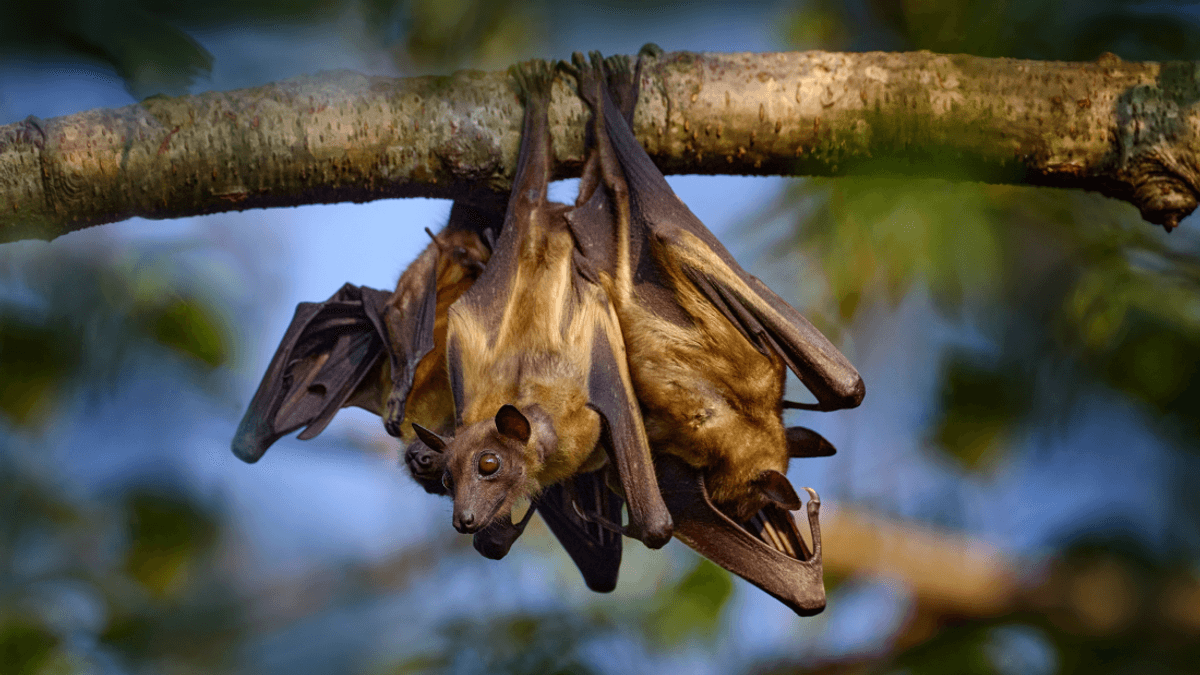
How would you feel to be surrounded by 10 million bats? For wildlife cameraman Josh Aitchison, it was an “extraordinary spectacle,” and one that he had to spend three weeks living in a tree to capture from a unique angle.Straw-colored fruit bats, Eidolon helvum, are a large species of Old World fruit bats, Pteropodidae. Their diet of fruit and flowers means they serve an important ecosystem service by dispersing seeds and pollen during their flights, which range from daily trips of tens of kilometers, to their epic annual migration.That migration brings an estimated 10 million straw-colored fruit bats to Kasanka National Park in north-central Zambia, considered to be the largest mammal migration in the world. It’s also one of the largest known aggregations of fruit bats in the world, according to a 2007 study.It’s unsurprising, then, that such a record-breaking event makes for quite the aerial spectacle, and it’s one that wildlife cameraman John Aitchison got to see from a unique perspective when he spent three weeks filming from a tree in Kasanka National Park. The epic filming marathon features in the BBC series Mammals, narrated by Sir David Attenborough, “Some of them have come 1,000 kilometers [621 miles] to be here just for a few weeks,” said Aitchison in a video about his experiences. “When they leave, there’s this extraordinary spectacle [that’s] really on a different level to any other view of mammals you will ever get.”“There are millions of bats in the air at the same time, it’s just amazing. One of the most extraordinary things about it, is [that] they're really noisy when they're in the roost here and then when they leave, they go completely silent and you can't even hear their wings. The sky is darkening with bats but you can't hear them.”Mammals was quite the series for world-first footage and record-breaking animals, including the first time leopards have been filming hunting roosting baboons at night, and a charming segment on the world’s smallest mammal – the Etruscan shrew.[H/T: The Kids Should See This]
Like
Comment
Share
Science Explorer
Science Explorer
2 yrs

Is It Really Bad To Go To Bed With Wet Hair?
Favicon 
www.iflscience.com

Is It Really Bad To Go To Bed With Wet Hair?

If you favor an evening over a morning shower (and that’s a whole other debate we’re not getting into now!) you may well have been tempted to hop in bed while your hair is still wet. Who has time for blow-drying when there’s sleep to be had? But if this is you, you might also have had people tell you all the ways that sleeping on wet hair is supposedly bad news for your health. So, is this true, or can you afford to skip the dryer tonight?What are the claims about going to bed with wet hair?There are lots of beliefs about the potential health risks of sleeping with wet hair, some more dubious than others, so we took a closer look at a few of the most popular.“Wet hair can make you catch a cold”This one’s pretty easy to debunk. Colds are caused by viruses, not a moist cranium. You might feel unpleasantly chilly with wet hair clinging to your neck all night, and that can make it harder to get a good night’s sleep, but it’s nothing that can’t easily be solved with a towel. While we’re here, going outside in the wintertime with wet hair won’t give you a cold either, despite what your granny told you – although she was right about some other stuff.  “Wet hair can give you a stiff neck/headache”It’s a little harder to figure out where this rumor came from, but it’s certainly something we’ve heard over the years.A couple of possible explanations we’ve seen include the muscles in the neck tensing up while you sleep as you subconsciously try and move away from the cold wetness, or issues with the head being colder than the rest of the body. However, we’ve not been able to find any evidence from scientific studies to back up these assertions.If you find it uncomfortable or cold to sleep with wet hair, then don’t do it. But we’ve seen nothing to suggest these problems are in any way universal, and it’s likely many people will be able to wake headache-free from a night with wet hair. “Sleeping on wet hair can damage it”You might think that skipping the hairdryer will also allow you to skip the heat damage that can come with it, and that’s true. Unfortunately, if you’re trading in heat styling for eight hours of tossing and turning on wet hair, you may still be storing up some problems for yourself.“In general, wet hair is more fragile and prone to breakage than dry hair,” dermatologist Timothy Schmidt explained for University of Utah Health. “The water weakens the hair's protein structure, making it more elastic and easier to stretch and snap.”A 2015 study suggested that stretching hair fibers to between 30 and 70 percent of their original length can cause damage, and it’s easy to see how that might happen while you sleep. Excessive friction can also be damaging, which is why experts tend to advise that you don’t rub your hair dry with a towel.If you really don’t have time to fully dry your hair before bed, Schmidt suggests you let it dry naturally or with mild heat for as long as possible, and consider using a silk or satin pillowcase that will minimize friction on your damp tresses.“Leaving your hair wet can cause dandruff”We regret to inform you that this one is also kind of true. A moist environment is the ideal breeding ground for fungi. Dandruff is just one condition that can result when these pesky microbes go to town on the scalp, with others including scalp ringworm and seborrheic dermatitis. One particularly troublesome genus is Malassezia yeast, which is naturally occurring on human skin but can sometimes cause issues when it overgrows or infects hair follicles. Wet hair, along with the moisture that can seep into your pillow as you sleep and the warmth of your head, create the perfect conditions for yeast and could put you at increased risk of a fungal infection, as emergency physician Dr Chirag Shah explained to Healthline. The takeawayWhile some of the beliefs about going to bed with wet hair can be filed in the “old wives’ tales” box, there are some that are worth further consideration. You won’t catch a cold, but you could land yourself with a fungal infection and damaged hair into the bargain.Family medicine specialist Dr Matthew Goldman from the Cleveland Clinic has a simple piece of advice: “Whenever possible, go to sleep with dry hair.”If you’re really struggling for time one evening, drying your hair for as long as possible and using a microfiber towel, and/or silk pillowcase, can help limit some of the damage. And, you know, there’s always dry shampoo. The content of this article is not intended to be a substitute for professional medical advice, diagnosis, or treatment. Always seek the advice of qualified health providers with questions you may have regarding medical conditions. 
Like
Comment
Share
Science Explorer
Science Explorer
2 yrs

The Original Purpose Of The Mysterious Hattusa Monolith Is Unknown
Favicon 
www.iflscience.com

The Original Purpose Of The Mysterious Hattusa Monolith Is Unknown

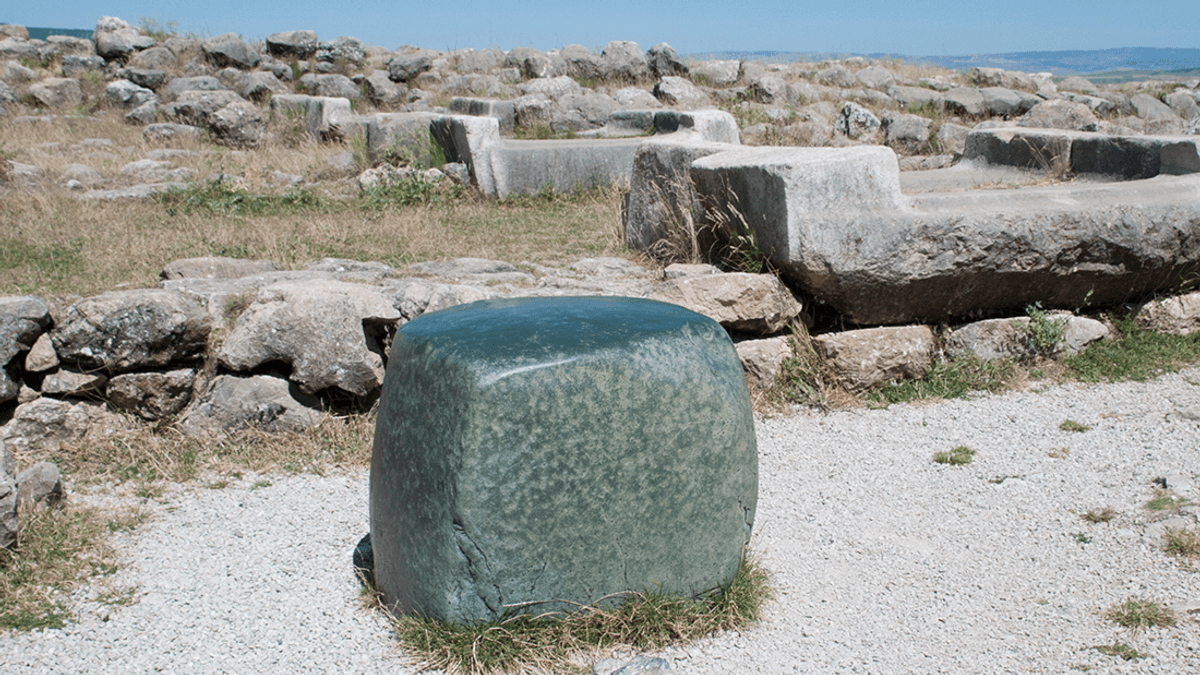
Amongst the remains of the Great Temple at Hattusa, located in modern-day Turkey, is a feature that stands out: a large monolith of nephrite, carved into the shape of a cube.The stone, called a "wish stone" by locals to the area, was found in the remains of the Hittite empire that settled in the area from around 2000 BCE, and became one of the dominant powers of the Middle East by 1340 BCE. The capital, Hattusa, likely housed 40,000-50,000 people at the civilization's peak, and was home to a number of temples, royal residencies, and fortifications, before being gradually abandoned over the course of several decades around 1200 BCE. Many of these structures survived (albeit barely) until today, including the Great Temple and the mysterious hunk of nephrite within it. Unfortunately, we have been left with few clues to the stone's original purpose."The green stone is very different from other stones in this archaeological site and that is why it is attracting such an attention," archaeologist Andreas Schachner told Anadolu Agency in 2019. "This stone is serpentinite or nephrite (jade). It is a kind of stone that can be found in the area. It is not so special stone, but it is remarkable that it is preserved monolithically."There have been suggestions that the stone may have had religious significance, with cults prevalent in the Hittite Empire, as seen in a nearby settlement of Alaca Höyük."During the later period of the Hittite Empire, Alaca Höyük seems to have become a major cult centre," archaeologist Damien Stone writes in his book The Hittites: Lost Civilizations, adding that ancient Hittite records give clues that the site was likely dedicated to a Sun goddess. "No inscription has been found yet that identifies its ancient name, but the most likely candidate is Arinna, the city of the Sun-goddess."However, similar stones have not been found despite the abundance of nephrite in the area, suggesting that the rock may not have had much significance. The ultimate purpose remains unknown, and it could simply have served as the base of a statue. Unless significant finds are made at the site, or others around the area, we will probably never know its true purpose. But we can confidently say it doesn't grant any wishes.
Like
Comment
Share
Science Explorer
Science Explorer
2 yrs

They're Back! Another Ship Sunk By Orca Attack In The Mediterranean
Favicon 
www.iflscience.com

They're Back! Another Ship Sunk By Orca Attack In The Mediterranean

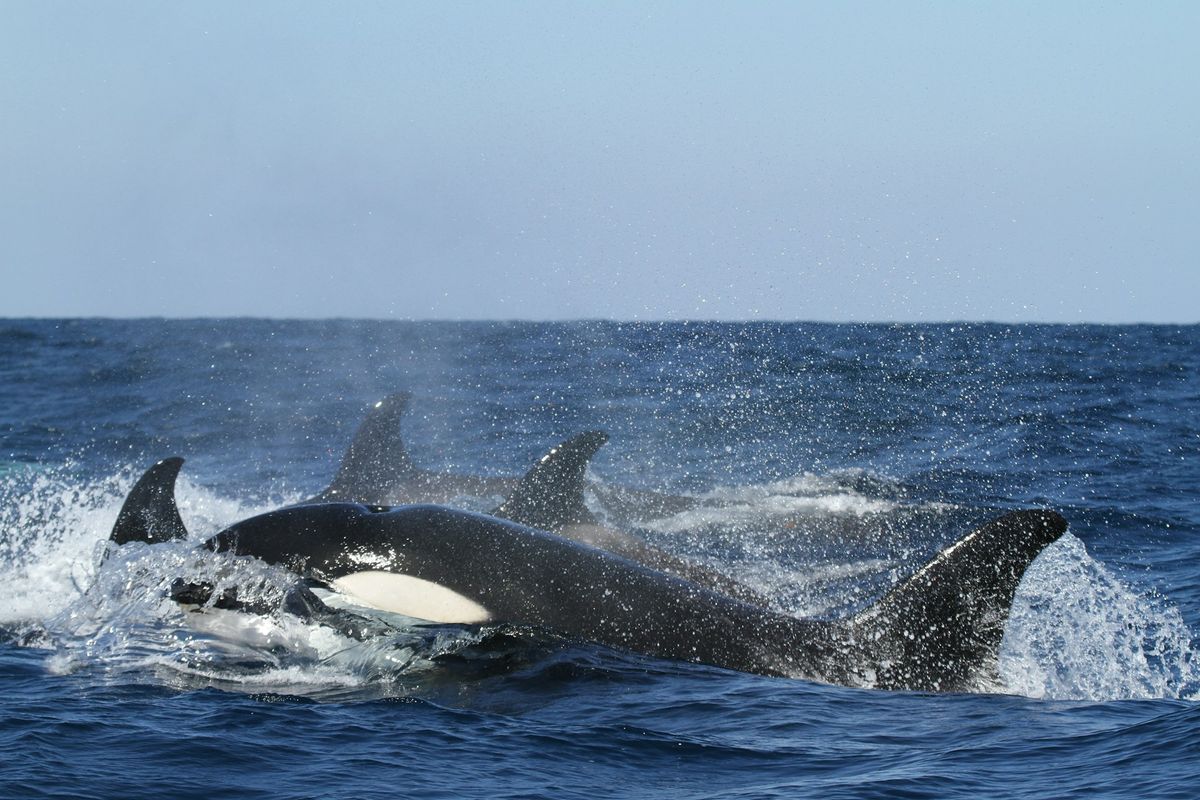
After a brief hiatus, it looks like the boat-attacking orcas of the Mediterranean are back. Two sailors had to be rescued this weekend after their boat was reportedly struck by a group of orcas in the Strait of Gibraltar.The sailboat, named Alborán Cognac, encountered the feisty cetaceans on the morning of Sunday, May 12, around 25.9 kilometers (14 nautical miles) from Cape Spartel in Morrocan waters, according to Spanish newspaper El País.The crewmembers said their 15-meter (49-foot) boat was rocked by several blows to its hull, after which they noticed damage to the rudder and water leaking into the vessel. The Spanish maritime rescue service was alerted, and a helicopter was mobilized and a passing oil tanker was requested to assist with the recovery. The pair were rescued by the nearby MT Lascaux oil tanker before their boat slowly drifted and sunk.Since May 2020, hundreds of similar orca attacks have been seen in the Mediterranean around the Iberian Peninsula. According to the Atlantic Orca Working Group, at least 52 disruptive interactions were reported between July and November 2020. In 2021, a total of 197 interactions were clocked, while 207 interactions were recorded in 2022. Orca, also known as killer whales, are a highly intelligent, socially complex species of toothed whale. Although they are apex predators of the ocean, they are typically peaceful when interacting with humans in the wild. The species has a cosmopolitan distribution, meaning they are found in waters across the world, but there's a small population that lives year-round in the Strait of Gibraltar.Researchers are unsure why this new behavior has emerged in the Strait of Gibraltar, although it does have to have spread through social learning – a testament to the fierce intelligence of these animals. Some orca experts believe the behavior may be playful, while others suggest it may be a more aggressive strategy to obtain food. Perhaps they’ve associated vessels with fishing and the snatching of much-needed tuna, others have pondered. While it does appear the number of orca attacks has significantly dropped in 2024 so far, researchers are keen to better understand this curious – and potentially worrying – novel behavior. “If this situation continues or intensifies, it could become a real concern for the mariner's safety and a conservation issue for this endangered subpopulation of killer whales,” explains a 2022 study on the orca attacks.“There is an urgent need to conduct dedicated research that would help better understand the behavior of the animals and implement mitigation measures,” they conclude.
Like
Comment
Share
Science Explorer
Science Explorer
2 yrs

The Mystery Of The "Hanging Pillar" Of Veerabhadra Temple
Favicon 
www.iflscience.com

The Mystery Of The "Hanging Pillar" Of Veerabhadra Temple

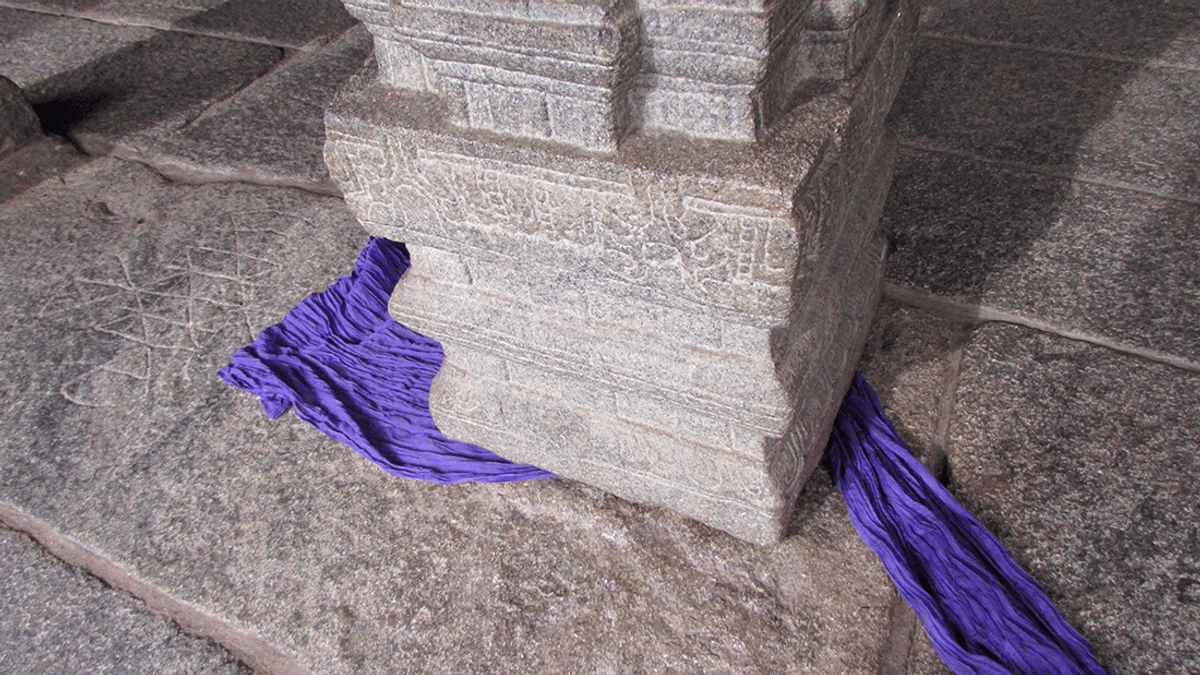
At the Veerabhadra Temple in Lepakshi, Andhra Pradesh, India, there are hundreds of ornate features, carved out in the 16th Century CE.At the complex, as well as a monolithic bull (carved from one giant slab of granite) in the image of the Hindu god Shiva's mount, there is one particular feature that draws the attention of tourists. One pillar among many appears not to touch the ground. Visitors attempt to pass thin pieces of cloth, paper, and other objects under the pillar, but as you can see below the stone does touch the ground on one corner.  The temple is so well-designed that legends have sprung up, crediting the architects with making it deliberately look like it was floating, and other legends stating that it was dislodged into its current resting position by a British engineer during the British Empire era."The architectural and ornamental elements such as sculptures; pillars of natya- mandapas elaborately carved with the figures of musicians, gods and goddess, and dancers portray a remarkable concentration of skills of 16th Century artists and crafts workers of South India," UNESCO writes of the site. "The unique sculptures of the temple, carved out of granite boulder like Nandi (monolithic bull) and Naga-sivalingaare significant for the use of material and its scale. The property thus bears a witness to human artistic and creative endeavors."However, it is unlikely that the pillar was made to rest only on one corner by design. Similar legends have sprung up about the Windsor Guildhall in England, which contains pillars that don't quite make it up to the ceiling. There were rumors that architect and astronomer Sir Christopher Wren knew pillars were unnecessary for keeping the building up, but was forced by the council to place them there after they became concerned about building collapse. According to the legend, Wren placed pillars there but defiantly left them a little short of the ceiling to prove an architectural point, or as a joke. However, they were likely not there in Wren's day, and were merely placed there as a decorative feature in 1829.Similarly, the pillar at Veerabhadra Temple was likely moved into its seemingly-floating position by seismic activity, or a mistake during construction. 
Like
Comment
Share
Science Explorer
Science Explorer
2 yrs

Carbon Dioxide Increase Is Fastest It Has Ever Been In Last 50,000 Years
Favicon 
www.iflscience.com

Carbon Dioxide Increase Is Fastest It Has Ever Been In Last 50,000 Years

It is undeniable that we are changing the planet’s climate. The reality of this is backed by study after study – and the latest one shows that the rate at which carbon dioxide is being released into the atmosphere now has no natural counterparts over the last 50,000 years.Researchers analyzed the gas that has been trapped in Antarctic ice over that period. They found that in the last largest natural increase, carbon dioxide rose by 14 parts per million over 55 years. This took place 7,000 years ago. The same increase now takes between 5 and 6 years."Studying the past teaches us how today is different. The rate of CO2 change today really is unprecedented," lead author Kathleen Wendt, an assistant professor at Oregon State University's College of Earth, Ocean, and Atmospheric Sciences, said in a statement. "Our research identified the fastest rates of past natural CO2 rise ever observed, and the rate occurring today, largely driven by human emissions, is 10 times higher."Previous analysis has shown that there were peculiar jumps in carbon dioxide during the last ice age, which ended around 10,000 years ago, but there weren’t enough details to work out what was happening during that time. These periods are called Heinrich Events, and the new work has delivered crucial insights into their cause."These Heinrich Events are truly remarkable," added co-author Christo Buizert, an associate professor in the same department. "We think they are caused by a dramatic collapse of the North American ice sheet. This sets into motion a chain reaction that involves changes to the tropical monsoons, the Southern hemisphere westerly winds and these large burps of CO2 coming out of the oceans."      A potentially important player during the Heinrich Events is the westerly winds. They do affect the circulation in the deep ocean, and during the rise of carbon dioxide, they appeared to be stronger. The strengthening led to the rapid release of CO2 from the Southern Ocean. This could be bad news for the future.Previous research has suggested that the climate crisis is making the westerly wind stronger again. If this work is correct, it might mean that going forward, the Southern Ocean’s ability to trap the carbon dioxide we release will greatly diminish."We rely on the Southern Ocean to take up part of the carbon dioxide we emit, but rapidly increasing southerly winds weaken its ability to do so," Wendt said.A paper describing the results is published in Proceedings of the National Academy of Sciences.
Like
Comment
Share
Science Explorer
Science Explorer
2 yrs

Some Papua New Guineans Have Denisovan Genes, And It Might Protect Them From Malaria
Favicon 
www.iflscience.com

Some Papua New Guineans Have Denisovan Genes, And It Might Protect Them From Malaria

New research has found that lowland populations of Papua New Guinea have Denisovan genes that may have helped them develop a resistance to malaria. The findings are part of a larger study that examined whole-genome sequences from highlanders and lowlanders living in the southwestern Pacific country.Papua New Guinea (PNG) has a diverse range of environments, each of which presents different challenges to the people living there. The difference between lowlanders and highlanders is indicative of this. The former are exposed to pathogens, such as malaria, that are not an issue for the latter, while the latter have to survive in low oxygen environments caused by the high altitude.Despite each population clearly adapting to endure in such different environments, little is known about the specific nature of these adaptations.That’s where this new study comes in. The data was collected by the Papuan Past project, which brought together researchers from the universities of Tartu (Estonia), Toulouse (France), and Papua New Guinea.“We explored the signatures of selection in newly sequenced whole genomes of 54 PNG highlanders from Mt Wilhelm (Chimbu Province) and 74 PNG lowlanders from Daru Island (Western Province),” project lead Dr François-Xavier Ricaut explained in a statement.“We hypothesised that the genomes of both populations have been shaped differently to mitigate the detrimental effects of their respective environments”.  In this study, the genetic variants under selection were associated with blood-related phenotypes.  The team found that one of the candidates for selection in lowlanders was something of non-Homo sapiens origin. The Denisova, an extinct archaic hominin population that lived in Asia before modern humans settled in Papua New Guinea (around 50,000 years ago), appear to have left genes that have benefited their human descendants. This is because these archaic humans interbred with early humans and passed on part of their genome.The researchers believe that a genetic mutation in Denisovans that impacts a specific protein structure has survived into Papua New Guinean genomes.“It looks like the altered protein is beneficial for the lowlanders to survive in their environment. Although we do not know the exact cause of this selection, this mutation might help the lowlanders overcome malaria,” Dr Mayukh Mondal explained.In contrast, the highlanders show a genetic variant that may impact their red blood cell count. A higher red blood count helps the highlanders live at an altitude where the oxygen level is lower. The selected variant in the lowlanders, on the other hand, was associated with the percentage of white blood cells, key components of the immune system."This supports the idea that hypoxia might have been the main driving force of selection that has acted on Papua New Guinean highlanders. However, specific pathogens might have shaped the genome of lowlanders through selection," added Dr Mathilde André.Interestingly, as Dr Nicolas Brucato pointed out, both these variants “also affect the heart rate of individuals with those mutations. This multiplicity highlights the complexity of interpreting the role of genetic mutations. One mutation can affect multiple phenotypes altogether."The authors conclude the study illustrates how adaptation to the local environment has shaped the genomes and resulting traits, or phenotypes, of different Papua New Guinean populations. It also highlights just how important it is to investigate populations with diverse backgrounds in helping scientists fully understand the intricacies of human biology.The study is published in Nature Communications.
Like
Comment
Share
Strange & Paranormal Files
2 yrs

Millionaire’s treasure “opened” after 100 years of storage under lock and key
Favicon 
anomalien.com

Millionaire’s treasure “opened” after 100 years of storage under lock and key

The auction house calls Lars Emil Bruun’s estate “the most valuable collection” to ever come to market, reports Sky News. The tycoon Lars Emil Bruun stipulated in his will that the collection of 20 thousand coins, which he collected throughout his life , must be kept for 100 years before it can be sold. Sky News writes about this . This fall, more than a century after the millionaire’s death, New York auctioneer Stack Bowers will finally sell off his unique collection. It is reported that some copies can bring up to 800 thousand pounds sterling, and in general the entire inheritance is about 60 million. Coins of Lars Emil Bruun Lars Bruun, who was born in 1852, became wealthy through his dairy business and had an interesting hobby – collecting rare coins, medals, tokens and banknotes from Denmark, Norway and Sweden. After the First World War, the rich man noted in his will that his collection should serve as a reserve for the royal fund in Copenhagen if it was destroyed. When Bruun died, his collection was transferred to his former Danish residence at Frederiksborg Castle, and then to the National Bank of Denmark. Before the treasures were put up for auction, the National Museum acquired seven rare coins – six gold and one silver, using the right of first refusal. These exhibits were minted around the 15th-17th centuries. Danish or Norwegian monarchs and cost more than 877 thousand pounds sterling. “They are described in the literature as the only existing specimen of their kind. The fact that this collection was closed for a hundred years makes it a legend. It’s like a fairy tale,” says senior researcher and expert at the National Museum Helle Horsnaes. The post Millionaire’s treasure “opened” after 100 years of storage under lock and key appeared first on Anomalien.com.
Like
Comment
Share
NewsBusters Feed
NewsBusters Feed
2 yrs

Michael Knowles Mauls Biden’s Ridiculous Defense of Bidenomics on CNN
Favicon 
www.newsbusters.org

Michael Knowles Mauls Biden’s Ridiculous Defense of Bidenomics on CNN

The Daily Wire host Michael Knowles attacked President Joe Biden for his incoherent response to questions from a CNN anchor.  During the May 10 edition of The Michael Knowles Show, Knowles responded to President Biden’s befuddled defense of Bidenomics, noting that Biden’s “failures on the economy were most likely to destroy Democrats in November.” To emphasize just how bad things are for Biden, Knowles played a clip of “Erin Burnett of CNN grilling Biden for his economic failures” during which Biden made a vain attempt to save face.  On May 8, CNN Anchor Erin Burnett, to her credit, confronted President Biden with both his low polling on economic issues and bad economic statistics. “Voters by a wide margin, trust Trump more on the economy,” Burnett told Biden. She went on to cite polls and statistics that spell out Biden’s devastating failures:  “The cost of buying a home in the United States is double what it was when you look at your monthly costs from before the pandemic. Real income, when you account for inflation is actually down since you took office, economic growth last week, far short of expectations. Consumer confidence, maybe no surprise, is near a two-year low. With less than six months to go to election day are you worried that you're running out of time to turn that around?” Absurdly, Biden responded, “We’ve already turned it around.” Biden referenced a poll to support this point before veering off in a very different direction. “The polling data has been wrong all along. You guys do a poll at CNN, how many folks do you have to call to get one response?”  Knowles roasted the president for his incoherent response. “Biden is not as swift as he used to be and he just gave two answers that contradict each other,” Knowles said.  He ripped Biden for simultaneously questioning the bias of unfavorable polls while also pointing to one solitary favorable poll. Knowles pointed out the absurdity of anyone on the left arguing that the polls or the media are biased against them.  “Democrats have the media on their side. So when a Republican says ‘the fake news coverage is slanted against us’, that’s different from the Democrats saying that because Republicans don't really have news outlets and Democrats have all of the news outlets, same goes for polling, same goes for any aspect of American political propaganda,” Knowles said.  The Daily Wire host went on to say that when polls are actually wrong, they tend to overestimate Democrats rather than Republicans. “So when you’ve got polls coming out, economic indicators coming out, statistics from all the social scientists coming out that do not look good for Democrats and you hear this being reported by Democrat liberal news outlets, you know these people are really, really in trouble,” he said. He added that the media “have every single incentive to paint the Democrats in as good a light as possible and that’s just not going to cut it these days because everyone knows that the economy is in the doldrums.”  The economy is in the doldrums. While the devastating statistics listed by Burnett proved too much for Biden to address, they aren’t the only bad numbers. Burnett also could have mentioned that Americans have dealt with 5.5% average monthly inflation under the Biden administration. She also could’ve addressed how gas prices have skyrocketed from $2.42 a gallon in Jan. 2021 (when Biden took office) to $3.54 in March. Conservatives are under attack! Contact ABC News at (818) 460-7477, CBS News at (212) 975-3247 and NBC News at (212) 664-6192 and demand they tell the truth about the Bidenomics disaster.
Like
Comment
Share
NewsBusters Feed
NewsBusters Feed
2 yrs

MRC Backs Religious Lawsuit Against NPR-Favoring Government Rate Scheme
Favicon 
www.newsbusters.org

MRC Backs Religious Lawsuit Against NPR-Favoring Government Rate Scheme

The Media Research Center is calling on the federal government to stop discriminating against religious broadcasting companies and right-leaning talk radio. On Monday, MRC filed an amicus brief this week in support of the Alliance Defending Freedom (ADF)’s petition for the U.S. Supreme Court to hear a case pertaining to religious broadcasting companies challenging the Biden-led Copyright Royalty Board (CRB), which is a federal entity responsible for regulating royalties and copyright licenses. In the brief, MRC argued that the CRB violated the First Amendment religious liberty and free speech rights by not providing the same deal to religious broadcasters it entered into with leftist National Public Radio (NPR). The legal battle began in 2021 after the CRB inexplicably refused to extend a favorable NPR deal, including low fees, to the National Religious Broadcasters Noncommercial Music License Committee (NRB), a non-profit representing various religious communicators and broadcasting companies. The ADF wrote in February that the CRB established a statutory license for companies, including NPR and NRB, to pay royalties to the copyright holders of songs played on their stations. Instead of offering the same rates granted to NPR, the CRB demanded that religious broadcasting companies pay 18 times the royalty fees of NPR if they have over 200 listeners. This was in contrast to the CRB's deal with NPR, a secular, taxpayer-funded company at the center of controversy for bias. Related: Here Are the Best & Worst Moments From the House NPR Hearing with MRC’s Graham “Here, the Board created a content-based, tiered rate structure that required religious broadcasters to pay far more than NPR stations to communicate with an audience above a mere 218 people,” the MRC brief read, alluding to the notable discrepancies in the deals offered to NPR and the NRB. Further addressing the court, the MRC wrote that this discriminatory practice “forces religious broadcasters to pay royalty rates 18 times higher than those to which NPR will be subject.” The religious broadcasting companies took the CRB to court in 2021. Regrettably, the U.S. Court of Appeals for the D.C. Circuit ruled in favor of the federal government. “This unlawful discrimination forces some noncommercial religious stations to stay small and restrict their listener reach so they can afford to stream online,” the ADF added. “The Copyright Royalty Board is violating federal law and the U.S. Constitution, and so we are urging the Supreme Court to take this important case and rule on the side of religious liberty and free speech.” Conservatives are under attack. Contact your representatives and demand that Big Tech be held to account to mirror the First Amendment while providing transparency, clarity on hate speech and equal footing for conservatives. If you have been censored, contact us using CensorTrack’s contact form, and help us hold Big Tech accountable.
Like
Comment
Share
Showing 28440 out of 56670
  • 28436
  • 28437
  • 28438
  • 28439
  • 28440
  • 28441
  • 28442
  • 28443
  • 28444
  • 28445
  • 28446
  • 28447
  • 28448
  • 28449
  • 28450
  • 28451
  • 28452
  • 28453
  • 28454
  • 28455

Edit Offer

Add tier


Select an image
Delete your tier
Are you sure you want to delete this tier?

Reviews

In order to sell your content and posts, start by creating a few packages. Monetization

Pay By Wallet

Payment Alert

You are about to purchase the items, do you want to proceed?

Request a Refund