YubNub Social YubNub Social
    #ebikelife #urbanride #victrip #goelectric #electricmoped
    Advanced Search
  • Login

  • Night mode
  • © 2025 YubNub Social
    About • Directory • Contact Us • Privacy Policy • Terms of Use • Android • Apple iOS • Get Our App

    Select Language

  • English
Install our *FREE* WEB APP! (PWA)
Night mode
Community
News Feed (Home) Popular Posts Events Blog Market Forum
Media
Headline News VidWatch Game Zone Top PodCasts
Explore
Explore Jobs Offers
© 2025 YubNub Social
  • English
About • Directory • Contact Us • Privacy Policy • Terms of Use • Android • Apple iOS • Get Our App

Discover posts

Posts

Users

Pages

Group

Blog

Market

Events

Games

Forum

Jobs

SciFi and Fantasy
SciFi and Fantasy  
1 y

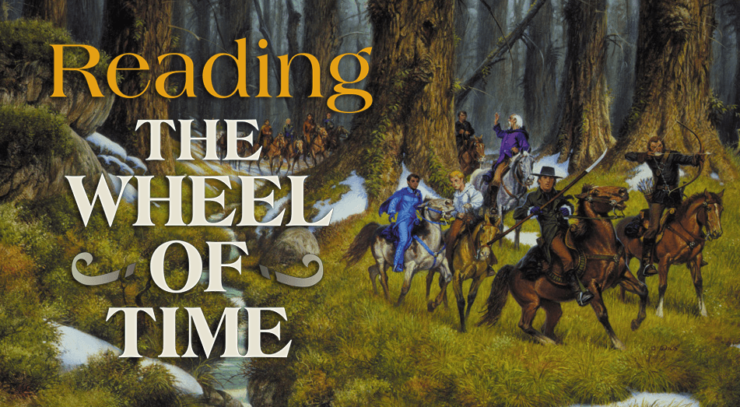
Reading The Wheel of Time: Perrin Embraces Pain in Crossroads of Twilight (Part 18)
Favicon 
reactormag.com

Reading The Wheel of Time: Perrin Embraces Pain in Crossroads of Twilight (Part 18)

Books The Wheel of Time Reading The Wheel of Time: Perrin Embraces Pain in Crossroads of Twilight (Part 18) This week we’re coming to pivotal moment for Perrin… By Sylas K Barrett | Published on December 10, 2024 Comment 0 Share New Share This week in Reading the Wheel of Time, we’re covering Chapter 27 of Crossroads of Twilight, in which Perrin reaches a personal crossroads of sorts, and faces the question of What Must Be Done to save his Faile. Perrin supervises the So Habor merchants as the townspeople winnow the weevil infested barley. It is a touch affair, given how oddly the inhabitants of So Habor are behaving, but it helps that they are outside the town walls while doing the work and loading the carts. Perrin finds that, for some reason he can’t understand, his own display of unconcern seems to settle the nerves of his cart drivers and soldiers. As Perrin watches the pile of cleaned bags begin to grow, Berelain joins him, reminding him that he can’t save everyone, and that it was Lord Cowlin’s duty to look after his people. Perrin asks if Annoura has any idea what is going on here, and Berelain replies that Annoura is not as forthcoming as Berelain once believed her to be and rides off. Having overheard, Annoura informs Perrin that, even as a ta’veren, he is only a thread in the Pattern, as she is, and even as the Dragon Reborn is. Perrin remarks that sometimes people don’t want to be woven into the Pattern without any say, and she only asks if he thinks that matters. Seonid keeps asking to stay behind until Perrin eventually threatens to send the Wise Ones to bring her back if she stays. When Masuri comes up to him, Perrin asks if she wants to stay as well. She only responds that there are many ways to serve, and that one cannot always serve in the way one might wish. They are having what passes for lunch when one of the Cha Faile, Latian, discreetly reports to Perrin that Balwer’s “friend” is away but will be back in town in a day or two, and Balwer asks permission to catch up with Perrin in a few days. Perrin hesitates, thinking of Faile, then passes the message for Balwer not to wait too long. Perrin is ready to leave an hour later, taking the Two Rivers men and the loaded carts with him, and leaving Kireyin and the Ghealdanin soldiers to guard the rest and escort them back when they are fully loaded. As soon as Perrin is through Neald’s gateway, he kicks Stayer towards the camp. He senses tension even before Dannil reports that the Maidens brought in five Shaido, and that Arganda took them to put them to the question, and that Masema is with them. Perrin goes to Arganda, pushing past both Ghealdanin soldiers and Masema’s men to the front of a crowd, where he sees four Aiel lying bound on the ground and a fifth stretched out naked, with Hari—the prophet’s man who likes to collect people’s ears—putting hot coals on the Aiel ’s body while the screams into a gag. Without thinking, Perrin knocks the coals away, hitting Hari in the process and hurting his hand. Masema explains that Aiel don’t feel pain the way other men do, and you have to be willing to do more to make them talk, while Arganda and Aram both remind Perrin that they must do what they have to. Perrin interrogates the prisoner about Faile, but the man only sings about washing the spears, and around him Perrin feels the judgment of everyone looking on. Aram pleads for Perrin to leave, as Perrin looks around, viewing the faces of his allies and remembering the words that they have all said to him. What had to be done. Perrin looked at the faces around him. Arganda, scowling with hatred, at him as much as the Shaido, now. Masema, stinking of madness and filled with a scornful hate. You must be willing and able to hurt a stone. Edarra, her face as unreadable as the Aes Sedai’s, arms folded calmly beneath her breasts. Even Shaido know how to embrace pain. It will take days. Sulin, the scar across her cheek still pale on her leathery skin, her gaze level and her scent implacable. They will yield slowly and as little as possible. Berelain, smelling of judgment, a ruler who had sentenced men to death and never lost a night’s sleep. What had to be done. Willing and able to hurt a stone. Embrace pain. Oh, Light, Faile.The axe was as light as a feather rising in his hand, and came down like a hammer on the anvil, the heavy blade shearing through the Shaido’s left wrist. The man grunts in pain and deliberately sprays Perrin in the face with the resulting gout of blood, but he still doesn’t smell afraid. Perrin instructs Seonid to heal the man, and then explains that there will be no more hot coals, only questions, and if the Aiel refuse to answer or their answers do not match, everybody loses something. Further, he promises that if they continue to hold out even after they have lost both hands and both feet, he will find a town to leave them in where people will take pity on them and treat them as beggars. “You think on it and decide whether it’s worth keeping my wife from me.” Even Masema was staring at him as if he had never before seen the man standing there with an axe. When he turned to go, Masema’s men and the Ghealdanin alike parted in front of him as though to let a whole fist of Trollocs through. Perrin walks out of the camp and through the snow-covered trees, unaware of how far he has walked, until at last he hurls the axe, hard, into the trunk of a tree. Then he sits down on a rock and informs the nearby, hidden Elyas that he knows Elyas is there. Elyas asks if Perrin threw the axe away because he was starting to like it. Perrin answers that it isn’t about liking the axe but about how he feels more alive when he’s in battle, more alive than he feels at any other time except when he’s holding Faile. He doesn’t know what he would be if he started to feel that alive doing what he just did to the Aielman, but he is sure he wouldn’t be a man Faile would want to come back to. Elyas explains that when your heart starts pounding it quickens your blood and heightens your senses, so of course you feel more alive when facing danger and battle, and that doesn’t mean that you like it. Perrin wishes he could believe that. “Live as long as I have,” Elyas replied in a dry voice, “and you’ll believe. Till then, just take it that I’ve lived longer than you have, and I’ve been there before you.” Eventually Aram and Neald arrive to tell Perrin that the Aielmen talked, probably because they were more frightened of Perrin’s threat of leaving them to beg than anything else, but that unfortunately, none of them have seen anyone matching Faile’s description, or the Queen or the other captives. Elyas remarks that there are thousands of Shaido and that this was a slim chance, while Aram suggests killing the captives, so that they can’t escape and warn the other Shaido. Perrin replies that the prisoners can be guarded. He leaves the axe stuck in the tree as he returns to camp. There he is found by Balwer and an unkempt, bearded man that Perrin doesn’t immediately recognize… until he catches his scent. Balwer seems surprised that Perrin recognizes Tallanvor, explaining that he found the young man in So Habor and that Tallanvor may have some allies for Perrin. After hesitating for a moment, Tallanvor explains that there are fifteen thousand Seanchan, including a large number of Taraboners riding under the Seanchan banner, and that they have at least a dozen damane with them. They are also hunting the Shaido, and although it would be like taking help from the Dark One, Tallanvor would take the Dark One’s help to free Maighdin. For a moment, Perrin stared at the two men, Tallanvor nervously thumbing his sword hilt, Balwer like a sparrow waiting to see which way a cricket would hop. Seanchan. And damane. Yes, that would be like taking the Dark One’s help. “Sit down and tell me about these Seanchan,” he said. I’m curious if there is anything going on between Berelain and Annoura besides the fact that she and Masuri were both spotted visiting Masema. Not that secret visits to the Prophet aren’t enough by themselves to warrant Berelain’s hostility, but Berelain is canny enough that I would expect her to keep that hostility a secret from Annoura, lest Annoura suspect that Berelain knows what she’s been up to. But perhaps Berelain decided to confront her advisor, and Annoura either refused to explain anything or gave an answer that Berelain found unsatisfactory. As we well know, Aes Sedai do what they do for their own reasons, and rarely feel like they owe others any kind of explanation. It would certainly make sense if Annoura and Masuri wanted to keep tabs on someone as powerful and unhinged as Masema. Plus Annoura is a Gray, so she might have been interested to see if she could do anything from a mediation angle, especially since Perrin vetoed getting rid of the guy. But whatever the exact nature of the conflict between them is, Annoura and Berelain give Perrin very similar advice about So Habor. Berelain tried to assuage any guilt Perrin might be feeling by reminding him that he can’t save everyone and pointing out that Lord Cowlin is the one who abandoned his duty. Annoura took a more expansive perspective when she reminded Perrin that individual threads can’t choose how they are woven into the Pattern—not even if they are ta’veren, or the Dragon Reborn himself.  Every time a character makes a comment like this, I am returned to the question of how free will works (or doesn’t) in the universe of The Wheel of Time. It’s a concept I’ve explored in other posts so I won’t get back into it now, but what I’m particularly interested in this week is how the idea of being a thread in the Pattern, of your path being chosen and directed for you by a higher power, can either be a very comforting thought or a very distressing one, depending on what happens to you and what your general perspective on life is. In our own world we have similar philosophies, such as the Christian idea of “God’s plan,” or the more secular and vague “everything happens for a reason.” Many people do find such a perspective comforting, because it means that their losses or pain aren’t meaningless. Others, however, might find the idea that someone, or something, deliberately engineered their suffering to be a patronizing or even cruel idea, no matter if it is part of some greater design. In Perrin, we see the latter: Faile is his world, and the needs of the Wheel or the Pattern can’t really factor into his perspective. This is why, I think, he loses his empathy and sense of guilt around what is happening in So Habor. His sense of the world narrowed to one single loss, his sense of self to one single need. He doesn’t choose between So Habor and Faile, doesn’t consider letting Seonid stay before deciding that he has to choose the option of saving Faile instead of the option of helping So Habor. For him, there are no options, only one goal. There are two thoughts that Perrin pairs together even before he’s confronted with the question of how to get information from the Shaido prisoners. The first is that a man “does what he can,” which is about accepting human limitations and releasing oneself from those responsibilities you can never hope to fill. The second is that a man “does what he has to,” which is about finding the strength to do difficult and unpleasant things in the service of important goals. The two ideas are somewhat related, but ultimately are very different ideas, and it’s interesting that Perrin seems to be treating them as one concept.  It reminds me very much of Rand, I think, who has already made the mistake of equating strength with hardness, of believing that he must make himself into a cold, inhuman thing in order to have the strength to carry out his duty as the Dragon Reborn. He learned that he couldn’t always afford to make his decisions based on his kinder emotions—emotions like compassion and empathy and love and sorrow—so he decided that he had to get rid of those emotions, rather than learning how to balance emotion and judgement, and how to be guided without being controlled by his feelings. Perrin is embodying that struggle differently, but I think he is suffering from the same confusion, for lack of a better word, that Rand is. So many people are pushing Perrin, telling him how to be a lord and how to be a leader, and giving him advice based on their own experiences as lords and generals and leaders of men and women. Perrin has found almost all of it distasteful, and has resisted as much as he can, giving in only when he felt he had no other choice. And that is what the chopping off hands incident feels like, to me. It feels like Perrin giving in to what he believes everyone has been telling him all along. And its heartbreaking to watch. It’s interesting that Perrin assumes that Berelain has never lost a night’s sleep over sentencing a man to death, that he doesn’t think in this moment about how Arganda is driven by almost the same emotion as Perrin is, that he takes Masema’s (very racist) judgment about the Aiel to heart even as he recognizes the man’s madness and hatred of everything. You can see him starting to buy into the concept that he has been resisting, that violence and torture are necessary and that true leaders don’t suffer from grief or attacks of conscience when they do what has to be done. It never occurs to Perrin to take the advice and judgments of his companions as helpful information that he can explore and interpret in his own way, that advice is meant to be helpful, and not a trap. Of course, in a way, Perrin is trapped. He can’t go back to the person he was, and even if he was willing to abandon all the responsibilities he’s accidentally acquired and run off to live in the woods somewhere or get a blacksmithing job in a remote village where no one will ever find him, there’s still the whole ta’veren problem to be considered, with all its Pattern-mandated ties to Rand. So it’s not really surprising that Perrin felt, when confronted with the need for information from the Shaido prisoners, that his only choices were to resist the trap or to step into it fully, just as Rand seems to have accepted that all his fears about what being the Dragon Reborn would will definitely come true. Which brings us back to the fact that Perrin sees the Pattern and the nature of fate as a curse, not as a reassurance. And now Perrin has thrown his axe away, which I think was the right decision, not because of the morality of what he has or has not done with it, but because it has been a source of distress for him since he first picked it up. Perhaps Perrin has made the axe too much of a symbol for violence. In no way do I think he is renouncing violence entirely by throwing away the axe, but perhaps discarding the symbol will be helpful in his journey towards finding some kind of equilibrium with the part of him that abhors violence and the part of him that believe he must stand up and defend those who cannot defend themselves. And that he is willing to do just about anything if it’s about protecting his wife. The best moment of all, however, is the conversation between Perrin and Elyas. I’m always keeping Jordan in mind when I’m reading these books, his past, and what he has said about his intentions in writing the book. In chapter 27, I felt Jordan’s presence, the weight of his experience in the army, more than I have in any single chapter so far. I remember coming across a post from his blog in which he talked about one of the nicknames he gained in Vietnam after a particularly intense feat of gunnery—the Iceman. It was a reference to the Eugene O’Neil play, in which the Iceman is Death, but I thought of the story when Neald remarked that he didn’t think Perrin’s blood was quite cold when cut of the Shaido warrior’s hand. Jordan wrote about hating the nickname, but being unable to shake it, and while there are aspects of that story that we also see in Rand—particularly in how he describes how cold of a person he was, and how he metaphorically killed and left behind that man before returning to civilian life. But I think there is a lot of that experience in this moment for Perrin, as well, because we are seeing how people interpret what he did, and label him accordingly. Arganda thinks Perrin’s blood is so hot he should be given time to cool off before anyone talks to him. Neald sees him as being ice cold, like an Asha’man, and is pleased, or at least amused, about it. Everyone sees Perrin differently now, even Masema, and he can never go back to the person he was before he committed that action. And I suspect, going forward, that this action will change everything and also nothing for Perrin. It’s a huge moment in a personal sense, and its going to inform how he sees himself and engages with his capacity for violence and willingness to do everything for Faile—whether for good or ill, or a mix of both remains to be seen. On the other hand, as intense and immoral the action was, in the grand scheme of the terrible things that have been done by characters in this world, from the “good guys” like the Aes Sedai to the bad guys like the Whitecloaks and Seanchan and Shaido, to the Evil-capital-E of the Forsaken and other Darkfriends, it’s not exactly the worst thing we’ve seen. The Shaido were still going to be tortured, burned by coals and worse, and over a longer period of time, and with Masema and his goons in charge might have ended up just as mutilated, or worse, than one man losing a hand and the rest remaining untouched. That hardly makes what Perrin did morally okay, but it does… lend some perspective, I think. I was so happy when Elyas showed up again, and boy does Perrin need him. Perhaps more than he needs Faile, though Perrin wouldn’t agree with that assessment. And what touched me most was Elyas sitting down beside Perrin, without judgment or a desire to influence Perrin’s decisions one way or another, to say that he understands, and to provide the perspective of someone who has been where Perrin is, and who has survived and come out of it without losing his empathy or his humanity. And I wonder if it was healing for Robert Jordan to write out that part of heat of battle is the awareness of life that comes from the nearness of death, and to have an older character offer the words; “Live as long as I have,” Elyas replied in a dry voice, “and you’ll believe. Till then, just take it that I’ve lived longer than you have, and I’ve been there before you.” I wonder if he wished, as he wrote this chapter, there had been someone to tell him that, when he was a young soldier. I wonder if in some ways, he felt like he was Elyas, speaking to Perrin, and to the younger version of himself who feared what violence and war might make of him. This is one of the greatest powers of storytelling, the ability to relate to, and even to heal, real life trauma through fiction and art. And although I have been fortunate enough in my life to never face the kind of violence that the characters in this story faced, that their creator faced, I still felt drawn to, and deeply moved by, the truths that Jordan was exploring here. It’s this kind of exploration that has kept Perrin as one of my favorite characters throughout the series. We’ll be moving on to catch up with Mat next week, covering chapters 28 and 29, and then there will be a (slightly awkward) two-week break for the holidays before we finish up with chapter 30 and the Epilogue. It’s hard to believe that book ten is almost over, but here we are![end-mark] The post Reading The Wheel of Time: Perrin Embraces Pain in <i>Crossroads of Twilight</i> (Part 18) appeared first on Reactor.
Like
Comment
Share
Hot Air Feed
Hot Air Feed
1 y

Trump Trolls Trudeau And It Is Glorious
Favicon 
hotair.com

Trump Trolls Trudeau And It Is Glorious

Trump Trolls Trudeau And It Is Glorious
Like
Comment
Share
Hot Air Feed
Hot Air Feed
1 y

Irony: Pete Hegseth Now Has the 'Vibes'
Favicon 
hotair.com

Irony: Pete Hegseth Now Has the 'Vibes'

Irony: Pete Hegseth Now Has the 'Vibes'
Like
Comment
Share
Science Explorer
Science Explorer
1 y

Is It A Shark, A Ray, Or A Prehistoric Creature? Meet The Bowmouth Guitarfish
Favicon 
www.iflscience.com

Is It A Shark, A Ray, Or A Prehistoric Creature? Meet The Bowmouth Guitarfish

You need six stringfish before you get to a guitarfish.
Like
Comment
Share
Science Explorer
Science Explorer
1 y

Dogs Can "Talk" To Us By Stringing Words Together
Favicon 
www.iflscience.com

Dogs Can "Talk" To Us By Stringing Words Together

The pups are highly litter-ate!
Like
Comment
Share
Science Explorer
Science Explorer
1 y

The World’s Deadliest Animal Is Not What You Think It Is
Favicon 
www.iflscience.com

The World’s Deadliest Animal Is Not What You Think It Is

This unassuming killer is responsible for hundreds of thousands of deaths across the world each year.
Like
Comment
Share
NewsBusters Feed
NewsBusters Feed
1 y

Stewart Asks Aspiring DNC Chair How He Stopped GOP From 'Diabolically' Altering Wisconsin
Favicon 
www.newsbusters.org

Stewart Asks Aspiring DNC Chair How He Stopped GOP From 'Diabolically' Altering Wisconsin

Jon Stewart welcomed Wisconsin Democratic Party Chairman Ben Wikler to Monday’s The Daily Show on Comedy Central to promote his campaign for national party chairman. On one hand, Stewart was optimistic as he gushed over Wilker’s ability to stop Republicans from “diabolically making changes” in Wisconsin, but on the other, he was worried Democrats “have a harder row to hoe" because they are “not nihilistic” like Republicans. Stewart wondered, “There was a supermajority in Wisconsin, the Supreme Court of Wisconsin was diabolically making changes to withstand power, Scott Walker was the governor. How did you turn that situation around?”     Wikler recalled, “So, Republicans took over Wisconsin in 2010 and immediately smashed unions, suppressed voting rights, gerrymandered the living daylights out of legislative maps to make sure they’d never lose power even if voters try to throw them out. And for years, it looked as though Wisconsin was going to fall off the cliff, be a state where Republicans controlled everything, whether voters liked it or not.” Obviously, Republicans did not suppress the vote. If they did, Wikler would not be on The Daily Show to hype the fact that he worked to elect liberals to the state supreme court to overturn GOP-drawn maps. Those state supreme court elections also allowed Democrats to undemocratically undo Walker’s reforms. Later, Stewart addressed what he thinks is one of the Democrats’ main obstacles, “One of the fundamental problems that the Democrats have had is they cosign to this, sort of, what they call the neoliberalism, economics, supply-side, deregulation, NAFTA, and after, all these other things, and they never clawed it back. And what we keep hearing is we just need to keep raising taxes on billionaires, but if you haven't convinced your voters that the money that is raised will be spent wisely and with value, none of it’s going to matter. Isn't it—look, the Democrats have a harder row to hoe.” As Wikler agreed, Stewart continued, “Because they are the party that believes government needs to be there and play a vital role in balancing out corporate interests and helping people's lives. It is not nihilistic, like the other, which is, blow the whole thing up and reduce it to the size you can drown in a bathtub. So is that a message of competence that people can wrap their heads around in the Democratic Party?” That’s a bit rich coming from the guy who said, “[bleep] the norms,” when it came to President Joe Biden pardoning Hunter. As it was, Wikler declared that “You have to prove it out to be able to earn that trust,” to which Stewart replied, “Have they done that in Wisconsin?” In more evidence that Republicans didn’t suppress the vote, Wikler added, “They’ve done that in Wisconsin, and Governor Evers ran on ‘Fix the damn roads,’ and then he fixed the damn roads.” Here is a transcript for the December 9 show: Comedy Central The Daily Show 12/9/2024 11:18 PM ET JON STEWART: There was a supermajority in Wisconsin, the Supreme Court of Wisconsin was diabolically making changes to withstand power, Scott Walker was the governor. How did you turn that situation around? BEN WIKLER: So, Republicans took over Wisconsin in 2010— STEWART: Yes. WIKLER — and immediately smashed unions, suppressed voting rights, gerrymandered the living daylights out of legislative maps to make sure they’d never lose power even if voters try to throw them out. And for years, it looked as though Wisconsin was going to fall off the cliff, be a state where Republicans controlled everything, whether voters liked it or not. … STEWART: One of the fundamental problems that the Democrats have had is they cosign to this, sort of, what they call the neoliberalism, economics, supply-side, deregulation, NAFTA, and after, all these other things, and they never clawed it back. And what we keep hearing is we just need to keep raising taxes on billionaires, but if you haven't convinced your voters that the money that is raised will be spent wisely and with value, none of it’s going to matter. Isn't it — look, the Democrats have a harder row to hoe. WIKLER: Yeah. STEWART: Because they are the party that believes government needs to be there and play a vital role in balancing out corporate interests and helping people's lives. It is not nihilistic, like the other, which is, blow the whole thing up— WILKER: Yeah. STEWART: — and reduce it to the size you can drown in a bathtub. So is that a message of competence that people can wrap their heads around in the Democratic Party? WIKLER: You have to prove it out. STEWART: Right. Right. WIKLER: To be able to earn that trust. STEWART: Have they done that in Wisconsin? WIKLER: They’ve done that in Wisconsin and Governor Evers ran on "Fix the damn roads" and then he fixed the damn roads.
Like
Comment
Share
NewsBusters Feed
NewsBusters Feed
1 y

PBS Plays Up 'Politicized' Penny Case, Some See 'Reckless Vigilante Who Went Too Far'
Favicon 
www.newsbusters.org

PBS Plays Up 'Politicized' Penny Case, Some See 'Reckless Vigilante Who Went Too Far'

The acquittal of Daniel Penny disturbed the ivory tower virtue of the PBS News Hour on Monday evening. Penny, who intervened on a New York City subway in the summer of 2023 when violent homeless addict Jordan Neely threatened to kill other passengers, had been put on trial for his civic heroism by an otherwise soft-on-crime Manhattan prosecutor. PBS reporter Stephanie Sy sounded suspect of the jury’s verdict (woke Manhattan District Attorney Alvin Bragg’s racial and political machinations were naturally ignored.) Co-anchor Amna Nawaz had quite the reaction, especially after a jury verdict which vindicated Penny’s heroic actions. Amna Nawaz: The death, which took place on a subway car last spring, has provoked intense reactions. Some are painting Penny as a savior who protected people. Others see him as a reckless vigilante who went too far. Stephanie Sy has the details on the verdict and the case. Reporter Stephanie Sy: Jordan Neely was a homeless man who struggled with mental illness. On the day he died, he entered a crowded subway car, yelling that he was hungry, thirsty, and ready to die or go to jail. But Sy left off the violent threat described by Penny himself: “The three main threats that he repeated over and over was: ‘I’m going to kill you,’ ‘I’m prepared to go to jail for life,’ and ‘I am willing to die.’”  Sy: That's when another passenger, Daniel Penny, took him to the ground in a choke hold that lasted for almost six minutes. When Penny let go, Neely was unresponsive. He was later pronounced dead at a hospital. The verdict brings an end to a closely watched trial that touched on questions around public safety, mental health, race, and homelessness. Neely's father spoke moments after the decision. Andre Zachary, Father of Jordan Neely: I just want to say I miss my son. My son didn't have to go through this. I didn't have to go through this either. It hurts. It really, really hurts. What are we going to do, people? What's going to happen to us now? I had enough of this. The system is rigged. Zachary is not exactly in the running for Father of the Year, but PBS ignored Zachary’s suddenly convenient concern for his troubled son. Sy turned to Samantha Max, public safety reporter for WNYC public radio. "Help us understand how the jury could have arrived at this acquittal." Max admitted that the jurors were regular subway riders. “There were several people who were really genuinely afraid and who said that they were relieved when Penny held Neely in a choke hold….” Sy: Penny is a former Marine who happens to be white. Neely was a homeless black man with a history of mental health hospitalization and a traumatic childhood. “Happens to be white” is bearing a lot of weight here – would Bragg have issued charges if there was no racial angle to play? Bragg’s prosecutors certainly leaned despicably on the race card, repeatedly referring to Penny as “the white man” during the trial and suggesting racist motives on Penny’s part. Also left out of the PBS segment was Neely’s long criminal record, including some 40 arrests, and his hitting a senior citizen woman in the face while she was on her way out of yes, the subway. That resulted in an alternative sentence, a feeble attempt at intervention, which Neely skipped out on early. Max suggested only one side was playing politics, obscuring Bragg and Black Lives Matter. Only one side drew an ideological label: Max: ….You had big conservative names like Vivek Ramaswamy joining into his defense. And, also, both of his defense attorneys are former military. So it really became just this very political case on both sides. Sy: Following up on that, Samantha, after the verdict was read, there were reportedly some cheers in the courtroom. And there had been some anger when Daniel Penny was charged. Is there a sense of vindication among his supporters? And on the flip side, for Penny's critics who said it was vigilantism run amuck, is there concern that this verdict leads to more of that kind of thing? “That kind of thing” translates as “doing the work New York City has refused to do with disturbed people like Neely for years.” Max's response was revealing. Max: ....But I do think it sends a message to people who were perhaps concerned about what could happen when you step in, that perhaps this will make them feel more empowered to do so, for better or for worse. This soft-on-crime segment was brought to you in part by BNSF Railway. A transcript is available, click “Expand.” PBS News Hour 12/9/24 7:42:20 p.m. (ET) Geoff Bennett: A jury in New York City today found Marine veteran Daniel Penny not guilty in the choke hold death of Jordan Neely. Amna Nawaz: The death, which took place on a subway car last spring, has provoked intense reactions. Some are painting Penny as a savior who protected people. Others see him as a reckless vigilante who went too far. Stephanie Sy has the details on the verdict and the case. Stephanie Sy: Jordan Neely was a homeless man who struggled with mental illness. On the day he died, he entered a crowded subway car, yelling that he was hungry, thirsty, and ready to die or go to jail. That's when another passenger, Daniel Penny, took him to the ground in a choke hold that lasted for almost six minutes. When Penny let go, Neely was unresponsive. He was later pronounced dead at a hospital. The verdict brings an end to a closely watched trial that touched on questions around public safety, mental health, race, and homelessness. Neely's father spoke moments after the decision. Andre Zachary, Father of Jordan Neely: I just want to say I miss my son. My son didn't have to go through this. I didn't have to go through this either. It hurts. It really, really hurts. What are we going to do, people? What's going to happen to us now? I had enough of this. The system is rigged. Stephanie Sy: Penny did not speak afterward, but his lawyer later said that he — quote — "finally got the justice he deserved." Joining me to discuss the case is Samantha Max, public safety reporter for New York public radio station WNYC. And, Samantha, you have been covering this trial. Thank you so much for joining us now. Going into this, we knew that New York City's medical examiner had ruled that Penny's six-minute choke hold on Neely caused his death. Help us understand how the jury could have arrived at this acquittal. Samantha Max, Public Safety Reporter, WNYC: So, Penny was charged with two crimes, manslaughter and criminally negligent homicide. He couldn't have been, in any case, convicted of both. They kind of spoke to different mind-sets. But, basically, the prosecution had to prove that Penny not only directly caused Neely's death, but also that he knew or should have known that he could have been putting Neely's life in danger and that he wasn't justified in his actions. So, ultimately, at least one of those factors, the jury felt enough doubt that they decided they could not find him guilty of those charges. Stephanie Sy: Daniel Penny's defense was that he was protecting himself and other riders. And both sides actually agreed, I understand, that he didn't intend to kill Neely. The jurors were all regular subway riders, where safety, of course, is never far from mind. How did that factor into the trial? Samantha Max: The subway really was central to this whole case. During jury selection, everyone was asked how often they ride the subway. So the people who were deciding this verdict were also regular subway riders. And throughout the trial, we heard from many different people who were on the subway that day, many who had been riding the subway for years or even decades, often many, many times a week. And they were saying that they had witnessed outbursts before, but that there was something that was different about this one. There were several people who were really genuinely afraid and who said that they were relieved when Penny held Neely in a choke hold. And then there were others who — especially those who once the train pulled into the station and watched Penny continue to hold Neely for about six minutes, that they felt uncomfortable with how long he was holding on. And those were the people who tried to intervene unsuccessfully. Stephanie Sy: Penny is a former Marine who happens to be white. Neely was a homeless Black man with a history of mental health hospitalization and a traumatic childhood. Samantha, how did the histories and identities of these two men add to the weightiness of this trial and the ways in which it was politicized nationally? Samantha Max: I mean, I think it just really added a lot of layers. On Neely's side, this was coming at a time when there was a huge debate already happening in the city about mental illness and homelessness, especially after the pandemic. And so many people who are struggling with mental illness or who are unhoused have really been in the subway system very visibly. And then, on the other hand you have Daniel Penny, who's a former Marine, and he really went into the spotlight in his own way. There was a legal defense fund that was set up that garnered more than $3 million in donations. You had big conservative names like Vivek Ramaswamy joining into his defense. And, also, both of his defense attorneys are former military. So it really became just this very political case on both sides. Stephanie Sy: Following up on that, Samantha, after the verdict was read, there were reportedly some cheers in the courtroom. And there had been some anger when Daniel Penny was charged. Is there a sense of vindication among his supporters? And on the flip side, for Penny's critics who said it was vigilantism run amuck, is there concern that this verdict leads to more of that kind of thing? Samantha Max: I think that is the unpredictable question. We actually just were speaking with Penny's defense attorney, who was saying that this is a huge relief for his client and that he thinks that his client was a hero and that he acted with justification. We have had other instances of self-defense in New York City, some famous cases on the subway. Some people might think of the name Bernie Goetz. There was also — shortly after Jordan Neely was killed, there was another person who was involved in an incident and stabbed someone to death on the subway and was not charged, because pretty quickly prosecutor's felt that he was justified. So I think, if these things come up in the future, prosecutors will always be evaluating on a case-by-case basis. But I do think it sends a message to people who were perhaps concerned about what could happen when you step in that perhaps this will make them feel more empowered to do so, for better or for worse.
Like
Comment
Share
The Blaze Media Feed
1 y

Glenn Beck interviews left-wing Ana Kasparian, and they AGREE on mainstream media lies and the border crisis
Favicon 
www.theblaze.com

Glenn Beck interviews left-wing Ana Kasparian, and they AGREE on mainstream media lies and the border crisis

Although Glenn Beck and Ana Kasparian, producer and host for "The Young Turks," a liberal media outlet, represent opposite sides of the political spectrum, these “strange times” we’re currently in led to a sit-down interview in which they discovered that they actually agree on a number of important issues. Their open and honest conversation mirrors the coalition of people of all stripes that formed around Donald Trump during the election. “People on the right, people on the left, and the people somewhere in between or nowhere at all are starting to agree — hey, we have problems, and we have to stop this political division before it destroys us completely,” says Glenn. While the duo broached several topics, including government stock trading, free speech, and Kamala Harris welcoming an endorsement by Dick Cheney, among many others, one highlight of their conversation was their discussion of the mainstream media and the border crisis it pretended didn’t exist. Although Ana still identifies as “left-wing,” she has undergone some changes in her “policy prescriptions.” When Glenn asked if there was a singular moment that “changed everything” for her, Ana gave a complex answer. On one hand, yes — there was a specific incident that was a catalyst for change. “I was sexually assaulted by a homeless guy in Los Angeles in my neighborhood,” she said, noting that it wasn’t the incident itself as much as “the reaction of the left” that was transformative for her. “They were far more concerned with me talking about it because they felt that that was stigmatizing the homeless community,” she told Glenn. This “social justice” faction of the left was “loud enough to push [her] away completely.” On the other hand, some of Ana’s evolution took place over time as she started scrutinizing not only the “social justice left” that condemned her for speaking out on her abuse but also the mainstream media and the Biden administration that it panders to. She began to realize that these radicalized entities all pushed the narrative that there wasn’t a border crisis and to say there was made someone “anti-immigrant.” She pointed to Cook County, Chicago, as an example. “You have an influx of migrants going to Chicago, right? You have a lot of anger among the black community in Chicago because they've been nickel-and-dimed by their local government, and at the same time, their mayor, Brandon Johnson, is doling out the cash for migrants and justifying it,” she said. However, when she spoke out on this issue and said, “Democrats need to wake up because more and more voters feel like they're being abandoned by the Democratic Party, economically speaking,” she was called “anti-immigrant,” even though she is the daughter of immigrants. “I’m not anti-immigrant, but I do have a problem with the Biden administration neglecting the border, pretending like there wasn't a migrant crisis at all, allowing these municipalities to be inundated with migrants without any federal resources to deal with the problem,” she explained. However, before she came to this conclusion, she took the mainstream media at its word. “I bought the mainstream media narrative that there wasn't a migrant crisis,” she admitted. But now she knows the truth. “When it comes to mainstream media, the fact of the matter is they do play defense more and more for the Democratic Party, and that's an issue," she acknowledged. “It wasn't until Texas Governor Greg Abbott started busing or sending migrants to blue cities where that woke me up,” she told Glenn. After that she stopped “relying on mainstream media reporting or anyone's reporting” and started doing her own investigating. “What I'll do is I'll go out of my way and I'll watch the entirety of a … local government function. I talk to real people, and I get a sense of where hearts and minds really are,” she revealed, “and so on election night, I wasn't surprised at all.” “I knew what was coming,” she said. To hear more of Glenn and Ana’s enlightening conversation, watch the episode above. Want more from Glenn Beck?To enjoy more of Glenn’s masterful storytelling, thought-provoking analysis, and uncanny ability to make sense of the chaos, subscribe to BlazeTV — the largest multi-platform network of voices who love America, defend the Constitution, and live the American dream.
Like
Comment
Share
The Blaze Media Feed
1 y

Matt Gaetz to host his own TV show
Favicon 
www.theblaze.com

Matt Gaetz to host his own TV show

After resigning from the House in November, former Republican Rep. Matt Gaetz of Florida is now poised to anchor his own show on One America News Network. The Florida firebrand's upcoming show was advertised Monday night with a promotional "coming soon" graphic on OAN's website. Gaetz's wife, Ginger Gaetz, clarified in a Tuesday post on X that the show will be launching in January. "I could not be more excited to join the One America News family," Gaetz said on Tuesday. "The best reporting, the best analysis, and the most in-depth coverage of the Trump administration is gonna come from our team.""I've got the sources, I've got the insights, and there is such a spirit of optimism to unlock the opportunity of America," Gaetz continued. "There's no place that's gonna cover it better than One America News."Gaetz resigned from the House after President-elect Donald Trump nominated him to serve as attorney general in the upcoming administration. Gaetz withdrew his bid less than two weeks after his nomination, arguing that he was "unfairly becoming a distraction" for the Trump transition team. Following his withdrawal, Gaetz confirmed that he would not return to serve in the 119th Congress, leaving his professional prospects in limbo."While the momentum was strong, it is clear that my confirmation was unfairly becoming a distraction to the crucial work of the Trump/Vance Transition," Gaetz said in a post on X. "There is no time to waste on a needlessly protracted Washington scuffle, thus I'll be withdrawing my name from consideration to serve as Attorney General.""Trump's DOJ must be in place and ready on Day 1," Gaetz continued. "I remain fully committed to see that Donald J. Trump is the most successful President in history. I will forever be honored that President Trump nominated me to lead the Department of Justice and I'm certain he will Save America."Trump later nominated former Florida Attorney General Pam Bondi, who has since spent time on the Senate side garnering support ahead of her confirmation hearing. Following his withdrawal, Gaetz confirmed that he would not return to serve in the 119th Congress, leaving his professional prospects in limbo.Gaetz resigned just days before a highly anticipated report from the ethics committee was set to go public. The report addresses allegations of illicit drug use and sexual misconduct with a minor, all of which he has vehemently denied. The ethics committee has continued to hold meetings and deliberate the release of the report despite Gaetz no longer being a member of Congress. House Democrats proposed a resolution to release the ethics report in early December, but it was promptly struck down by Republicans. House Speaker Mike Johnson (R-La.) also argued against releasing the ethics report. "I do not believe that that is an appropriate thing," Johnson said. "It doesn't follow our rules and traditions, and there is a reason for that. That would open up Pandora's box, and I don't think that's a healthy thing for the institution." Like Blaze News? Bypass the censors, sign up for our newsletters, and get stories like this direct to your inbox. Sign up here!
Like
Comment
Share
Showing 468 out of 56669
  • 464
  • 465
  • 466
  • 467
  • 468
  • 469
  • 470
  • 471
  • 472
  • 473
  • 474
  • 475
  • 476
  • 477
  • 478
  • 479
  • 480
  • 481
  • 482
  • 483

Edit Offer

Add tier


Select an image
Delete your tier
Are you sure you want to delete this tier?

Reviews

In order to sell your content and posts, start by creating a few packages. Monetization

Pay By Wallet

Payment Alert

You are about to purchase the items, do you want to proceed?

Request a Refund