YubNub Social YubNub Social
    Advanced Search
  • Login

  • Day mode
  • © 2025 YubNub Social
    About • Directory • Contact Us • Privacy Policy • Terms of Use • Android • Apple iOS • Get Our App

    Select Language

  • English
Install our *FREE* WEB APP! (PWA)
Night mode
Community
News Feed (Home) Popular Posts Events Blog Market Forum
Media
Headline News VidWatch Game Zone Top PodCasts
Explore
Explore Jobs Offers
© 2025 YubNub Social
  • English
About • Directory • Contact Us • Privacy Policy • Terms of Use • Android • Apple iOS • Get Our App

Discover posts

Posts

Users

Pages

Group

Blog

Market

Events

Games

Forum

Jobs

The Blaze Media Feed
1 y

The end of the IRS? Trump considers biggest tax overhaul yet
Favicon 
www.theblaze.com

The end of the IRS? Trump considers biggest tax overhaul yet

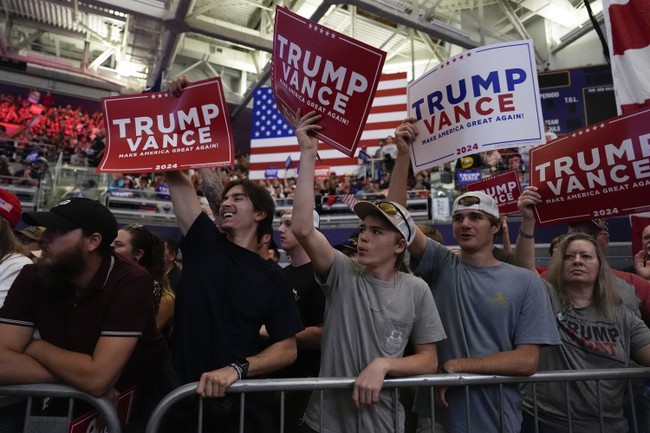
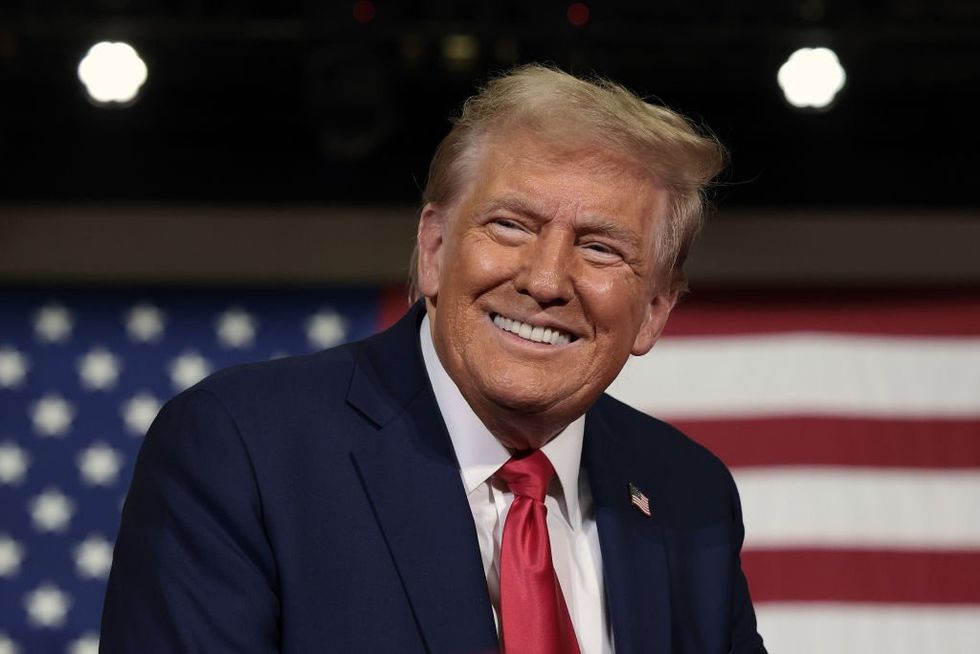
As Election Day approaches, former President Donald Trump told voters that he believes he could pave the way for the elimination of federal income taxes.On Monday, Trump participated in a town hall segment with Fox News at a barbershop in the Bronx, where he answered questions from the business' owner, employees, and patrons. 'There is a way if what I'm planning comes out.'One individual told Trump that his biggest concern is that his two children and future generations will not be able to obtain the American dream because of oppressive over-taxation."When it comes to federal taxes, I'm sure you're going to start back up the pipeline, the Keystone Pipeline, which is going to generate an abundance of revenue. Also, with the tariffs that you've spoken of," he told Trump.He asked, "With all this extra revenue that we're going to be bringing into the country, do you believe that at some point in time, we could find a way — once the country's back on its feet and getting enough revenue and pays off our debt — do you think it's possible to find a way to eliminate federal taxes?"Trump replied emphatically, "There is a way."He stated that in the 1890s, the United States relied on tariffs and did not have a federal income tax."Now we have income taxes, and we have people that are dying, they're paying tax, and they don't have the money to pay the tax," Trump continued. "In the old days, 1890, 1880, we had so much money they had to set up committees, blue-ribbon committees, how to spend our wealth. We had no idea how to spend it; it was so much money. Then we went to the income tax system, and the rest is sort of history.""No, there is a way if what I'm planning comes out," Trump added.The former president has already stated that he supports abolishing the federal income tax on tips, overtime pay, and Social Security.The United States, for the first time, briefly imposed a 3%-5 income tax from 1862 to 1872 to cover the cost of the Civil War.W. Elliot Brownlee, a historian of tax policy at the University of California, Santa Barbara, told the New York Times that the U.S. adopted "a mass-based income tax for the first time during World War II."From 1868 to 1913, approximately 90% of all revenue was generated from liquor, beer, wine, and tobacco taxes. Currently, income taxes generate 94% of the federal government's revenue, while tariffs make up just 2%.Like Blaze News? Bypass the censors, sign up for our newsletters, and get stories like this direct to your inbox. Sign up here!
Like
Comment
Share
The Blaze Media Feed
1 y

One way to drain the swamp: Start with transparency
Favicon 
www.theblaze.com

One way to drain the swamp: Start with transparency

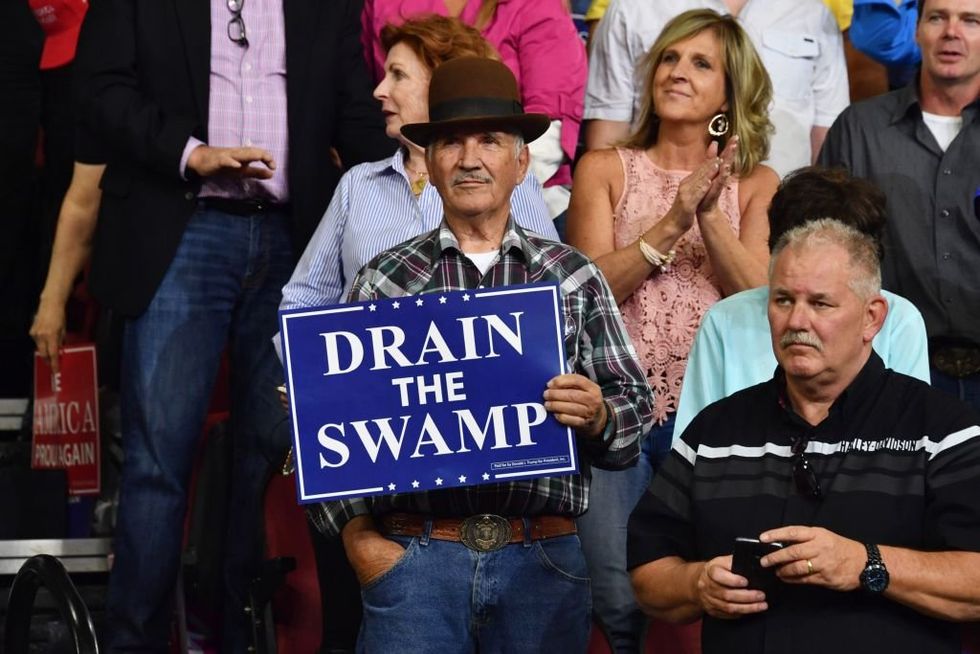
Draining the swamp requires hard work. You can’t do it casually or haphazardly. The bureaucracy has spent more than 125 years building the administrative state, and it won’t go quietly.During President Trump’s first term, we learned that bureaucrats holding power have largely insulated themselves from the electorate and elected officials. Long-term structural change will need legislative reform, starting with the Administrative Procedure Act, the key law governing the relationship between Congress, agencies, and the courts.A regulation can only change the rational thinking of those who know and understand it. Yet we are all subject to countless regulations we neither know nor understand.Executive action will only have a lasting impact if it’s taken consistently and coherently. Railing for a return to the pre-progressive era of William McKinley serves no purpose. Modern life is complex and interconnected. The trust and sense of community that once stabilized interactions between neighbors are inadequate in today’s world of global supply chains, faceless corporations, and weakened communities. While the administrative state can be reduced, it can’t be eliminated.Reform must start with a simple, clear, and explainable theory of regulation, then adjust the massive regulatory code accordingly. Fortunately, such a theory exists, and leading bureaucrats have already adopted it. Recent high-profile actions by bureaucrats also provide clues for reform. The key is to use these insights strategically.Barack Obama’s regulatory czar, University of Chicago law professor Cass Sunstein, popularized the essential theory: Regulations “nudge” people toward making socially desirable decisions. Merrick Garland’s Justice Department and several big-city district attorneys have shown the key reform tool: enforcement discretion. When used effectively, this combination can achieve more swamp draining in one presidential term than has occurred since the New Deal.Start with the theory of regulation — or, more broadly, of law. The basic premise, drawn from economics, is that people generally make rational decisions. In other words, when facing multiple options, I will choose the one I believe provides the greatest benefit to me. But if society decides that my self-serving choice imposes unacceptable costs on others, a regulation can change my decision-making by making that option more expensive, perhaps through criminal penalties or civil fines. Regulatory subsidies favoring “more socially desirable” options can have the same effect.Take, for example, a manufacturing company choosing between two industrial processes: Process A costs $80 per unit but adds $40 in pollution costs. Process B costs $100 per unit with no pollution. Without regulation, a rational company would choose process A and leave taxpayers to pay for cleanup. A regulation that forces the company to clean up its own pollution changes this calculation. The company would likely spend the extra $20 for process B, save taxpayers from footing the bill, and generate an overall societal saving of $20. This is an example of an environmental regulation worth preserving.Essential executive actionDuring the Obama years, Sunstein and his fellow progressives used this theory to encourage progressive behavior. We can improve on this approach by reversing the script. Instead of starting with the behavior we want to promote, real reform must begin from the decision-maker’s perspective.A regulation can only change the rational thinking of those who know and understand it. Yet we are all subject to countless regulations we neither know nor understand.One of the great tragedies of modern life is that we face so many rules, on so many topics, that we have no idea what’s expected of us. Who among us could withstand the scrutiny of a special prosecutor? If the government randomly subjected Americans to such investigations, nearly anyone could be incarcerated or ruined. Besides the obvious violation of civil liberties, this situation points to a larger regulatory failure. If a successful regulation redirects behavior toward socially beneficial actions, then any unknown or poorly understood regulation fails by default.Enforcement discretion can have a similar effect. When a district attorney announces that she won’t prosecute shoplifting, for example, it effectively nullifies theft laws. Those of us with a basic moral code may still pay for the items we take because it’s the right thing to do. However, those with a weaker moral compass may revise their thinking and conclude that simply taking what they want best serves their (at least short-term) interests.Draining the swamp requires aligning enforcement discretion with the theory of regulation: Only enforce regulations that people know and understand. How can an agency determine which of its regulations are known and understood? That’s where executive action comes in. An executive order can direct agencies to explain their regulations before enforcing them.Consider an announcement and order along the following lines:The purpose of regulation is to encourage behavior that benefits local communities and the nation. But many Americans, both individuals and corporations, don’t know which laws apply to them or how the law expects them to behave. These laws can’t promote the behavior they claim to encourage; instead, they act as “gotchas” that allow enforcement agencies to punish innocent Americans who didn’t know they were doing anything wrong.We are giving every agency 90 days to review everything within its enforcement jurisdiction. For each regulation, the agency must publish a simple statement explaining whom the regulation affects and the behavior it aims to deter or promote.These new explanations are not legal statements. They describe enforcement discretion. Moving forward, agencies will only enforce regulations against those they have informed, in line with the behaviors they have identified. No agency will bring a new enforcement action under any regulation unless it has been publicly explained and available for at least 30 days.That’s it. Officially, this approach doesn’t eliminate any regulations or change the scope of agency power. Practically, it disciplines all agency actions. It requires our government to tell people how we expect them to behave, promoting both government transparency and socially beneficial behavior.This approach also reduces the need for expensive compliance professionals and replaces technical, legalistic disclosure with real disclosure — placing necessary information front and center, rather than hiding it in a footnote that only a legal team would notice.Redirect the flowsEntire swaths of the federal government and the compliance and lobbying industries would suddenly lose power. Opposition would be fierce, but difficult to justify. Opponents would be left arguing against fair notice and warning before enforcement. Even better, this approach would shift the balance of power in the swamp. Bureaucrats have grown so powerful because the regulatory code is both sprawling and opaque. Enforced clarity would strip them of one of the biggest weapons in their arsenal.Long-term benefits are also likely. By forcing agencies to choose between clarifying their authority or ceasing to use it, such an order would force them to prioritize. Presumably, each agency would clarify the regulations it most wants to enforce first. Low-priority regulations left unenforced for extended periods would become increasingly hard to defend. A collection of these long-unenforced regulations would make an excellent case for an omnibus deregulation bill. A significant reduction in the regulatory code, in turn, would justify a corresponding reduction in the federal workforce.Restructuring the federal government is tough work. Progressives aimed to do it in the 1890s under William Jennings Bryan and in the 1910s under Woodrow Wilson. However, they saw only marginal success until the 1930s. Faced with a true crisis and a theory of the administrative state, FDR fundamentally changed the American system of governance.We’ve reached another crisis point. Regulatory sprawl and vast enforcement discretion have undermined every remaining republican virtue. No living American can possibly understand the entire regulatory code, which means everyone is arguably in violation of something. This vast enforcement discretion allows the government to target and harass anyone deemed objectionable for any reason. Constitutional norms that haven’t yet been discarded are under constant threat.The only way to rein in the bureaucracy and restore republicanism is with a coherent theory of regulation and a realignment of enforcement discretion. I’ve presented a plan that’s simple to explain and easy to sell. Maybe there are other options.Ultimately, the only way to drain a swamp is to redirect the flows that feed it. Opaqueness and discretion are two of the main feeders. Redirect them, and we can reclaim the American constitutional order.
Like
Comment
Share
The Blaze Media Feed
1 y

Former Pence chief of staff calls accusations from Gen. Kelly against Trump 'too egregious to ignore'
Favicon 
www.theblaze.com

Former Pence chief of staff calls accusations from Gen. Kelly against Trump 'too egregious to ignore'

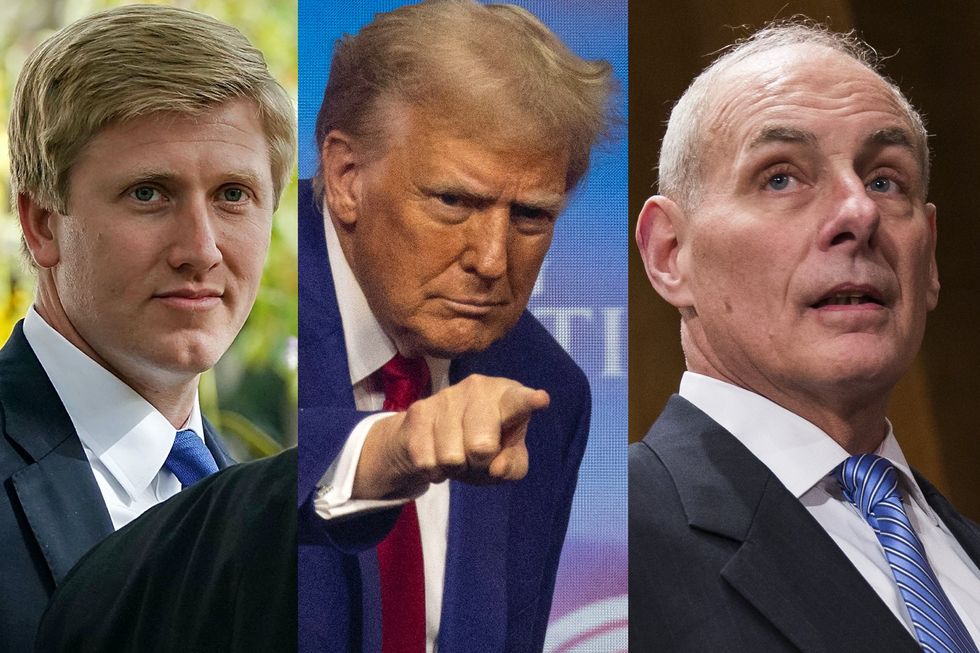
Accusations from a former Trump chief of staff meant to derail his presidential campaign were defused by a vehement denial from the former chief of staff to Mike Pence. Retired Marine General John Kelly said that former President Donald Trump had praised Adolf Hitler's military and wished that he had the same. He also said Trump met the definition of a fascist and would govern as a dictator if elected a second time. The media ran wild with the claims in an attempt to damage the Trump presidential campaign. 'There were no secrets at that White House related to what the president was saying or thinking.' "He certainly prefers the dictator approach to government," Kelly said. But according to Nick Ayers, Kelly's accusation is false. "I’ve avoided commenting on intra-staff leaks or rumors or even lies as it relates to my time at the White House but General Kelly’s comments regarding President Trump are too egregious to ignore," wrote Ayers on social media. "I was with each of them more than most, and his commentary is *patently false.*" Ayers went on Fox News to directly address the accusations. "I'm responding to one general who made egregious comments that are simply not true, that are manufactured, if they were true, obviously the American people would have known about it before then," Ayers said. "You all know how the White House was covered, there were no secrets at that White House related to what the president was saying or thinking." He went on to identify Kelly as a member of the "military-industrial complex" in the segment. Kelly's accusations were picked up by Vice President Kamala Harris, who cited him in a brief speech on Wednesday. "Donald Trump said that because he does not want a military that is loyal to the United States Constitution; he wants a military that is loyal to him," Harris said. The Trump campaign lambasted Harris in a fiery response. "Kamala Harris is a stone-cold loser who is increasingly desperate because she is flailing, and her campaign is in shambles. That is why she continues to peddle outright lies and falsehoods that are easily disproven," the statement read. "The fact is that Kamala's dangerous rhetoric is directly to blame for the multiple assassination attempts against President Trump and she continues to stoke the flames of violence all in the name of politics," the statement continued. "She is despicable and her grotesque behavior proves she is wholly unfit for office." Kelly, who left the Trump administration in 2019, had previously called Trump "dishonest," "pathetic," and the "most flawed person" he had ever met in his life. Like Blaze News? Bypass the censors, sign up for our newsletters, and get stories like this direct to your inbox. Sign up here!
Like
Comment
Share
Gamers Realm
Gamers Realm
1 y

Hunt Showdown stands firm after Ghostface crossover ridiculed by players
Favicon 
www.pcgamesn.com

Hunt Showdown stands firm after Ghostface crossover ridiculed by players

Hunt Showdown has been on something of a wild ride this year. The launch of its enormous 1896 update, which added a new map and was essentially a soft reboot for the extraction FPS, saw it reach new heights when it comes to its Steam player count. However, sweeping changes to core elements like Hunt’s UI saw it get viciously review-bombed by some of its most hardcore, dedicated fans. Having only just recovered from that barrage, another huge wave of review bombing has ensued over recent days due to the reveal of Hunt’s first ever in-game collaboration Continue reading Hunt Showdown stands firm after Ghostface crossover ridiculed by players MORE FROM PCGAMESN: Best FPS games, Best survival games, Best multiplayer games
Like
Comment
Share
Twitchy Feed
Twitchy Feed
1 y

WELL LOOKY HERE: Lucas Kunce Gun Range Stunt Organized by CRIMINAL Prohibited From Accessing Firearms
Favicon 
twitchy.com

WELL LOOKY HERE: Lucas Kunce Gun Range Stunt Organized by CRIMINAL Prohibited From Accessing Firearms

WELL LOOKY HERE: Lucas Kunce Gun Range Stunt Organized by CRIMINAL Prohibited From Accessing Firearms
Like
Comment
Share
Twitchy Feed
Twitchy Feed
1 y

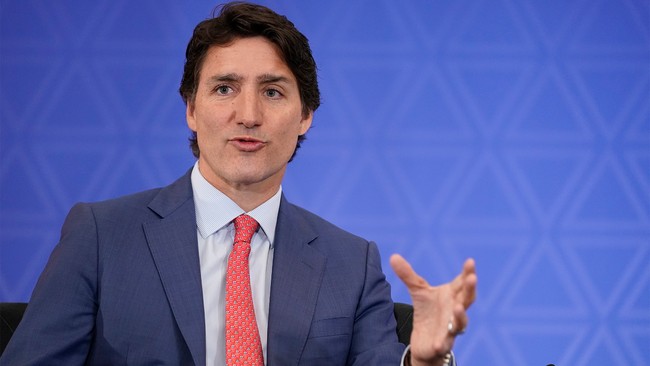
Red Faced Justin Trudeau Declares Canada in Crisis and Immigration Must be Slowed
Favicon 
twitchy.com

Red Faced Justin Trudeau Declares Canada in Crisis and Immigration Must be Slowed

Red Faced Justin Trudeau Declares Canada in Crisis and Immigration Must be Slowed
Like
Comment
Share
Twitchy Feed
Twitchy Feed
1 y

Media Can't Grasp Why Guy They Called Hitler for Years Won't Help Them Attack Guy They Call Hitler Now
Favicon 
twitchy.com

Media Can't Grasp Why Guy They Called Hitler for Years Won't Help Them Attack Guy They Call Hitler Now

Media Can't Grasp Why Guy They Called Hitler for Years Won't Help Them Attack Guy They Call Hitler Now
Like
Comment
Share
RedState Feed
RedState Feed
1 y

'Cover Up': Aurora, CO City Councilperson Starts Docs Dump, Calls Out City, Media Over Tren de Aragua
Favicon 
redstate.com

'Cover Up': Aurora, CO City Councilperson Starts Docs Dump, Calls Out City, Media Over Tren de Aragua

'Cover Up': Aurora, CO City Councilperson Starts Docs Dump, Calls Out City, Media Over Tren de Aragua
Like
Comment
Share
RedState Feed
RedState Feed
1 y

Trump Reveals Whether He’d Be Willing to Pardon Hunter Biden: ‘Very Bad for Our Country’
Favicon 
redstate.com

Trump Reveals Whether He’d Be Willing to Pardon Hunter Biden: ‘Very Bad for Our Country’

Trump Reveals Whether He’d Be Willing to Pardon Hunter Biden: ‘Very Bad for Our Country’
Like
Comment
Share
Trending Tech
Trending Tech
1 y

Notion is making a super customizable email app
Favicon 
www.theverge.com

Notion is making a super customizable email app

Image: Notion After taking on calendar apps earlier this year, Notion is ready to tackle emails with a fully customizable app launching next year. Much like Notion’s other tools, the company says Mail will “distill email down to its building blocks,” allowing you to create an inbox with views, layouts, and actions tailored to your preferences. You can also use Notion AI to automatically organize, archive, or draft emails based on a prompt. Its AI can schedule meetings for you through integration with Notion’s Calendar app, as well as help you quickly write personalized emails using “one-click snippets.” The Mail app bears some resemblance to Skiff, the secure email service Notion acquired in February. GIF: Notion Notion plans on... Continue reading…
Like
Comment
Share
Showing 6809 out of 56670
  • 6805
  • 6806
  • 6807
  • 6808
  • 6809
  • 6810
  • 6811
  • 6812
  • 6813
  • 6814
  • 6815
  • 6816
  • 6817
  • 6818
  • 6819
  • 6820
  • 6821
  • 6822
  • 6823
  • 6824

Edit Offer

Add tier


Select an image
Delete your tier
Are you sure you want to delete this tier?

Reviews

In order to sell your content and posts, start by creating a few packages. Monetization

Pay By Wallet

Payment Alert

You are about to purchase the items, do you want to proceed?

Request a Refund