YubNub Social YubNub Social
    Advanced Search
  • Login

  • Day mode
  • © 2026 YubNub Social
    About • Directory • Contact Us • Privacy Policy • Terms of Use • Android • Apple iOS • Get Our App

    Select Language

  • English
Install our *FREE* WEB APP! (PWA)
Night mode
Community
News Feed (Home) Popular Posts Events Blog Market Forum
Media
Headline News VidWatch Game Zone Top PodCasts
Explore
Explore Jobs Offers
© 2026 YubNub Social
  • English
About • Directory • Contact Us • Privacy Policy • Terms of Use • Android • Apple iOS • Get Our App

Discover posts

Posts

Users

Pages

Group

Blog

Market

Events

Games

Forum

Jobs

Daily Caller Feed
Daily Caller Feed
1 y

China Threatens Taiwan With Largest Military Drill In Decades As Biden Quietly Disappears From World Stage
Favicon 
dailycaller.com

China Threatens Taiwan With Largest Military Drill In Decades As Biden Quietly Disappears From World Stage

'Wall of PLA Navy forces'
Like
Comment
Share
Daily Caller Feed
Daily Caller Feed
1 y

FACT CHECK: Did Lana Del Rey Announce She Will Perform At Trump’s Inauguration?
Favicon 
checkyourfact.com

FACT CHECK: Did Lana Del Rey Announce She Will Perform At Trump’s Inauguration?

A post shared on social media purports singer Lana Del Rey will be performing at President-elect Donald Trump’s inauguration. Lana Del Rey to sing “Hallelujah” at the inauguration of Donald J Trump. pic.twitter.com/qIv7jlWAwU — Marlin, Esq (@nostalgiafkninc) December 8, 2024 Verdict: False There is no evidence for the claim. Fact Check: In a recent interview Trump made […]
Like
Comment
Share
Daily Caller Feed
Daily Caller Feed
1 y

FACT CHECK: Image Of Christmas Tree With Ukrainian Flags In Berlin, Germany Is From 2022, Not 2024
Favicon 
checkyourfact.com

FACT CHECK: Image Of Christmas Tree With Ukrainian Flags In Berlin, Germany Is From 2022, Not 2024

The photo is not recent, but instead was posted in 2022.
Like
Comment
Share
Daily Caller Feed
Daily Caller Feed
1 y

FACT CHECK: No, Emmanuel Macron Was Not Arrested
Favicon 
checkyourfact.com

FACT CHECK: No, Emmanuel Macron Was Not Arrested

A post shared on social media purports French President Emmanuel Macron was arrested. MACRON HAS BEEN ARRESTED FOR TREASON AND TRAFFICKING OF MINORS CARRIED OUT IN PARIS IN THE CAPITAL OF FRANCE A FEW MINUTES AGO BY THE MILITARY SECRETLY WITHOUT ANYONE KNOWING THIS HAS HAPPENED TODAY THIS WEEKEND, SATURDAY, DECEMBER 7, 2024 AT 2 AND 30 […]
Like
Comment
Share
Daily Caller Feed
Daily Caller Feed
1 y

BOB EHRLICH: It’s Time To Reflect On Recent Cultural Boomerangs
Favicon 
dailycaller.com

BOB EHRLICH: It’s Time To Reflect On Recent Cultural Boomerangs

'For anyone tempted to minimize woke’s impact'
Like
Comment
Share
Classic Rock Lovers
Classic Rock Lovers  
1 y

Favicon 
www.classicrockhistory.com

Learned Helplessness In The Streaming Era

One of the most highly anticipated recurring events in the streaming era occurred this week as millions of users each flocked to the Spotify app to assess the results of their annual, personalized Spotify Wrapped analysis. The release unsurprisingly evoked various reactions from users, many of which directed criticism toward the gargantuan streaming service regarding its utilization of Artificial Intelligence in this year’s roundup of statistics. Many users took to social media to express discontent at the lack of personal genre analysis included in the 2024 Spotify Wrapped cycle. Others leveraged criticism at the artificially generated, podcast-style exchange assigned The post Learned Helplessness In The Streaming Era appeared first on ClassicRockHistory.com.
Like
Comment
Share
The Lighter Side
The Lighter Side
1 y

Dick Van Dyke Dances in New Coldplay Video Premiering on His 99th Birthday (WATCH)
Favicon 
www.goodnewsnetwork.org

Dick Van Dyke Dances in New Coldplay Video Premiering on His 99th Birthday (WATCH)

In a rather unexpected collaboration for a single off the new Coldplay album, Chris Martin teamed up with Dick Van Dyke for a music video just before one of the danciest stars in Hollywood turns 99 years old. ‘All My Love’ is a single from the LP Moon Music released in October, and in a […] The post Dick Van Dyke Dances in New Coldplay Video Premiering on His 99th Birthday (WATCH) appeared first on Good News Network.
Like
Comment
Share
SciFi and Fantasy
SciFi and Fantasy  
1 y

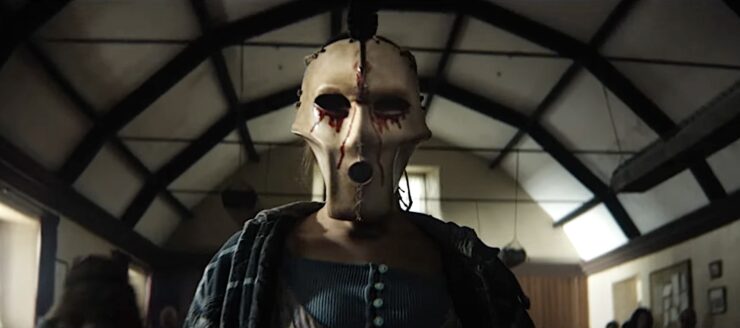
It’s Aaron Taylor-Johnson’s Turn to Kill Zombies in the 28 Years Later Trailer
Favicon 
reactormag.com

It’s Aaron Taylor-Johnson’s Turn to Kill Zombies in the 28 Years Later Trailer

News 28 Years Later It’s Aaron Taylor-Johnson’s Turn to Kill Zombies in the 28 Years Later Trailer 28 or 23 years later, depending on your counting scheme, Danny Boyle returns to zombieland By Molly Templeton | Published on December 10, 2024 Screenshot: Sony Pictures Entertainment Comment 0 Share New Share Screenshot: Sony Pictures Entertainment They’re not coming back, exactly. They never really went away. A mere 23 years after 28 Days Later, director Danny Boyle and writer Alex Garland’s indelible 2002 zombie movie, it’s time for 28 Years Later, the first film in a new trilogy that returns (or fast-forwards) us to a time when the rage virus wreaked havoc on the world. That first movie starred a young Cillian Murphy [ed note: heart eyes], who appears to pop up here as a zombie; he is expected to appear in these films, but his zombification has yet to be confirmed. Our new hero is Aaron Taylor-Johnson (Kraven the Hunter) who heads out from his lightly oldey-timey civilization with a young boy, presumably his son. They have bows and arrows and appear to be hunting dinner. Naturally, they find something else entirely. After a seemingly endless number of seasons of The Walking Dead, most of which I did not even watch, it is hard not to find the imagery here familiar: the carefully guarded settlement, the not-so-unexpected threat, the attempts to make life go on. There is no dialogue, so we can’t get much sense of the characters. Instead, we get what Deadline identifies as “a Taylor Holmes recording of Rudyard Kipling’s war poem ‘Boots’,” glitchy and monotone and eerie. Boyle and Garland have both returned to this continuation of the series; along with Taylor-Johnson, new cast members include Jodie Comer (Killing Eve), Ralph Fiennes (Conclave), Erin Kellyman (Solo), and Jack O’Connell (Ferrari). Get ready to run fast when 28 Years Later arrives in theaters June 20, 2025.[end-mark] The post It’s Aaron Taylor-Johnson’s Turn to Kill Zombies in the <i>28 Years Later</i> Trailer appeared first on Reactor.
Like
Comment
Share
Nostalgia Machine
Nostalgia Machine
1 y

Ooky And Kooky Facts About The Addams Family Sitcom
Favicon 
www.pastfactory.com

Ooky And Kooky Facts About The Addams Family Sitcom

Crazy and kooky, The Addams Family's not-so-normal yet charming dynamic was all the spooky rage in the 1960s. Still, there are some behind-the-scenes facts about the sitcom that might have crept over fans' heads along with the family hand, Thing. From newspapers refusing to run The Addams Family comics after the series aired to the real-life attraction between Morticia and Gomez, here are some ** Source
Like
Comment
Share
Daily Signal Feed
Daily Signal Feed
1 y

Why the First Amendment Is No Bar to Forcing TikTok’s Divestiture
Favicon 
www.dailysignal.com

Why the First Amendment Is No Bar to Forcing TikTok’s Divestiture

Courts are increasingly asked to “apply long-standing First Amendment principles to somewhat novel facts” involving digital social media. They have performed this task often—if not well—in recent cases such as NetChoice v. Paxton, Murthy v. Missouri, and Anderson v. TikTok.  The mixed lessons from these efforts were on display in the latest installment in this juridical drama issued Friday from the U.S. Court of Appeals for the D.C. Circuit in the TikTok divestiture case, TikTok v. Garland. TikTok came before the court asserting several challenges to a law that required its separation from parent company ByteDance, an entity headquartered in and subject to the laws of the People’s Republic of China (PRC). That law was, as Chief Judge Sri Srinivasan put it, the product of a “strong bipartisan majority of both houses of Congress, together with two successive presidents (one of whom is also the president-elect).” For all that those persons disagree on, all of them agreed “that divesting TikTok from PRC control is a national-security imperative.” TikTok’s primary arguments against divestiture rested on the familiar assertion that most anything having to do with the business of social media platforms is inherently a matter of protected speech shielded by the First Amendment. Cast in supporting roles were arguments that the law violated the Constitution’s promise of equal protection and its little-used prohibition on bills of attainder, i.e., laws passed to punish a specific party. Ultimately, none of these was availing.  Strident though TikTok and its “self-styled creators” were in accusing the government of trying to suppress free expression, it turns out that national security remains one of the few governmental interests insulated against the techno-libertarian bent of the Supreme Court’s recent free speech jurisprudence.  The three-judge panel in the case divided 2-1 over the proper standard of review, but all three agreed that the law passed constitutional muster. The government’s national security justification for the law had two components—one that concerned TikTok’s transfer of American user data to the Chinese Communist Party and another that concerned the Beijing’s manipulation of content shown to American users through its access to the ByteDance-created algorithms that TikTok employs. The data-protection rationale, all three judges agreed, did not present First Amendment concerns.  The desire to prevent the PRC’s manipulation of content on TikTok was, however, another matter. Writing for the majority, senior Judge Douglas Ginsburg assumed that the divestiture law made a content-based distinction when it addressed the potential for Beijing to mediate the content Americans saw on TikTok. In doing so, he drew on the Supreme Court’s controversial decision last term in NetChoice v. Paxton, where the court insisted that algorithmic content moderation is necessarily a form of protected expression. That meant that the divestiture law had to clear the demanding “strict scrutiny” standard of review, which requires that the law be narrowly tailored to achieve a compelling government interest. Despite that usually fatal standard, Ginsburg concluded that Congress’ security rationales were compelling and well-founded, and that the law was sufficiently tailored to them.  Thus, the First Amendment was no bar, nor could TikTok’s subsidiary arguments overcome the government’s security interest. Perhaps this favorable review was colored by the fact that the law had been a priority of both parties under two presidents.  It also did not hurt that national security is an area in which courts remain deferential to the political branches, even as their deference to the executive branch recedes in other areas after Loper Bright Enterprises v. Raimondo (2024).  But more specifically, Ginsburg credited the government’s fear that ByteDance and its U.S. subsidiaries would not “comply in good faith with the [National Security Administration]” if left in their current state of ownership. That follows from the very nature of ByteDance, which Ginsburg refers to as a “hybrid commercial threat.”  As one U.S. presidential administration after another made free trade the core of American policy abroad, rivals such as China had no patience for the dogmatism of an undergraduate economics course.  Instead, they were busy creating hybrid commercial threats the better to “conduct espionage, technology transfer, data collection, and other disruptive activities under the disguise of an otherwise legitimate commercial activity.”  Through its manipulation of nominally private enterprises, the “PRC has positioned itself to manipulate public discourse on TikTok in order to serve its own ends,” an activity far afield from the interests and protections of the First Amendment. The entanglement with the PRC was not speculative. In addition to being subject to the Beijing’s laws on data accessibility, ByteDance apparently houses a “Chinese Communist Party committee” consisting of 138 ByteDance employees. But the presence of party members has not prevented the company from learning to speak in the peculiar idiom of market liberalism and contend to a U.S. court that Congress’ law must be set aside because it “would make TikTok uncompetitive with rival, global platforms.” Fortunately, the appeals court did not allow TikTok or ByteDance to “[exploit the] corporate form to take advantage of legal protections in the United States.”  Ginsburg’s decision to assume that strict scrutiny applied may have been the prudent choice. It bolsters the decision against criticism if the Supreme Court grants TikTok’s inevitable petition for review. But conceptually, Srinivasan seems to have the more sensible approach, particularly in concluding that the law is not content-based and thus a less demanding “intermediate” tier of scrutiny should apply. The majority fears that the law made a distinction in content because its application affects some of TikTok’s content moderation decisions. But the majority is never clear on what sorts of content form the basis of the law’s supposed distinction. As Srinivasan maintains, a content-based law “discriminate[s] based on the topic discussed or the idea or message expressed.” Here, the law’s distinction is premised on the actions and intent of a particular actor deemed by Congress to be a foreign adversary, in this case, the PRC. And as Srinivasan points out, “one can imagine situations in which it would even serve the PRC’s interests to augment anti-China, pro-U.S. content,” for instance, to bolster a narrative of Western bias and warmongering.  Ultimately, the law’s reference is not to the message of any particular content, but to Beijing’s motives for promoting it. Here, fortunately, there is no consequence to the choice between standards of review, but the reflexive assumption that strict scrutiny applies whenever social media content moderation is implicated could jeopardize the prospects for other beneficial sorts of legislation, such as state efforts to limit minors’ premature access to social media platforms. And that brings us to a further point. Although the law and the appellate court’s decision mitigate the national security concerns, critics of TikTok should not expect this decision to accomplish much else. Both opinions are quite clear that once TikTok is truly privatized, i.e., taken out from under PRC control, then “new owners could circulate the same mix of content as before.”  In other words, whatever they deem “expressive content” can be algorithmically funneled with abandon to its tech-addled users. For a sample of the type of content on which TikTok makes its money, readers might familiarize themselves with the “blackout challenge” that gave rise to Anderson v. TikTok. The post Why the First Amendment Is No Bar to Forcing TikTok’s Divestiture appeared first on The Daily Signal.
Like
Comment
Share
Showing 458 out of 56670
  • 454
  • 455
  • 456
  • 457
  • 458
  • 459
  • 460
  • 461
  • 462
  • 463
  • 464
  • 465
  • 466
  • 467
  • 468
  • 469
  • 470
  • 471
  • 472
  • 473

Edit Offer

Add tier


Select an image
Delete your tier
Are you sure you want to delete this tier?

Reviews

In order to sell your content and posts, start by creating a few packages. Monetization

Pay By Wallet

Payment Alert

You are about to purchase the items, do you want to proceed?

Request a Refund